These 120+ Games Didn't Survive My Shelf
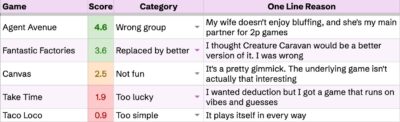
A free Google Sheet of every game I've culled, when, and why, plus an index of all my reviews. Updated quarterly. Join my newsletter to get it.
I never sell or share your data. Unsubscribe anytime.

A path-building tile game that looks a lot better than it is. I came in with high hopes, but it left me wishing I'd traded for something else.
Game Info
Upsides
Downsides
I got Tsuro for one reason only: I've been on the hunt for a game that plays like a real "board" game (i.e., no card games) with dead-simple rules and no language dependence. In short, a game that I could play with kids and non-gamer parents and grandparents. I'm talking ultra-simple games for when Kingdomino and Sushi Go are deemed too complicated.
And on that front, Tsuro works! But it sacrifices too much to get there. It's not often I feel a game is playing itself, yet that's exactly what went through my mind in my first game, fifth game, tenth game. After our first play together, my wife looked at me and asked, "Is that it?" And that's coming from someone whose gaming motto is the simpler, the better.
This review is based on my own personal copy of Tsuro, which I got in a trade via BoardGameGeek. Not a free review copy.
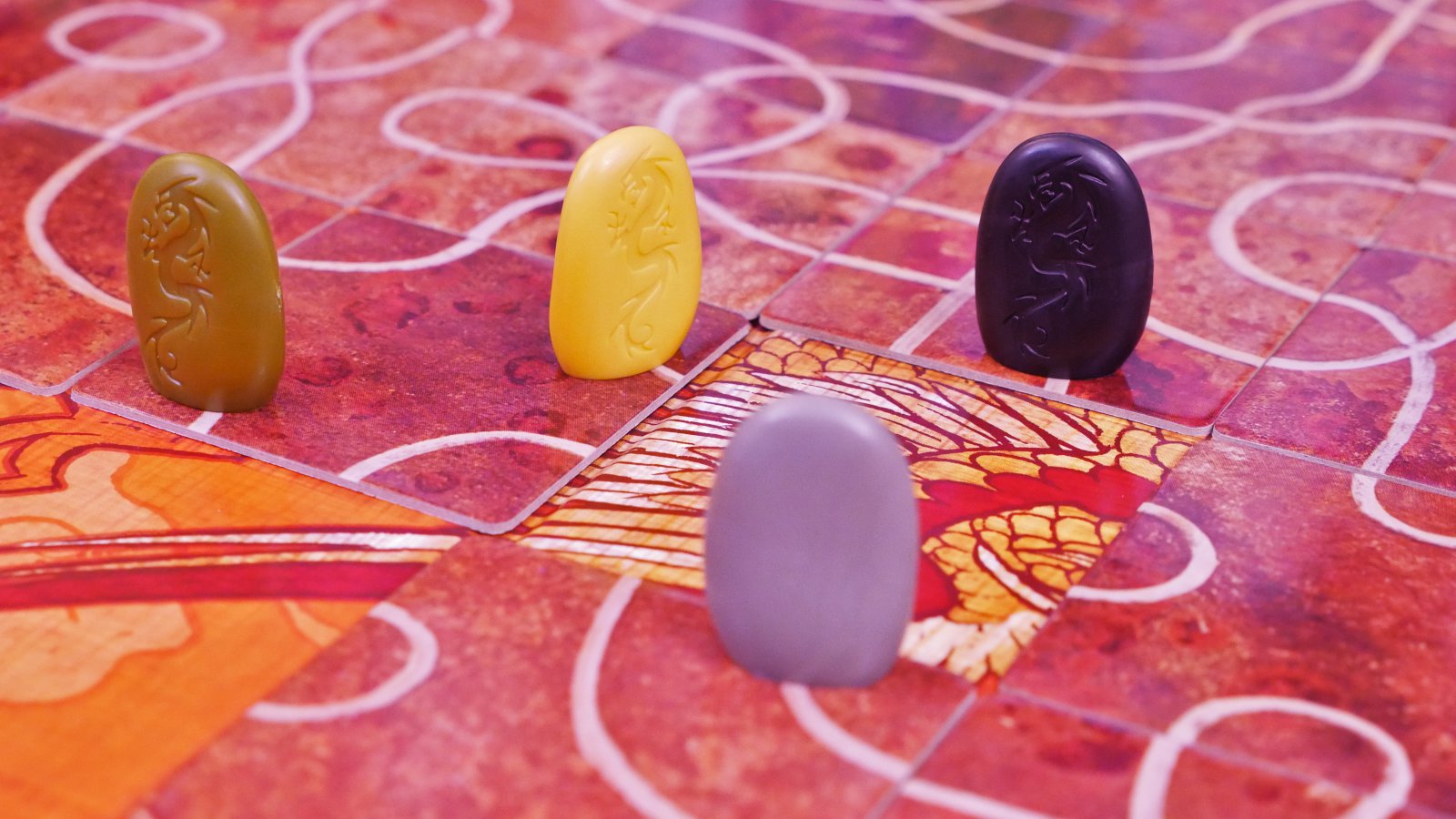
Tsuro is a path-building game played on a shared central board, where players navigate an increasingly tangled web of paths. Each player controls a stone that represents a traveler seeking enlightenment, and the goal is to stay on the board longer than everyone else does. As soon as your path leads you off the board's edge, you're eliminated.
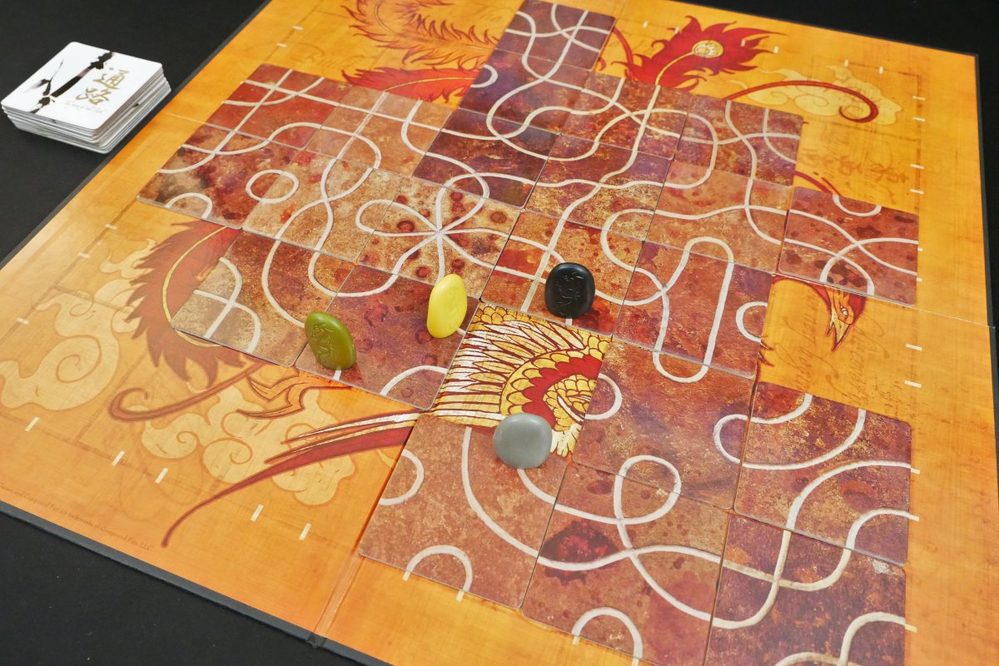
On a turn, you play one of the tiles in your hand, not only extending your current path but adding to the total network of paths on the board. Each tile brings its own interconnecting path layouts, and your choice in how you orient the tile determines the pathways you take. As the board fills up, the network grows more complex and you have less room to maneuver.
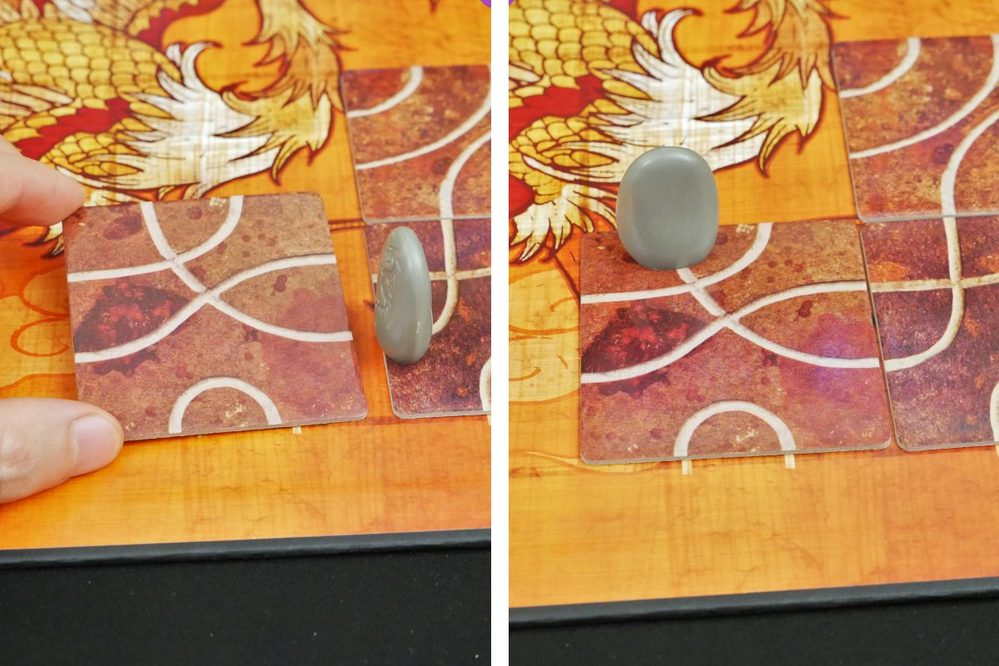
The main tension comes from the shared nature of the board: another player's tile can redirect your stone, sometimes putting you in a dangerous spot or eliminating you altogether. You can even end up on the same path as someone else, resulting in a collision that takes you both out.
In short, Tsuro is about navigating your own path while anticipating how your placements will disrupt others.
The end goal of simply surviving longer than everyone else forces everyone into a flowchart strategy that plays for you. Because you're eliminated as soon as your stone travels off the edge of the board, the survival strategy is clear: stay away from the edges. That's all I ever think when I'm "deciding" what to do with my hand—I test each tile's four possible orientations against my current position, and choose whichever one moves me toward the center.
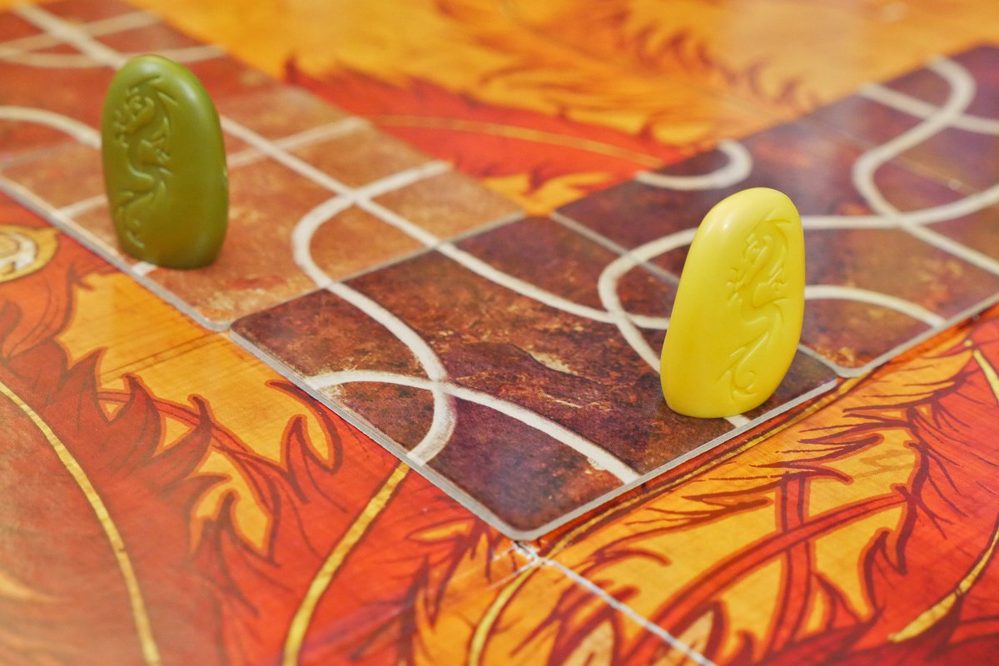
There's nothing else on the board to consider. No spots that offer me protection, or special powers, or extra options. Because the only way to survive is to prolong your time away from the edges, and because the only way to keep your distance is via movement, everyone is pigeonholed into the same decision flow: play a tile that moves me to the center, and if I can't, then play whichever tile doesn't take me to the edge. You have three tiles to choose between, but that choice is already made for you—your only task is to find the tile.
The randomness of tiles in your hand undermines long-term planning, so victories feel arbitrary rather than strategically earned. On any given turn, you have at most twelve possible moves: the three tiles in your hand, each tile having four orientations. You can see where your stone will end up after placing one tile, and you can plan your next tile around that, but no further. You don't know what replacement tile you'll draw, so you don't know your full set of next-turn options, and you can't weigh your tile choices until you do.
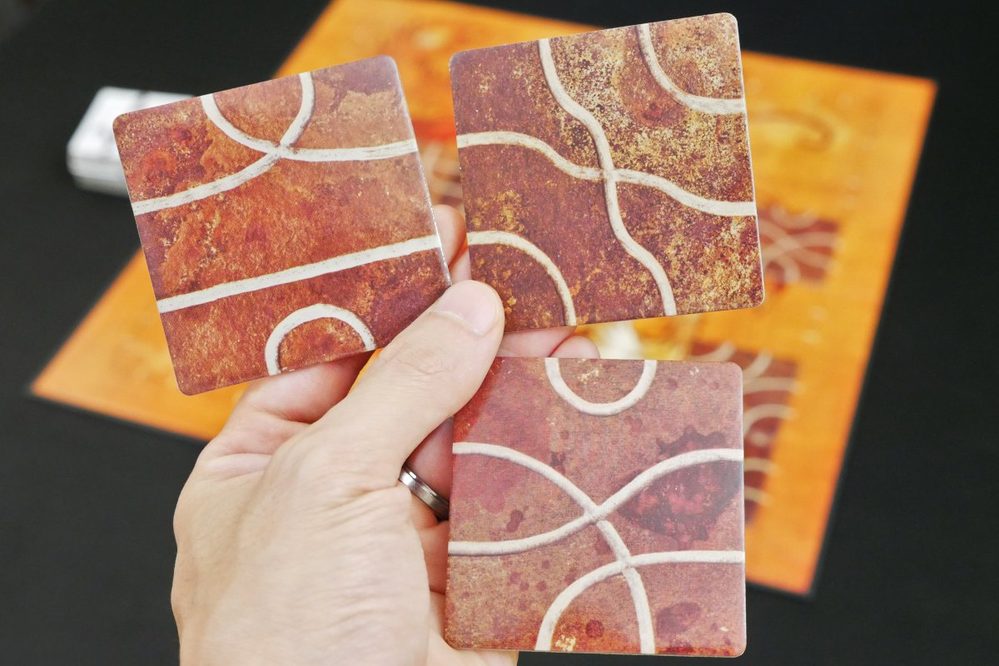
The problem is compounded further by your hand size. With only three tiles in hand, your movement options are restricted by whatever you've drawn. So many times I knew that going straight would be my best move, but I didn't hold a tile with a straight path for my orientation, so that decision wasn't available to me. I have to move elsewhere, and only to a spot allowed by my three tiles.
Tsuro feels like you're riding a train on an unfinished railroad, laying down tracks as the train chugs along. Turn after turn, you pick the best of three tiles and go where they take you. Five turns later, you're in the far corner. You didn't mean to go there—you just played whichever tiles kept you surviving and they happened to take you there. Eventually the board runs low on spots and every path leads you to one edge or another, so any tile you play is a losing move.
When a tile is played, all touching stones are moved along their newly formed paths, sending players to locations they couldn't have anticipated. Towards the end of one game, my wife played a tile that intersected with me, causing my stone to hitch a ride down the connecting path across 11 tiles. It spat me out on the other side of the board where I had less room to survive in.
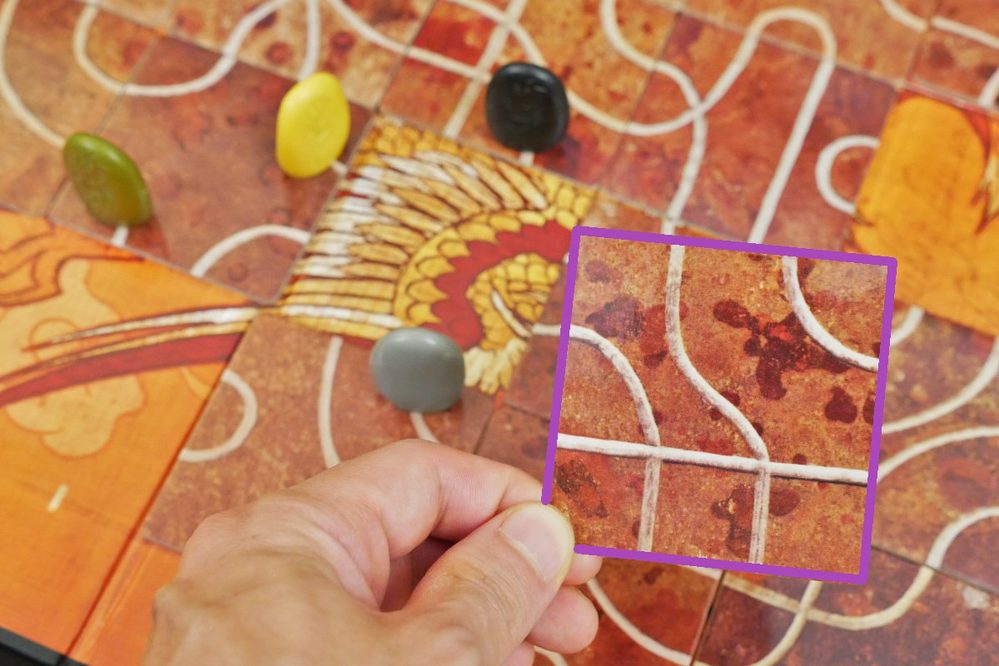
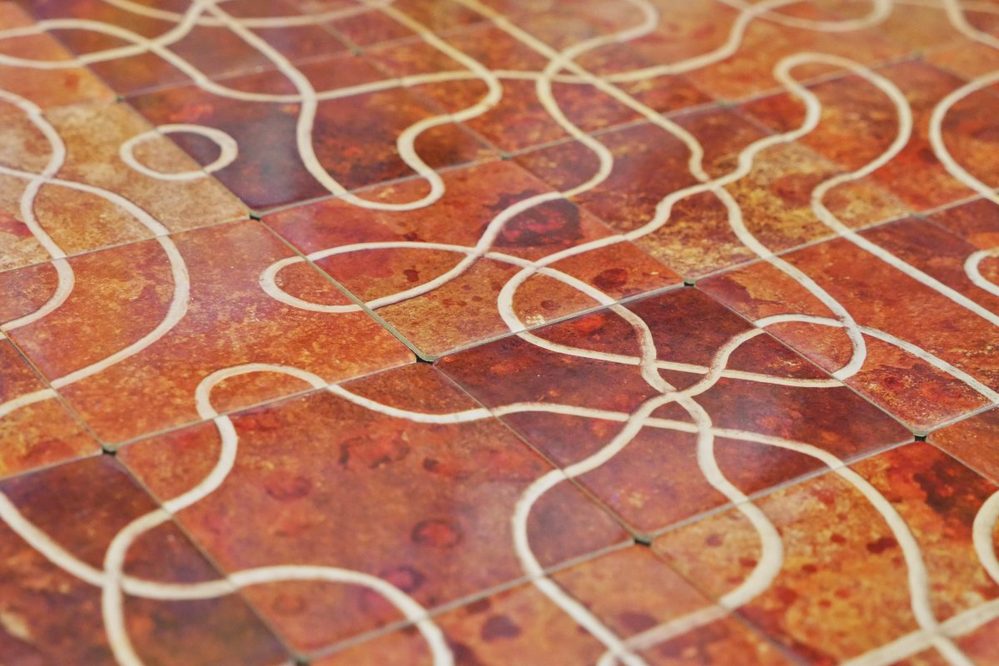
She didn't send me there on purpose, though. She had played her tile in a way that put herself in a safer position, and it just happened to touch me as well. These interactions typically don't happen until later in the game. But that's also when the board has filled up with tiles, with long and winding paths criss-crossing all over the place. A single path is easy enough to follow but there are far too many to track all of them, so when you send someone down a path, it's often incidental, not intentional.
And that's the problem. If interactions are incidental and long paths send you to effectively unforeseen spots, it's chaos. You aren't making things happen—things are happening to you and you're just trying to survive them.
Tsuro works well as a mixed-age family game, one that blends accessibility with simplicity to create an experience that anyone—regardless of age, background, or skill level—can learn and enjoy. As a first-gen American, it's hard to share my love for board games with my parents, mainly for two reasons: language barriers and complex gameplay. My parents are decidedly non-gamers, but even they can play Tsuro.
There's no text anywhere—you control a stone and you play tiles that are purely visual. There are effectively two rules: how to place tiles and how your stone moves. The end-game condition is intuitive: if you fall off the board, you're out. You just play a tile from your hand, without crunching through layers of strategy. The stakes are low and the skill ceiling is lower, but that's a good thing when playing with kids and non-gamers, as everyone can participate without feeling outmatched whether it's their first or hundredth time playing.
That's the one niche Tsuro serves well. It's a true family game in every sense. If you need something in your collection that feels like a real board game (not just a card game) but has low pressure and minimal onboarding, this is it.
Tsuro is best played at 4 players. The box says it supports 2 to 8 players, but I've found real problems at both ends of that spectrum. It feels like Tsuro was meant to be played at 4p, calibrated right in the center against those issues.
At 2 and 3 players, the board is too open. If there's any excitement in Tsuro, it's when you bump up against the other players—and while the outcomes of those interactions are highly unpredictable, at least something has happened. At these lower counts, those interactions are rare. You have freedom to move wherever you want with almost no risk of being thrown off your path until the board fills up. (I've tried the low-count variant where each player controls two stones, but you're merely splitting your attention between them. You still only place one tile per turn, so the rate of interactions remains low.)
At 5+ players, the chaos and unpredictability ramp up. Not only is the board too crowded, you also have to endure 4+ turns between your own moves. At 5p, you get about 7 turns; at 8p, you barely get 4 turns. The board state changes so much between your actions, you lose agency—other players' tiles butt up against you so often that you end up moved this way and that. It's a total crapshoot as the waves of forced movement overwhelm whatever choices you make.
One play is all it takes to see everything Tsuro has to offer. Your first turn is the same as your tenth, the same as your twentieth—you pick whichever tile is safest in the moment, you move your stone, and you draw a new tile. The decision process itself never changes and there are so few factors to consider when picking a tile, so the game stales almost immediately.
The novelty factor is also weak, with everything revealed in that first game. The board has 36 spots and there are 35 path tiles, so every tile shows up in every play. Once you've seen them all, there are no more surprises. While the tiles may combine in thousands of ways edge-to-edge, those combinations don't introduce new interactions or strategic possibilities.
There's a tiny bit of variability in the game setup, but even that is more of an illusion than a real choice. Yes, with 12 starting locations along each edge of the board, that means 48 potential starting spots. But there's no reason to choose one edge over another—they're all identical before any tiles are put down—so you're merely choosing your starting distance from other players.
Tsuro is a 15-minute game that doesn't meaningfully evolve past the first play, and so I have no desire or intention to play it again.
Tsuro doesn't look or feel like a $40 game by modern standards. The first thing you notice when you open the box is how conspicuously empty it is—you get a board, a set of 36 tiles, and a bag of eight stones. Those stones are molded from heavy plastic in pleasantly muted colors, while the tiles and board are made of thick cardboard and coated in a glossy sheen. By all means, they're nice... they just aren't $40 nice. Tsuro is a $20 game at most.
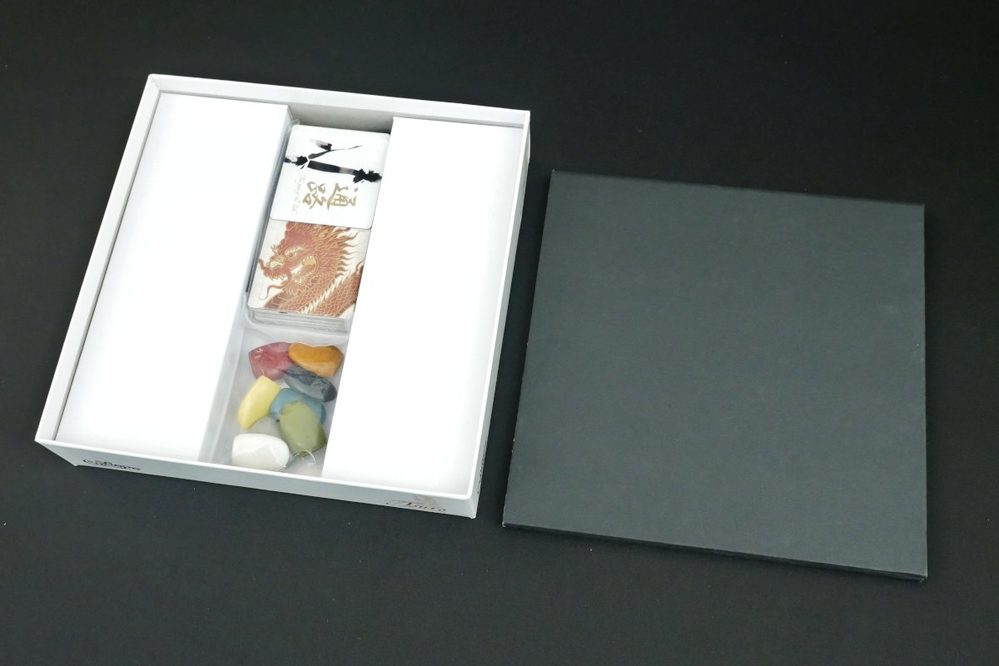
Yet, I'd still hesitate even then. Despite its table presence and tactile pieces, there just isn't enough gameplay to justify its asking price. Tsuro is the kind of game you remember for the aesthetics, not the experience.
Tsuro is a lightweight tile placement game that's easy to teach and universally accessible. You're trying to survive longer than everyone else on a shared board where path tiles move and redirect players around. But survival comes down to which tiles you end up drawing, and other players can send you to your doom with no way to block or escape it. At higher player counts, that interaction becomes so chaotic that outcomes end up feeling arbitrary. Tsuro is fine if you need a simple, language-independent game for mixed groups, but skip it if you're expecting meaningful decisions and strategic play.
These 120+ Games Didn't Survive My Shelf
A free Google Sheet of every game I've culled, when, and why, plus an index of all my reviews. Updated quarterly. Join my newsletter to get it.
I never sell or share your data. Unsubscribe anytime.
More Reviews