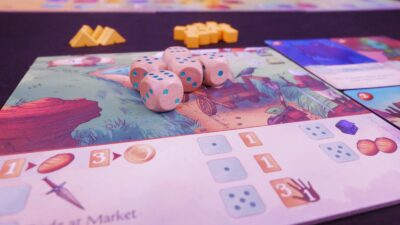
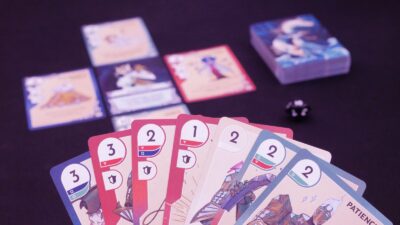
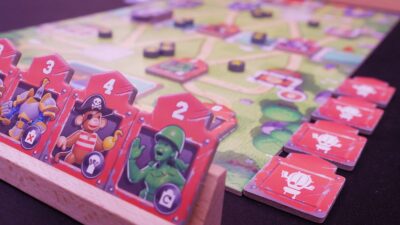
I first got Dice Throne back in 2023, and since then I've yet to play a 2-player dice battler that's as exciting, strategic, and satisfying. You've heard that it's "Yahtzee meets Magic: The Gathering," but that undersells it. With more agency than Yahtzee and nowhere near as complicated as M:TG, it hands you a set of dice along with tools to keep those dice in check.
Dice Throne asks you to push the luck of your dice as far as it'll go. Push too much and you'll land a dud that drags you behind. Push too little and your opponent will outpace you, slamming you with hits while clawing out a lead. You're playing your dice as much as they're playing you, and that tension is what hooks you even when you lose that battle.
This review is based on my own personal copy of Dice Throne, which I acquired in a math trade on BoardGameGeek. Not a free review copy. There are many sets of Dice Throne, and I own three of those sets. This is a review of the Dice Throne system based on those experiences.
Table of Contents
View more
What It Is
Dice Throne is often called "battle Yahtzee" and that's exactly right. Built for two-player head-to-head excitement—but also able to support up to six players with variant modes—Dice Throne is more like a system, where you pick characters to duke it out via dice chucking and card play. Characters mainly come in two-character boxes, but you can freely mix-and-match between them.
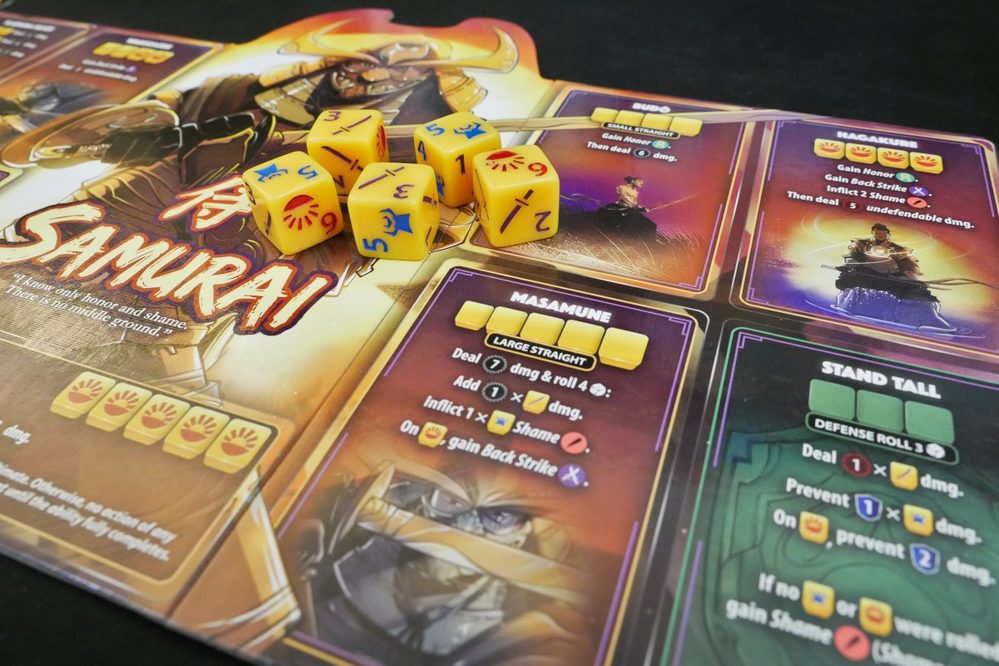
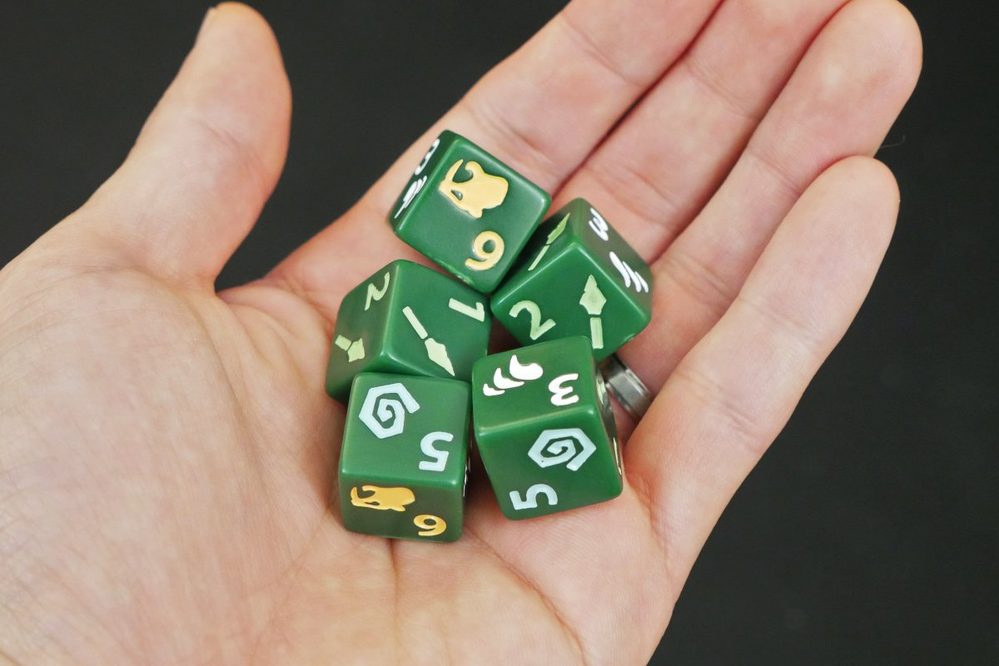
True to its name, Dice Throne centers on dice. Each character comes with a custom set of 5 dice with symbol faces that are unique to them. On your turn, you roll—and if you don't like what you get, you can re-roll any number of dice up to two times. That's the Yahtzee part.
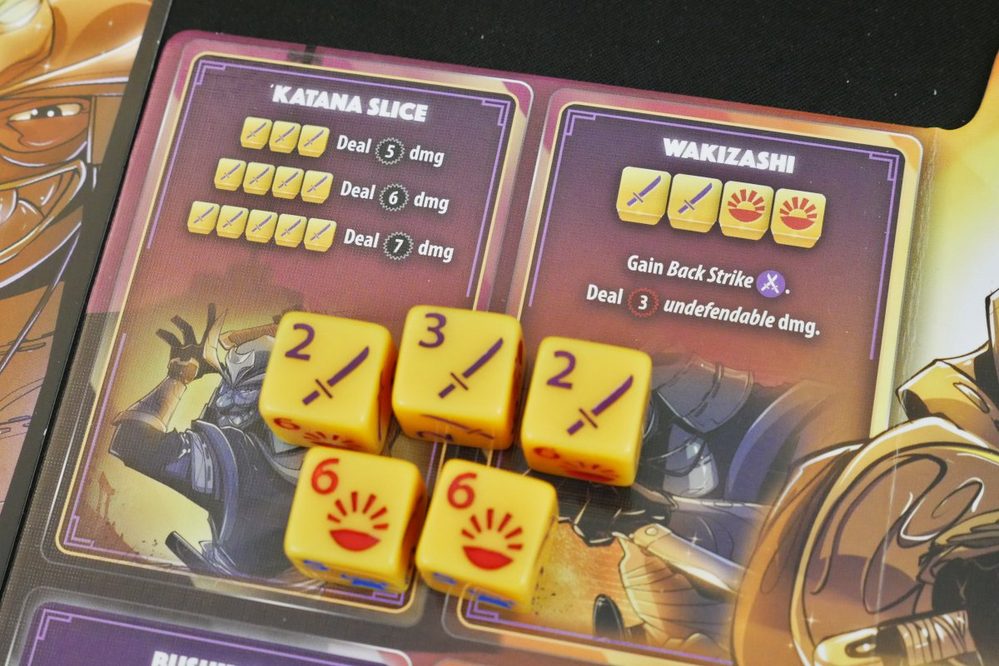
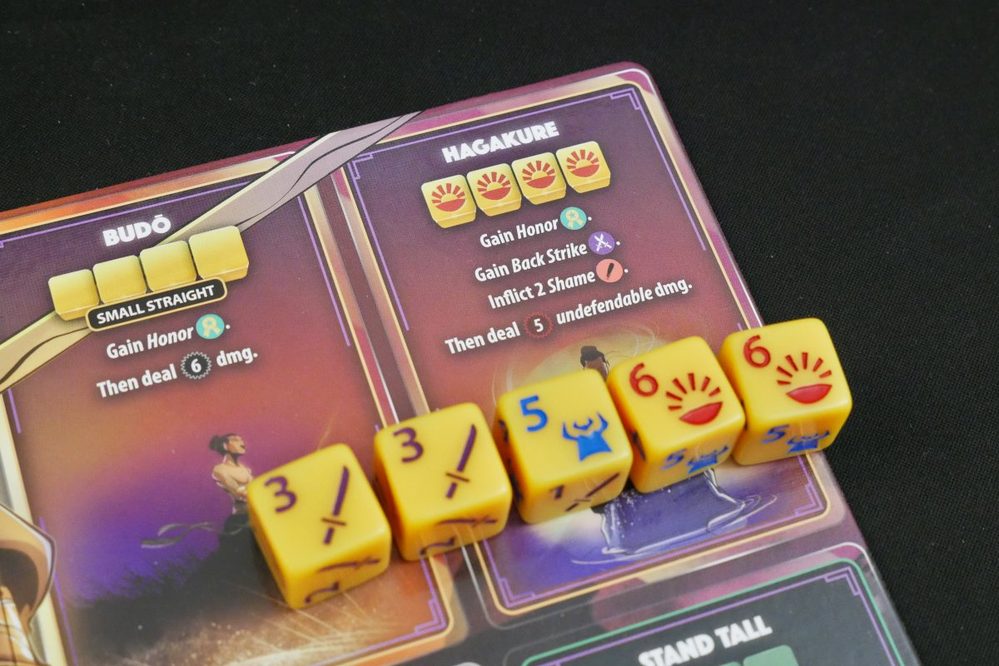
With this roll, I can match either Katana Slice or Wakizashi. The choice is mine.
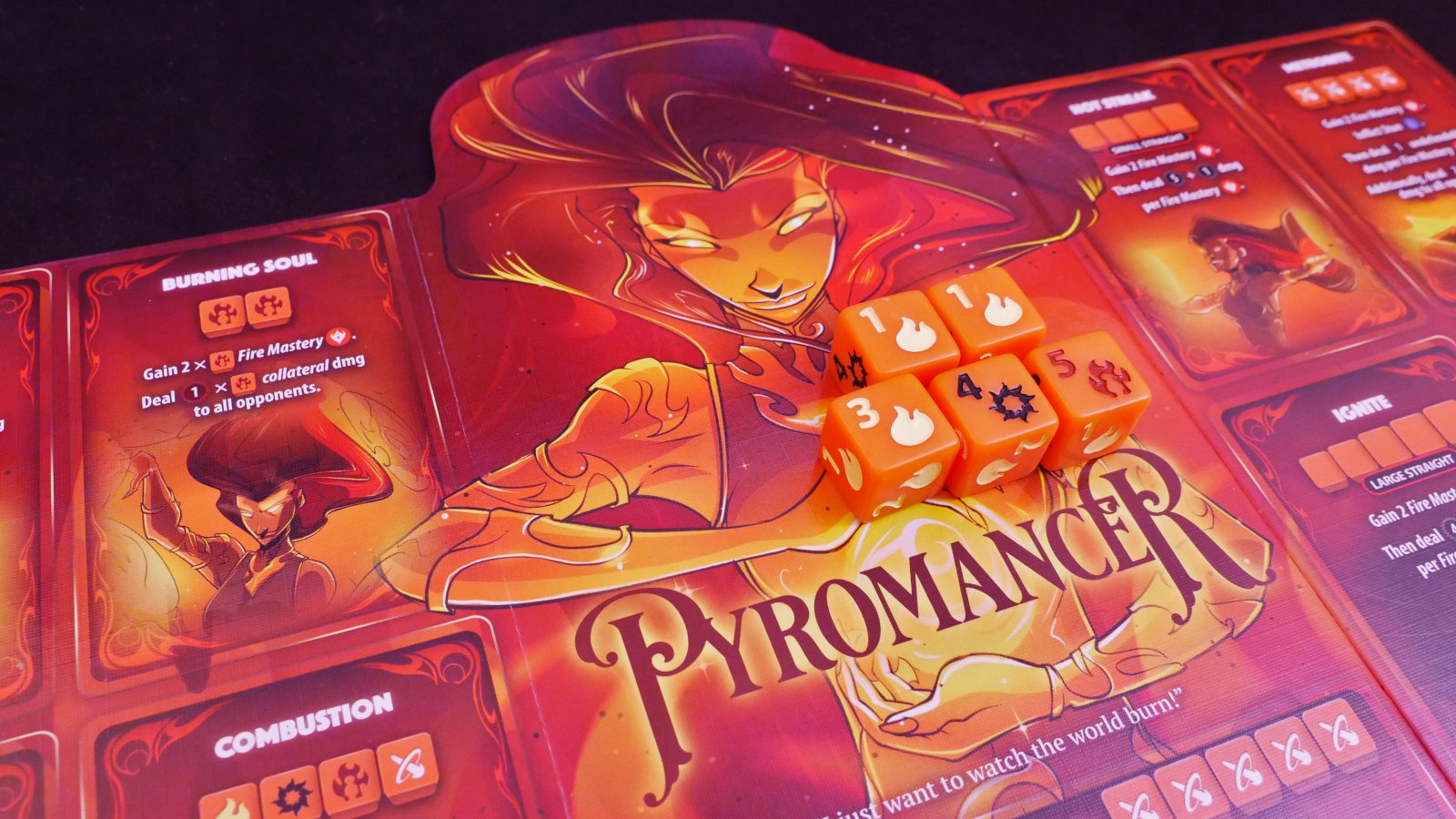
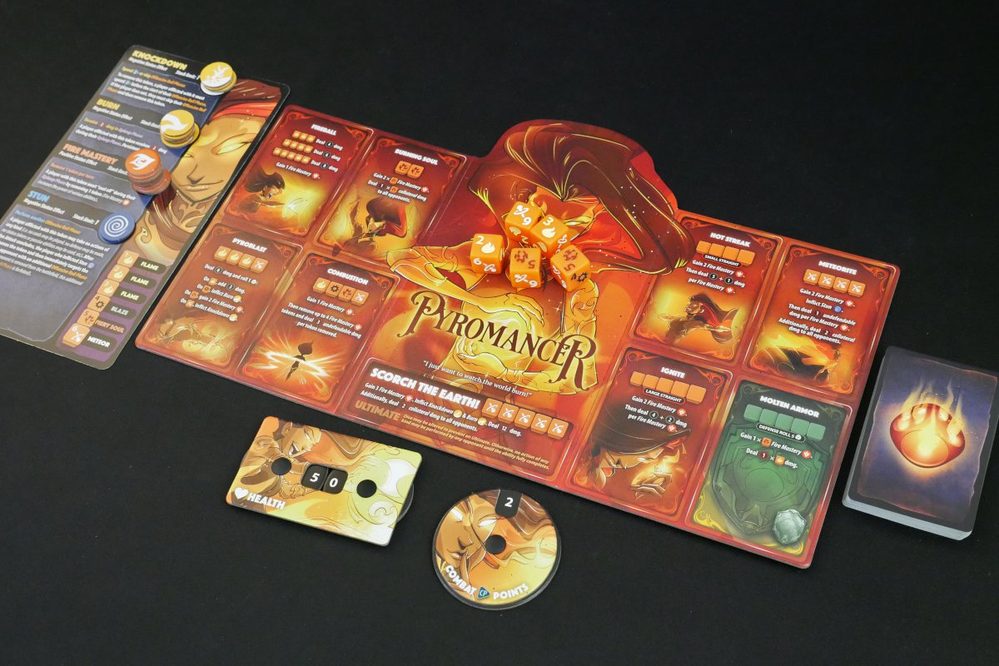
Then, based on the numbers and symbols in your result, you can activate any matching ability. You're trying to match dice patterns, whether it's a small straight (e.g., 1-2-3-4), a large straight (e.g., 1-2-3-4-5), a set of Katanas with the Samurai, a mixed set of Flame-Blaze-Fiery Soul-Meteor with the Pyromancer, etc. You roll to attack, then your target rolls to defend.
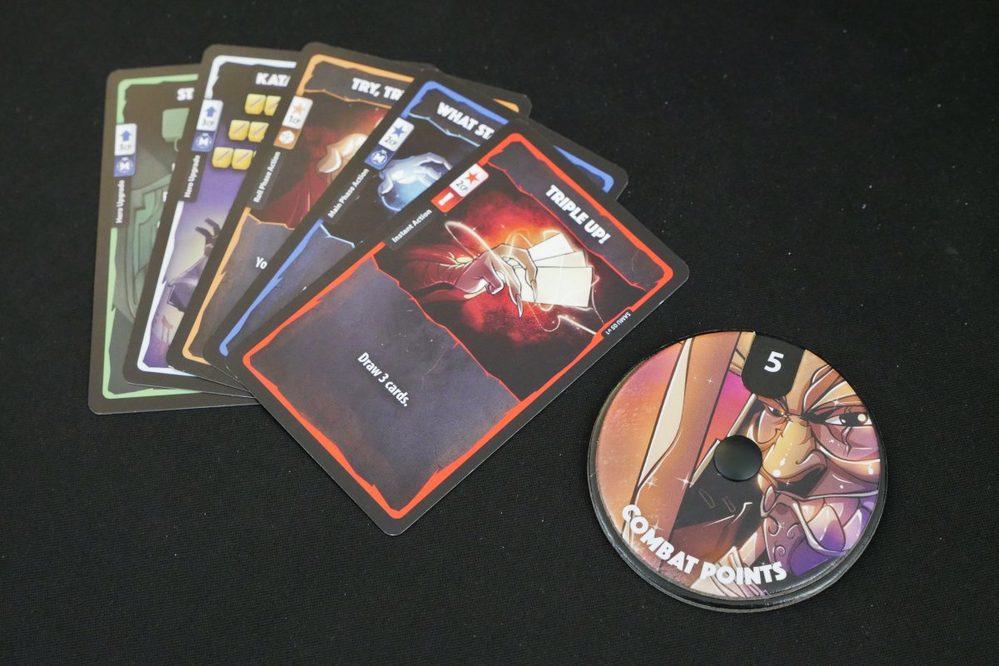
There's also a card system, where cards in hand can be played for effects, like changing a die value, earning another re-roll, or inflicting damage outright. Cards require Combat Points, an energy resource that passively builds up every turn, but you can also "sell" unwanted cards to gain extra Combat Points. Every character comes with their own deck of ~32 cards, a mixture of standard actions plus a handful of unique ones for that character only.
Turn by turn, the battle continues until a character's HP drops to 0, at which point they're eliminated. Whoever's the last one standing is the winner.
How It Feels to Play
Dice Chucking Is Fun Because It's Meaningful
In Dice Throne, the re-rolling does something that lots of wannabes fail to do: it gives you reasons to stay and reasons to go. You aren't just pushing your luck for the sake of it or because it's the obvious play. Push-your-luck games fall apart when they don't calibrate that tension properly. Here, your decisions actually matter—and that makes every re-roll feel impactful.
Like when I'm Samurai and I roll double Swords and double Suns, which can trigger the Wakizashi ability (deal 4 undefendable damage, plus gain the Back Strike buff and inflict the Shame debuff). Unsure if that's my best move, I have a choice: either re-roll all my non-Swords to hopefully turn them into Swords and trigger Katana Slice (8 defendable damage plus Shame), or re-roll all my non-Suns to turn them into Suns and trigger Hagakure (7 undefendable damage and an even better mixture of buffs and debuffs). All three options are good. I don't know which one to pursue.
And that's the mark of an excellent spin on Yahtzee. Playing it safe matters. Playing it risky matters. All paths are viable, and it's up to you to determine when the odds are worth chasing. And since those stronger abilities come with harder-to-roll combos, every re-roll is done with bated breath. You really want those Suns to land even when you know it's unlikely.
High Highs, Low Lows, Big Swings
Dice Throne doesn't just lean on dice-chucking as a crutch. It fundamentally understands what makes dice-chucking fun: the emotional rollercoaster that comes from unpredictability. Some push-your-luck games try to reduce swinginess in the interest of fairness and balance, but all that does is make a game limp. Dice Throne isn't afraid to send you soaring up... or crashing down.
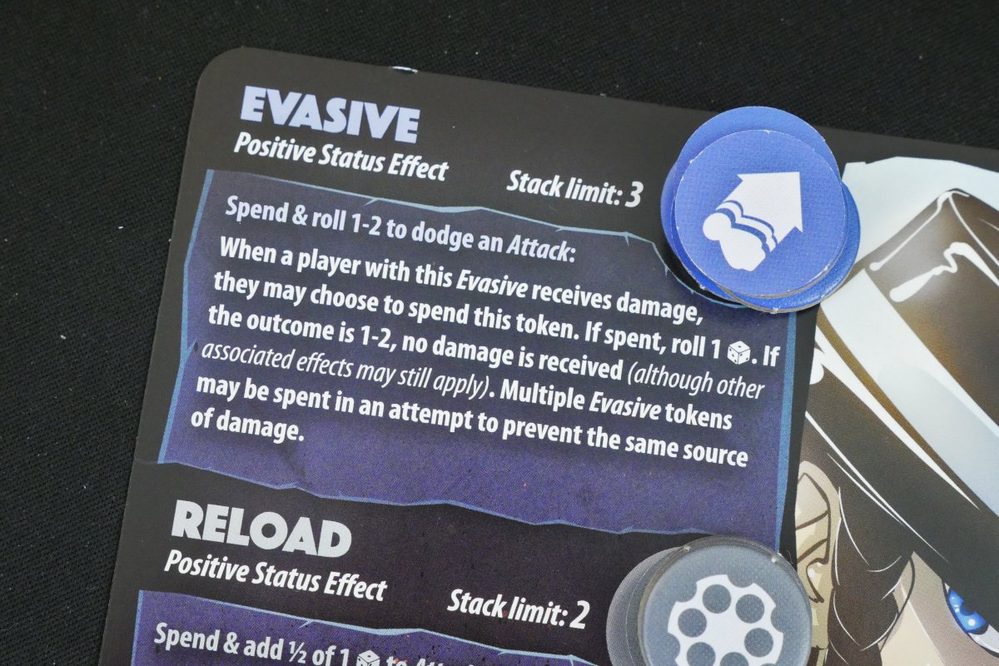
I'm constantly chasing big attacks like the Tactician's large-straight Exploit ability, which hits for 9 damage. The dice don't always cooperate, but when I roll 2-3-5 and successfully re-roll the rest into a 4 and 6, I cheer every time. And when my wife, who's facing my 9-damage attack, chooses to spend her Evasive token to dodge if she can roll a 1 or 2? That's a big moment. Either she gets it and I whiff hard, or she doesn't and eats my entire strike.
A game of Dice Throne is 10+ rounds of that, over and over, and the threat of big swings is what gives every turn so much tension. Is it lucky? Is it unfair when the dice seem to hate me but love my wife? Sure, it can feel that way. But that's the price you have to pay for a thrilling duel like this.
Card Draws Are Unbalanced (But Fixable With a Tweak)
If there's one area of Dice Throne where luck is a negative, it's in the card play. At the start, you shuffle your character's deck into a single draw pile. The problem is, that deck is comprised of two types of cards: actions cards and upgrade cards. They each serve different roles, and putting them together into a single pile can result in wild imbalances.
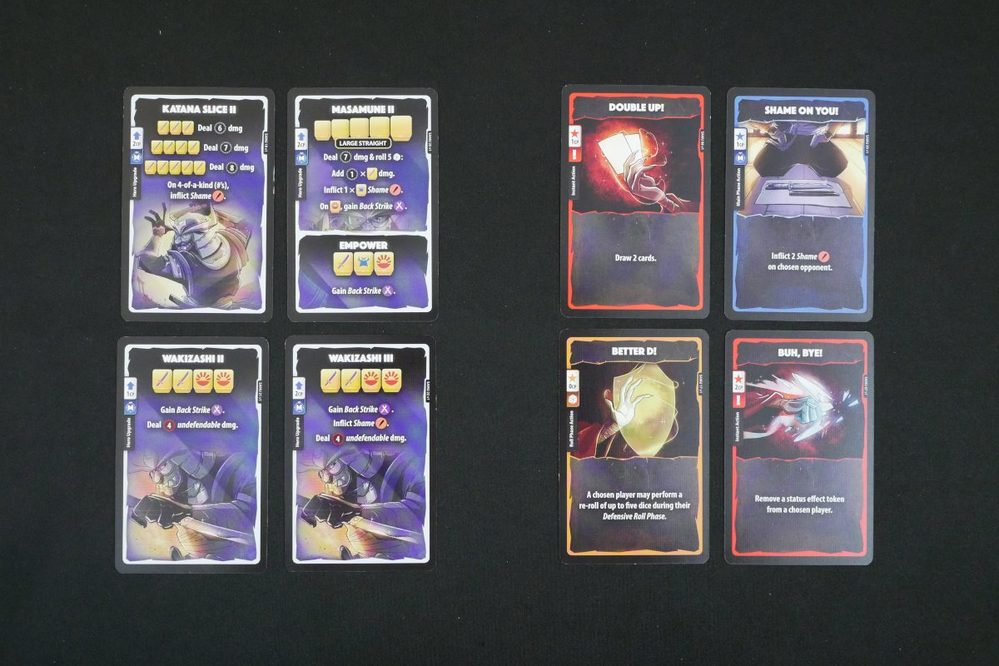
Action cards grant immediate benefits like die value changes, extra Combat Points, status effect cleansing, and drawing more cards. Upgrade cards replace your character abilities with stronger, leveled-up versions. You want both, but you don't always want both. When you're five rounds deep and haven't drawn a single upgrade, you feel hamstrung. When your initial hand is all upgrades, you lack the tactical flexibility that comes with actions.
On the left: upgrade cards. On the right: action cards.
The card play is meant to mitigate the luck of the dice, but the game doesn't provide enough mitigation for the luck of the cards. Yes, you can sell unwanted cards for CP, but that's only half a solution—it doesn't help you get the cards you want. And when you're constantly drawing the wrong cards at the wrong time, you're fighting an uphill battle. Given how swingy the dice-chucking part is, I don't like that the card play adds even more swinginess on top.
That's why I play with the split-deck variant. Instead of a single draw pile, you have an action pile and an upgrades pile. When drawing a card, you choose which pile to draw from. It gives players a little more agency and another avenue for tactical decision-making. That's a win-win.
The Card Play Slows Down Pacing
I don't like how the cards slow things down. "Battle Yahtzee" conjures up a specific kind of experience—a rapid-fire duel of dice-chucking chaos where the rolling should be the main event and be snappy. Too much evaluating, strategizing, and downtime brings down the energy of the whole.
And that's a problem with the card play. Yes, the cards add a layer of dice luck mitigation, and yes, the cards deepen the decision space by giving you more things to do and ways to claw out of sticky situations. But it all comes at a cost: a few too many things to think about at every turn.
After chucking my dice, my opponent might want to play a card to disrupt my results. They think for a minute, then decide not to. Meanwhile, I'm also pondering if I should use a card to fix my straight. But it's not just about what I could play now, but also about the Combat Point economy. Do I want to burn my CP now or save it for a bigger card later? And at the end of my turn, I spend another minute or two deciding which (if any) cards to sell for CP.
It's a little bit here and a little bit there, scattered throughout the course of one turn. And while each individual thought may not seem like a lot, it adds up. What should be a quick back-and-forth dice battle is actually more analytical than I'd like. A game like this shouldn't take an hour.
Every Character Is a New Path to Explore
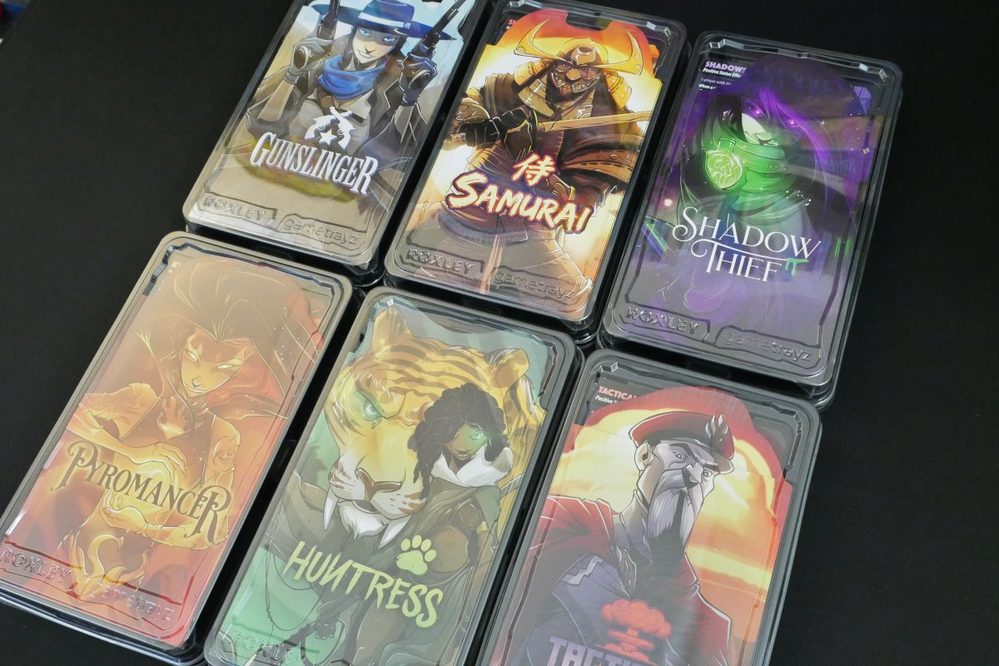
One of my favorite things about the Dice Throne system is how well it walks the line between familiarity and freshness across its roster. Keep in mind I only own six characters (three boxes), so I've barely scratched the surface of what's offered among the 40+ characters. Still, the ones I do have are truly their own, and each one brings their own flavor to the game.
It's all thanks to the design space afforded by the abilities, cards, and status tokens. Gunslinger has high variance with her Reload, Evasive, and dueling defense rolls. Shadow Thief manages Poison stacks while building up Combat Points for explosive straights and ultimates. Huntress plays a game of attrition, wearing down targets via a thousand cuts while keeping her pet Nyra alive. Pyromancer is the quintessential glass cannon, whose offense is her defense.
Think of it like a fighting video game. Just as Mario, Link, and Kirby in Super Smash Bros all adhere to the same template (A button for standard and smash attacks, B button for special attacks, aerial attacks, etc.), each Dice Throne character has a base skeleton but also breaks the mold to create their own tempo, style, and specialties. No two characters play the same, and that's important for an asymmetrical fighter.
Upfront Learning Curve With Lots of Reading
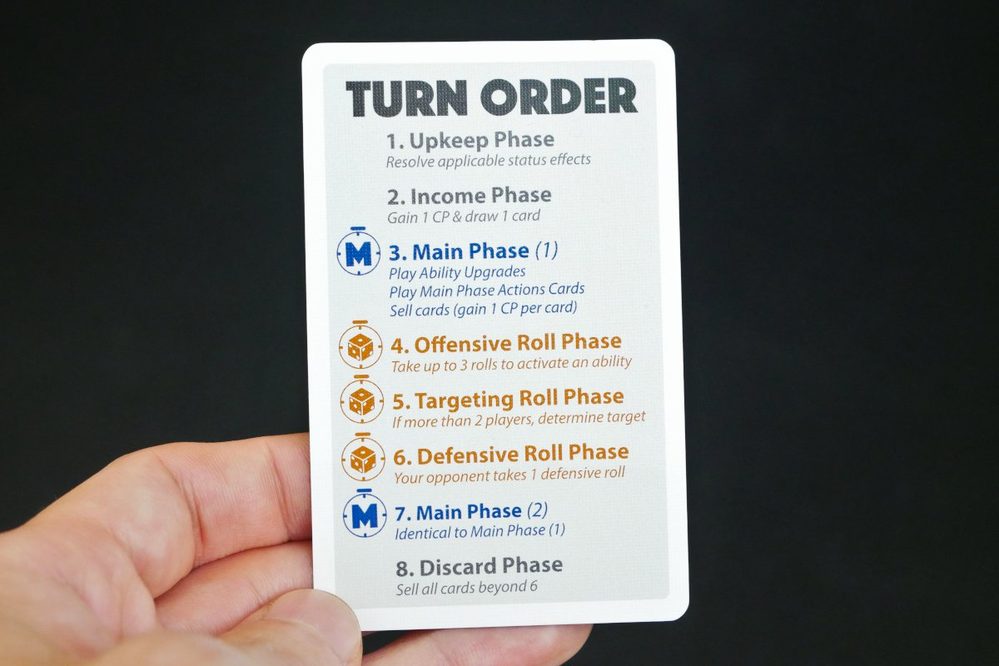
Dice Throne is a full-blown hobby game, and it won't be an easy pickup for someone whose only gaming experience is with Uno and Exploding Kittens. There's a lot to absorb before you can even start playing: what all nine character abilities do, how all the unique status effects operate, what all the gameplay keywords mean, the flow of the phases every turn.
The actual systems and effects are all pretty simple on their own; it's the amalgamation of it all that can be hard to take in, and there's a good amount of mental upkeep. For example, the Samurai has a passive ability called Bushido, which grants an Honor token if you end your turn without spending all your re-roll attempts. On its own, that's elementary. But that's effectively an extra rule you have to remember for the whole game. I can't tell you how many times I missed out on Honor tokens because I forgot about this passive.
The good thing is, everything is written out in plain text everywhere. The bad thing is, you'll be doing a lot of reading and dealing with high cognitive load in your first game, as well as any time you try a new character. It gets easier and smoother once you're familiar with the underlying systems, but that front-loaded learning curve disqualifies Dice Throne as a gateway game.
Player Count and Scaling
Dice Throne is best played as a 2-player duel. Every character is designed around this format and that balance breaks with more players in the mix. For example, defensive characters like Shadow Thief are better at stalling while others beat each other down, while long-game characters like Huntress can struggle to keep up with the extra pressure of multiple threats.
But beyond balance, Dice Throne's card-driven pacing problems are exacerbated with every additional seat at the table. Waiting is bad enough when you're playing every other turn; it's a real drag when you have two or more turns between your own in King of the Hill Mode, and there's extra downtime with cooperative deliberation in Team Versus Mode. And King of the Hill Mode is especially frustrating when you're teamed up on, eliminated, and forced to sit back and watch as the rest duke it out.
I applaud Roxley for trying to make it work with more players, but it just doesn't work well enough to recommend. I'd never play Dice Throne as anything other than a 1v1 game.
Replayability
I have to be in the mood for Dice Throne. I don't want to play it every week, but when I do come back to it, it's always more enjoyable than I expect. It takes a few minutes to refresh myself on the flow and reacquaint myself with whatever character I'm playing, but after that it's smooth sailing.
It's enjoyably replayable, and that's because it always delivers the emotional experience I expect from it. Yahtzee-style dice-chuckers are a dime a dozen now, but Dice Throne stands out because you aren't just rolling dice and hoping for the best. You're actively making tough choices, and those calculated actions have real consequences. When you forego the Combustion you just rolled to try for a Pyroblast, you're second-guessing yourself—and when the Pyroblast does hit on your last re-roll, you're pumping your fist. That explosive blend of luck and agency is what keeps me coming back.
And it doesn't hurt that there are so many characters to explore, all with different playstyles, but you don't need a lot of boxes. That's the beauty of it. While each character adds a new twist, a single character that you jibe with is all you need to have fun. I have six characters, but I mainly only play two (Samurai and Shadow Thief), and I'd happily stick to just those two forever.
The only thing that keeps me from tabling Dice Throne more often? The downtime. I really wish it was closer to a 30-minute game. But since it takes about an hour, it's harder to pull out on a whim than it should be.
Components and Setup
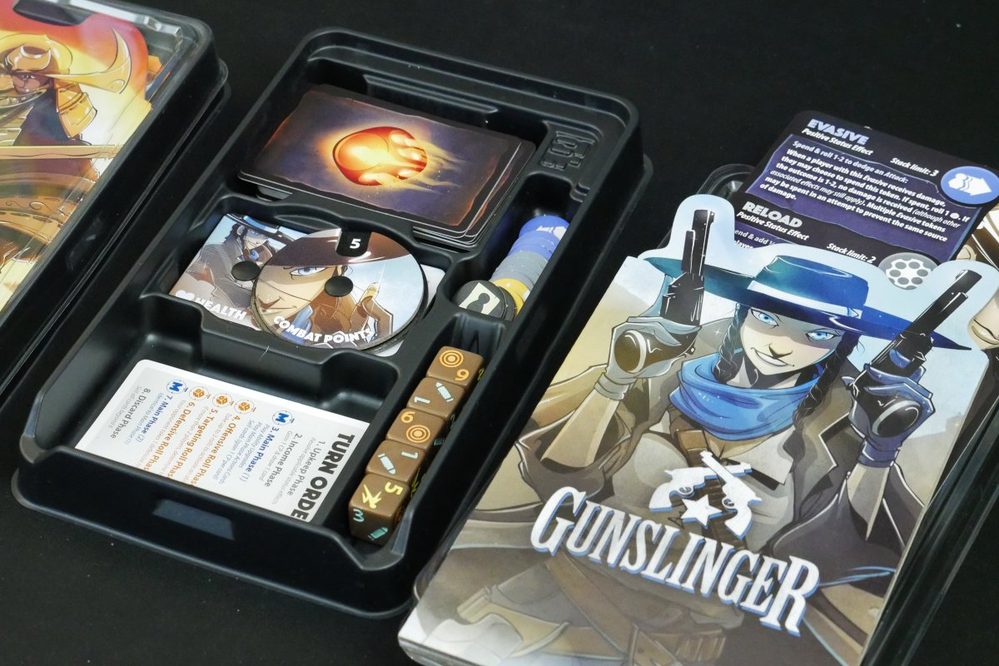
Dice Throne has one of the best production designs in all of board gaming. The custom Game Trayz box inserts are fire, specially designed to hold the character board, cards, and dice in a flat, easy-to-store package. You can pull out the character you want and be set up to play within minutes.
And the table presence is phenomenal. Each character board brings its own vibe, with gorgeous illustrations, color palettes, and graphic design. The layout makes the game clean to learn and play, with all the information you need laid out right in front of you for easy reference. And the fold-up board packs away compactly. If I could sum up the whole package in one word, it'd be... intuitive.
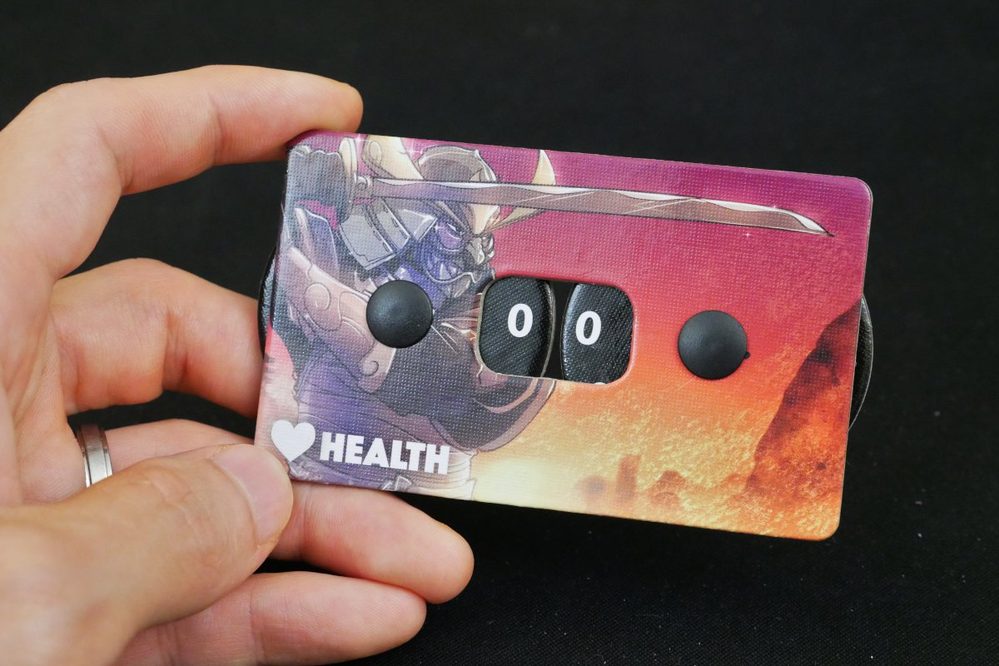
I love the custom dice, the use of spinners for tracking health and Combat Points, the reasonable box size. It's obvious how much thought went into every aspect of the game, and the end result is just a breeze to play.
The Bottom Line
Dice Throne is the ultimate "battle Yahtzee" game, a strong blend of dice-chucking mayhem and strategic card play. But it plays slower than you might expect, and you'll need a steady partner who won't mind the upfront learning curve. If you want a tense 1v1 game that takes about an hour and doesn't apologize for its luckiness, I've yet to play a better fit. But if you're expecting a low-commitment game you can pull out on a whim, don't bother.