My first game of Spirits of the Wild: Awakening was a letdown. I'd come into it with cautious optimism, excited about its tactical Action Tiles mechanism and hoping it would rekindle my interest in open drafting. Plus, I'm always on the lookout for quick-and-punchy two-player games to enjoy with my wife on a casual weeknight. This one seemed to fit the bill.
Why was that first game a bummer? Because the ending snuck up on me—I'd drawn two Spirit Stones at once, triggering the end-game much earlier than anticipated. But after several more plays, the rhythm of the whole thing started to make more sense. Spirits of the Wild: Awakening is unpredictable, and optimizing your actions within that unpredictability is the fun. The more I play it, the more I like it and the more I want to come back to it.
This review is based on my own personal copy of Spirits of the Wild: Awakening, which I bought new from Amazon. Not a free review copy.
Table of Contents
View more
What It Is
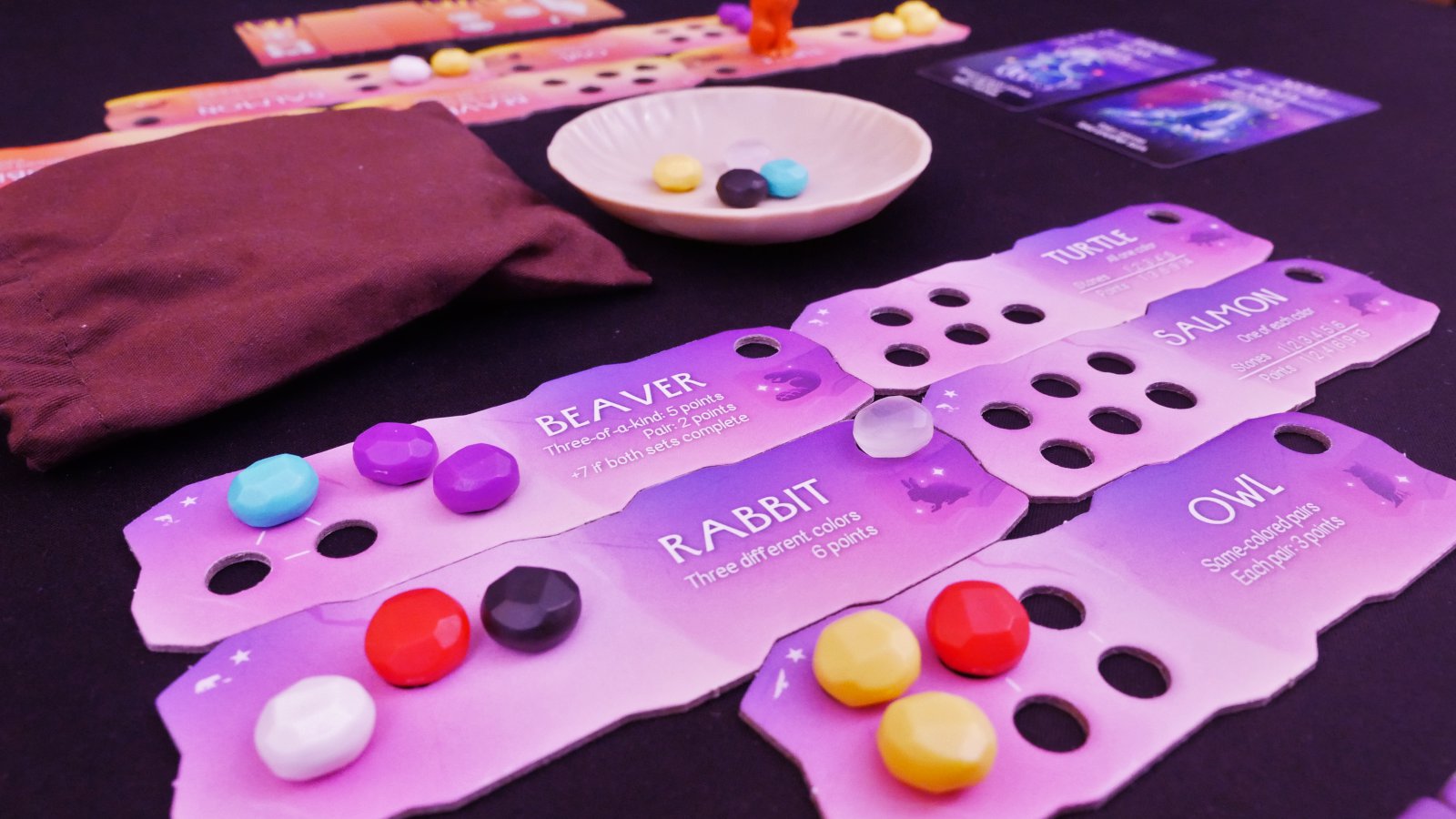
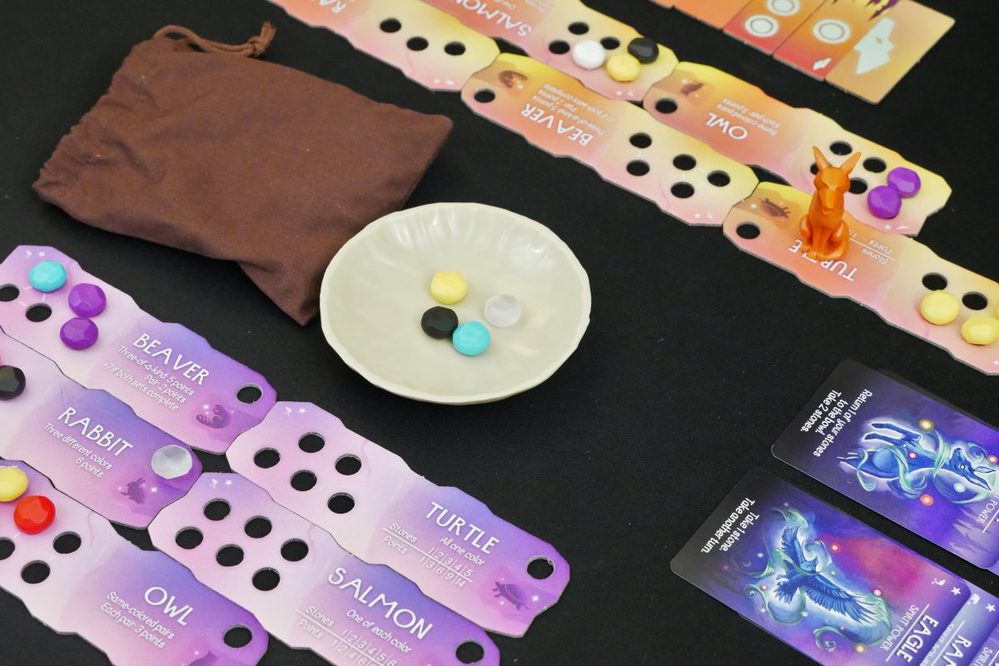
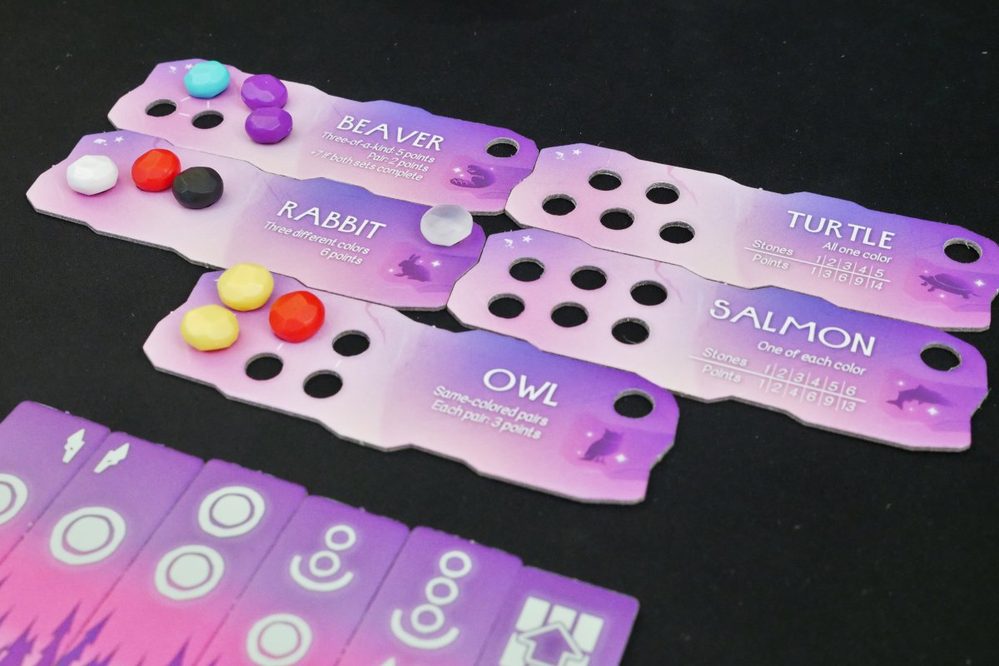
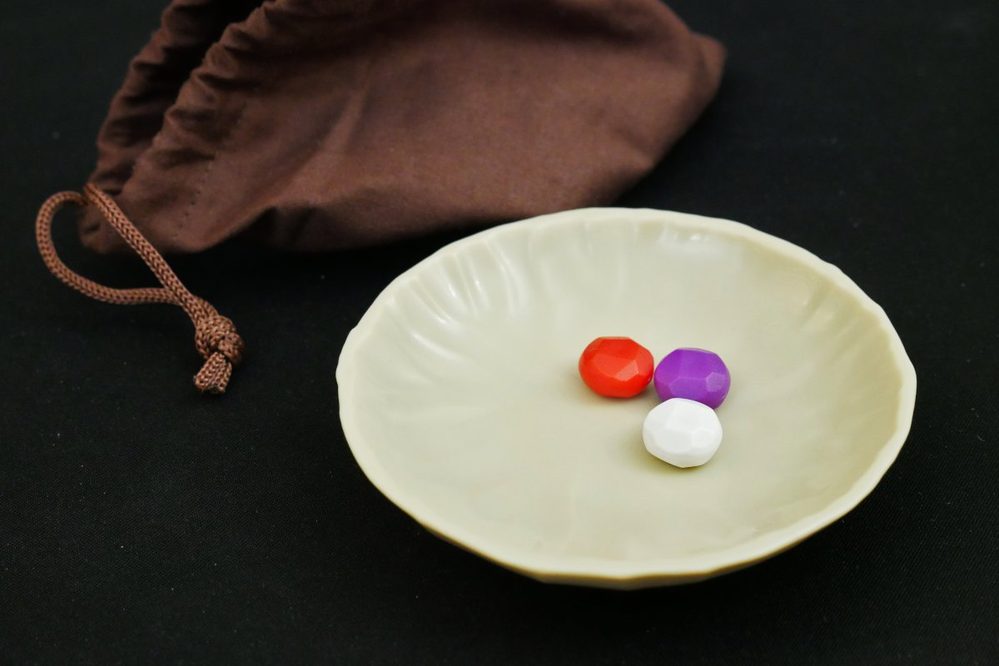
Spirits of the Wild: Awakening is an open drafting set collection game for two players. If you've played Azul or Harmonies, this one will feel familiar—except it has its own identity. You'll take turns drafting colored stones from a central bowl, and your goal is to fulfill the different scoring criteria of your five Animals, which are each satisfied by different sets of stones and colors.
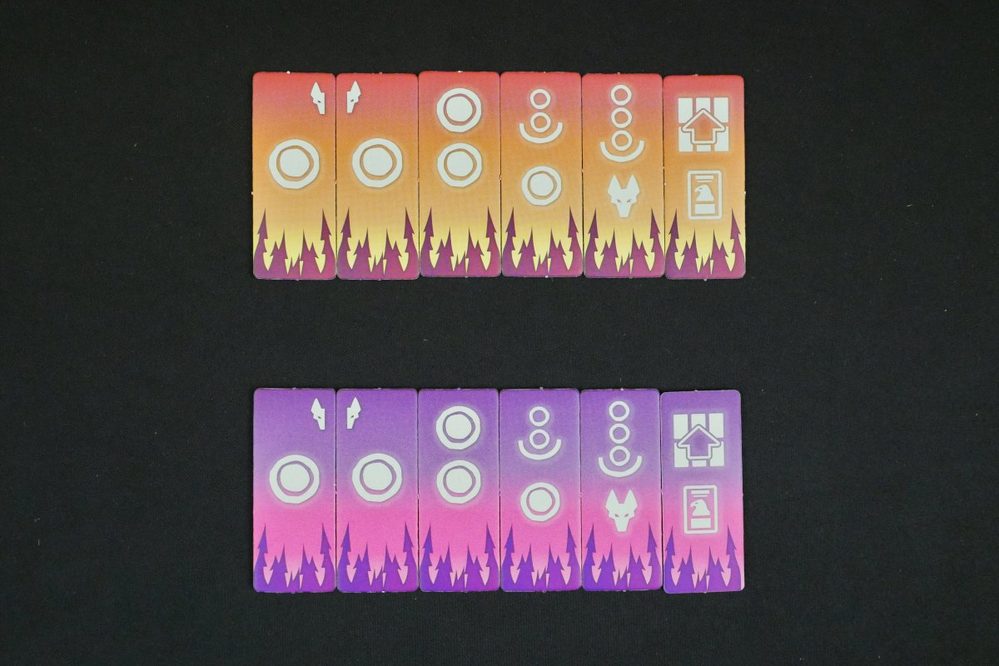
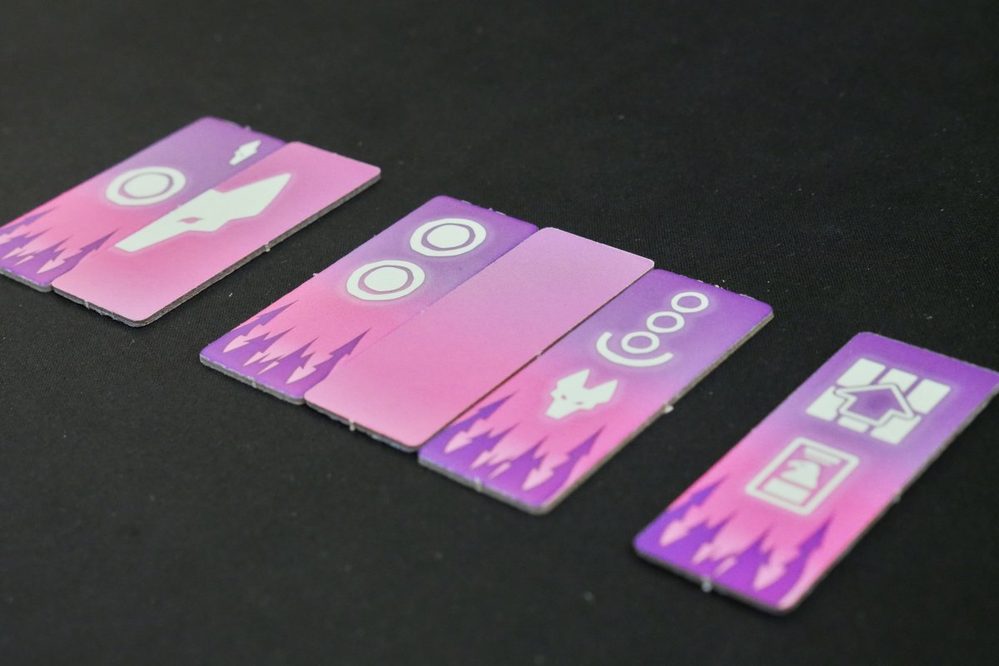
Each player has the same set of six Action Tiles, with each Action Tile dictating what you can do on a turn: take one stone from the bowl, or take two stones from the bowl, or add more stones to the bowl from the bag, etc. When an Action Tile is used, it's flipped over—and you can only recover spent Action Tiles using the "Recover Tiles" Action Tile. On a turn, all you do is spend one of your Action Tiles to take that action.
Each player has the same exact set of Action Tiles.
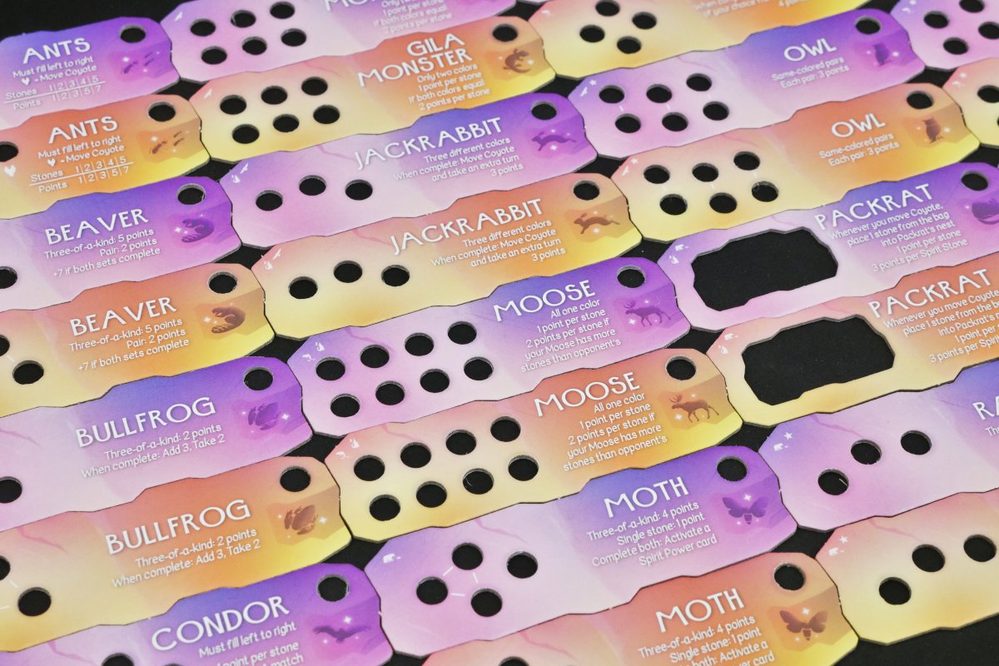
Each player also has the same set of five Animals. By drafting stones from the bowl to an Animal, you'll earn points—and you may also trigger special abilities with some Animals. Stones come in 6 colors (White, Yellow, Blue, Purple, Red, Black) plus a 7th Clear color for the special Spirit Stones. When you draft a Spirit Stone to an Animal, it doubles that Animal's end-game score but also prevents you from placing any more stones on that Animal.
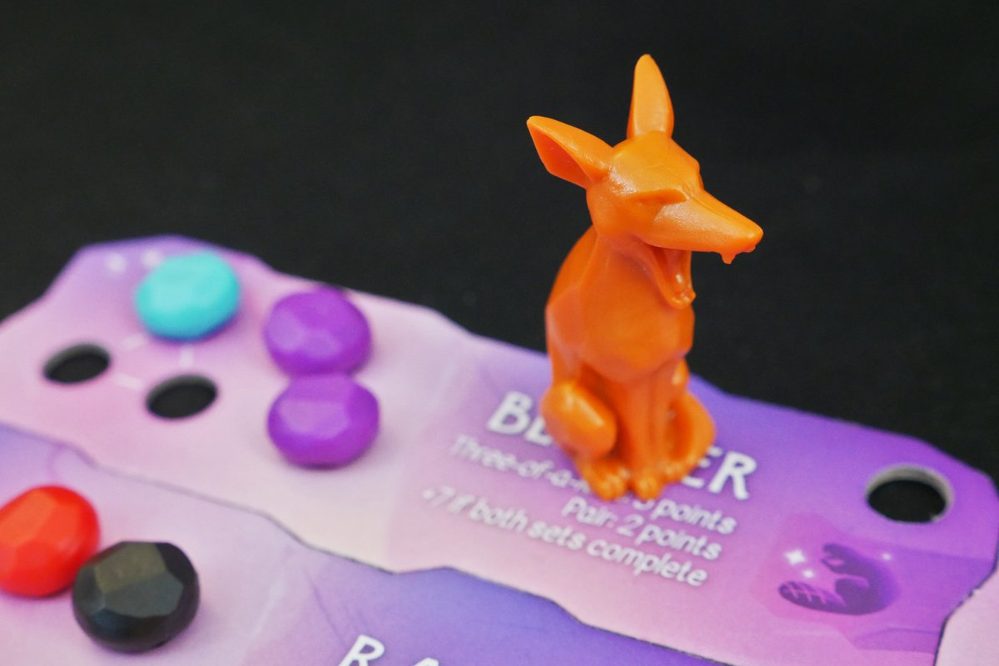
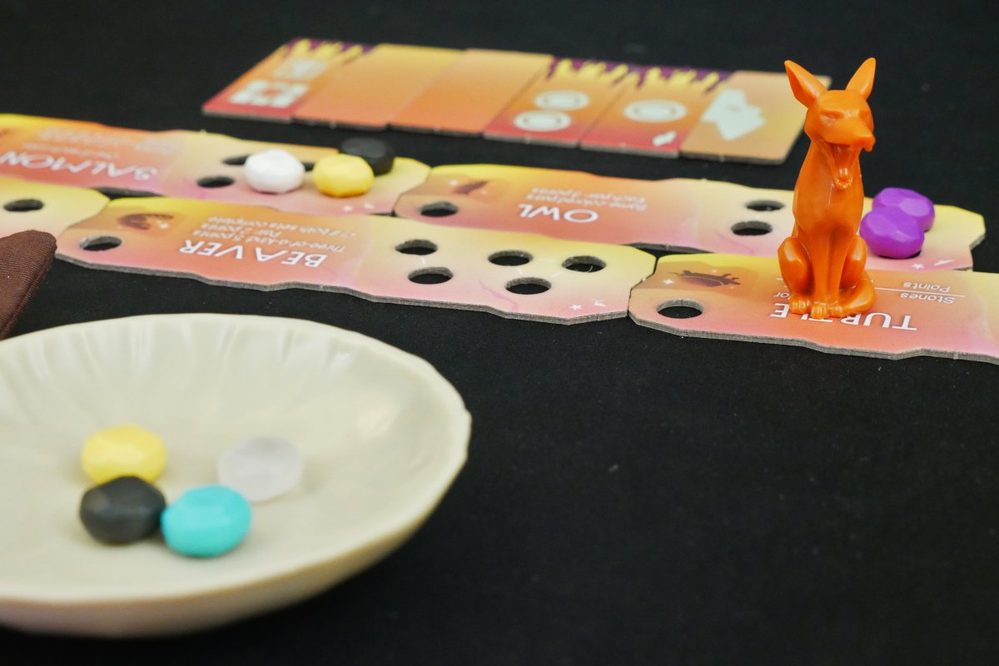
There's also the Coyote, which is mainly activated in two ways: either with the "Add Three Stones & Move Coyote" Action Tile, or as a bonus side effect after activating both "Take One Stone" Action Tiles. When activated, you send this mischievous figure to one of your opponent's Animals, blocking stone placements on that Animal until the Coyote is moved elsewhere.
The Coyote is blocking me from adding stones to my Beaver.
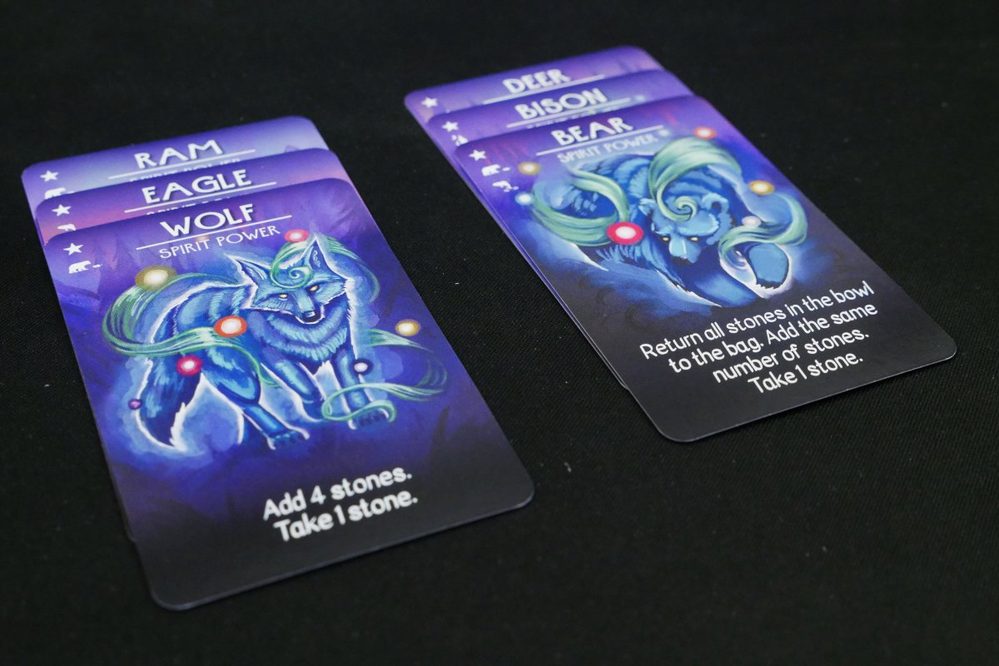
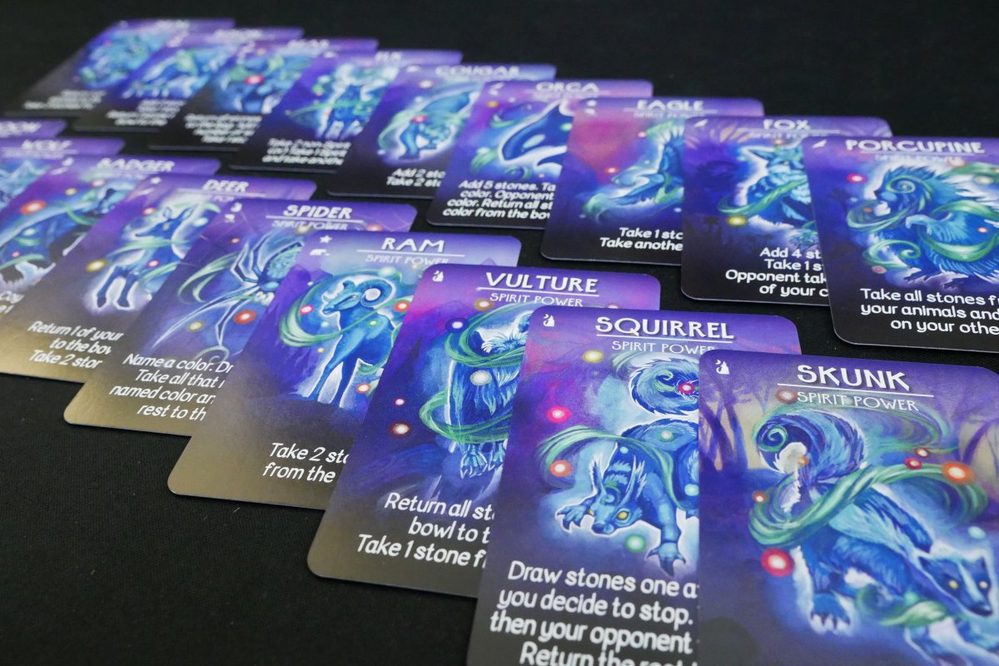
And finally, there are Spirit Power cards, which are publicly available to both players and activated via the "Recover Tiles" Action Tile. A Spirit Power is like a super-action, manipulating the bag, bowl, and stones to a greater degree than the basic Action Tiles. But once activated, a Spirit Power is rotated out to another one, so the ones available are constantly cycled.
You can always choose from two Spirit Power cards.
The game end is triggered when someone pulls a 5th Spirit Stone into play. Whoever did that will finish up their turn, and then both players score their Animals. Whoever has the higher score wins.
How It Feels to Play
Every Turn Is a Weighed Decision
The Action Tile mechanism is what gives Spirits of the Wild: Awakening its simple-yet-deep decisions. Every tile is a pro/con exercise, and figuring out when to use a particular Action Tile and how that Action Tile affects the bowl state is the puzzle. Too many poorly timed Action Tiles will see you fall behind and lose out on crucial stone-drafting moments.
For example, the "Take One Stone" Action Tile is the most basic one. It lets you take one stone from the bowl, which isn't a lot to gain. But you have two separate "Take One Stone" Action Tiles, and when both are spent, you get to move the Coyote. Meanwhile, you also have an "Add Three Stones & Move Coyote" Action Tile, which lets you move the Coyote in a single turn but adds a bunch of stones to the bowl that your opponent can now draft. Every action feels like progress but also puts you in a more vulnerable position, and that tension makes every decision feel important.
But the most important Action Tile is "Recover Tiles," which flips all of your spent Action Tiles back up to unspent... and also lets you activate a Spirit Power. The Spirit Powers are critical momentum shifters, like the Orca which lets you add five stones from the bag to the bowl, then take all stones of a chosen color. If timed well, you could load up one of your Animals and secure a whole bunch of points in one fell swoop.
The catch? You can only use "Recover Tiles" if you have at least three spent Action Tiles, which means you can only activate Spirit Powers at most once every four turns. When you recover and cycle out a Spirit Power, you might reveal one that you really want to use—and you'll be chewing your nails turn by turn, hoping it's still there when you're able to use it. There's a dual tension here: the uncertainty of when to recover and activate a Spirit Power, and the risk of revealing a Spirit Power that your opponent will have first dibs on.
Exploiting Tempo Is What Sets It Apart
What I like about Spirits of the Wild: Awakening is that while you're both focused on the central bowl of stones, you're both playing at different cadences. It's not a zero-sum tug-of-war, which is what many two-player skirmishes end up being and what I expected going in. It's not a back-and-forth until someone finally yanks hard enough over the line. It's more interesting than that.
Every Action Tile has its own tempo. "Take One Stone" is slow and methodical, while "Add Two Stones & Take One" is a bit faster, "Add Three Stones & Move Coyote" is even more of a shift, and "Recover Tiles" is like a deep breath that resets your action economy. The order in which you play your six Action Tiles determines your flow, and every cycle is like a sentence—some terse, some flowery, all spoken as part of a larger argument.
When your opponent burns their "Take Two Stones" Action Tile, they've created a tempo gap that you can exploit. Now you can "Add Three Stones & Move Coyote" with less concern, knowing that they can't snatch two great stones right off the bat. Or you can go slow with "Take One Stone," grabbing the last remaining stone in the bowl and forcing them to refill it, all while holding back on your bigger Action Tiles for a bigger opportunity. Or you might "Recover Tiles" and position yourself for a stronger move later, gaining an edge on your opponent who now has fewer Action Tiles at their disposal.
In a genre that's packed with games that think balance means forcing players into a shared rhythm, this tempo imbalance is refreshingly compelling.
There's Luck You Can Control, and Luck You Can't
Spirits of the Wild: Awakening is random—or should I say tactical, where randomness dictates which stones show up in the bowl but your tactics determine where those stones end up. For the most part.
You know how many stones of each color remain in the bag, but when you reach inside to pull them out, you have no idea what you're getting. Yet, once those stones go from bag to bowl, you have control over what happens to them. Spirits of the Wild: Awakening is very much about playing the odds, hoping for good pulls, and making the most of what happens. And because you have five Animals to work on, you can always pivot if you're stuck with the wrong stones. You wanted Blue for your Bullfrog but it didn't get drawn? You file that in the back of your mind for later and shift gears, picking the Black stone and starting on your empty Otter instead.
But that same randomness can bite you in the rear in a different way. Since the game ends as soon as a 5th Spirit Stone comes out, the ending can crash down on you out of nowhere. One time, I just needed the Red stone in the bowl to finish my Beaver, and only three Spirit Stones were out so I thought I had time to grab it next turn. But when my opponent used "Add Two Stones & Take One," he drew two Spirit Stones. He grabbed one for himself, doubling his Moose's points, and left me with an unfinished Beaver.
You really have to live in the moment with Spirits of the Wild: Awakening. You can go 10 turns without a single Spirit Stone showing up, or the game can end in just a few turns. That threat is what makes every turn count. Those sudden ends were hard for me to stomach at first, but I appreciate it now—and bad swings don't feel bad because it's so short, lasting just 10 to 20 minutes.
It's Accessible, Breezy, and Cozy
Spirits of the Wild: Awakening is an excellent gateway game for three reasons: minimal learning curve, breezy pacing, and gentle theme that won't scare anyone away. Onboarding is a lot simpler than it looks at first glance. The bag drawing, bowl drafting, Animal scoring, and Action Tiles are all straightforward. The mechanisms are simple and there isn't a lot of text to read—just a bit on the Animal boards, a little bit more on the Spirit Power cards.
Unlike a lot of head-to-head board games, this one isn't a full-blown mental showdown where you have to think five moves ahead to trap your opponent. You're just looking at the bowl, assessing the puzzle, and deciding which Action Tile you're going to use. You don't have a grand strategy to develop and build towards, and your options are limited to whatever Action Tiles you haven't spent yet. You don't have a ton of possibilities to crunch through, and that makes Spirits of the Wild: Awakening so accessible. It's not very thinky, nor is it prone to analysis paralysis. It's snappy, not overwhelming.
And who could hate this theme? Spirit animals, constellations, colorful stones, and a trickster Coyote. Not only is it inoffensive, but dare I say cozy and a bit ethereal. It invites you into its soft, spiritual world in a way that a WW2 skirmish or head-to-head space battle doesn't.
Player Interaction
Spirits of the Wild: Awakening feels a lot like Azul at first blush: you're both drafting from a central pot, and whenever you take something, you're changing the puzzle for your opponent. The bowl is in a constant state of flux, and winning comes down to extracting as much value from it as you can while making it tough for your opponent to do the same.
Yet though you're focused on your own Animal boards, Spirits of the Wild: Awakening succeeds at making sure you pay attention to what your opponent is doing too. You have to know which stones they're interested in, as that'll inform which stones you can safely leave in the bowl. If they need a Yellow to complete their Condor, you better "hate draft" any Yellows that come out. You aren't just in your own little world—you're directly affecting their decisions.
But unlike Azul, Spirits of the Wild: Awakening never feels mean. At best, you put your opponent in a pickle with a tough decision, like when you hate draft that Yellow and leave three other stones they don't need. In Azul, leaving your opponent stuck with bad tiles can cause a lot of damage in the form of negative points—in Spirits of the Wild: Awakening, you can never "force" your opponents into taking anything. The worst you can do is steal a stone from one of their Animals with the Badger or Raccoon Spirit Powers. And if you don't want to play with any such take-that Spirit Powers? You don't have to.
The Coyote mechanism also isn't as mean as I'd expected. Sure, it's annoying when you're working on your Salmon only for your opponent to block it with the Coyote, but you still have other Animals you can work on. You also have enough ways to move the Coyote back to them, whether via your basic Action Tiles or certain Animals/Spirit Powers. It's an inconvenience, not a punishing penalty. When I'm hit with the Coyote, I'm not filled with dread or angst—it's just part of the back-and-forth rhythm, and it keeps the puzzle interesting.
Replayability
Spirits of the Wild: Awakening has a lot going for it in the replayability department. For starters, the turn-by-turn puzzle-solving decision space is engaging without being overwhelming. If you like staring down a new game state every turn and figuring out your best move without seeing too far into the future, then Spirits of the Wild: Awakening delivers in spades.
But it's the Animal boards and Spirit Power cards that lend near-infinite replayability. Every Animal board has a unique scoring design that tangibly changes your approach to stone-drafting, and some even have special abilities (like the Jackrabbit, which gives an extra turn when completed). Meanwhile, each Spirit Power is also a uniquely designed ability that alters the game's rhythm in its own way (like the Bear, which resets the bowl by throwing all stones back into the bag and drawing an equal number of new ones out).
Every Animal board and Spirit Power card is a different cog, and each combination that gets mixed and matched together creates a new machine that cranks at a different pace. Playing with the basic Owl-Rabbit-Beaver-Salmon-Turtle set feels unlike the Ants-Jackrabbit-Moose-Condor-Packrat set. It's not just a new sudoku or crossword puzzle to solve using the same strategies and techniques—it's a new mini-game entirely. And because you can choose any 5 Animals (of 15 total) and any 6 Spirit Powers (of 18 total) per game, there are over 55 million potential combos to explore.
Components and Setup
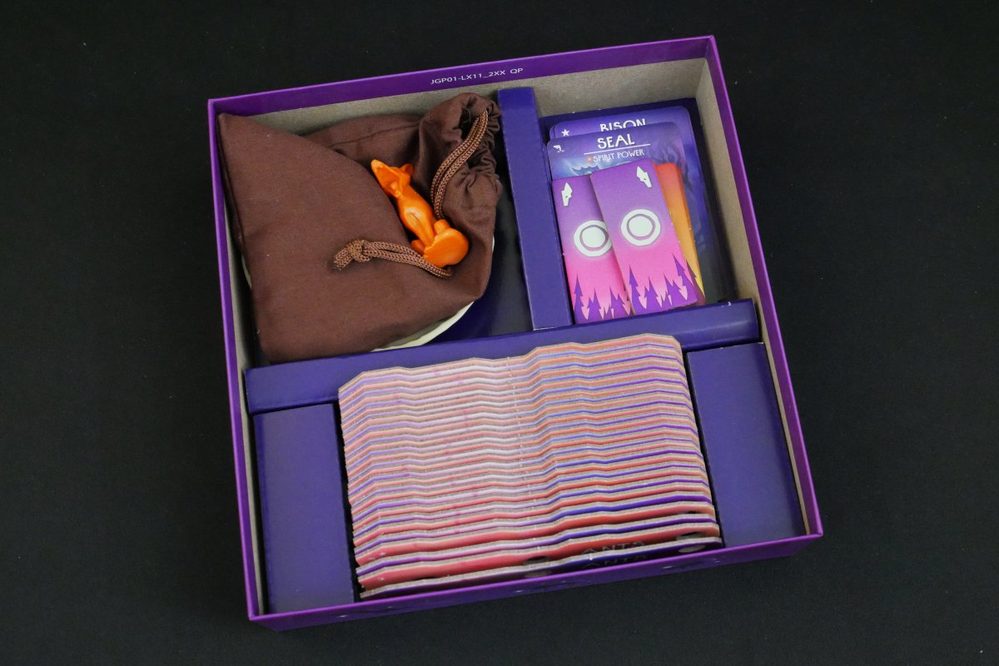
Once you get the box insert sorted, Spirits of the Wild: Awakening is a snap to set up. The insert has clean compartments for everything—and my wife even alphabetized the Animal boards—so it's easy to thumb through, find what you need, and pull it all out for a quick start. It takes 2 minutes max, and it doesn't take up much table space. A 3-by-3-foot table is plenty.
As for the overall experience, it's tactile, memorable, and cozy. The plastic stones are invitingly colorful, the rubbery Coyote figure has presence, and the night-style spirit-infused theme keeps it from feeling too serious. It all feels thoughtful and well-made without being excessive.
But there are two minor flaws I have to mention. First, while the stone bag is soft and pleasing to the touch, it's quite small. I don't have big hands, but even I struggle to pick stones out of it—I can barely fit my thumb and two fingers in there. Second, while the rulebook is clean in its teach, the multi-fold one-big-sheet format is a pain to flip through when you want to reference the Animal and Spirit Power clarification pages. And given how much you'll be referencing those elements, I do wish it was easier to flip through.
Neither flaw is anything more than an inconvenience, but they stand out because the rest of it is close to flawless.
The Bottom Line
At $22, Spirits of the Wild: Awakening is a no-brainer. It's not a deep game, but it isn't trying to be; it's just a series of satisfying tactical decisions. This two-player stone-drafting game teaches easily, plays fast, doesn't overstay its welcome, and offers near-infinite replayability with variable setups that actually impact the decision space. If you want an interactive two-player game that's neither mean nor mentally taxing, this one's hard to beat.