Stop Buying Games You'll Regret
Avoid buyer's remorse with my downloadable 8-question checklist—free when you subscribe to my newsletter.
One monthly email with my latest reviews and articles. No spam, ever. Unsubscribe in one click.


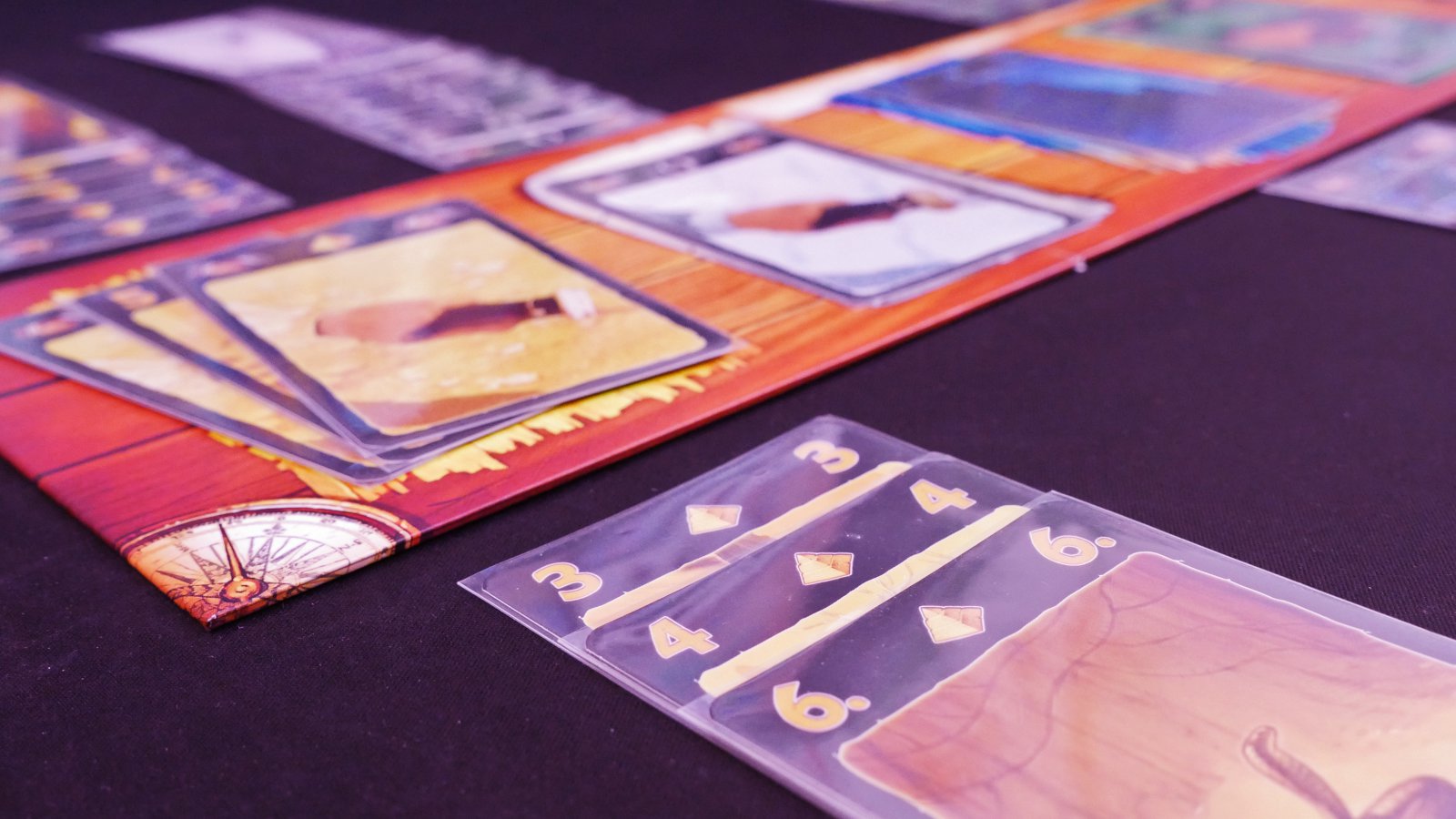
Plain on paper, suffocating to play. My wife and I are still hooked on this small two-player card game even after dozens of plays.
Game Info
Upsides
Downsides
"Where the heck is the Yellow 6?" I ask, sighing at what I've drawn instead. My wife's lips curl, unable to hide her smirk—she's definitely holding onto it. Fine, I guess it's time to move on. I play the Yellow 7... then a few turns later I draw that cursed Yellow 6, but it's useless now.
In Lost Cities, you'll make mistakes and won't realize it until it's too late. Even though it's just a deck of numbered cards, it makes me grit my teeth every time. And that's only scratching the surface of why my wife and I keep coming back to this deceptively simple card game.
This review is based on my own personal copy of Lost Cities, which I got in a math trade on BoardGameGeek. Not a free review copy.
Lost Cities is a two-player head-to-head card game of wits, nerve, and daring. Played with a single deck of 60 cards divided into 5 colors, you'll be managing a tight hand and building a tableau of cards in front of you. The more cards of each color you collect, the more points you'll earn—but be careful because collecting too few of a color will hurt you.
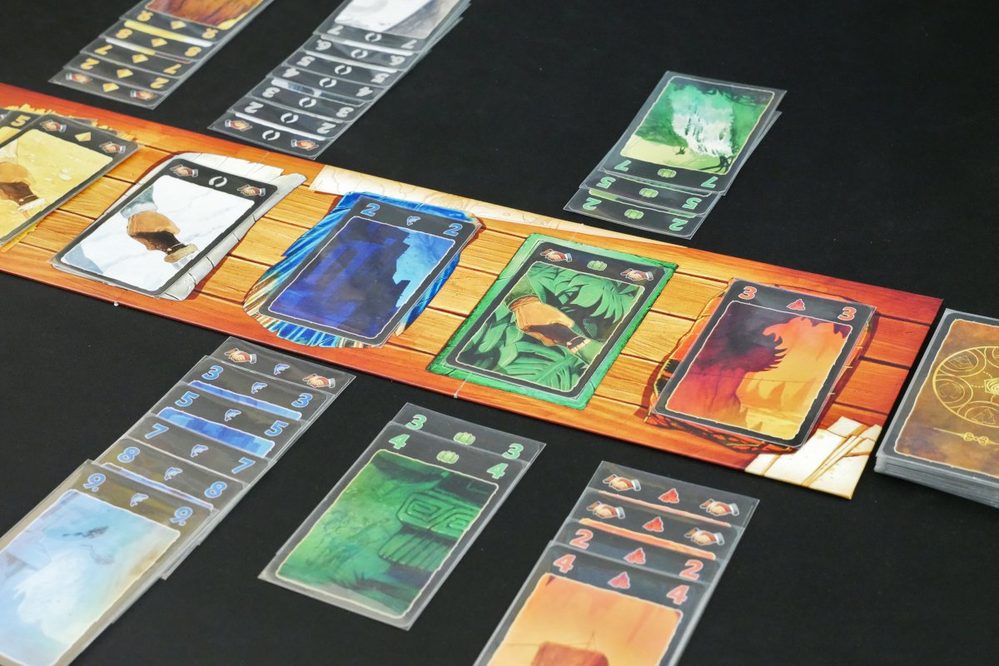
You start with a hand of 8 cards. On a turn, you play a card and draw a card, which means you'll always have 8 cards in hand. Playing a card means adding to one of the five color columns in your tableau or discarding into the face-up discard pile for that color. Drawing a card means top-decking the draw pile or taking the top card from any of the discard piles. You take turns building out your own tableaus while the discard piles are shared.
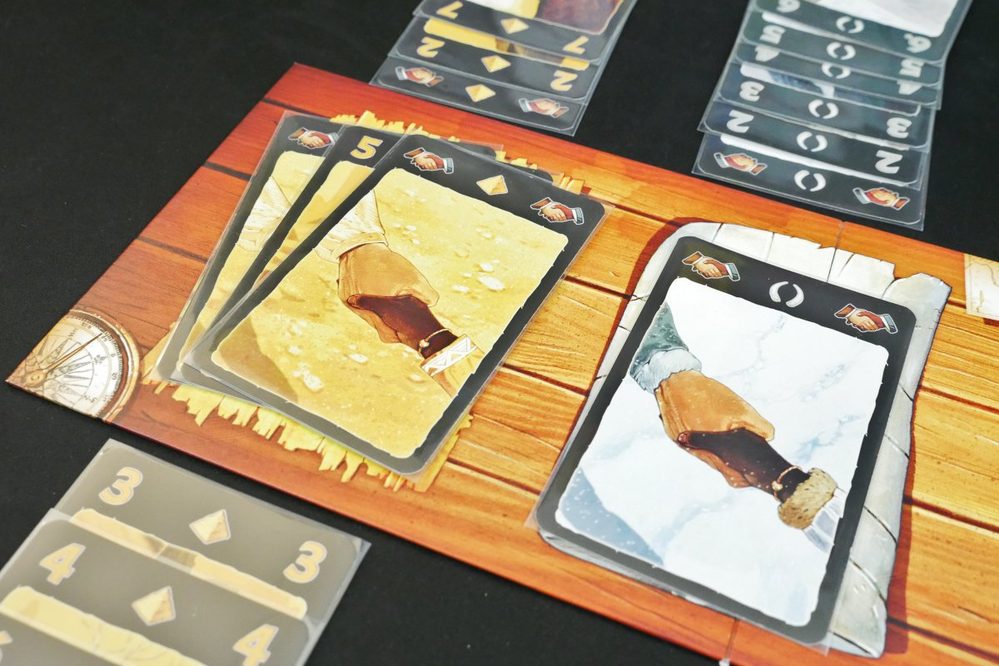
Where Lost Cities gets interesting is in its placement rule. Each color has cards numbered 2 through 10. When playing to a column, you can only play a higher value card than what was last played. If you play a Green 5, you can no longer play the 2, 3, or 4 Greens—only Green 6 and higher going forward. And since every card is worth its value in points at the end, skipping values means missing out on potential points. Meanwhile, if you can build a column to 8+ cards, you'll nab a 20-point bonus, incentivizing bigger columns.
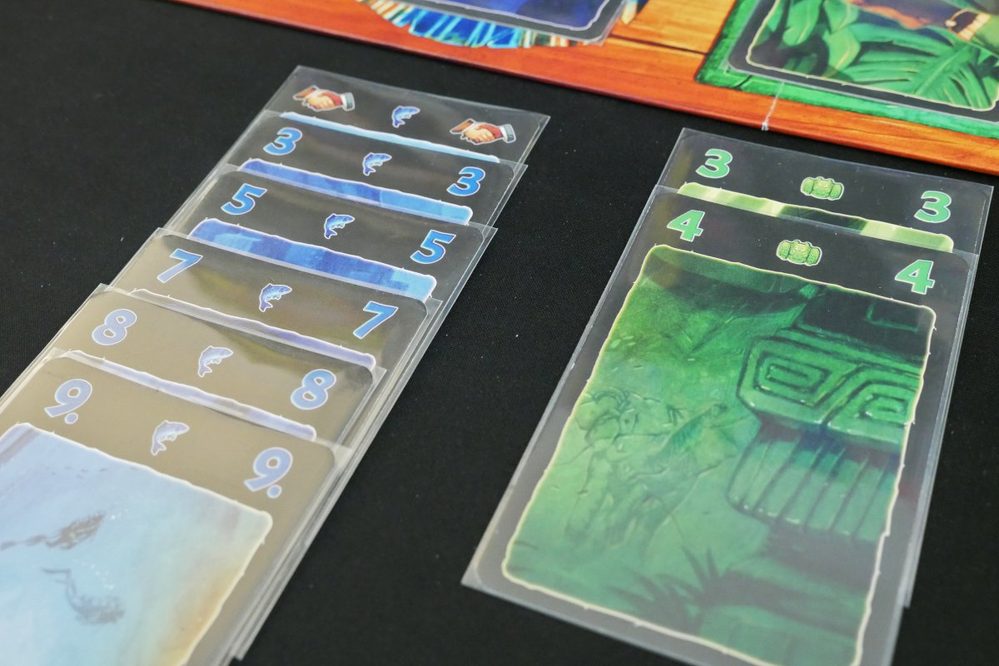
Lost Cities gets even more interesting with this next rule: every time you start a color, you incur a -20 point penalty. That means you need to accrue at least 20 points with a color before it starts earning you a positive score. But if you never start a color, you won't get penalized for that color.
And there's one final twist that makes it bonkers: you'll find three Wager cards in each color. A Wager card will double the score for that color, but Wager cards can only be played before number cards. Wager cards can also be stacked, so two Wagers will triple your score and three Wagers will quadruple. But as soon as you play a numbered Red, for example, you can no longer add Red Wagers to that column. If your score in a color ends up negative, Wagers will still multiply, turning a small loss into a big one.
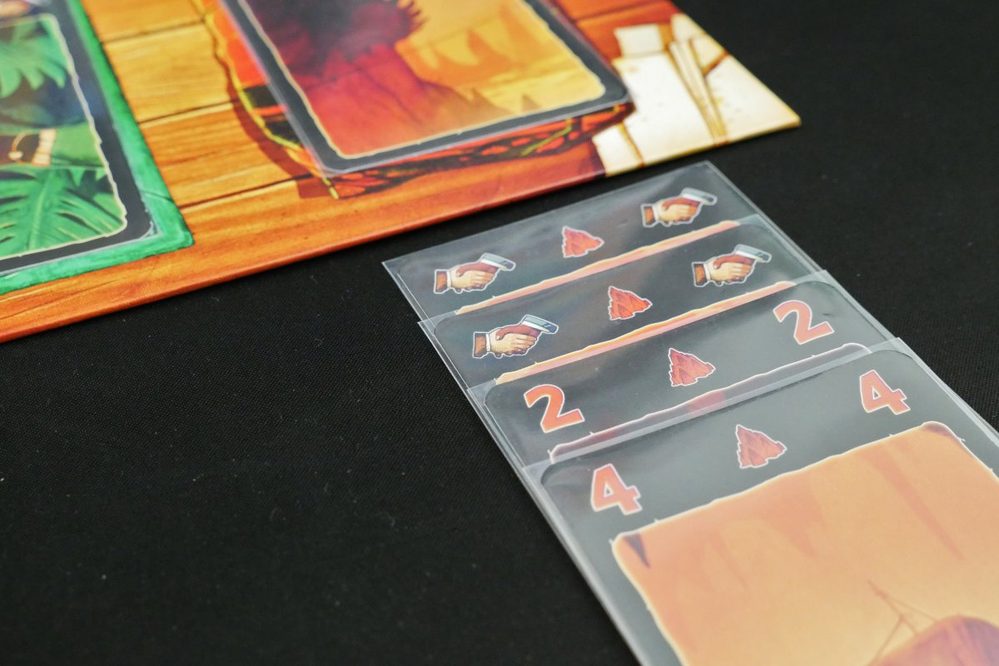
The moment the draw pile is depleted, the game ends and you both tally up your scores. If you want to play the short game, you can end it here with the higher score winning. For a full game, you play three rounds, sum up your scores across all three, and then determine the winner.
Lost Cities is a game of commitments and timing. It punishes you for locking in too early and for waiting too long, and the hard part is knowing which mistake you're making in the moment.
The tough decisions start from turn one. Obviously low cards are great at the beginning, but you don't necessarily want to play that Yellow 3 from the get-go. It might lock you into Yellows too soon, putting you into that -20 point hole before knowing if you'll draw any of the higher value Yellows. Or maybe you want to wait for a Yellow Wager or two first, multiplying whatever big Yellows come your way. Or even wait for the Yellow 2, giving you one more card toward unlocking that juicy 8-card bonus.
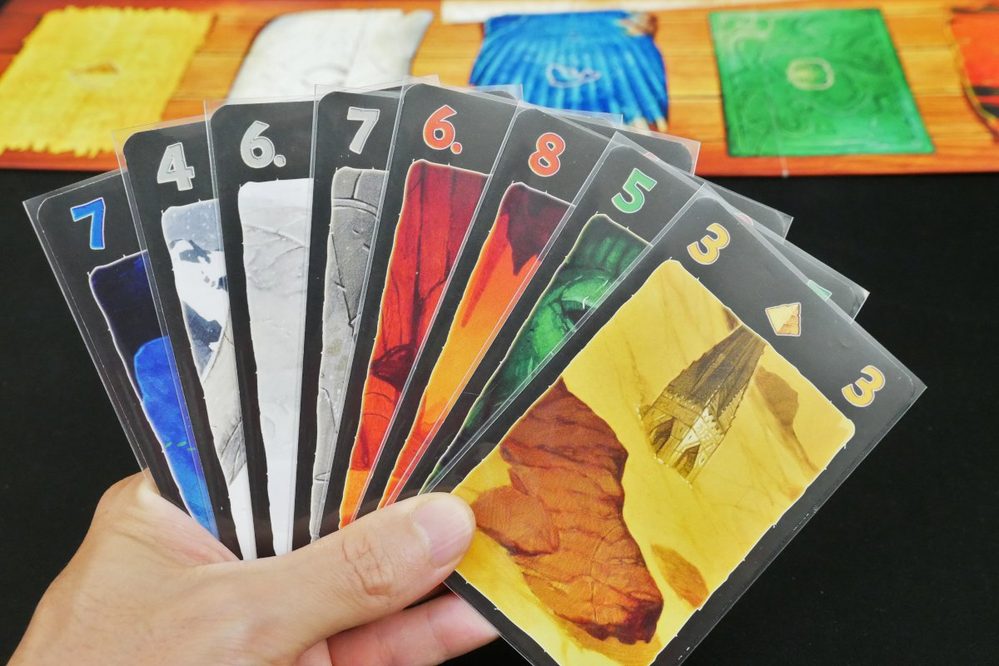
But you also don't want to wait too long before committing to your colors. With a 60-card deck and 8 cards dealt to each player, the draw pile starts with 44 cards. That means you get about 22 turns each to build your tableaus, and you're building your tableau one card per turn. That's not a lot of time to accrue points, more so if you burn tableau-building turns on discards.
Those turns flash by faster than you expect. I've played dozens of times and I still hold onto my cards for way longer than I should. I once had a Blue column with Wager, 2, 3, 5 while holding the Blue 8, 9, 10. I kept fishing for the Blue 6 and 7 to fill that gap but they never came, and by the time I decided to pivot, I realized I only had two turns left. I played the Blue 9 and 10 but missed out on the Blue 8 worth 16 with the Wager in play.
Lost Cities is a game of sacrifices. Your hand of 8 cards will suffocate you from turn one, and that claustrophobic feeling won't go away until the last few turns—and even then it won't feel like relief.
That claustrophobia comes from your hand playing two distinct roles. First, you're holding onto cards that you want to play later, all the while hoping to draw the exact cards you want to play now. Second, you're holding onto cards you don't want but your opponent does.
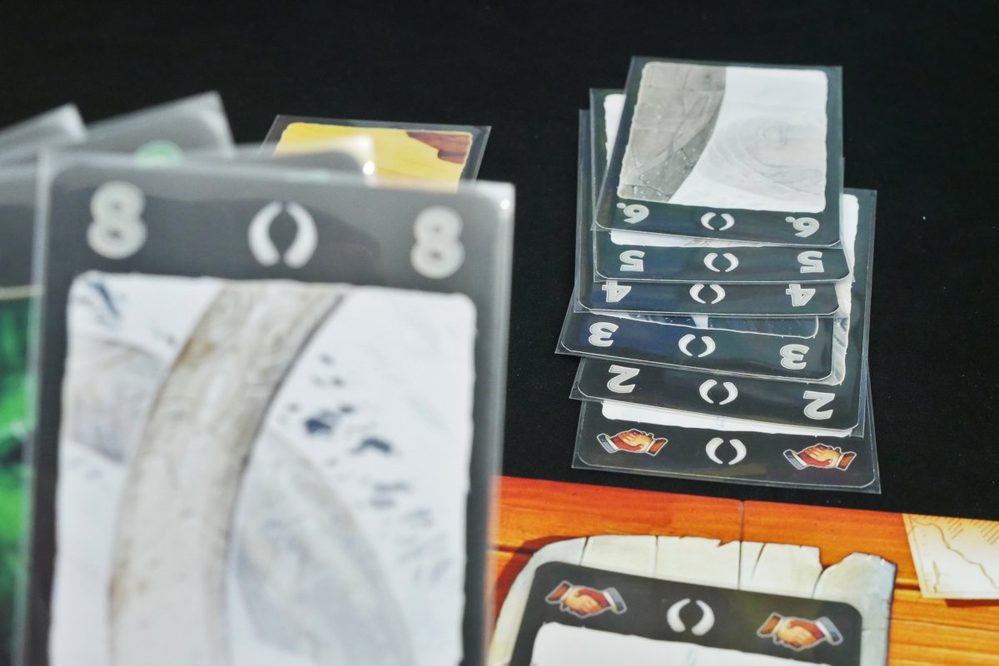
You can't play that White 8 because the round's halfway through and you haven't built up any Whites, meanwhile your opponent has a White Wager, 2, 3, 4, 5, 6. If you discard that White 8, you're handing over 24 points (the double Wagers triple the 8 value).
That double layer of tension pins you down into an impossible position: either clog your hand with cards and effectively shrink your usable hand size, or free up your card slots with detrimental moves. You have to sacrifice either flexibility or points—your only choice is which.
Lost Cities is a game of deduction and memory. Every card is evidence and you're expected to use what you see to work out your best moves.
When your opponent discards a Blue Wager early, you can glean a lot. They could be freeing up their hand and hoping to pick it back up later. More likely it means they're giving up on Blue, probably because they don't have any high Blue cards. Maybe they have high cards in other colors, prompting them to commit in that direction instead. Should you lean into Blue then? It might make sense to snap up that Blue Wager and pivot that way.
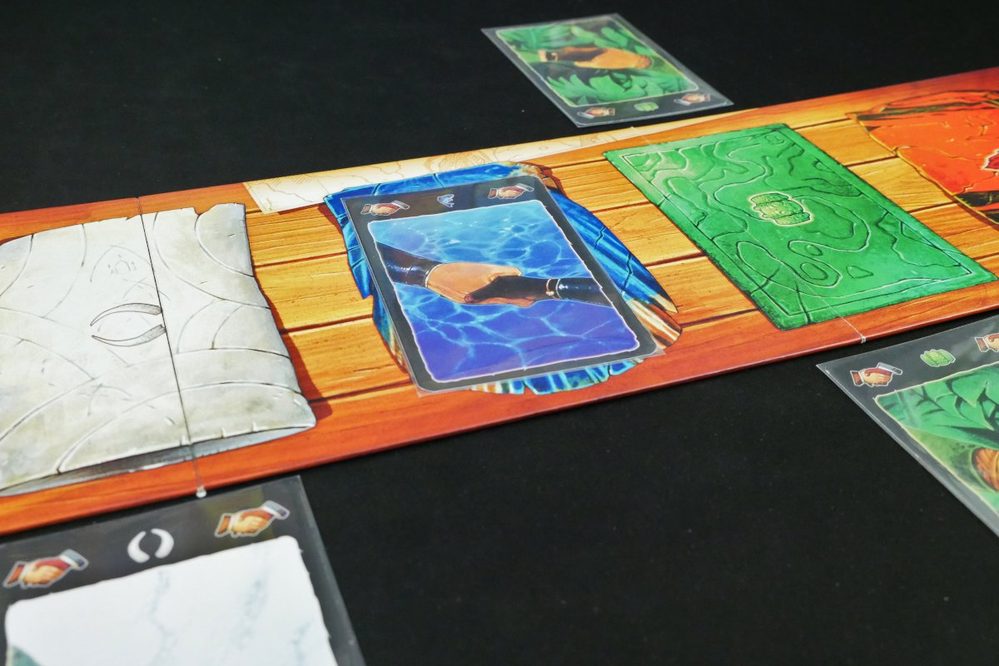
Deduction also plays a role when you're fishing for cards. There's only one copy of every number card, so once you see it, you know it won't show up again. If a card isn't on the table or in your hand, then it's either in the draw pile or your opponent's hand. Could they be sitting on the Red 4 you need to fill that gap before your Red 5? Or is that Red 4 buried in the deck and waiting to be drawn?
Lost Cities has a memory component to it as well. As cards are discarded, they get buried under later discards. If you can remember what was tossed, you'll have more information for sussing out intent. And whenever your opponent draws from a discard pile, that's critical information to retain. If you toss your Red 5 and they scoop it up even though they haven't even started on Reds, you have to assume they're likely sitting on high Reds.
Lost Cities is a game of risk management. A great hand can trap you as badly as a terrible one, and that's part of the fun. Whichever way luck swings, it'll generate some tough decisions for you to overcome.
It's the kind of game where you'll start with a Blue 3 in hand, throw it away on turn one, draw a Blue 5 on turn three, throw that away a few turns later, then draw a Blue 8 and regret having tossed those other Blues. How could you have known? It's the kind of game where you'll start with Green 4, 5, and 6 in hand, hold onto them turn after turn while hoping for Wagers or other lower values before you commit, only for the Greens to never come.
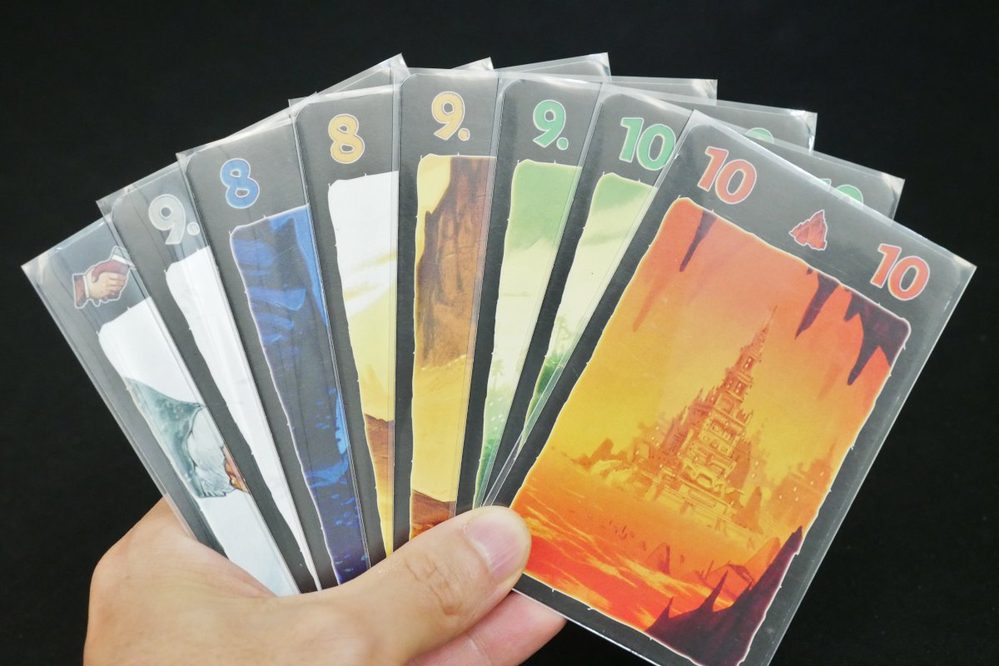
But every instance of luck—whether good or bad—ratchets up the tension and forces you to commit, sacrifice, or play the odds on the draw deck. I once picked up my starting hand and saw 5 different Wagers staring back at me. Which ones do I play and which do I toss? I need to draw more cards before I can decide, but how long do I hold onto them? And once I know which ones I want to toss, when do I do it without giving these free multipliers to my opponent? Meanwhile, starting with no Wagers and all high cards is its own struggle, like when I got dealt two 8s, two 9s, and two 10s. I ended up discarding one of the 8s, but only after minutes of moaning and groaning.
Lost Cities is a game of math. Numbers are everywhere and eventually they come to collect. After 10 minutes of quiet-but-fierce battling over cards, you spend a few more minutes tallying everything up. For each column, you sum up the numbers, then subtract 20, then multiply by any Wagers, then tack on the 8-card bonus. Do that four more times for the other colors. Then do it all two more times for a full three-round game.
A quick little card game shouldn't have this much mental math. Yeah, I can handle it with the calculator on my phone—and I've done that most games—but even then it's still a drag. And I say this as someone whose favorite subject in school was math. I like numbers; I just don't think a game's pacing should be bogged down by homework.
In Lost Cities, you're playing your opponent as much as you're playing the odds, in an indirect yet still confrontational way.
You're constantly inferring what your opponent wants and doesn't want. If you can deduce that they don't want Reds, you can safely discard them and prevent them from clogging up your hand. But if they're steadily building up their Yellow column, then it's imperative that you hold onto that Yellow 9 and deny them. You cannot afford to give it up until they play the Yellow 10, at which point you can let go at last. This kind of denial is the only real way to hurt them—it just so happens to hurt you too, taking up a spot in your hand.
Lost Cities can also take on a race vibe when you and your opponent both end up committing to the same color. There are times when I've laid down a Green Wager only to watch my wife do the exact same thing next turn. We build our Green columns halfway up—2, 6 for me and 3, 4, 5 for her—and now we're both sweating as we fish for the same Green 7. It's enough to make it feel competitive as you scramble over draws and discards.
But it never feels mean. You'll never directly attack each other, and you can't tear down what the other has built. You'll just be eyeing them all game long and doing your best to block and outpace them as much as you can.
It's impressive how replayable Lost Cities is, considering it's just a 60-card deck of numbered cards. No special powers, no variable setup or goals, no asymmetric player roles—and yet it keeps pulling me back. With dozens of plays under my belt, I still don't feel close to exhausting what it offers.
Every round is a new puzzle to solve. The game's "ascending card numbers" design gives real meaning to the shuffled deck. In one game, the Red 7 comes out after you've already played the Red 8, so it's dead; in another, the Red 7 starts in your hand and you cling to it all round long. Evaluating each card's relative usefulness is the puzzle, and that puzzle is fresh every time. You'll never play a perfect game, but the chase is mentally stimulating.
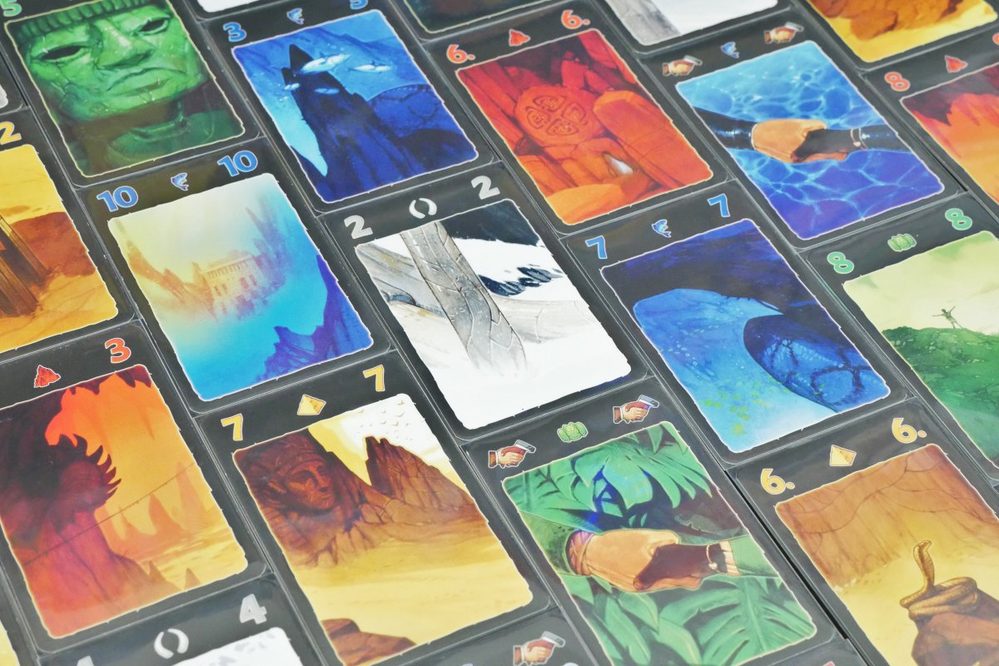
The three-round structure also makes the replayability meaningful. You aren't just shuffling up and playing again in isolation, but each round builds on the tension of the previous one. And it's not best 2 out of 3 games—the scores are summed, so every single point matters. You can be behind after two rounds, play an incredible third, and clinch the win. It's a new arc every time.
I'm good after a full three-round game, but the itch is back the next day. My wife (my stalwart Lost Cities partner) also agrees, and given that she's not as much of a hobbyist as I am, that's about the highest praise it can get.
Lost Cities is exactly what it needs to be for a simple card game: it plays smoothly, sets up in a minute (just a few quick shuffles), and fits comfortably on a 3-by-3-foot table. The numbers, symbols, colors on the cards are all legible, and they stay legible even as you build your columns thanks to the smart top-edge card designs. On the whole, it's well-made.
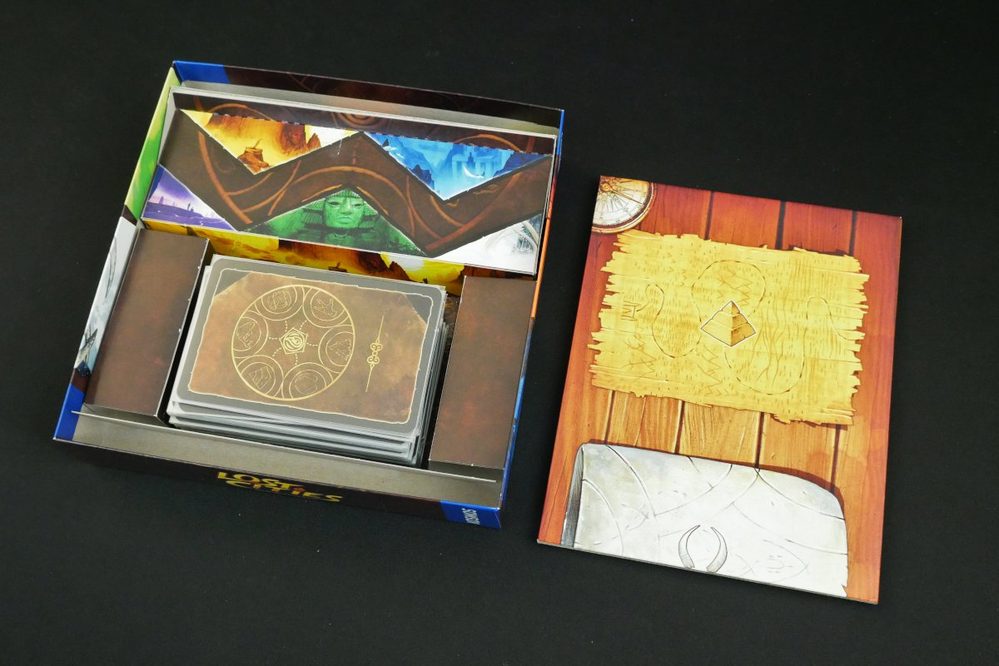
But Lost Cities is also too big for itself. It's inexplicably printed on tarot-sized cards, which is wholly unnecessary because each card only needs to convey three simple details: number, symbol, color. All of them are shown along the top edge, and the rest of the card is wasted space. The large format is awkward to shuffle (especially for smaller hands), and even though it fits on my card table, it still takes up way more space than it ought to.
I'd prefer standard-sized cards in a pocket-sized box instead of the standard 8-by-8-inch box used across the Kosmos 2-player line. I wanted to take Lost Cities with me on a cruise, but it stayed home because it didn't fit in my luggage.
Lost Cities earns its spot on my shelf as one of my favorite two-player card games. It's a game that squeezes you, trapping you into impossible decisions without clear answers. I never feel like I've played a perfect game, and that's why I'm always down to play—to chase that perfect game. Skip it if you need it to fit your pocket or if you hate mathy score calculations; get it if you have a partner and want a tense, quick card game that never turns mean.
Stop Buying Games
You'll Regret
Before your next game purchase, run it through this mental checklist that every seasoned gamer uses.
Free checklist, delivered instantly to your inbox.
No spam, ever. Unsubscribe in one click.
More Reviews