Stop Buying Games You'll Regret
Avoid buyer's remorse with my downloadable 8-question checklist—free when you subscribe to my newsletter.
One monthly email with my latest reviews and articles. No spam, ever. Unsubscribe in one click.


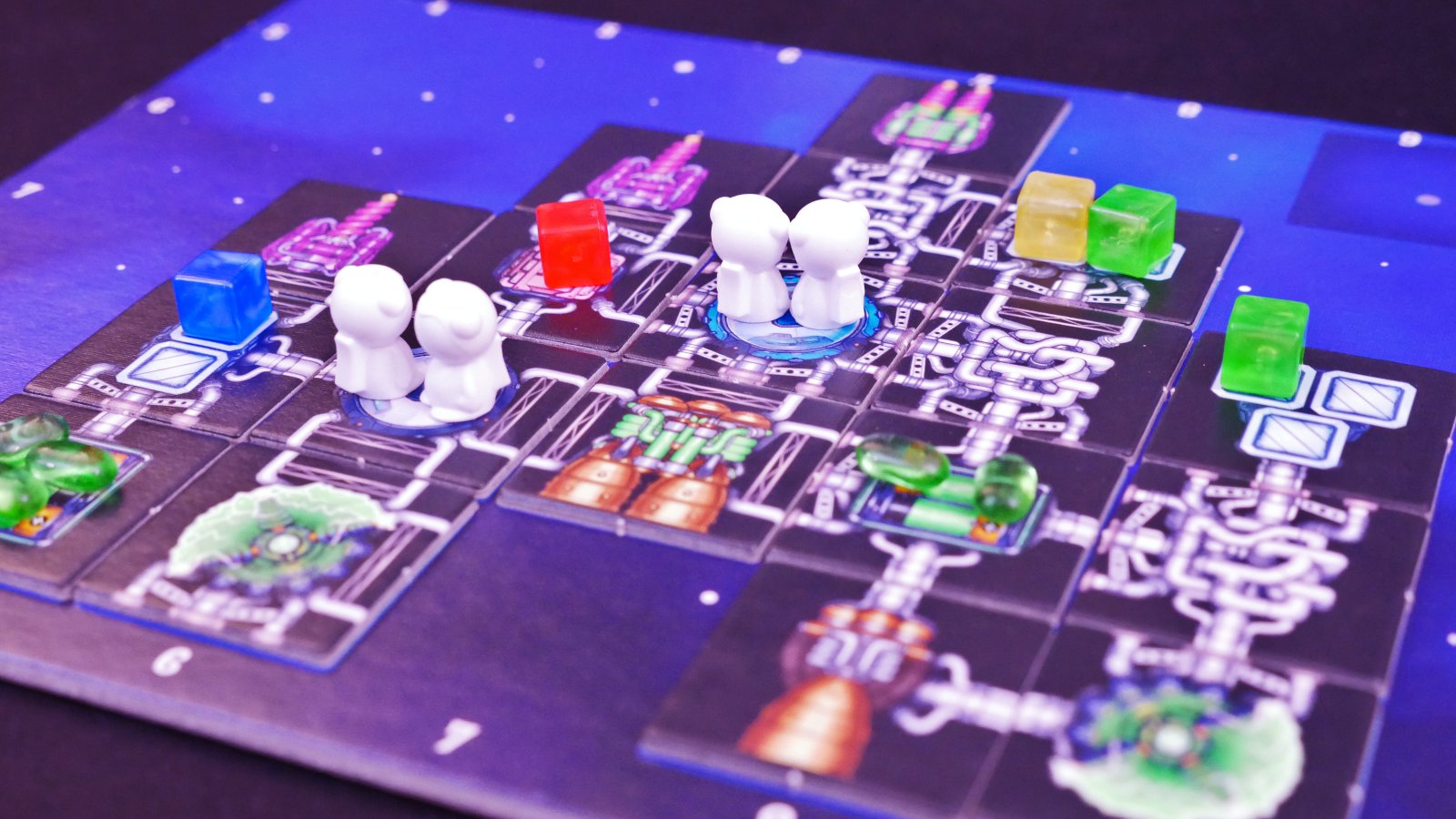
Galaxy Trucker is a party game with a strategy game's bite. You'll build a ship, send it off into space, and watch it fall apart before your eyes.
Game Info
Upsides
Downsides
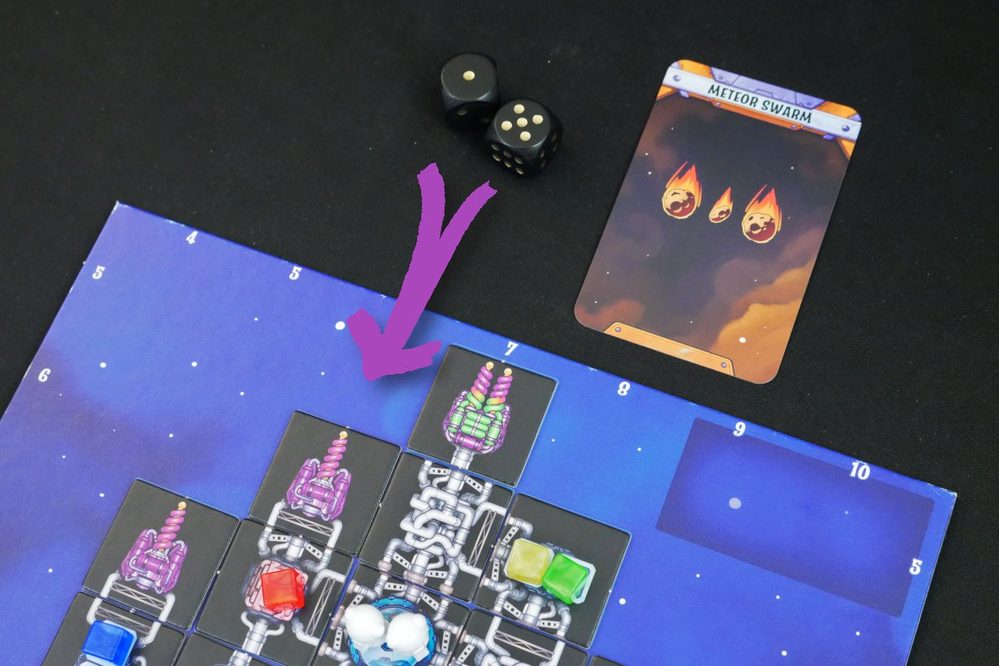
I watched my ship crumble before my eyes. My confidence in what I'd built evaporated as soon as my right-side cannon blew off, exposing a key joint that held everything else together. And when a meteor swooped in and blasted that joint apart, my ship wasn't a ship anymore—it was a floating wreck with a single engine, just enough to keep me going.
But I wasn't devastated. I was amused, entertained, and I bellowed in laughter with every destroyed piece. It's funny how Galaxy Trucker gets you to build and invest in something, only to pummel it down and show you just how poor of a job you actually did. Whether you find that fun, and whether you still appreciate that joke on your tenth play, will depend on your relationship with control, agency, and randomness.
This review is based on my own personal copy of Galaxy Trucker (Second Edition), which I bought new from Many Realms. Not a free review copy.
Galaxy Trucker is a space-faring crisis simulator that's played in two halves: the first half is a real-time tile-laying exercise where you build your ship from parts, the second half is an adventure through an event deck where you respond to situations that arise on your way through space. It's a party game... but not quite. A strategy game... but not quite. It's both and neither.
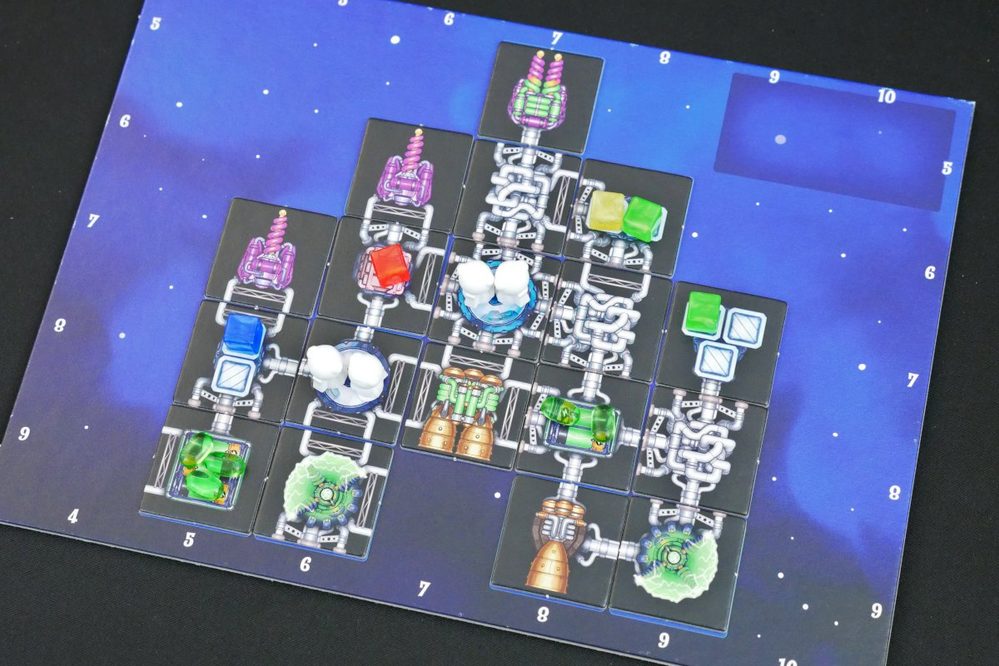
The tile-laying phase is a frantic rush as everyone picks tiles from a central face-down pool, and it's done in real time—everyone at once, under threat of a timer. Picked tiles are added to your ship or tossed face-up back into the pool. Tiles represent ship features: cannons to ward off hostiles, engines to propel through space, crew cabins to man your ship, cargo bays to store loot, shields to block attacks, and batteries to power your ship features. But tiles have different connector edges, which must match for valid placement.
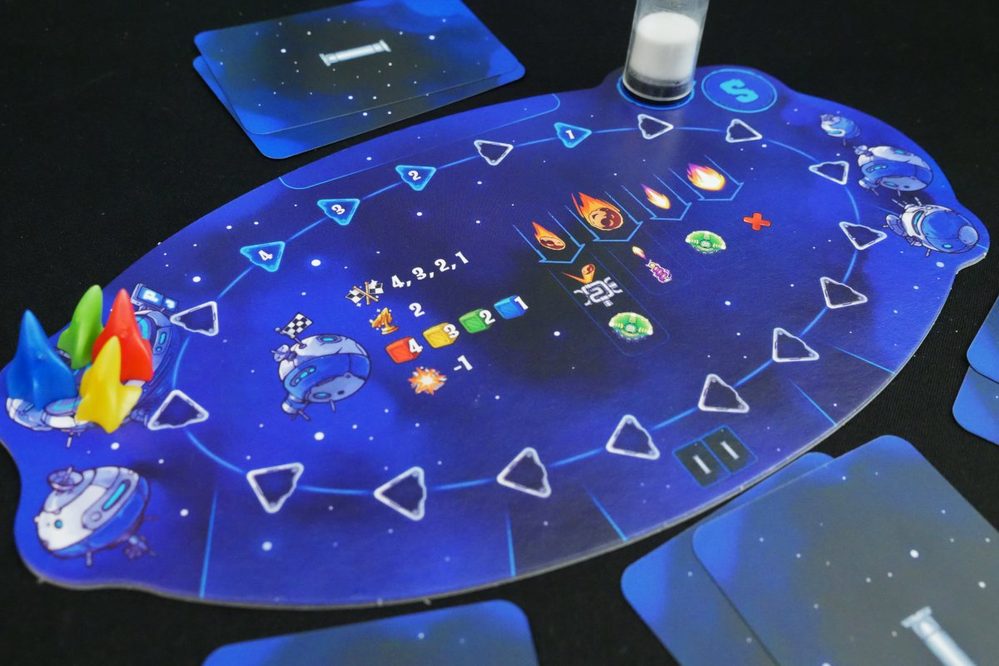
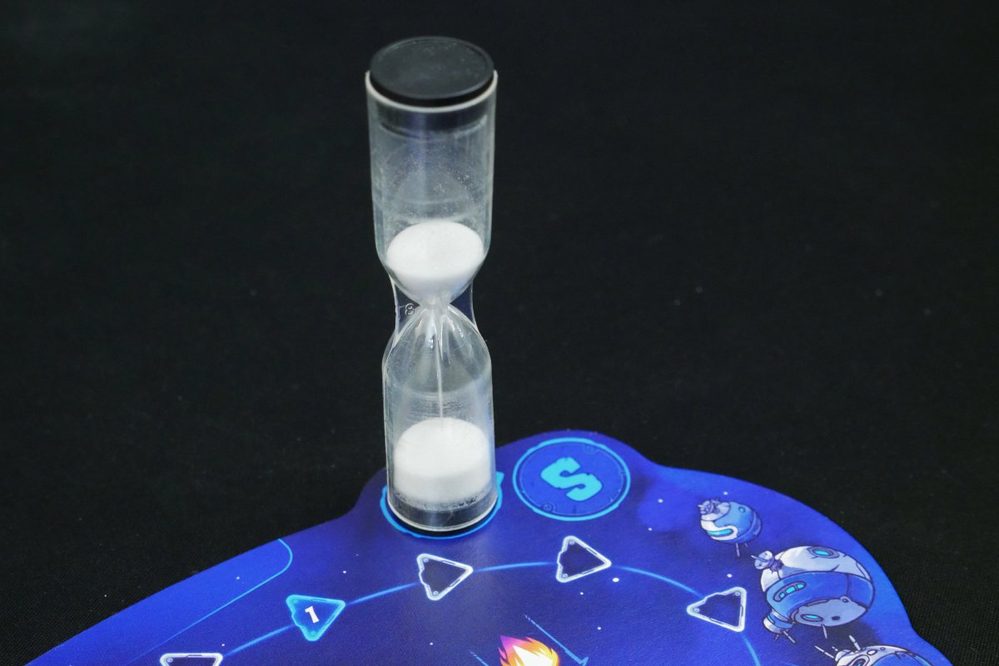
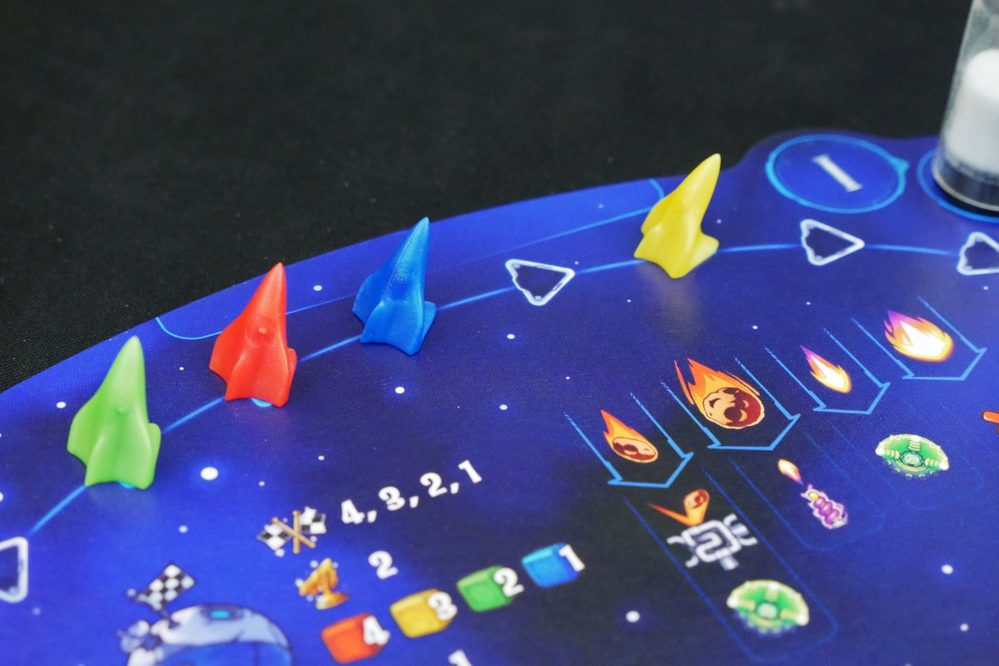
Why build faster rather than smarter? Because the faster you build, the sooner you get to claim a spot on the Flight Board, which determines player turn order. As soon as someone decides they're done building their ship, they flip the final ship-building sand timer and claim the most advantageous spot on the Flight Board. Once that final timer runs out, everyone must cease working on their ships and rush to claim the remaining Flight Board spots.
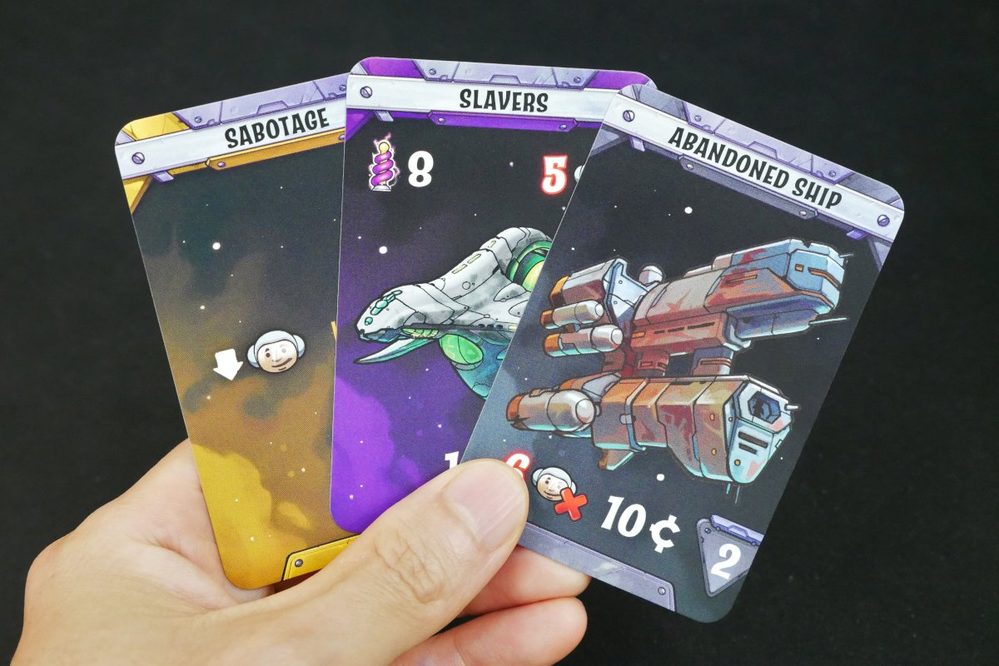
In the adventure phase, everyone journeys through space together using a single randomized event deck. Each flip represents a situation that must be resolved, often in player turn order. Events include meteor swarms that damage and destroy ship tiles, planets where loot can be found, abandoned ships and stations that can only be claimed by one player but offer enticing rewards at a cost, combat zones where players compare their ships, and a handful of other event types to keep you on your toes.
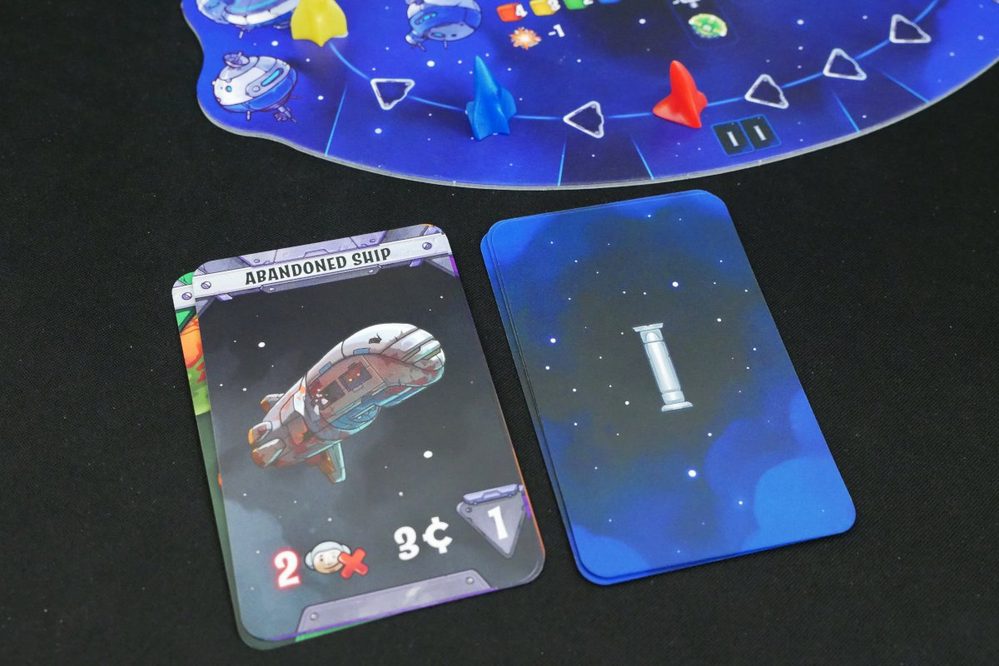
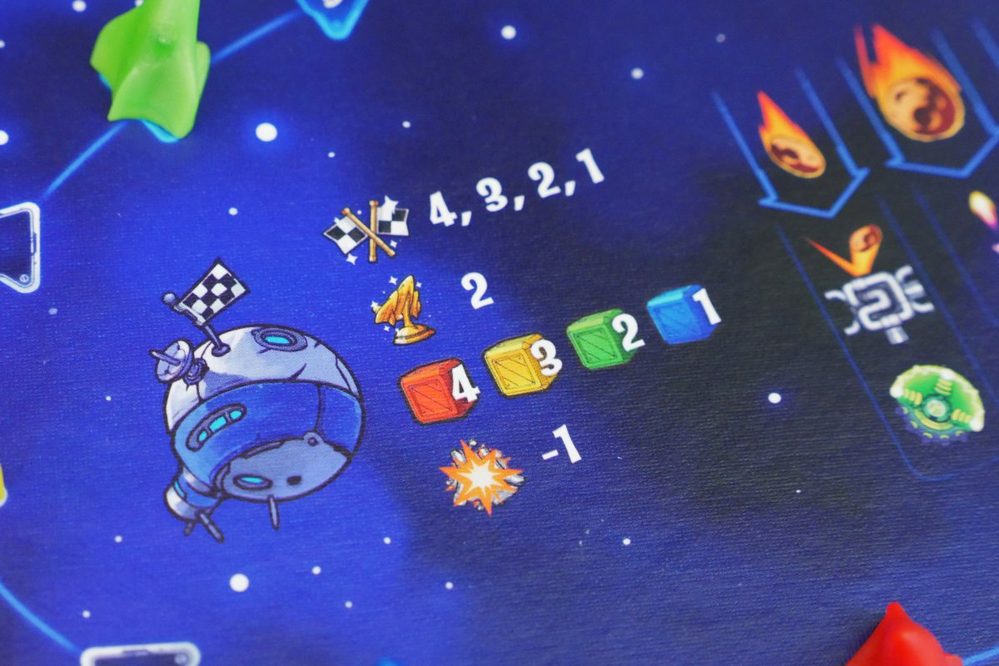
Once the event deck runs out, the adventure ends and players gain final credits (points) for things like their position on the Flight Board, how "beautiful" their ships are (i.e., fewest exposed connector edges), and how much cargo they've held onto. Players also lose credits for every tile that got blown off their ship during the adventure. Whoever has the most credits remaining wins!
Galaxy Trucker asks you to pour all of your decisions into building your ship, then strips most of that agency away once you're in space. It's heavily front-loaded, and even then your best decisions don't always stand up to the destructive power of chaos in space. Don't come to this game expecting the better player to always come out on top. That's not how it works.
Your decisions in the first half will echo throughout the second half. You'll want to keep every single ship tile you draw because every tile does something important for your ship. But you simply can't keep all of them. Your ship might have a bunch of batteries, crew cabins, and cannons, but you still need to flesh it out with engines and cargo bays. Are you going to hunt for those specific features and risk not finishing your ship? Or settle for whatever face-up tiles happen to fit and launch into the second half with an unbalanced design?
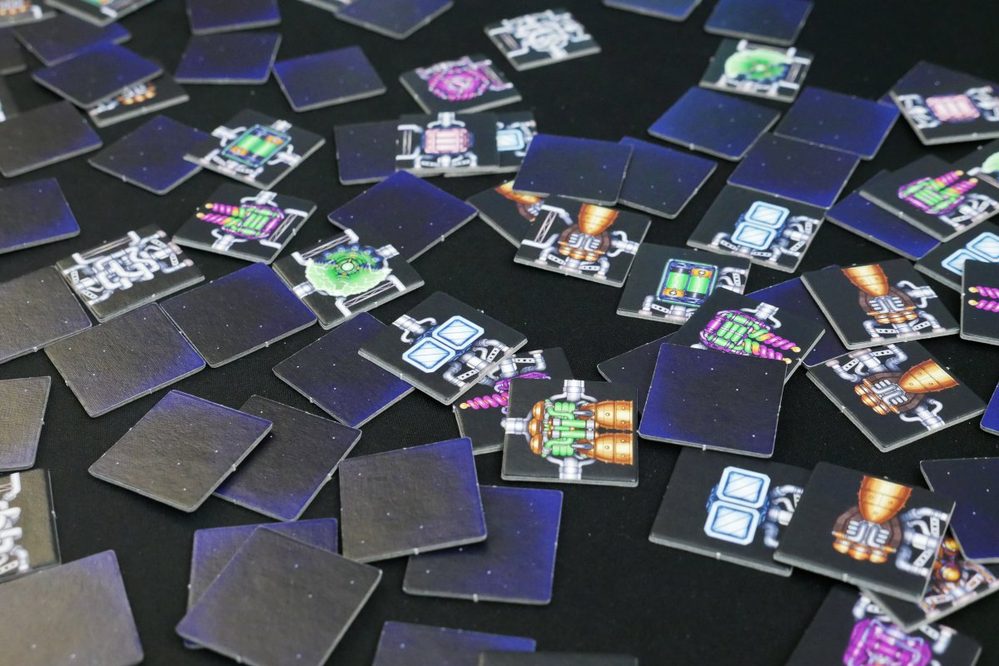
Deciding what to keep and where to place it versus what to throw away isn't easy, and that's the tension. Your success in the adventure phase depends on how well you build your ship—a good ship can still fall apart, but a bad ship will absolutely fall apart. That gives every decision stakes.
Once the ship-building phase ends, your decisions are pretty much over. In the adventure phase, you might occasionally get to choose which planet to mine, or whether to explore the abandoned station that everyone else skipped, or whether to burn battery to power your shields or double cannons/engines. But they're micro-decisions at best. Things happen to you; you aren't really making things happen. Your agency is gone and the rest is a simulation.
The sudden lack of player agency in the adventure phase isn't a bad thing. Normally, a game without agency is a bad game because outcomes are effectively random—you might as well flip coins. But here, your lack of agency in the second half is rooted in your first-half agency. That tension between building a ship fast and well, then sending it off to see how well it survives? That is the game. The latter results are contingent on your former performance, and that's why it works here while failing elsewhere.
Have you ever done an egg drop experiment for school? It's a science project where you build a container for a raw egg using everyday household supplies, then drop it off the roof of the school to see if the egg breaks. Does the challenge of cobbling together a viable container from scraps intrigue you? Are you okay with your egg splatting on the ground? How much schadenfreude do you get from seeing those other eggs explode on impact?
An egg drop would be boring if everyone's eggs survived, and it's the exact same here. If you like egg drops, you'll probably like Galaxy Trucker. Watching your ships fall apart is the climax—that's the fun, and that's what gives meaning to the building phase. My favorite sessions are when my ship gets mangled early on and still manages to limp across the finish line. Not your idea of fun? Then steer clear of Galaxy Trucker.
Galaxy Trucker is more gamery than you might expect from its relatively simple premise. A mad dash to match tiles on a board? Flipping cards and resolving whatever they say? How hard could any of that be? Truth is, it's not "hard" at all—every individual mechanism and component is easy enough to grasp. The trouble comes when it's all put together.
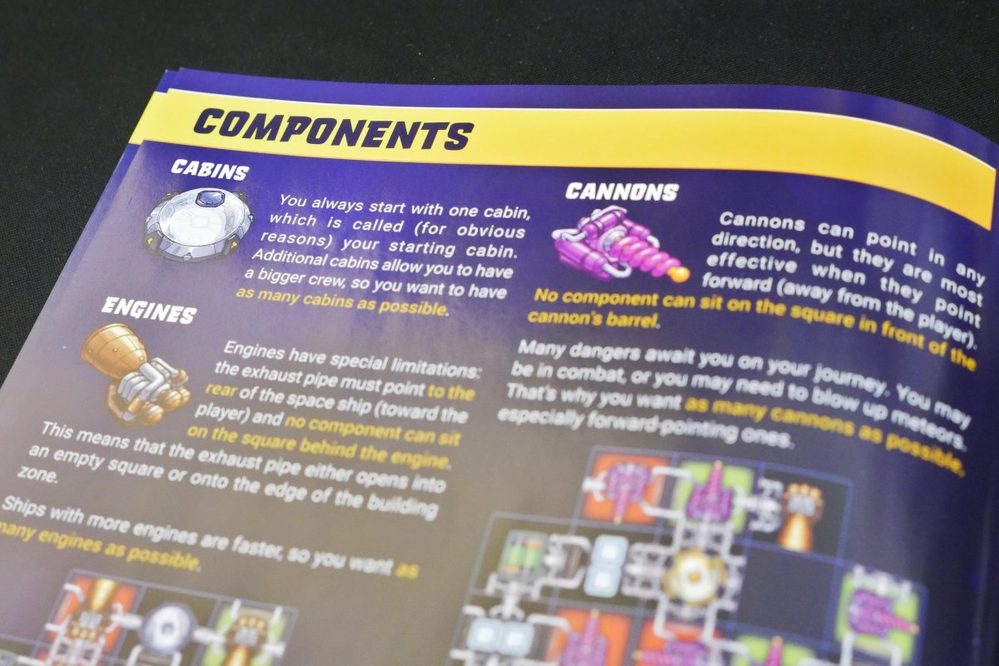
The learning curve of this game is all up front. You have to understand what every ship feature does, why you'd want it, and how to balance it against everything else. You can't start building your ship until you know it all: the seven basic features, plus double cannons/engines, plus red cargo bays, plus alien cabins (which you can play without). My wife is a mid-core gamer and even she struggled to absorb it all on first play.
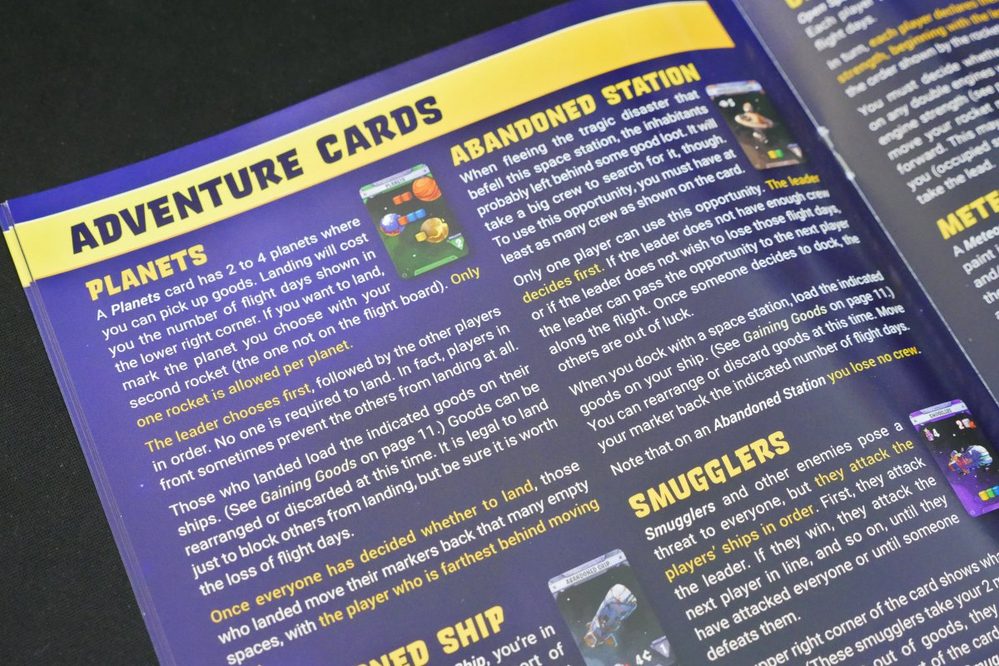
But the adventure phase is where the real complexity hits. There are 10 main event types, with variations within each type, and each event operates differently. Some involve all players while others involve only one. Some resolve in Flight Board turn order while others resolve in reverse order. Some are harmful, others are helpful. Every card has its own logic and the graphic design doesn't always make clear how you're supposed to resolve it. You have to be intimately familiar... or constantly reference the rulebook.
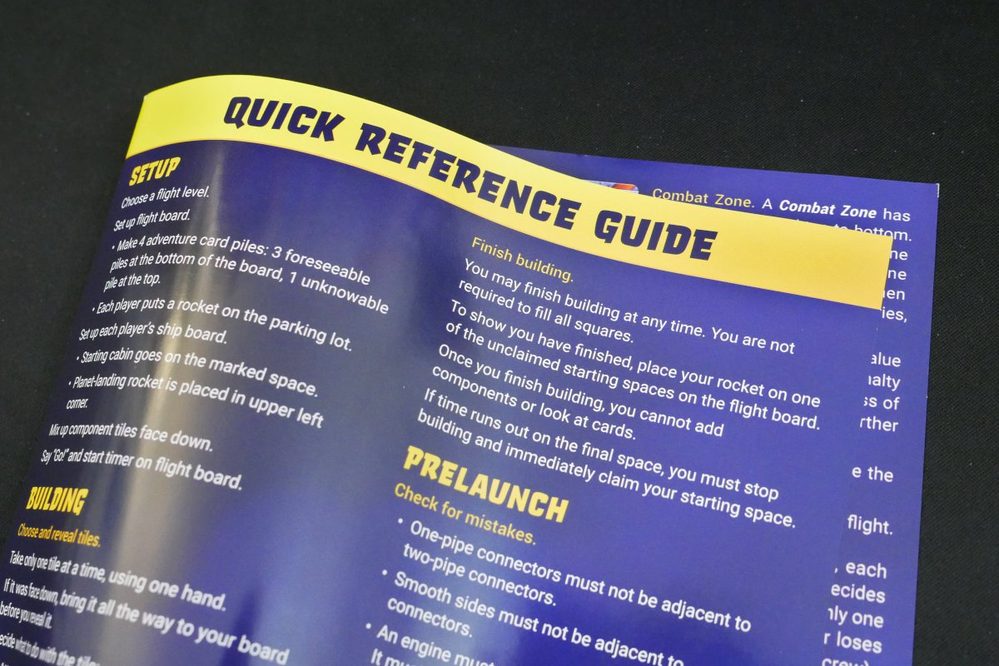
Call them edge cases or situational rules or whatever you want. At the end of the day, Galaxy Trucker is not a streamlined game. You might be able to get away with it if one person acts as game master and guides everyone through, but it's not the kind of game I'd introduce to casuals or non-gamers. It demands more from you than any straight party game ever will.
Player elimination is the one thing that really irks me about Galaxy Trucker. During the adventure phase, you can be knocked out in three ways: you lose all your crew, your ship has no engine power during an open space event, or you get lapped on the Flight Board. When eliminated, you stop playing, miss out on all end-game bonuses, and lose half the value of cargo in your hold.
Player elimination just isn't fun as a mechanism, and Galaxy Trucker doesn't do anything interesting with the idea to make it worth its inclusion. When I sit down to play a game—especially a party-style game—I expect to play through the whole thing. Getting knocked out and watching everyone else continue to have fun while I wait? It's a mood-killer. And it's not like the threat of elimination adds extra tension. The game already gives you enough incentive to survive; elimination is just salt on the wound.
The silver lining is that elimination usually happens later in the phase, so you don't have to wait around too long for it to end. But that's not always the case. One time, a series of unlucky events tore my ship apart by turn 7, and I spent the next 10–15 minutes as a spectator.
Galaxy Trucker has surprisingly little player interaction for such an uber-chaotic game. In the first half, there's virtually zero interaction at all—you can pick up a tile that someone threw away, and you can put time pressure on everyone by finishing your ship early, but that's about it. Your attention is solely on your own ship. You don't care what anyone else is doing.
A little more can happen in the second half, but even then it's mostly indirect. You mainly jockey for position on the Flight Board for turn order. Sometimes you draw a combat zone event, which forces you to compare your ship features against everyone else and penalizes whoever has the least cannon power, engine power, crew on board, etc. You never directly attack anyone, or block, or hinder, or even trade. The only way I can hurt someone is to get ahead of them and snag first dibs on future event decisions.
These "interactions" are the least interesting aspects of the game. I never make decisions based on how they'll affect others—it's always about what's best for me, period. I only care about my ship, and I honestly don't care if you're doing well or lagging behind, at least as far as my own progress is concerned. Everyone is effectively playing solo in parallel, suffering the same events at the same time and seeing who fares best.
Despite that, Galaxy Trucker is still best at its max player count of 4 players. The more, the merrier! Rushing to finish your ship while cutting corners, ribbing each other when faced with tough events, watching everyone's ships get blown apart, amassing as many credits as you can—all of that is more fun with more seats at the table. After all, your ship's result is only as interesting as how it compares to the other ships in the end. Is it still fun at 3p and 2p? Yeah, but you lose out on more of that vital table energy with every missing seat.
Every play of Galaxy Trucker is both different and the same. Your frantic search for tiles will always result in a new composition of parts, so your ship will never be like one you've made before. The event deck is randomized, so you'll never run into the same exact set of crises on any given journey across space. But the feel of building your ship and the feel of traversing hostile space will remain familiar—and that's both a good and bad thing.
Galaxy Trucker is more of an experience than a game. It shines brightly, generating lots of laughter and shared memories, and maybe you follow it up with a second play. But then you put it away. It doesn't deepen with repeat plays, and it's not the kind of game you'll keep replaying throughout an entire session. Most of its entertainment value comes from its chaotic novelty, so that second playthrough of the night is rarely as good as the first, and by the third, you've exhausted what it offers.
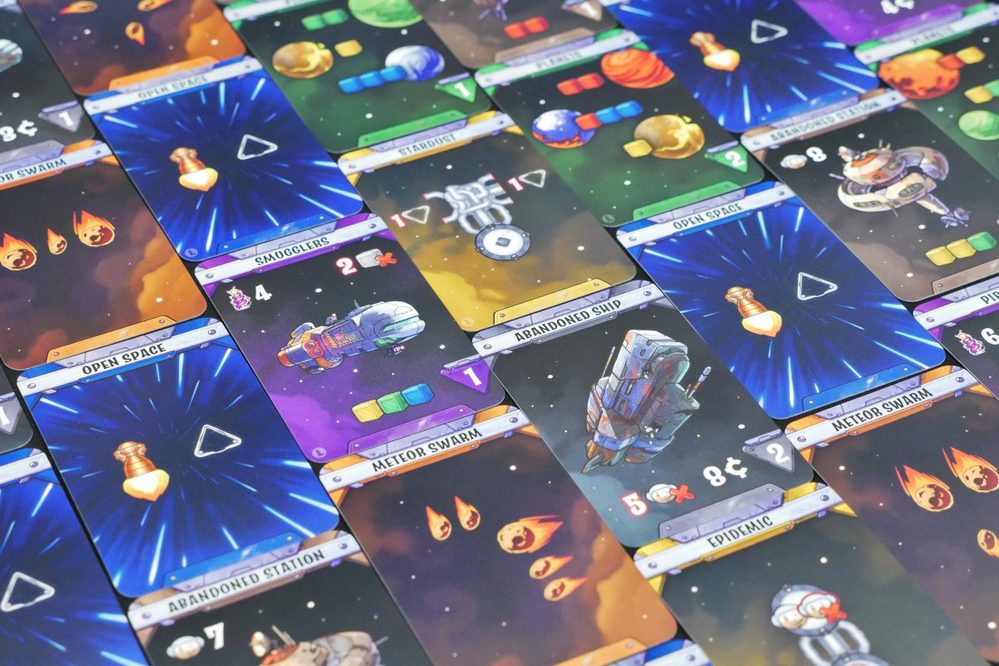
But it's also the kind of experience worth coming back to every once in a while. Maybe once a month, maybe once a year—it depends on your game group's tastes and schedule. Even though I tire of it after two back-to-back plays, even just a week later I find myself itching to play again. The chaotic see-what-happens-to-your-ship gameplay has a pull, and it's the perfect fit for any time you want a high-energy party atmosphere with more strategic meat than your typical rules-light party games like Just One or Telestrations.
Galaxy Trucker is made well. All of the ship tiles are readable, and I like that they're color-coded for easy reference (green = battery, purple = cannons, brown = engines). The various reminders on the Flight Board keep questions to a minimum, and the Quick Reference sheet answers most without needing the full rulebook. The resources each add their own tactility to the game, making it a pleasure to play—you aren't just pushing cubes around.

But it isn't completely flawless. The tiles are thin, so it's sometimes a struggle to flip tiles while building, and it feels a little cheap. My biggest complaint is with the event cards. Not only is it sometimes unclear what a card is asking you to do, none of the cards have indicators as to whether resolution turn order is front-to-back or back-to-front, or whether a card can only be completed by one player or all players. Even after multiple plays, I still have to look those up because the cards don't tell me what I need to know.
As for setup, it takes longer than I'd like for a party-style game—at least 5 minutes if you're fast and organized, 10 if you're leisurely about it. Dumping out all the resources into token trays is tedious, shuffling the event cards and dealing out the adventure deck more so, and flipping all the ship tiles face-down for a wash shuffle is the slowest bit. Once it's all set up, it's almost smooth sailing. Just know that it'll be tight with 3 players on a 3-by-3-foot table; if you're playing with 4, I'd recommend a 4-by-3-foot table at least.
Galaxy Trucker is a game of commitment, where early decisions are unchangeable and have late consequences. You'll feel helpless as your ship heads off into space and gets wrecked by what shows up. If you can let go and accept that destruction is the whole point, you'll have a raucous good time. Just keep in mind that it isn't a true party game—there's a learning curve that'll cause unexpected friction with non-gamers.
Stop Buying Games
You'll Regret
Before your next game purchase, run it through this mental checklist that every seasoned gamer uses.
Free checklist, delivered instantly to your inbox.
No spam, ever. Unsubscribe in one click.
More Reviews