Shelf Gamer Dispatch →One monthly email with my latest reviews and articles. Free guide included if you sign up today.
15 Essential Games for Every Collection
Subscribe to my monthly newsletter and get my downloadable list of excellent starter board games—something for every group, every occasion, every budget.
One monthly email with my latest reviews and articles. No spam, ever. Unsubscribe in one click.
The Best Cooperative Board Games
I've played dozens of cooperative board games over the years. Here are the ones that earned a spot on my shelf—and a few that didn't.
Some links in this article are affiliate links. If you buy through them, I may earn a commission at no extra cost to you.
Cooperative board games deserve space in most collections. They exercise valuable soft skills: speaking up, listening to others, and working together despite obstacles. But cooperation comes in many forms, from real-time shared decision-making to outright silence as you try to read each other's minds. There's also the satisfaction of overcoming a challenge together.
I've selected my favorite cooperative board games below, chosen based on the quality of experience they offer. In this genre, I tend to prefer games that are easy to play, and I gravitate toward logical deduction and word association, so you'll see several of those. But I tried to vary my picks otherwise. I've also included some popular games I don't like in case they fit your own tastes.
Table of Contents
View more
The Keepers
Bomb Busters
Logical deduction, limited communication • 2–5 players • 15–30 min • Moderate
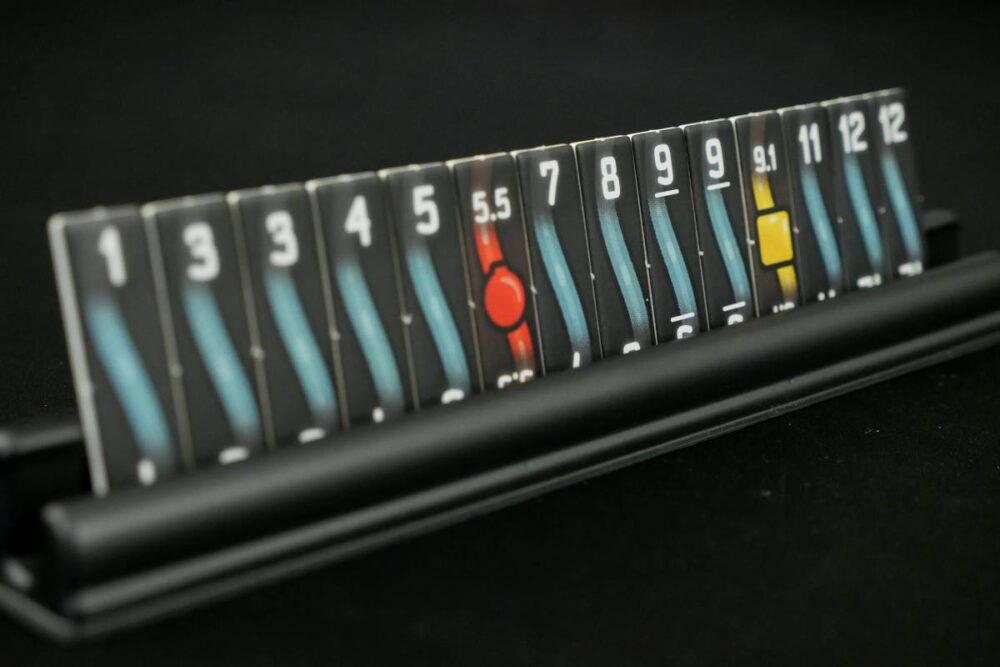
What is it?Bomb Busters is my favorite cooperative deduction game. Every player has a tray of random number tiles, and nobody can talk. In silence, you take turns pointing at tiles—one of your own, one of someone else's—to match numbers. A successful match defuses those tiles, while a failed match ticks down the bomb countdown. Everyone's trays are sorted from low to high, and that sorting is key to deducing what tiles could be where.
Why is it a keeper? I love that Bomb Busters has a 66-mission campaign, with eight training missions plus 58 extra missions that add in gameplay twists. But those missions are just extra content—the last training mission is the "full game" and it's indefinitely replayable. The enjoyment here is in the cooperative deduction, not the variable setups. There's a small bit of luck in the random deal and times you have to intuit rather than deduce, so if you hate deduction games where sometimes you have to guess, it may be frustrating.
Trick-taking, limited communication • 2–5 players • 10–15 min • Simple
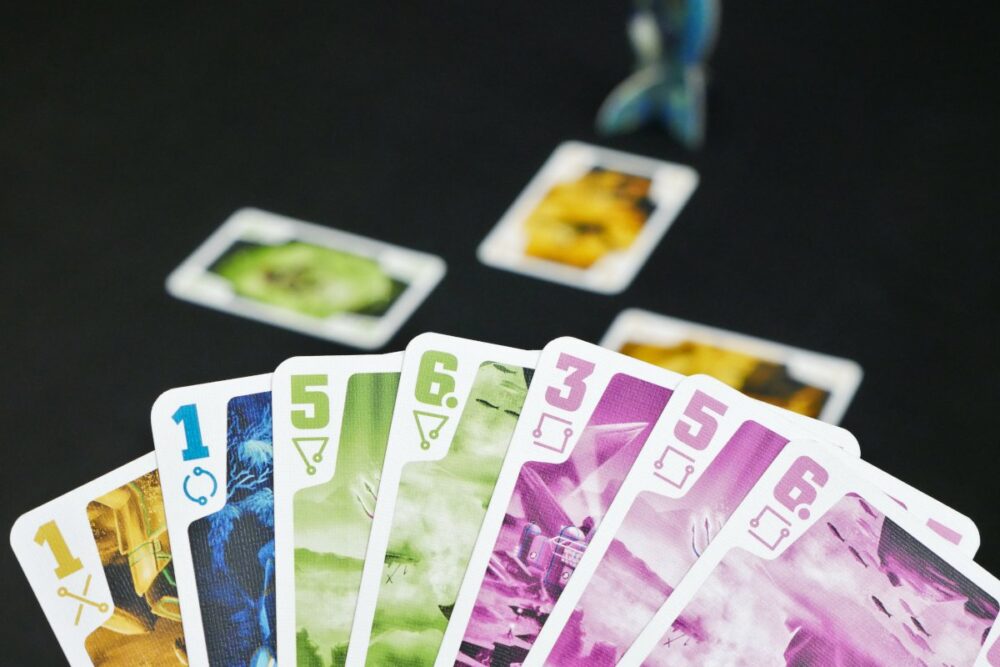
What is it?The Crew: Mission Deep Sea is a cooperative trick-taking game—like hearts, spades, or euchre—where everyone has "tasks" to fulfill. Maybe you want to win a certain green card, or win all the "5" cards, or win no tricks at all. The catch is, nobody can talk. You have to play your hand in a way that fulfills your own tasks while also helping others with theirs.
Why is it a keeper? Whereas Bomb Busters is more of a gamer's game, The Crew: Mission Deep Sea captures much of the same feel in a shorter, less complex package. If you've played trick-takers before, it'll click fast and the cooperative twist will give you a new appreciation for the genre. If you've never played a trick-taker, it may take a few games to wrap your head around—the strategy and deduction in trick-takers can be nuanced. Someone who struggles to spot the subtle hints in cards played may frustrate the others at the table.
Word association, mind melding • 3–7 players • 20–40 min • Very simple
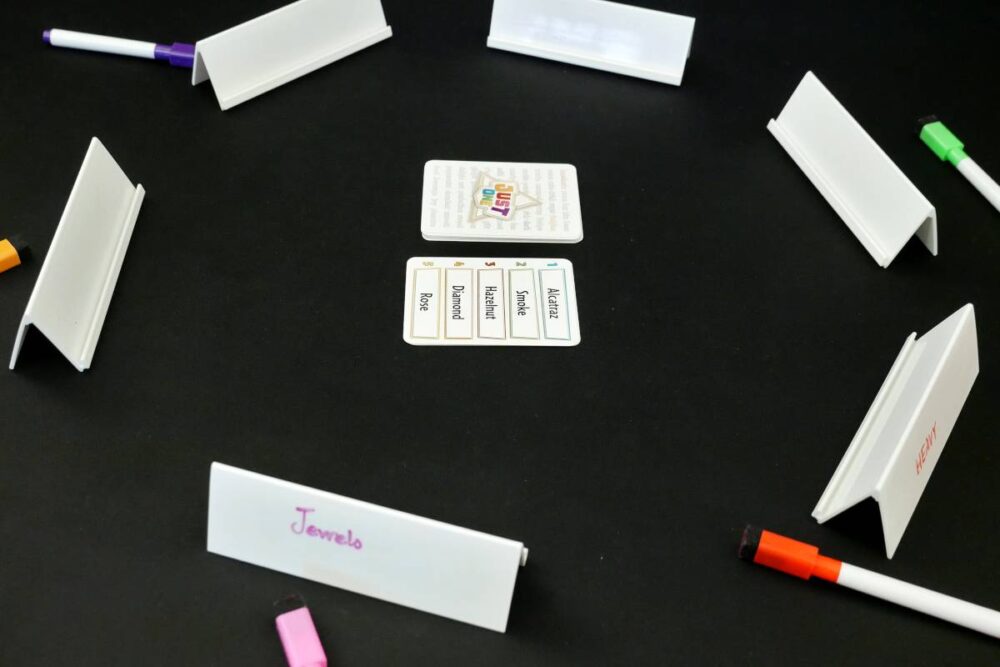
What is it?Just One is a cooperative party game where players take turns guessing a target word. While the guesser closes their eyes, everyone else secretly writes a single-word hint that would help the guesser pinpoint the target word. But if multiple people jot down the same hint, they're all cancelled out and withheld from the guesser. So the tension is in picking a good hint that's obvious, but not so obvious that someone else would also write it.
Why is it a keeper? Whenever I'm in need of a fast, exciting party game that's teachable to anyone in 30 seconds, Just One is the first one I reach for. I've introduced it to half a dozen groups, mostly non-gamers, and it's always been a hit. At least three people went out and bought their own copies afterward. Just One's only real downside is its language-dependence—players who aren't comfortable with the language or lack the vocabulary to come up with good hints won't enjoy it.
Hidden object search • 1–4 players • 10–20 min • Very simple
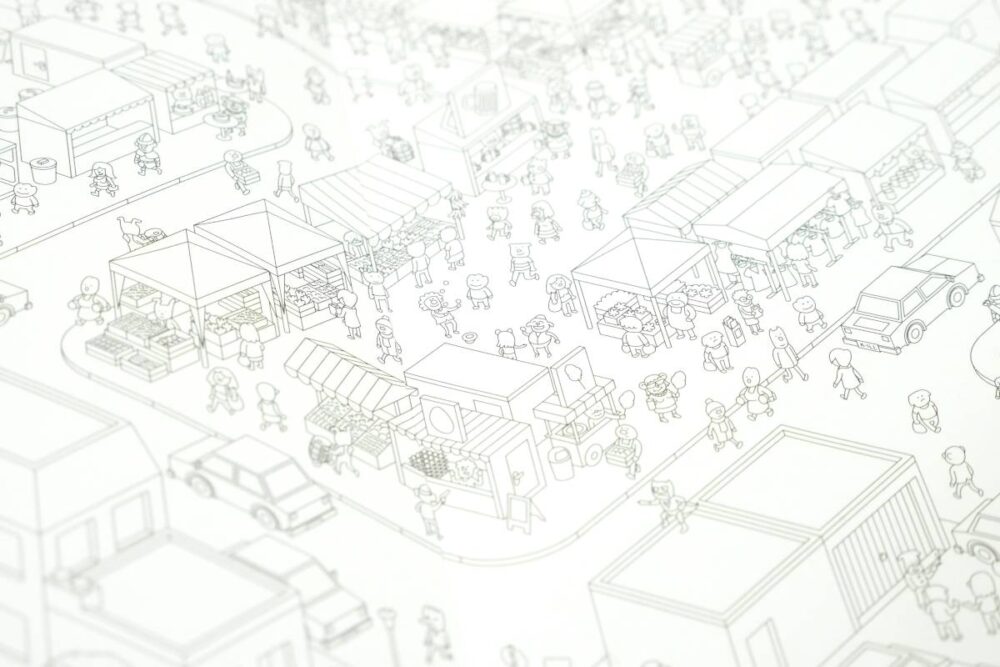
What is it?MicroMacro: Crime City is what you'd get if you took Where's Waldo? and added a story to it. Played on a giant fold-out paper map of Crime City, you're a detective who has to solve cases by finding people on the map, following them across the city to different points, analyzing what they're depicted as doing, and using deduction to uncover motives and outcomes. Every case is a multi-step process where the hidden object search is merely how you collect your clues.
Why is it a keeper?MicroMacro: Crime City is one of the most charming experiences I've had. I love how everyone hunches over the map, hunting for clues while thinking out loud. "Oh my God, he's over here and he's getting into a car!" someone says. "I found him! He's dumping a body!" says another. Putting it all together as a group is both satisfying and memorable. The one caveat is its finite shelf life: it comes with 16 cases, and once you know the answer to one, there's little incentive to re-run it. But even so, I think it's worth it.
Dice worker placement, limited communication • 2 players • 30 min • Moderate
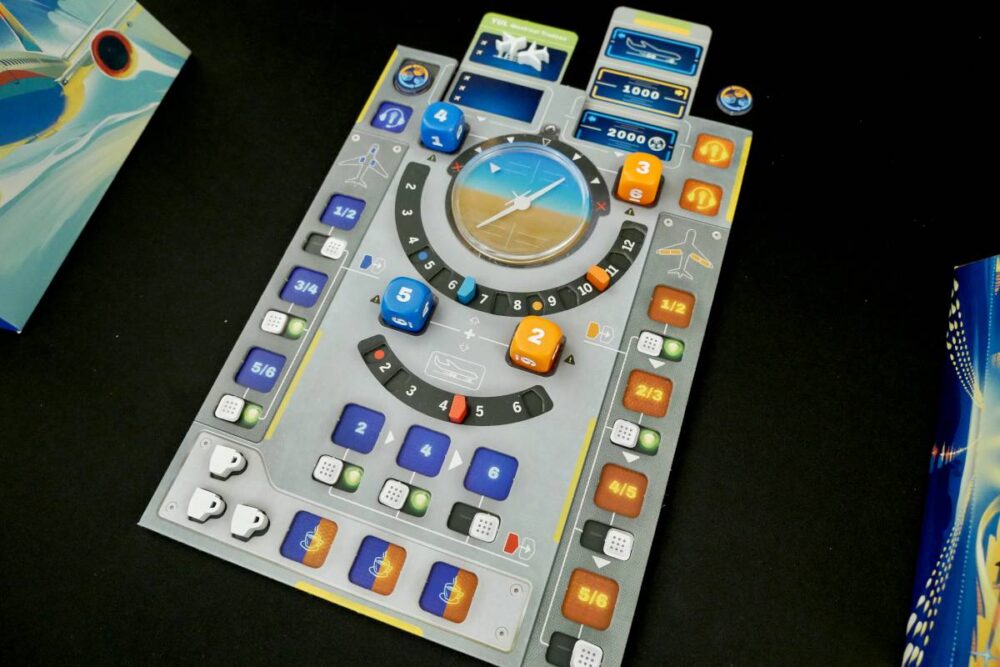
What is it?Sky Team is a cooperative, no-talking game strictly for two. You're both co-pilots who are landing a plane together, and you're using dice to control the plane's altitude, alignment, engines, and landing gear. You roll your own dice in secret behind a personal shield, then take turns placing those dice in spots to adjust those landing systems. In total silence, you must work together to get everything in order before you touch down at the airport.
Why is it a keeper? The gameplay is a unique dance between deducing your opponent's intentions through silence and managing the risks presented by your own dice options. The high-quality production evokes the feel of a cockpit, and the extra modules let you adjust the difficulty to your skill level. It's a quiet game, though, and it'll really test how well you can read each other's minds. If you don't like the uncertainty of mind-melding, it may not land for you.
Word association, logical deduction • 2–6 players • 30 min • Simple
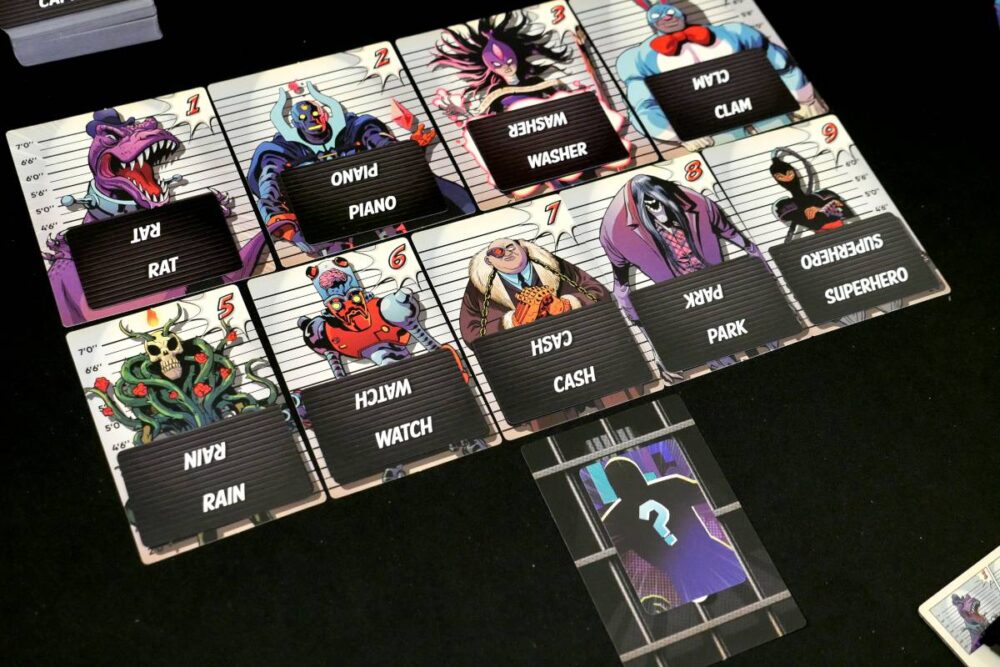
What is it?Alibis is a party-style word association game, like Codenames with a cooperative twist plus a dash of deduction. There's a lineup of suspects (words) and everyone is assigned two of them at random. You come up with a single-word hint that connects your two suspects, and then you guess which suspects everyone has. But the twist? One suspect belongs to no one—if you're able to correctly deduce the leftover suspect, you score bonus points.
Why is it a keeper?Alibis is all the greatness of Codenames without its worst bits. Simultaneous play keeps everyone engaged at all times, and no one is ever put in the "hot seat" with everyone staring at them while they think of a clue. It's simpler because you only have two words to connect, and even if you mess up your clue, you can still score points by guessing well. The three-phase flow is slightly unintuitive so it doesn't teach as easily as a game like Just One, though, and I only recommend it for groups of at least 4 players.
Legacy, narrative, tableau building • 1–6 players • 30–45 min • Simple
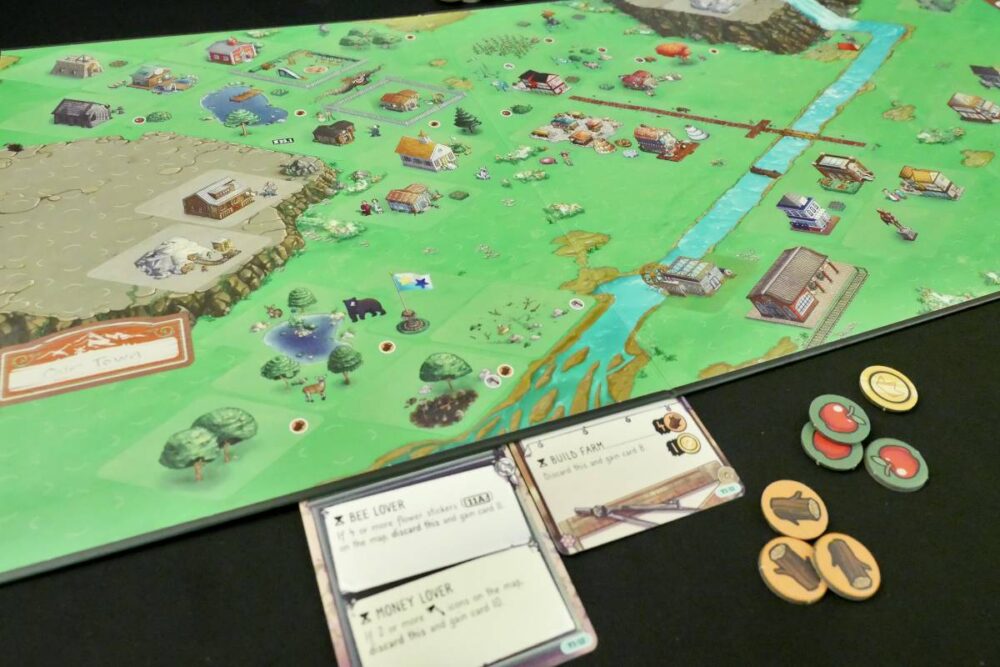
What is it?Cozy Stickerville is essentially a choose-your-own-adventure played using cards and stickers. Across 10 years, you take turns encountering events and making decisions that permanently affect your town. Who do you invite to live in your town: the farmer or the professor? When a robed stranger comes across your path, do you accept his offer or turn him away? Most decisions involve sticker placements, and you end with a board that's wholly unique.
Why is it a keeper?Cozy Stickerville is more of an experience than a game, one that's every bit as cozy as its name entails. It's about discovery, exploration, and seeing what happens—you can't do everything you want to do, so you have to commit one way or another. It's a low-stakes, low-pressure activity with branching storylines and surprising moments you'll fondly look back on. It's a bit pricey for its finite replayability, but you get to play through twice (two separate 10-year playthroughs on either side of the board) and I think that makes it worthwhile. Don't go in expecting a game in the usual sense, and don't get it if you hate the idea of placing hundreds of stickers.
So Clover! is a word association puzzle played in two halves: first, everyone crafts four one-word hints for their own clover board's four keyword pairings, then the group cooperatively solves each clover board one by one. I think of it as a thinkier Alibis—more clues to supply, more ways to get guesses wrong—that's best at 2p. I don't like the downtime as you sit there in silence while everyone else solves your board, but at 2p you can solve each other's boards simultaneously, eliminating that particular issue.
Codenames: Duet is a cooperative spin on Codenames, and that spin makes it the best in the series. On a shared 5x5 grid of words, you take turns giving single-word hints to guess target words. But there are assassin words mixed in, and guessing any of them will end the game immediately. It's the most mentally demanding of the cooperative word association games on this list: coming up with a single-word hint that connects multiple words while dodging assassins takes a lot of effort. And while you can also play it team-versus-team, the downtime as one team quietly discusses what hint to give is a pacing killer—it's too low energy to be a group game.
Dorfromantik: The Board Game is a chill tile-laying puzzle game with a progression system. Turns are simple—you draw a tile and place it somewhere—and you're trying to maximize your score by completing various tasks as they show up. It's a low-pressure game with no loss condition. Across multiple plays, you'll unlock new content that adds twists to the tile-laying puzzle, offering more ways to attain higher scores. It's the kind of game that serves as a gentle activity with mild depth, not a nail-biting, crunchy challenge.
If you want to feel like a real detective—finding clues and deducing how they fit together to arrive at a big-picture answer—Chronicles of Crime is a strong pick. This app-driven game starts you off with a victim, and it's up to you to figure out the perpetrator, motive, and means. You'll search 3D crime scenes, talk to NPCs, and collect evidence that only points you to the answer if you interpret it correctly. It comes with five standalone cases in the box, with each case taking around 1.5 to 2 hours to complete. No other murder mystery game has challenged my deductive reasoning as much as this one has.
Spirit Island is a cooperative crisis management game where you play as nature spirits defending an island against invading colonizers. You'll have to manage your hand of cards and time your actions well to wipe out the invaders, but they're like rats—no matter how much you do, they just keep coming. The main draw of Spirit Island is two-fold: every spirit has its own playstyle, and the interactions between spirits and invaders lead to emergent strategies. I've played it half a dozen times and I can firmly say it's too crunchy for me, but it's a well-made game that captures the tension of putting out a raging fire together. And with dozens of spirits and scenarios, replayability is high.
Take Time is a no-talking card game where you take turns playing cards from your hand face-down to a central clock board, trying to get all your numbers in just the right places to solve the board's conditions. If you've played The Mind, it's like that with a smidgen more structure—but still not enough. I found it too luck-driven for two reasons: only half the deck is dealt out so the distribution can literally be unsolvable sometimes, and there isn't enough information to deduce what someone is playing or why they're playing it.
Kinfire Delve
Kinfire Delve is a card-driven hand management puzzle in the guise of a dungeon delve—you play cards to defeat a series of challenges before taking on the boss at the end. It has some neat ideas, especially the triple-use card designs where a card can be used for its challenge value, for its special ability, or for boosting your partner's actions. I thought I'd love this, but it's way too tight and punishing for my taste. You can only draw a fixed number of times before losing, have almost no ways to heal damage taken, and early bad luck can corner you into a loss that isn't realized until much later.
Pandemic
Pandemic is a cooperative crisis management game where you each take on distinct roles and work together to eradicate four diseases ravaging the world. Outbreaks are unavoidable, and too many of them will end in a loss. While I recognize Pandemic as a pioneer of the cooperative board game space, and while I think it's conceptually interesting, I've never really liked it. The constant placing and removing of disease cubes is fiddly, and the process of treating and curing diseases via location cards feels too mechanical. Pandemic boils down to an abstract resource juggler with a clever timer mechanism.
Marvel United
Marvel United is a cooperative boss battler that feels like a much simpler and faster Pandemic: you play cards, dispatch baddies, and eradicate the Villain before they achieve their plans or you run out of cards. It's insanely modular, with 100+ heroes and 100+ villains that you can mix and match however you want. I've only played the base box, so take my opinion with a grain of salt: Marvel United is even fiddlier than Pandemic with all its tokens, and the gameplay feels on-rails because your limited hand of actions leaves you with little freedom to determine how you approach each turn.
Décorum
Décorum is a limited communication game about decorating a house in a way that makes everyone happy. Each player has secret conditions for the four-room house, and players take turns adding, removing, or changing aspects like the color of a room's wall or whether it has a painting or, if so, what style of painting. After every change, other players can only comment on whether they like it, dislike it, or don't care either way. Décorum is essentially a logical deduction puzzle, but the information you share is so obfuscated that meaningful deductions are hard to make.
Is Your Collection As Good As It Could Be?
These are the must-have board games I'd recommend if you want to build a worthwhile shelf of fun.