Word association games live or die on one thing: whether the people playing them are genuinely wired for wordplay. I knew going into Codenames: Duet that my wife and I were. What I didn't know—what I secretly hoped for—was whether this game had real stakes and could deliver an experience that felt more than just mechanical.
As someone who didn't like the original Codenames very much, I wondered how much I could possibly like this one. Codenames: Duet has a deeper layer beneath the word association, and that deeper layer is where it will ultimately either click or fall apart for you and your partner.
This review is based on my own personal copy of Codenames: Duet, which I acquired in a math trade on BoardGameGeek. Not a free review copy.
Table of Contents
View more
What It Is
Codenames: Duet is a cooperative spin on Codenames for either 2 players or 2 teams. The core gameplay is still there: a guessing game centered on a 5x5 grid of nouns. You take turns giving one-word clues to help your partner guess the "good" words while avoiding the "bad" words.
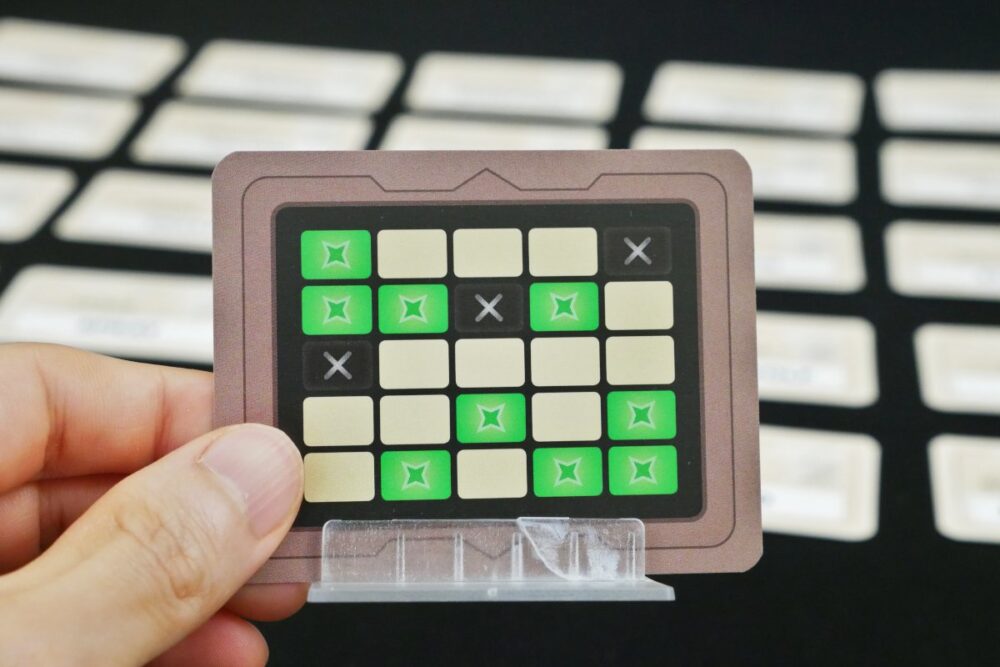
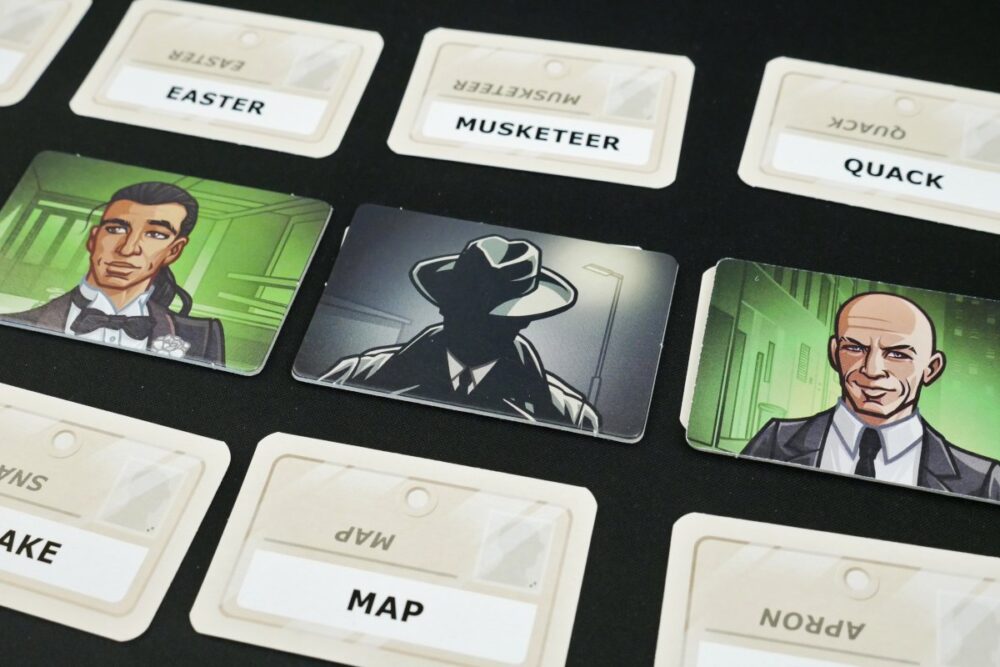
The key to all this lies in the aptly named "key card." This double-sided card assigns both of you 9 good words, 3 bad words (called "assassins"), and 13 neutral words (called "bystanders"). But the assignments are different for both of you. Your good words are mostly different from your partner's good words, with just a bit of overlap to keep things interesting. Same with the bad words. You're trying to get your partner to clear all of your good words, and vice versa, all without ever guessing one of the bad words.
On your turn, you give a one-word clue along with a number. For example, if you say "Mammal 2," what you're saying is "I want you to guess two cards that are somehow related to the word 'mammal.'" (On the board, those two words might be "Cat" and "Bear." Hopefully your partner will get it.) Your partner makes their guesses. You switch turns.
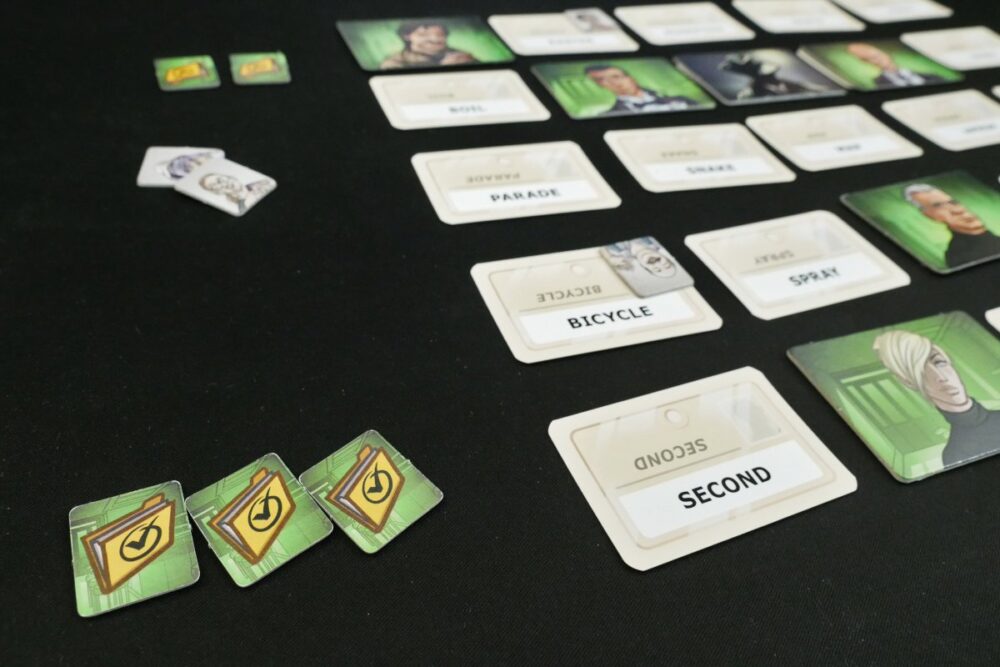
When guessing, you guess one word at a time, and if your guess doesn't land on a good word, your turn immediately ends. If you guess a bad word? The game ends in an instant loss. There are 15 total words to guess and you have only 9 total turns to guess them all. Good luck.
How It Feels to Play
Creativity in Clue-Giving
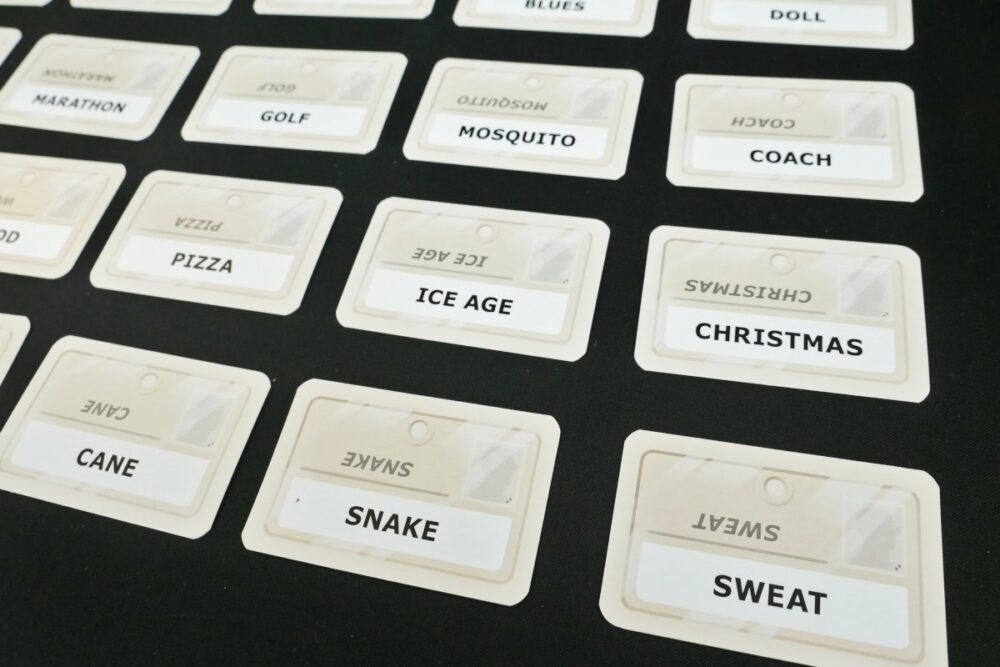
Codenames: Duet is at its most engaging when you're the clue-giver. You're scanning all 25 words (or what's left of them) and trying to forge abstract, mental connections between only the good words. Meanwhile, you're constantly second-guessing and reformulating your clue because you want zero overlap with bystanders and assassins. You might come up with "Camping 3" to connect "Snake," "Mosquito," and "Wood" in the grid, but you spot "Sweat" in the corner and that one's an assassin—so it's back to the drawing board.
Forging an effective clue is not easy. It's hard enough coming up with strong associations between what's on the board, but there's also the element of controlled risk. You have limited turns to guess all the words on both sides of the key card, which means you can't dawdle or delay. You need to knock out as many words as you can every time. But how far are you going to push it? A clue like "Breakfast 2" might secure both "Bacon" and "Tea," but "Breakfast 3" could also capture "Spoon" if your partner is crafty, and "Breakfast 4" to include "Salt" would be a stretch... but it could pay off big.
And then there's the advanced "zero-word clue" that helps when you're in a pinch. Say something like "Tree 0" and you're telling your partner that none of your good words relate to trees. It's a different kind of mental exercise that can steer your partner away from assassin words, but at the cost of not giving a real clue. Used cleverly, a zero-word clue can loosen up the board and allow you to give a much stronger clue next turn (now that you don't have to worry about accidentally overlapping with an assassin).
Tension in Guessing
Codenames: Duet is at its most tense when you're the guesser. You've just been given a clue like "Anniversary 3" and now you're looking over the board for matches. But you aren't just making literal matches—you also have to get inside the mind of your partner and approach the clue from their perspective. Why did they say "Anniversary"? None of these words appear to relate. Is she tripping? Or does she... oh! You see "Marathon" and remember that you ran one together on your 5-year anniversary. Now you get what she's doing.
That's pure deduction in action: figuring out her intention from the clue. And while clues can be based on inside jokes and shared references, it's not always like that. A lot of times it's more straightforward, like "Animal 3" when they want you to guess "Dove," "Fur," and "Teeth." Sounds like an obvious clue, right? But you'll so often find yourself second-guessing even the most obvious answers, wondering if that's what they really meant. Of course doves are animals! But maybe she saw it as the past tense for "dive" and it didn't register as the bird, and maybe she actually wants you to guess "Sleep" instead. Codenames: Duet is the one game where you'll start doubting yourself and obsessing over whether a dove really is an animal or not.
And every guess is a nail-biter because those assassins are always hanging over your head. You don't know if your partner accidentally overlooked a bad word while coming up with their clue. Or maybe you're misinterpreting what they're going for, which means you might accidentally stumble into dangerous territory. Even when you're pretty sure, you're never fully sure—and it's those assassins that make every guess feel like a trap.
A Built-In Timer
Codenames: Duet has a twisting game arc that tightens with every turn. The game begins wide open and shrinks over time, starting with a big board of potential associations and lots of freedom but also zero information on what the dangerous words are. Towards the middle, a handful of words have been eliminated from the grid, allowing you to be more intentional with your clues. At the end, you only have one or two turns left to nail all remaining words—and those are usually the most ambiguous words that have been the toughest to connect. You really have to get creative here.
With 15 words to clear within 9 turns, you can't be leisurely with your clues. If you're only guessing one word per turn, you're falling behind. The game wants you to clear at least two words per turn, which puts pressure on you right from the get-go. If you can dole out a big clue that clears three or more words, you both cheer as you secure some extra breathing room for later turns.
And if you run out of turns before you can successfully guess all the good words, the game enters sudden death and you now have to guess blind without any additional clues. The original Codenames didn't have a sudden death mechanism, but here it adds a second layer of tension. The assassins incentivize you to choose tight clues with minimal ambiguity, but the turn timer incentivizes you to cast a wide net and loosen up your clues. You're pulled in two directions and now you're sweating.
Getting Your Wires Crossed
One of the funniest but also most frustrating moments in Codenames: Duet is when you give an obvious clue and your partner thinks past you.
You'll give me a clue like "Movie 3" and you're hoping I'll guess "Joker," "King," and "Shoot." I'm thinking my thought process out loud, and eventually I do end up guessing both "Joker" and "Shoot," but then I'm stuck. I see "King" and say out loud: "I guess Lord of the Rings is a popular movie, and the third movie is Return of the King. Aragorn is the king in that movie, and he wears a pin with a tree symbol on it. Trees have leaves. Is the third word 'Leaf'? Sure, I'll go with 'Leaf.'" And you're quietly sitting there, trying to keep a straight face as you die inside, wanting to strangle me because I should've just stopped at "King."
These are the moments that define Codenames: Duet and get seared into your memory, turning into inside jokes that you two can laugh about for years. The game is at its absolute best when communication breaks down, not when you're firing on all cylinders and sweeping the board.
Player Count and Scaling
The rulebook flat-out says that Codenames: Duet was designed for 2 players, so you'll get the most out of it played that way. But you can also play as two teams, working together to suss out what the other team is trying to give.
It works, but it's far from my favorite team-versus-team game. There's too much downtime: one team twiddles their thumbs while the other comes up with a clue, then the other team twiddles while the guessers process the clue. This pacing is fine to endure at just 2 players, but it's an energy killer with teams. It's too thinky to be a party game and too in-your-own-head to be a group game.
Replayability
In Codenames: Duet, you look at the board like you would a new crossword puzzle—the variability is the puzzle. You randomly deal a grid of 5x5 cards and that randomized grid is the game. Creatively forging word associations and successfully interpreting your partner's clues is the satisfying part. If you hate finding the bridge between "Cat," "Book," and "Ham," you'll hate Codenames: Duet within the first few minutes. But if you're like me and your brain naturally enjoys wordplay, you won't be able to get enough.
One thing I don't like is that you have to spend a few minutes at the start of every game just taking in all the words and familiarizing yourself. It's not a big deal for the first game of the night, but if you play multiple times in a session and reset all the words every time, you may get jumbled up. On more than one occasion, I've accidentally thought a word was an assassin but it was actually an assassin in the previous game. I've also accidentally given clues for words that were no longer on the board.
The key cards serve double duty here. They add an additional layer of variability, and they let you replay the same grid of words so you don't have to refresh your mental map every time. The board might be the same, but you get a fresh set of good, bad, and neutral words—no need to re-memorize what's out there, yet still forced to make new mental associations. In one game, you might have to bridge "Cat" with "Book" and "Ham"; in the next game, you're bridging "Cat" with "Africa" and "Teeth."
Yet despite infinite replayability, Codenames: Duet does have one obstacle between it and the table: I have to be in the mood for it. It's thinky, it's draining, it's all in your head. Sometimes I'd rather be doing something with my hands, like handling cards, rolling dice, or writing on sheets of paper. Codenames: Duet is a mental exercise that demands full attention—and if you come at it without enough brain energy, your sessions will fall flat.
Components and Setup
My copy of Codenames: Duet is the 2017 edition. A new, revised edition was released in 2025 with 400 new words, refreshed art, a streamlined rulebook, and a new box insert. The gameplay itself is exactly the same.
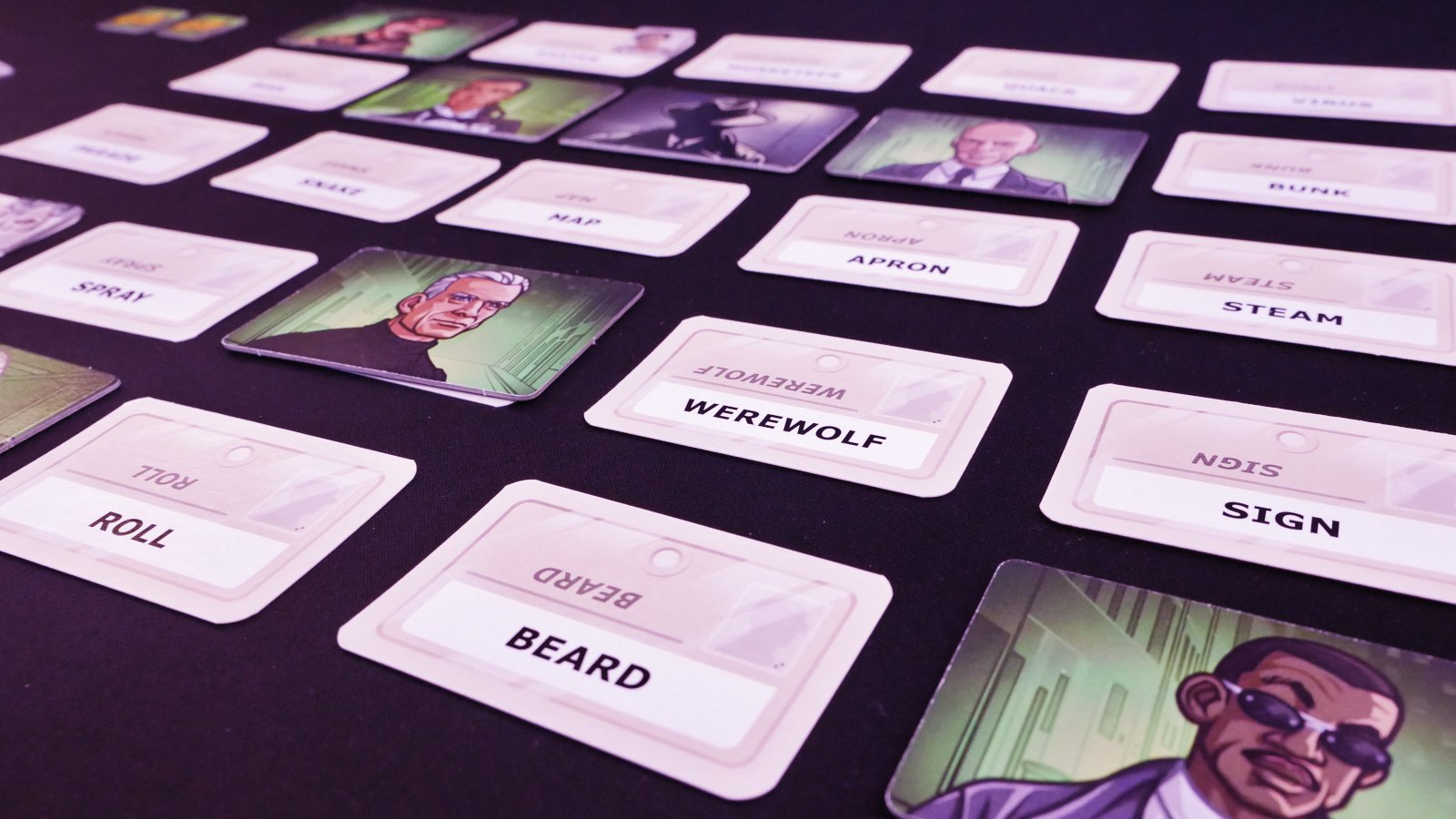
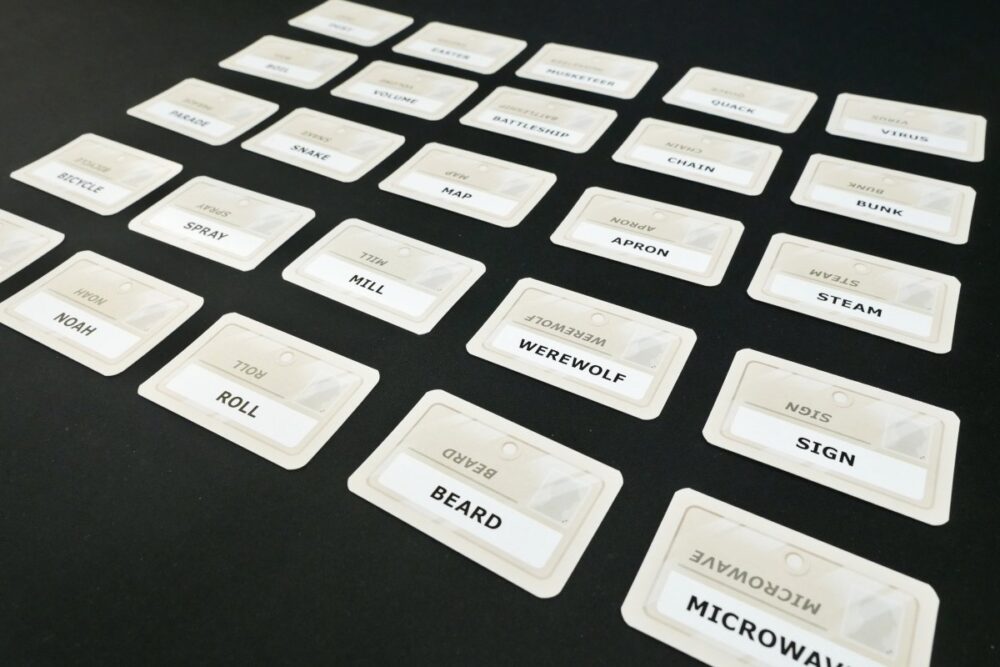
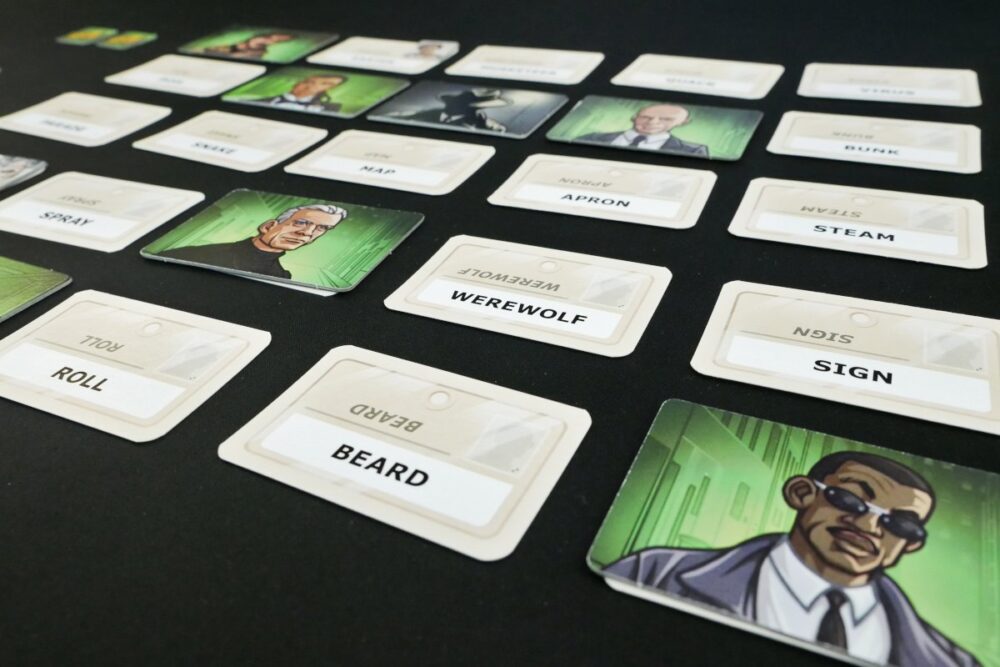
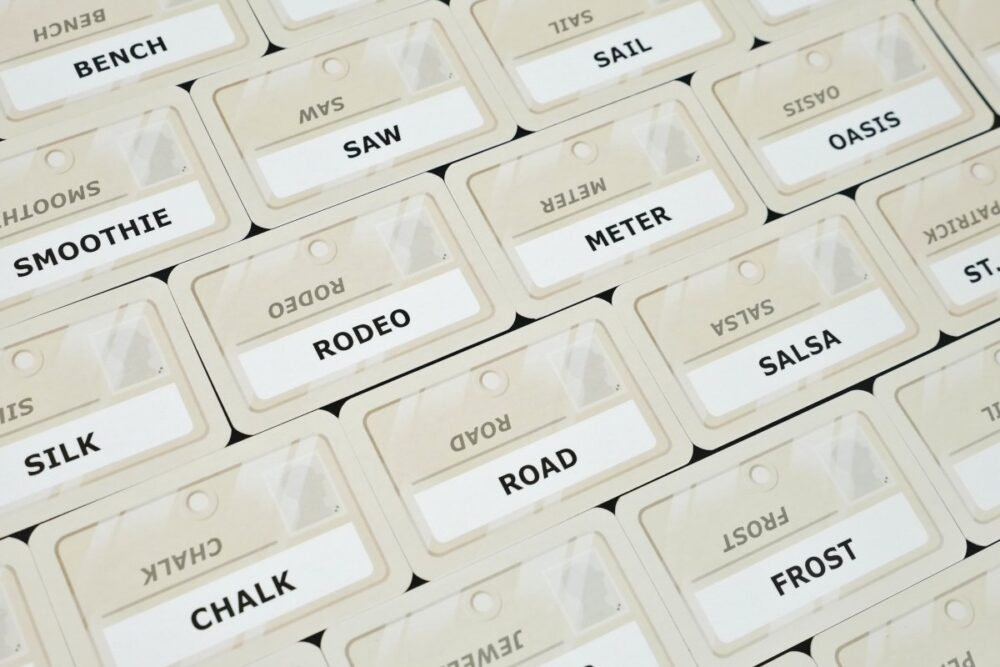
Codenames: Duet only takes a few minutes to set up and play. You pull out a random key card, set aside the stack of markers and tokens, then deal out the grid of 25 word cards. It only requires moderate table space—my wife and I can comfortably play on our 3-by-3-foot card table. The key cards are easy to read, the word cards have their words mirrored so both players can read from either side, and the turn tokens work well as a game countdown.
But I don't like that the upside-down mirrored text on each word card is smaller and harder to read for one player (a design element that seems carried over from the original Codenames). And the assassin marker is superfluous given that the game ends as soon as you pick an assassin, so you don't actually need to mark the word.
The Bottom Line
If you like word association games, Codenames: Duet is a no brainer. It's one of the purest and most engaging takes on this mechanism, but both of you need to enjoy lexical challenges to get anything out of it. If either of your brains just isn't word-inclined, it will spoil the whole experience. Otherwise, it's one of the best two-player cooperative games on the market.