I've long been on the hunt for a good 2-player-only polyomino game. Patchwork is the clear king in this genre, but I want something with a little more meat to bite into—and apart from Patchwork, the pickings are slim. That's why I jumped on the chance to buy The Isle of Cats Duel last year. Between the promise of a light-medium strategy game and the popularity of the original Isle of Cats game, I thought this might be the one.
This review is based on my own personal copy of The Isle of Cats Duel, which I bought new from Cardhaus. Not a free review copy. I've never played the original The Isle of Cats, so I won't be comparing the two games.
Table of Contents
View more
What It Is
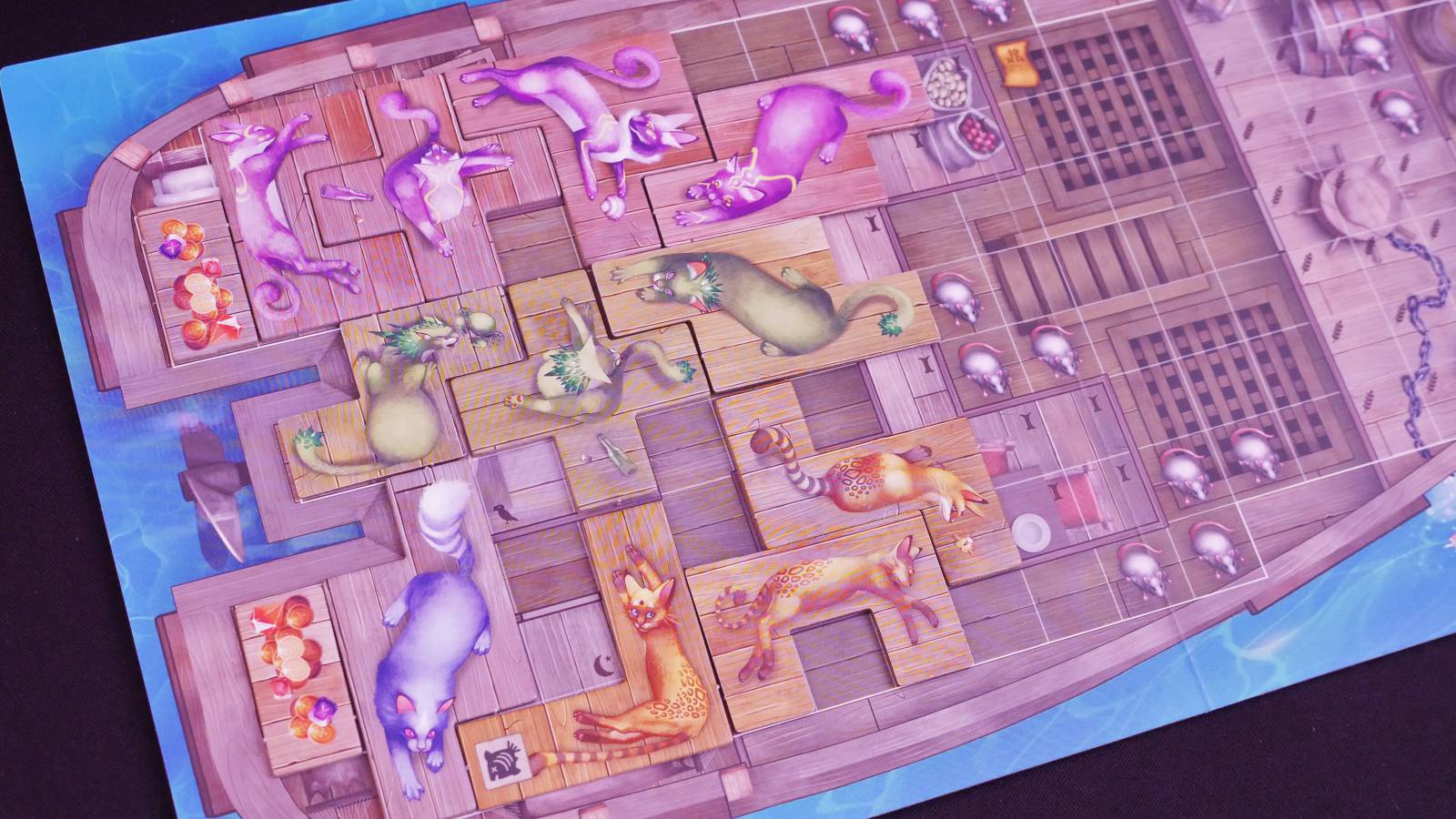
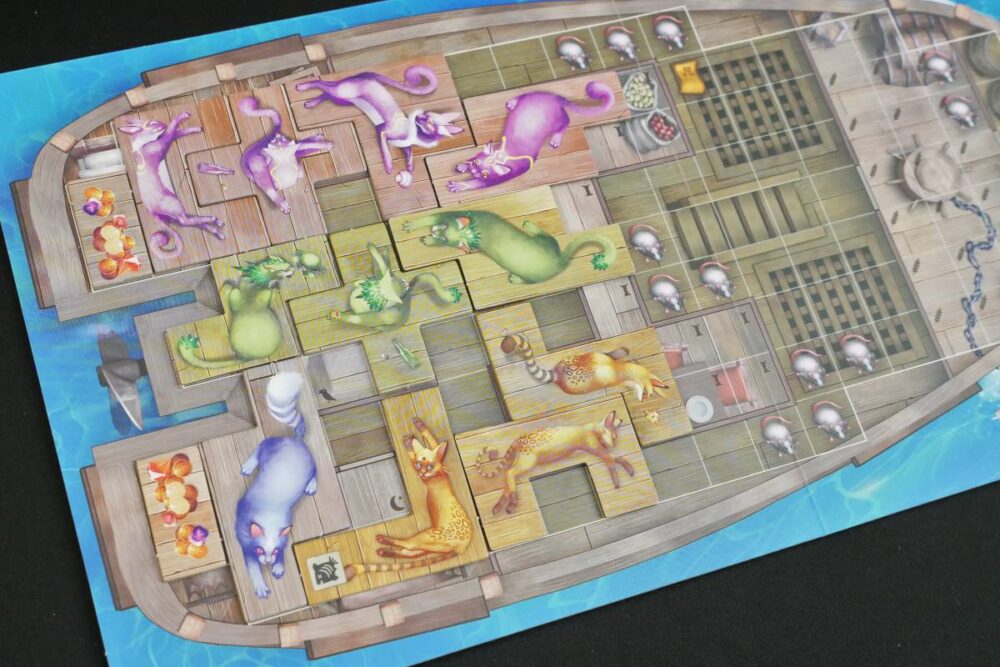
The Isle of Cats Duel is a pared-down, 2-player-only spin on The Isle of Cats, a polyomino tile placement game where you're rescuing cats from an island and stuffing as many of them as you can onto your ship. The more space you can fill up, the more points you'll score—and if you can keep your cats clumped together by family (color), you'll score even more points.
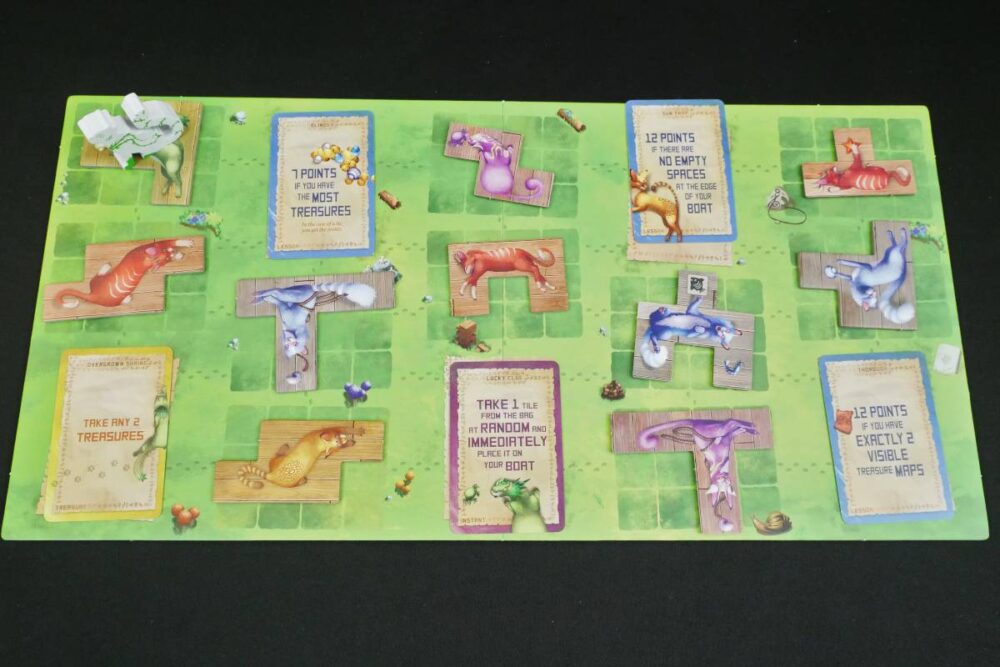
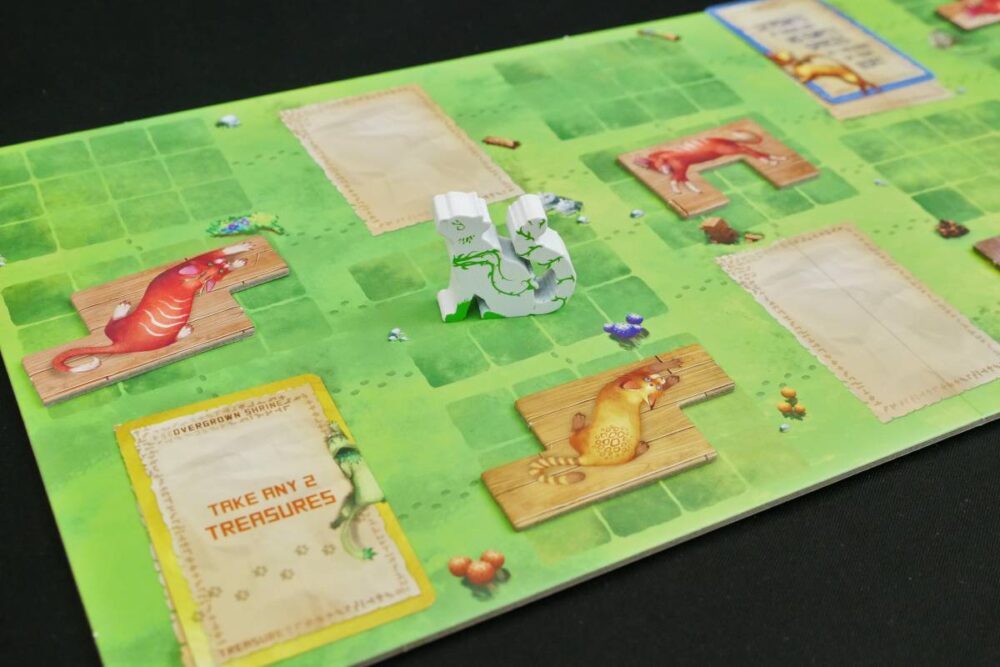
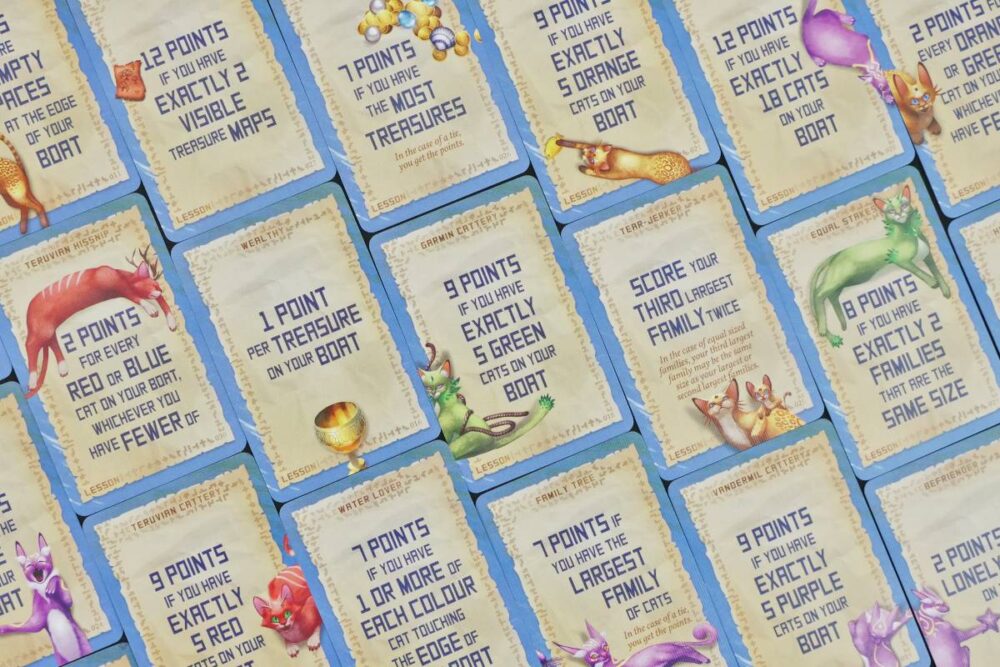
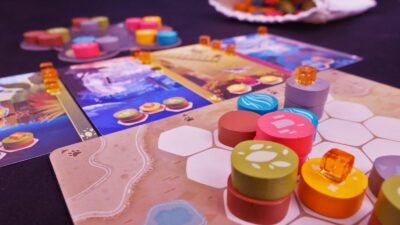
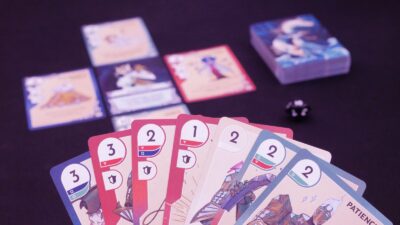
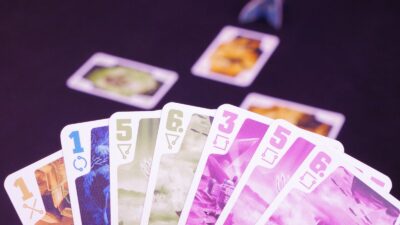
The game is played over four rounds. Each round brings out 10 new cats (drawn from a bag of cat tiles) plus 5 discovery cards (drawn from a deck), which are laid out across a shared island board. You'll take turns moving the Oshax meeple, drafting one of the tiles or cards, and placing the drafted cat onto your ship or using the drafted card (different bonuses based on card type). The most common card type is lesson cards, which are extra ways to score points if you can fulfill their special cat tile placement conditions.
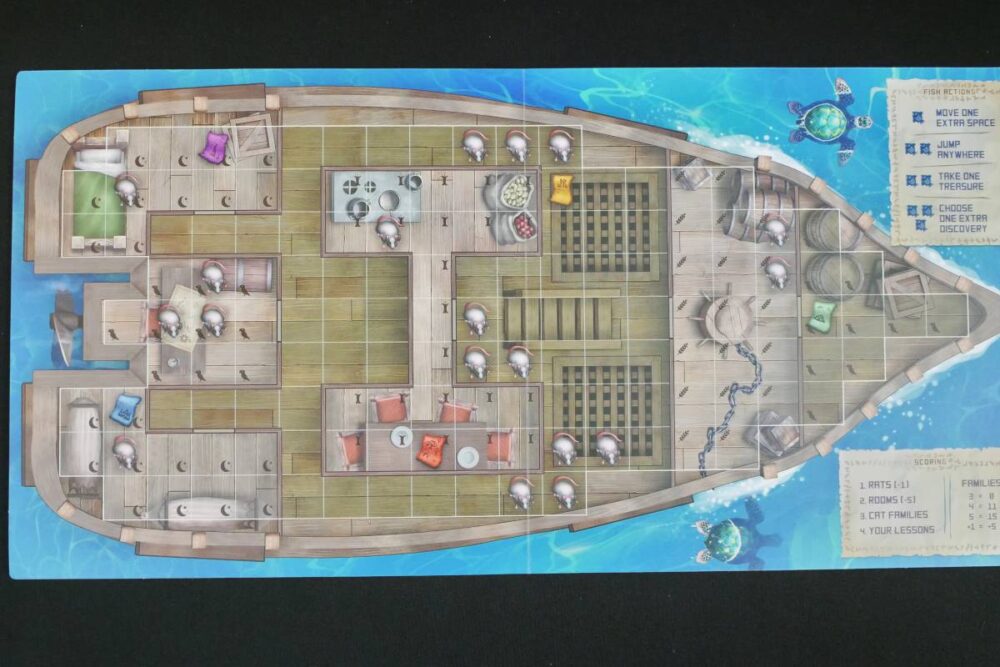
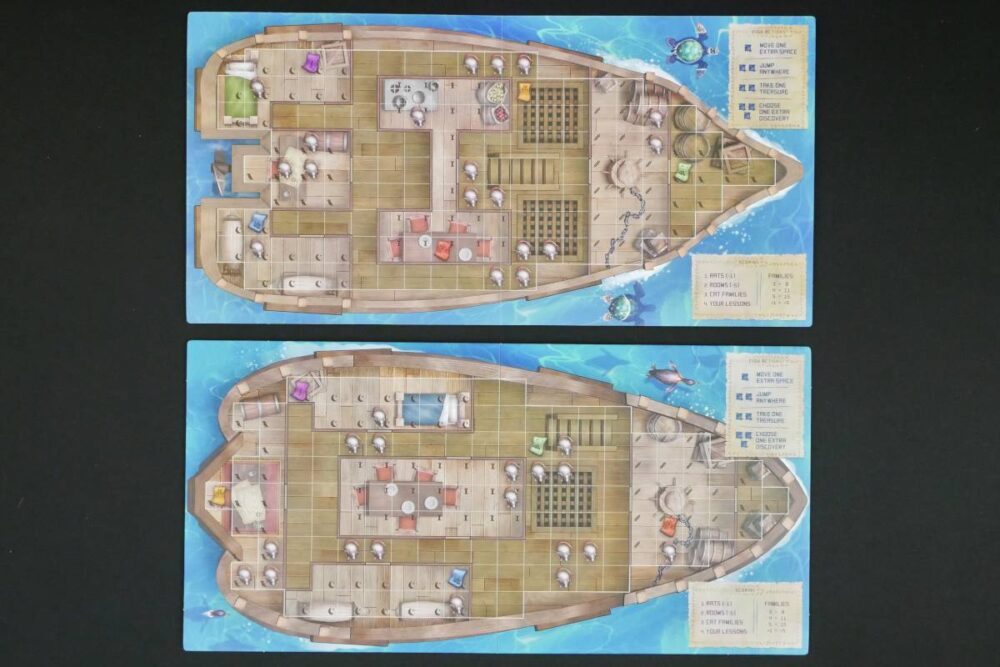
Your ship is divided into seven rooms, and you'll lose points for every room that isn't completely filled. Your ship is also infested by rats, and you'll lose points for every rat that isn't covered by a cat. Your ship also has treasure map spots, which grant you a bonus if you cover them with same-colored cats: a free treasure tile, which is smaller than a regular cat tile.
After the fourth round ends, you add up your points from cat family groupings and lesson cards, subtract points for exposed rats and unfilled rooms, and whoever has the most points wins.
How It Feels to Play
Dull Drafting Decisions
With the various scoring conditions, Isle of Cats Duel wants to pull you in multiple directions when drafting. Do you grab a same-colored cat to grow a particular clump of tiles? Or a specific-shaped cat that perfectly covers all the rats in a tight corner that may not be fillable later? Do you place that cat on a treasure map to gain a free treasure piece for filling in a hole you left behind? Or forego grabbing a cat in favor of a lesson card instead, expanding your scoring potential? On the surface, it seems like every drafting decision should be tough, forcing you to balance the pros and cons while setting yourself up with openings and opportunities for future turns.
In practice, the drafting in Isle of Cats Duel falls flat. The point penalties for not covering rats and rooms are harsh, pushing you towards board coverage and making cat tiles more valuable than discovery cards. And within Oshax's radius, there are often only one or two tiles that are meaningful to your current board state, and you can often tell right away which tile is most desirable. You'll have to do some visual-spatial work to see if those tiles even fit in their intended spots, but once you eliminate the tiles that don't fit, it's pretty clear which of the remaining tiles you should draft.
The discovery cards offer no help here. They basically amount to things like "here are new scoring goals for your cat tiles" and "gain Fish tokens if your current ship board meets these conditions" and "take some treasure tiles for free and use them." The action-oriented cards give situational benefits, so they only factor into your Oshax movements when you happen to be in a situation where you need one. And the actions themselves are pretty bland, so even when you are in a position to benefit, you aren't enthused to take one. Cat tiles are just too important to pass up, so action cards are mostly only taken after the cat tiles are gone, when you shrug and think "eh, might as well grab it now."
The Weight of Lesson Cards
Lesson cards make up the bulk of the discovery deck—of the 32 discovery cards, 22 are lessons—and that shows how important they are. The basic scoring in Isle of Cats Duel is, indeed, basic: you miss a few rats, you fail to fill a room or two, you clump your cats into three-to-five-tile families, and it all evens out in the end. The way you gain an edge over your opponent is with lesson cards, which give you extra scoring opportunities on top of those basic conditions.
As long as you don't make any critical errors with cat tile placements (which you're unlikely to do once the rules click), this is the only way to gain ground or catch up. They're especially vital to draft in the early rounds, when you still have time ahead of you to play your cats into those newly opened scoring opportunities. In the later rounds, you'll pass them up more often (unless they happen to synergize with what you have).
In short, if you neglect lesson cards, you're effectively guaranteeing your loss—and that sucks because lesson cards are prone to luck. You only see five cards per round, and some of those will be non-lesson cards. Of the ones that are lessons, you may not be able to grab the best one because your opponent just happened to start this round and grab it first. Or the ones that appear just happen to synergize well with what your opponent has drafted and clash with what you've got. Too much of the game swings on lesson cards while not giving you enough control over those very cards.
The Polyomino Puzzle
Even if the drafting decisions aren't too compelling, at least the polyomino tile placements are fun. I tend to like the puzzle of fitting pieces together within spatial constraints, and Isle of Cats Duel offers one of the more interesting takes on that puzzle with its weirdly shaped cats.
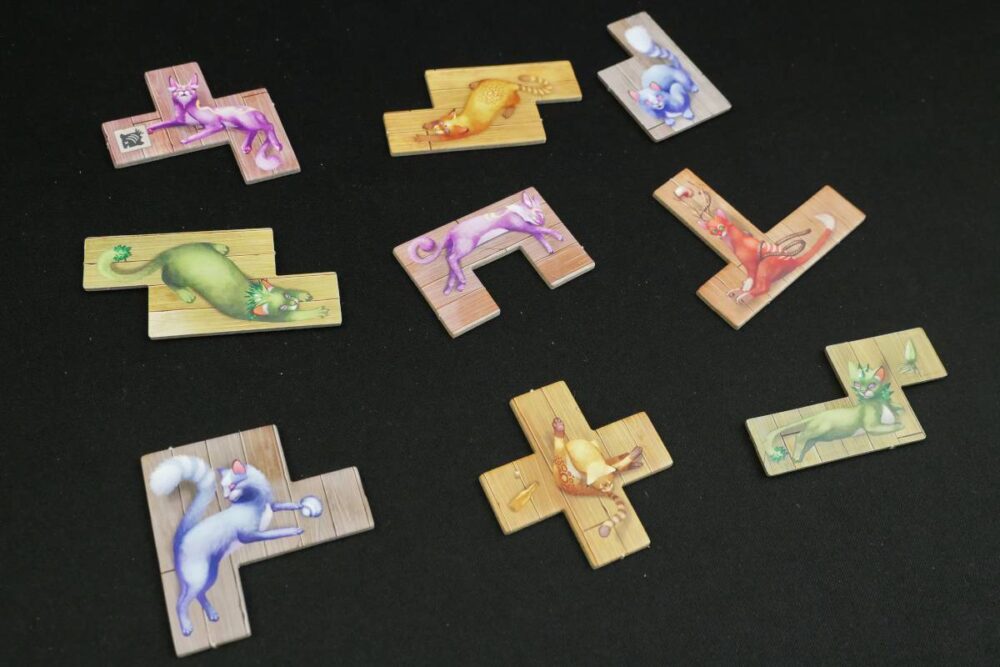
Whereas most polyomino board games have shapes that max out at 4 squares, Isle of Cats Duel's cat tiles all consist of 5 or 6 squares. They're bigger and more irregular, making them harder to fit together neatly and more likely to leave behind holes—and holes are bad because you're either leaving rats uncovered, treasure maps wasted, or rooms unfilled.
This is the one area where Isle of Cats Duel excels over other polyomino games in its complexity tier, giving it a texture that smaller polyomino games lack. If you're mainly interested in a polyomino puzzle that rewards the visual-spatial challenge (as opposed to a game that focuses more on engine building like Project L, cascading actions like Silver & Gold, or racing for pieces like Bärenpark and New York Zoo), then Isle of Cats Duel is the one.
Steady Momentum, Stalled Pacing
Isle of Cats Duel has two things going for it in the pacing department. The first is its four-round design, where each round refreshes the island and provides a new set of cat tiles and discovery cards to fight over. These rounds are like a built-in clock that pulls you through to the end. You know you only have a fixed number of turns left, and knowing your time is limited creates urgency. Isle of Cats Duel has 45 total cat tiles and only 10 come out each round, plus any undrafted tiles at the end of a round get thrown back into the bag before the next round's tiles are pulled out. In other words, you aren't guaranteed to see all tiles throughout a game. If you don't take that one red cat tile now in the third round, another one may not show up in the final round.
The second factor is the ship board itself. You start with lots of open opportunity, but each tile you place shrinks the amount of freedom you have. As your board shrinks, you feel the game tighten around you. Each tile is a visual indication of game progress—you can see the end of the game creeping up as your board fills. These two factors give Isle of Cats Duel a constant momentum that builds to a clean finish.
That said, while the turn structure itself is simple and fast, there's a hiccup that can ruin the pacing. Since the polyomino shapes in Isle of Cats Duel are larger and more complex, they can cause turn stalling in players who struggle with visual-spatial processing. The game can really drag when your opponent needs five minutes every turn to compare every available cat tile on the island against their ship board, rotating and flipping and checking every available spot, putting the piece back and picking up the next one and doing it all again.
Neither Strategic Nor Accessible
Isle of Cats Duel wants to be two things and fails to be either. On one hand, it wants to be a strategic head-to-head duel, not merely multiplayer solitaire. It does this with Oshax movement—you're supposed to outplay your opponent by carefully considering where you leave Oshax to limit your opponent's drafting options. But putting Oshax in a bad spot for your opponent often means sacrificing your own draft. It's just better to serve yourself than to deny your opponent, so it's a non-decision. If you're ever able to deny Oshax in some way, it's usually more coincidental than intentional.
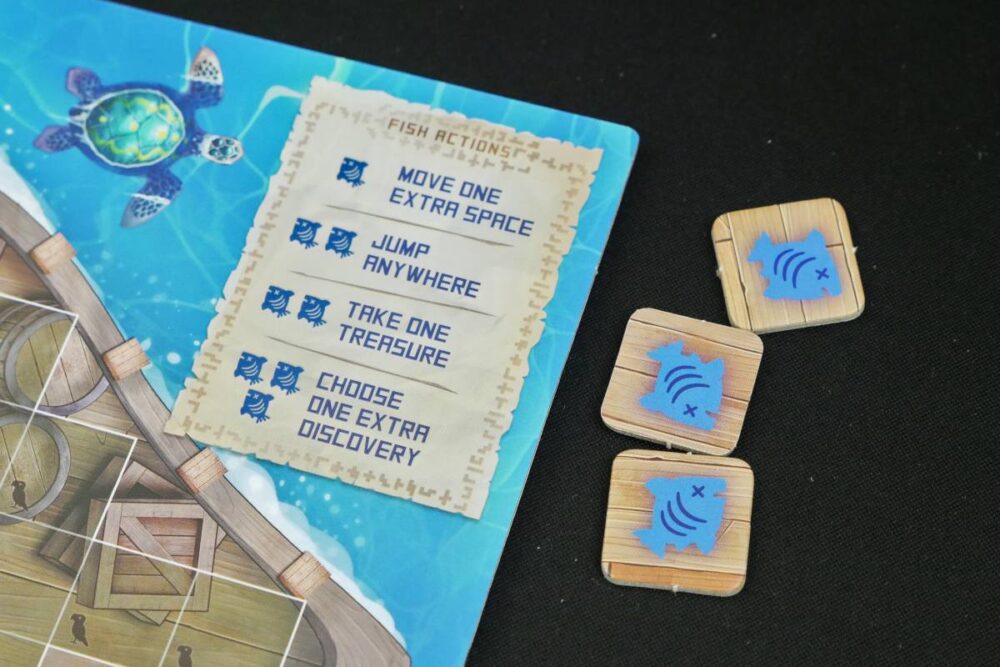
It also tries to inject head-to-head tension via Fish abilities. With smart use of these one-time powers, you're supposed to give yourself slight edges over time. But the Fish token economy is way too tight—you'll likely only get to use two, maybe three Fish powers per game. You could sacrifice turns to draft purple action cards (which grant extra Fish tokens), but the Fish powers are so bland that it isn't worth making that sacrifice. In short, these strategic layers—the parts meant for outplaying your opponent—fall apart in action.
At the same time, Isle of Cats Duel aims for breezy accessibility. Between its cute theme and simple turn structure, Isle of Cats Duel clearly wants to be an easy-to-pick-up entry point for newbies. But between the tactical Oshax movement, the numerous actions cards, the stacking lesson cards, and the extra Fish abilities, there's a little too much going on for light gamers.
The end result is a game that's only as interesting as the polyomino challenge. The putting together of weirdly shaped cat tiles has enough going for it to hold your attention, but it doesn't have enough conflict or depth to satisfy those who get this game for the "Duel" portion of its name.
Replayability
When you first open Isle of Cats Duel, you notice the ship boards are double-sided: a Turtle side, a Penguin side. Cool, variety! Except no. The two sides are different but equal—all the same elements, just in a different configuration. Neither side offers any kind of advantage or extra challenge or meaningful change, so there's no point in having both sides, no reason to choose one over the other. When you're halfway through a game and can't remember which side you're playing, that says all you need to know.
Beyond that, Isle of Cats Duel is one of those games where the randomness in it doesn't lead to better replayability. Yes, the cat tiles and discovery cards are unpredictable. Yes, the state of your ship board is never the same from game to game. Yes, you can collect different lesson card combinations. But none of it feels different on repeat plays. Between shallow decisions and limp Fish actions, turns lack impact—and when you can't make impactful moves, you default to the path of least resistance every time.
In other words, while Isle of Cats Duel successfully generates some tension, that tension is mild and samey. It's rote, mechanical, and you can autopilot your way through it all. Your ship may look completely different from one play to the next, but the games themselves blur together and you'll walk away feeling déjà vu. What I'm saying is this: Isle of Cats Duel is pleasant in the moment but immediately forgettable and not compelling enough to return to.
Components and Setup
It's a shame I don't like the gameplay more because I appreciate the effort and thought that went into Isle of Cats Duel's production.
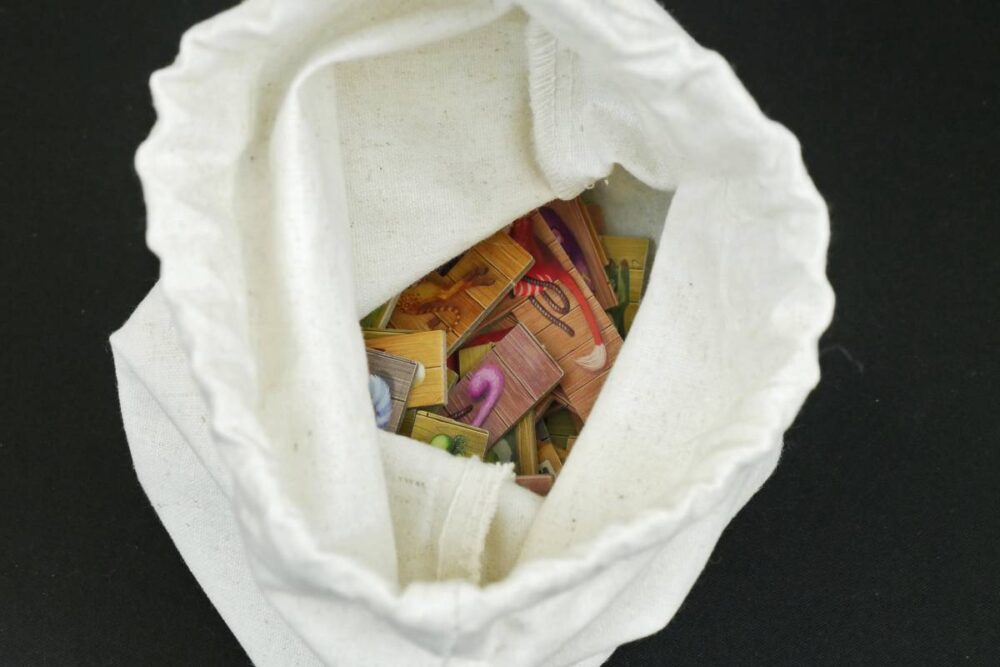
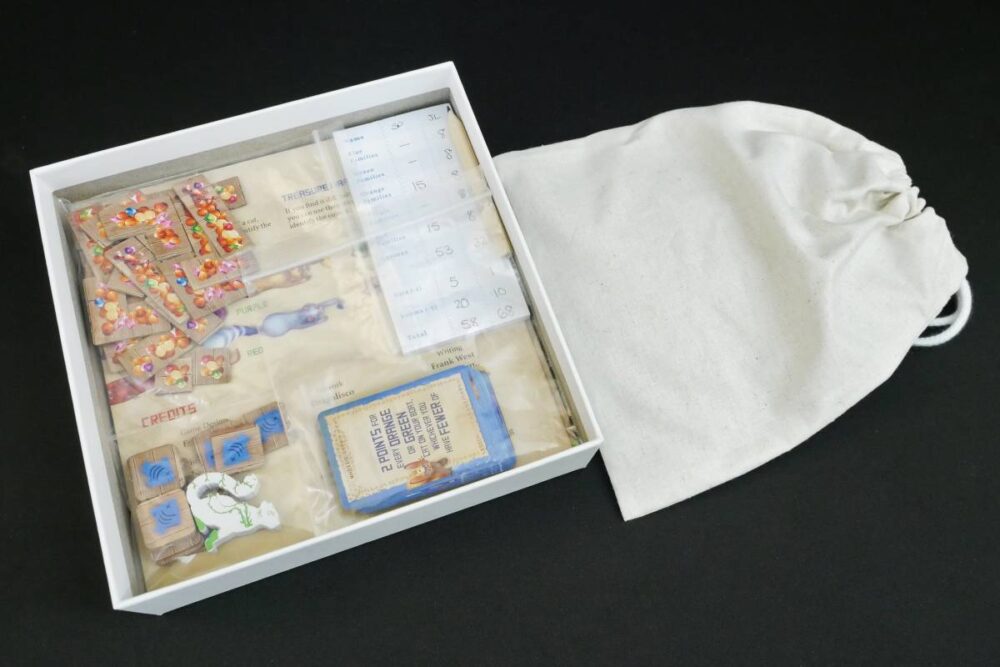
Overall, the hand feel is great. The polyomino tiles aren't exactly chunky, but they're thick enough to comfortably piece together. They're also cut precisely so they fit together without tolerance issues. (Always a plus in polyomino games, could be gamebreaking otherwise.) The tile bag is cut from a midweight canvas material that feels well-made, and the Oshax meeple is a nice touch: large, wooden, fun to pick up and move around. The ship boards and island board are robust yet fold in half for compactness, and everything goes neatly back into the compact box without much fuss.
Setup is pretty clean, taking just a few minutes. The most finicky parts are shuffling the discovery deck and sorting/stacking the treasure tiles—everything else is quick and straightforward. As for table footprint, the boards are sizable when unfolded (measuring just under 15-by-8 inches each) and you'll need a spot for the bag of tiles. We played comfortably on a 3-by-3-foot card table.
Two things I don't like: the art style and the font used on cards. The cats are just plain ugly—not pleasing to look at, painted in drab colors, the exact opposite of cute. (And I say this as a cat person!) A cuter style could have carried this game much farther. As for the font, the excessive blockiness and variable font sizes make the text annoying to read.
The Bottom Line
I struggle to recommend The Isle of Cats Duel. It's a fine game, but it doesn't offer enough distinctness to justify buying this one over other polyomino options. For a meatier puzzle, Planet Unknown offers a lot more and plays well at 2 players (actually, it scales well from 1 to 6). For an entry-level 2-player-only polyomino puzzle, Patchwork is still the king.