Stop Buying Games You'll Regret
Avoid buyer's remorse with my downloadable 8-question checklist—free when you subscribe to my newsletter.
One monthly email with my latest reviews and articles. No spam, ever. Unsubscribe in one click.


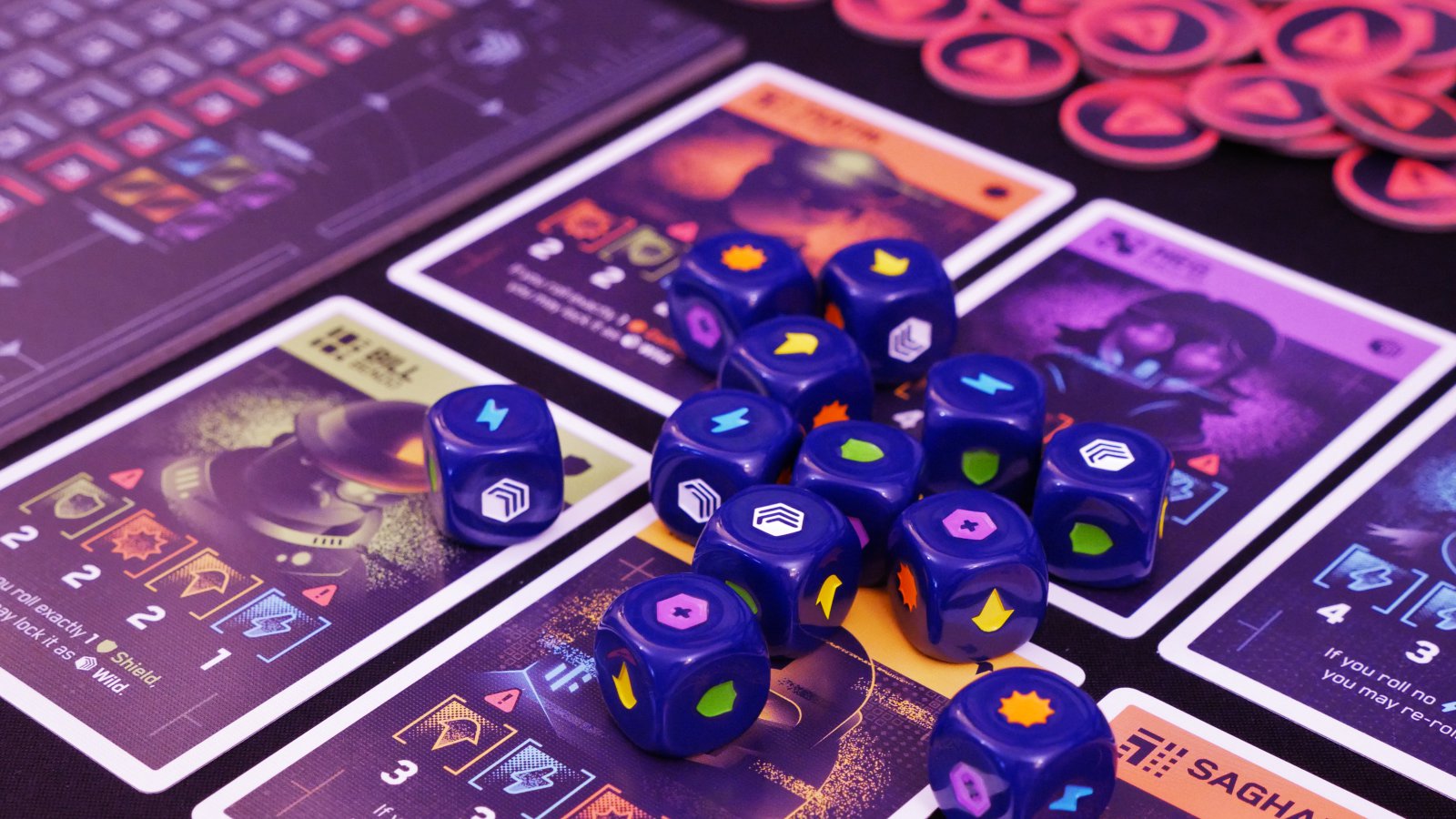
Moonrollers is a dice-chucking push-your-luck game with a genuinely addictive re-roll loop. It earns its spot on my shelf.
Game Info
Upsides
Downsides
Moonrollers just showed up on my doorstep one day. I had shot an email to IV Studio months before, heard nothing, and moved on—so when I opened the mystery package and saw it inside, it was like a second Christmas. And given how much I love chucking dice and pushing my luck, I came in expecting a banger.
Push-your-luck dice games need a balanced busting mechanism. Too random and you have no agency. Too forgiving and there's no tension. I've played enough of them to know that most land somewhere in the unsatisfying middle. Moonrollers is ambitious for a small-box filler, and I wondered if it would buckle under the weight of its triple layers of push-your-luck.
This review is based on a review copy of Moonrollers provided by IV Studio, but my thoughts and opinions are my own.
Moonrollers blends three mechanisms into an easy-to-play game with teeth: push-your-luck dice rolling, contract fulfillment via dice assignments, and open drafting from a central market.
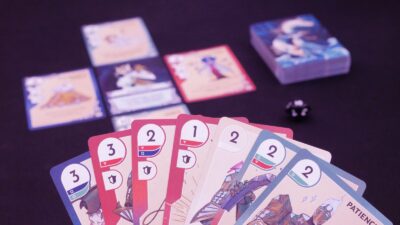
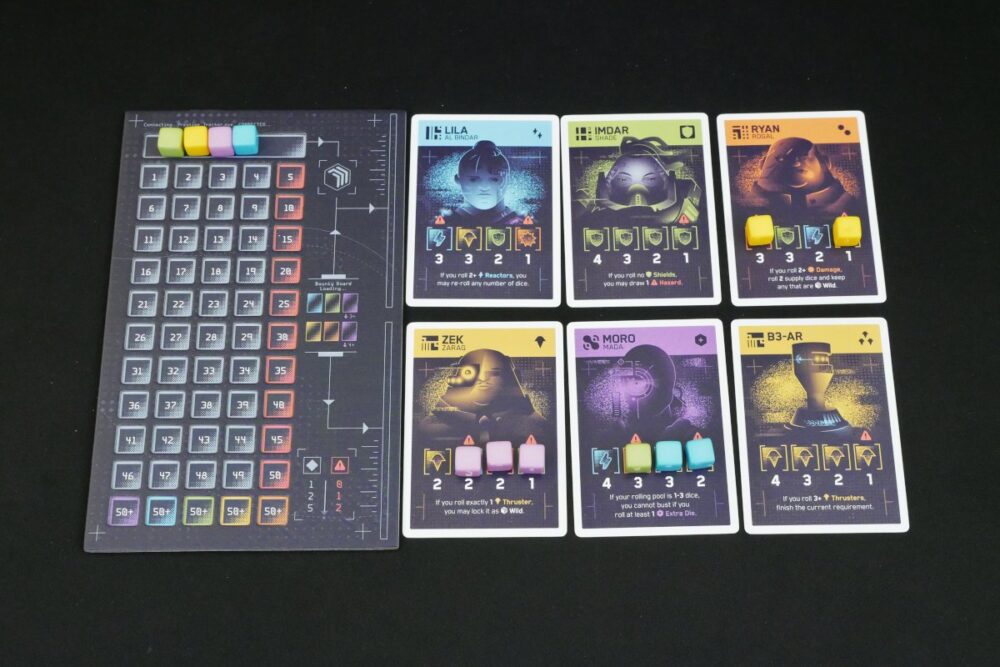
In the central market, there are Crew cards. Each Crew card has a set of Requirements that need to be fulfilled for that card to score. Players are vying to fulfill the various Requirements across all the Crew, and once a Crew is completely fulfilled, everyone who made any progress on that Crew will score points for what they contributed. This mixture of competition and cooperation drives you to work alone but also want help. But one wrinkle: only the person who fulfilled the last Requirement gets to take the Crew card.
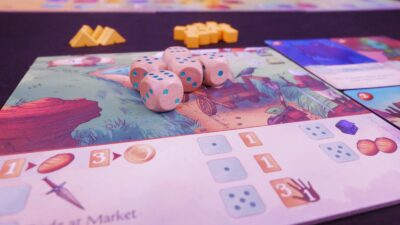
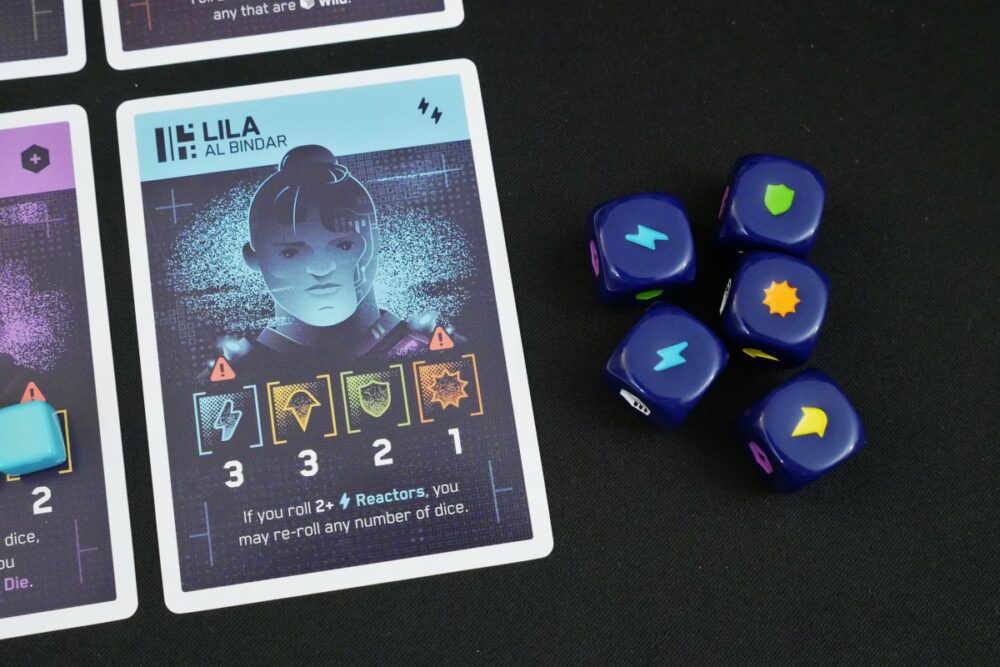
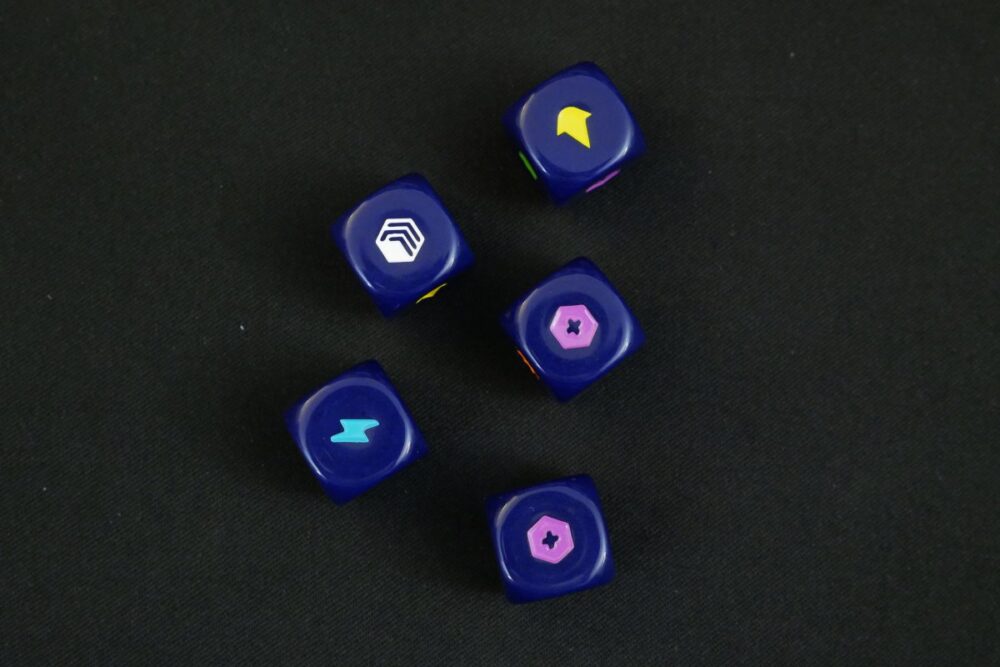
On your turn, you roll a handful of dice. Each die has four unique Requirement symbols, plus a Wild symbol, plus an Extra Die symbol. You'll assign dice of one type to a Crew, then choose whether to re-roll all remaining dice (plus extras earned with Extra Die symbols) or end your turn. For example, you might assign two Thruster dice to a Crew, then re-roll your three remaining dice hoping to land two more Thrusters to complete the Requirement. Why wouldn't you re-roll? Because if you're working on a Requirement, you're locked into that requirement—if you ever re-roll and can't assign any dice, you lose all the progress you made during that turn. Stopping early lets you avoid busting.
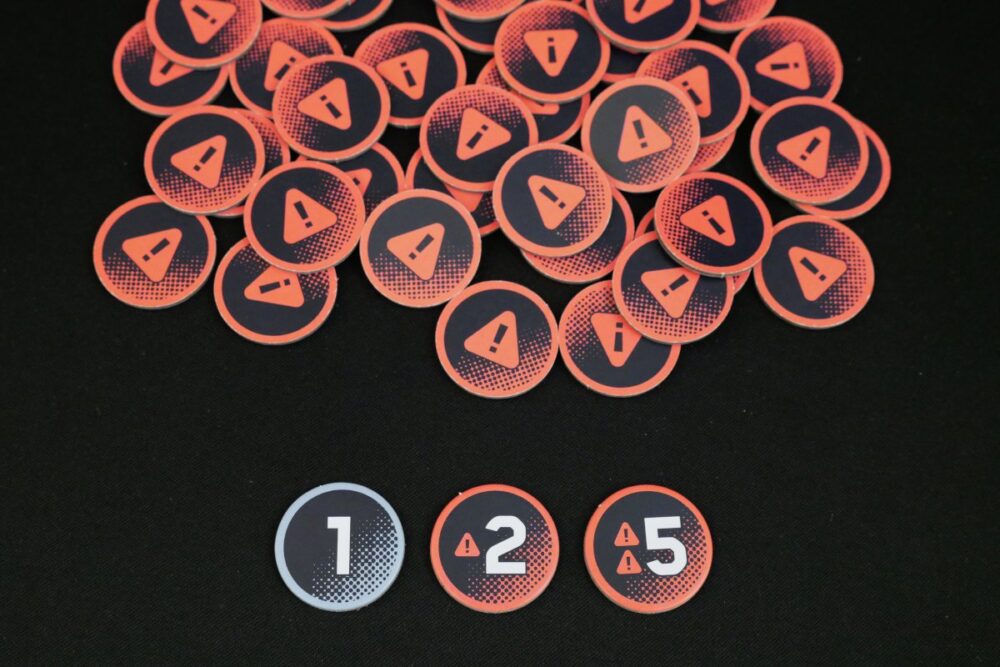
Some Crew Requirements also grant Hazard tokens when you fulfill them. When taking Hazard, you draw two face-down tokens from the pool, look at both, choose one, and return the other. These tokens have 1, 2, or 5 points on them, along with some Hazard icons (the more points they offer, the more dangerous they are). Your Hazard total is kept secret until the end of the game, at which point all is revealed and whoever has the most Hazard icons loses all of their Hazard tokens.
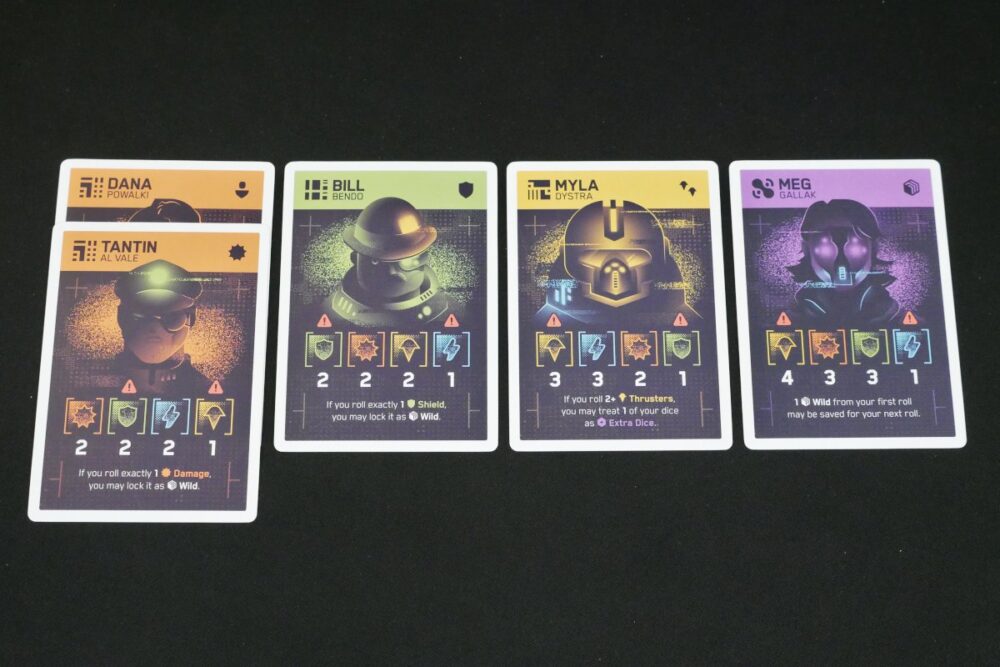
Crew come in five different colors, and each Crew has a unique ability. As you take Crew cards, you'll build a tableau of Crew cards and abilities that give you ways to adjust and mitigate dice rolls—but you can only have one active ability per Crew color. Also, Crew colors dictate the end-game trigger: as soon as somebody has three of the same color OR one of every color, it's over. Count up points and whoever has the most is the winner.
Moonrollers lives and dies by its push-your-luck loop, and the success of it comes down to the Extra Die mechanism. When you roll, you're assigning dice to Crew, which means your pool of dice shrinks and you're less likely to roll what you need next time. But if you hit any Extra Die, you gain more dice to play with on your next roll. That chain is addictive: you can keep rolling and rolling and rolling, and you're silently hoping to see more of those purple Extra Die symbols every time. You feel like a gambler.
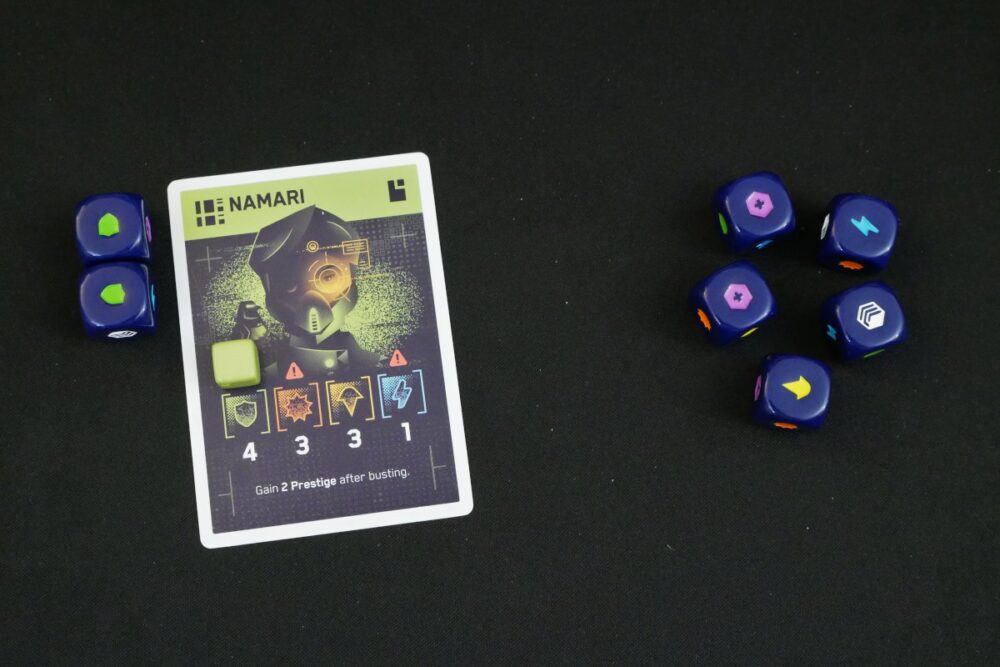
But even with the Extra Die mechanism, re-rolling isn't mindless. You still have to weigh your chances and play the odds. Why? Because on every turn, you're locked into one Crew of your choice. And because when you assign dice to that Crew, you're locked into that Requirement until it's fulfilled. If you're working on Namari this turn and she needs four Shields but you only assign two Shield dice, you need more Shields on a re-roll. If you choose to re-roll and don't get any Shields, you bust. That threat is always there.
On the one hand, you want to keep rolling because it feels so good when you get those long-running Extra Die chains that can score you huge points. But if you bust, you lose all the progress of that turn. Busting at the end of a re-roll chain is painful, and the longer you go, the more it hurts. It's this two-directional tension that makes Moonrollers so gripping.
Every push-your-luck game can ultimately be judged by its busting mechanism—how much of a threat it is, how punishing it is, how often it happens, how much agency you have in it. Moonrollers gets it just right.
There are two layers of busting to keep you on edge. First, the dice rolls that happen on every turn. If you ever roll and can't assign any dice to the current Crew Requirement you're working on, you bust and lose all progress you've made on that turn. It's punishing enough because you've wasted an entire turn and lost potential points, but it's not so punishing that you're left hopeless. And between careful decision-making and Crew abilities, you're managing your risk by choosing which Crew to work on, which Requirements to tackle, and whether to re-roll or not. If you bust, you have only yourself to blame...
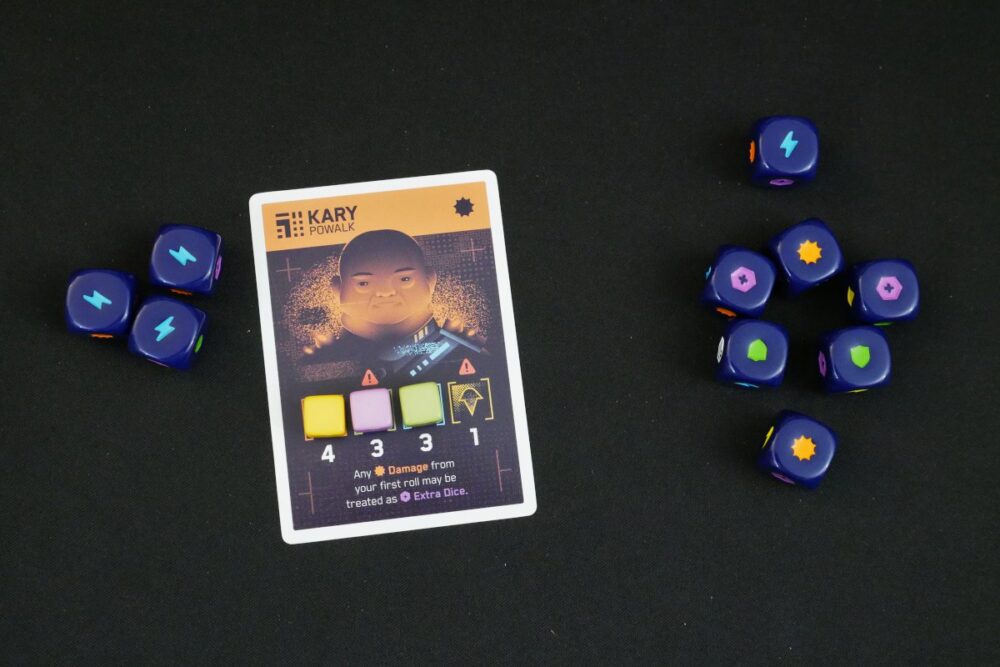
...most of the time, anyway. As with any dice-rolling game, Moonrollers can smack you with bad luck outcomes that are highly improbable yet always possible. One time I just needed a single Thruster symbol to complete the Crew Requirement I was working on, and I had a pool of 7 dice in hand. Re-rolling seemed like a no-brainer—surely the odds were in my favor? Yet somehow I failed to roll a single Thruster and no Wilds to boot. Yeah, it can happen.
Second, the Hazard tokens at the end of the game. You always have a choice between two randomly drawn tokens when gaining Hazard, so it's up to you whether you play it safe or not. You might see that Carly has a pile of Hazard tokens in front of her, so you think it's safe to collect a few 5-point Hazards. But you don't know whether her tokens are all 1-pointers with zero danger. You have to size up her personality and peek into her mind, all while balancing your own desire for points against how risky you're willing to be.
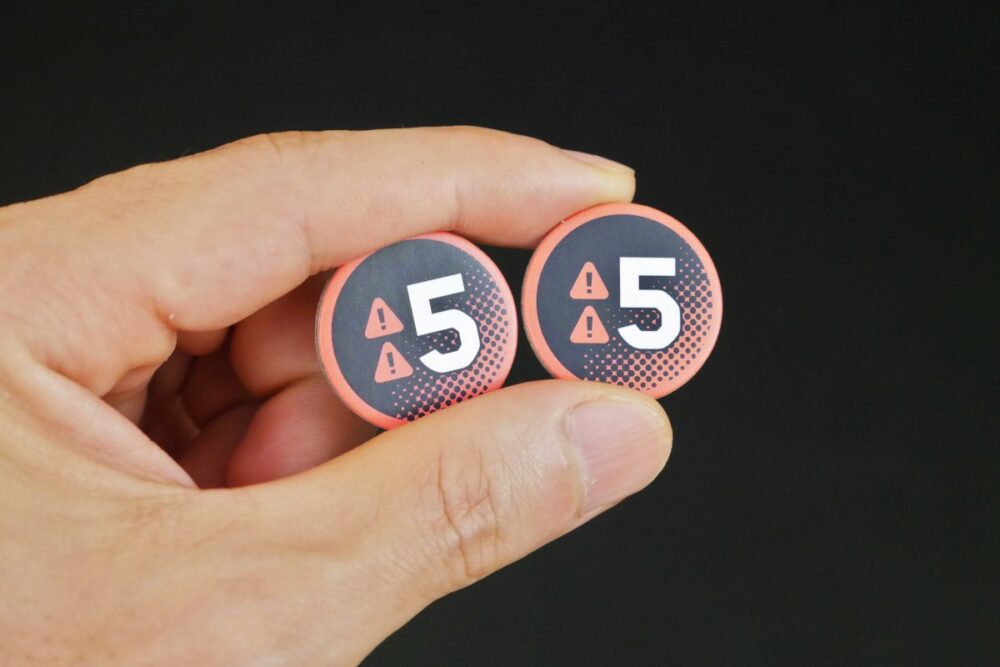
There's a bit of luck with Hazards. Sometimes you draw two 5-pointers and have no choice but to take a dangerous token. But Moonrollers gives you an out: whenever you acquire a Crew card and already have one of that color, you can return one of your Hazard tokens. It gives you another reason to chase certain cards, and it lets you adapt to unlucky Hazard draws.
Hazards are everything in Moonrollers, but they're sneaky. They'll seem small and insignificant at first blush, almost like an afterthought. You'll ignore them in your first play. You'll focus all your attention on the Crew, trying to re-roll your way to victory. And then you'll realize your mistake when the game wraps up. Turns out, Hazards make up nearly half the points you'll earn.
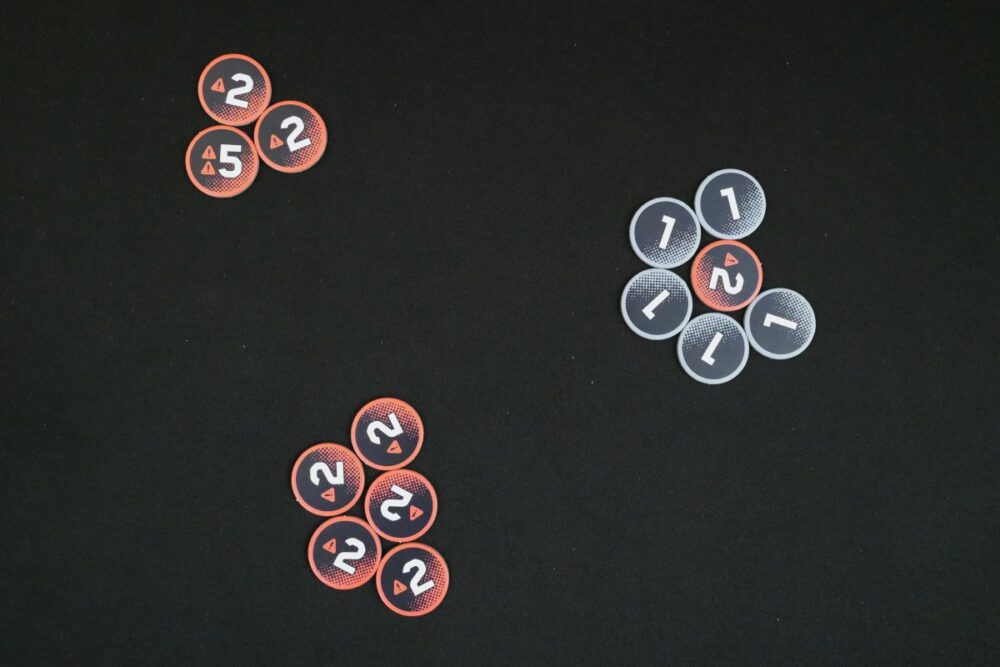
Which is why the Hazard-driven push-your-luck layer is so important. If you end with the most Hazard icons, you lose all of your Hazard points. That means you lose nearly half of your potential score. You thought you were in first place? A Hazard cancellation can swing you into last place. Meanwhile, you can be lagging behind on the scoreboard, but if you risk just enough to score lots of Hazard points without busting, you can swing up into the lead.
It's not just a setback. It's a game-ender. And once you know that, you really start to feel the pressure of those Hazard tokens.
The most important decision in Moonrollers happens right at the start of every turn: which Crew card am I going to work on? That's the only Crew card you can work on for this turn. You're locked in. If you end up completing it, your turn is over. The addictive re-roll chaining gets cut early if you pick a Crew that doesn't have many Requirements left to fulfill. Choosing a Crew with only one Requirement left feels like a waste of a turn—you'll probably finish it, but you won't get many points out of it. It's not worth your action.
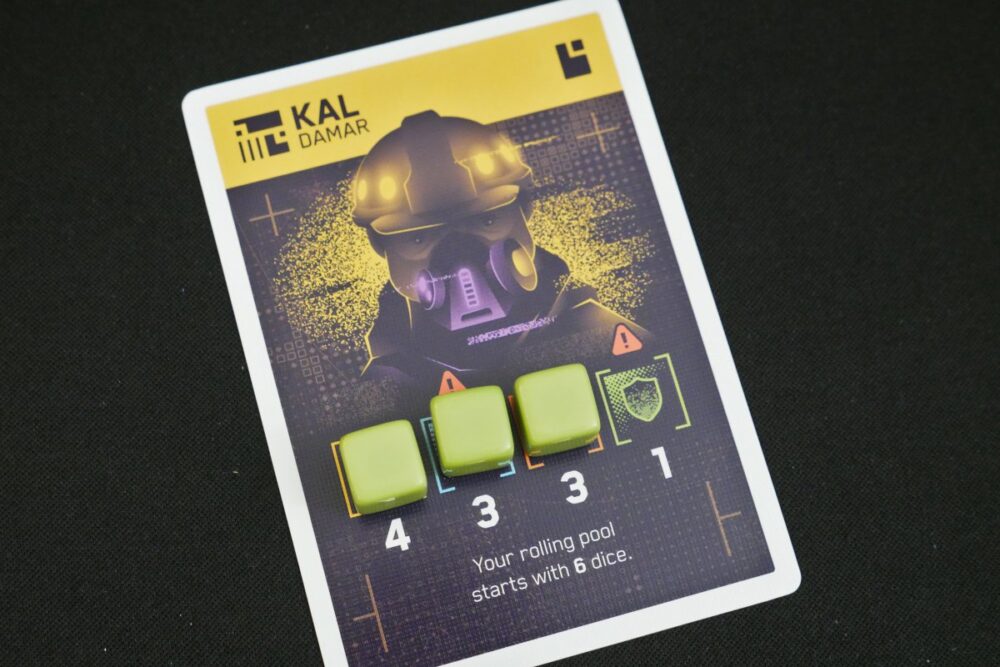
But you also know that a Crew only scores once it's completely fulfilled. Even if you've done 10 points of work on Kal Damar, you won't actually realize those points on the scoreboard until Kal Damar's final 1-point Shield Requirement is completed. You might wait it out, hoping that someone else will finish it for you. But if the game ends while Kal Damar is still unfulfilled, your points vanish into thin air. So it's up to you: either waste a turn and finish it yourself to lock in those points, or risk waiting around for someone else to do it.
And someone else might do it because there are other reasons to finish a Crew. Maybe you've been eyeing Myla Dystra's special ability and now's your chance to snag it. Or maybe you want her color because it's a duplicate that'll let you return a Hazard token to the pool. Or maybe you want to rush the end and that color gets you one step closer. You might think it's worth burning a turn to finish that Crew card and claim it for yourself.
These decisions are interesting, but they're also murky. Moonrollers likes to pull you in several directions at once, which makes for a lot of tension, but it also means you don't always see a clear path to victory. Sometimes you have valid reasons to choose three of the Crew on board and no way to know which one is best, so you just shrug, pick one, and go. It's not the game to play if you like long-term strategizing and scheming.
The Crew abilities are... fine. A few are genuinely interesting (like Vanta Sae's "If you roll no Extra Dice, you may lock any 1 die as Wild" or Kal Damar's "Your rolling pool starts with 6 dice") but the rest are different flavors of turning one symbol into another. If you're looking to this game for cool powers and game-breaking cards, you won't find that here.
But the purely functional approach to abilities works well for Moonrollers. You can have up to five active abilities in front of you (one per Crew color), and there's some mental load involved as far as remembering what you have and utilizing them when you roll. When I first played, I didn't even pay attention to the powers—I just rolled to collect cards because strategizing was already murky enough without them. By the end of that first game, I was comfortable enough to start using them in the next.
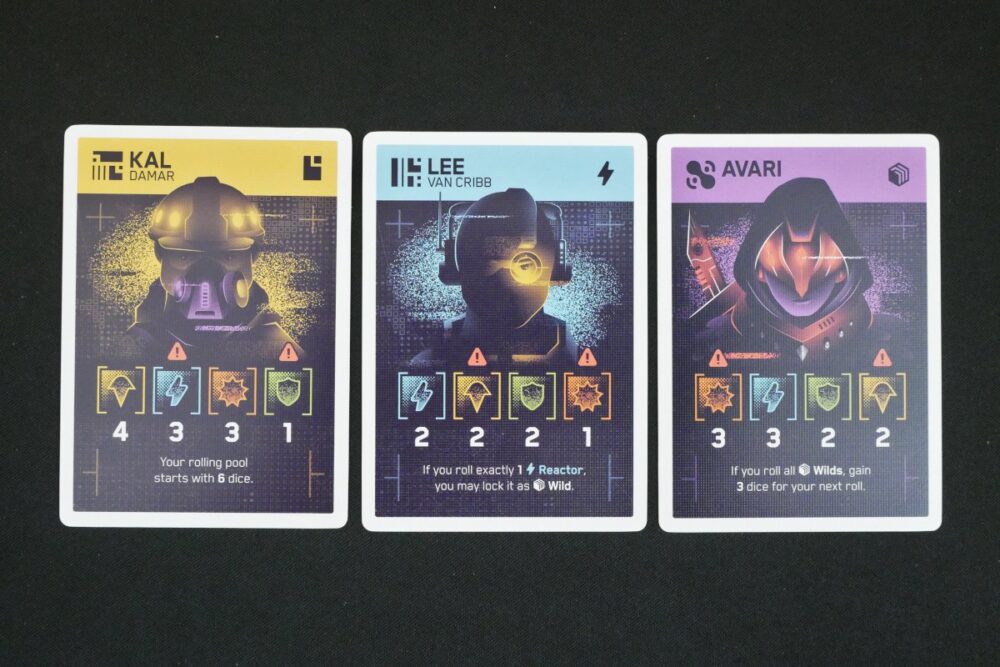
And by your third game, those purely functional abilities start opening up and revealing a soft but real texture to Moonrollers. For example, "If you roll exactly 1 Reactor, you may lock it as Wild" may not sound too impressive, but when you have it and your roll shows a single Reactor, you feel a jolt of excitement. Not to mention that some abilities are harder to pull off than others (like Avari's "If you roll all Wilds, gain 3 dice for your next roll"). That's its own kind of push-your-luck as you build your tableau.
My only complaint with Moonrollers is the end-game trigger. It's over as soon as somebody collects their third Crew of a single color or at least one Crew of all five colors. That means the game could end as soon as someone's third card or as late as their ninth card. That's a pretty wide gap, which can lead to unpredictable game lengths. I've had some 2-player games end in 30 minutes and others take over an hour. A breezy experience like this should be more predictable in duration—if I only have half an hour, I want to know that I'll be able to play it without having to cut it short.
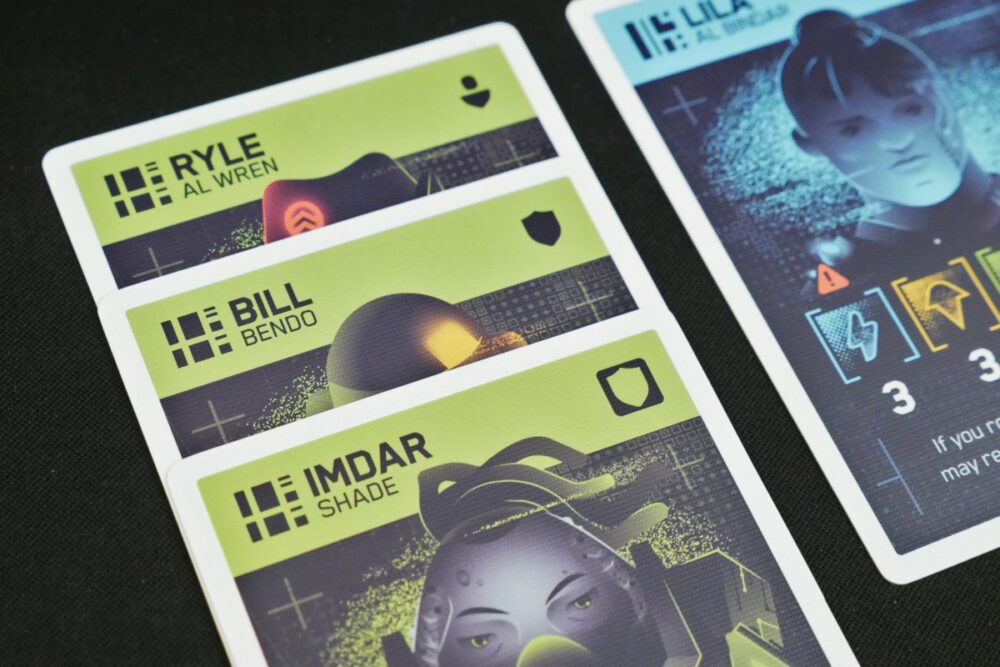
That end-game trigger can really sneak up on you, too. You can be so focused on the rolling and busting and not even realize that someone's on the verge of ending things. I once collected a Green card, brought it to my tableau, and groaned when I realized it was my third one. Sure, that's on me—I should've been paying attention. But even when you see the game end coming, it can feel a bit anticlimactic. Someone completes their last Crew, you reveal your Hazards, and tally the points. Yay.
Moonrollers is at its most fun when you're in the thick of it. The re-roll chaining is peak excitement, while the ending almost doesn't matter.
Moonrollers is a comfortable play at 2 players. While you're technically competing over Crew cards, you'll likely end up working on your own cards more than fighting over specific ones. In that sense, it feels more like a race than a fight. You're trying to assign dice faster than your opponent can, which pushes you to take more risks. The Hazard mechanism gets a small twist that works well: you only lose your tokens if you end with 3+ more Hazard icons than your opponent. It's tense trying to read their mind and collect fewer Hazard points without overdoing it.
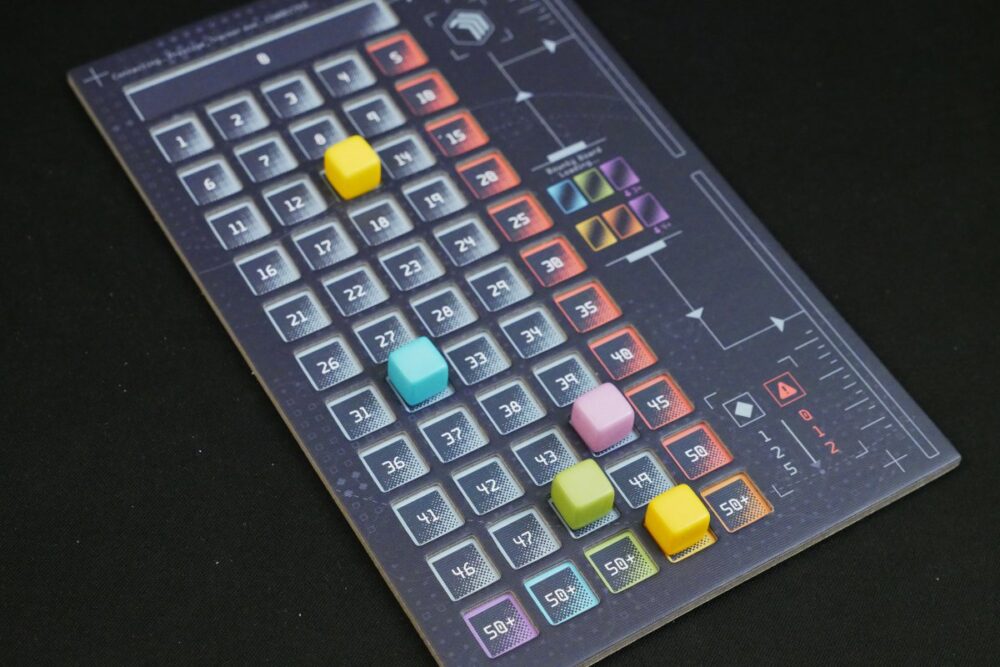
At higher player counts, Moonrollers opens up with more direct competition and blocking within Crew cards, as you don't have as much opportunity to solo your own Crew. You also have more room to aggressively collect Hazards. Not that you can mindlessly grab 5-pointers and expect to win, but you don't need to be as conservative as you do in 2p. Turns are snappy so downtime isn't an issue, although total game length does go up noticeably with every extra player.
My favorite count is 3, but I'd happily play at any table size.
I'm always down for a game of Moonrollers, but I only want to play it once or twice per session. The re-roll chaining is the best part, the various push-your-luck layers keep the tension up, and the ruleset is straightforward. But it's not a deep game. You play it to chuck dice, kill some time, and feel the high of gambling, not to challenge your mind with complex decisions and show off your brain. It's about luck, not strategy.
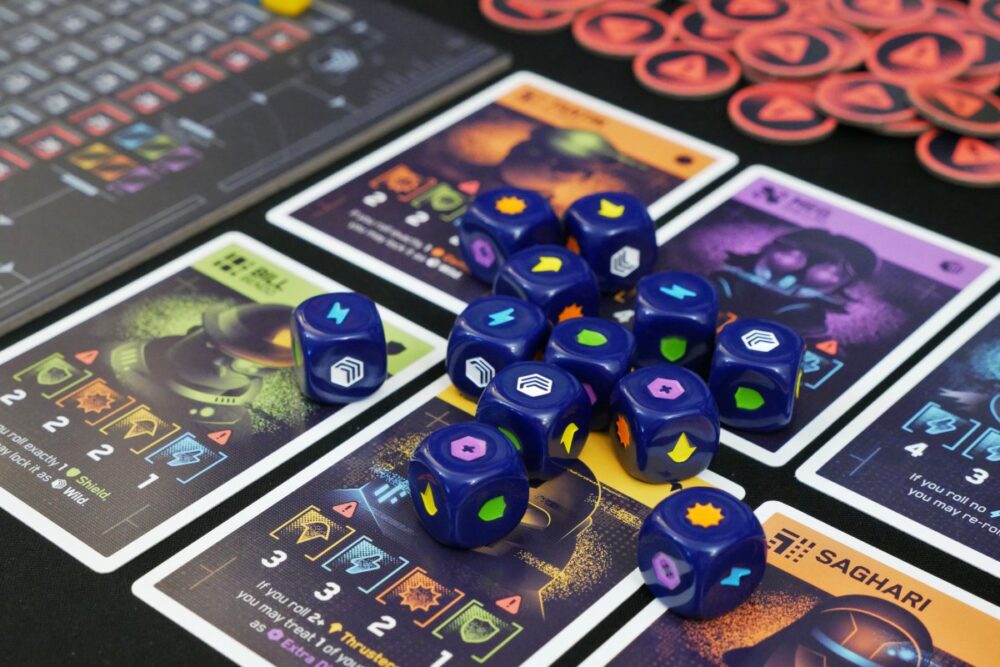
Moonrollers is an appetizer, not the main entrée. It's really tasty and it might just be your go-to appetizer whenever you sit down for a meal, but it isn't filling enough on its own. With only 30 Crew cards, it lacks long-term variety. You'll see the same cards over and over, and the Crew abilities aren't flashy enough to sustain interest with repeat replays. The decisions are engaging in the moment and it's far from a solved game, but it can get samey after a while.
It's a game that's great in short bursts every once in a while, and that's the role it serves in my collection. I keep coming back for a quick bite.
I love these dice. They're comfortable, with rounded corners and just enough heft, plus iconography that's clearly readable and color-coded. The colors in this game are pleasant and unique, like gummies begging to be eaten. The card graphic design is intuitive—everything makes sense and you can infer gameplay from almost every element. The cardboard Hazard tokens look and feel nice, with a fitting "danger red" design.
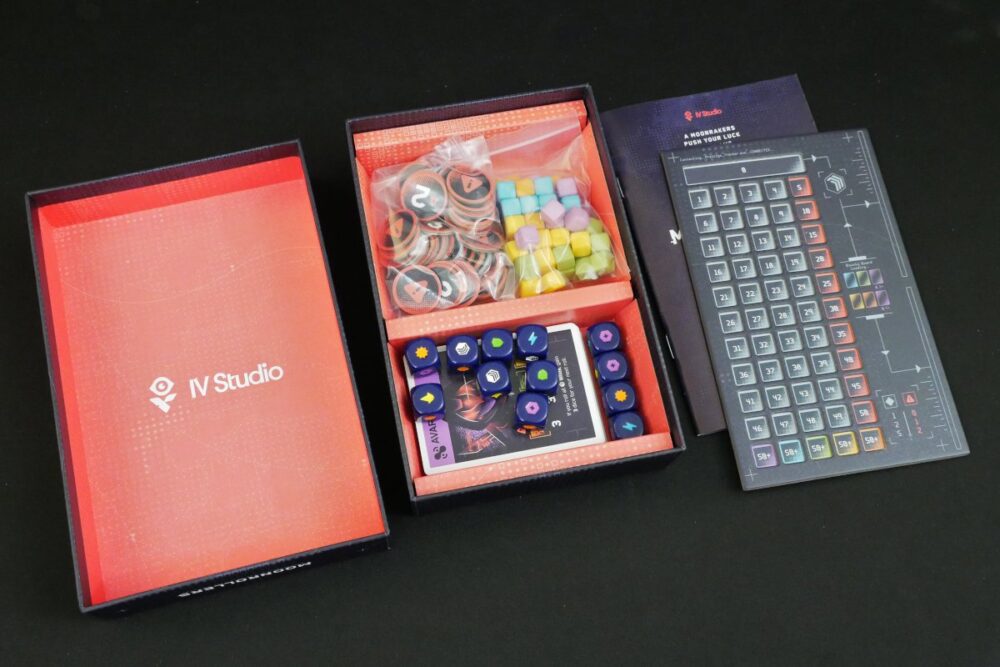
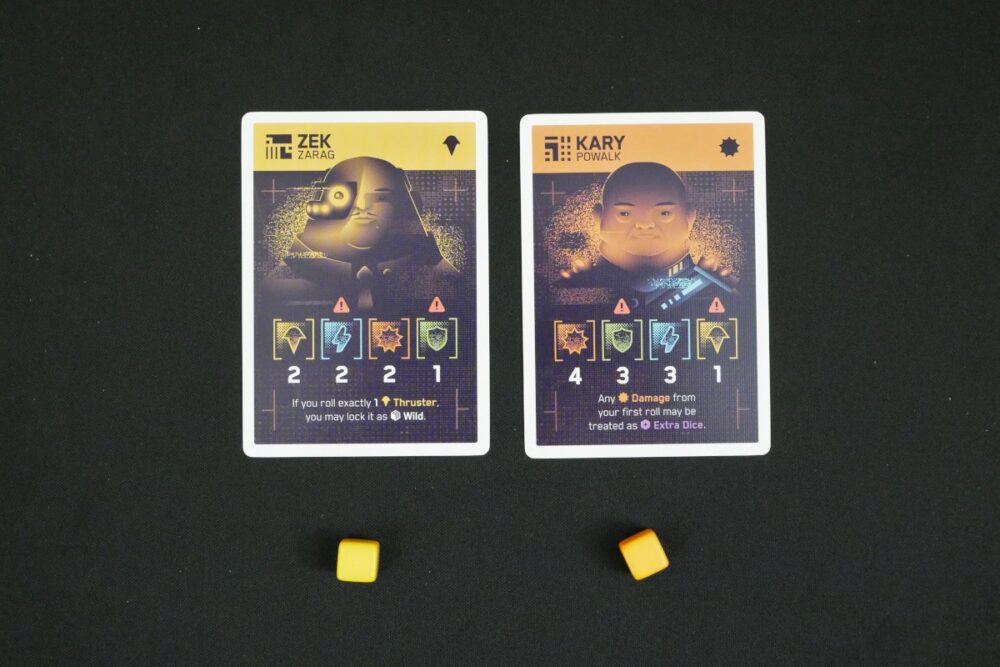
Moonrollers is well-made, period. The only thing I can flag as needing improvement: the choice of yellow and orange colors used, both on player cubes and Crew cards. The two colors appear very similar, so you'll definitely mix them up if you aren't paying attention. It's not enough to ruin the game, but it's a noticeable misstep in a game that's otherwise perfectly produced.
If you like push-your-luck dice chucking, Moonrollers belongs in your collection. It's a tad undercooked at 2 players but still exciting enough to reach for. At every other count, it's packed with three layers of push-your-luck tension, upheld by the addictive Extra Die re-roll chains. Get it if you love rolling with the punches; skip it if you need clear, meaty strategy.
Stop Buying Games
You'll Regret
Before your next game purchase, run it through this mental checklist that every seasoned gamer uses.
Free checklist, delivered instantly to your inbox.
No spam, ever. Unsubscribe in one click.
More Reviews