With Mille Fiori, you can see how designer Reiner Knizia earned his reputation. Everyone pitches Mille Fiori as "Knizia's take on point salad games," but what's more interesting is what he did with the structure. It's Sushi Go meets area influence with the thrilling pace of a snowballing race, a blend of mechanisms you don't often see. Knizia's real achievement is how much tension he packed into that simple draft-and-place rhythm.
Be warned, though, that for all its brilliant design elements, Mille Fiori demands a specific set of table conditions for it to sparkle. I was underwhelmed the first time I played it, but that's because I made the mistake of playing it at just 2 players. With repeat plays at the right player counts, you start to see what this game really is: constant interactions, constant tension.
This review is based on my own personal copy of Mille Fiori, which I bought new from Cardhaus. Not a free review copy.
Table of Contents
View more
What It Is
Mille Fiori is what you get when the acclaimed Reiner Knizia mashes up closed card drafting with area influence on a central board. Except you aren't set collecting here. Instead, each card corresponds to spots on the board, allowing you to place one of your glass tokens there.
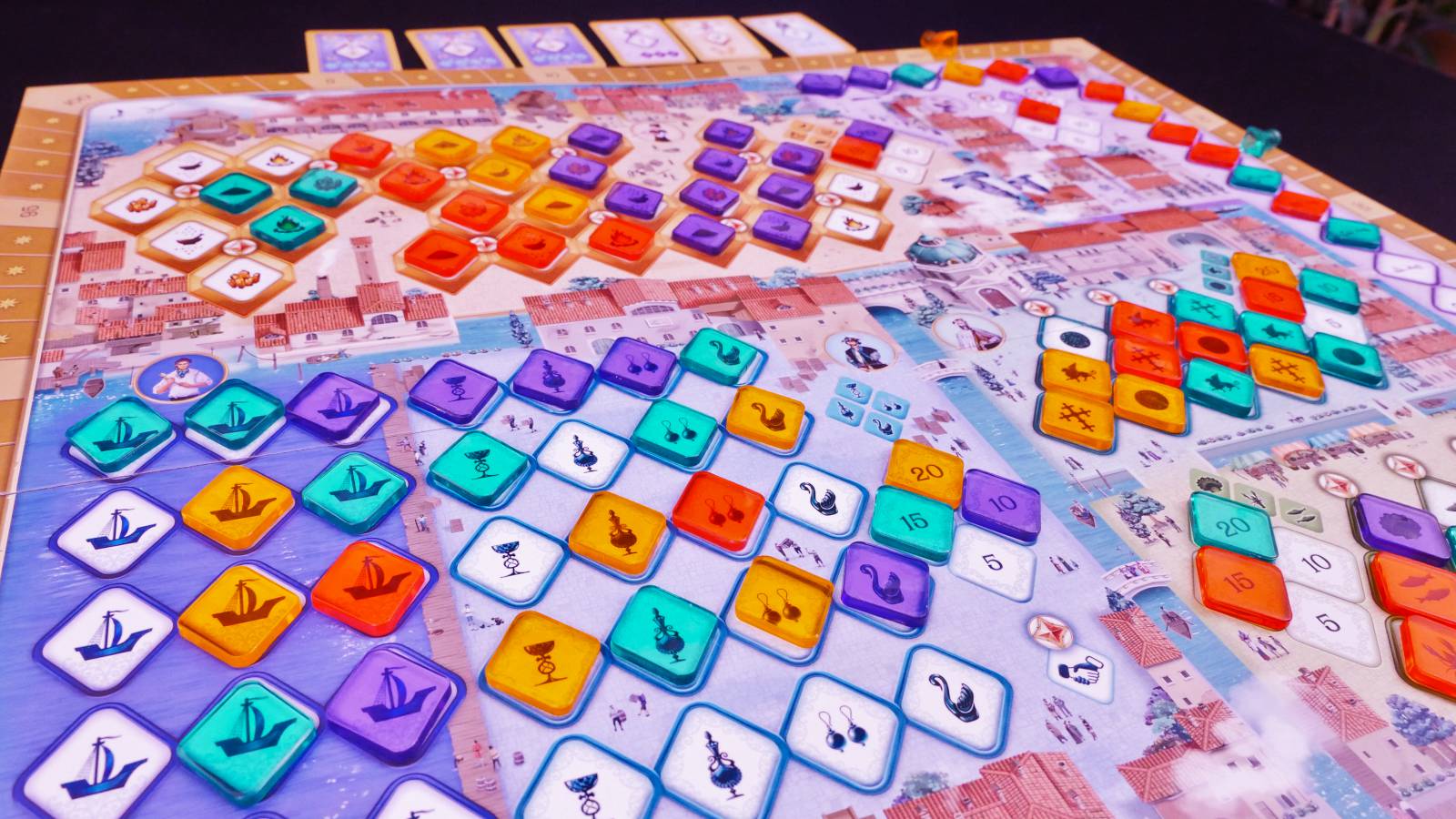
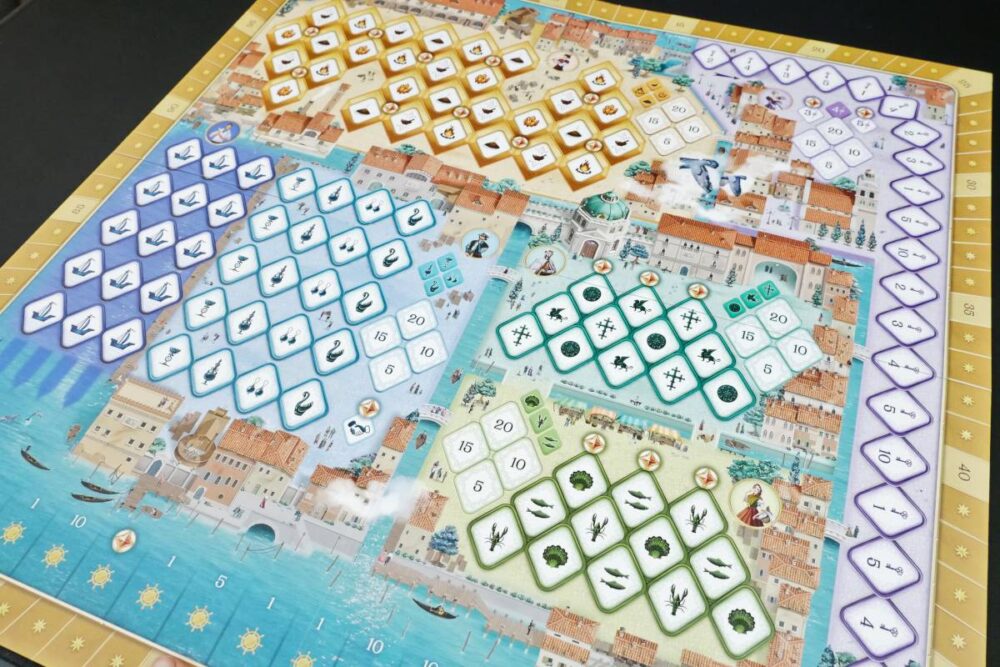
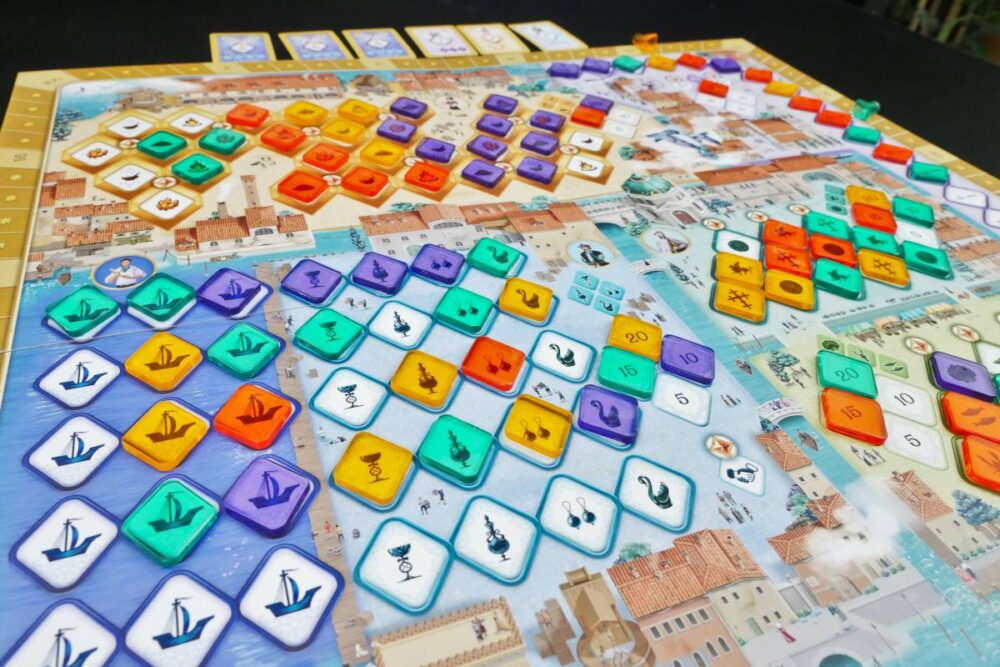
There are five main districts: Workshops (Yellow), Residence (Purple), Townspeople (Teal and Green), Trade (Light Blue), and Harbor (Dark Blue).
The closed card drafting is done simultaneously, meaning all players each choose one card from their hands, then all reveal together. In turn order, each player takes their chosen action—so you may have drafted an action, but if someone else also drafted the same action, they'll go before you and possibly take your spot (since each spot can only be occupied by a single glass token). Then everyone passes their hands to the left and drafts another card. Everyone's last remaining card is shunted off to the side as bonus actions, the first player marker rotates, and a new set of action cards are dealt out.
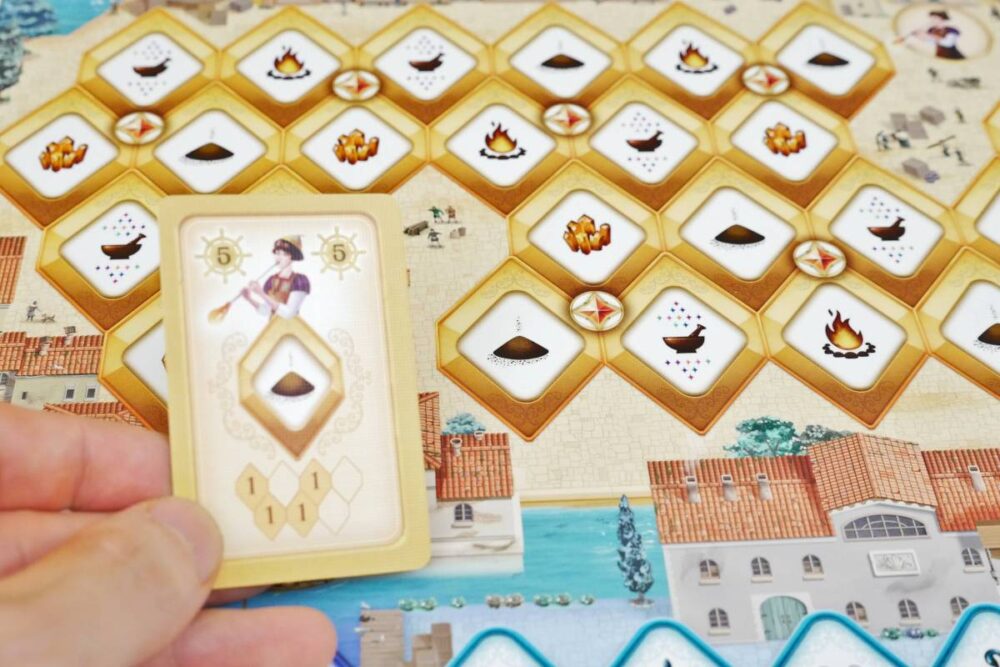
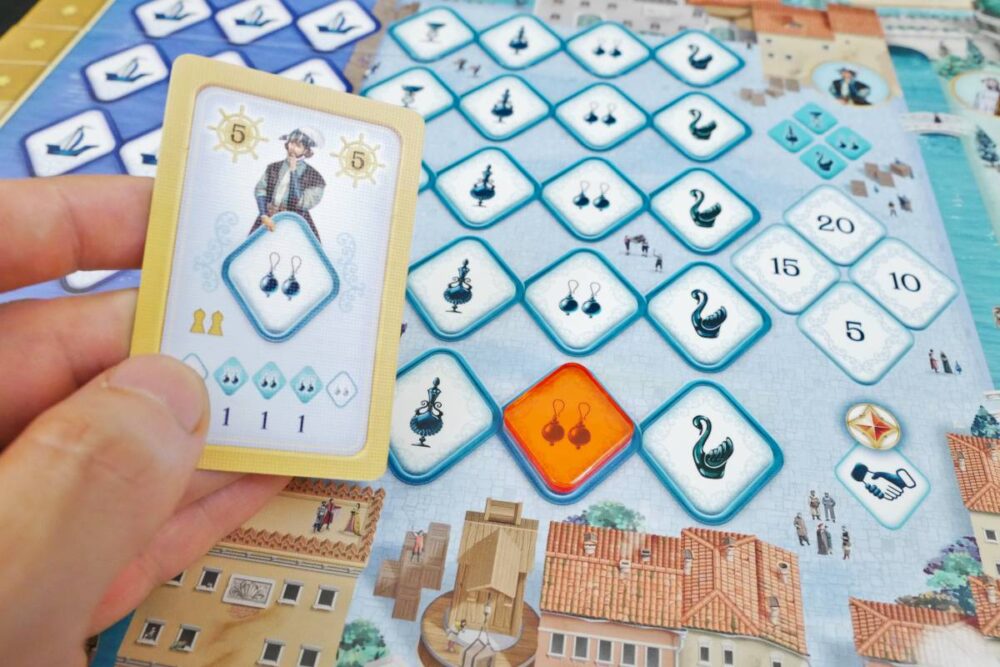
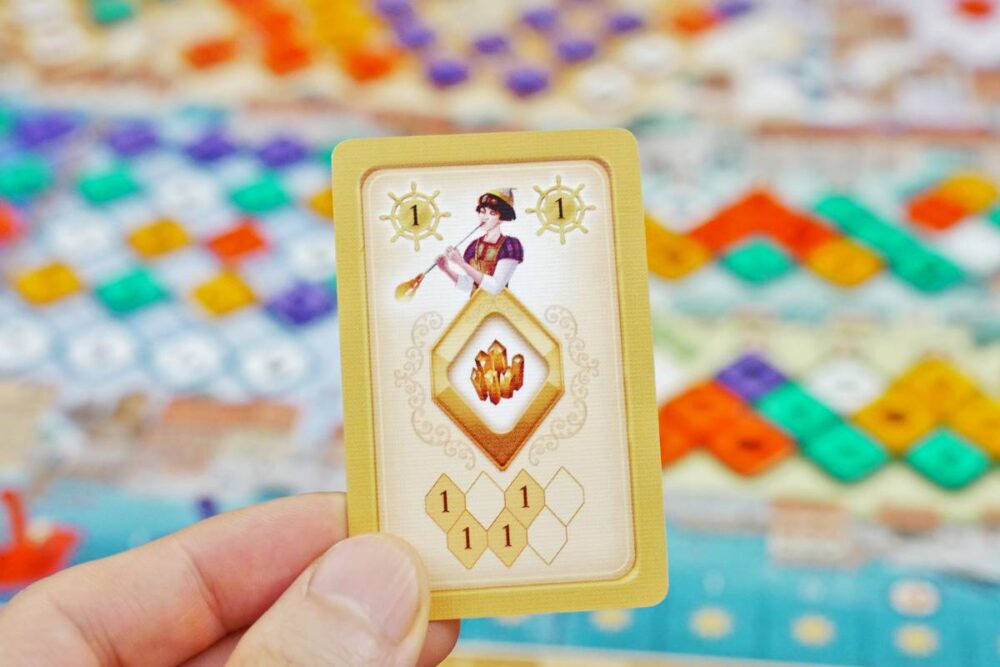
This Lime card lets me place my glass token on any Lime spot in the Workshops.
The central board is divided into five major districts, each with its own unique placement rules and scoring mechanisms. In a sense, each district is its own little mini-game, but they're all tied together by a shared basic structure: you earn points when you place a glass token, you can score bonus points if you're the first to fulfill special criteria in a district, and you can also take bonus actions when you meet other special criteria in a district. Remember the "bonus cards on the side" I mentioned above? You get to play a card from that pool whenever you activate a bonus action in a district.
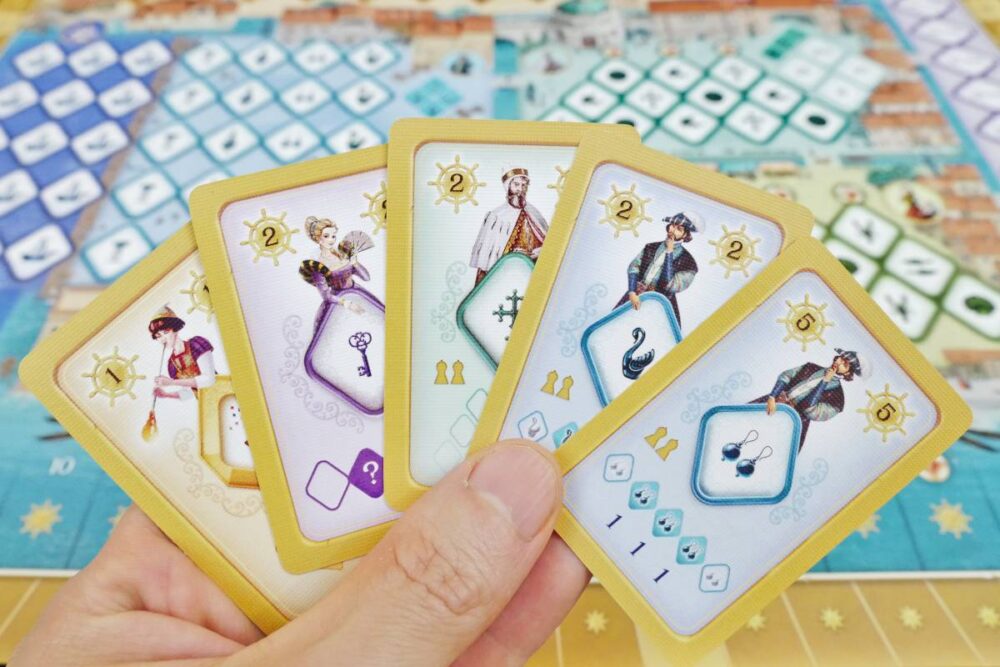
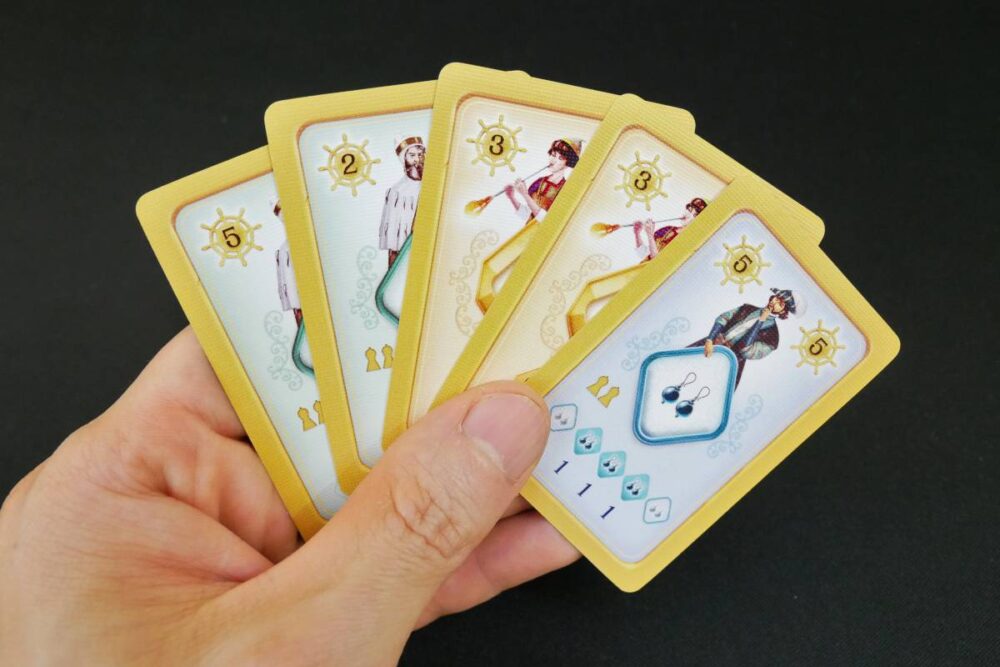
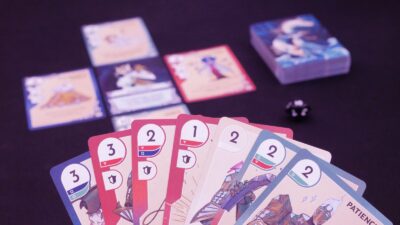
From this hand of five cards, I must choose one as my action.
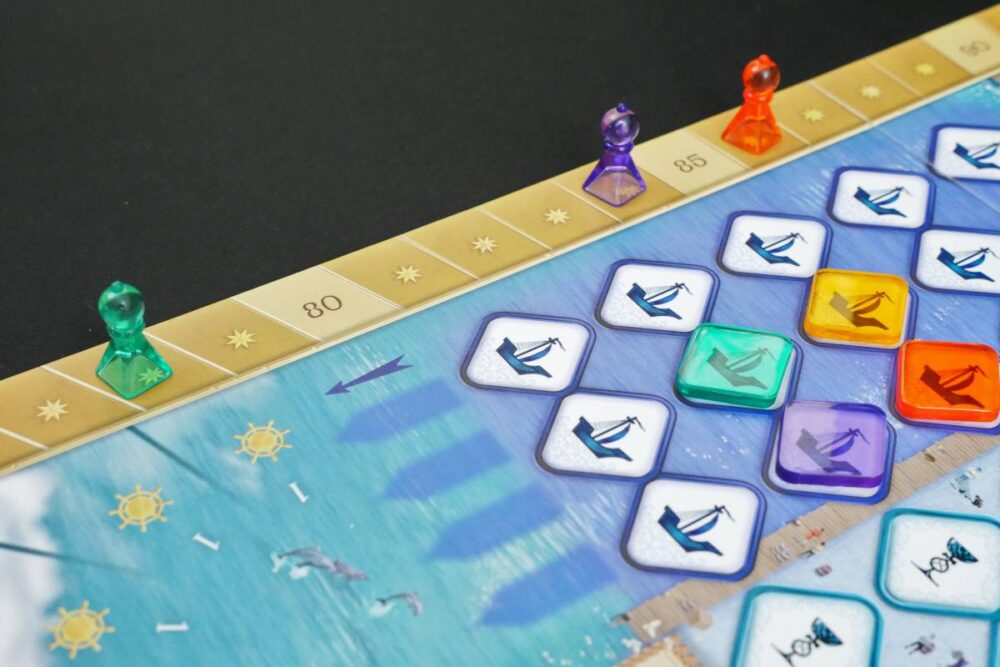
Mille Fiori packs different types of interaction across its districts. In the Workshop district, you can steal the bonus action spot that someone's building towards. In the Townspeople district, you can piggyback off the work of others and they earn extra points when you do. In the Harbor district, you speculate on shipments and try to get in on the good ones before others can.
Everyone's constantly earning points, tracked by markers around the outside edge of the board, and the game keeps going until someone places their last glass token on the board. Everyone else finishes up their turns, then whoever has the most points wins.
How It Feels to Play
Simple Turns, Meaningful Decisions
Mille Fiori has dead simple turns. All you do is pick a card and place a token—anyone can do that. But don't mistake Mille Fiori's simple turns for simple decisions. Every decision in this game is surprisingly meaningful, and you won't realize just how meaningful a given decision is until you're several turns down the road and reaping the benefits or cursing your earlier self.
When you're staring at your hand of cards, you aren't just deciding which district to play in but also where to play within that district. You aren't just looking at what placement will score you the most points now, but how you can set yourself up to score big in the future. It's not like chess, though, where you have to plan many turns ahead in strict sequence—the game doesn't allow for much planning ahead because you don't know what cards will be available. It's more about leaving yourself opportunities all around the board so you can later pounce on those opportunities when you're holding the right cards.
Every turn is mechanically simple, but it will have far-reaching ramifications.
Yet for how limited your options are on any given turn, you never feel restricted or backed into a corner. Every card always helps and never hurts, so it's hard to be disappointed even when you're holding a hand of unwanted cards. And even those unwanted cards can be pivotal, allowing you to activate a stray bonus action to then play a follow-up card that ends up being very beneficial for you. Every card also has that backup "boat movement" option: forego the normal token placement to move on the boat track instead, earning points and maybe even landing another bonus action.
Mille Fiori asks you to strategically build opportunities for yourself around the board, then tactically take advantage of them when opportunity strikes. Everyone else is doing the same thing on a crowded central board, so all those carefully crafted opportunities are constantly being disrupted or even stolen. You draft a card, you place a token, and that token has far-reaching ramifications that'll keep being felt until the very last turn.
The Racing Tension and Pressure
Mille Fiori is a race at heart. From the outset, you're advancing your point tracker around the outer edge of the board. It may only be a few spaces at first, but you've fallen behind and already feel the pressure to catch up. As decisions snowball into opportunities, as players chain their bonus actions and claim the bonus points in different districts, the point tracker movements grow bigger and bigger every turn. You're constantly popping points, catching up and falling behind only to catch up again. It's exhilarating when you pull off a triple bonus action combo and leap ahead from last to first. Not so much when Tom does the same thing three turns later.
Watching the point trackers move every turn is surprisingly thrilling.
That racing tension never lets up, and the stakes only keep growing as point scoring opportunities cascade. There's a real sense of acceleration in Mille Fiori, and it's heightened by the built-in countdown of glass tokens. As soon as someone plays their last token, the game end is triggered—so even as you're jockeying for position with big swings, you're hoping YOU can put in the last point surge that puts you in the lead right before the game ends.
The first few turns of Mille Fiori are always slow and uneventful, but they're necessary to set the stage. It only takes a few minutes for the game to take off and hum along with its satisfying rhythm. The card drafting is simultaneous, so there's minimal downtime. And with a maximum of 5 cards in your hand on any turn, analysis paralysis never rears its head. Mille Fiori is masterfully paced, getting out of its own way and letting the gameplay speak for itself.
Constant Conflict Yet Never Mean
There's something genius about Mille Fiori's central board action selection being driven by the cards in your hand, and how those cards come to you in randomized groupings. Your selection is always narrow, which means the game doesn't let you play to your strategy all the time. Sometimes you're forced to spread out and contend in districts that are of lesser priority for you—and that all but guarantees interaction with other players.
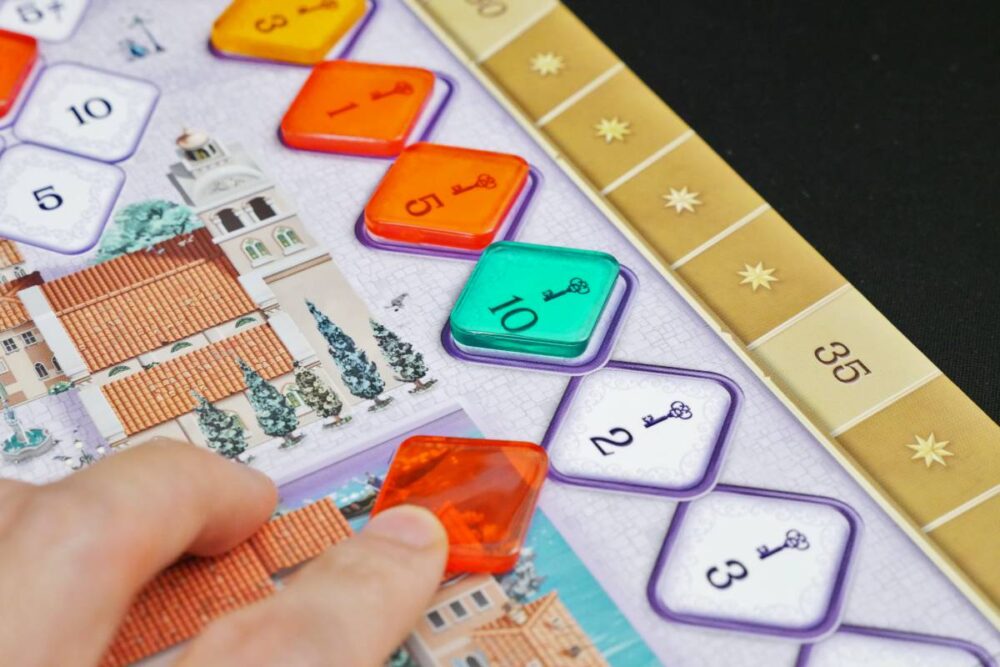
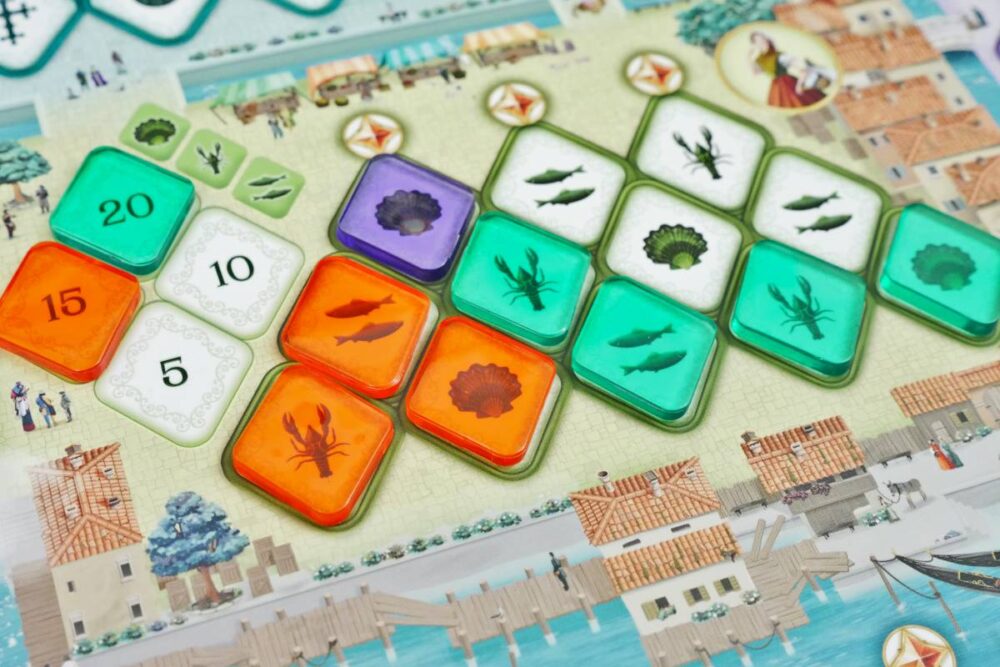
I wanted to continue my chain in the Residences, but Green stepped in and broke it. Now I'm forced to take the next spot—fewer points and no chain benefit!
There's also the simultaneity of that action selection. If you're first in turn order, you're guaranteed to place your tokens in your desired spots for all turns that round. But if you aren't first, you don't have any guarantees. Everyone chooses their actions secretly and simultaneously, then everyone reveals. You thought you were getting the 10-point spot in the Residences, but Gary ahead of you also chose a Residence action. He goes first, so he snatches the 10 points from under you and now you're stuck placing on the next spot, which is a lousy 3-pointer and you also miss out on the bonus action you would've gotten. Even if Gary had no intention of sabotaging you, he's still done it. These kinds of accidental interactions happen everywhere in this game.
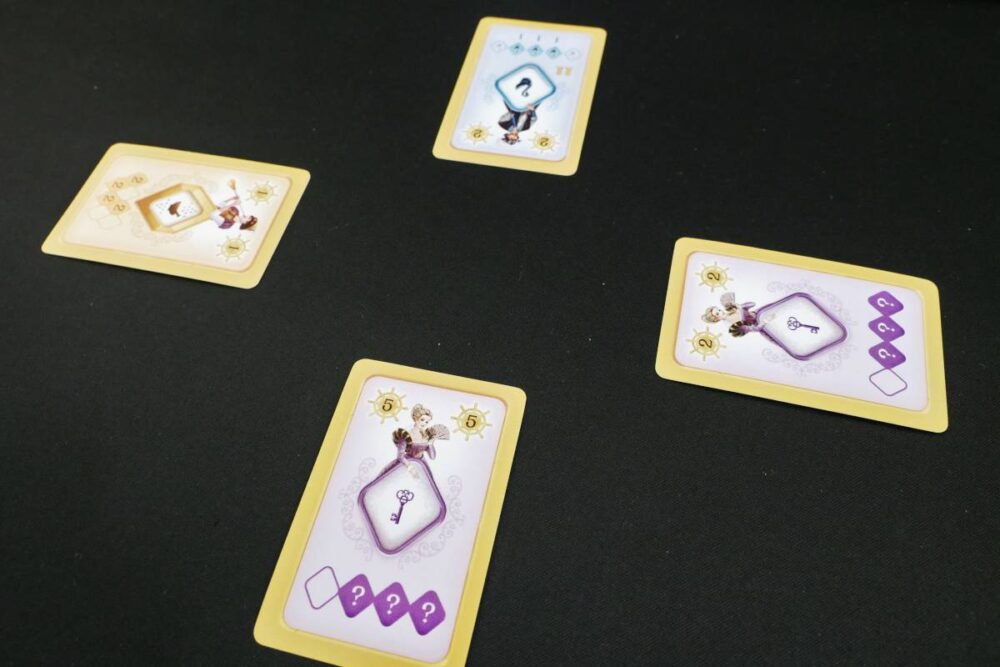
Each turn, everyone selects their card in secret and reveals simultaneously. That mixture of uncertainty and commitment brings out a lot of tension.
And it's the secret simultaneous play that keeps Mille Fiori from ever feeling mean. You're constantly rubbing up against each other, but you can't gang up or pile on a specific person. Why? Because you're always limited by the cards in your hand. If someone messes with you on a turn, it's because the opportunity presented itself and they took it, not because they have it out for you. It was likely the best move for them and it just happened to affect you. Despite all the conflict, it's benign and cordial and good-natured, so it's hard to get mad.
Luck Plays a Role
Any time you have a shuffled deck of cards, luck is there with it. If you're coming in to Mille Fiori expecting a full-blown strategy game where the cleverest player always comes out ahead, you'll be left disappointed. For as smart and strategic as the card-driven action selection is, you will inevitably get boned by the draw at times—as will everyone else.
There will be times when Pete is running away with a growing streak in the Residences, and you'll decide that you really want to break that streak sooner than later. But it's entirely possible that Pete ends up being the only one to draw a Residence card in hand this round, allowing him to play and extract huge points again with no one able to stop him.
Even if I want to break someone's Residence chain, if there are no Residence cards in my hand, I simply can't do it. That's just bad luck.
Or Matt plays a Harbor card on the same exact turn as you, except he's ahead of you in turn order so he gets to slip in and ship out the huge row of goods, scoring big points and leaving you with scraps. Or it's near the end of the game and you have two perfect cards in your hand, but you can only play one and there's a good chance that other opportunity may not surface again.
That small layer of luck is a good thing. It's what keeps Mille Fiori accessible and engaging, preventing new players and weaker players from getting absolutely stomped by the sharpest at the table. It's a rush when you catch the right side of it, and a gut punch when you're caught on the wrong end.
Not the Easiest Game to Teach
The worst thing about Mille Fiori is its front-loaded learning curve. While the turn structure itself is dead simple to explain—you pick a card from your hand, then place a glass token in a spot indicated by the card—the central board and the various district mechanisms are layered.
Each district has three placement considerations (where you're allowed to place tokens, how bonus points are achieved, and how bonus actions are activated) and each district's three layers have unique rules and restrictions. You can teach the game in about 15 minutes, but many players (especially less experienced gamers) will struggle to keep it all straight in their heads.
Teaching the different districts, the bonus actions, and the race points? Not easy.
A full game is usually needed for all of it to click, which makes Mille Fiori the kind of game I'd rather replay with the same group rather than the kind of game I'd freely bring out with new groups. You really have to practice and nail down the teach if you're showing Mille Fiori to newbies, or you'll spend the entire game re-explaining why each action is scoring that many points.
To that end, Mille Fiori is firmly a "gateway plus" or "family plus" game—not simple enough to be a newbie's first, second, or even third introduction to the hobby, but an excellent step up in complexity from something like Ticket to Ride or Cascadia or Carcassonne. If it weren't for that front-loaded learning curve, it would easily be one of the best gateway games of the 2020s.
Player Count and Scaling
The dynamic interactions in Mille Fiori shine at 4 players. With a full table, the simultaneous card draft is at its most tense and exciting; the entire board fills up with tokens, guaranteeing collisions and blocks; your decisions are tighter and your strategies harder to pull off; the Residences are less likely to result in a runaway leader problem (i.e., if no one bothers to break someone's growing chain, that player can amass tons of points very quickly). All of this is still there with 3 players, but weakened and diminished—still enjoyable enough that I'd play at 3, but it does feel like it's running at 80% power.
At 2 players, Mille Fiori loses most of its magic. The board is way too open, so you don't feel the pressure and tension that comes from multiple spots evaporating every round, and you aren't forced to compete across every district. It's a much gentler, more mechanical game with just 2. You can sort of fix it using one of the unofficial 2p variants, like pre-filling in a bunch of spots at the start of the game to tighten up the board, but you still lose a lot of the other magic in the simultaneous action selection, the interactions where you benefit each other, the racing for bonus points. It takes on a more back-and-forth abstract strategy feel that doesn't capture the same spirit as 3p or 4p.
Replayability
Mille Fiori may not have any modular variability, but it's highly replayable in the classical sense—and that's all because of the action selection deck.
Since the action selection deck gets shuffled at the start of every game, you get a whole new, randomized sequence for how this particular game will play out. And yet, since decisions are so meaningful and the ramifications of those decisions build on each other from start to finish, the game never feels like it's on rails. You're constantly adapting to an evolving game state, and that game state branches out in unexpected ways all the time. It's always surprising you, and you have a new puzzle to solve on every turn.
And it never feels repetitive. The whole draw-a-card-play-a-token rhythm remains engaging throughout because neither the draw-a-card nor play-a-token halves have obvious plays. You might see a "best" card to play that'll score you the most possible points on this turn, but maybe you forego that card for another one that sets up a different opportunity later. Mille Fiori never feels solved, and that itself is the replayability hook.
Components and Setup
Mille Fiori sets up within minutes, and that's part of its charm. Not only do you get a dense and interactive experience that plays in under an hour, but it's so easy to get from shelf to table. You just unfold the central board, shuffle up the deck, and pass out each player's glass tokens—that's it.
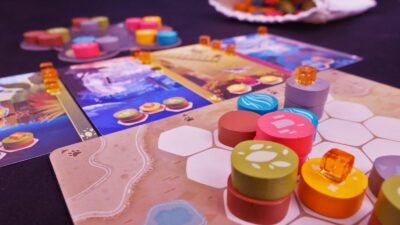
The theming is thin, but the artwork and graphic design are superb. The colorful board catches your eye, more so when those vibrant glass tokens start filling in various spots. The cards are easy to read and they have helpful illustrations that remind you how each action works and scores. I love the miniature size used for the cards, which saves on table space, but I'm surprised by how thin they are. The card stock quality is lacking and prone to warpage if you riffle shuffle, and I do worry about accidentally bending or creasing them. It's a minor issue, but do consider sleeving them if you can.
Mille Fiori is a treat to play thanks to its tactile acrylic tokens and visually stunning art direction. The vibrant colors suck you in and by the end you're dazzled by the prismatic display—one of the prettiest sights in board gaming.
The Bottom Line
While I don't normally buy games at full price, Mille Fiori is one I'd likely make an exception for. But you'll need a full table of 4 players who can handle scoring complexity, or you'll miss out on the rich interactions that make it worth playing. With the right crowd, nothing else plays quite like it.