I'm always hunting for card games that are fast, portable, easy to bring out, but still satisfying. Scout seemed like an excellent fit when I picked it up a few years ago—it has a great reputation, a tiny box, and a strong mechanical hook with its dual-numbered cards. I was ready to finally have a ladder-climbing game that felt designed, not house-ruled.
And Scout certainly stands out with its peculiar design. But is there real substance behind the gimmick? I'm once again left scratching my head at how this game earned its reputation.
This review is based on my own personal copy of Scout, which I bought new from Boardlandia. Not a free review copy.
Table of Contents
View more
What It Is
Scout is a ladder-climbing card game that'll feel familiar to anyone who's played games like rummy, canasta, big two, Chinese poker, etc. You have a hand of cards and you take turns playing bigger and bigger melds (i.e., sets of the same number or sequential runs of consecutive numbers) while trying to be the first to empty your hand. But Scout throws in three twists that turn it into more of a gamer's take on card shedding and ladder climbing.
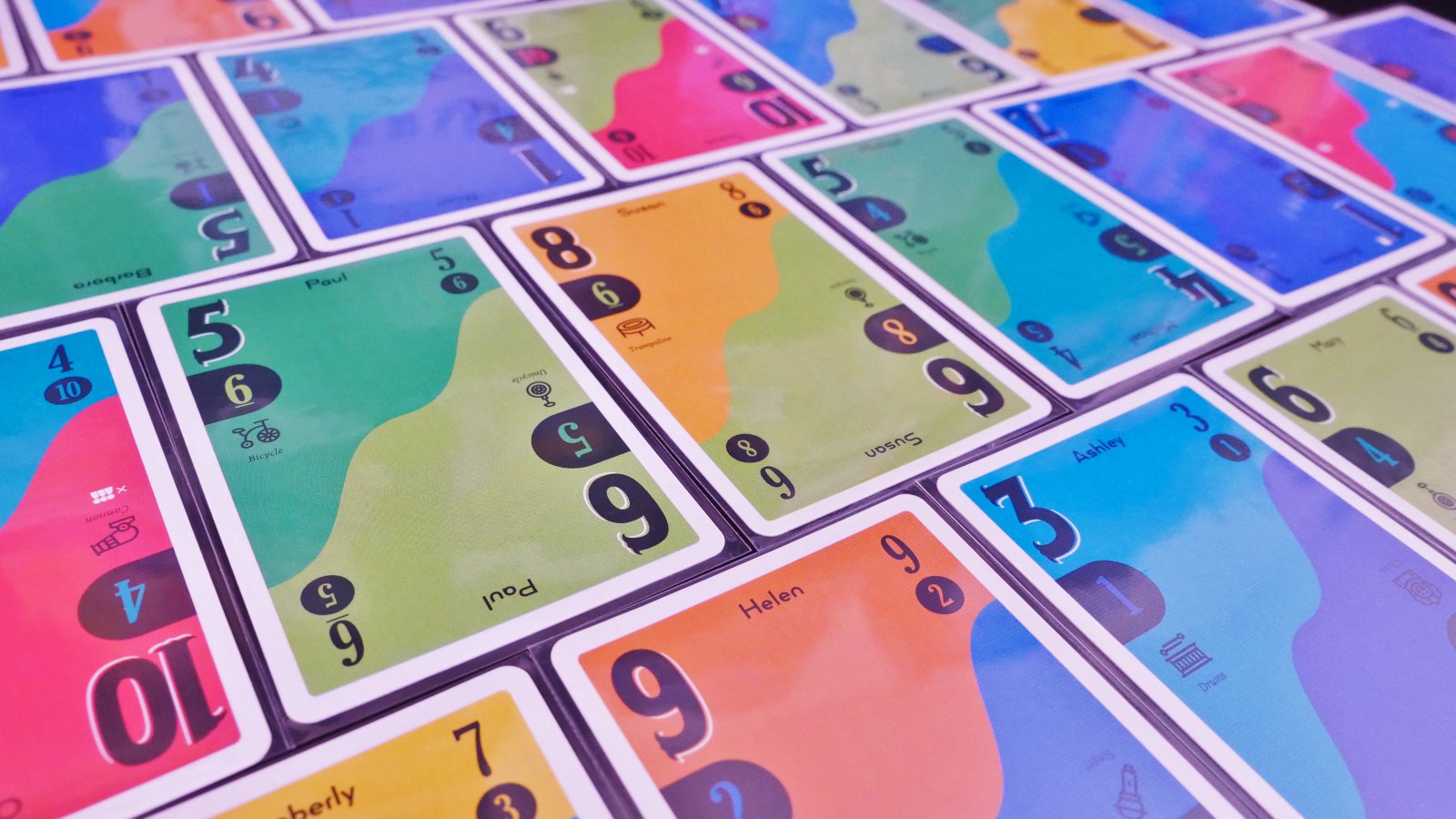
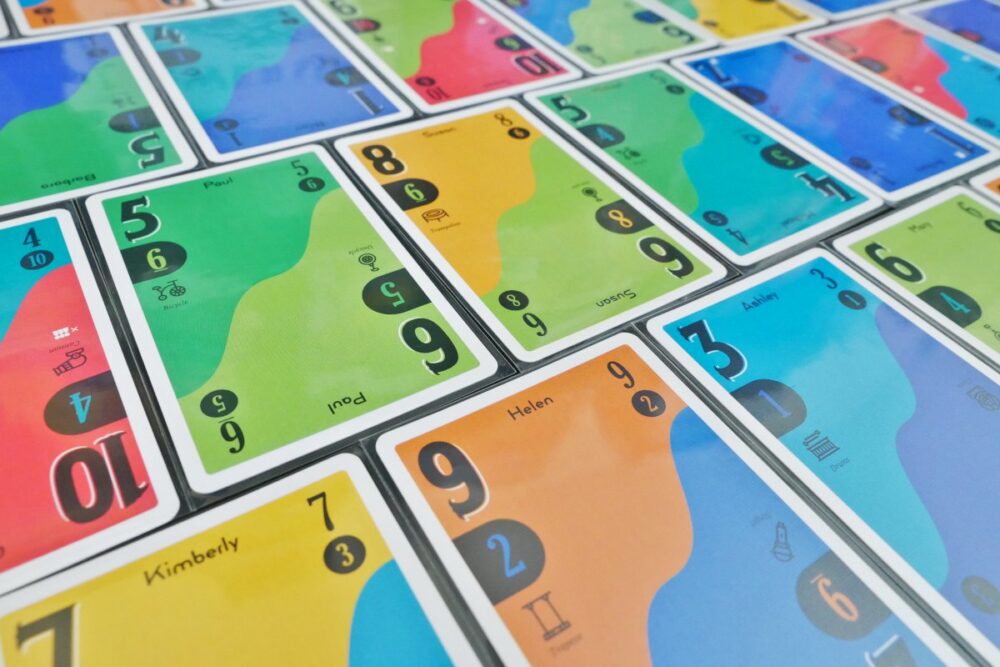
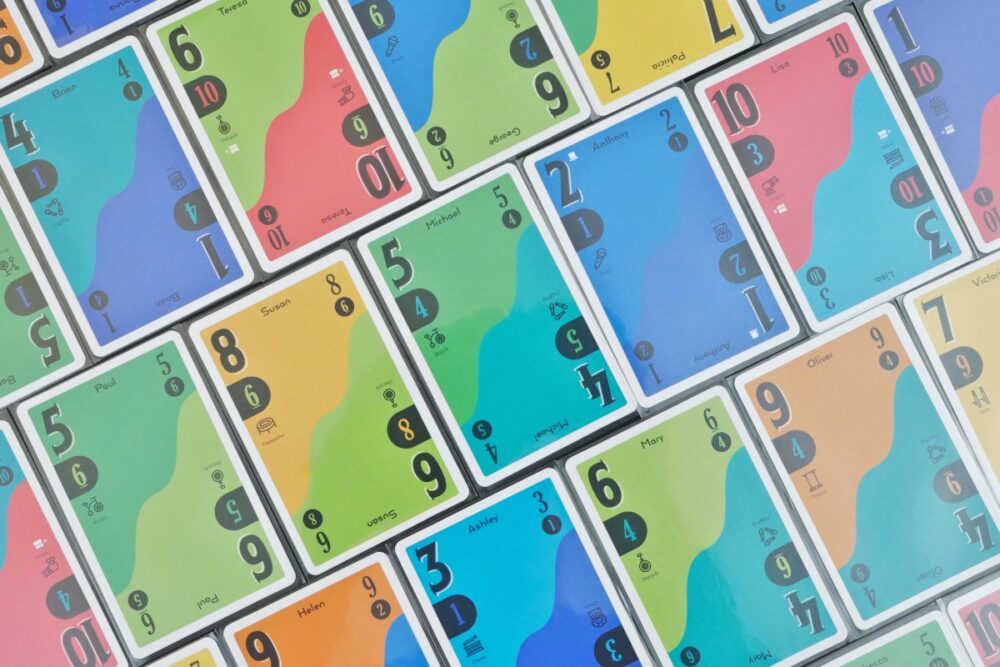
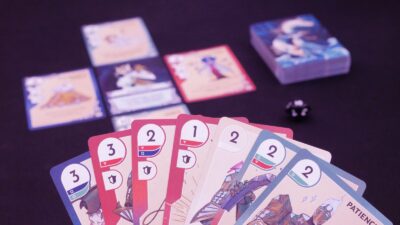
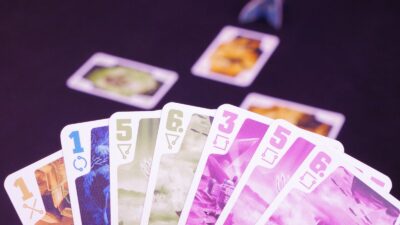
The first big twist is that each card has two numbers, but only one is active depending on which way the card is oriented. For example, a 4/9 card plays as a 4 when held one way or a 9 when flipped upside-down. When your hand is dealt to you, those cards are kept in the orientation they're in. You can't flip cards while they're in your hand, but you will have opportunities to flip them later.
The second big twist is that you can never rearrange your hand. Want to sort your hand from lowest to highest? Too bad, you can't. When your hand is dealt, you take it as it's dealt—whatever order it's in when you pick it up is the order in which you have to play it. As you play stray cards, the remaining cards in your hand will come together, form melds, and become stronger.
The third big twist is that you can choose to either "show" or "scout" on your turn. The show action is simply playing a card (or meld) that beats whatever the previous player played. You take their cards as points and now it's the next player's turn to beat what you played. The scout action is for when you can't play a stronger meld. To scout, you take one of the cards from the active meld and place it into your hand anywhere (flipping it if you wish), and the player you just scouted from earns a point token. This strengthens your hand and at the same time weakens the active meld for the next player.
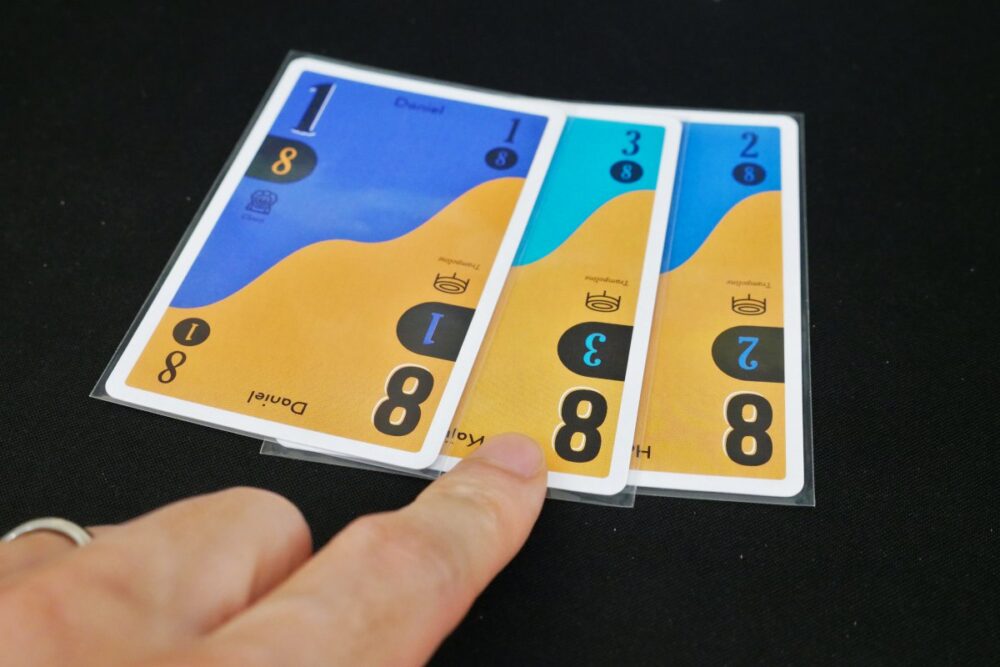
Someone else played 8-8-8. I can't beat it, so I must scout one card.
A round ends in one of two ways: either someone empties their hand, or everyone scouts and it comes back to the active player. When a round ends, everyone tallies their scored points and loses points for each card remaining in hand. Scout plays one round per player, then whoever has the most points wins.
How It Feels to Play
Strong Novelty, Weak Decisions
At first glance, Scout seems to present interesting decisions born from its restrictions. You're playing cards from your hand to beat what's on the table, but you're also aiming to bridge the gaps between cards in your hand to form melds (or strengthen the melds you already have). Scout wants you to play from those gaps, choosing your cards smartly, holding off on your melds until the time is right to lay them down for big points.
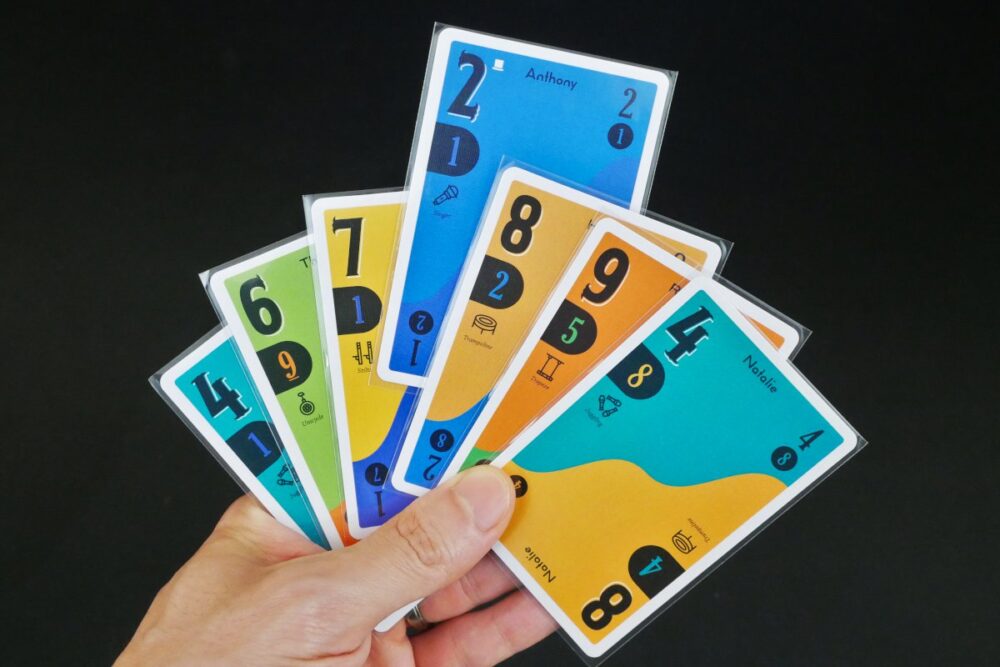
If I play this 2, I can connect my 6-7 to my 8-9 and create a big meld for later.
And you can score big points from several angles. If you beat the active meld, you take those cards as points. If you play a big meld that no one can beat, you earn a point every time someone scouts from you. And if you can lay down a meld so large that it forces the entire table to scout, you prematurely end the round and score a huge lead—everyone else loses points for whatever's left in their hands, dragging them behind you. Scout is all about manipulating your hand, building big melds, and playing those melds at the right time.
But Scout's fun factor rests in figuring all that out. It's the novelty of an un-rearrangeable hand with flippable cards that feels fresh and interesting... and it is fun for a little while as you wrestle with its mechanisms and learn how they interplay with all the scouting. Once you've figured it out, though, Scout mostly plays itself—it becomes just another card-shedding game with its own spin. All the fun of Scout is in the learning of it, not in the playing of it.
The One Source of Tension
There's a special action in Scout that everyone can do once per round: "scout and show." Instead of one or the other per usual, you can spend your scout-and-show token to do both in that order—you scout a card from the active meld, then play from your hand on the same turn.
It's a powerful ability that can disrupt the momentum of a round, but you have to be smart about when to play it. As the round progresses and your hand builds up in strength, everyone else's hand is also growing stronger. The scout-and-show ability is the only way to take down someone who plays an unbeatable meld that's guaranteed to circle the table and end the round.
And this introduces a miniature game of chicken. Who's going to be the first to spend their scout-and-show token? If it's you, you'll be left vulnerable to future melds while everyone else still has their tokens to stop you, so you try to delay spending it as long as you can. But if the entire table scouts and you're the last one who can beat the active meld, you either spend your token and keep the round going... or don't and let the round end.
Timing your scout-and-show token is the one thing in Scout that puts you on edge—there's real tension there. But is it enough to save the game? Not for me. The rest of Scout still plays on autopilot, and it sucks when you're forced to spend your scout-and-show token just because you're last in line. You're robbed of your only meaningful decision for the entire round.
Luck Outweighs Skill
You have to be okay with luck to enjoy Scout. Yes, there's some strategic mitigation, but the power of your initial deal can't be overstated. Since you can't rearrange your cards, the power of your hand is even more predetermined than in traditional card games. In a traditional card game, you could be dealt a perfect set of 1 through 10 and that's always to your benefit, but in Scout the same set of cards are only as good as the order in which they're dealt. If you get 1 through 10, you're unbeatable; if they're jumbled up, you're screwed.
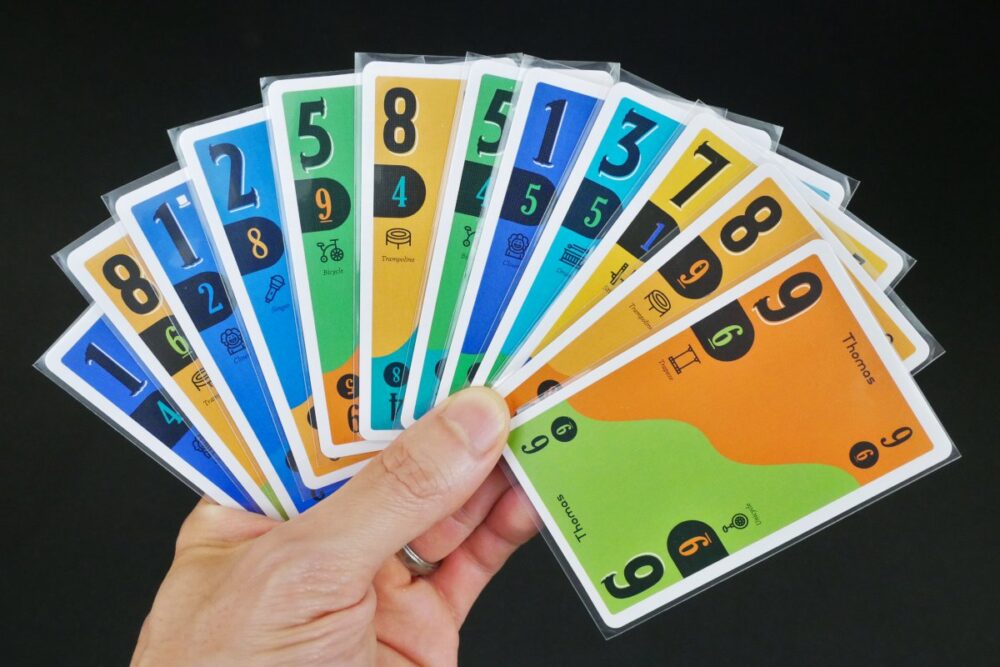
The initial deal. What you get is what you get. Bad hand? Too bad.
And I'm not just talking about getting a perfect deal. The inability to rearrange cards in your hand takes vital control away from you. Starting with 3 pairs and 2 triplets might put you significantly ahead of everyone else, and you're only there because those cards arrived in the right order. What do you do if your hand sucks? You can flip the whole thing and try playing with the other side, but that doesn't help if both sides are terrible.
In any given round, luck has huge sway over the winner. Players of equal skill will be beholden to what they're dealt—and between players of disparate skill, that gap needs to be pretty big for strategy to win out over the long run. Even for a card-shedding game, Scout is just too lucky to be fun.
Ad-Hoc Table Alliances
There's a funny thing that happens in Scout when someone lays down a big meld: everyone else is suddenly on the same team. When a big meld threatens to end the round, you inadvertently work together with everyone else to take it down. You don't want it to last an entire circle around the table, else the round ends in that player's favor.
So when Jack plays a 4-card run, you're exchanging glances with Petra and George, hoping one of them will break it... because you know you certainly can't. You end up scouting, then Petra scouts, then you and Petra both yell "C'mon, George! You gotta beat it! Oh, you can't? Use your scout-and-show!" And George begrudgingly uses it (hurray!) or he doesn't—and flashes a smirk because he knows he came out ahead of you this round.
Player Count and Scaling
Scout falls apart at 2 players. You have to play by a variant that skirts the whole "round ends when it comes back to you" rule. There's no more scout-and-show ability. Instead, each player gets to scout three times—and whenever you scout, you take another turn. If you ever need to scout but you've used them all up already, the round ends. It's a tense mix of a race and a tug-of-war, but the game is predetermined by the luck of the deal and stripped of its most interesting mechanism. It's functional but lifeless.
At 3 players, Scout doesn't have enough hands around the table, causing a gameplay imbalance. With the "round ends when it comes back to you" rule, you often win by playing a meld size that equals the number of players plus one—in this case, you just need a 4-card meld. It's too easy to build an unbeatable meld at this player count, so rounds end too quickly and too abruptly. There's no tension, no buildup, no fun.
Scout is at its best with 4 players, and it feels like the game was designed specifically for this count. It's almost as good with 5 players, but your initial hands are smaller and it's pretty much impossible to build a round-ending meld, so it loses a good chunk of what makes Scout tense.
Replayability
Every hand of Scout is a new puzzle to work through. Which gaps are you going to play and which are you going to fill? Which cards are you going to scout to build up your melds? When is the best time to burn your scout-and-show? There's certainly a lot of variety in the shuffled deck, especially since every card can be flipped one of two ways—the combinations are near limitless.
But once the novelty wears off, Scout just isn't all that special compared to other ladder-climbers. If your family or game group is the type to always bust out big two or canasta at holiday gatherings, Scout could potentially be the lifestyle replacement for you. But if you aren't already locked into a rummy-style tradition that comes out all the time, Scout won't convert you.
Components and Setup
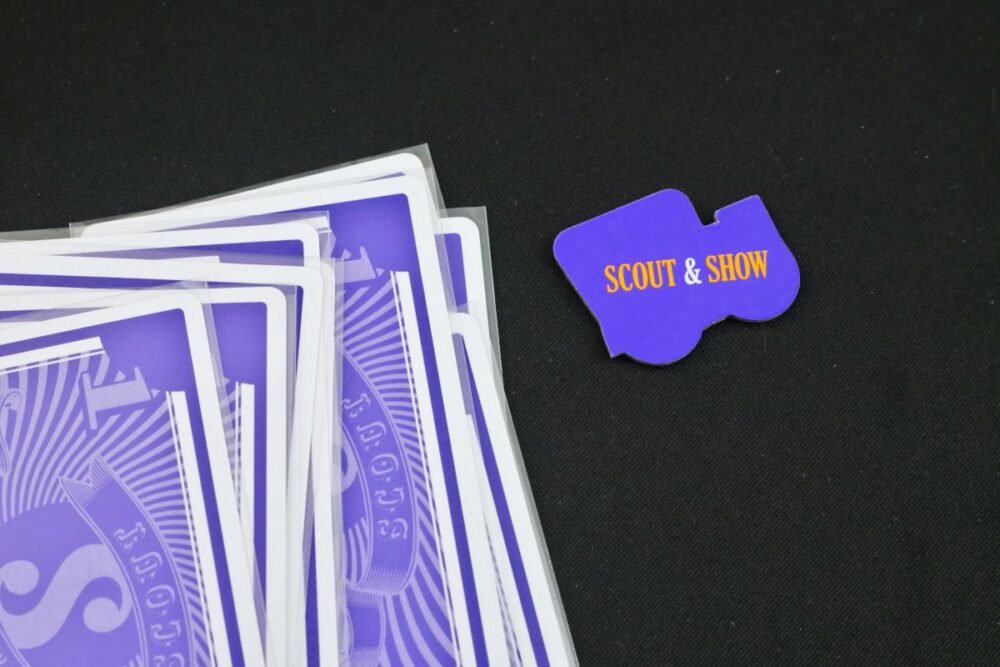
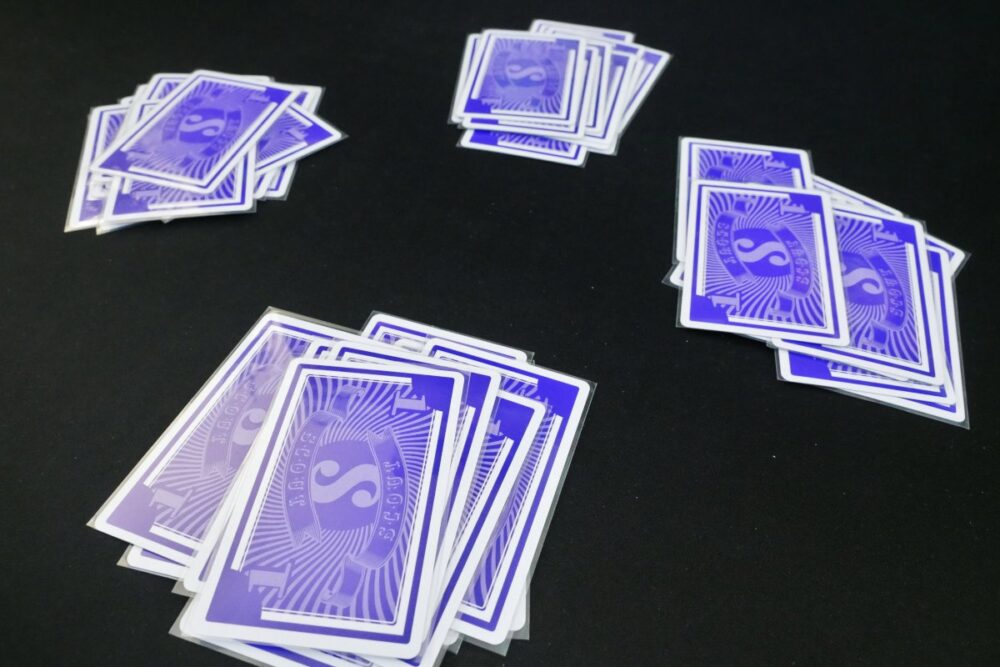
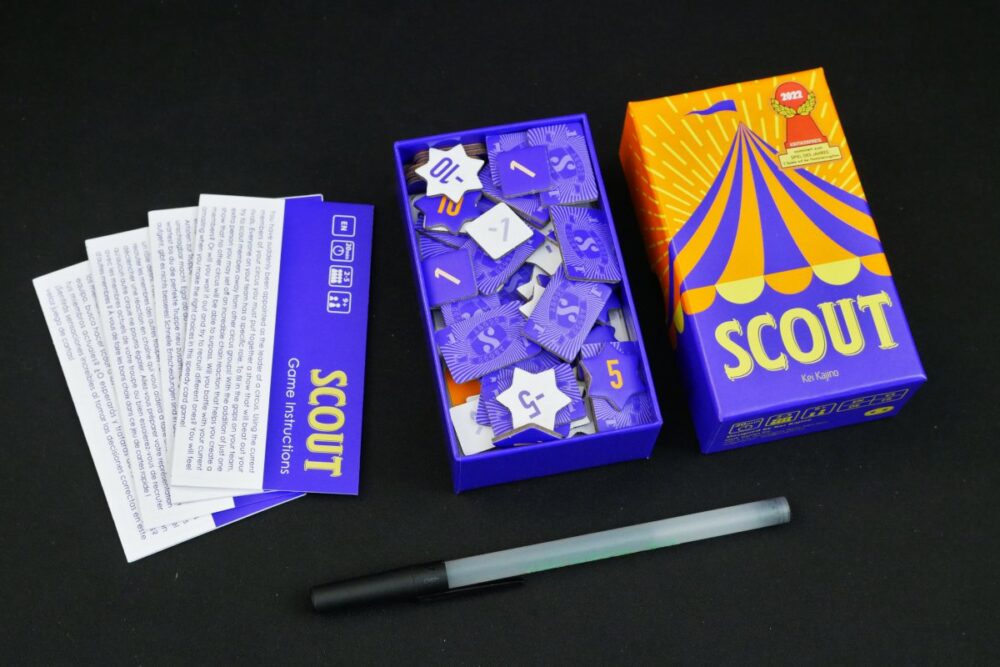
Scout is easy to set up, with caveats. At all player counts but 5, you have to remove some of the cards before you play. You also have to pile the tokens off to the side and give everyone their scout-and-show token. Then you just shuffle up and deal. Those tokens make the game less convenient for portability, and they demand more table space than a cards-only game would.
The everyday pen is there for scale.
The tiny box size is a big plus, and the graphic design is eye-catching and appealing. The cards feel durable enough to last, though you'll definitely want to sleeve these given how much handling they suffer. While the cardboard tokens aren't too thin or flimsy, they're snug when putting everything back in the box—you'll either have to do some Tetrising or tolerate lid lift.
The Bottom Line
Scout should be a $15 game at most, and even then it'd be hard to recommend to anyone but a specific subset of gamers who already know who they are: those who love traditional ladder-climbing card games and want to try a novel variant. The play itself is too mechanical, too automatic, and too lucky for anyone else, and I don't see myself playing it again.