Stop Buying Games You'll Regret
Avoid buyer's remorse with my 8-question checklist—free when you subscribe to my newsletter.
One monthly email with my latest reviews and articles. No spam, ever. Unsubscribe in one click.


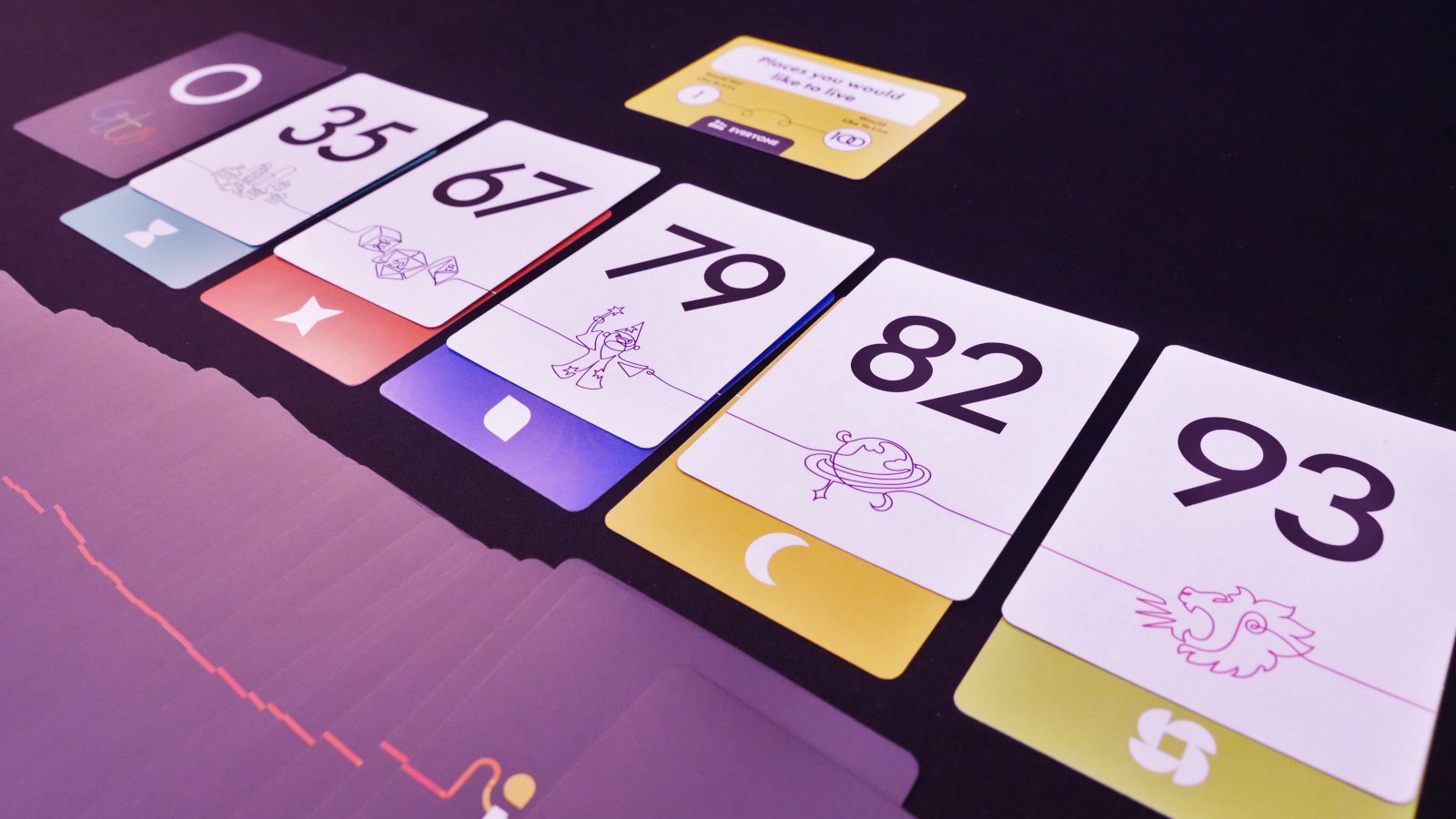
Ito is a cooperative party game that's charming in theory, frustrating in practice, and only worth owning in one specific situation.
Game Info
Upsides
Downsides
Ito got a lot of attention in 2025, reinvigorated by the Arcane Wonders reprint and praise from The Dice Tower. And so I went into it with high expectations, hoping to experience the same highs that fans keep singing about. A raucous party game that generates table talk and reliably hits? That's exactly the kind of game I'm always seeking. But Ito just doesn't work for me—and it won't work for a lot of people.
This review is based on my own personal copy of Ito, which I received as a gift from family. Not a free review copy.
Ito is a cooperative party game for 3 to 10 players. (The box technically also says 2 players, but don't do it. I'm warning you.) It's a number-ordering game where everyone gets a secret number between 1 to 100 and the goal is to place them in a shared face-down line in ascending order. The way you do that? By giving a clue that describes your number.
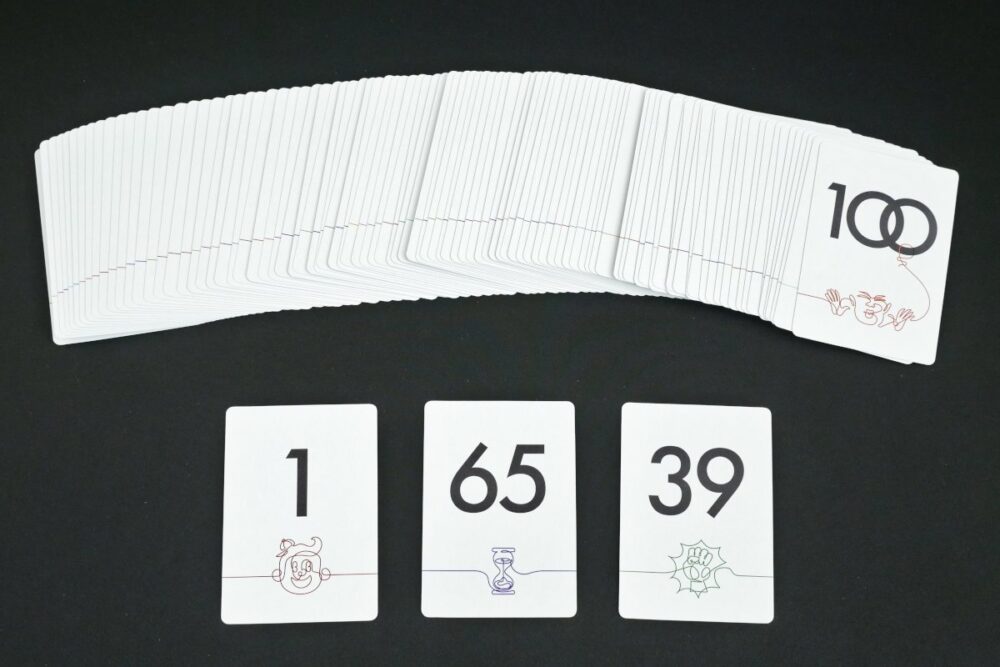
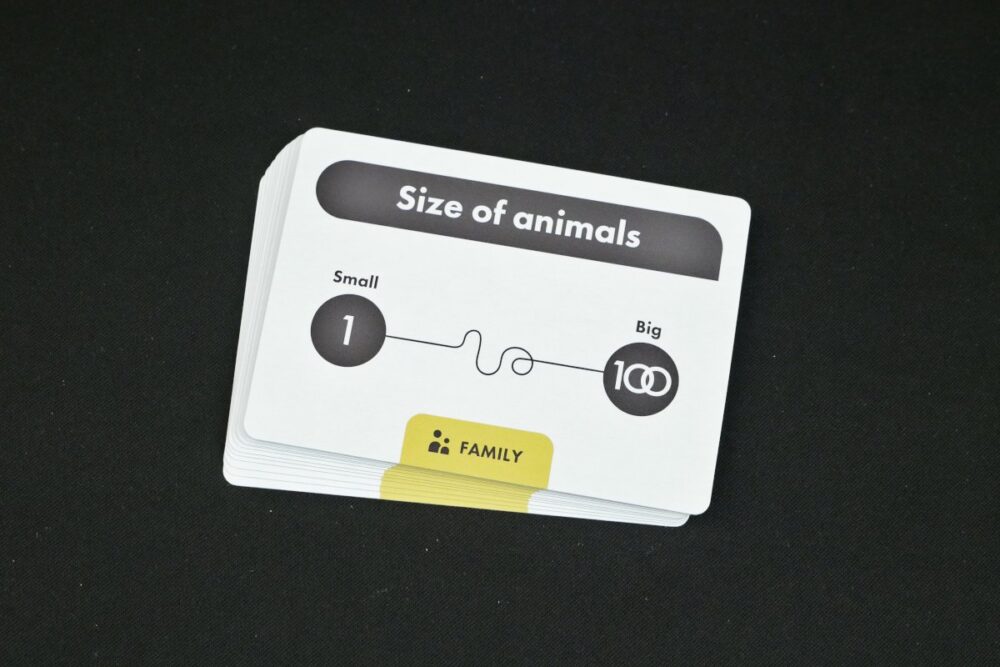
The game comes with category cards that each provide some kind of spectrum from 1 to 100. For example, one category is "Size of animals" and it goes from Small (1) to Big (100). If you held the 11 card, you might say "mouse" because it's pretty small but there are other smaller animals, then you slip your card into the shared face-down line. Mark might say "giraffe" and then slip their card into the line next to yours, also face-down. (That's a pretty big animal, but there are others bigger, so his card might be in the 70s?) Then Jeff says "groundhog" and slips his card in between yours and Mark's, and so on.
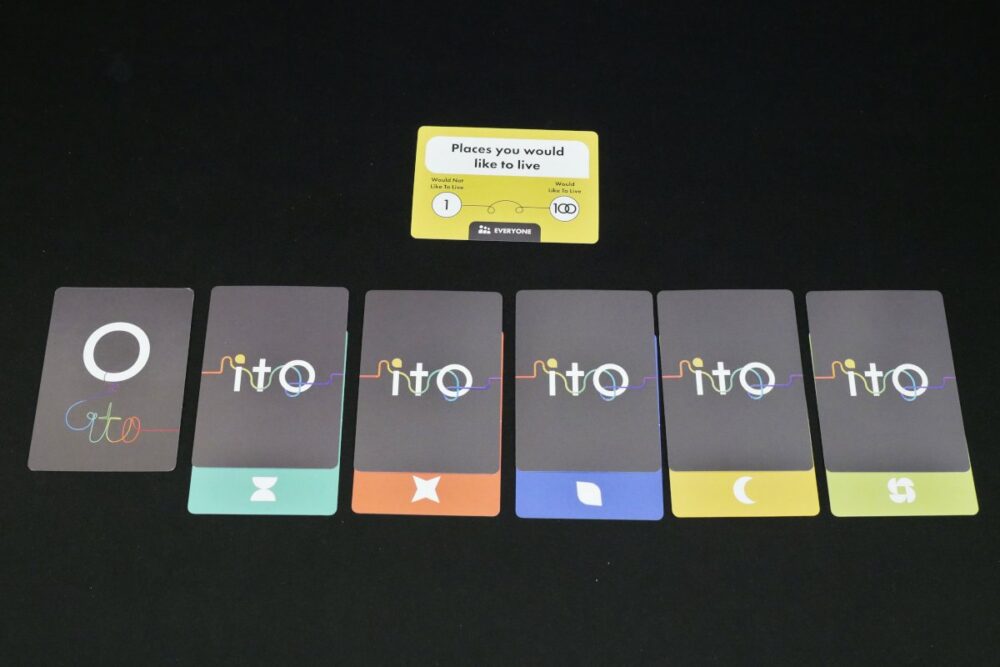
There's no set turn order. Anyone can go whenever they want, but they must slip their card into the line when they do, either at the front, at the end, or in between two cards. When everyone has finished their turn, the entire group can discuss the line and move cards around if they want to. (Each player tags their card with a player color card, so you know which card is whose and you don't have to memorize them.) While doing this, you can always change your clue whenever you want to. As long as you don't mention numbers, values, or quantities in your clues, anything is fair game.
When everyone finally agrees on what the line order should be, the cards are flipped face-up one by one—and if they're in proper ascending order, you win as a group. Otherwise, you all lose together.
Ito's randomness undermines its potential. The deck is just 1 through 100 in shuffled order, with one card dealt to each player. That means you could get a 77, Fred gets a 78, and Jamie gets an 82. Can you really give a hint for "famous cartoons" that lands precisely at 77, with enough specificity that it won't be construed as 78 or 82? Not a chance.
Ito wants you to deduce everyone's numbers from their clues, but it provides no meaningful way to ensure enough distance between player numbers, so it often collapses into vague guesswork. It's at its worst when multiple players are throwing out clues that are basically interchangeable in ranking—you all realize you've probably got similar cards, so you throw up your hands and just hope for the best. That's not a game.
Ito is a creative game, one that asks you to generate clues out of thin air. Thinking of an animal that ranks 37 out of 100 is tough. Thinking of an animal that gets others to understand you have 37 is even tougher. And that's within one of the easier categories! Other categories like "famous people you would like to be," "things that would be weird if said by the person on your left," and "popular comic books" are tougher. It's easy to second-guess yourself, especially for categories you aren't familiar with or confident in, and it sucks when it feels like everyone is judging your clue at the end after all is revealed.
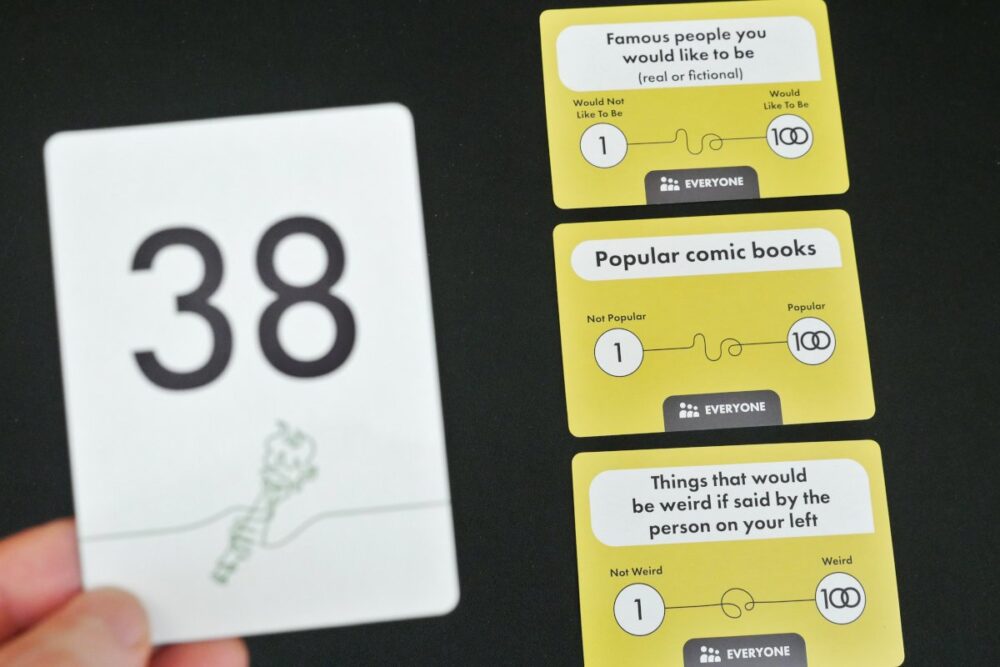
That creative difficulty affects pacing, too. After everyone is dealt their card, you all sit there in silence as you try to come up with a good clue. The lack of a set turn order is a consolation, allowing players to make a move as soon as they're able, but you inevitably get stuck waiting for that last player or two to come up with something—anything—that gets the game moving again.
A good party game shouldn't stress the players, nor should it have lots of dead air. You can feel the energy get sapped out every time it happens, and it happens more often than you'd expect in Ito.
All of that thinking and waiting might be worth it if there was any sort of payoff. You discuss the line order for a while (or don't discuss at all if you're in a non-talkative group), then flip the cards over. I know there's supposed to be a "countdown" feel as you make each flip, hoping that the final card is right and the whole line is correct, but that countdown has no weight.
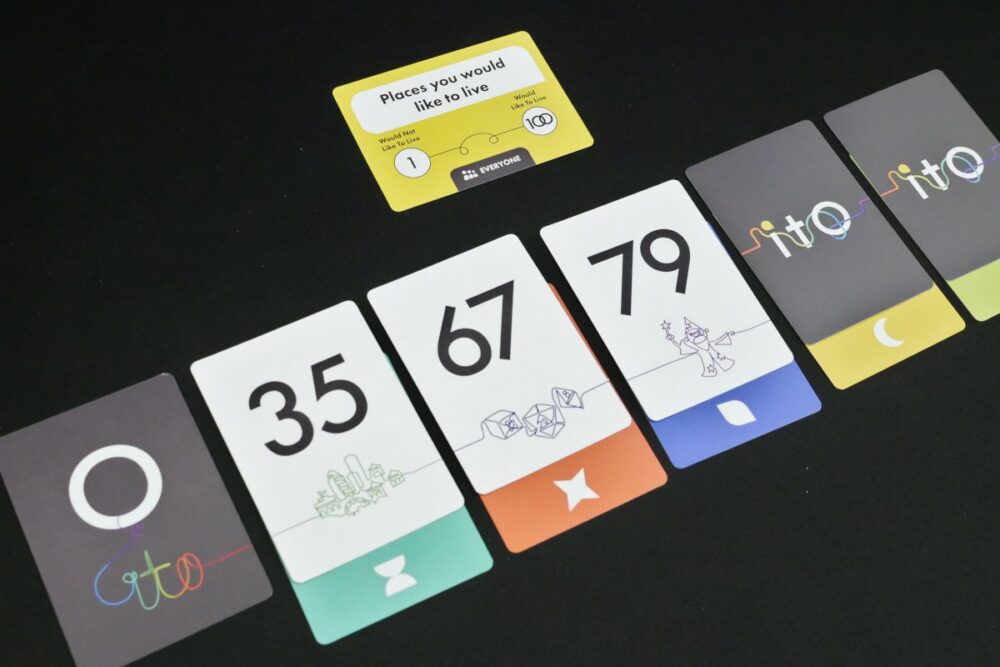
The problem is, the line is either obviously in the correct order because everyone got a good spread of numbers and the clues were strong (and if your card is at the end of the line, the climax falls even flatter for you because you already know what that card is), or the line is obviously jumbled up because everyone got close numbers and gave overlapping clues. And the game demands so little of you—one turn and that's it—that you have almost no investment in the outcome. In other words, you can tell how correct the line is and you don't care where it's wrong.
If there's one good thing about Ito, it's that it can lead to some surprising reveals about the players at the table. When the category is "scary things" and Henry blurts out "mirrors" and confidently slides in at the end of the line, you've just learned something about him. Sometimes it's so surprising that the group can't help but start probing ("Are you serious? Mirrors?") and suddenly you're talking about parallel dimensions and supernatural entities for 10 minutes. That happens despite the game, but it's intriguing when it does.
Ito has a surprisingly narrow band of good player counts. You'd think a party game as light and free-flowing as this would succeed at most table sizes, but no. It's a low-energy snoozefest at 3 and 4 players, with a line that's too easy to get correct and not enough table talk. At 7+ players, it's a chaotic mess, barely even a game anymore, with too much of a chance for close numbers and impossible deductions. You'll get the most out of it with 5, maybe 6 players.
And don't get me started on 2 players. The box technically says 2 to 10 players, but as soon as you open the rulebook, it hits you with "suggested for 3 or more players." With 2, you play a variant where each player gets 2 cards—everything else is the same. But it's barely a game because you know 2 of the 4 cards in play. Knowing half the cards in the line robs the game of what little tension it had, and whether you win or lose, it's just... meh. At that point, you'd be better off with a deck of date night conversation starters instead.
Ito lives and dies by who's playing. It's a game where all the fun comes from the perspectives and personalities at the table—the game itself has almost no replay value beyond that.
Yes, Ito comes with 50 double-sided category cards. Yes, you're always dealt a random number so you have to think up new clues even when repeating categories. But Ito's gameplay isn't as variable as it seems at first. How much real variety can there be when answering "things to spend lottery winnings on" or "things you could stare at all day"? Unless you have an insanely creative group with wild imaginations, you're just going to run into the same mundane answers over and over when playing with the same people.
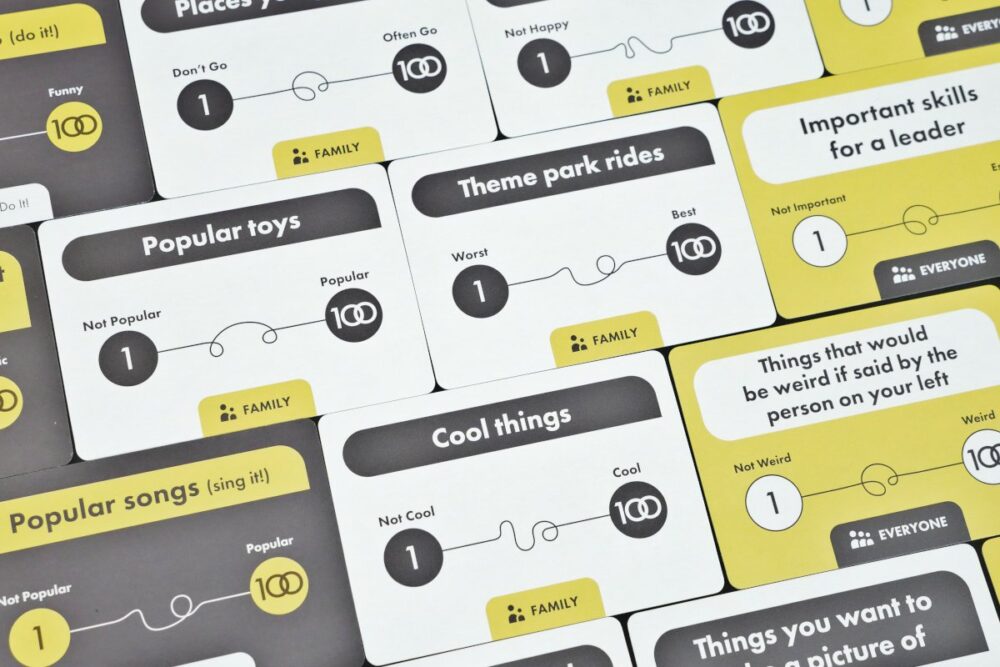
You need a constant cycle of fresh blood to generate new clues that catch you off guard and keep the table talk interesting. That's why it's a great icebreaker game—the kind you bust out with a new group, or when someone new joins your group. Playing with the same people all the time gets old fast. Those new viewpoints are the only thing that makes Ito worth anything.
The category cards are divided into three types: family, everyone, and action. The "action" type involves physical movements, singing, and sound effects—I've never played these cards and I never will. (Fortunately, only 3 of the 50 cards are "action" type.) But with only 15 "family" type, your replayability will be severely limited if you intend to only play Ito with kids. That leaves 32 "everyone" type, and you have to be able to play this type for full value.
Ito sets up fast and has a small table footprint. Once everyone picks a player color, you just shuffle up the deck, deal, reveal a category, and you're ready to go. The central line of cards is only as long as the number of players, so it doesn't take up much space at all.
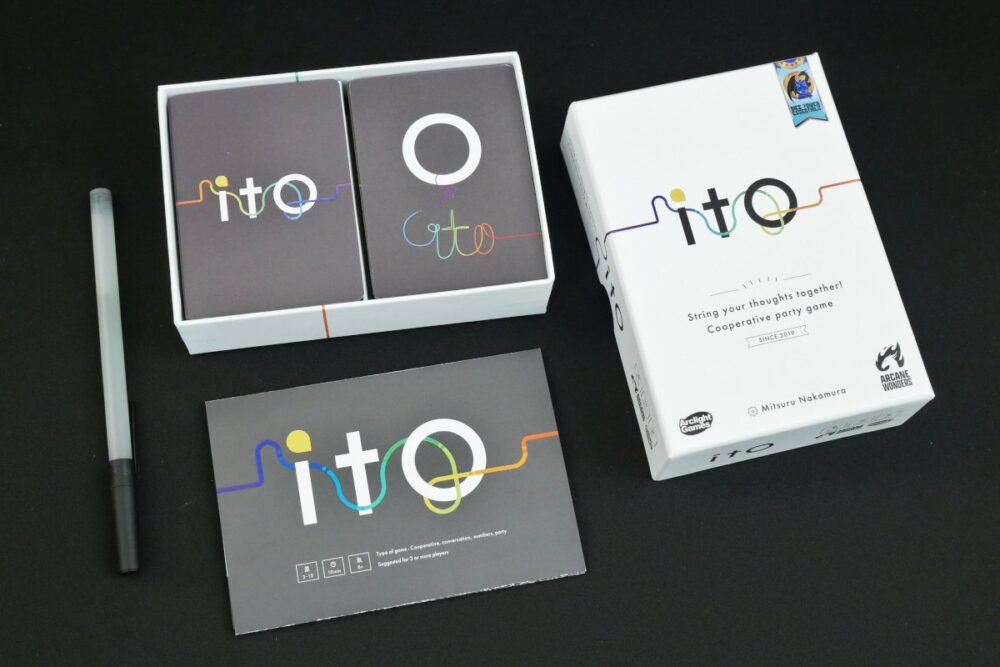
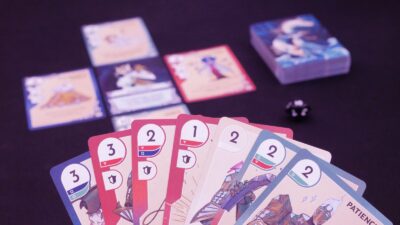
The cards are sturdy enough and the box is compact, and the art and graphic design are good, with cards being easy to read and intuitive to play. You could be handed the entire deck without a rulebook and you'd figure out most of the gameplay just from the cards.
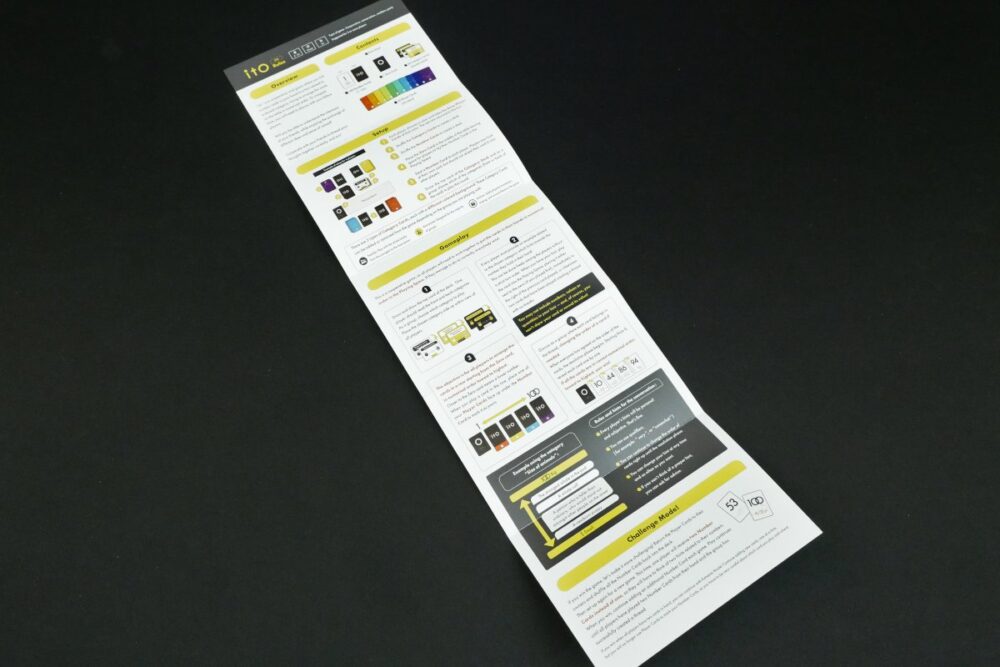
But the theme is subtle. "Ito" means thread in Japanese, and each card is one segment of a long piece of thread—if you can put the cards in ascending order, you've maintained the integrity of the thread. Honestly, I treat this as a themeless game and so should you. It adds nothing and informs nothing.
You can find Ito for under $15 new, so it's hard to complain about value—but price isn't the issue here. You need the right situation for it. It's best as an icebreaker that sheds light on how people think and what they value, so I'd only recommend it to gamers who are constantly meeting new people and playing games with them as a social lubricant.
Most people won't fall into that bucket, and you already know whether you do or don't. I certainly don't. That's why I have other party games I'd rather play at all player counts—ones that have real gameplay (Wavelength), produce more laughter (Telestrations), and hit the table all the time (Just One). Ito is a situational dud that I won't be playing again.
Stop Buying Games
You'll Regret
Before your next game purchase, run it through this mental checklist that every seasoned gamer uses.
Free checklist, delivered instantly to your inbox.
No spam, ever. Unsubscribe in one click.
More Reviews