Jaipur has a big reputation to live up to. It's been around for nearly two decades by now, and it's often touted as a must-play for couples. That's what drove me to acquire it back in 2023 (when Space Cowboys came out with their revamped edition) and I came in with high expectations, as should anyone who tries out a game with this much name recognition.
My main worry with Jaipur is whether it would be as much of a "comfort food" game as I'd heard it to be. It's good if it has tension, but would it be stressful? Would it feel too mean, as many 2-player games tend to be? Can a game this simple really have this much staying power?
This review is based on my own personal copy of Jaipur, which I bought new from Amazon. Not a free review copy.
Table of Contents
View more
What It Is
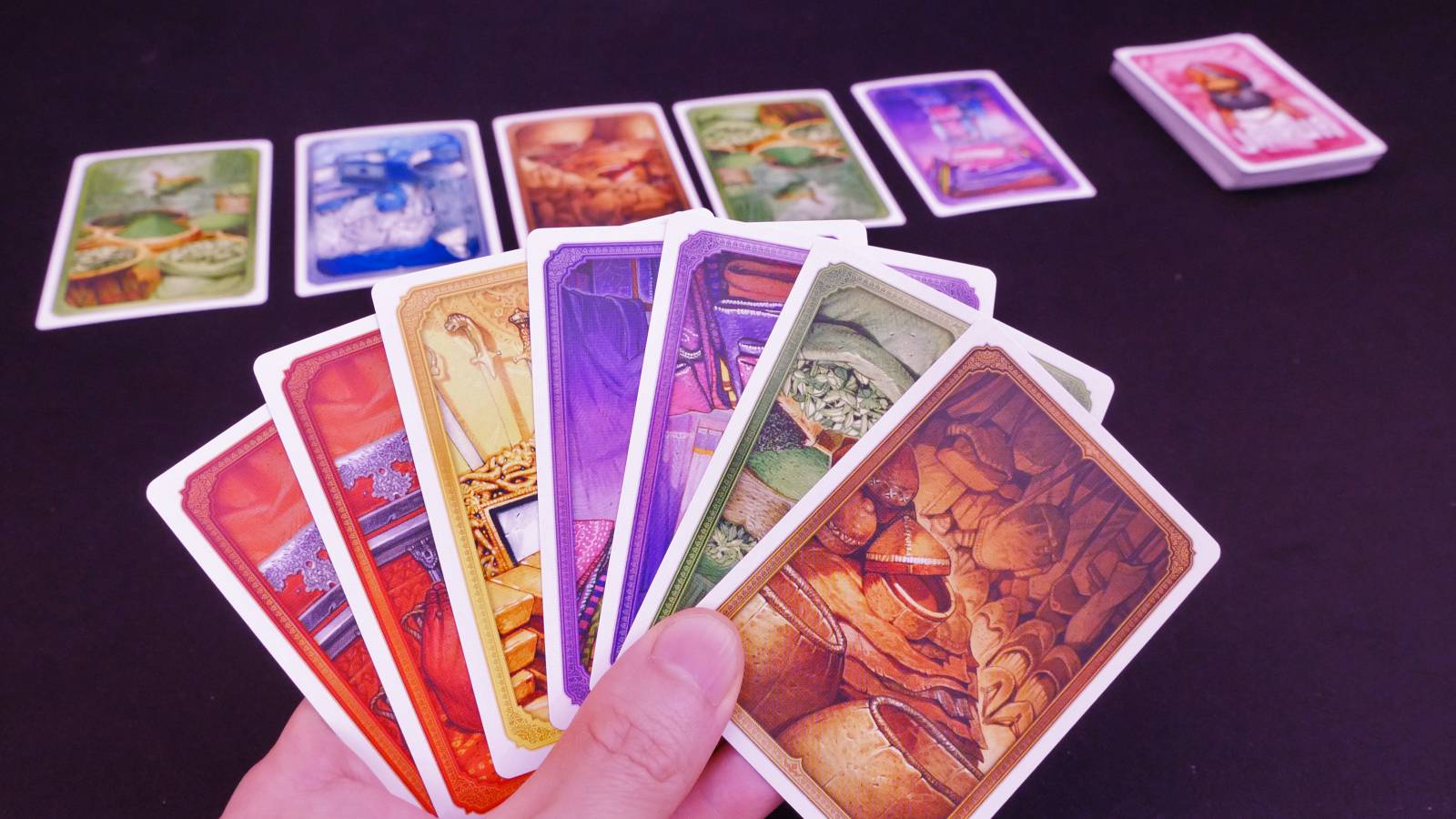
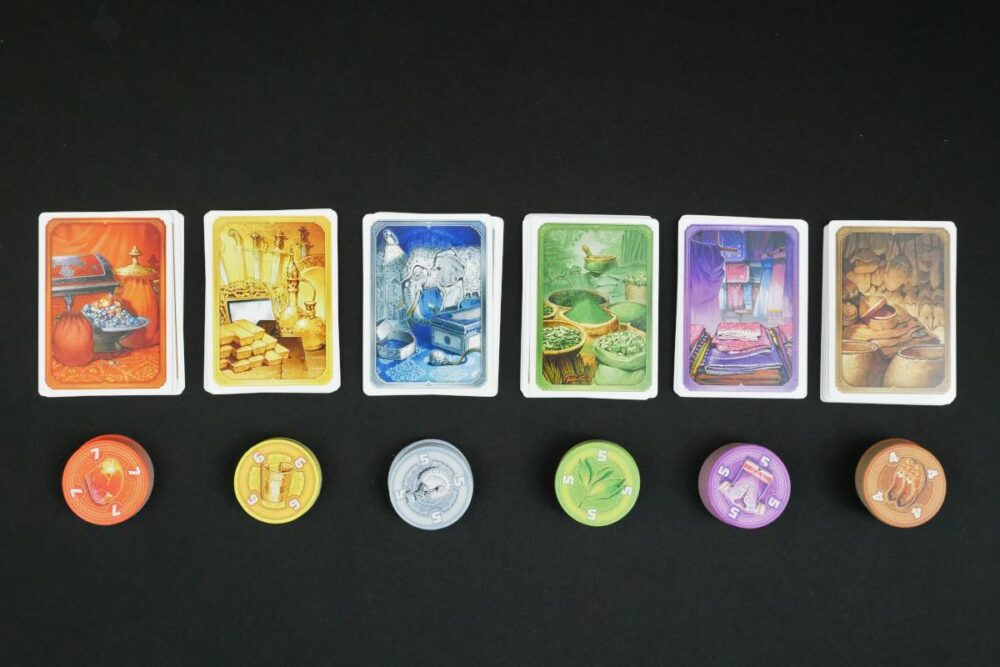
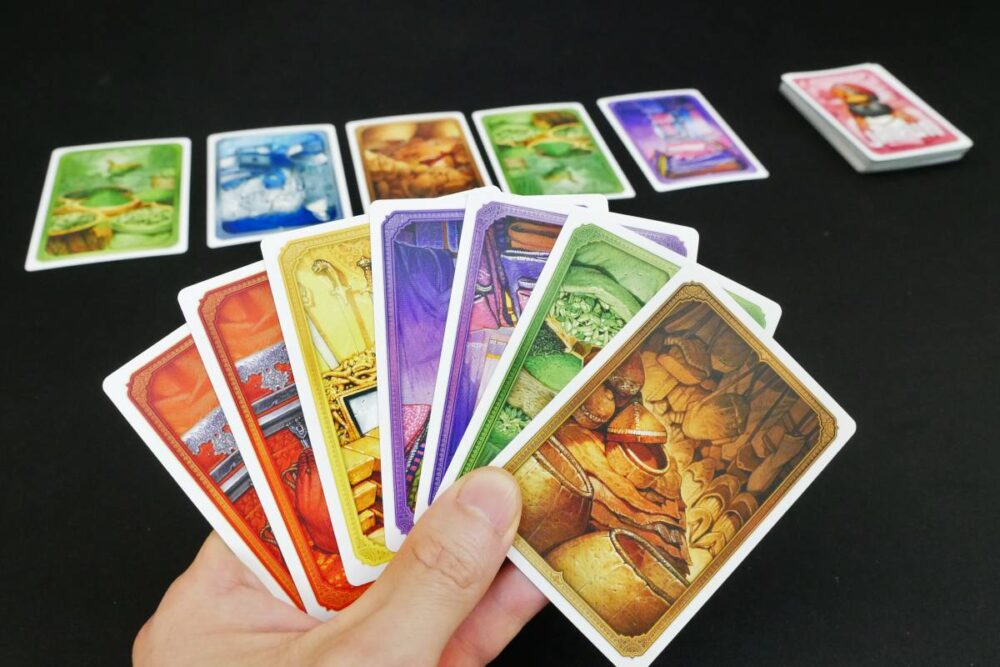
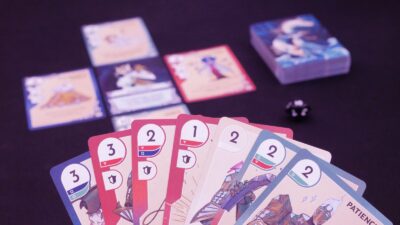
Jaipur is a 2-player-only card game of hand management and set collection. The deck consists of six different types of goods (Diamonds, Gold, Silver, Cloth, Spice, and Leather) and you're collecting sets of the same type to sell for points. You do this by trading cards from your hand with cards in the central market, never directly trading with your opponent. Everything you do happens between your hand and the market.
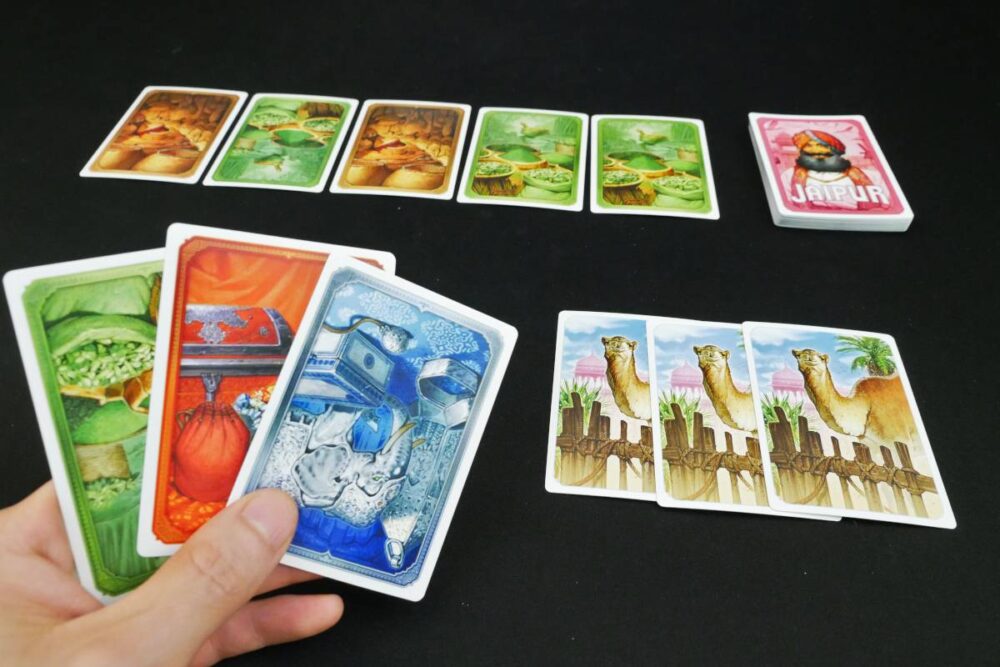
When trading with the 5-card market, you can do so in one of three ways: take a single card (which is replenished from the market deck), swap any number of goods from your hand with an equal number of goods from the market (no new cards are flipped from the market deck), or take all the camels in the market (and a bunch of new goods are drawn in their place). Camels are like wild cards that you can use in place of goods when trading. They don't clog up your hand, though, instead sitting on the table in front of you.
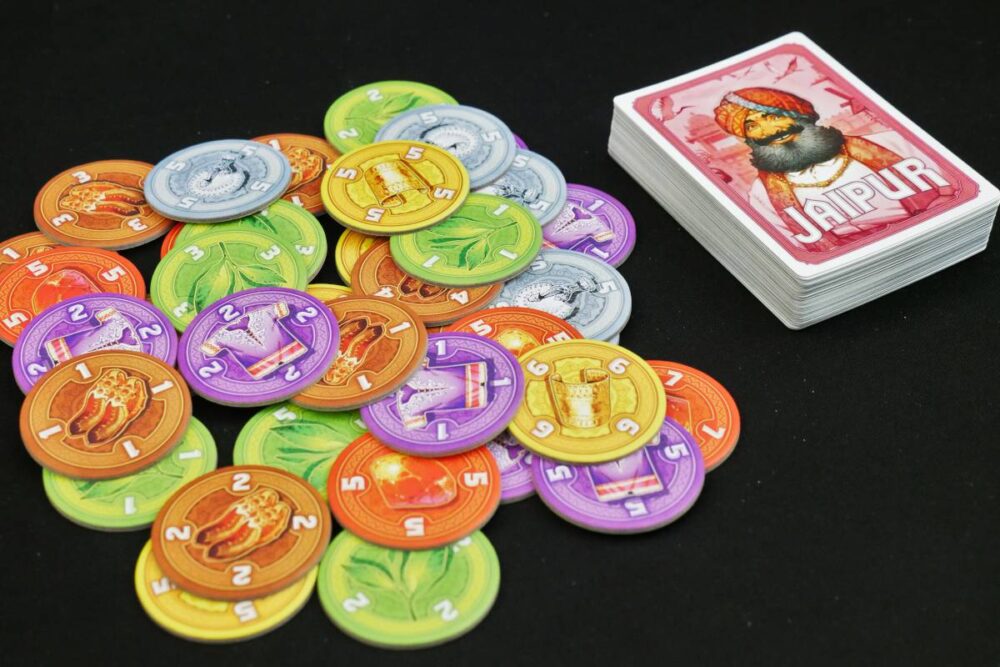
Hand clogging is a real problem in Jaipur thanks to a strict hand limit of 7 cards, which makes trading feel cramped. To free up room in your hand, you'll need to sell your goods regularly, which means turning in a set of same-type goods for point tokens. The point tokens for each type of good are sorted from highest to lowest, so the first sold good of a type earns more points than the next, and the next, and the next. When turning in a set, the size of the set can be as many or as few cards as you want (with one exception: a minimum set size of 2 for the more valuable Diamonds, Gold, and Silver goods).
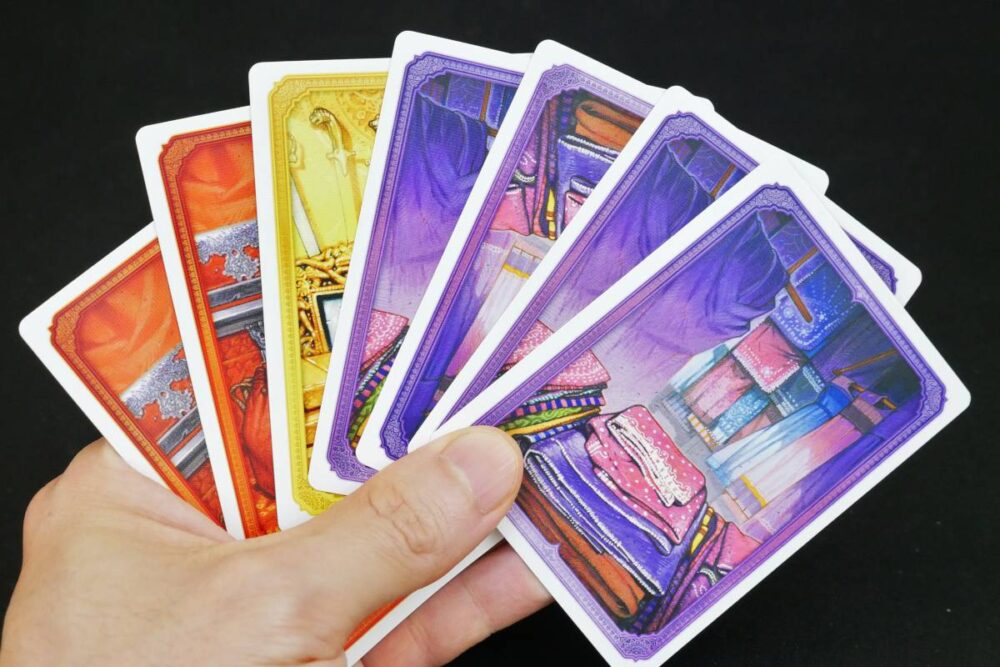
Situations like this are tricky. Do I give up a valuable Diamond or Gold to collect another Cloth for a 5-set? Or just turn in the 4-set now? Or give up on Cloths to collect more Diamonds and Gold? The hand limit is tight!
You and your opponent go back and forth, trading and selling, until the round ends. Whoever wins the round earns a Seal of Excellence. You shuffle up, deal, and play again until someone wins the game with two Seals of Excellence.
How It Feels to Play
Simple Decisions, Lots of Tension
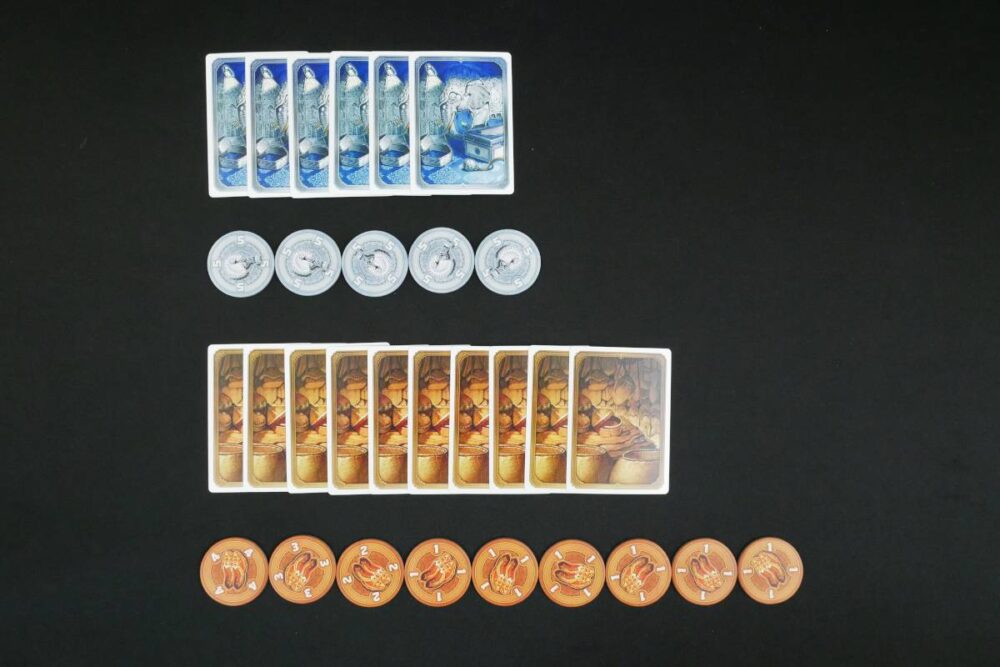
In Jaipur, there are six different types of goods, and each type has a different card count and value curve. For example, there are 6 Silver cards and 5 Silver tokens that are each worth 5 points—there's no race to sell Silver because it's always worth the same. But there are 10 Leather cards and 9 Leather tokens worth 4/3/2/1/1/1/1/1/1 points, meaning you're likely to see a lot of Leather circulate in the market but it quickly loses its value as it's sold. There is a race to sell Leather, and it's basically worthless after the first sell. Since every type of good is different, you have to adapt a different strategy for each type—that interplay is what makes the hand management puzzle so compelling.
But timing your sells is the biggest challenge in Jaipur. When you sell goods, you can sell any number of a single color from your hand, but selling a set of 3 or more earns a bonus token. Bonus tokens are just extra points, but the amount of extra points is small for a 3-card set, more for a 4-card set, and much more for a 5-card set. You're incentivized to hold onto goods so you can collect large sets for big bonuses. But you're also itching to sell ASAP because every good sold is worth less than the previous good sold of that color. You're incentivized to let go of your goods because they're more valuable if you sell them before your opponent does.
It's all about efficient hand management and resource trading—puzzling out which goods to pursue, which to forego, and timing their sells for maximum profit, all without clogging your hand for too many turns. You feel that tension, of wanting to hold every card but being stuck with a 7-card hand limit, all throughout the game.
Load-Bearing Camels
In Jaipur, trading against the market is its own puzzle. You aren't just swapping goods from your hand with the market. You're also collecting camel cards, which sit on the table in front of you instead of clogging up your hand, and these camels can be used in lieu of goods when trading. So if you want 3 goods from the market but only have 2 cards you're willing to give up, you can use one of your camels as a wild. Camels serve double duty, giving you the flexibility to make high-value trades that fill up your hand, while also letting you make these trades without giving up valuable goods to your opponent. The camels end up clogging up the market, reducing your opponent's options.
I want all those Spices in the market, but I don't want to give up my valuable Diamond or Silver. Thankfully, I can use my camels to trade!
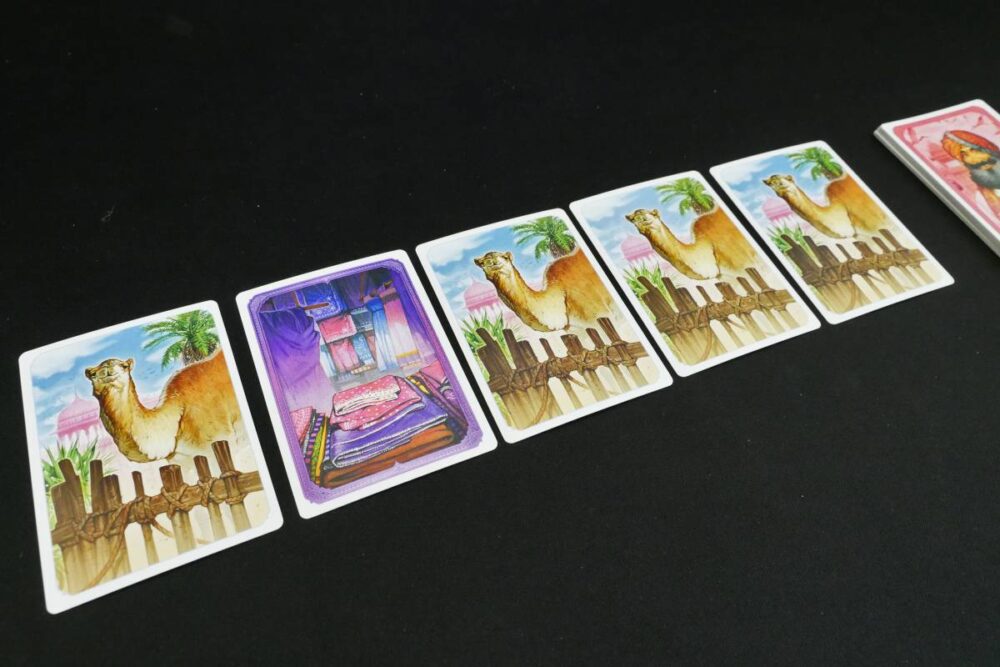
But that also means you'll find yourself on the other end of that, staring at a market full of camels and not many goods. When you're in this situation, Jaipur suddenly turns into a game of chicken. If you choose to take all the camels, you gain all that future trading flexibility, but you also flood the market with new goods from the deck and your opponent will have first dibs on those goods next turn. If you choose to leave the camels there, you'll have to make a weak trade instead and effectively waste your turn, hoping that your opponent takes those camels next turn and gives you first dibs on fresh goods. Who's going to bite the bullet? When's the right time to do so?
Jaipur adds another tension point here by incentivizing you to take those camels: on top of the extra trading flexibility, you also earn 5 bonus points at the end of the round if you possess more camels than your opponent does. The point value is calibrated just right so that you never feel obligated to collect camels, yet you never feel bad for collecting them. Camels are a tool to make yourself a more efficient trader, and this small mechanism adds a surprisingly rich layer of tension to an already tense game.
Well-Calibrated Luck
To enjoy Jaipur, you have to be okay with luck, which shows itself in your initial hand draw and the ever-shifting card market. It's entirely possible to start with a Gold in hand yet never see another Gold because they've all been shuffled to the bottom of the market deck. It's also possible to take all the camels from the market, refill it with fresh goods, and incidentally give your opponent the exact ones they need to score a massive set. You have no way of knowing what's coming out of that deck next. Jaipur is as much about managing risk and playing the odds as it is about optimizing your hand and timing your sells.
Whoever takes all these camels will end up flooding the market with... who knows!
Jaipur tries to mitigate the impact of this luck with its best-of-3-rounds design. You can ignore your actual score value on any given round—what matters is that you simply score more than your opponent does, which earns you a Seal of Excellence. Then you shuffle up and play again. The first player to earn two Seals of Excellence wins the game. That means even if you get stomped 71–30 in round one, you could barely edge out a second-round win with 45–44 points and still be tied in Seals of Excellence. A lucky swing in one round is contained to that round. The idea is that luck will even out across the rounds, allowing the better player to win more often with smarter play.
In practice, Jaipur is still pretty lucky despite the three-round structure, but it's not enough to undermine its strategic value. If you want to reduce the luck factor even further, you can play best-of-5 instead. I'm content with best-of-3.
Shifting Game Arc
Jaipur's tension twists from start to finish, giving a game arc that changes shape. You begin with the tension of first-come-first-served points for selling the different goods, hoping you can collect the right cards faster than your opponent can. But as you both sell off your sets, those point tokens dwindle and lose their value. You know that every subsequent turn-in is worth less, and that makes those bonus tokens all the more valuable, so you pivot and start holding out for 4-card or 5-card sets to net those bonuses. Jaipur slows down from the initial high-speed race to a more tactical game where you need to pick and choose your big sets carefully.
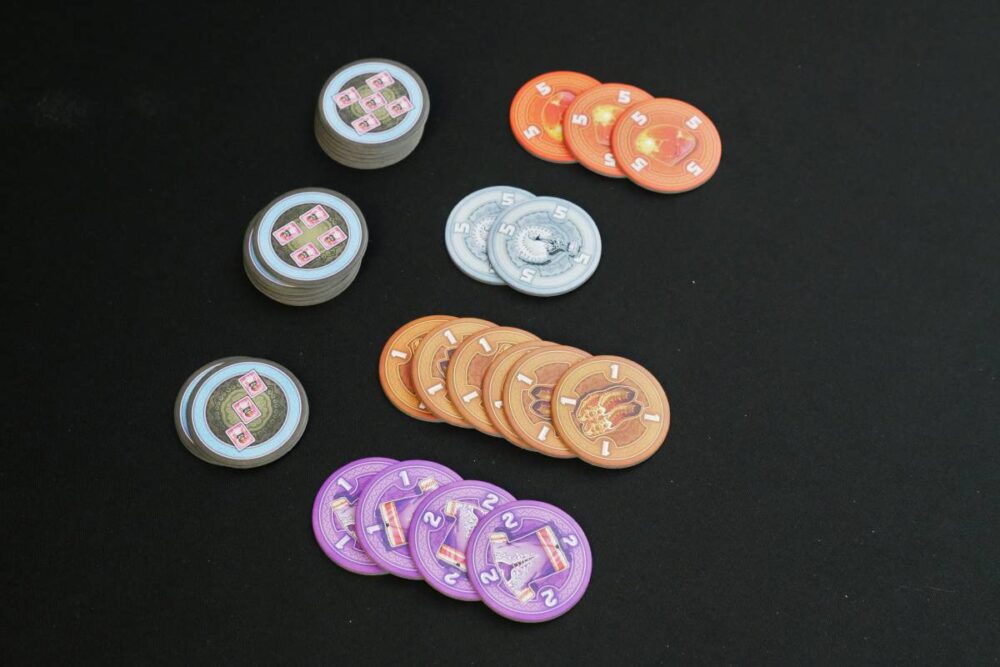
Two of the goods token stacks are gone. When a third one is depleted, the game ends. Will I be able to sell one last set before then?
But a different kind of tension shows up in that end-of-round phase: the threat of the round ending before you can pull off those big set turn-ins. In Jaipur, a round ends when three of the six goods token stacks are depleted, or when the market deck goes empty. That means you could be sitting on a 4-card set and waiting for a 5th card, only for your opponent to realize what you're doing and scoop up the last remaining tokens of a stack to end things. (I've never had the game end with an empty market deck, for what that's worth.)
And the point tokens you get for selling goods? They're kept face-down on the table, so you don't know how many points your opponent has. That leaves you on edge because you never know if you're ahead or if you need to claw out a few more points, making that end-game trigger that much more suspenseful.
Excellent Gateway for Two
Jaipur's learning curve is nearly flat. It teaches in less than 5 minutes and there are no complex rules or mechanisms to trip you up. Because it's intuitive enough for non-gamers, Jaipur is an excellent first game for couples new to the hobby. The only part that could be considered remotely puzzling is the camel cards, but even that's simple to grasp. Anyone who has ever played any variant of rummy will click with Jaipur, making it a cozy staple for spouses, parents/children, or roommates.
Jaipur excels at walking a fine line: plenty of interactive tension so it's never multiplayer solitaire, yet none of the frustrations of a direct conflict game. The market as a middleman alleviates a lot of potential meanness, yet it still feels like you're competing head-to-head. And there's enough luck to level the strategic playing field, so it's not like chess where a dominant player will always trounce the other. This balance is exactly what I want in a comfortable 2-player game to play with my wife.
But that also means Jaipur isn't for strategy fiends who love planning ahead several turns and outplaying opponents with clever schemes. Nor is it for gamers who want lots of direct conflict where you mercilessly beat each other down to zero. It's tense, but it's also gentle and breezy.
Replayability
Jaipur might just be a deck of cards with zero modular variability, but this little card game has a long shelf life. Its replayability doesn't come from making novel decisions, exploring varied strategies, or playing with extensible cards. It comes from the addictive tension that's woven throughout, the rewarding puzzle of balancing hand management and risk management, and the lightning-fast pace that always catches you off-guard.
It doesn't have enough strategic depth or gameplay variety to sustain hours of play in a single session. But you'll happily go through a few rounds before stashing it away for another day, satisfied and knowing you'll return again. Jaipur is a light, tasty snack that's easy to munch on. You don't want to eat it all the time, but you always keep a bag of it in the pantry. I only play Jaipur in small bursts, but it's one I keep coming back to.
Components and Setup
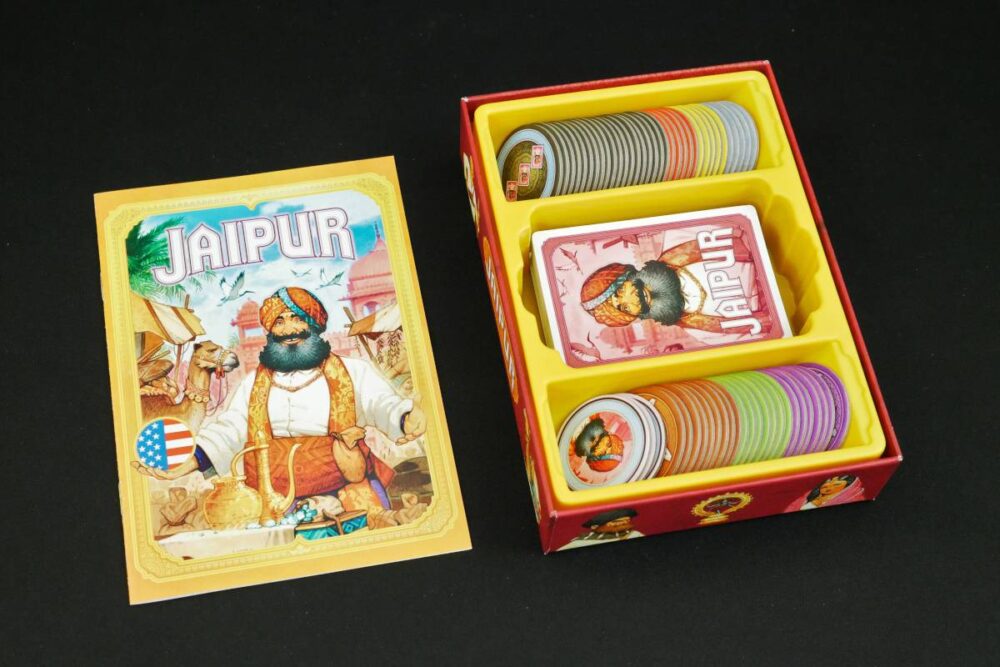
Given that it's just a deck of cards and some cardboard tokens, Jaipur doesn't have much room to "wow" with its presentation—but it succeeds with what it has. The cards feel good in hand and stand up to wear and tear (although they have slightly warped with time). The artwork by Vincent Dutrait, whose style is hit-or-miss for me, is warm and welcoming and a perfect fit for this game. I love the easy-to-discern colors and the card illustrations. I also appreciate that the box comes with a nifty insert that keeps it all organized and easy to set up. The tokens would feel better if they were acrylic or wood.
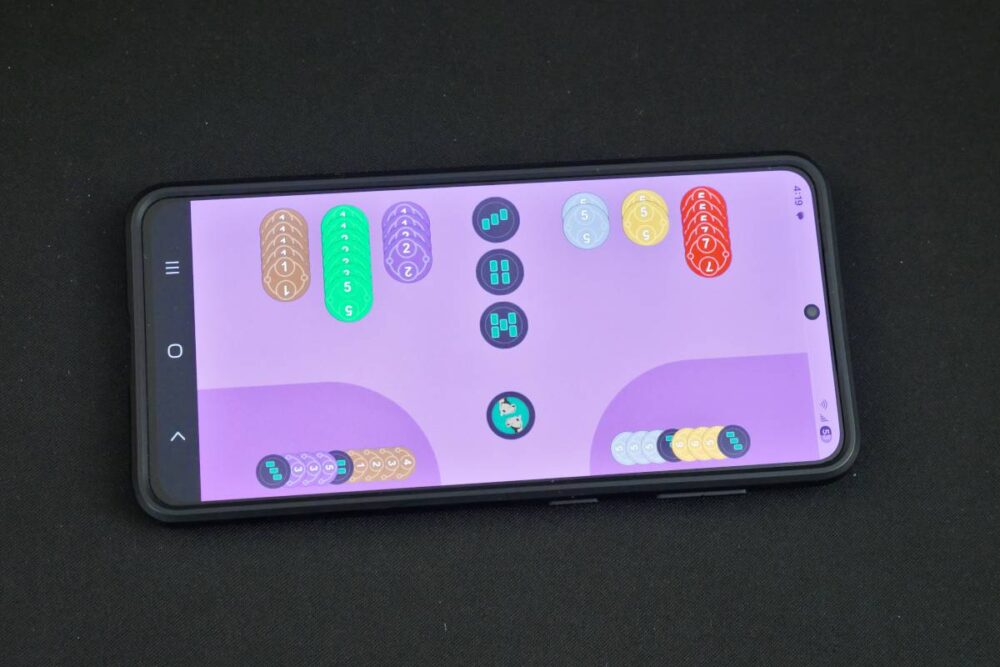
Setup is the only thing I don't like about Jaipur. You have to take out all the tokens, sort them by color, sort each color by value, and spread them into stacks. It's fiddly and it hampers the game's easy-to-table quality. Fortunately, you can use a free web app called Pink City (save it as an app using the "Add to Home Screen" feature in your mobile browser) to track all your tokens. With Pink City, I can pack Jaipur's cards alone and play anywhere.
The Bottom Line
Jaipur is a fantastic game—extremely accessible, affordable, and a perfect example of a tense 2-player card game that doesn't feel mean, stressful, or vapid. If you play regularly with a partner or spouse and don't own a dedicated 2-player card game yet, this is the one to get. If you need deep strategy or direct conflict, or if you're allergic to 2-player-only games, skip it.