When I first heard about ORBIT, I blew right past it—the board looked a little too crazy with all the orbit tracks, and the whole thing gave me abstract-strategy-analysis-paralysis vibes. But then I saw it mentioned in a Dice Tower video, gave it another look... and it intrigued me. A fast-paced hand management game that plays in an hour? That's my jam.
But ORBIT has its work cut out for it. With the family-weight gateway game space so crowded, it's harder than ever to care about new titles. For this one to succeed, the chaotic orbit tracks need to generate real tension, the card play can't bog down the pacing, and losers need to feel like they can still pull out a win. As I was half an hour into my first game, watching my wife agonize over which card to play, I wondered if that was deliberation or frustration.
This review is based on a review copy of ORBIT provided by Asmodee and Bitewing Games, but my thoughts and opinions are my own.
Table of Contents
View more
What It Is
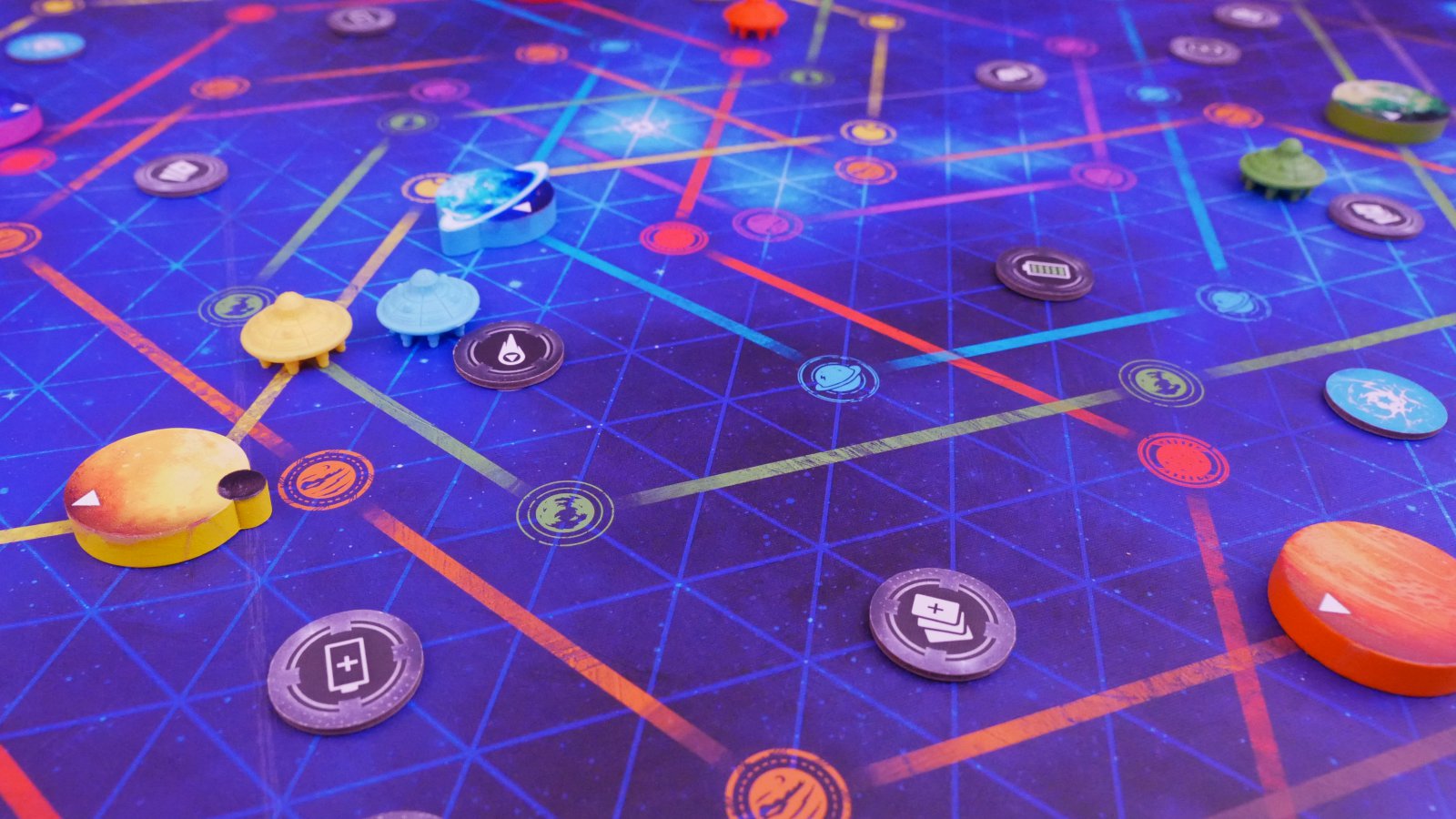
ORBIT is a hand management racing strategy game in which you play cards to move around the Silo System, trying to be the first to visit all the planets before returning to your home planet. The tricky part? Some—or even all—of the planets move along their orbits every turn. The Silo System is constantly in motion, so you'll have to both think ahead and think on your feet to make sure you're making the most of every turn.
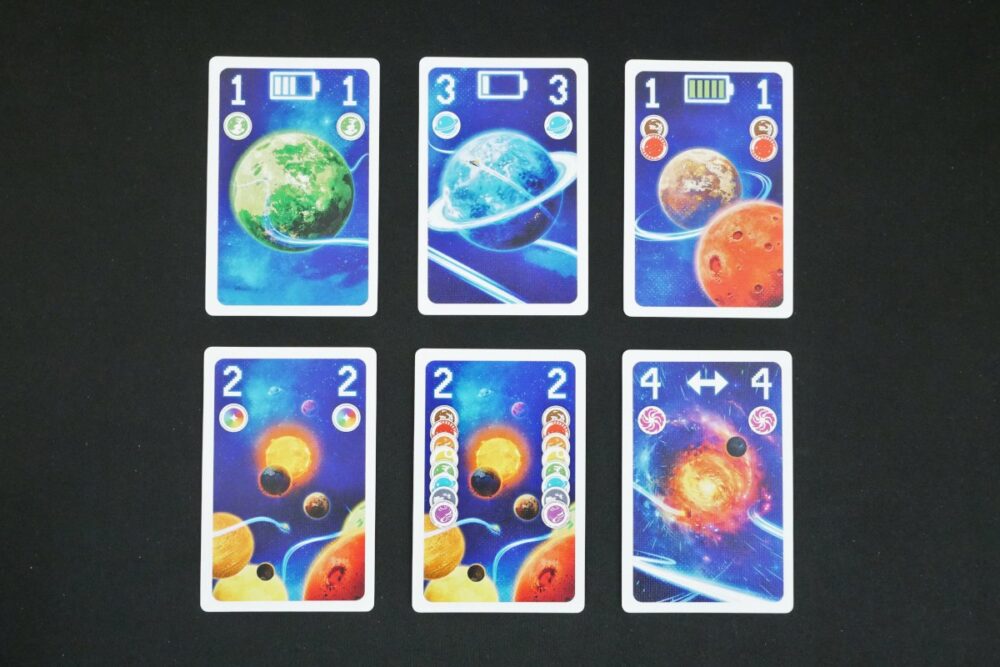
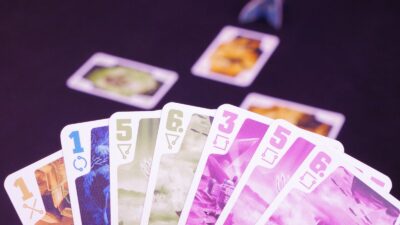
Your ship moves along a tiny hexagonal grid in minor increments, while planets move in large orbits in huge steps. Card play drives your ship, but the cards you play also have other effects. The number on the card determines how far your ship can move. The planet icons determine which planets move—if more than one planet, they all move, and if a planet is shown multiple times, it moves that many times. And some cards have a special ability, whether that's refilling your battery or reversing the direction of a planet.
But a slow ship doesn't have to mean slow progress. If you can hitch a ride on one of the planets, you'll move along with it when it moves—a good way to cover big distances if you can make it work. There are also warps around the board, allowing you to instantly teleport from one area to another. And there are hyper cannons that will shoot your ship in a straight line, spanning as much distance as you want but in limited directions.
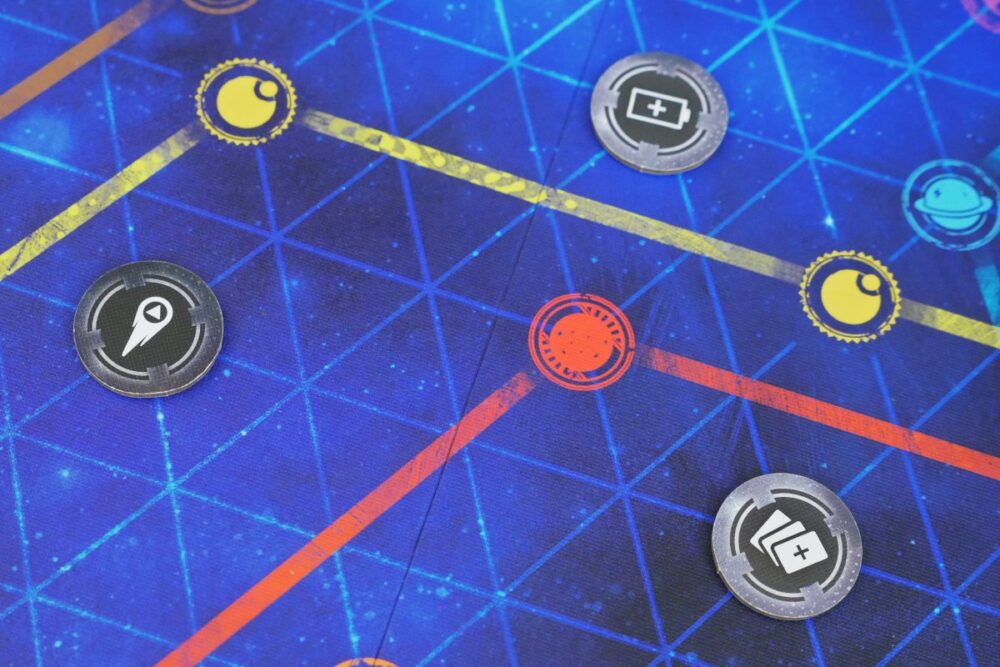
These "space stations" are scattered around the board. Visit them and you'll either get permanent upgrades or one-time special abilities.
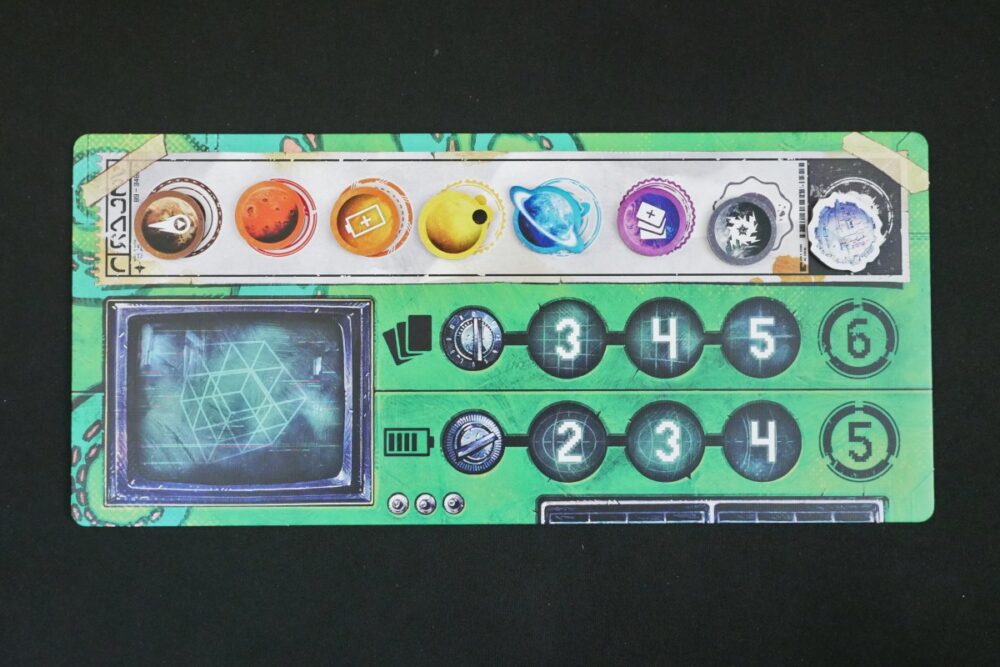
Along the way, you'll pick up a few upgrades. You can increase your hand size, which starts at 3 cards and caps out at 6 cards—more cards means more options on your turn. You can also increase your battery size, which you can spend to tactically boost your movement at key moments—more battery means more flexibility to move long distances when you need to.
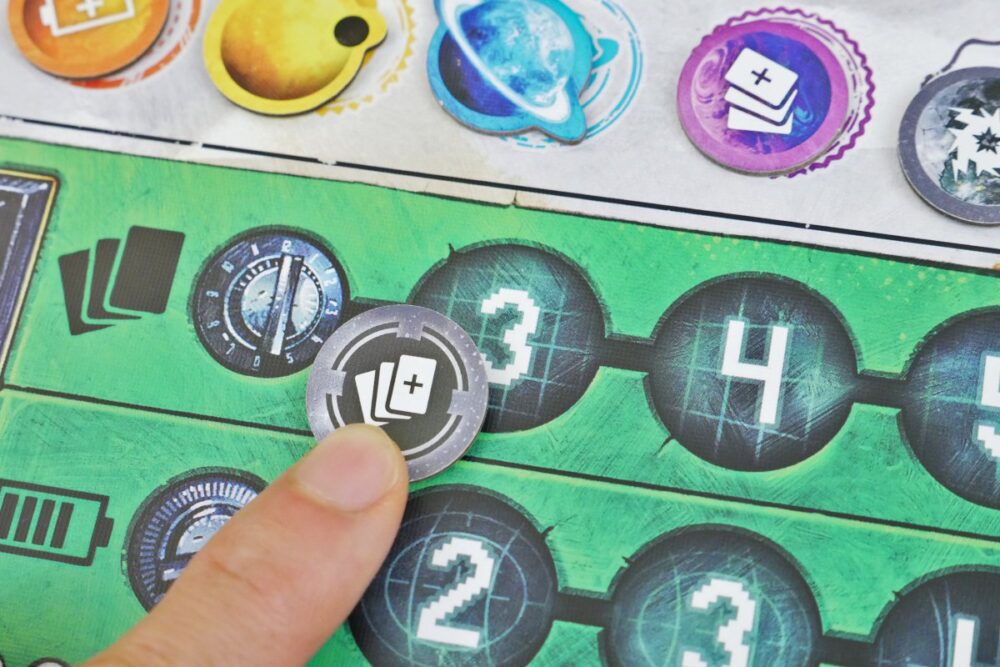
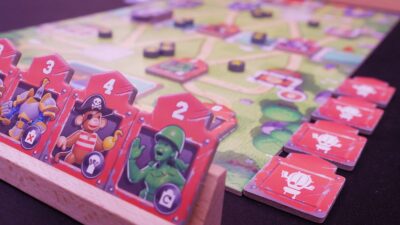
When you pick up an upgrade on the board, it goes to your player board. Both hand size and battery capacity can be upgraded, with the next visible number being your current value. In this case, covering the 3 now makes my hand size 4.
It's an action efficiency game at heart. ORBIT asks you to figure out the quickest way to hit a bunch of moving targets with just one card per turn, with that same card also messing up everyone else's pursuit as possible. It's a pure race, too. The moment you're back on your home planet, you win.
How It Feels to Play
Don't Try to Plan Ahead
ORBIT is controlled chaos. There are eight planets (nine if you count the stationary PRISM station, which is optional but you should play with it every time) and they're all moving around. Each planet has its own orbit track, and each planet can have its direction along its track flipped forwards and backwards. It's wild, unruly, and hard to predict.
Every action card always moves at least one planet, but some cards can even move multiple planets. Sometimes a planet moves twice with a single card, and sometimes every single planet in the system moves. You have no idea what someone's going to play, and when they do, it's probably not what you expected. Your plan might be to hitch a ride on the Blue Planet, only for someone to flip its direction and leave you trailing behind it. And with 3 or 4 players, that means the board can change a lot between your turns.
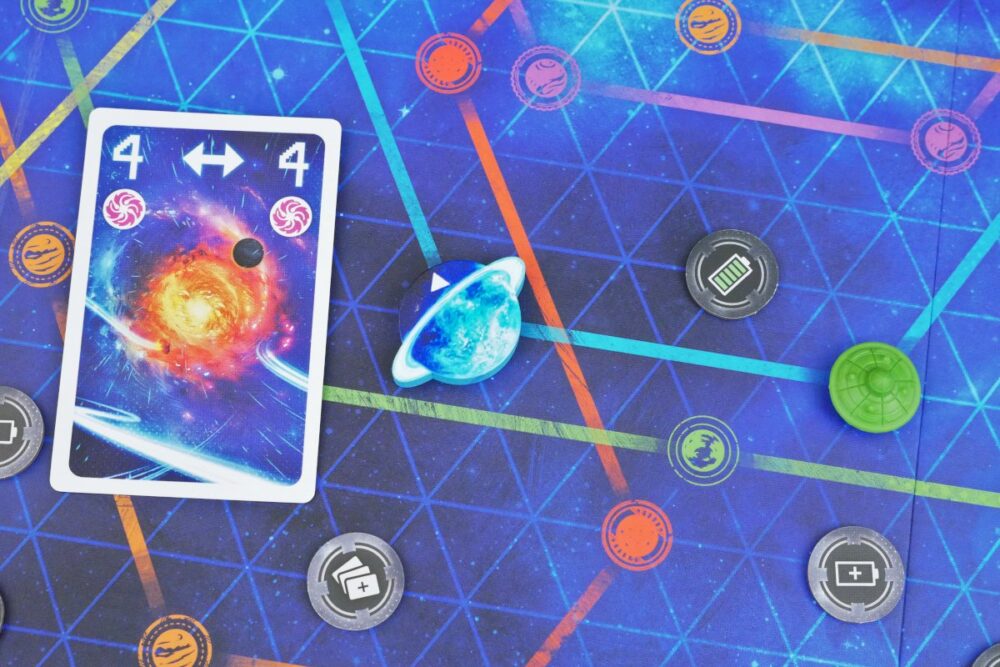
Here I was, sitting in the Blue Planet's path and waiting for it to pick me up. But someone else played this reversal card, causing the Blue Planet to change its direction.
If you're the type of player who loves to plan three, four, even five rounds ahead and orchestrate wide-spanning strategies to dominate your opponents, ORBIT is not the game for you. It shifts and churns and twists with every turn, then asks you to figure out a way through it. If you can't adapt on the fly, you'll have a miserable time in the Silo System.
Winning Is Resource Management
Despite how chaotic ORBIT can be, it gives you plenty to work with to mitigate that chaos. Throughout the Silo System, you can find and collect upgrades in between the various planet orbits. The hand size upgrade lets you hold more cards, giving you more options on what to play each turn. It mitigates the luck of the draw and provides you with flexibility for movement, for influencing different planets, and for refilling your battery at critical times. As for battery upgrades, you get to hold more of it, allowing you to boost your movement and make each card you play even stronger.
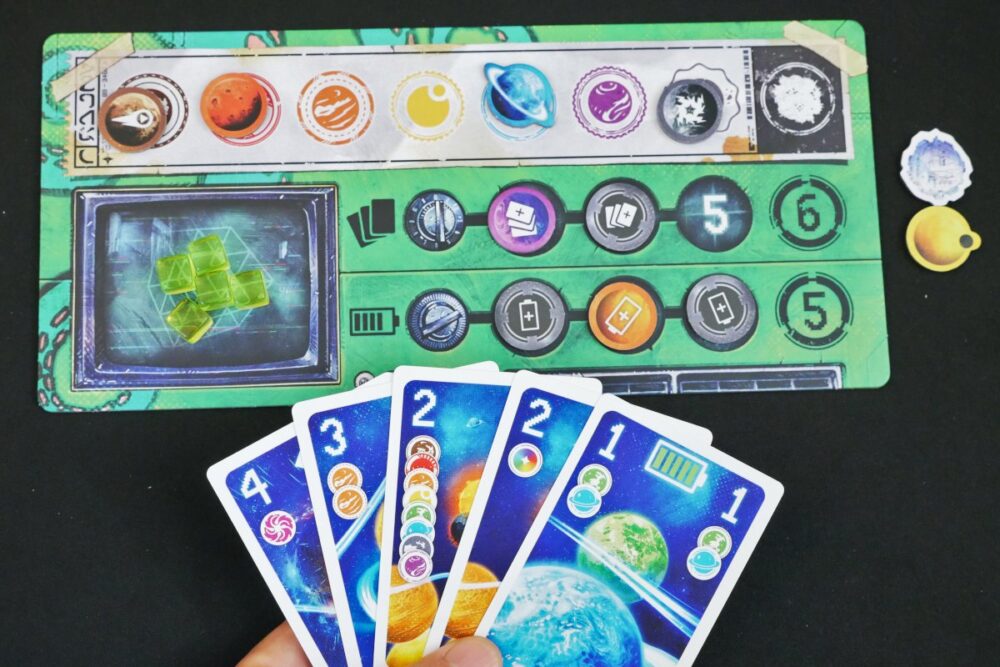
Upgrades may seem like detours, but they can empower you quite a bit. Here I've boosted my hand size from 3 to 5 and my battery capacity from 2 to 5. All these extra cards and battery units give me more flexibility to get where I need to go.
And it helps that ORBIT is generous with its battery provisions—there's no shortage of it, so you can spend freely. Many cards refill your battery by at least one, and you can also make battery pit stops throughout the system. I once spent five battery (fully upgraded capacity) with a 1-movement card to hop six spaces and reach the planet I needed. Even when you're stuck with "bad" cards, smart battery management can get you where you need to go.
Spot the Big Plays and Make 'Em
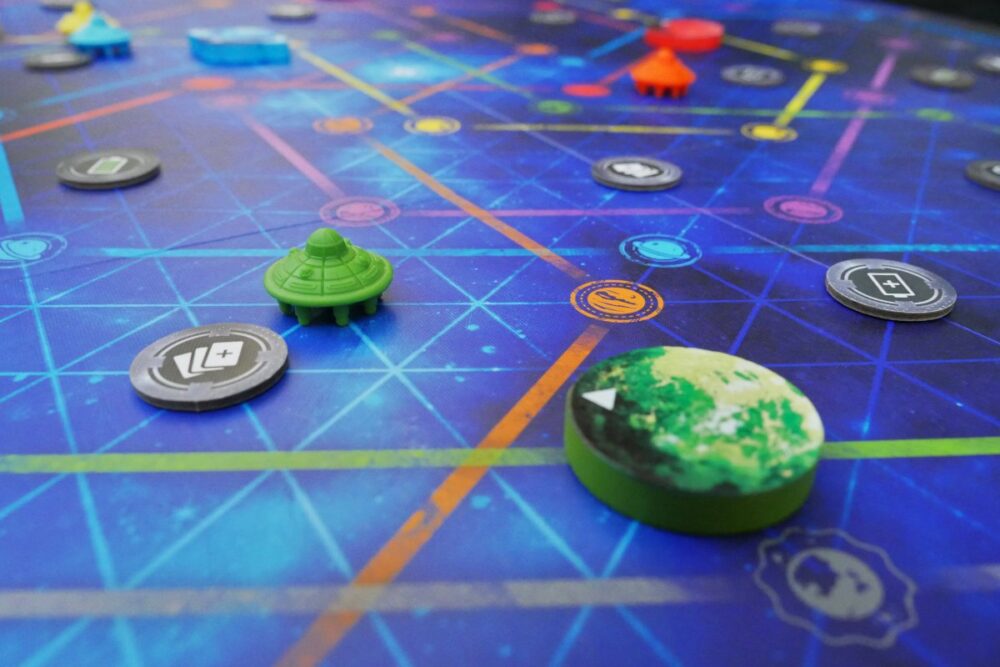
More often than not, you can exploit the sweeping planetary motion to your advantage. If you can dock your ship to a planet (i.e., land directly on it), then you'll move with it when the planet moves. One time I played a single card to move onto the Green Planet, then moved the Green Planet twice along its orbit, dragging me halfway across the system and putting me within spitting distance of the Orange Planet I still needed to hit.
I've hitched a ride on the Green Planet—and if things work out, both Green and Orange Planets will pass by each other. I can hop off and get there much faster this way.
You also have the hyper warps and cannons around the board. Reach any hyper warp in space and you can instantly teleport to another, traversing huge sections of the system. Reach any hyper cannon and you can blast yourself in a straight line, maybe even landing directly on a planet for immediate visitation. These moments don't happen all the time, but when they do, they're big enough to meaningfully shake up the standings.
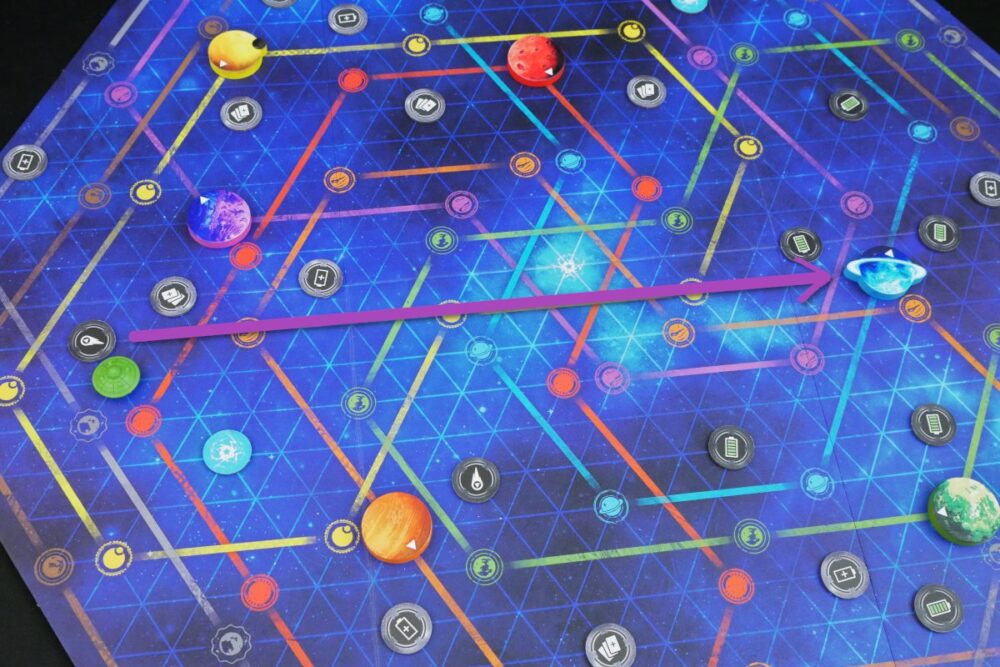
By reaching the hyper cannon station on the left, I can beam myself across the entire board and instantly land on the Blue Planet.
I love when a game rewards you for finding such opportunities. By smartly navigating warps, cannons, battery boosts, and planet rides, you can make big plays—and it feels good when you do.
It Truly Feels Like a Race
All of these simple but interlocking mechanisms come to a head in one vital way: ORBIT is a race and it sure feels like it. Most racing games land poorly for one of three reasons: they're plodding, they're convoluted, they're hard to win if you don't have a good start. ORBIT manages to sidestep all of those traps and deliver a fast, satisfying race in under an hour.
Your action is to play a single card. That means snappy turns and steady forward momentum, not a lot of fiddly administration or long-mulled decisions that weigh down pacing. It's one of Reiner Knizia's cleanest designs for a family-weight strategy game, never bogged down by overcomplicated rules.
And you can always claw out a victory from behind. Between the potential for big plays, unpredictable Silo System, and always-moving end-game trigger (i.e., returning to your home planet), fortune can spin in your favor at the most unexpected times. My wife won from last place by cannoning to the Brown Planet, cannoning again to the Yellow Planet, moving the Yellow Planet towards her home planet, then scooting over with a big battery boost on her next turn. If that kind of tense finish isn't the ideal in a race, I don't know what is.
Player Interaction Is Indirect but Real
ORBIT is the game to play if you like teasing, poking, and prodding your opponents without ever devolving into full-out war and destruction. Think of it like running a 5K while pelting the other racers with whiffle balls—it's annoying and it can slow them down, but they aren't getting hurt.
All of the player interaction happens in planetary motion. I once positioned myself in the path of the Gray Planet, planning to move it right onto me on my next turn and activate its warp ability... but Hank turned it around right before I could execute. It felt targeted, even a little mean. He dashed my plans and forced me to re-route—that's what the game is.
That said, a lot of the player interaction is incidental. Later on, I played a card strictly for its 3 movement, not realizing that it'd move the Orange Planet two steps away from Hank. I didn't plan for that. It just happened to be the right card in my hand for that turn, and it just happened to derail Hank. But he got me back later when he played a Wild Planet card and purposely moved my home planet as I was chasing it. (When those Wild Planets are played against you like this, that's really the only time you'll truly feel harassed.)
Player Count and Scaling
ORBIT's indirect player interaction works because you never lose your sense of agency, and the setbacks are occasional enough that it never edges into confrontational territory. At least, that's the case at 3 and 4 players. You need that head count for the planets to move enough between turns. It's what makes the player interaction worthwhile, ramping up the racing tension and the challenge of making efficient moves on an ever-changing board.
When you shrink down to 2 players, ORBIT feels meaner. You're equally interested in making progress as you are in impeding their progress, and vice versa. Meanwhile, the planets are more predictable because they only move once between your turns. ORBIT at 2 morphs into an abstract strategy game, losing much of its tension due to limp planets. The rulebook has an "advanced" 2-player variant where each player controls two spaceships, but it's a minor change that doesn't address the lost tension. It just lengthens the game.
I'd happily play ORBIT with 3 or 4, but likely won't at 2 again.
Replayability
In one sense, ORBIT is a puzzle with a race veneer. The race is certainly real, but the heart of it is action efficiency—and that efficiency comes from assessing the positions of the planets, the floating space stations in between, the warps and cannons, and figuring out how to navigate them with speed. You're constantly re-calculating your next turn as the planets circle around, and those re-calculations are the game.
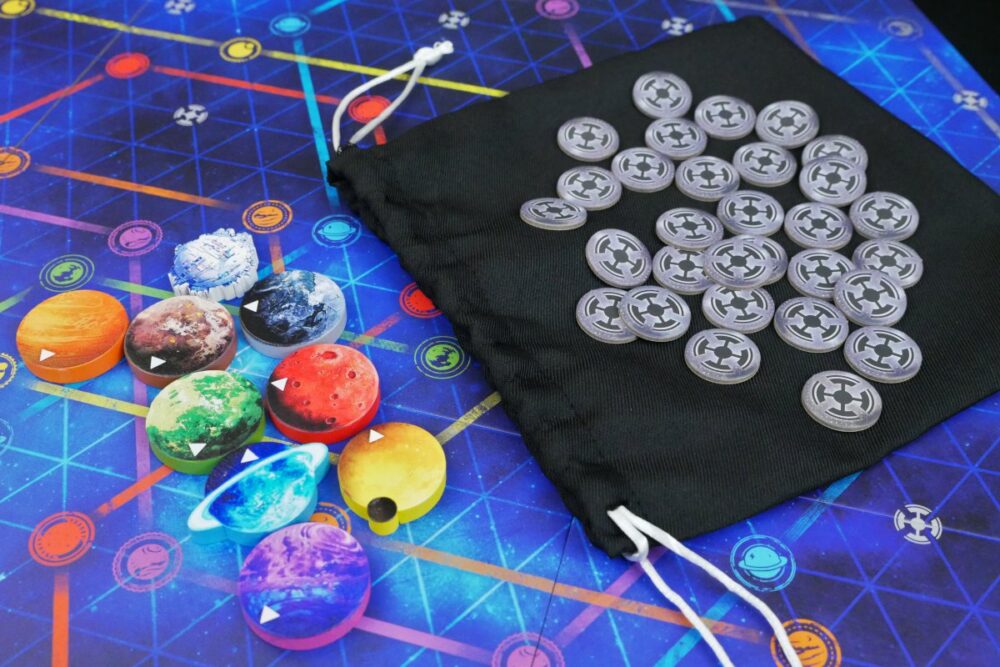
The game starts with two randomized layers: first, all the planets are spread across their orbits and faced in arbitrary directions, and second, all the space stations are plucked from a bag and placed on designated board spots. Whereas the planets are on fixed tracks, those randomized space stations make a real difference—they result in a distinct layout of hyper warps, cannons, and battery refill stations. Every game starts as its own new puzzle to solve.
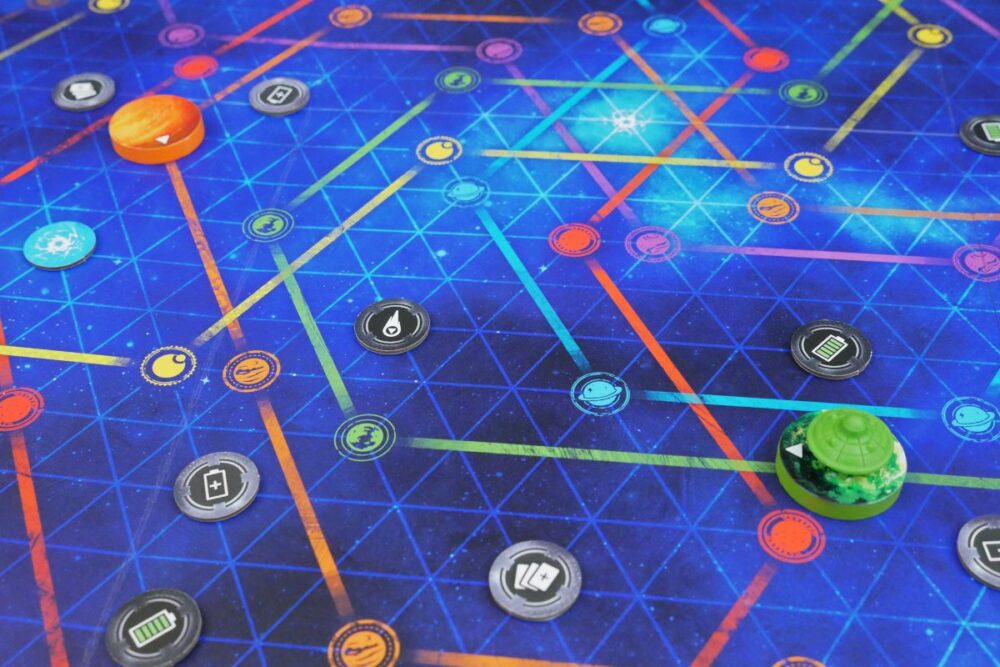
The distribution of space stations is randomized every game, as are the starting positions of each planet. Optimizing your paths for a randomized setup is the game.
ORBIT comes with a two-sided game board for more replayability. The basic side has simple orbit tracks per planet, while the advanced side has branching orbit tracks with multiple paths per planet. Those branching orbits add another layer of decision-making and player interaction—when you move a planet, you can choose which branch it takes—that deepens the gameplay, makes the puzzle harder to solve, and keeps it fresh across more plays.
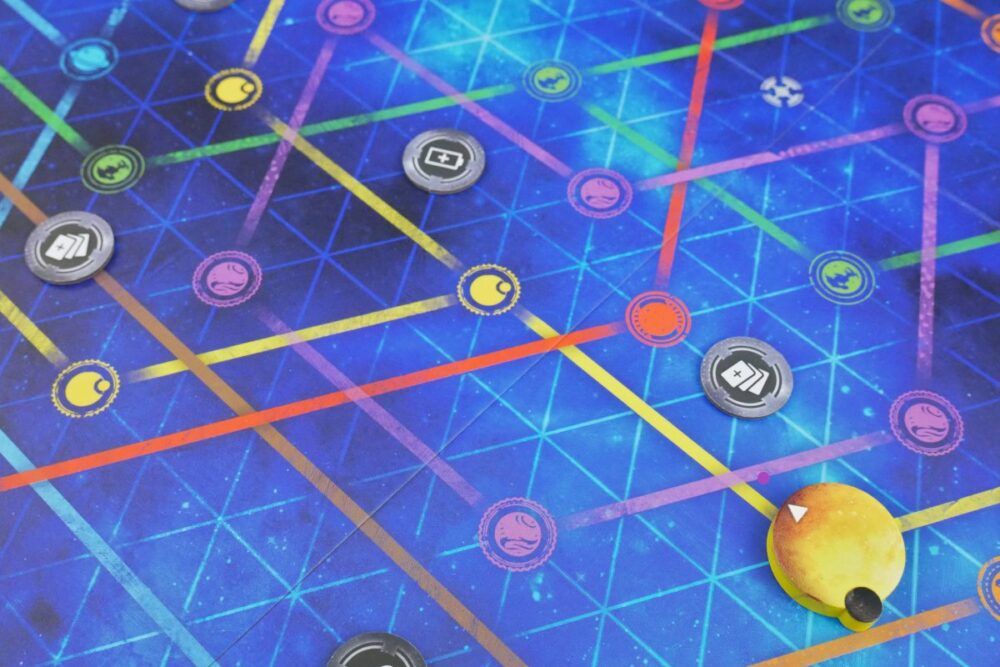
On the advanced side, every planet has a fork in its orbit. Here, you can see that the Yellow Planet is about to reach one. Whoever moves it gets to choose with path it takes.
But it does have a ceiling to its replayability. While it has good pick-up-and-play value and serves as a good gateway staple, ORBIT isn't the kind of game I'd play two or more times in a row one night. Despite an engaging puzzle, the turn-by-turn decisions do get repetitive over time. I won't come back to it every night, but I will come back to it—in the same way that I don't play crosswords all night every night, but love hitting them up every so often.
Components and Setup
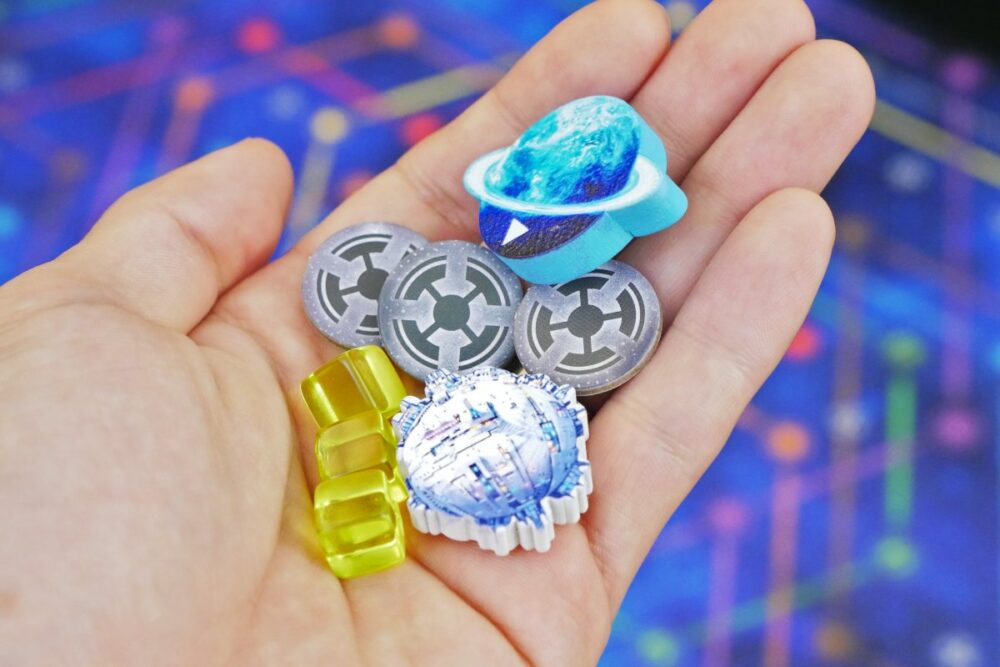
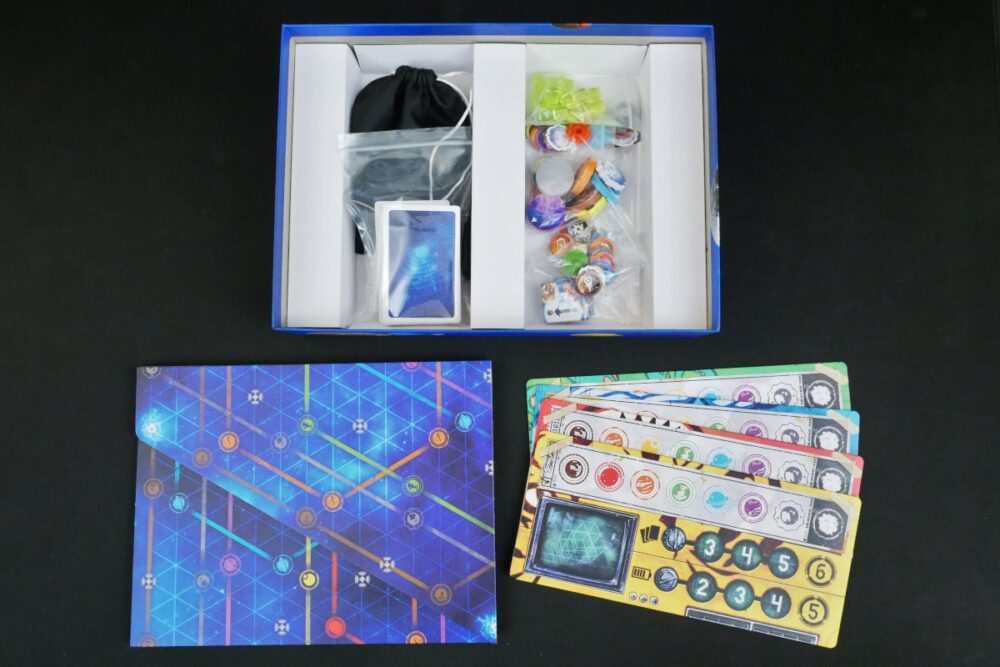
There are games that wow you with their productions, and then there are games that look great but stay out of the way and quietly make gameplay as frictionless as possible. ORBIT is the latter. The only real standout moment upon unboxing is when you unfold the uniquely hexagonal board. Otherwise, it's just cardboard tokens, wooden planet discs, and plastic battery cubes. It looks and feels good, but in a modest way.
The chunkiness and tactile variety makes for a lovely play experience.The player board is sized well and intuitively designed.The box could be a tad smaller, but overall it's a good use of space.
And I like that about ORBIT. Its theme and components are as approachable as its gameplay. The graphic design is legible and intuitive all around, with clean cards that drive clean gameplay. Neither cheap nor grandiose, it just strives to be an enjoyable experience—and it nails that. Setup takes 3–5 minutes to randomize all the planets and space stations, then shuffle the action deck, then you're good to go. And it can fit 4 players on a 3-by-3-foot table.
The Bottom Line
ORBIT is for gamers who want a puzzle disguised as a race, one that lets you elbow each other in the ribs as you go. If your idea of fun is to adapt turn-by-turn to an ever-changing board state instead of plotting five moves out, you'll like this. That it's a gateway-level game seals the deal. Play it at 3 or 4 players; with 2, the planetary chaos is subdued and the tension goes with it.