Stop Buying Games You'll Regret
Avoid buyer's remorse with my downloadable 8-question checklist—free when you subscribe to my newsletter.
One monthly email with my latest reviews and articles. No spam, ever. Unsubscribe in one click.


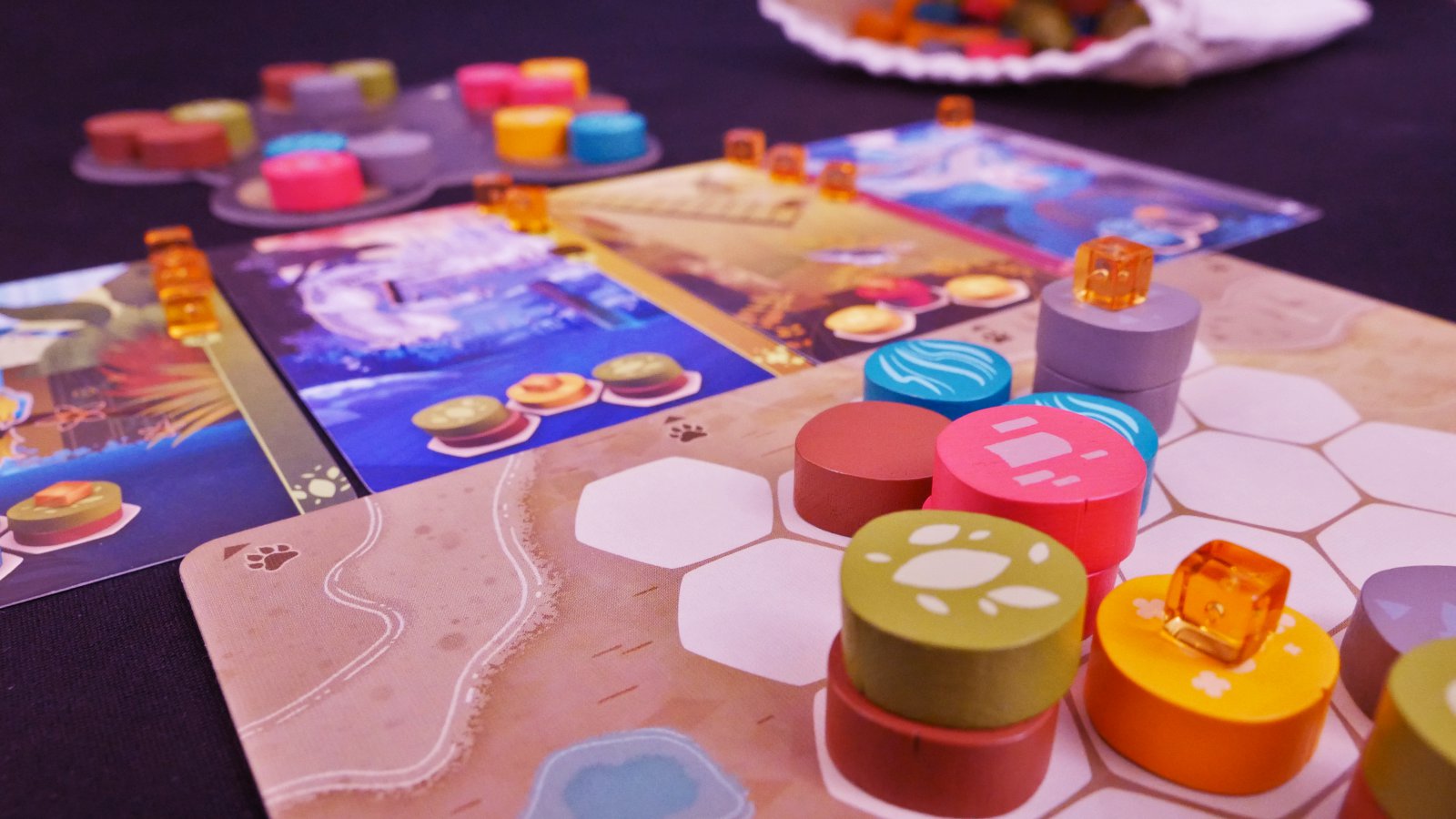
Harmonies is a beautiful tile-drafting puzzle game that plays best when you're the only one at the table.
Game Info
Upsides
Downsides
Harmonies came roaring out the gate in 2024 as the Cascadia killer, and I believed the hype. Everyone said that's what it was, so of course I expected a bona fide killer. To me, that meant a spatial puzzle with more depth, more replayability, and more animal-themed coziness. What I actually got is a game that presents one way and jukes the other way.
Forget the dazzling production and friendly theme. Harmonies promises a pattern-matching puzzle where you're building out the most perfect landscape. It's actually a game about commitment, about being stuck in a strategy you can't escape, about handling unwanted pieces as elegantly as you can. It's a game of compromise, and it's made worse by others at the table.
This review is based on my own personal copy of Harmonies, which I bought used from BGG's GeekMarket. Not a free review copy.
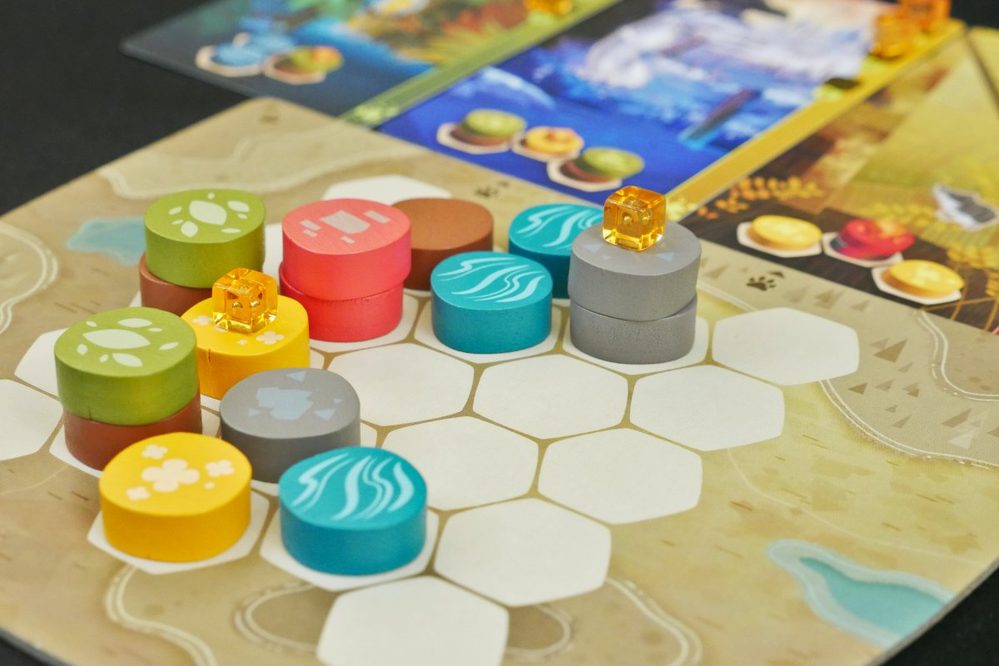
Harmonies is a token-drafting, pattern-building puzzle game for up to four players. It'll feel familiar if you've played the likes of Azul and Cascadia, where you're open drafting from a central pool of options to obtain the pieces you need to build out your tableau, except this one's more of a brain-burner with its emphasis on 3D pattern matching.
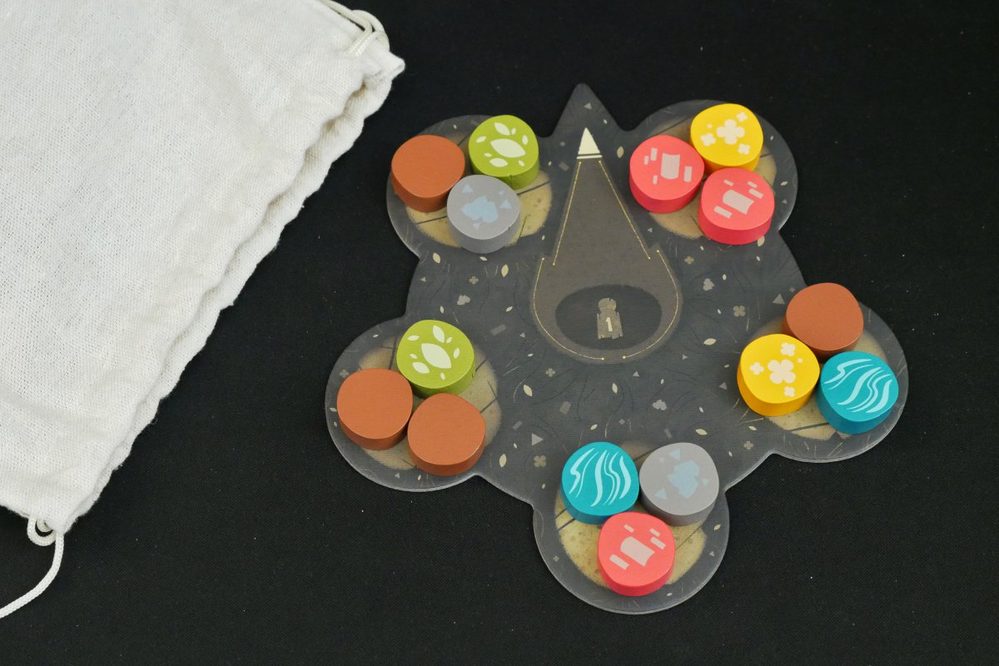
On your turn, you draft one of the three-token sets of terrain from the central board, then place those tokens on your personal board wherever you want with just a few placement rules. Some tokens can stack on top of other tokens to create 3D terrain shapes (like Green on top of Brown to create "Trees" and Gray stacked on Gray to create "Mountains"), while others can neither stack nor have others stacked on them (like Blue "Water" and Yellow "Fields").
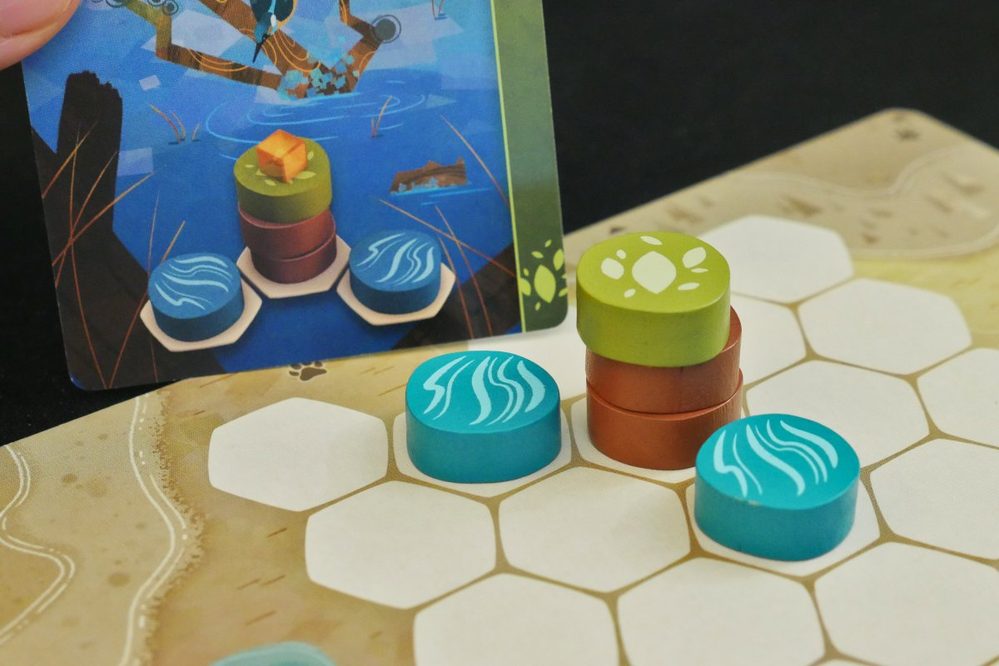
What you're trying to do is two-fold. First, the terrain shapes you create will be scored at the end, with the different terrain types scoring in their own ways. Second, you'll attract Animals to your board by building specific terrain patterns that match an Animal's Habitat, and each Animal you attract to your board earns you points.
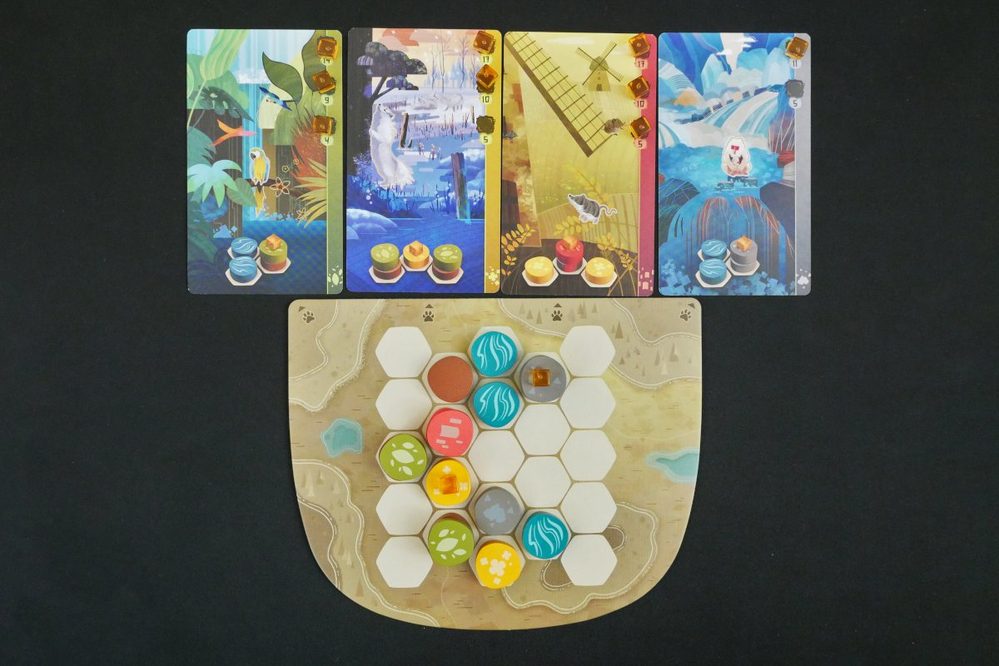
The game end is triggered when someone's board is nearly filled up (i.e., two or fewer empty spots remaining), at which point the round is played out so everyone gets equal turns, then whoever has the most points wins.
Don't be deceived by those cute Animal cards. Harmonies is surprisingly ruthless in how it asks you to draft cards without much information, then gives you zero recourse when you regret those initial choices. In building out your landscape, what you're really doing is crafting terrain patterns that can simultaneously satisfy multiple Animals, and that means drafting Animal cards with Habitat layouts that synergize with each other. But sometimes the cards out there don't work with what you have, so you either skip drafting or take one anyway and hope you can make it work. Both are traps.
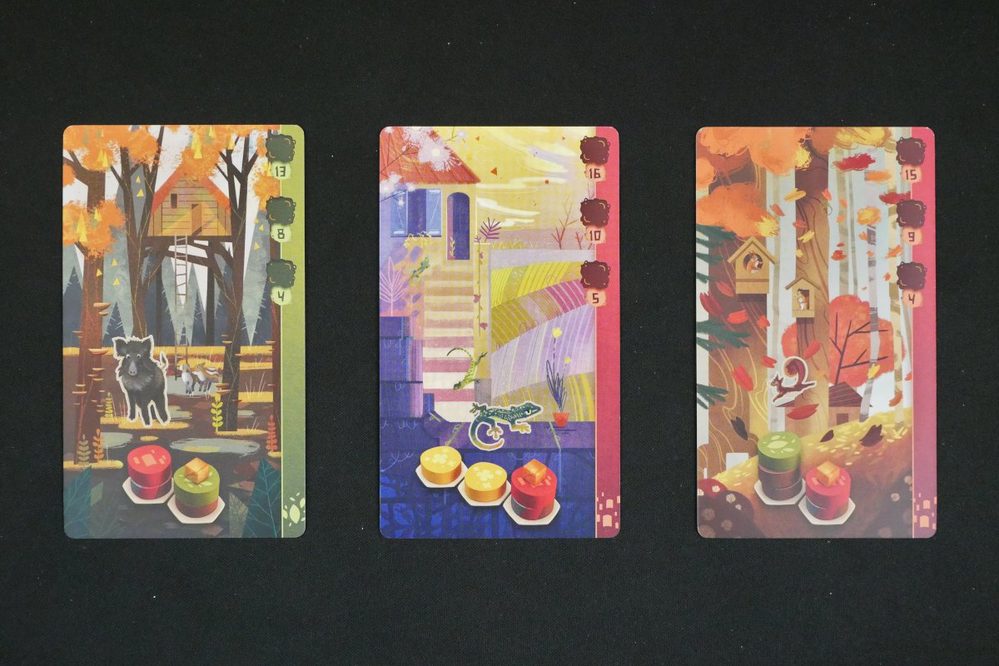
For example, the Boar needs a 2-Building plus 2-Tree pattern, which lets you place its Animal cube on the 2-Tree. This synergizes with the Gecko, which needs a 1-Field, 1-Field, and 2-Building in a line and places its cube on the 2-Building. Using the same 2-Building, you can fulfill both Boar and Gecko patterns with no overlap in cube placement. Meanwhile, the Squirrel needs a 2-Building plus 3-Tree with its cube placed on the 2-Building, which clashes with the Gecko because they both "consume" your 2-Buildings.
And Harmonies doesn't make it easy to pivot. There's no way to discard a poorly chosen card—you're stuck with it until you can complete it. I once drafted the Bee on my first turn, which needs three 1-Fields. For six straight turns, no Fields came out of the bag, then when one finally did show up, it was snatched before I even had a chance. Back on turn one, could I have predicted Fields would be so rare? Nope. That Bee clogged up one of my four Animal slots, and I was held hostage by a commitment from six turns ago.
Harmonies clearly wants you to strategize long-term. The whole idea is to draft Animal cards that work well together, then execute on that strategy with a landscape that fulfills those cards as well as you can. But once you're locked into the Animal cards you've drafted, your ability to execute is severely restricted by luck. You spend the first few turns building a plan, then the rest of the game triaging those patterns with tokens that won't cooperate.
Your Animal cards tell you what you need, while your turn-by-turn action is to grab terrain tokens and decide where to place them. When you can get the correct terrain, placements are autopilot—they go wherever your Animal patterns dictate. But when you have unwanted terrain, which happens often, you can't just toss them or ignore them. You have to figure out where they're going to sit in your landscape, and that's the real puzzle.
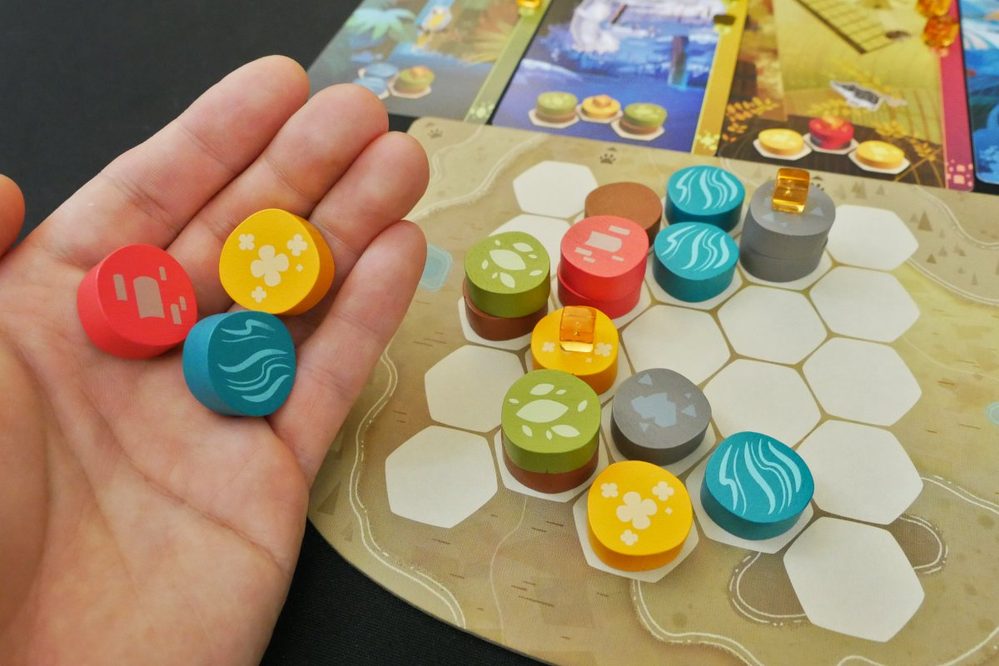
Harmonies is the constant tension between knowing what you want to build and not being able to build it. Playing to your Animal cards is easy. Knowing what to do with your trash and extracting as much value as you can from it? That's where the crunch happens. When it's your turn to draft a terrain pile and all five piles are trash, that's when Harmonies is a true test.
And the limited space in your player board adds to that tension. With only 23 spots to work with (or 25 if you play on the reverse side), the board quickly fills up, leaving less and less room to handle trash. You might happily take that pile with Stone and Leaf because you need them, but what will you do with the leftover Water? Put it in the far corner, treating it as worthless? Or place it somewhere near your existing features and maybe try to incorporate it with a future Animal card draft? There's no right answer.
While the non-trash part of the puzzle tends to play itself—your Animal cards dictate which tokens to draft and the shapes you want to create—hitting those terrain shape milestones along the way still feels good.
When you draft the perfect set of three tokens to build out a double-1-Water-with-1-Stone pattern and place your Penguin cube, it's only 4 points. Your progress in Harmonies is slow and steady, a few points at a time as you complete shapes. But finishing a pattern, no matter how small it is, makes lights go off in my head. Every completion is a tiny celebration.
And when the game ends, you get to look over your board and see the miniature world you've crafted—a slice of landscape that you'll never see again. Even when you lose in points, the work you've done is its own reward.
When I think back on my Harmonies games, what I mainly remember is sitting on my thumbs and waiting for my turns to come around. The pacing is stop-and-go because there isn't much to keep you engaged in between turns.
Normally, downtime is when you should be planning ahead and deciding how your next turn will go. Harmonies doesn't let you. The terrain token pile that you want may not even be there when it comes back around to your turn.
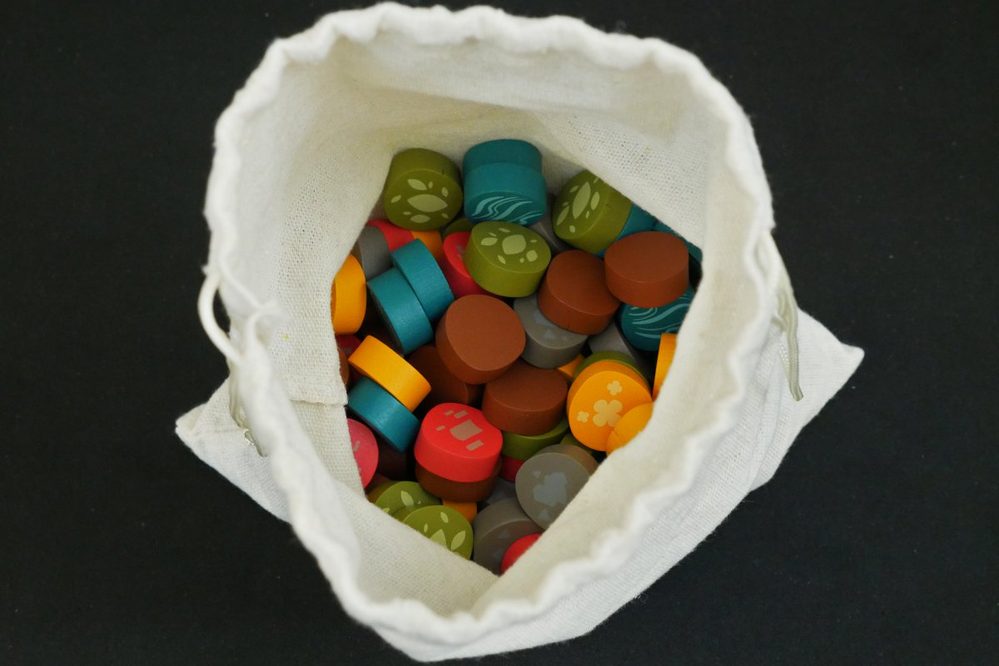
Plus, a new pile is drawn right before your turn, and you can't assess that one until it comes out. Similar issues exist with the Animal card market, though less pronounced. With two layers of open drafting, Harmonies leaves no reason to think very hard until it's actually your turn.
That means a lot of sitting around and hoping for good options. No one can fully think through their turn until it's actually their turn, and so you wait, wait, enjoy the puzzle for a short burst, then wait, wait some more... It's almost like the game wants you to check out mentally.
3D puzzles will always be polarizing. Not all brains are equally capable of processing 3D spatial patterns, and it's not an easy skill to develop. If you're on the "my brain melts when thinking in 3D" end of the spectrum, Harmonies will not be fun. How do I know? Because my wife is like that—she doesn't get along well with abstract thinking—and she doesn't like Harmonies.
If you struggle to imagine shapes and spin-flip-turn them around in your head, then Harmonies will be quite the brain-melter. If abstract 3D manipulation comes naturally to you, Harmonies will actually be quite cozy. (I know that because I'm on this end of the spectrum.)
That dichotomy can be a real downer. The 3D-adept players are frustrated by having to wait for others who take forever to take their turns, while the 3D-inept players are frustrated by the challenge and the struggle against something that seemingly comes easy to everyone else. Harmonies is no gateway game, and I'd only introduce it to spatial puzzle lovers.
Harmonies is best played solo, period. It's pure puzzle gameplay with zero player interaction and no reason to pay attention to what others are doing. You might watch what they draft and what terrain they're prioritizing, but that has no impact on how you actually solve your own puzzle. Can you "hate draft" the tokens they want? Sure, but that's a bad move—you'd only hurt yourself with tokens you don't want, clogging up your board with trash.
Truth is, the presence of other players only serves to lessen the purity of the puzzle-solving experience. Terrain tokens are limited resources, and every other seat at the table creates competition over those resources. That competition doesn't make the puzzle more interesting—it only reduces your agency, stealing away your options and potential choices through no fault of your own. Every extra head is also extra downtime that you have to sit through, and I hate downtime in games that are pure multiplayer solitaire.
Harmonies also isn't a great 2-player experience. At this count, with the game lacking a market refresh mechanism, the Animal card market quickly goes stale. I once drafted a Water Animal as my first, only to watch the market fill up with four more Water Animals. If you don't like any of the market options, you have no recourse but to burn a slot on an unwanted card and hope the next one is good. That isn't strategy or tactics. It's just bad luck.
The solo mode in Harmonies makes three changes that elevate the gameplay above the "multiplayer" experience.
First, the central token-drafting board only has three piles instead of five, and the Animal market only has three cards instead of five. With fewer choices, you're more likely to be stuck with options you don't like, making your decisions tighter and less forgiving. The terrain drafting is more meaningful as each pile is likely to include trash, so you have to weigh the pros and cons of which unwanted tokens to take and/or skip.
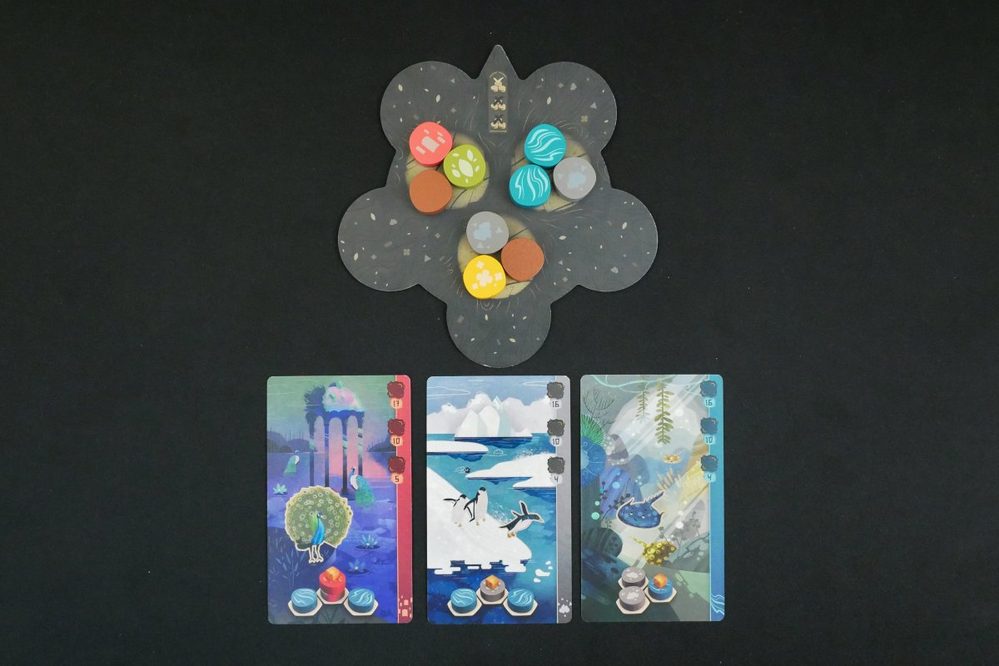
Second, when you draft a pile of terrain tokens, the other two piles are discarded. You can't save them for later, which increases the decision pressure—if you're stuck between two piles that seem equal, you must commit to one and lose the other. More importantly, it increases the churn. You have three fresh piles to evaluate every turn, and that keeps the puzzle interesting (unlike the main game where you only assess one new pile every turn).
Third, if you don't draft an Animal card on a turn, you can discard one from the market and draw a replacement. This keeps the market from going stale and gives you agency over its churn. You can strategically discard unwanted Animals and hopefully bring out others that might synergize better. This mechanism should be part of the main game, not just a solo quirk.
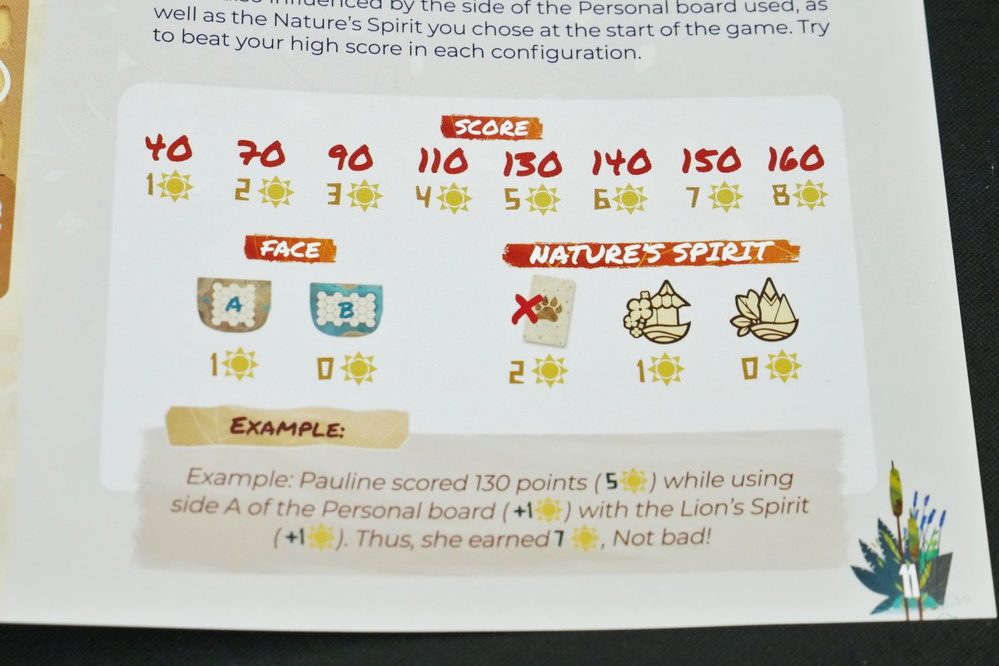
As for winning and losing, solo Harmonies relies on a beat-your-own-score design. It's a bit of a shrug—not very interesting, doesn't inspire repeat plays. If you're going to play Harmonies solo, it's because these changes make the core puzzle gameplay more engaging and you're there simply to enjoy the mental exercise of building out your 3D landscape to specifications.
Harmonies went stale on me within 10 plays. The first few plays were new, fascinating, enjoyable—I was impressed by its presentation and tactility, but all of that began to fade with repeat plays.
The main issue is that it's ostensibly a puzzle game, but the puzzle design itself relies on novelty to stay interesting. Harmonies hinges on its Animal card drafting, with Animal cards dictating your strategy and goals. As such, this is a case where variety is needed for replayability...
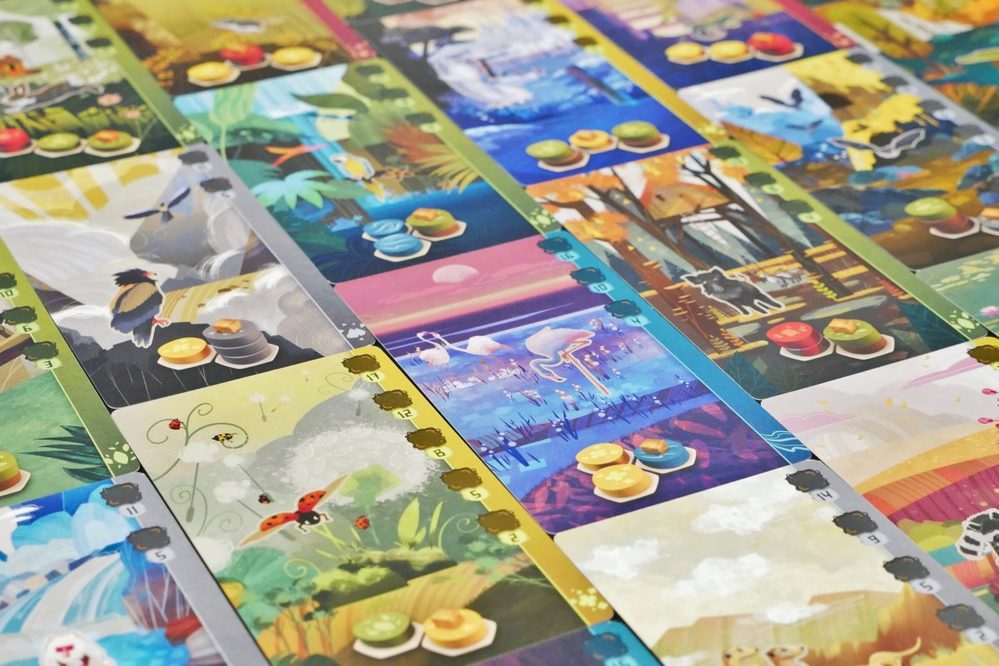
...but the variety isn't there. It comes with 32 Animal cards and most of them are rehashes of each other, the same patterns in different colors. Once you're familiar with them, the good and bad combos become clear and the main puzzle loses its thrust.
The non-solo pacing is also a deal-breaker. Every time, I've found myself wondering why I'm playing this with others when I could be enjoying the improved solo design with zero downtime holding me back. That downtime is enough to keep me from returning to the multiplayer game.
Harmonies is gorgeous and there's no denying it. Everything about its presentation is top-notch, from its vivid visuals to its tactile componentry that feel great to touch, effectively grounding you in its nature theme.
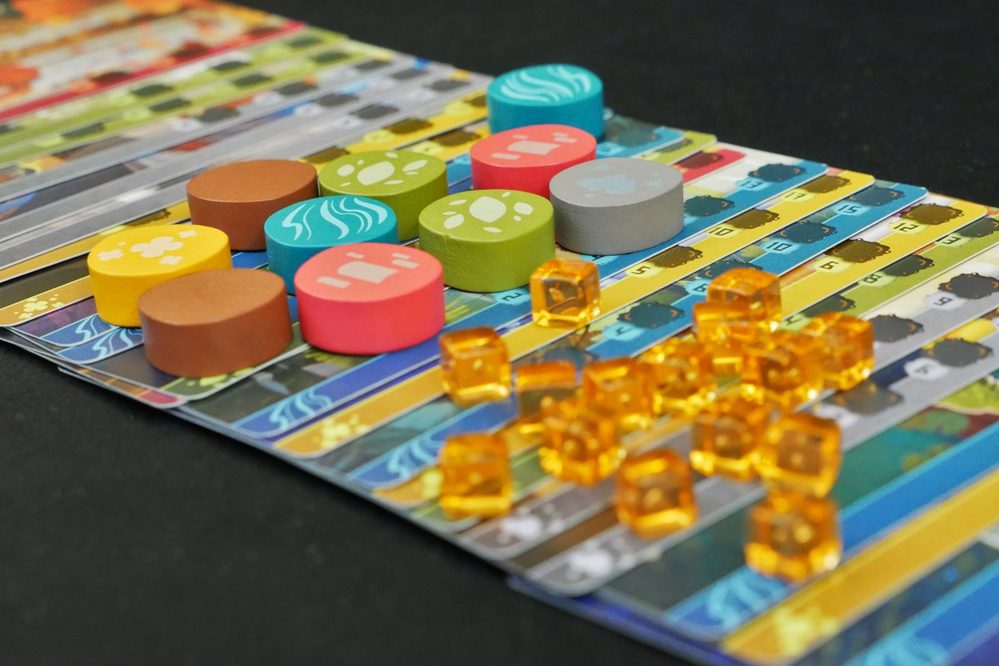
The Animal cards are beautifully illustrated. The terrain tokens have a soft, pleasing color palette. The graphic design leads to intuitive play—the flow of cubes from Animal cards to your board, the Habitat pattern depictions, and the scoring reference card make Harmonies easy to pick up and play.
But my favorite part is the box: not bigger than it needs to be, not so small that packing up is its own puzzle, with a clever flap-folding insert for snugly storing the cards and cubes. The canvas bag for pulling tokens doubles as storage, and I appreciate that there's nearly zero plastic involved.
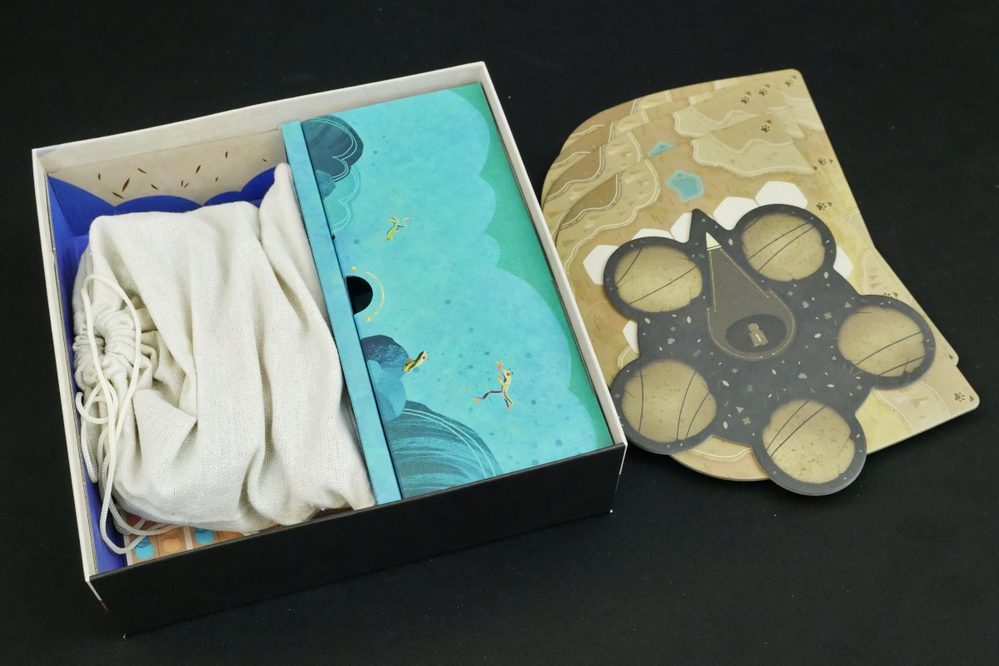
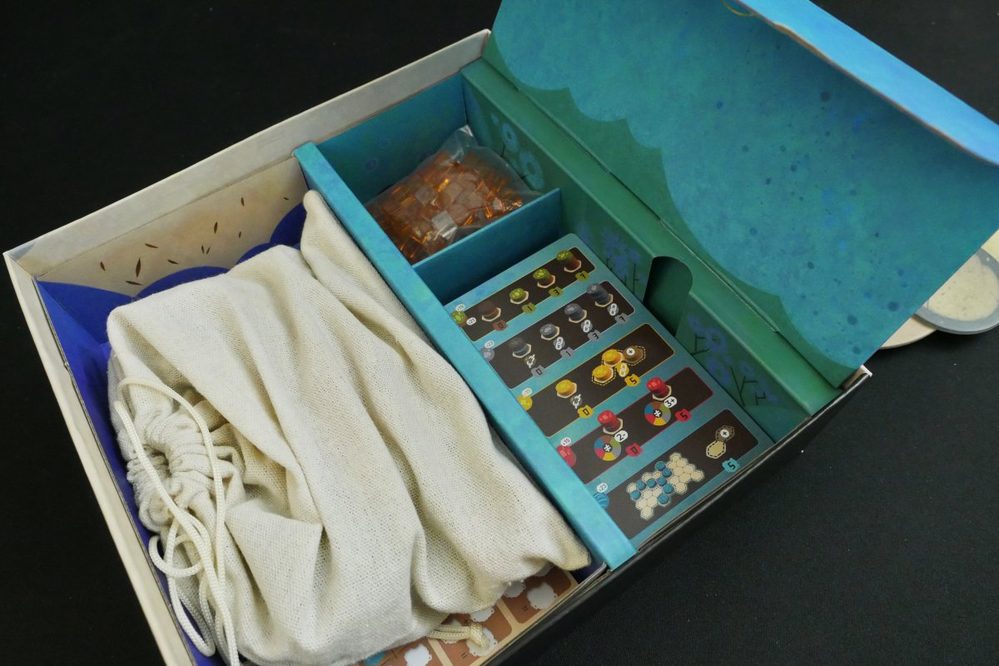
The whole package is thoughtfully constructed, and it all serves a smooth and fast setup (which takes about 2–3 minutes max) that fits 4p snugly on a 3-by-3-foot table (but it'll be tight due to the oversized Animal cards).
Harmonies is a stunner at first glance, but it has real depth and downtime problems. It peaks early and stales fast, without enough meat to sustain itself across multiple plays—unless you're solely in it for yourself. The solo mode fixes almost every flaw, and that's the only way I'll ever play it again. Get it if you need a cozy-yet-brain-burny solo 3D puzzle for your shelf. Skip it if you're expecting a gateway game to play with a full table.
Stop Buying Games
You'll Regret
Before your next game purchase, run it through this mental checklist that every seasoned gamer uses.
Free checklist, delivered instantly to your inbox.
No spam, ever. Unsubscribe in one click.
More Reviews