I came to Canvas with such high expectations, I was almost afraid to play it. Peeling the protective film off all the cards, playing that first game, and marveling at the paintings we'd made—it was an experience unlike any I've had in board gaming. It was good, and I thought I had a winner on my hands. But that first-game experience is where it peaks.
Canvas is a fondant cake: it's dazzling to look at, but it tastes like cardboard and packs no nutritional value. This review is about why.
This review is based on my own personal copy of Canvas, which I bought new from Cardhaus. Not a free review copy.
Table of Contents
View more
What It Is
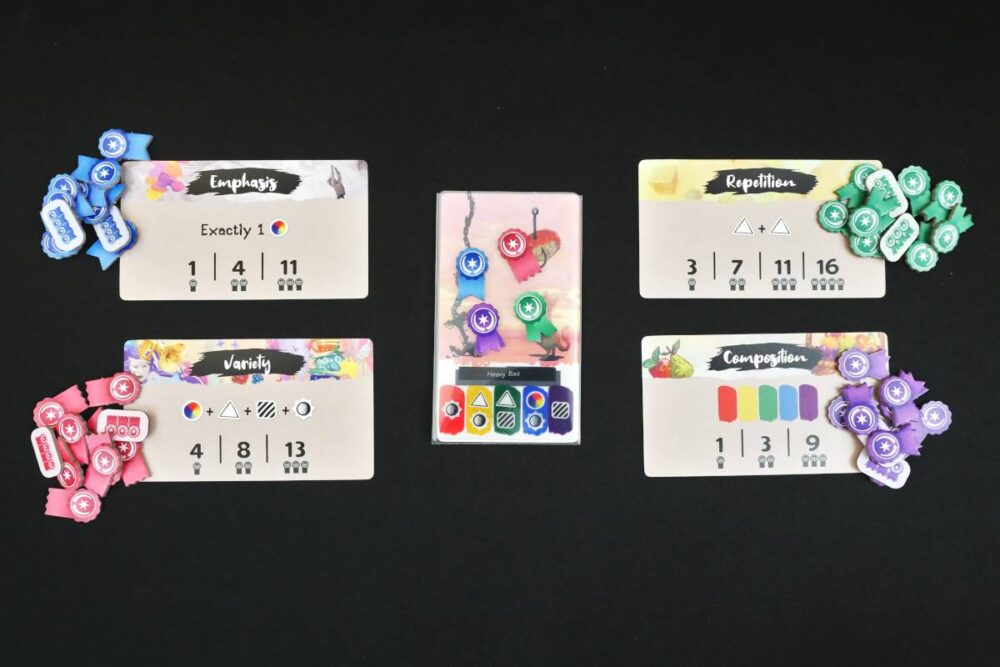
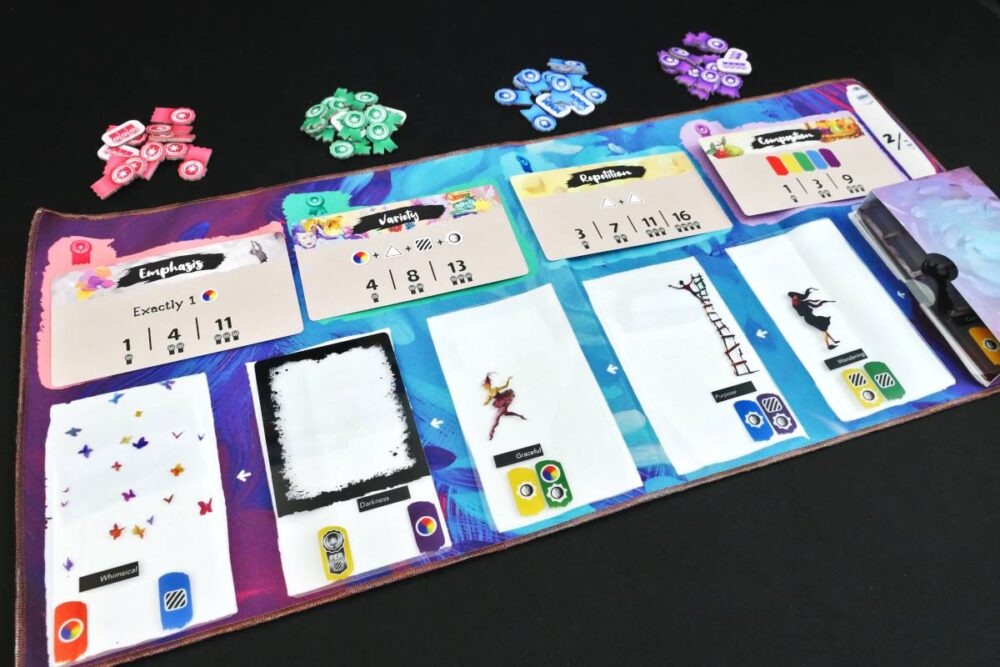
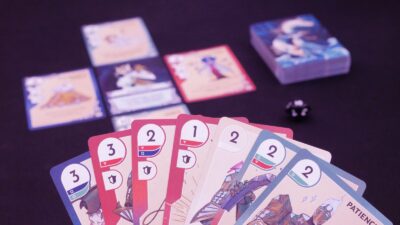
Canvas is a simple-yet-gorgeous card drafting game for 1 to 5 players where you collect different Art Cards and combine them into paintings. You'll create three paintings over the course of the game, and each painting is judged according to the Scoring Cards selected for that game. For each Scoring Card you fulfill, you'll earn a Ribbon—and more Ribbons means more points.
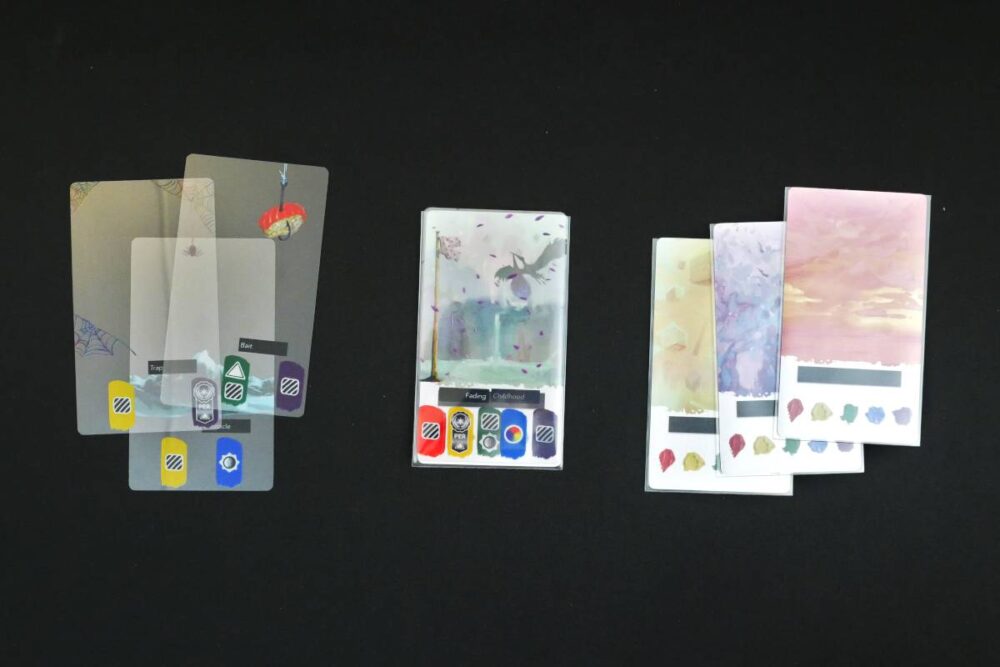
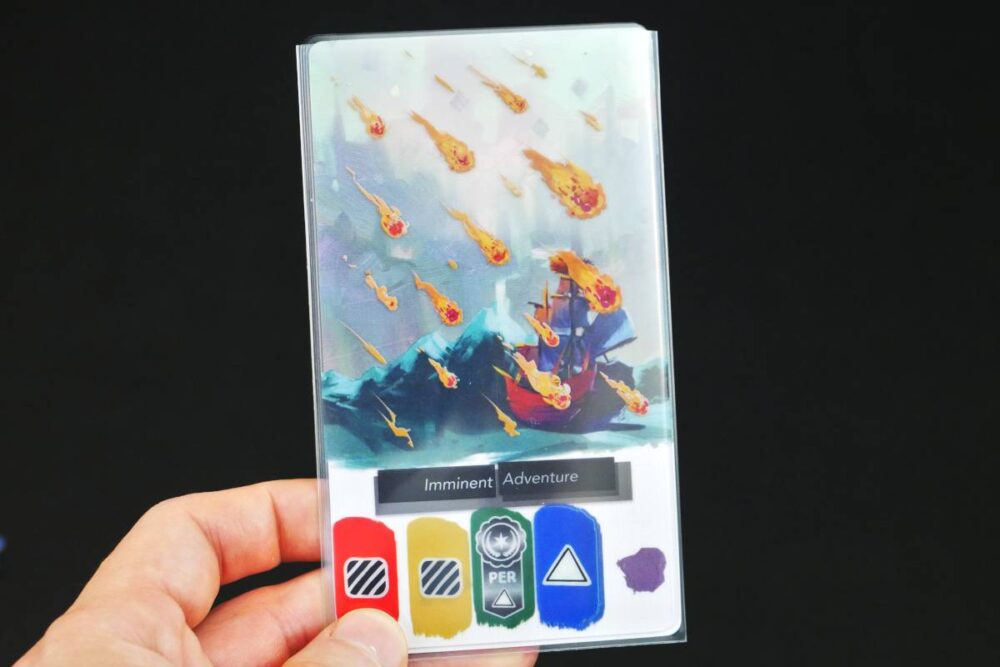
The transparent Art Cards (left) are layered together and slipped into sleeves with backgrounds (right) to create paintings (center).A complete painting (center) is scored according to four Scoring Cards, earning each Scoring Card's respective ribbon if its criterion is fulfilled.
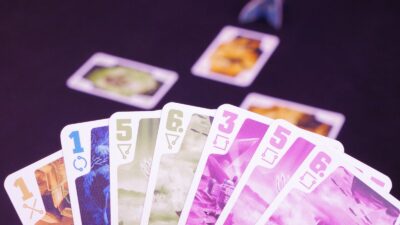
On your turn, you have one of two possible actions: either draft a card from the market or submit a painting. Drafting means taking a card from the central market to your hand, paying Inspiration Tokens to take the more expensive Art Cards. Submitting a painting means layering together three of the Art Cards in your hand, then sliding them into one of your painting sleeves. Art Cards are transparent, so depending on your layering order, they'll look different and showcase different scoring icons for the Scoring Cards.
And that's the whole game: acquiring the most suitable Art Cards and forming the most satisfactory paintings for whichever Scoring Cards are in play.
How It Feels to Play
Strategy vs. Tactics
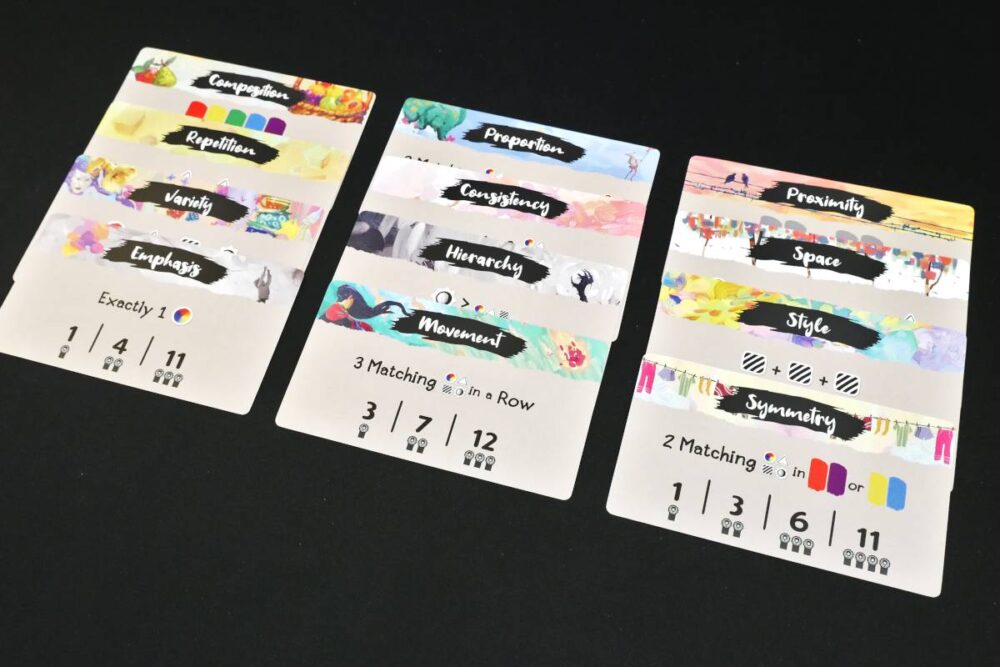
When you sit down to a game of Canvas, the first thing you do is look over the 4 random Scoring Cards that've been picked. These are the holy criteria by which your Paintings will be judged. You evaluate how they work together and how they clash, then mentally prioritize them. You'll be drafting and layering Art Cards according to your evaluation. This is the strategy aspect of the game—you have a long-term goal that underpins all your decisions.
Once the game actually starts, you spend all your time assessing the 5-card market and picking whichever one best suits your strategy. But it's all reactive. You can't forge your path to victory—you can only make do with what's available. If your strategy is to stack up on Art Cards with Triangles to satisfy the Repetition Scoring Card, but the market has zero cards with Triangles, you can't execute on your strategy. The market doesn't let you.
None of the market cards have Triangle icons? Too bad.
This isn't a criticism. There's a verisimilitude to it, forcing you to be creative and think on your feet as you adapt to whatever materials are available. It's very much in line with the painterly theme, although I doubt it was intentional by the designer. Just know that Canvas is a tactical game, not a strategic one. It asks you to be creative within the constraints of a lucky market.
Inspiration Economy
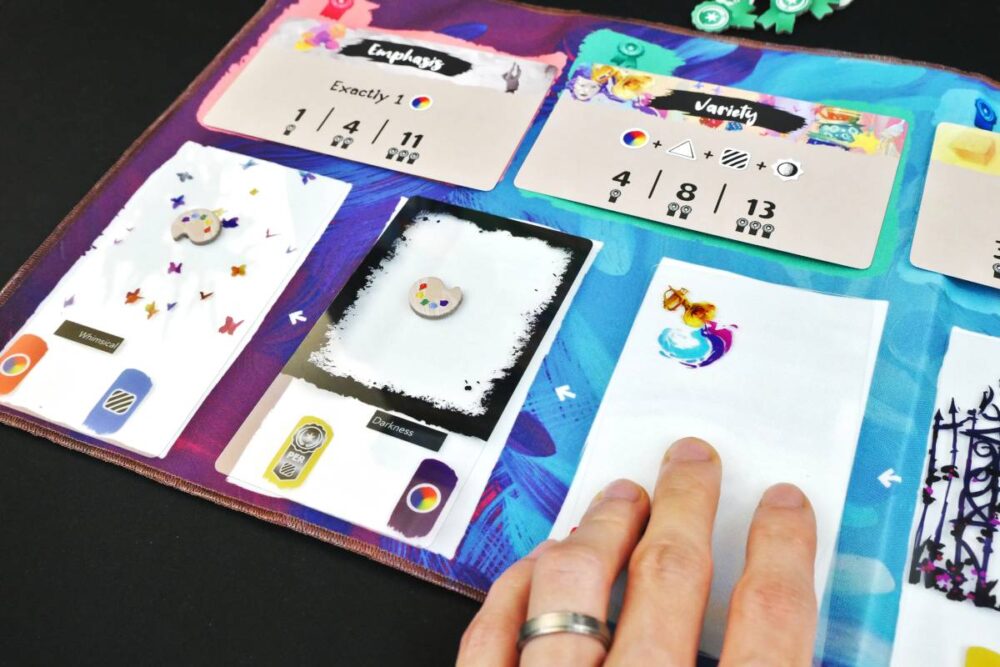
When you look at the card market, you can't just take what you want. There's a price to pay: Inspiration Tokens (or as I like to call them, palettes). The left-most card in the market is always free to take. For any other card, you have to place 1 Inspiration Token on each card you skip going left to right. Want the third card? That's an Inspiration Token on the first and second cards.
But you only start with 4 Inspiration Tokens. If you burn them too quickly, you hamstring your ability to draft the perfect card when it comes out, and now you must take the left-most card. Fortunately, you retrieve all the Inspiration Tokens on a card when you draft it, which refills your supply and gives you more flexibility in the market again.
Managing the ebb and flow of your palettes is the most interesting part of Canvas. If there's any tension in this game, it's when you see a card you want but it's too far up the market. Do you spend all your Inspiration now to secure it? Or sacrifice this turn to take the left-most card with 3 Inspiration, knowing it'll give you more breathing room on your next few turns?
Everyone else is doing this too, by the way, and the supply of palettes is fixed. It's a zero-sum economy where spending your Inspiration directly empowers others, and this economy is what keeps Canvas from feeling like a complete multiplayer solitaire affair.
Carried by Presentation
Every single time I've introduced Canvas to someone, they've uttered "Wow!" or "OMG!" or some variation of that. As soon as you show them how the Art Cards layer together and slip into sleeves to form complete paintings, you have their attention. You show them how the bottom-edge scoring icons cover each other up, how you have to layer them in the best way to fulfill the Scoring Cards, how you end up with a named painting. Their eyes sparkle as you do.
Most completed paintings are beautiful. It's amazing how well three layers and a background can come together. The two-word naming is also a nice touch.
Canvas lives and dies by this artistic presentation. If you strip all of it away, you're left with a dry, abstract, spatial reasoning game that frankly isn't unique or interesting on its own. The painting theme is entirely cosmetic, yet it's crucial here. It elevates the experience from soulless drafting and contract fulfillment to something more creative, more soul-tingling. It's ultimately an illusion, but a successful one.
Which is to say, don't get Canvas if you're looking for a fun game. Get it if you're looking for an original visual experience.
Not So Gateway Game
When Canvas first came out, lots of critics touted it as the perfect gateway game. The mechanisms are few and streamlined, making it a great introduction to open card drafting and a sliding card market. Your turn is dead simple: draft a card or submit a painting. Anyone can learn that.
But there's one big gotcha I've seen in my games. Until they submit their first few paintings, a newbie won't fully grasp how the Art Cards and Scoring Cards work together. And even after they "get" how it works, they'll struggle to juggle the Scoring Cards, especially if they aren't good with spatial reasoning. Between layering Art Card icons and evaluating Scoring Card criteria, Canvas forces you to think in an unusual way—and that can trip some people up.
Player Count and Scaling
If I had to play Canvas, I'd do so with 3 players. That's the right number to maintain energy in the market, to keep it feeling fresh turn to turn and making sure it doesn't go stale. It's also enough players to ooh-and-ahh over each other's paintings, and you get to showcase how varied and pretty they can be. At 3 players, there's good drafting tension, fluid circulation of palettes, and challenge in crafting paintings.
At 4 and 5 players, the worst parts are amplified. The market changes so much so quickly, it's basically new when it's your turn again. It's way too risky to let a card sit in market, and if you can't get it now, you've likely lost it—the luck factor hits you in full force. At 2 players, Canvas swings the other way and becomes a low-energy, low-tension affair. It's more strategic with the back-and-forth palette economy, but ultimately rote, dry, and mechanical.
Replayability
Canvas has variability, not replayability. With 12 Scoring Cards and only 4 used in any game, mixable and matchable at random if you so choose, you have plenty of goal variety to explore. The rulebook even includes a page of nine Scenarios (predetermined Scoring Card sets) with target scores for each, giving you something to aim for on repeat plays. Variable setup changes what a "good painting" looks like, affecting the relative values of Art Cards.
But the different Scoring Card combinations don't change the decision-making process. The core puzzle is always the same: given these 5 cards in the market and the cards already in my hand, which one should I draft next? Turn 1, Turn 20, Turn 100 all feel the exact same no matter the Scenario. If you've played it once, you've seen everything the gameplay has to offer—the only reason to replay is to see what new paintings people might come up with.
Solo Mode
Canvas comes with two solo modes. The first is Vincent, a simulated opponent who effectively takes market cards at random (by tossing up Inspiration Tokens and using the face-up ones to skip cards). The second is Solo Puzzle, where you play like you normally would, except all market cards you skip over are discarded (you still must pay Inspiration to do so). Vincent is a clever design that keeps the spirit of the game, but he's also random. Solo Puzzle is tighter, more predictable, and more rewarding if you plan ahead.
Both modes are ultimately quite similar, though, and I don't care for either one. Canvas's gameplay just isn't interesting enough to keep me coming back, let alone to spend my valuable solo time on it.
Components and Setup
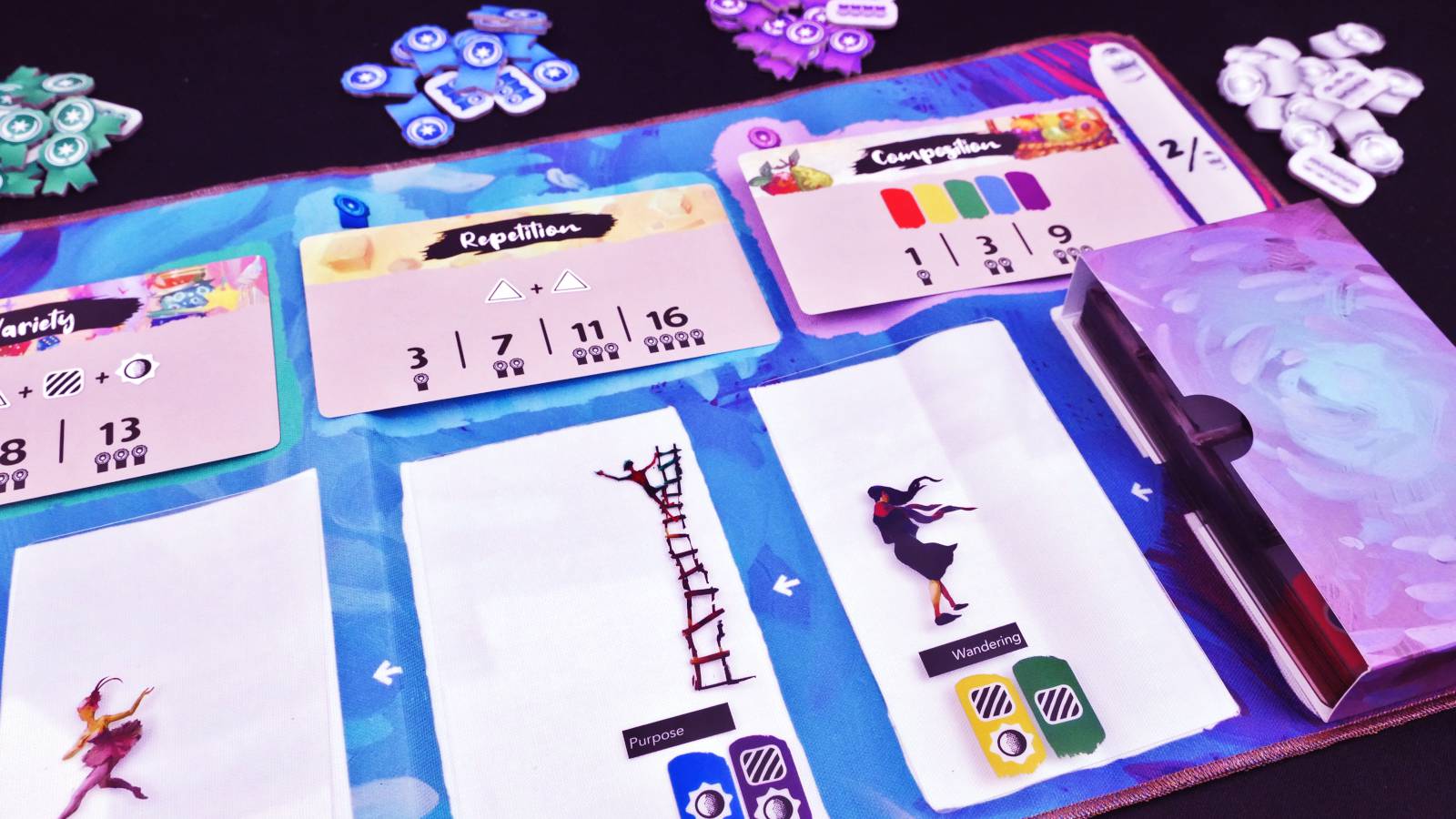
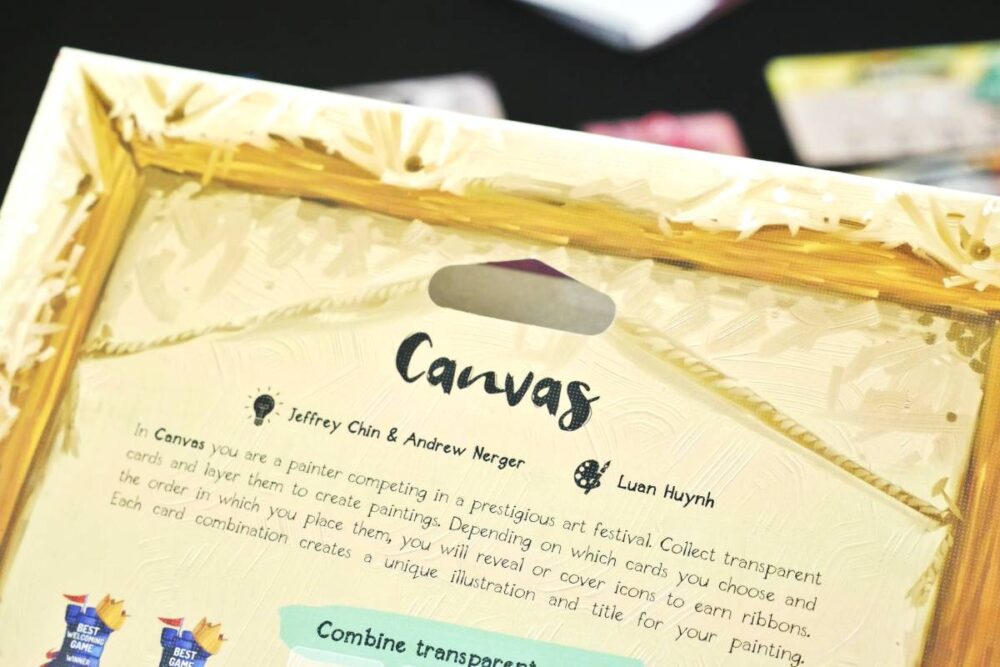
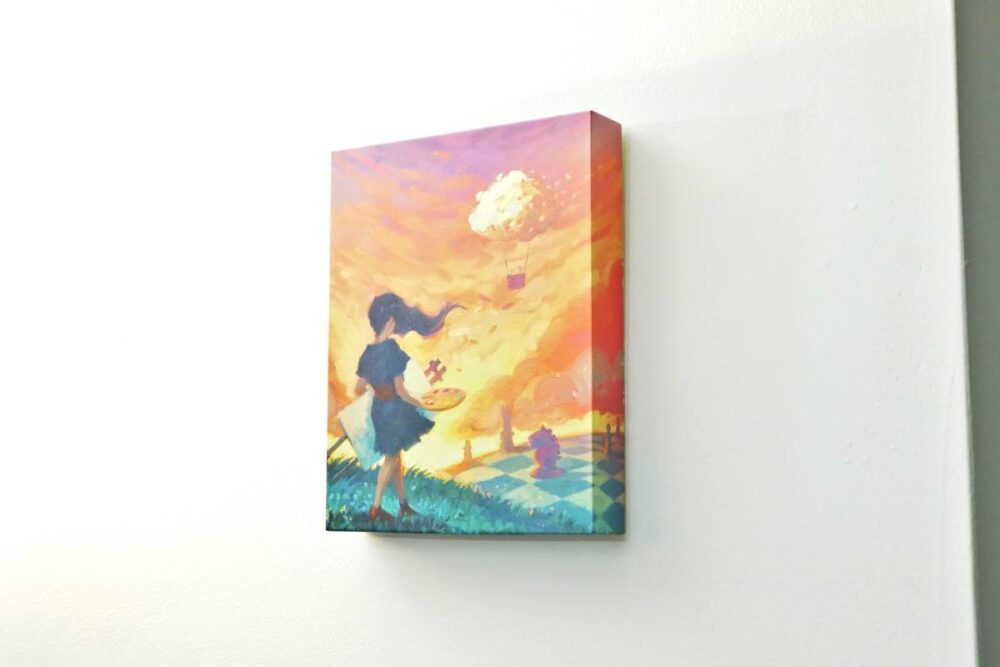
Almost everything about Canvas was thoughtfully produced. The colors are pleasing, the iconography is clear and readable, the sleeves are high quality, and the plastic Art Cards feel substantial in hand. But my favorite part is the game box design, which has a slot on the back for hooking on a nail and hanging on the wall. You can literally hang it up like a painting, a work of art that serves double duty. There's no branding, no title, no text at all—it'll blend in with all the other hangings in your home.
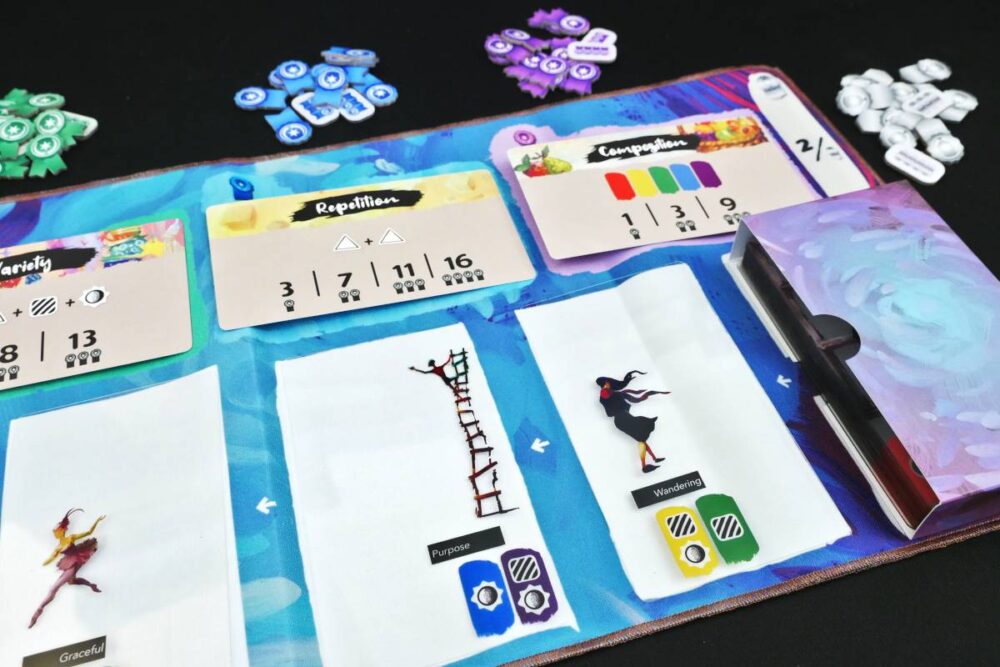
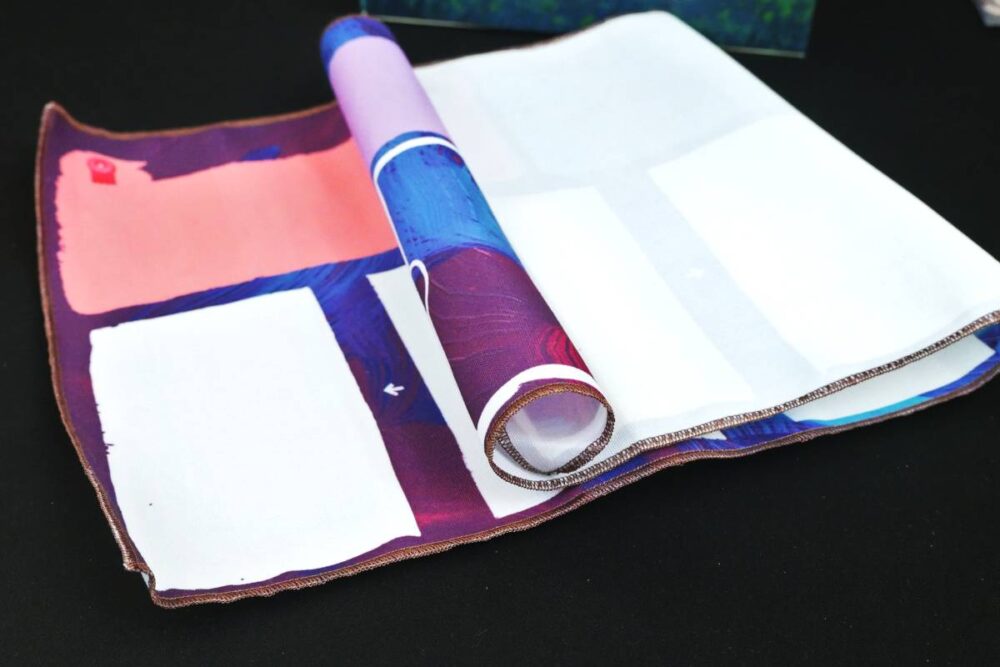
My only production complaint is with the Canvas Mat. Made of a thin cloth material, it's annoyingly cheap-feeling and out of place in an otherwise fantastic production. It doesn't lay flat, so you have to weigh down the edges when you play—or just don't use it at all, which sucks because it's actually nice to look at, establishes atmosphere, and serves as a play area guide.
The Bottom Line
I've played Canvas half a dozen times, but I was done with it long before that. It shares a lot of the same traits as Project L: gateway accessibility, streamlined gameplay, novelty wow factor, no staying power. Get it for an impressive one-time experience to show people. Don't get it if you want a game that'll keep hitting the table. I'll be getting rid of it.