
I'm a huge fan of logical deduction puzzles and games, but few have ever truly impressed me. The Search for Planet X and Bomb Busters still remain my two all-time favorites, and I've played over a dozen others that have ranged from "good" to "decent" to "meh." When I say I've never played one like Turing Machine before, I hope you'll see that I'm neither exaggerating nor uninformed. It really is one of a kind.
Turing Machine gets its name from Alan Turing, the mathematician and logician who cracked the Enigma machine's coded messages and played a crucial role in the Allies winning World War II. Turing Machine has nothing to do with actual Turing machines, which are also related to Alan Turing but not related to code breaking. It's a little misleading in that way.
So, logical deduction and code breaking. Here's everything you need to know about Turing Machine, how it plays, why it's unlike any other logical deduction game, and why I love it as much as I do.
This review is based on a review copy of Turing Machine provided by Hachette Boardgames, but my thoughts and opinions are my own.
Overview
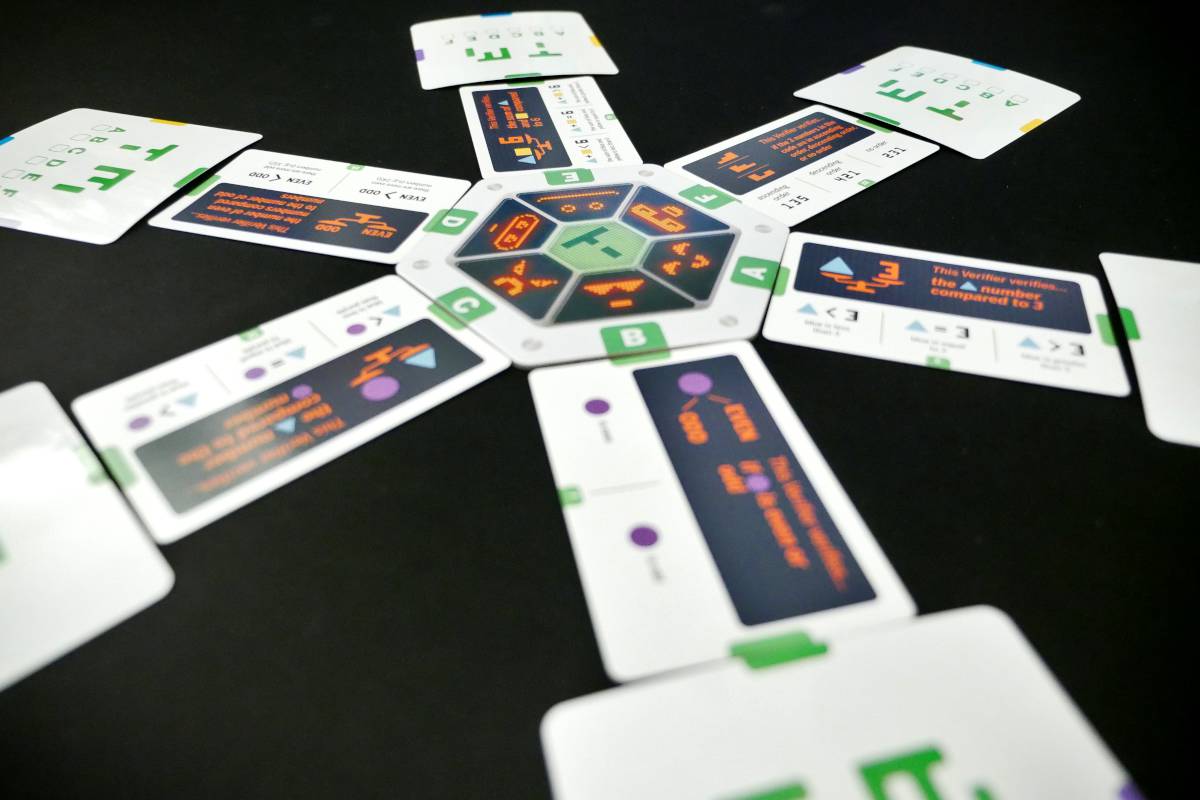
Turing Machine is a pure logic deduction puzzle with a mind-bending structure that's layered and crunchy. It's so unique that I guarantee you'll have a hard time grasping how to play, especially if you only have the rulebook to rely on. I don't know if I can adequately convey how it plays, but I'll give it a shot. (See "Learning Curve" below for more.)
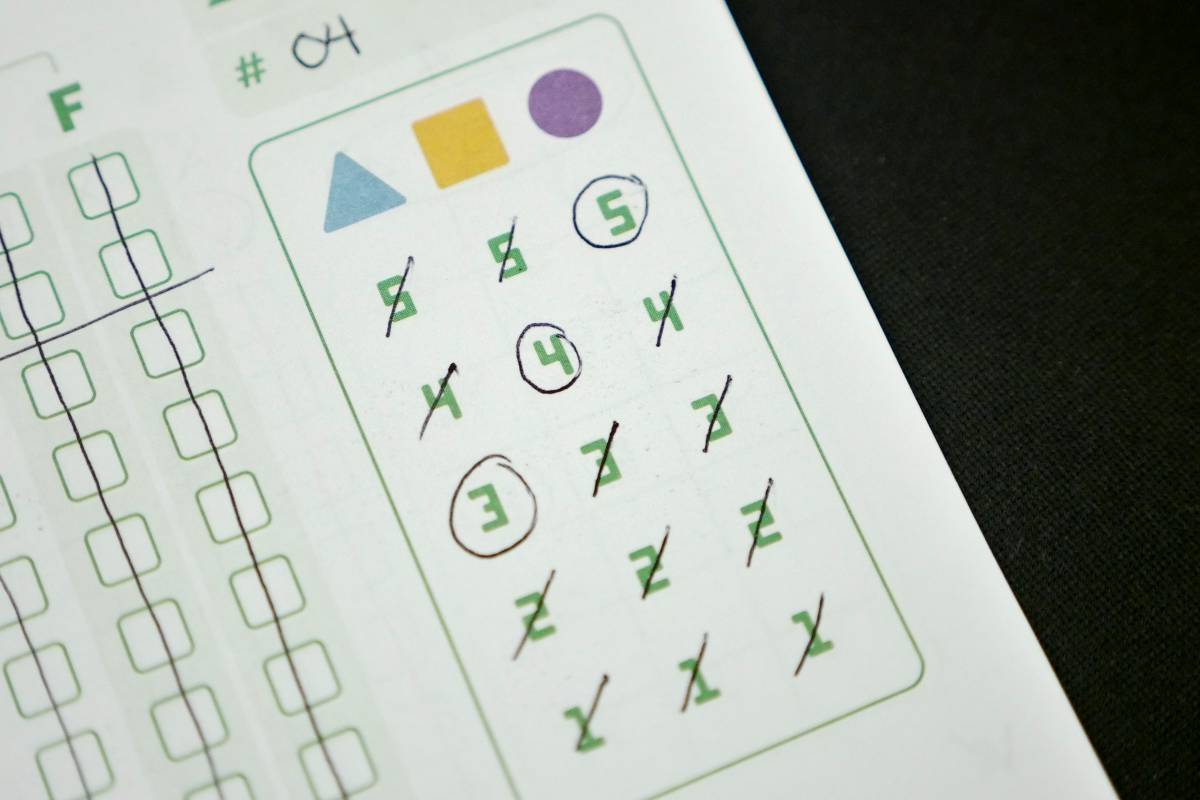
In Turing Machine, all players are competing to be the first to solve a Problem. The Problem is a secret three-digit code where each digit is a number between 1 and 5 (e.g., 1-1-1, 1-3-5, 2-4-1, 5-5-5, etc.). You can think of each Problem as like its own scenario or case with one specific answer.
Turing Machine is a race. It's played one round at a time, where each round is played simultaneously in real-time by all players. During a round, players gather clues about the secret code by interacting with the central Machine, then make deductions from those clues. With enough clues, you'll be able to deduce the secret code and solve the Problem.
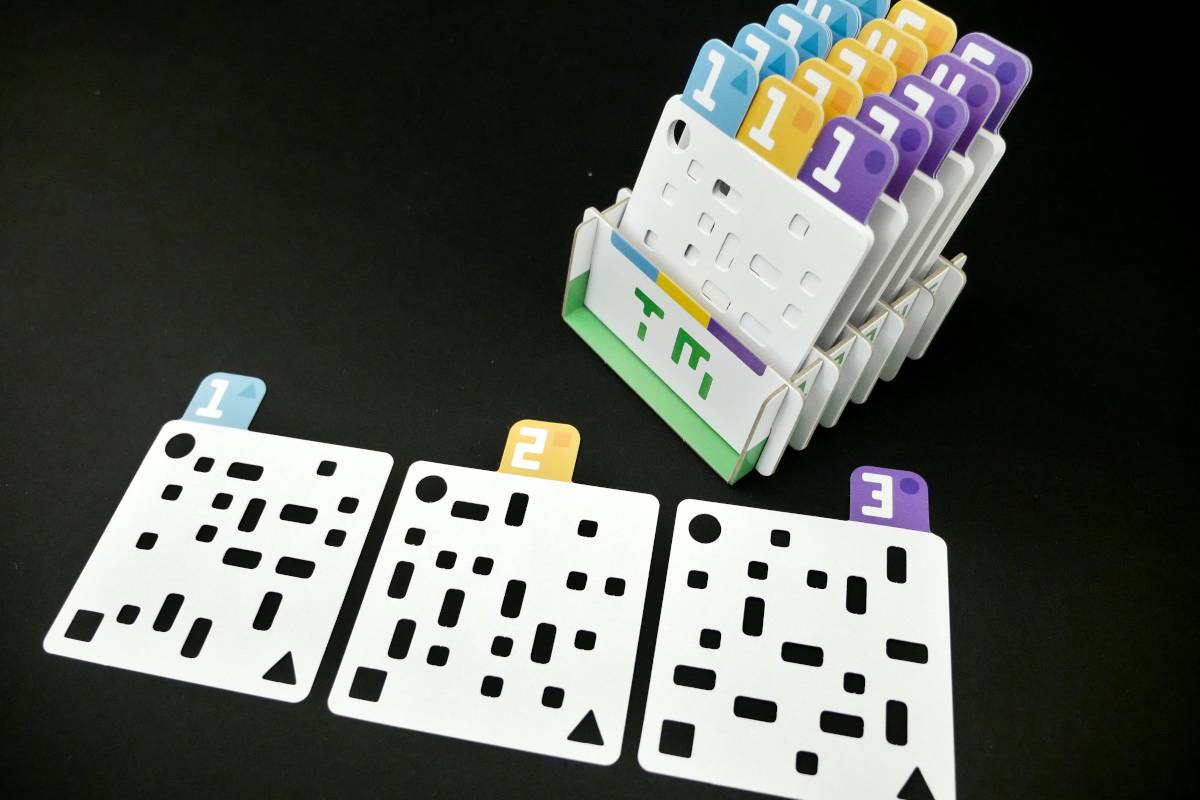
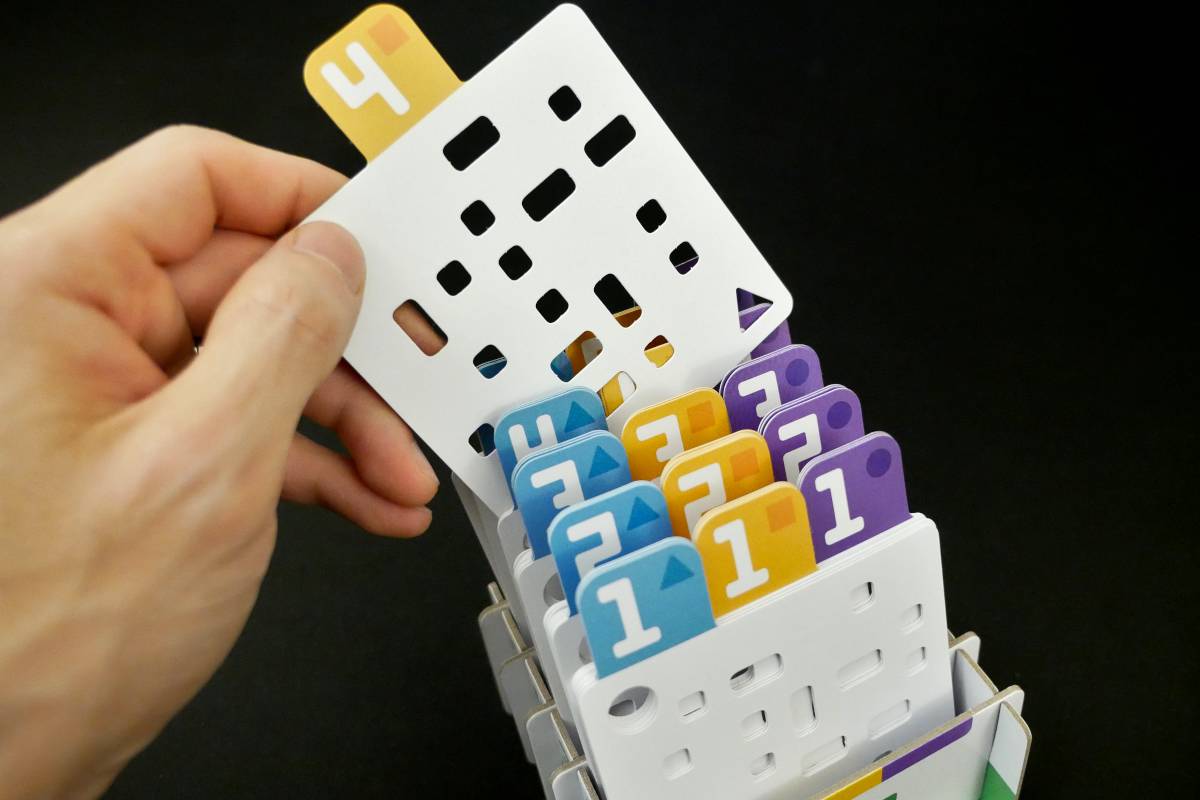
Every round of Turing Machine begins with a Proposal. A Proposal is your own three-digit number that you make up. When you make a Proposal, you gather the appropriate Punch cards for each particular digit and overlap them together, ensuring each Punch card is oriented the same way.
Your Proposal is NOT what you think the secret code is; rather, your Proposal is a way to get clues about the secret code. The digits in your Proposal will help you figure out the digits in the secret code.
Wait, what?!
Okay, this is where Turing Machine starts being hard to grasp, so hang on and keep reading—it will all make sense by the end (hopefully).
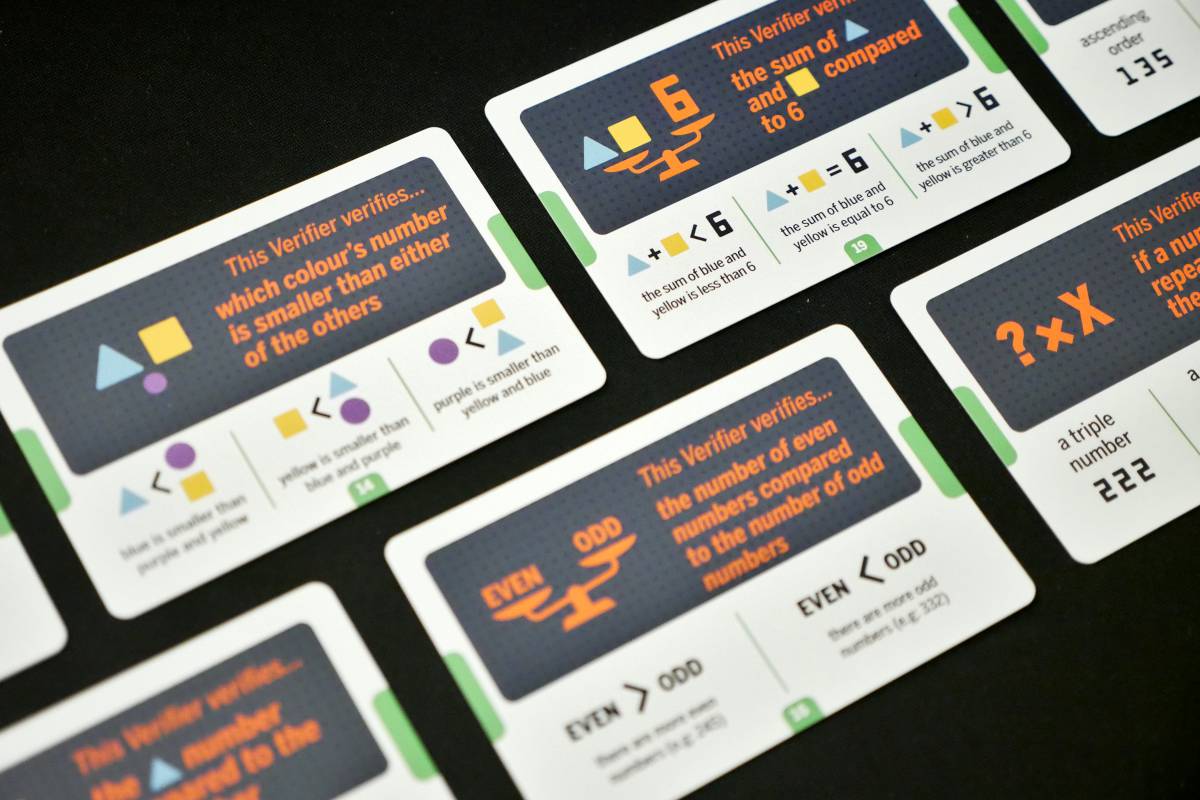
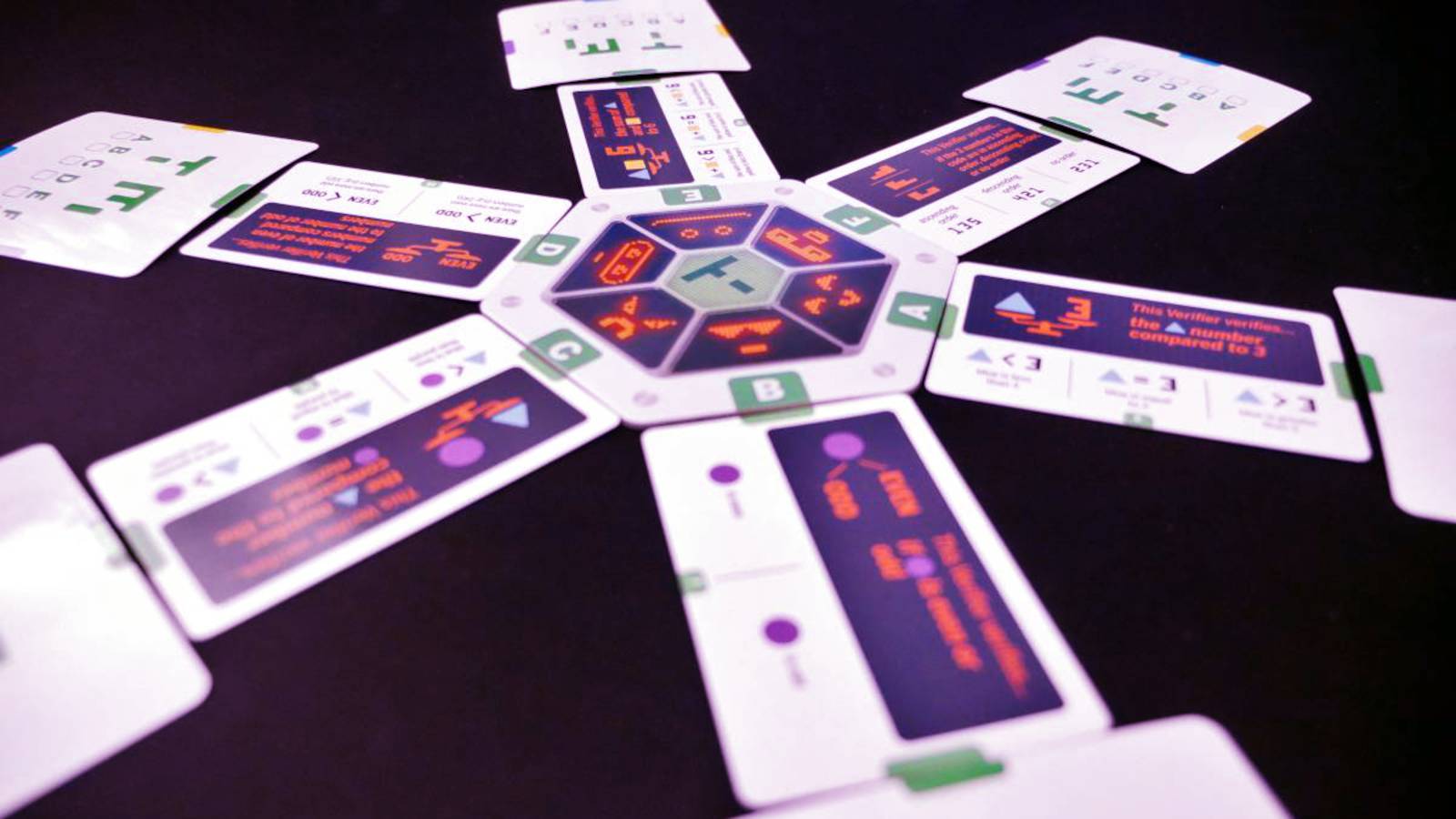
In Turing Machine, the central Machine has between 4 to 6 different Criteria cards that are assigned by the Problem you chose, and these Criteria cards will help you deduce the secret code. The Criteria cards explore the relationships between the digits in the secret code, with each Criteria card exploring a specific relationship.
But in order to figure out the exact relationship of the digits in the secret code, you have to "test" the Criteria card—and you do this by submitting your own Proposal. When you submit a Proposal, you're using the digits in your Proposal to test a particular relationship. The Machine will then spit out an answer, whether your Proposal passes or fails the test.
Again, your brain might be broken right now as you try to understand what I've just written. That's normal. Let me clarify with an example.
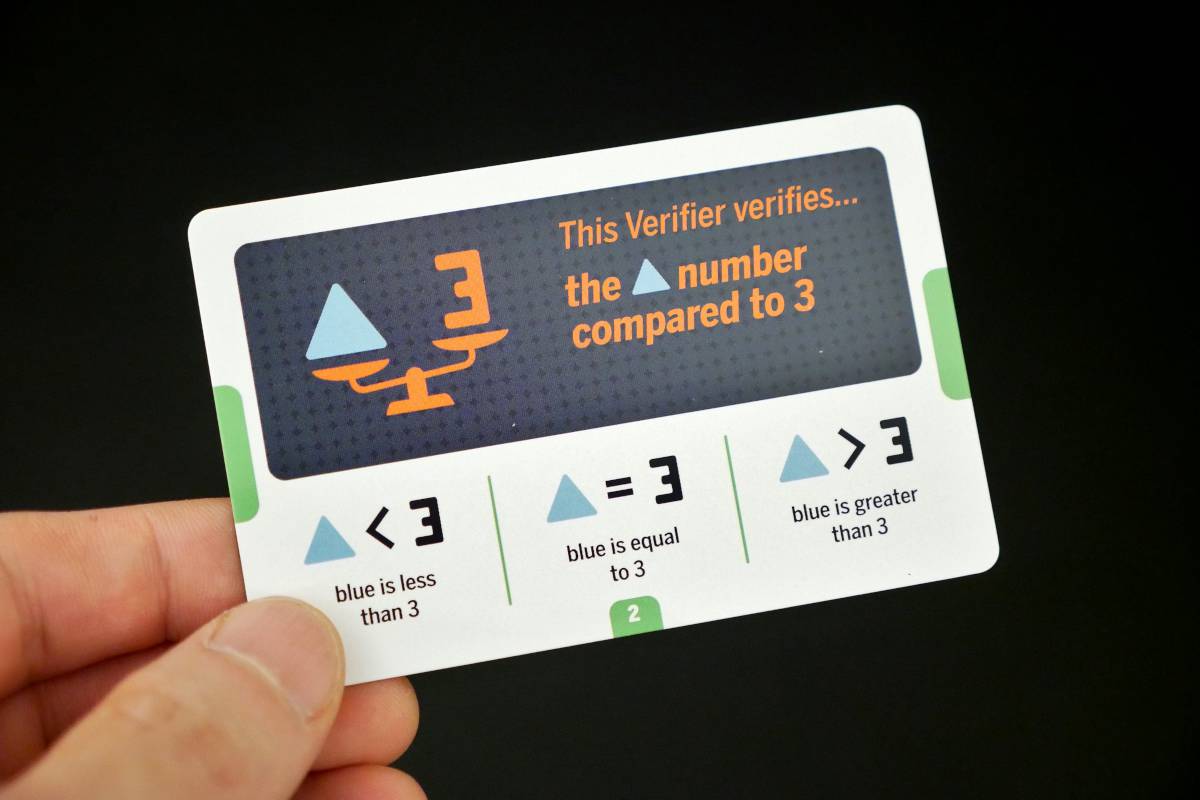
For example, this Criteria card tests the following relationship in the secret code: "The Blue (Triangle) number compared to 3." The card also tells us that there are three possible answers with this test: either the Blue (Triangle) number in the secret code is less than 3, equal to 3, or more than 3.
In Turing Machine, every three-digit number is broken down into Blue (Triangle) for the first digit, Yellow (Square) for the second digit, and Purple (Circle) for the third digit. This makes it easier to know which digits are being tested by a particular Criteria card. In this case, the Criteria card only provides information about the first digit.
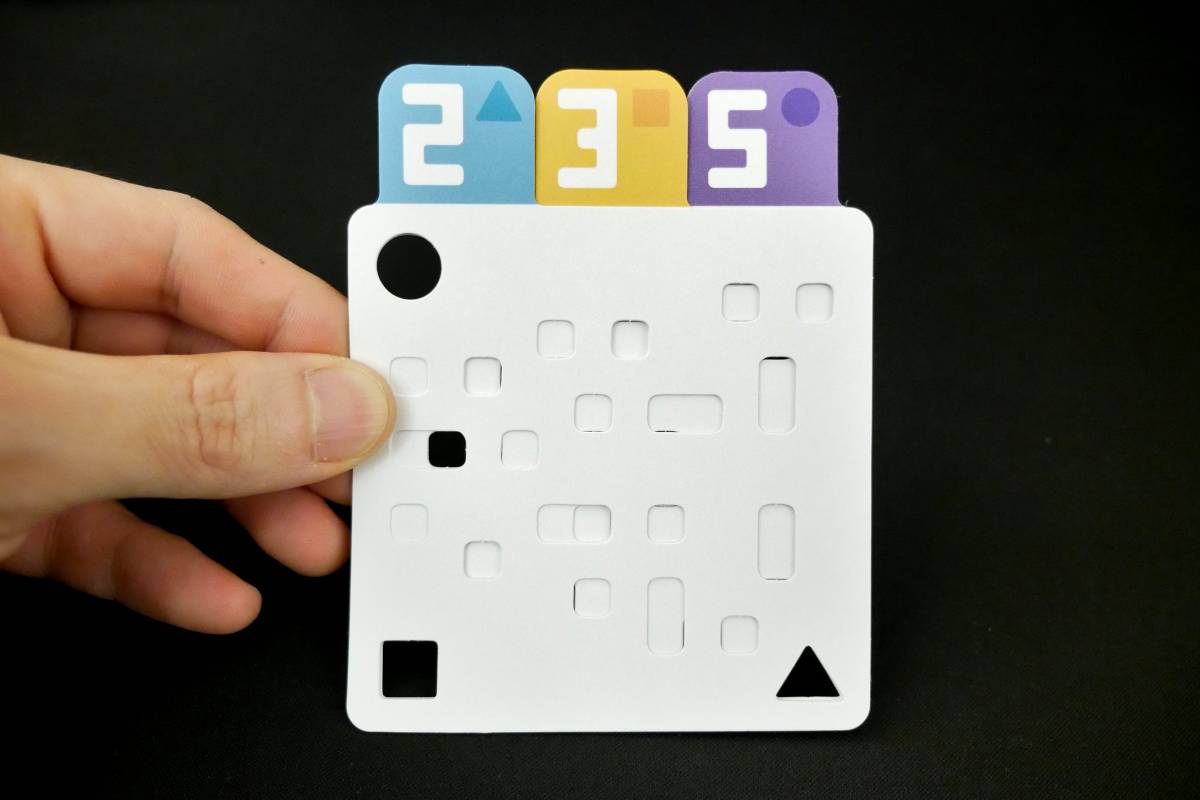
Suppose we submit a Proposal of 2-3-5, which means the Blue (Triangle) digit in our Proposal is 2. Our digit is less than 3, so by submitting this Proposal to this Criteria card, we're essentially asking the Machine whether the secret code's Blue (Triangle) digit is less than 3.
In other words: We are NOT asking whether the Blue (Triangle) digit in the secret code is 2. Rather, we're testing the relationship between 2 and 3 ("less than 3") to see whether that same relationship exists in the secret code.
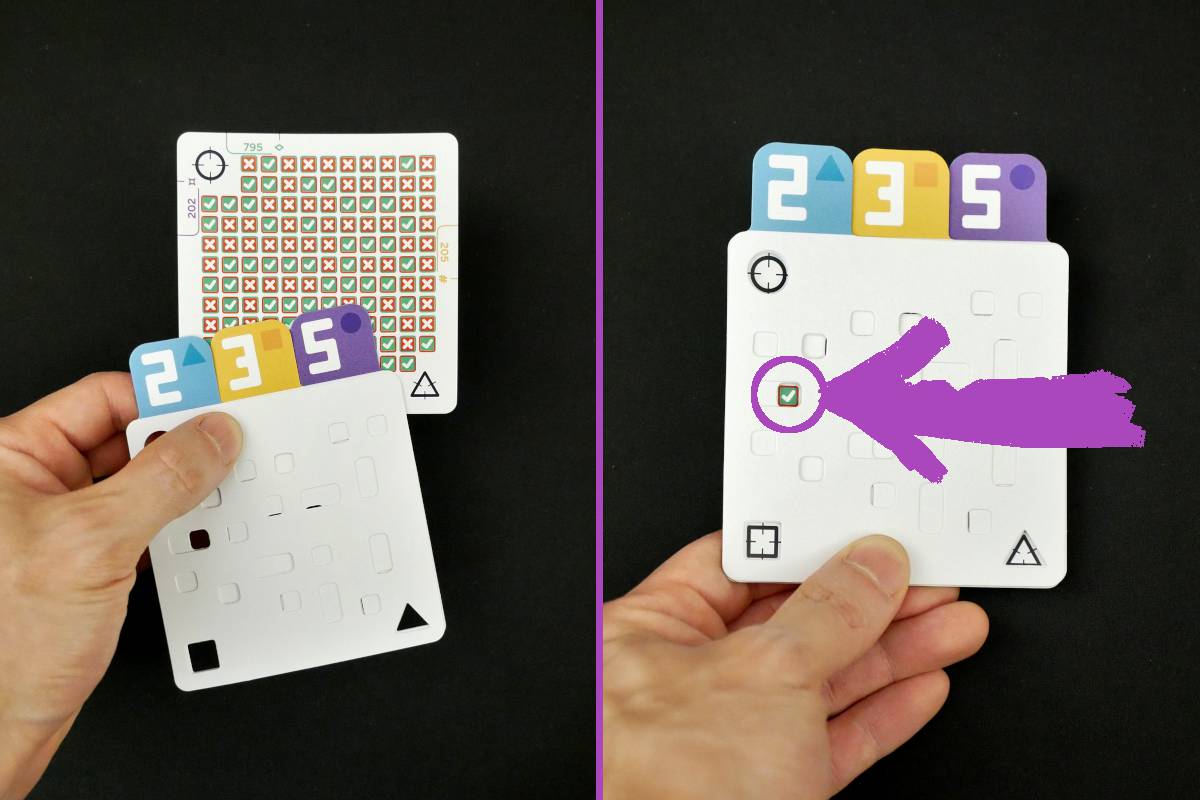
If our Proposal "passes the test," the Machine will spit out a Green Check, which tells us that the secret code's Blue (Triangle) digit is less than 3. But if our Proposal "fails the test," the Machine will spit out a Red X, which tells us that the secret code's Blue (Triangle) digit is NOT less than 3.
In Turing Machine, each Criteria card is paired with a Verification card (according to the Problem you chose). When you submit your Proposal to a Criteria, you overlap your Proposal's Punch cards with the Verification card paired to that Criteria card. You'll see a single hole that highlights an answer on the Verification card—this is the result of your test.
Once you come up with a Proposal, you can't change your number for the rest of the round.
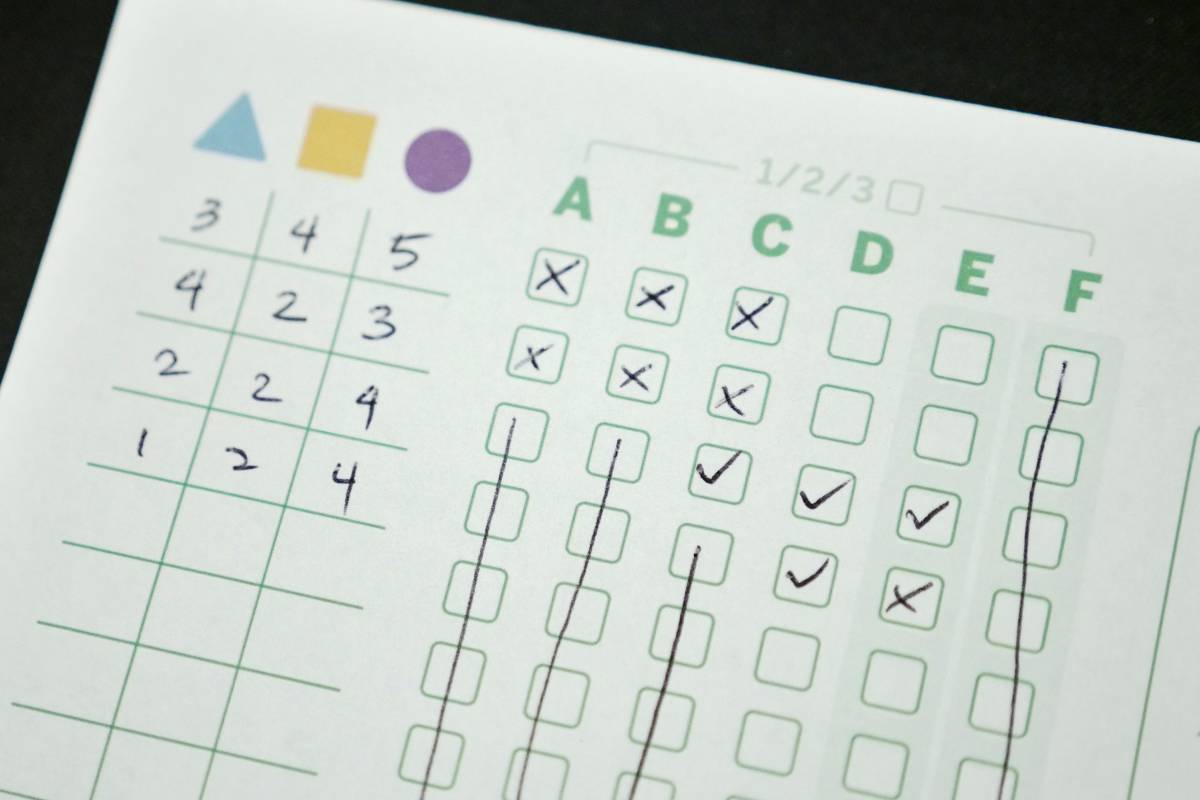
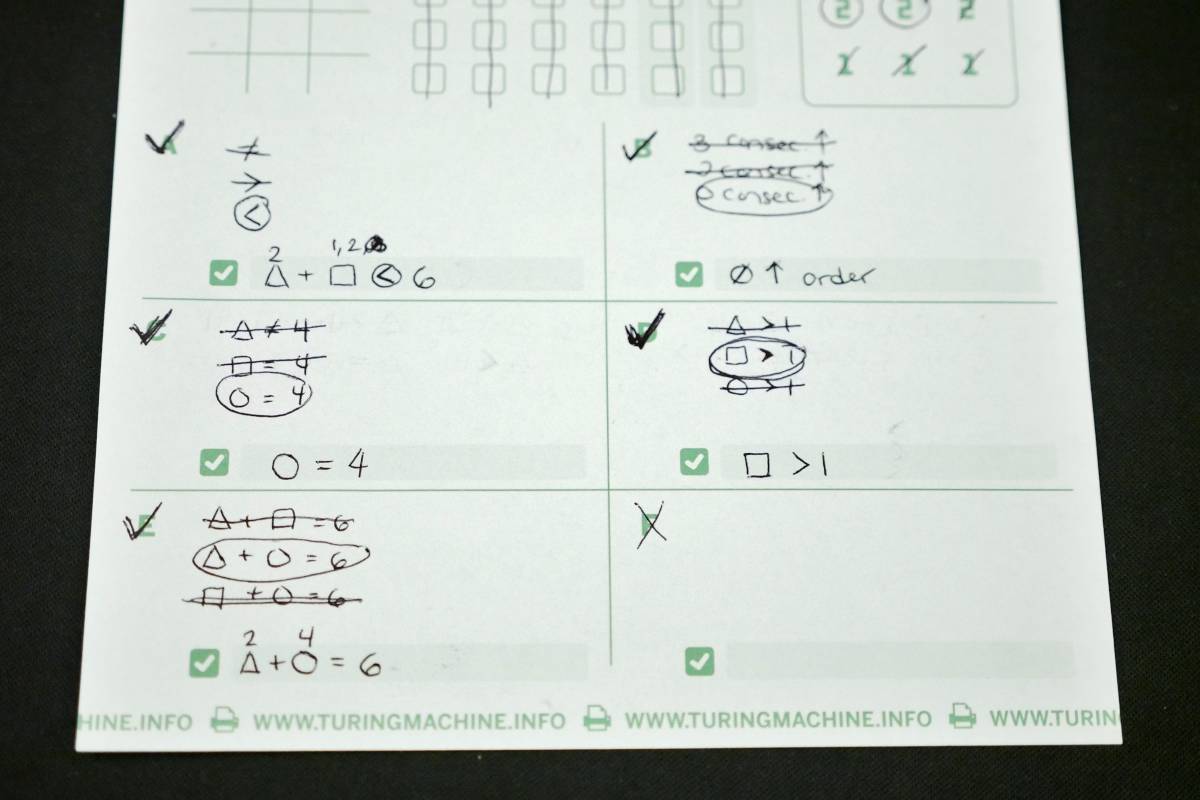
You'll test your Proposal against up to 3 different Criteria cards, jotting down the results of each test on your sheet before returning your Punch cards to the Punch box. Then you'll spend the rest of the round analyzing your results and making deductions.
At the end of each round, if a player thinks they've deduced the code, they can check their answer. If they're right, they win. If they're wrong, they're knocked out and everyone else keeps going.
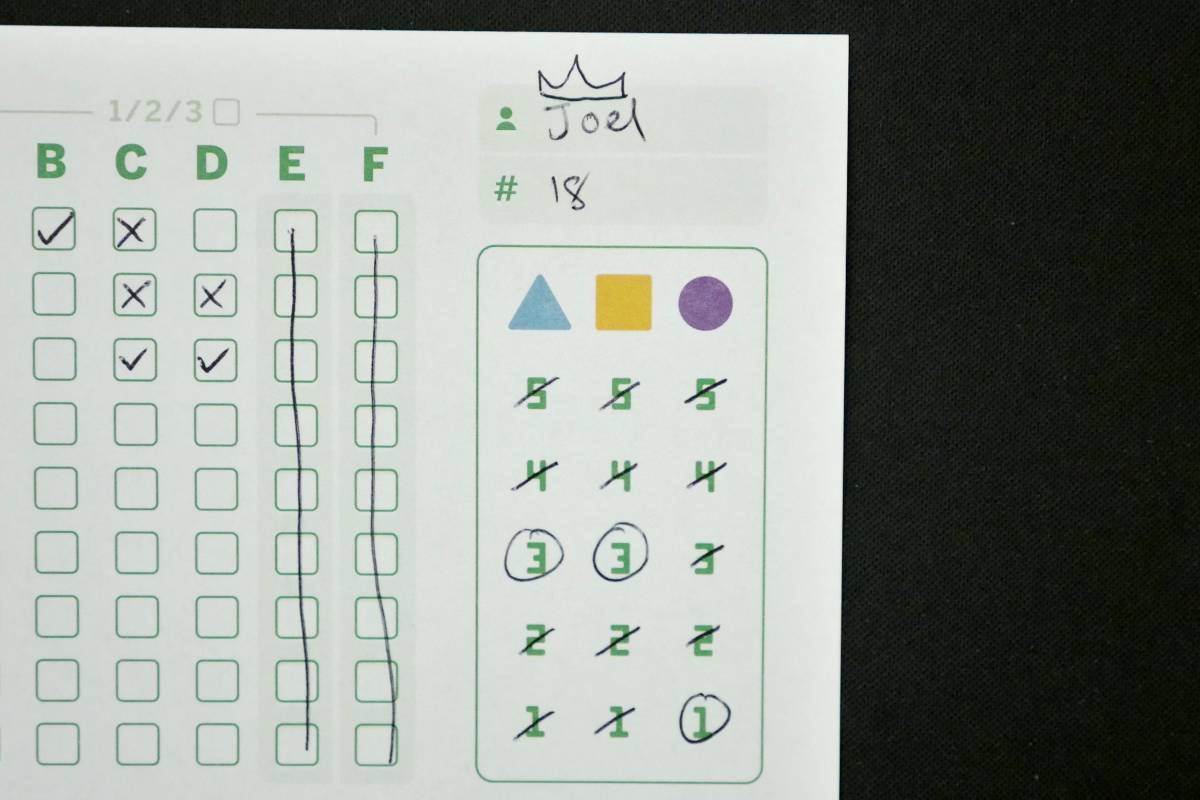
The next round plays out the same way: you come up with a new Proposal, test it against up to 3 different Criteria cards, make further deductions, and hopefully figure out the secret code before anyone else does.
And that right there is the heart of Turing Machine: coming up with the best Proposals and choosing the best Criteria cards to test against, such that you gain more information per round than everyone else.
Setup and Table Footprint
Turing Machine has a slightly involved setup. Whenever you take out the game, you must organize the Punch cards into the Punch box. Then you pick a Problem, which can be one of the introductory 20 in the rulebook or a randomly generated one from the app. That's the easy part.
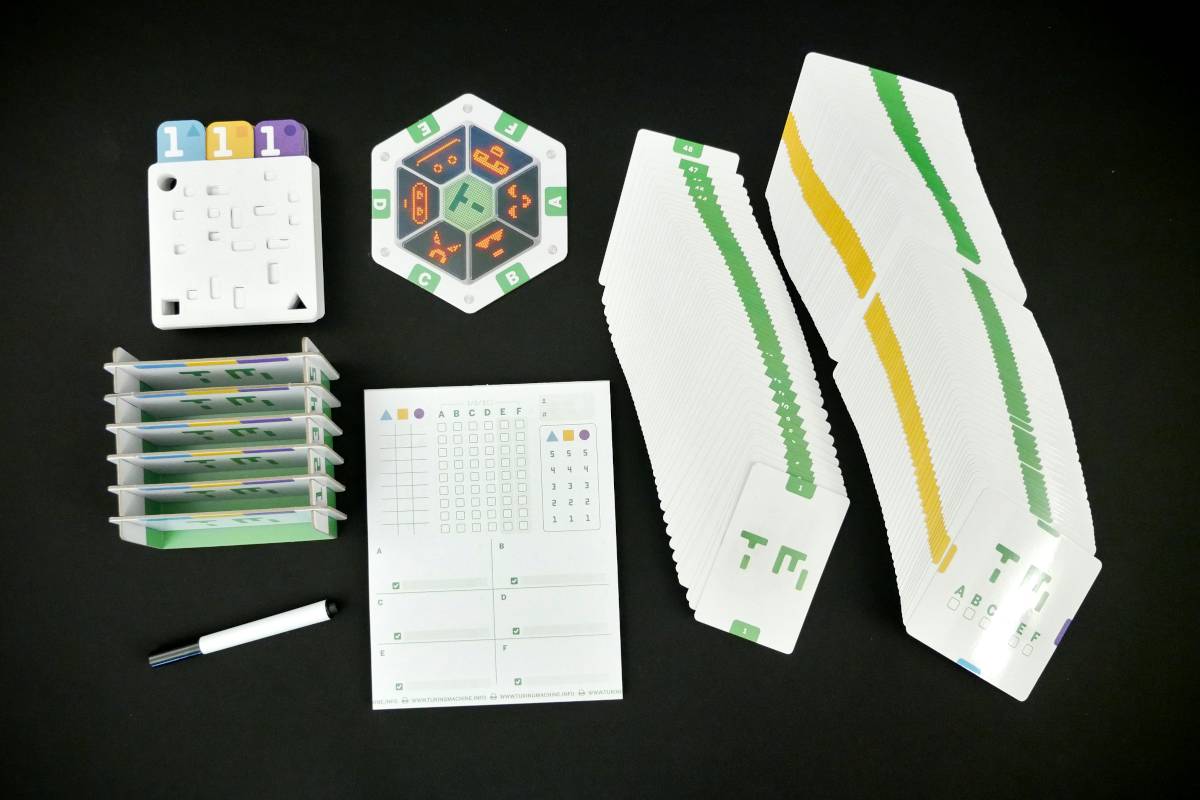
But once you have a Problem, you have to set it up—and that involves going through the Criteria cards and picking out the designated ones for the Problem, then going through the Verification cards and picking out the matching ones, then matching them to each Criteria card, then marking off the correct checkbox on each Verification card.
It's not that bad at first. But when you're done, you have to re-sort the Criteria cards back into the Criteria deck and re-sort the Verification cards back into the Verification deck. And if you're going to play another round—which you probably are because it's pretty fast—you have to go through and pick out the right cards for the next Problem.
It's far from a deal-breaker, but it's definitely a nuisance. The setup and cleanup are my least favorite aspects of the game. It's non-trivial friction that affects how easy it is to get to the table.
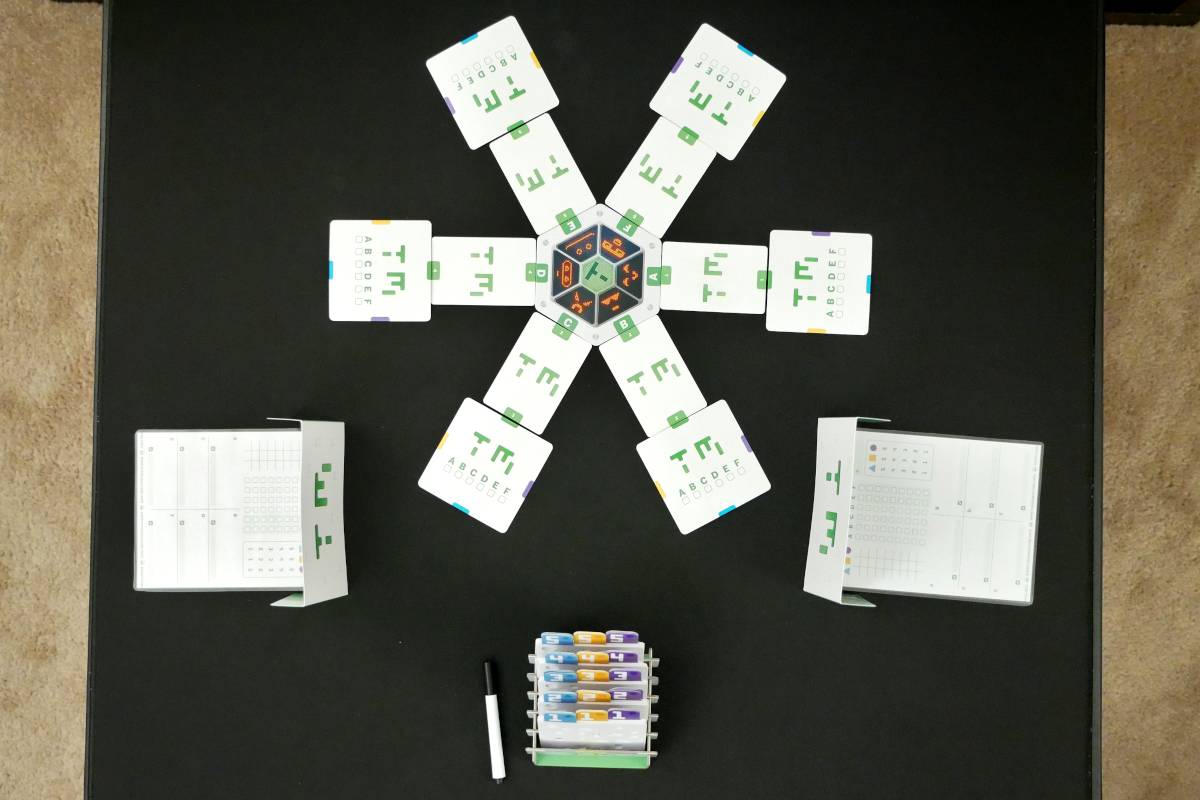
The table footprint is... not bad, but not ideal. Turing Machine takes up a good chunk of table space, mainly due to the way the Machine is designed. When all 6 spokes are being used, the diameter of the Machine is about 18 inches. When only 4 spokes are being used, it's still 18 inches on the long side but about 11 inches on the short side.
Next to the Machine, you need personal space for each player to work on their sheet, plus additional space to shield against wandering eyes. You'll also need extra space for the Punch box (which admittedly isn't very big but can still get in the way if it isn't far enough off the side) and space to set aside the decks of unused Criteria and Verification cards (if not kept in the box).
Turing Machine is not a compact game. I didn't expect it to be so big, especially with it being "just" a pure logic deduction game. Not big enough to be a deal-breaker, but big enough that it isn't one to play on a whim.
Learning Curve
Turing Machine is very straightforward to play once the whole concept of Proposals and Criteria cards clicks in your brain, but getting to that point can be tough, especially if you normally struggle with logic deduction.
My biggest gripe is that the rulebook is terrible. It does not teach the game clearly at all. In fact, I've tried re-reading the rulebook to see if it makes sense now that I do know how to play... and it's still a confusing mess. The round structure is explained well, but the most important bit—the gameplay that gets you to the secret code—is impossible to grok.
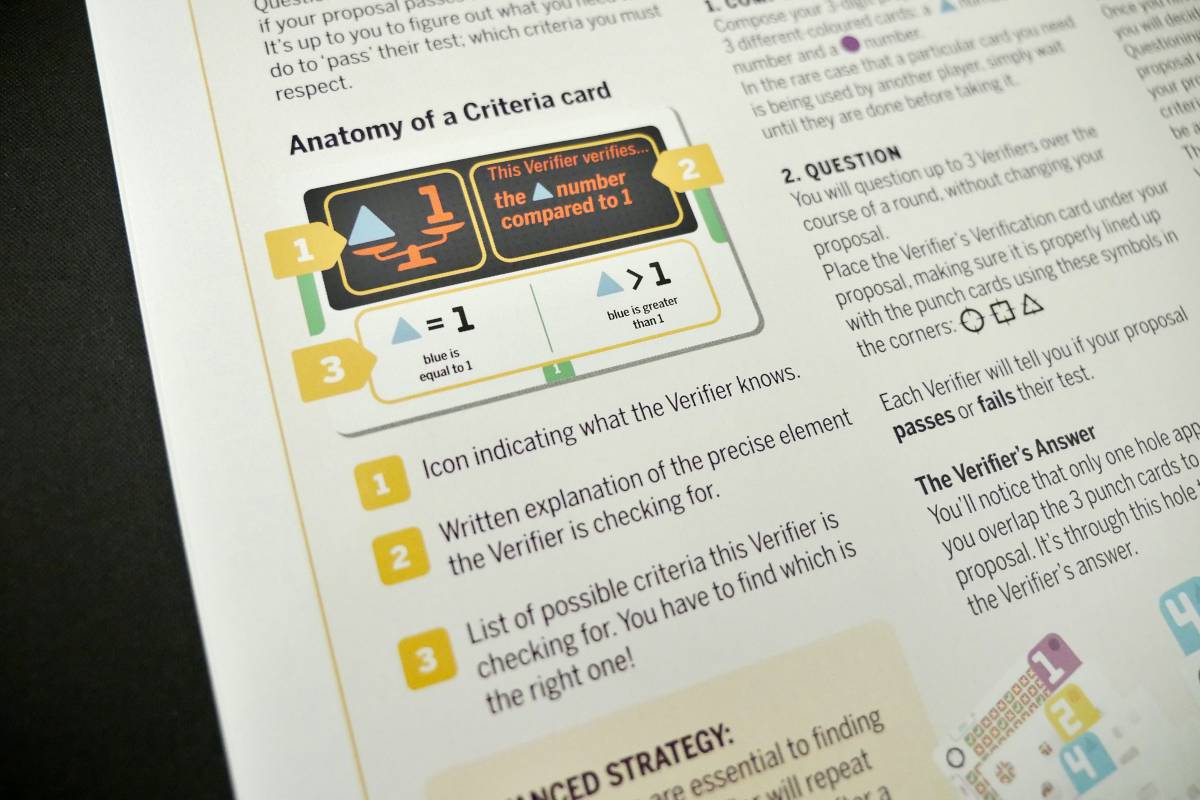
I have no shame in admitting that I couldn't figure out how to play Turing Machine from the rulebook alone. It's that bad. I had to turn to Rodney Smith's How to Play video before it finally clicked.
Turing Machine is not an easy teach. I really like the game, but I'll only ever introduce it to experienced gamers who love logic deduction puzzles. This is an extremely niche game with complex layers that prevent it from being approachable. When I do introduce it, I'm simply going to play the video linked above—and I recommend you do the same.
Game Experience
Decision Space
Turing Machine is a one-of-a-kind logic deduction game because it forces you to work three different levels at once:
- What is the secret code?
- What Criteria cards are in play?
- What Proposal will get me the information I need?
In order to chisel away at the secret code, you need to manipulate the Criteria cards to give you the information you need. In order to manipulate the Criteria cards, you need to craft clever Proposals that simultaneously get you the information you're after and eliminate impossible options.
On a round-by-round basis, here's what that looks like: You study all the Criteria cards. You see what information is available. You decide which Criteria cards you want to interact with this round and which answers to test for each Criteria card. You formulate a Proposal that's able to test all those things, choosing digits that have the relationships you need.
If you boil Turing Machine down to one essential skill, it's coming up with a good Proposal. A good Proposal will wring out more info from a Criteria card than a bad Proposal. But in order to craft a good Proposal, you need to know which Criteria cards are worth testing—but that's not always clear. It's the kind of thing that comes with experience. The more you play, the more you understand how to test the different Criteria efficiently.
Eventually, you realize there's an even deeper layer you didn't see before. When you've grown in your skill as an advanced Turing Machine player, you'll be able to see which Criteria cards were chosen for a Problem and immediately spot the gaps that each Criteria card is meant to fill.
Here's what I mean: The Machine only has 4, 5, or 6 Criteria cards to work with, and you know those cards must hold all the information you need to figure out the secret code. Logically, this means some Criteria cards must point you to the correct Blue (Triangle) digit, others must point you to the correct Yellow (Square) digit, and the rest to the Purple (Circle) digit.
When you're skilled enough, you'll be able to look at the initial setup and "sense" which Criteria cards point you in which way, all because you can see the "gaps" that aren't obviously covered. Being able to spot these gaps is a helpful skill, allowing you to avoid overlapping on tests that work the same digit, making your round-by-round actions more efficient.
As far as the deductive aspect goes, I'm pleased to say that Turing Machine is a phenomenal logic deduction game. There isn't a "correct" way to solve any particular Problem. That's because the game has enough layers to peel back and dig through, allowing you to fill in gaps using logic.
Even when you don't "pass" a Criteria test, you still gain information from that "failed" test. You can eliminate some possibilities. Then, when you combine that test result with the results of other tests, you can eliminate more possibilities. Sometimes I've even gone down a long chain of deductions, with one elimination leading to another, then another, until suddenly I know what the secret code is.
For example, one Criteria says the sum of Blue (Triangle) and Yellow (Square) equals 6, another Criteria says there are two Even digits, and another Criteria says Purple (Circle) is equal to 1. From this, you can deduce that both Blue (Triangle) and Yellow (Square) must both be Even. That instantly knocks out the possibilities of either digit being 1, 3, or 5.
All in all, Turing Machine is amazing. It's complex and thinky without feeling restrictive or frustrating. It teems with possibility. It gives you various threads that you can link together and it doesn't railroad you down a specific path. It makes you feel clever when you get it, but it's never so opaque as to feel impossible. I find it quite satisfying.
Worried about analysis paralysis? Don't be! The thinkiest parts of Turing Machine are when you come up with a Proposal and when you connect the dots after receiving your test results. Beyond that, there are no "hard decisions" to get locked up about. Once you've deduced all you can from the information you have, it's on to the next round.
Luck Factor
It's a little weird to say, but yes, Turing Machine has a bit of luck in it. Should this turn you off the game? Absolutely not! The luck is very minor, especially once you move up to the harder Problems.
At the start of Turing Machine, you have almost nothing to go off when devising your first Proposal. You might even come up with a random one just to have something to work with—and if you do that, you may or may not get a lot of helpful information in the first round. Two players who choose their first Proposals at random can have significantly different starts, and a good start definitely puts you on better footing for the race.
But as your skill level goes up, you learn how to make better starting Proposals based on the Criteria cards in play. Plus, the higher-difficulty Problems employ tougher Criteria cards that give less information away with every test. Both of those aspects help to level the playing field and lessen the impact of a lucky starting Proposal.
Apart from that, there's zero luck in Turing Machine.
Fun Factor
I really enjoy Turing Machine! And I say that as someone who loves logic deduction games so much that it's one of my favorite genres. If you struggle with logic deduction, your mileage with Turing Machine will vary.
What I love about it is the multi-layered design of its deductive elements. Most logic deduction games are little more than puzzles, giving you most (or all) of the clues outright but leaving it up to you to gather those clues so you can piece them together, slowing eliminating options until you arrive at the final answer. Turing Machine is more than that.
In Turing Machine, you also have to figure out how to generate the clues you need before piecing them together, and that's done through the interplay between crafting clever Proposals and running them through the Criteria cards one at a time. Turing Machine gets my brain firing on cylinders that other games don't even touch, and that's because the game is centered around creating hypotheses and testing those hypotheses against the Machine. It's more than just whittling away until you uncover the secret code—it's about creatively exploring logical relationships.
And that's why Turing Machine is so fun. It scratches the itch of a logical deduction puzzle on a much deeper level. It's challenging, engaging, and immensely satisfying in a way I've never seen before.
Pacing
Turing Machine is so impressive in how it packs a fully rewarding game arc into just 15 or so minutes. I love it every time.
At the start, you have no information. A blank sheet. You stare at the Criteria cards and wonder which of the many paths you should head down. With every test you run, you gain a little bit of information—then every so often, those little details coalesce into a confirmed bit of data. Not enough to solve the secret code yet, but another rung on the ladder there.
Every interaction with the Machine gives you more to work with, allowing you to see more of the logical gaps between what you know and don't know. Those gaps represent opportunities that can be filled in with creative deductions. Whereas most logical deduction puzzles shrink and contract with every deduction you make, Turing Machine expands and grows. It equips you with what you need, then leaves it to you to bridge the gaps—and that's what makes the final problem-solving moment so climactic.
If I have one complaint about pacing, it's that you might run into some downtime despite the simultaneous play. Some players are naturally faster with their deductions than others, so if you're one of the faster ones, you might exhaust your options and find yourself twiddling your thumbs while waiting for others to wrap up the round.
Player Interaction
There is zero player interaction in Turing Machine, so don't rush out and buy this game if that's what you're looking for. Okay, "zero" might not be entirely true, but the smidgen of indirect player interaction is so insignificant that it might as well be zero.
Like I said before, Turing Machine is a race to see who can solve the Problem using the fewest amount of tests. Looking up at the end of a round and checking whether someone has solved the secret code? That's the only time you ever look at anyone else.
Turing Machine is 100% multiplayer solitaire. You spend all your time in your own head, working through your deductions while submitting Proposals to the Machine and jotting down notes. Nothing you do affects anyone else, and you can't glean any info from what anyone else does.
Player Counts
Given that Turing Machine is a solo game (see "Player Interaction"), there's no reason to play it with others—unless you happen to enjoy solving puzzles while in each other's company, in which case it's great. I love playing Turing Machine with my wife, as we get to share that time together while giving our brains a workout.
So, if you ask me, Turing Machine is a solo game. Playing it alone eliminates all the potential for downtime and lets you focus all your attention on the Problem at hand. The race element doesn't add anything to the experience. It's also fun with one other player, but I don't think I'd ever play it with 3 or more players. It's just not that kind of game.
Fiddliness
One thing I don't like about Turing Machine is that it's unusually fiddly for a game that's purely about logical deduction.
I'm talking about the Punch cards for your Proposals. Every round, you have to pull out three Punch cards to craft your Proposal, square them up perfectly, then compare against the Criteria cards. Afterwards, you slip those Punch cards back into the box, making sure they're sorted properly. The in-and-out of the Punch cards is small fry on its own, but the constant back-and-forth every round does get fiddly.
Combine that with the fiddly setup and cleanup of each Problem (see "Setup and Table Footprint") and you can see how it causes friction. It'd be a lot easier to get to the table if the physical aspect was smoother—but I also have to admit that the novelty of the Punch cards is fun and infuses the game with a lot of charm, so I don't know. A necessary evil, perhaps.
Replayability
Turing Machine is one of the most replayable games in my collection, and there are several factors that play into that.
For starters, you aren't limited to the 20 Problems in the rulebook. Head over to TuringMachine.info and you can generate one of 7+ million Problems, with adjustable difficulty settings so you can play at your perfect level (not too hard as to be frustrating, not too easy as to be boring). This alone makes Turing Machine infinitely replayable.
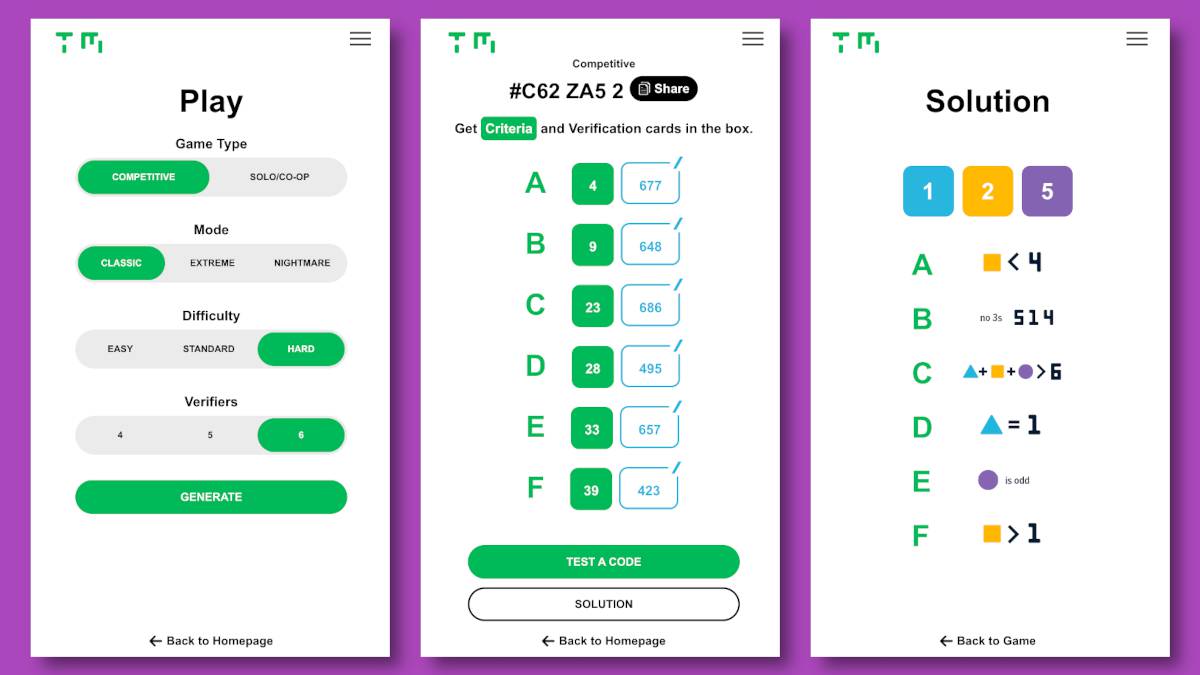
There's also the Daily Challenge, which offers a specific Problem that's refreshed every day. It's a fun thing to check in to once per day, and it's great for competing against friends. I find it quite enjoyable and it's how I always start any new session of Turing Machine.
If you're worried about memorizing all the Criteria/Verification cards and ruining the game, don't be. Every Verification card has four different identifiers, so when you set up a new Problem, it's hard to know which exact Verification cards are involved. Even if you somehow memorized every single Check and X on every card, it'd be extremely unlikely for you to know which exact cards are being used in a given Problem.
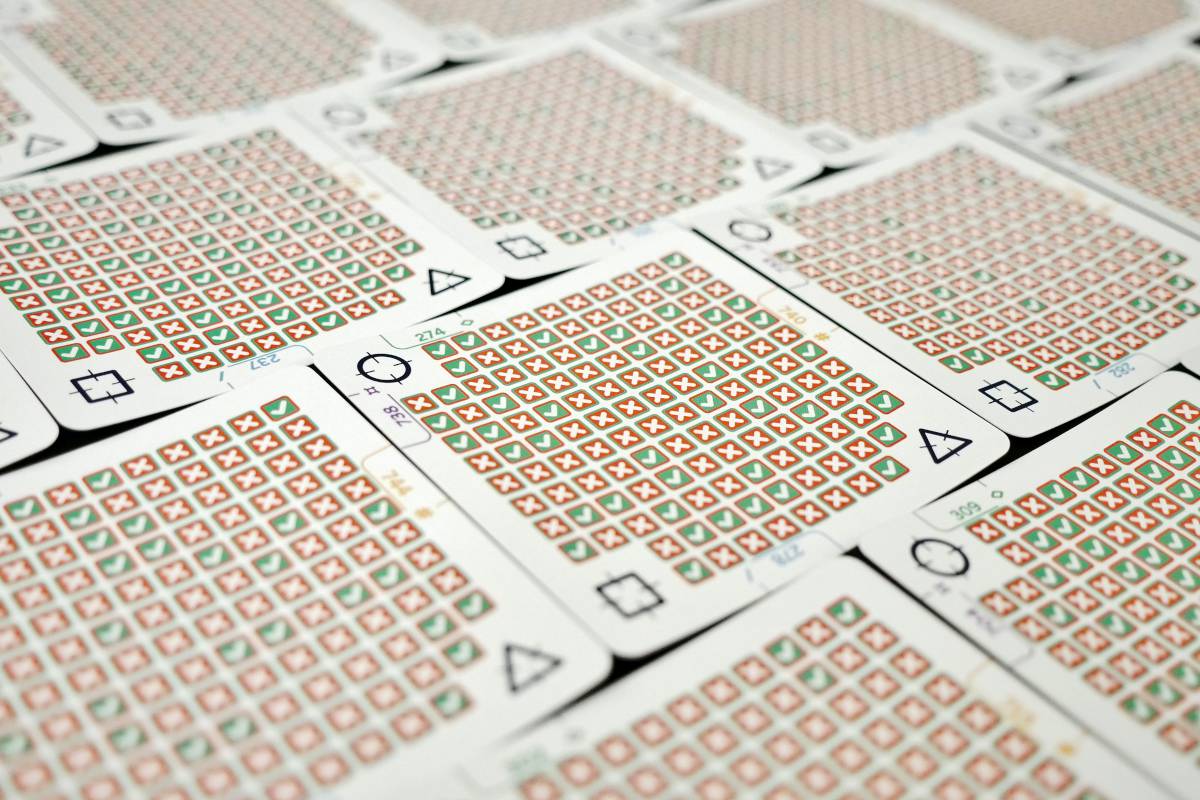
Ultimately, Turing Machine is replayable because it's a satisfying brain game. Millions of Problems wouldn't matter if the gameplay itself wasn't so compelling, and I'm happy to say that Turing Machine is very compelling. I love the way it stretches my mind and gets me thinking about logical deductions from multiple angles, with a dash of creativity in how I formulate my Proposals and test the Machine.
It's a phenomenal game and I'm always happy to come back to it.
Solo & Cooperative Modes
Turing Machine's solo mode is exactly like the multiplayer mode, except you don't have to wait for others or run the end-of-round check to see if anyone has solved the Problem. You just go through your deductions, then move on to your next Proposal as you're ready. Because of this, Turing Machine is best played solo. (See "Player Interaction" for more.)
The goal is the same: to solve the Problem in as few moves as possible, except now you're competing against the Machine. When you generate a solo-mode Problem, the Machine will have a hidden target. After solving the Problem, you'll enter your round-by-round results into the app, which will then spit out its own performance for you to compare against.
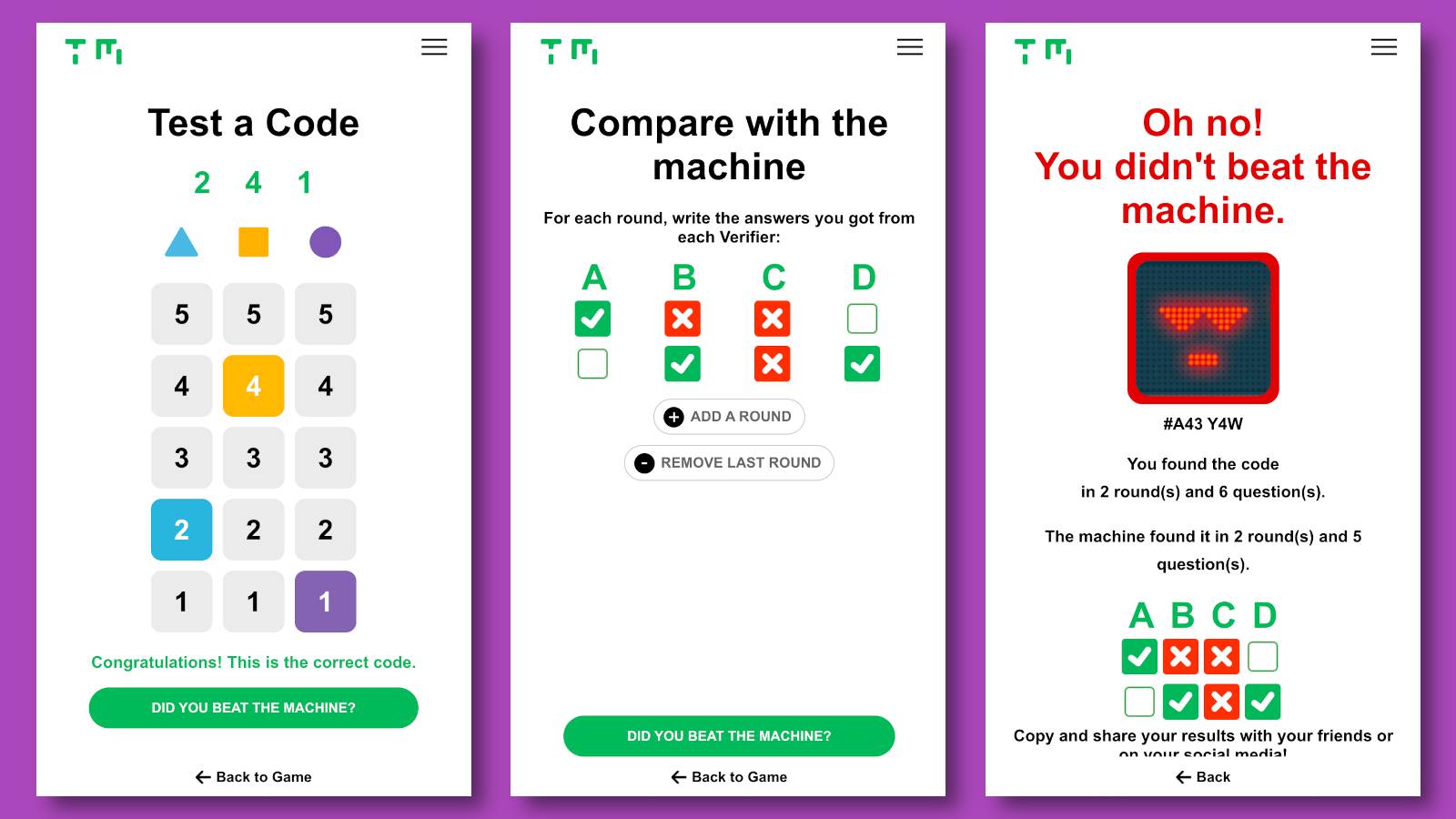
Incidentally, the solo and cooperative modes are the same. The only differences are that you collaboratively decide which Proposals to make, you verbally share your thoughts, and you work together on one sheet.
But the coop experience is... not that fun. It's extremely prone to quarterbacking, where someone will direct most of the decisions and everyone else just nods along. Or someone will submit a Proposal that you disagree with and you'll silently slap your forehead because they're wasting a turn on a Criteria test that isn't going to give you much info. Imagine working on a sudoku puzzle as a team and you'll have a good idea of what to expect playing Turing Machine cooperatively.
Production Quality
I'm torn on Turing Machine's production. Scorpion Masqué certainly tried something new here, and it certainly shines as a head-turner. You can't help but be drawn in by its unusually minimalistic yet retro-futuristic vibe, and its table presence is unlike any other. But the play experience has a few hiccups that—while not deal-breakers—keep it from feeling smooth.
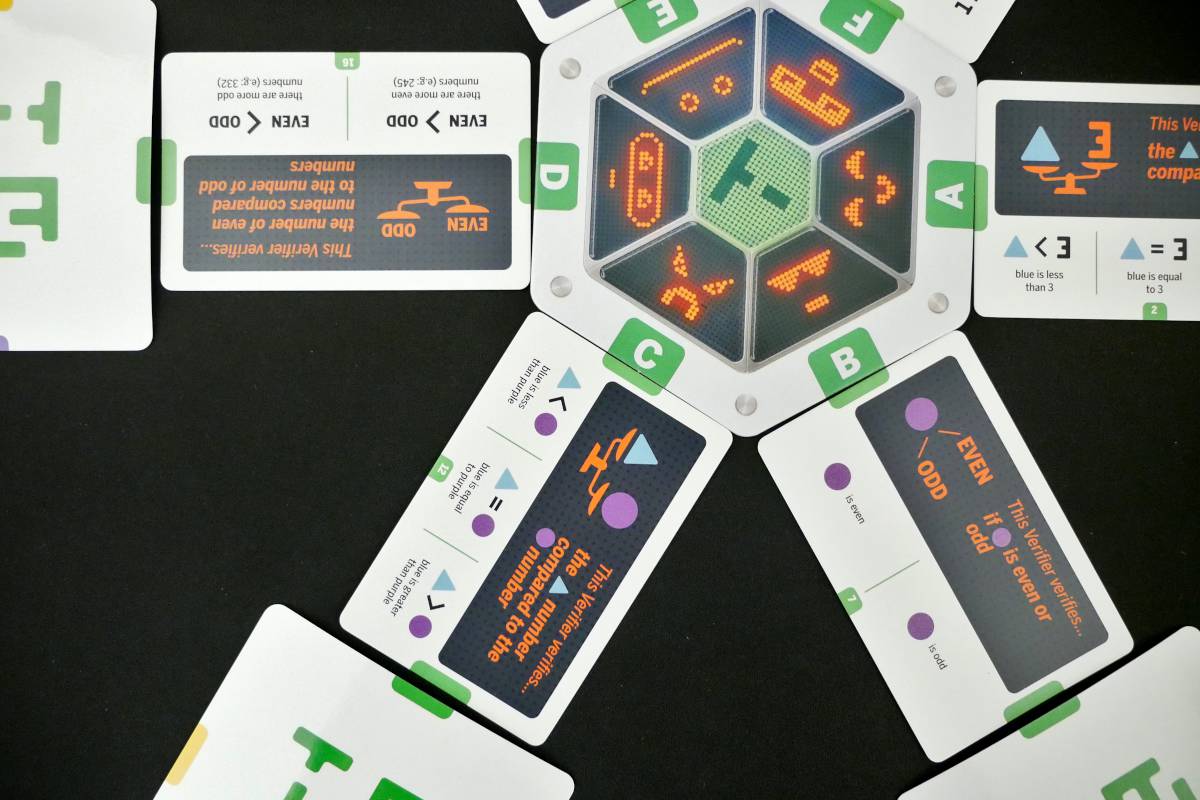
Its analog-machine-like aesthetic is form over function. I get why Scorpion Masqué went with the six-spoke design for the central Machine, with each Criteria-Verification set jutting out like a separate arm. It's cool to look at and it oozes personality, but it's annoying to play. Some cards are inevitably upside-down so they're hard to read, and the Machine takes up a lot more space than I'd like. I'm not sure the extra personality is worth the extra hassle. A cleaner layout would've been appreciated.

The Punch cards and box are my favorite parts. I know I ragged on this in the "Fiddliness" section, but you can't deny the genius of how these Punch cards come together to read out answers on the Verification cards. It's quite satisfying to square up the Punch cards for a Proposal and start reading out answers. I also really like the Punch card box, which is easy to use and effectively keeps all the Punch cards organized. The only flaw is, the Punch cards are made of weak card stock—I worry for their long-term durability, especially with the constant handling they must endure.
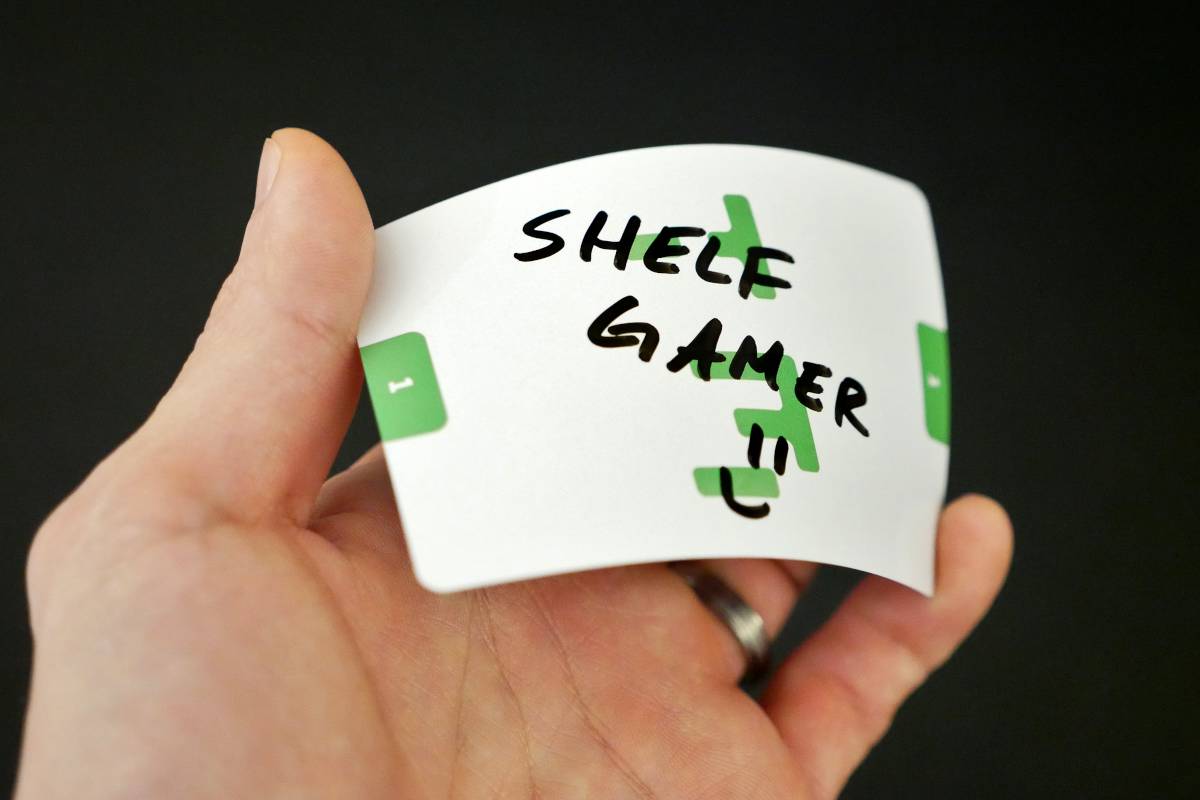
The card quality is pretty good. I like the dry erase approach. All of the cards (both Criteria and Verification) are made of thick card stock and coated in a plastic sheen, allowing you to write on them with dry erase marker. It's not a roll-and-write game, so it's wholly unnecessary apart from being able to mark each Verification card's assigned Criteria card (helpful in case you accidentally get them mixed up mid-game). But that plastic sheen is great for long-term durability and it feels nice to handle.
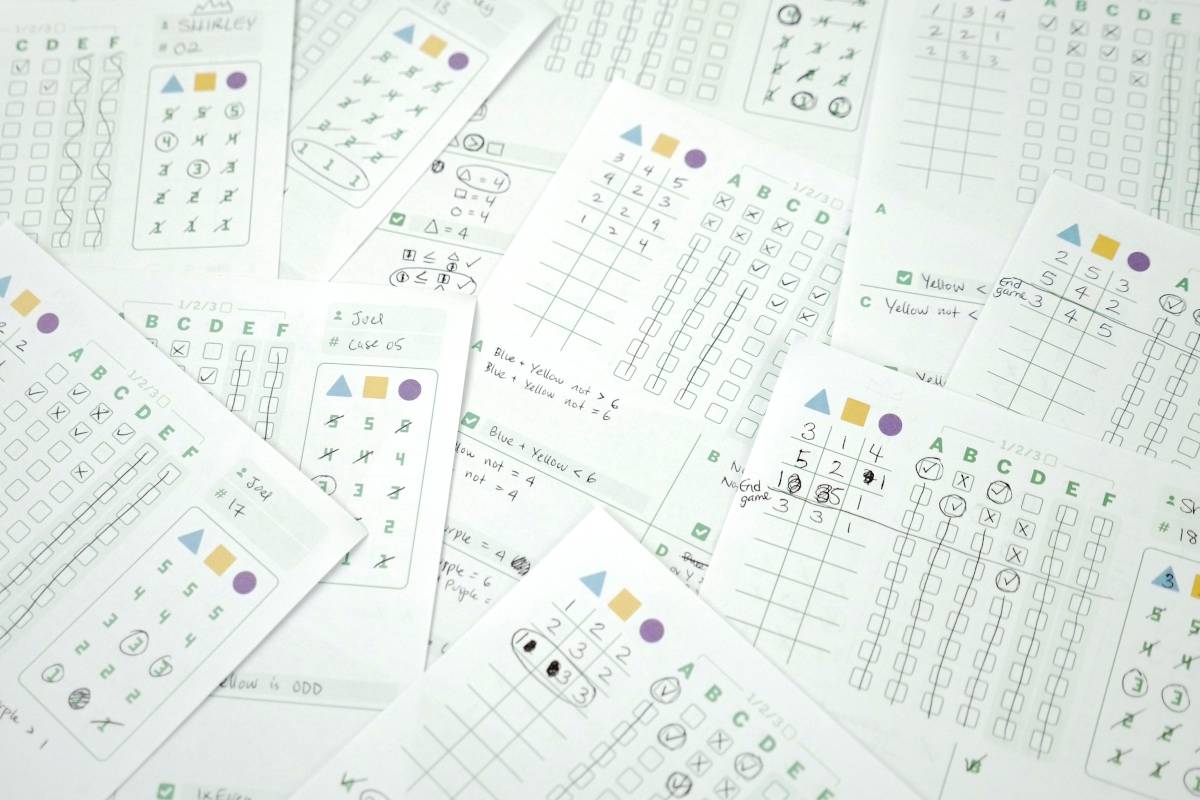
It doesn't come with nearly enough sheets. Turing Machine comes with a pad of 50 double-sided note sheets—a paltry amount given how quickly it plays. You'll burn through these sheets in no time, especially if you play with multiple players. I ended up laminating two sheets (one for me, one for my wife) using one of my favorite board gaming accessories, and we now play using ultra-fine dry erase markers. Alternatively, you can go to the Turing Machine website and print more note sheets yourself.
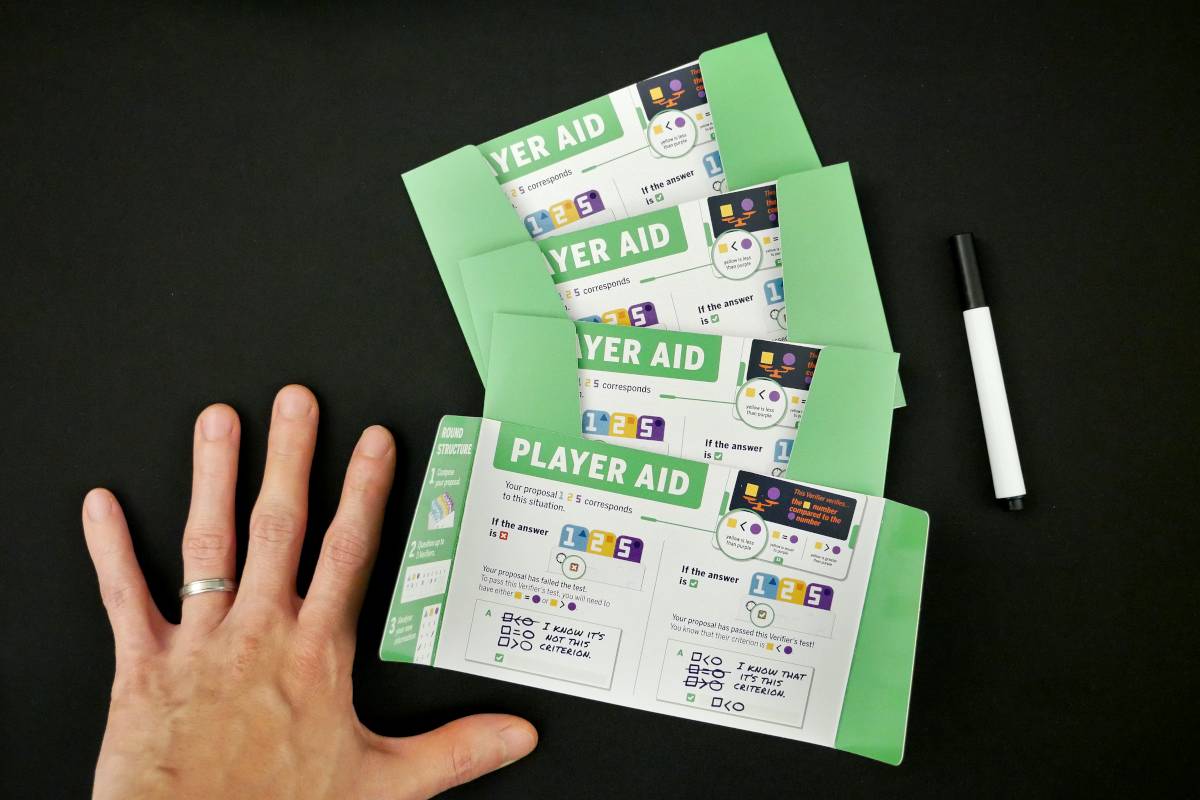
The player shields are kind of ridiculous. These must be the smallest and flimsiest player shields I've ever seen in a board game, lol. They're effective enough when playing one-versus-one as long as you're seated on opposite ends of the table, but way too small once more players are involved. And while it technically doubles as a player aid, the information on the shield isn't very helpful. Overall, I'm disappointed in the player shield design.
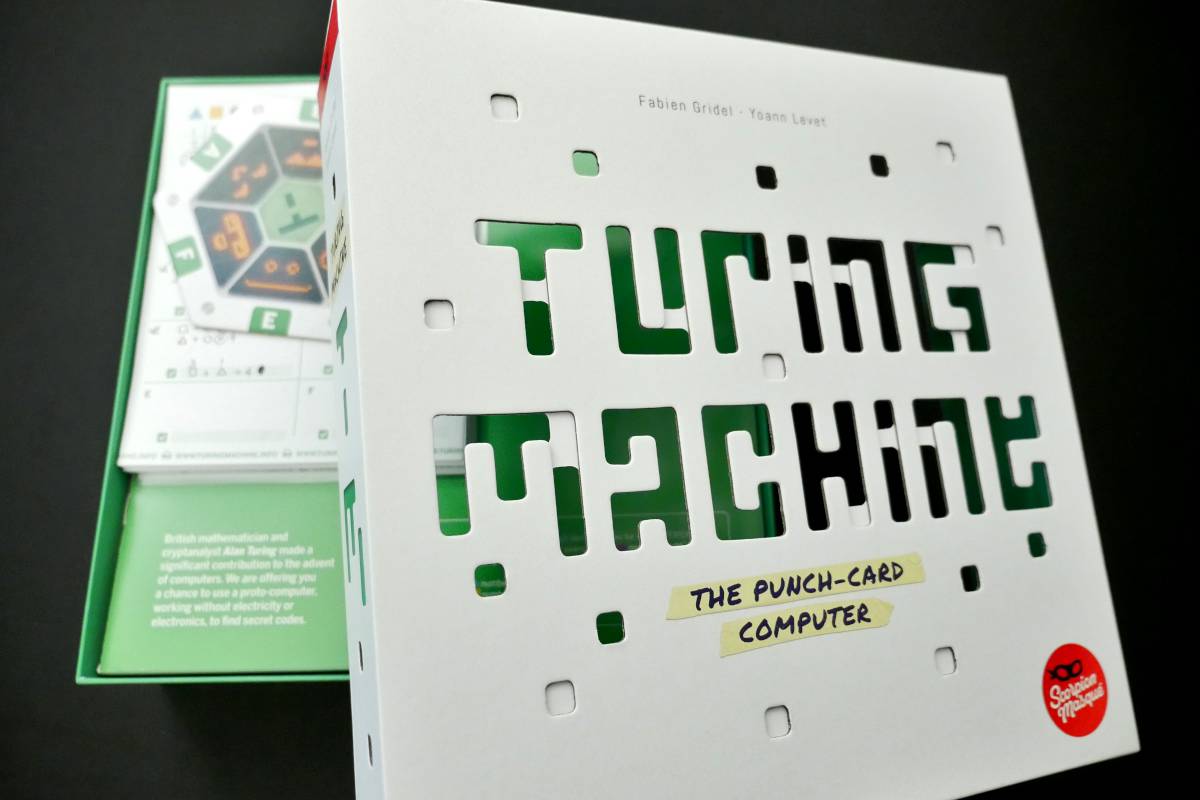
I really dislike the game box design. For one, the box itself is perforated with holes. What?! Why would they do that? I don't like the thought of the insides being exposed, plus it weakens the integrity of the lid. Sure, it's thematic... but it's also too much of a gimmick.
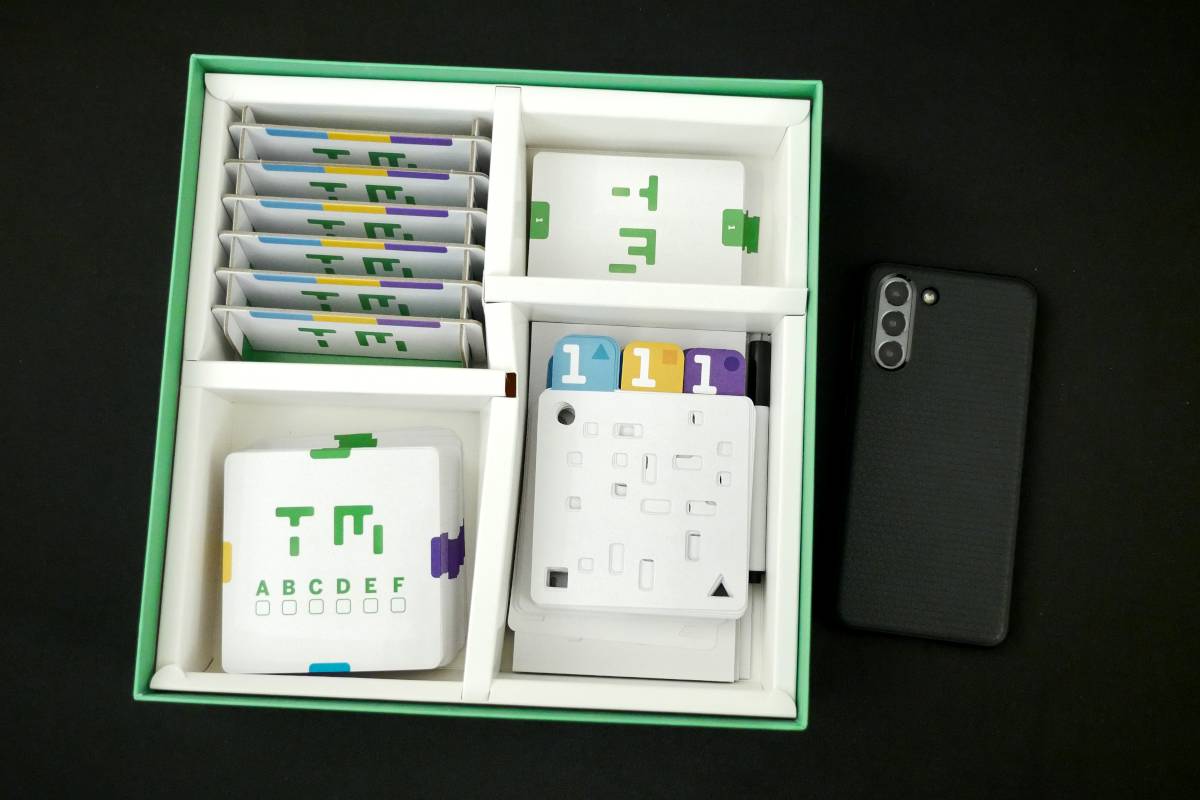
The cardboard insert also kind of sucks. Mine got crushed during shipping (thanks to the weak lid, no doubt) so it offers little support. The cards sit flush to the bottom of the box, so they're hard to take out. The overall box size could've been smaller, too, I think. Scorpion Masqué's productions are usually great, which just adds more salt to the injury on this one.
The Bottom Line
Turing Machine is an absolute winner. It's one of my favorite logical deduction games, perfect for when I just want to knock out a quick puzzle or two (as opposed to a bigger, chunkier experience). It gives you enough room to think creatively and exercise real deduction, without ever feeling impossibly opaque. But you need to like logical deduction puzzles to enjoy this one! Though it's a niche game, it's one of the best in its class.
Stop Buying Games
You'll Regret
Before your next game purchase, run it through this mental checklist that every seasoned gamer uses.
Free checklist, delivered instantly to your inbox.
No spam, ever. Unsubscribe in one click.