
Memory games are hard to get right. It's one of the least liked mechanisms in board gaming as the disparity between players can be enormous, resulting in lopsided matches that are dominated by whoever has the best memory. It's also tough to balance the challenge: if there's too little to track, it's trivially easy; if there's too much to juggle, it's overwhelming. And even when you nail it, memory isn't exactly "fun."
Along comes That's Not a Hat in 2023, which made waves for being a party-style memory game that bucked a lot of the usual stereotypes and avoided the common issues that come with the mechanism. But is it fun? How about for someone who has terrible memory? Can you play it with anyone and still have a good time? I had to find out!
Some context for this review: I have good long-term memory, so it's easy for me to remember and recall facts for things like tests. But my short-term memory isn't so good and I struggle to hold multiple things in mind. If I'm not studying, I tend to forget things right away.
This review is based on my own personal copy of That's Not a Hat, which I bought new from Amazon. Not a free review copy.
Overview
Imagine you're at a holiday party where everyone has brought a gift for a gift exchange—but this gift exchange is a little unusual. When you pass your gift box to someone, you claim that it's something (e.g., a brand-new iPhone!) and the receiver must decide if you're being truthful or not. The goal is to catch gift givers when they lie, while trying to pass off your own gifts without being caught.
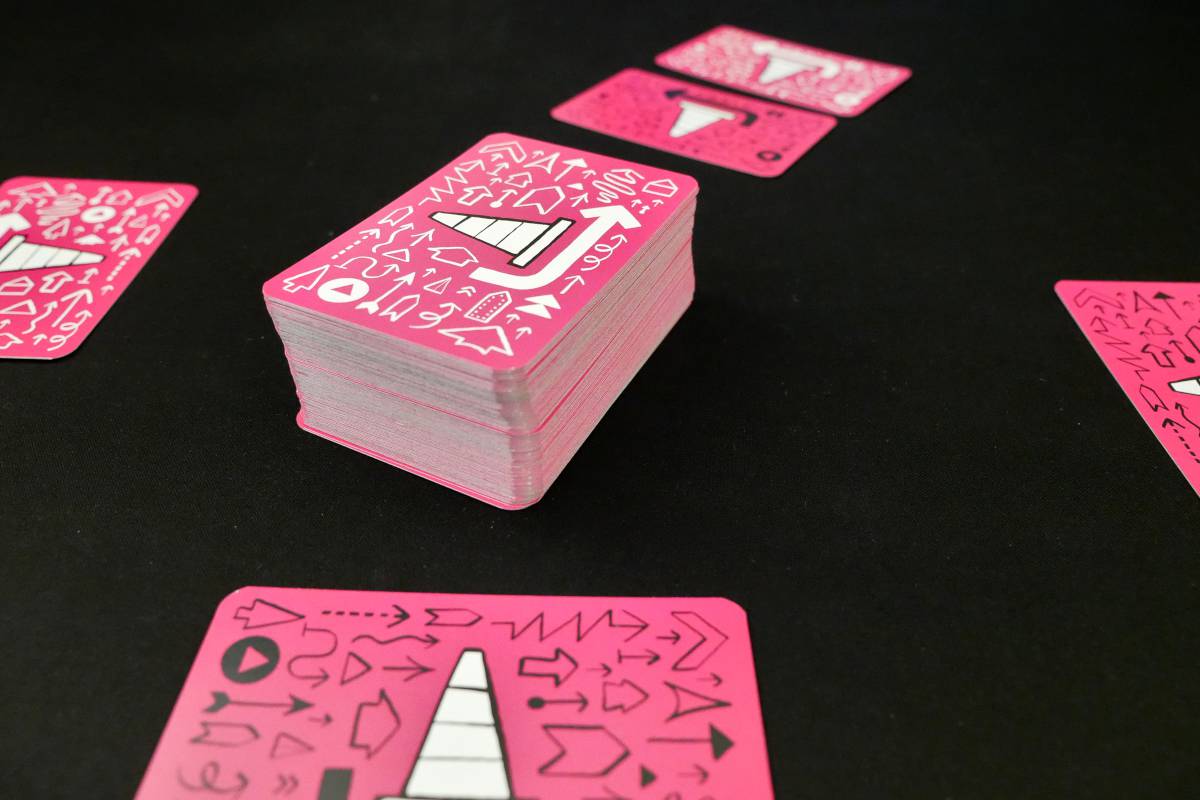
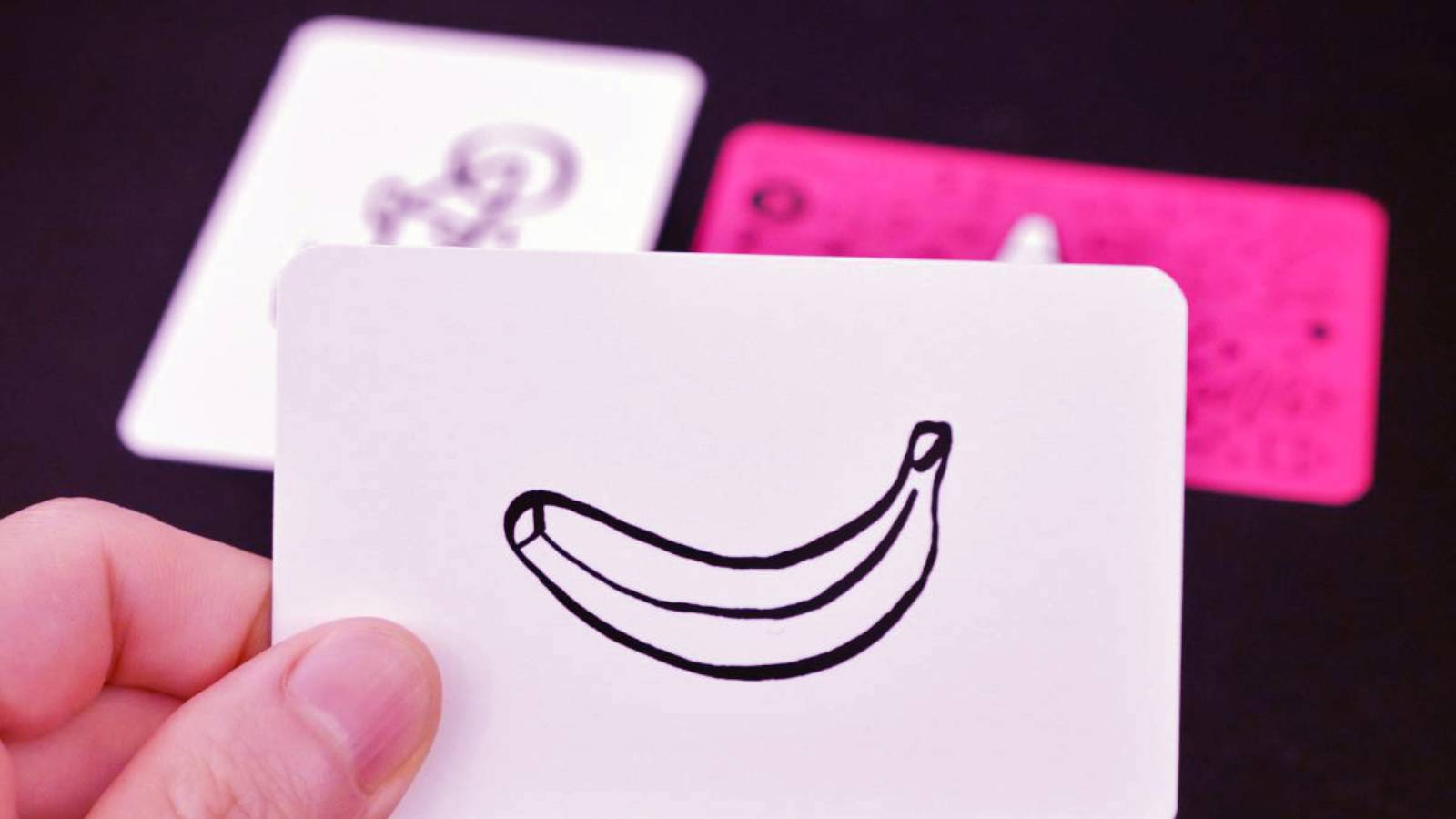
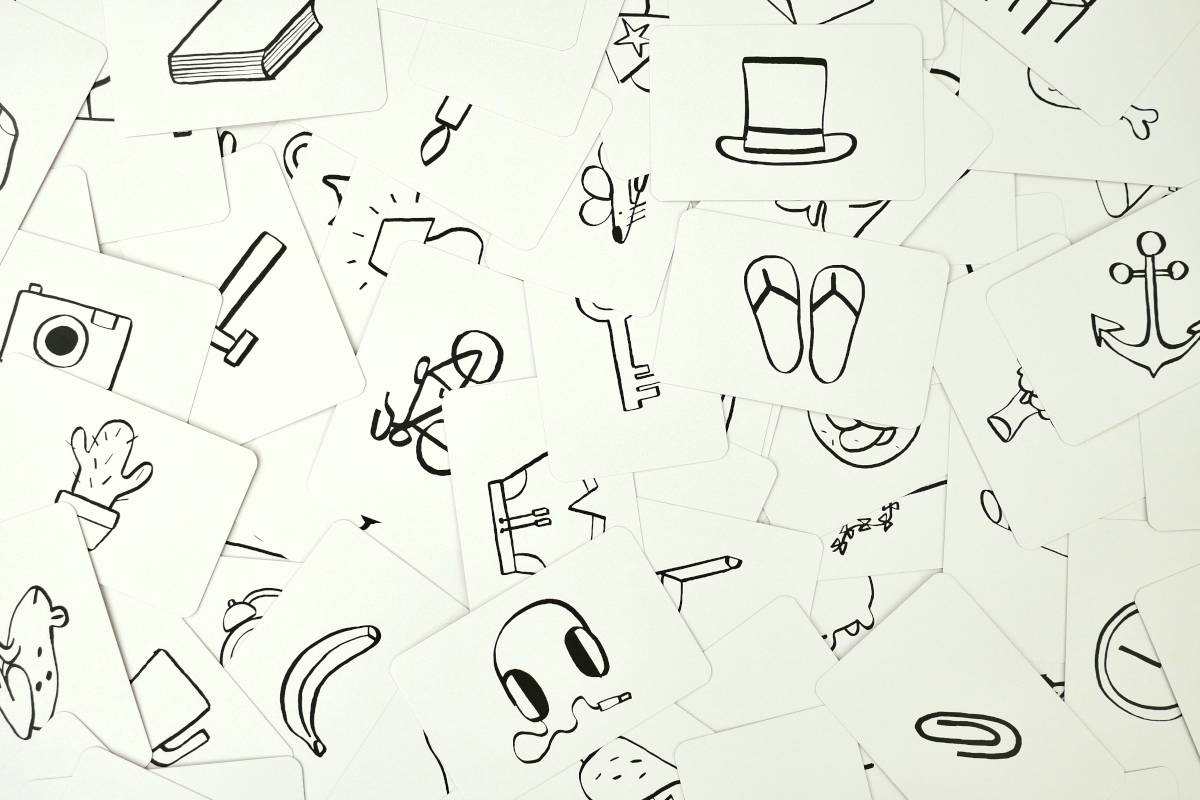
That's Not a Hat is nothing more than a deck of 110 cards, with each card consisting of a simple drawing of a random object. Each object is a "gift" to be remembered that'll be passed around.
The game starts with the gift deck in the center of the table, placed face-up so you can see what the next gift is. Everyone starts with one face-up object in front of them, representing the gift they brought to the exchange. Look around and commit them to memory! Because once they're packaged up, you won't get to see them ever again.
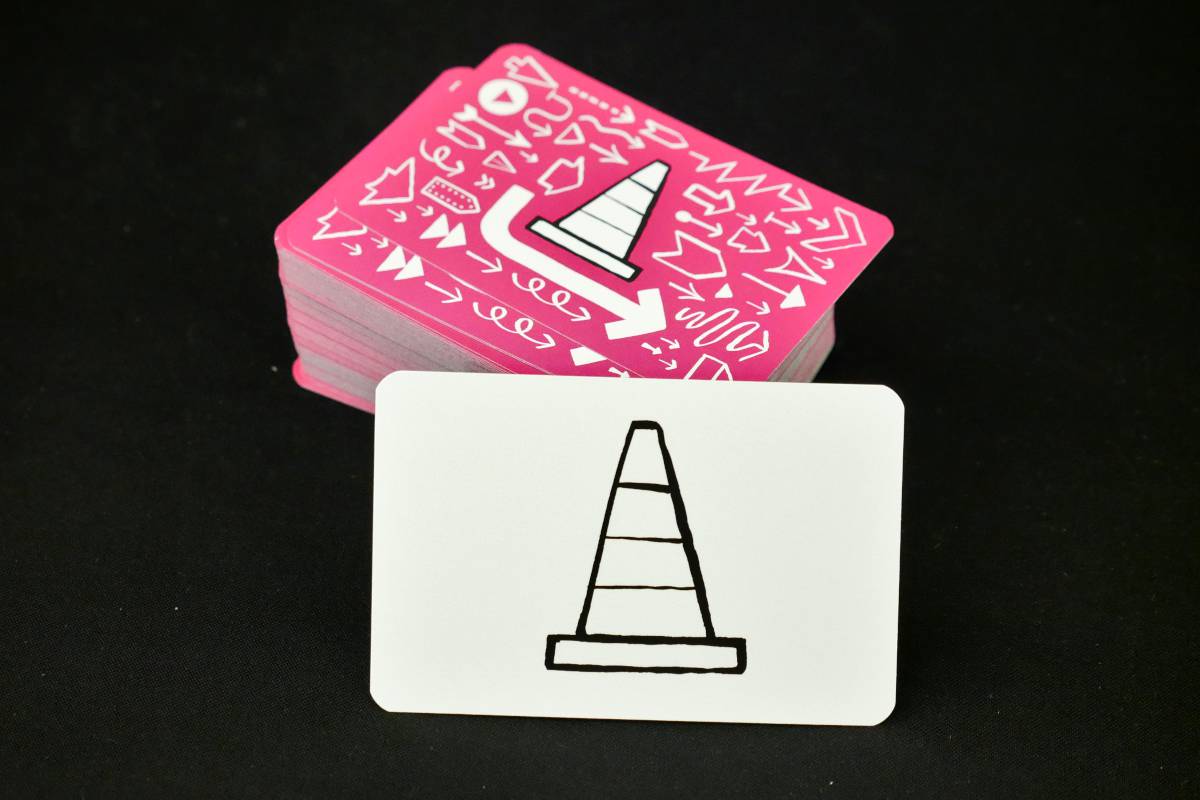
To start the round, you take a new gift from the gift deck, show it to everyone so they can commit it to memory, then flip it over so it's hidden. Then, going by the arrow on the back side, you "offer" the gift to your neighboring player in that direction. When you offer a gift, you simply say something like: "This is an [object]."
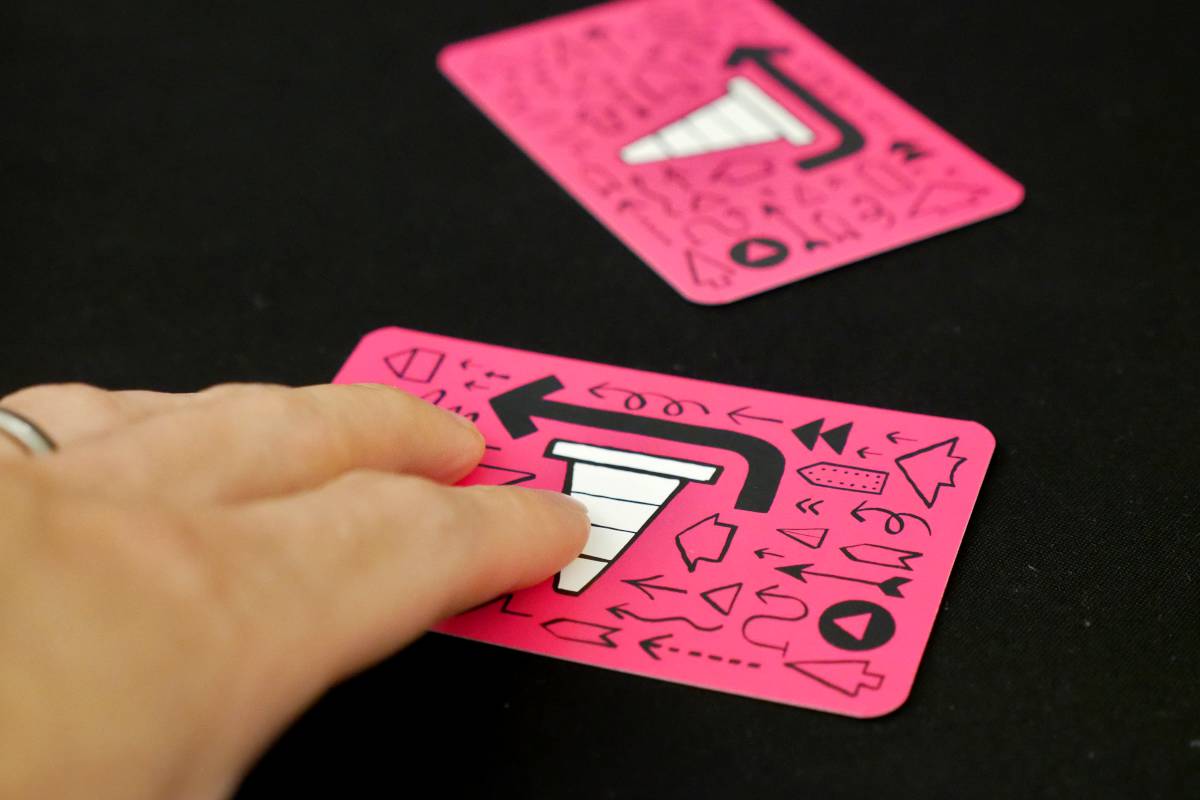
When you're on the receiving end of an offer, you have two choices:
Option 1: Accept the gift. You think they're telling the truth about what they're offering. You take the card—without looking at it, still face-down—and add it to your possession as your "newest" gift. (The rulebook recommends that you keep your oldest gift "closest" to you while new gifts are added above, "farther" from you.)
Now it's your turn. You offer your "oldest" gift to your neighbor as determined by the gift's arrow direction. You can't look at it, so you better remember what it is! If you don't, you gotta bluff.
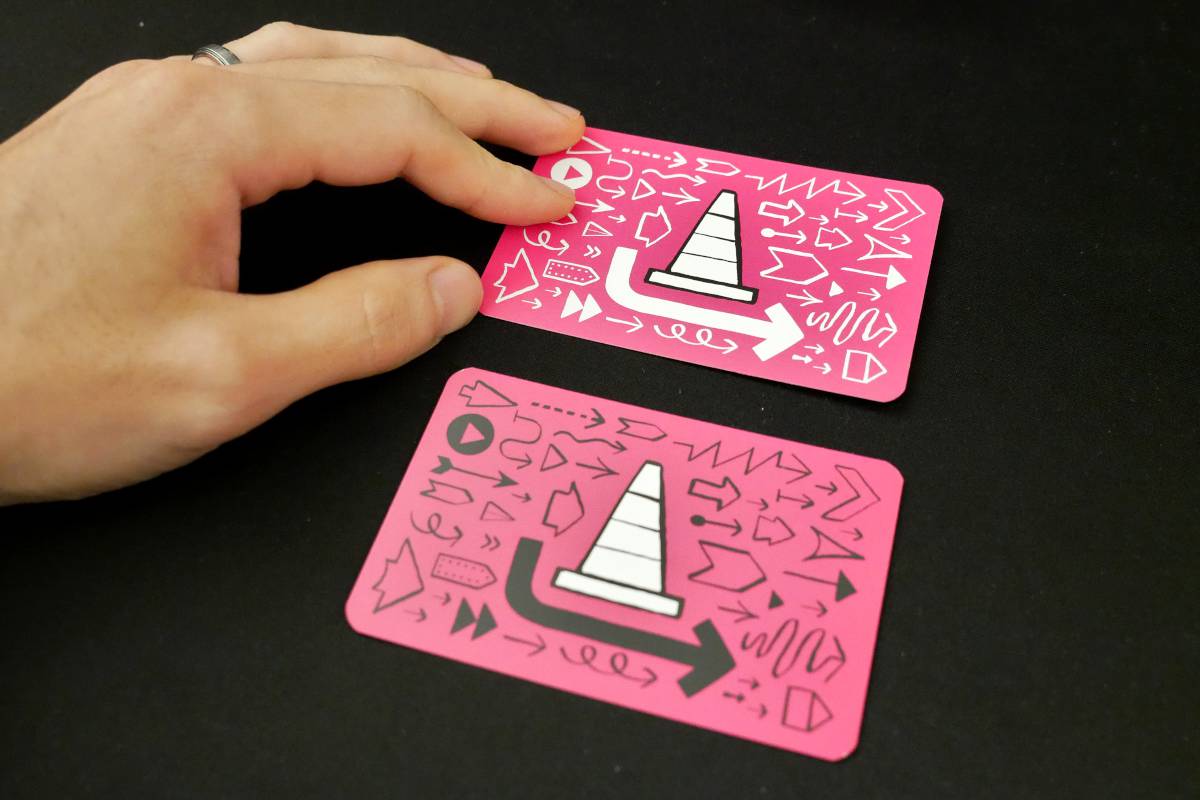
Option 2: Refuse the gift. You don't think the gift is actually what they say it is. You say: "That's not an [object]!" The card is flipped face-up and revealed, then whoever was wrong takes the card into their penalty pile as a negative point. If the giver was lying, they take the penalty; if they were telling the truth, you take the penalty.
After a refusal, whoever lost the challenge (the one who received a penalty point) resumes the game by drawing a new gift from the center deck. They show it to everyone, commit it to memory, flip it over, then gift it according to the arrow direction on the back of it.
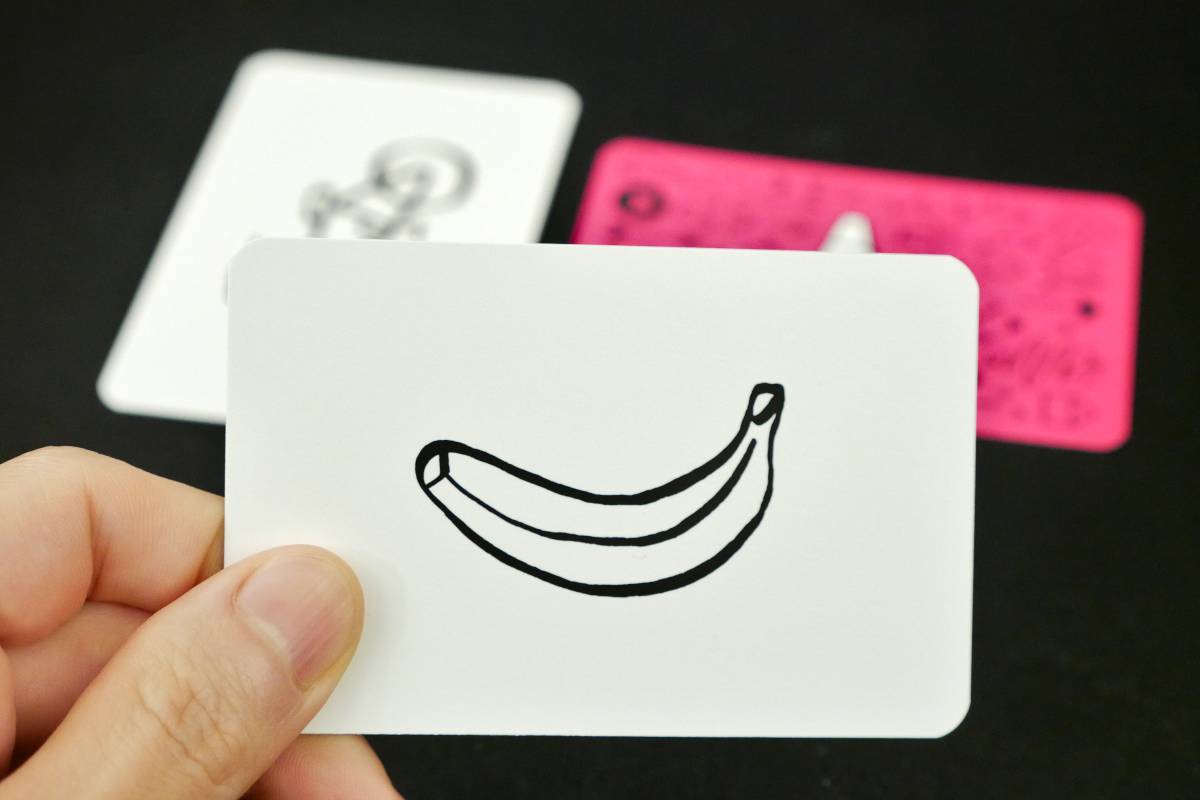
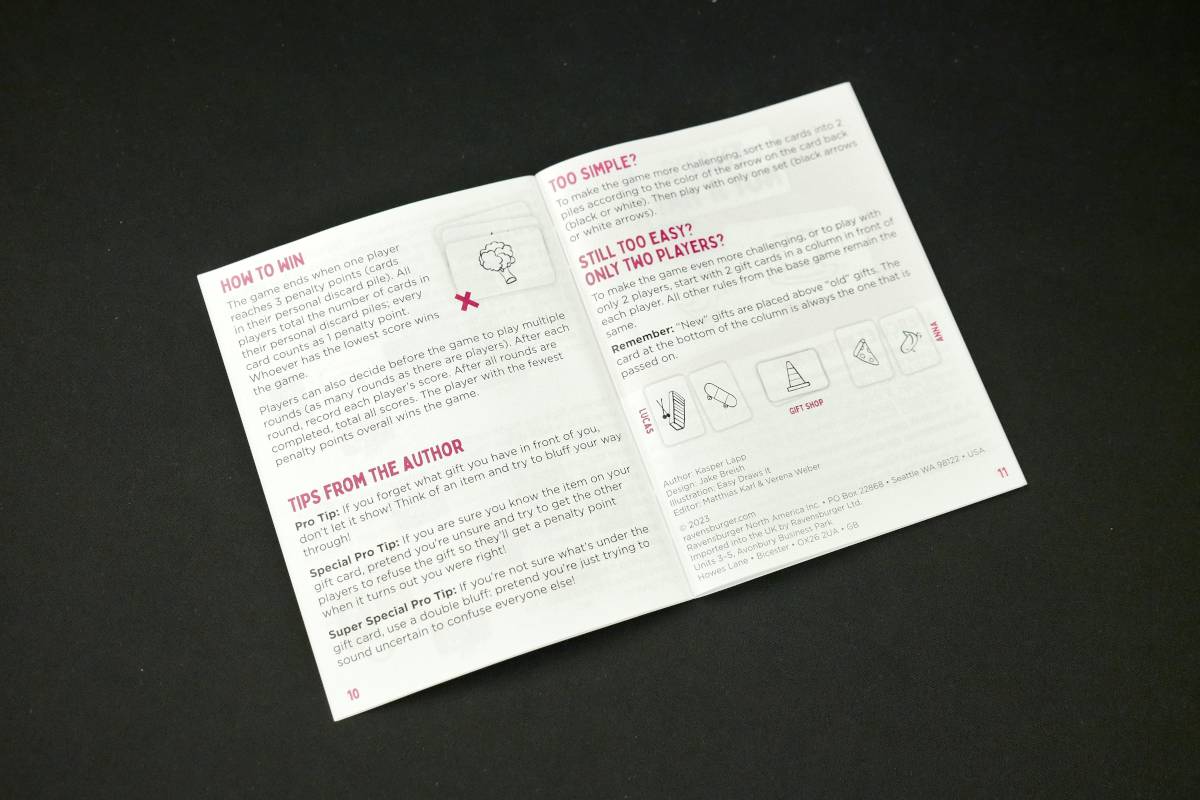
The game continues like this—with gifts circulating around the table punctuated by the occasional refusal challenge—until someone reaches 3 penalty points. That's when the game ends. Winner is determined by whoever has the fewest penalty points.
That's Not a Hat is such a silly game that the points don't really matter. You can just play until you're ready to move on. I think of it as more of an activity than a game, like Telestrations or Concept.
Setup and Table Footprint
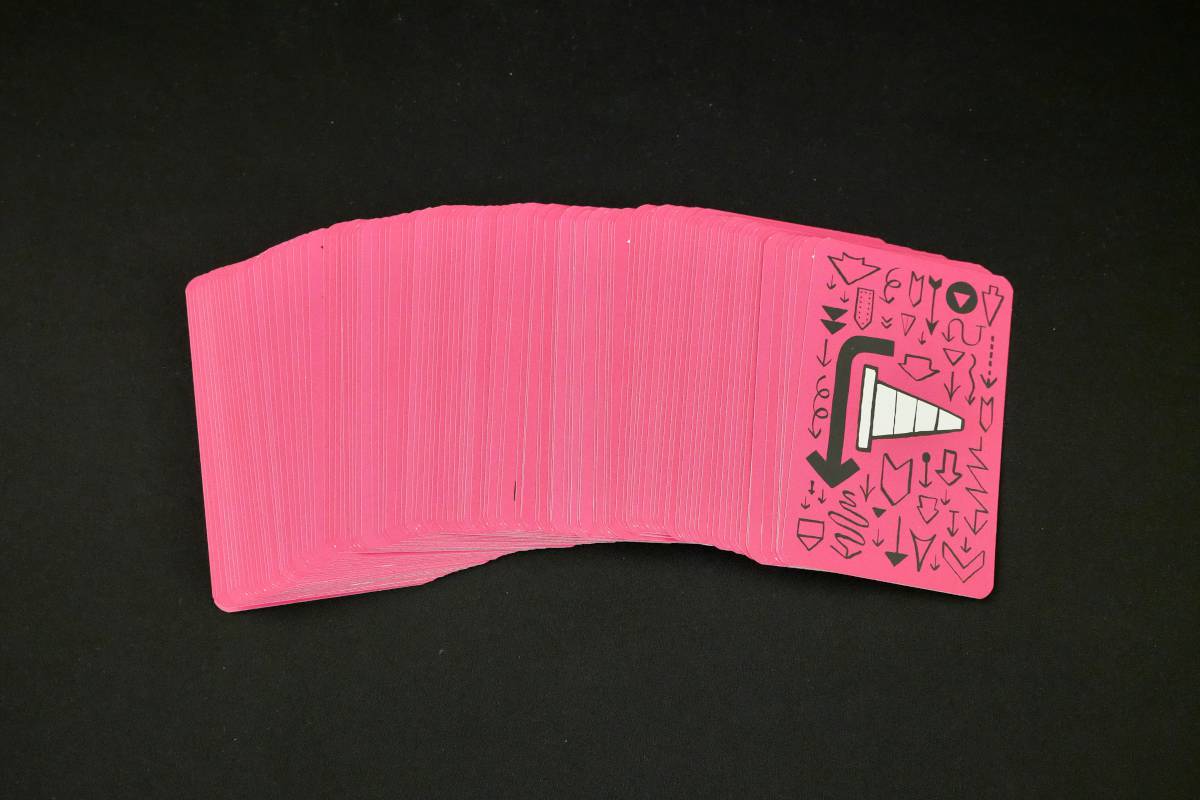
As with any great party game, That's Not a Hat is extremely low maintenance with minimal components. It's just a deck of cards, for crying out loud! Shuffle 'em up, deal one card to each player, then place the deck in the middle face-up. Boom, ready to go.
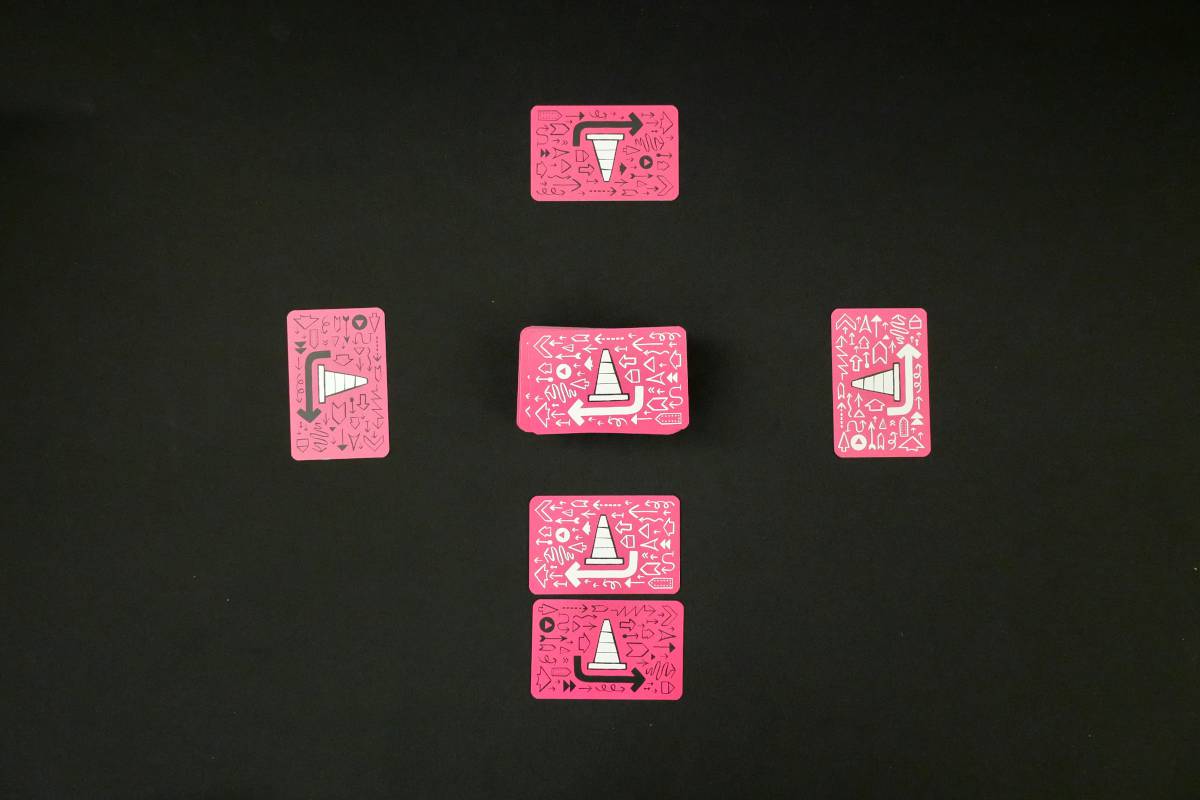
And similarly, That's Not a Hat takes up very little table space. You just need a spot for the gift deck, plus a tiny bit of personal space for each player's own gift. In a pinch, you could even play completely in your hands: hold your gifts in one hand (maintaining your oldest-to-newest gift order) and use the other hand to pass gifts around.
Learning Curve
That's Not a Hat is light and breezy. The rules are dead simple, so much so that anyone—even non-gamers—will be able to grasp how to play without much of a struggle. The concept of remembering gifts as they're passed around makes sense, the game flow feels natural and intuitive, and there's very little mental overhead. That's Not a Hat is a clear contender for "easiest card game to learn and play."
Game Experience
Decision Space
There isn't much "choice" happening in That's Not a Hat. It's a memory game and memory is binary: you either remember or you don't. But the thing that sets That's Not a Hat apart is that it's more than just a memory game—it's also about bluffing, which is the game's saving grace. Bluffing your way out of trouble is what makes it interesting!
On your turn, you must offer your oldest gift to your neighbor. There are three possibilities here:
- You remember what it is and play it straight. This is your safest option since it can never backfire. They either accept it, which ends your turn and moves the game along, or they refuse it, which ends in them taking the penalty point.
- You remember what it is but play it tricky. Even if you know it's a "carrot," you might claim that it's a "fork"... and as long as you aren't called on it, you might trick everyone into believing that it really is a fork. This is a bad idea early in the game when everyone still has a good idea of what each gift is, but it can be a fun move to pull later on. The risk is that if you're called on it, you're gonna have to eat that penalty point.
- You don't remember what it is, so you bluff. You think back on what gifts are currently in circulation, make your best guess, and claim it with enough conviction that the receiver won't question it. Whatever you do, don't name an item that's already been removed from circulation. Rookie mistake!
As you can tell, you don't really have much of a decision to make on your turn. You're mostly just doing either #1 or #3 depending on whether you know your gift or not. That's Not a Hat is very much a go-with-the-flow style game that's more about enjoying the experience than winning. There isn't much strategy, not even in the bluffing.
That said, there are two little details that can help you memorize gifts and juggle all the items in your head:
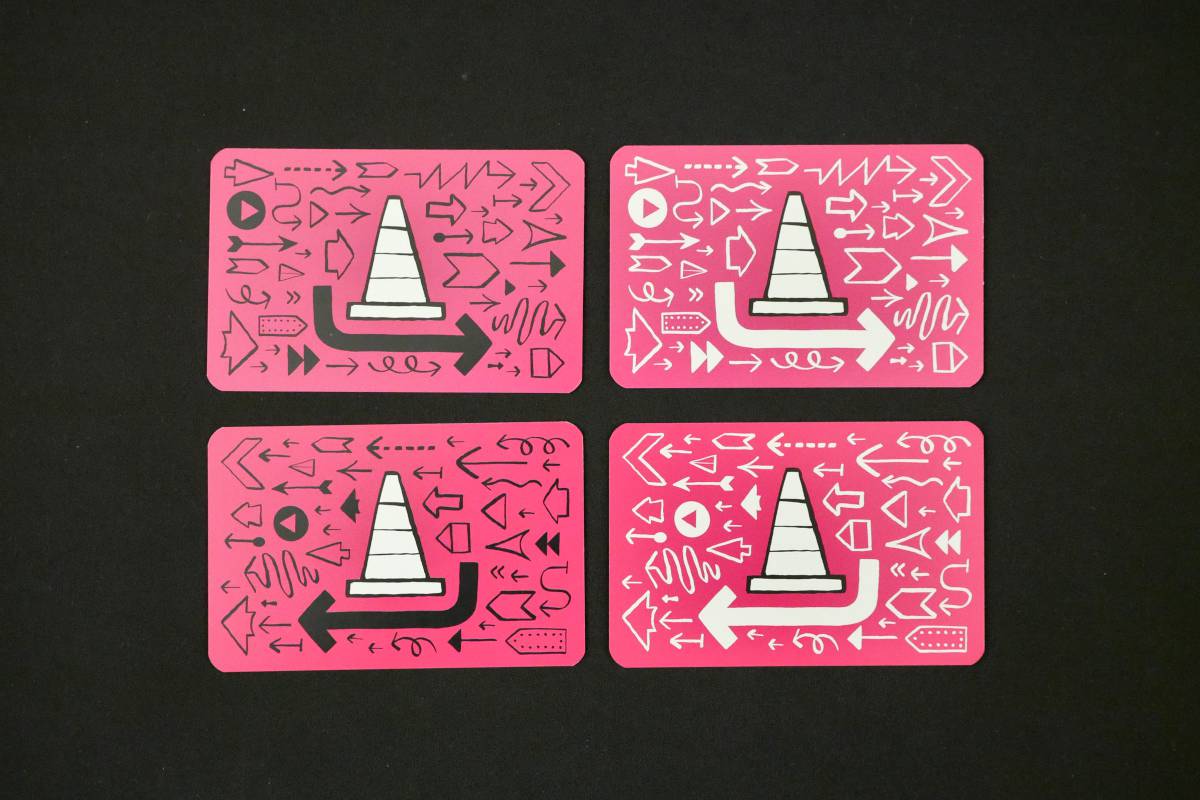
- Each item card has an arrow on its back, pointing either to the left or right, which determines the direction it circulates. You can use this to your advantage. For example, if you know that the broccoli moves left, you know your current gift with a right arrow isn't the broccoli.
- Each item card's arrow is either black or white. The same thought process applies here. If you know that the broccoli has a black arrow, then your current gift with a white right arrow definitely isn't the broccoli.
If you pay attention to the arrows and colors, you can give yourself an edge amidst all the chaos of That's Not a Hat.
Luck Factor
There's zero luck in That's Not a Hat as far as randomness goes, but the game can still feel "lucky" at times, especially when new gifts enter circulation and everyone starts losing track of which gift is which.
When you find yourself on the receiving end of a gift and you don't 100% know what it is, you have no choice but to take a wild guess if you want to catch the giver in a lie—and when you rely too much on guessing, that's when it can feel lucky.
Again, That's Not a Hat isn't random. If you had superhuman memory, you could track everything perfectly. But if your memory is as bad as the rest of us, just know that "luck" will play a role!
Fun Factor
That's Not a Hat is fun in the silly, boisterous, have-a-good-time-and-don't-care-about-winning sense. Yes, there are penalty points, and yes, there are technically winners and losers... but it's ultimately about those hold-your-breath moments when someone refuses a gift. I can't help but laugh when I yell "That's not a pizza!" and the card is flipped over to reveal the very pizza I thought I was holding.
There's a bit of tension that keeps you on your toes, but it isn't uncomfortable. It's not like a social deduction game where you're dead the moment your hidden identity is revealed. The stakes are much smaller here, and that allows That's Not a Hat to be more relaxed and pleasant. It's exciting, funny, and cozy.
Pacing
When you first start a game of That's Not a Hat, it can feel boring and pointless. After all, tracking gifts is trivially easy during those first few turns. But That's Not a Hat is deceptive. It only takes a few turns of gifts being passed around before you realize you're cooked.
Order quickly descends into chaos as gifts circulate. You lose track of stuff in the blink of an eye, and you aren't the only one. Eventually, nobody knows the full picture, so bluffing becomes easier and easier. The penalties begin to rack up and it's over before you know it.
This chaotic snowball effect forces the game to naturally conclude itself, with players feeling more and more confident about refusing gifts as the chaos builds. It prevents That's Not a Hat from outstaying its welcome.
Player Interaction
That's Not a Hat is nothing but player interaction. You won't be able to memorize all the gifts and hold all that information in your head perfectly, so it comes down to bluffing and reading others.
Even if you have no idea what gift you have, if you say "This is a guitar!" with enough conviction, maybe your neighbor will think twice about challenging you. Conversely, if you're offered a gift and it's clear the giver has no idea what it is, maybe you ought to call their bluff—unless they're only playing dumb and trying to trick you.
Player Counts
That's Not a Hat is better with more players—ideally in the 4 to 8 players range—for three reasons. First, it's harder to track any given object, which ramps up the bluffing and draws out the chaos in the design. Second, you have more time to watch others in between turns and you aren't in the spotlight as often. Third, the penalties spread out and you're more likely to have a longer (and more blufftastic) game.
It's certainly playable with 2 or 3 players, but the balance shifts more towards memory than bluffing. And with fewer players at the table, there's less energy—it's not as funny or exciting. That's Not a Hat needs a decently sized group of people who aren't taking it so seriously, otherwise it loses most of its charm.
When playing with 2 or 3 players, each player starts with two gifts. Otherwise, it'd be too easy! All other rules are the same.
Replayability
That's Not a Hat is relatively shallow, but that's not a knock against it. It's perfect for what it intends to be: a lightweight experience that eschews strategy in favor of boisterous fun. It's easy to pull out, knock out a game or two, have a crazy good time, and put away.
Does it offer anything new or different from play to play? No, it's the same every time. Does it get stale? Yeah, if you play it over and over all night long. But there's a place for games like this.
I put That's Not a Hat in the same class as Pit and Happy Salmon and Cockroach Poker—games that offer a quick explosion of fun. They're good to have in a collection, to be brought out every once in a while, maybe for a family reunion or as an icebreaker.
Production Quality
Ravensburger is rather hit-or-miss when it comes to its production. You have the shoddy quality control of games like Horrified, the weird box designs of games like Push, and the ugly aesthetics of most titles in the Alea series. But it's not so bad with That's Not a Hat.
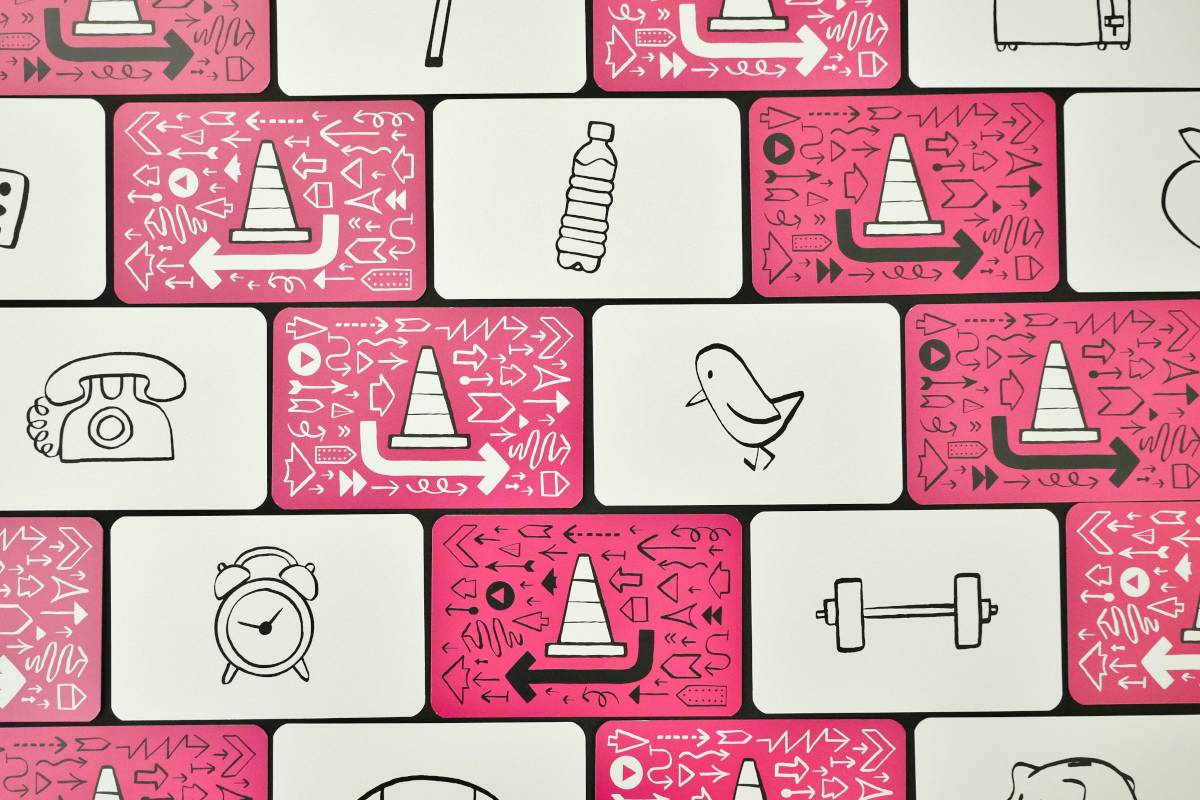
The artwork is basic but appealing. It's about as inoffensive and widely appealing as games get, almost to the point that it lacks identity. But does that really matter? The cards spend 99% of their time face-down anyway, so the minimalist approach works out. Given how simple the game is, it's a smart choice to go with accessible imagery. Anyone can look at That's Not a Hat and not be intimidated.
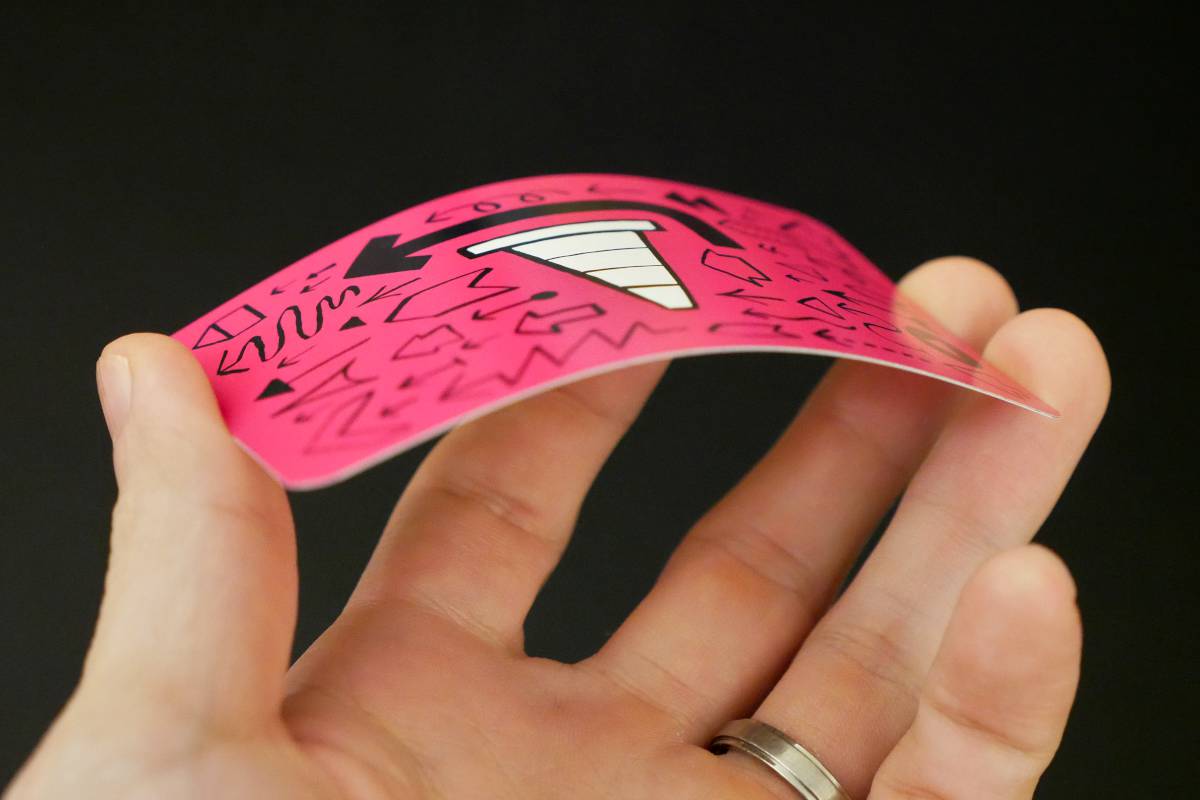
The cards are average quality and should probably be sleeved. They're going to get passed around a lot, whether from hand to hand or by sliding them across tables... and that means they're going to get grubby or catch nicks over time. For games like this where hidden information is the whole game, you really want to avoid marked cards. I'm not super big on sleeving, but I'd say it's a wise move here.
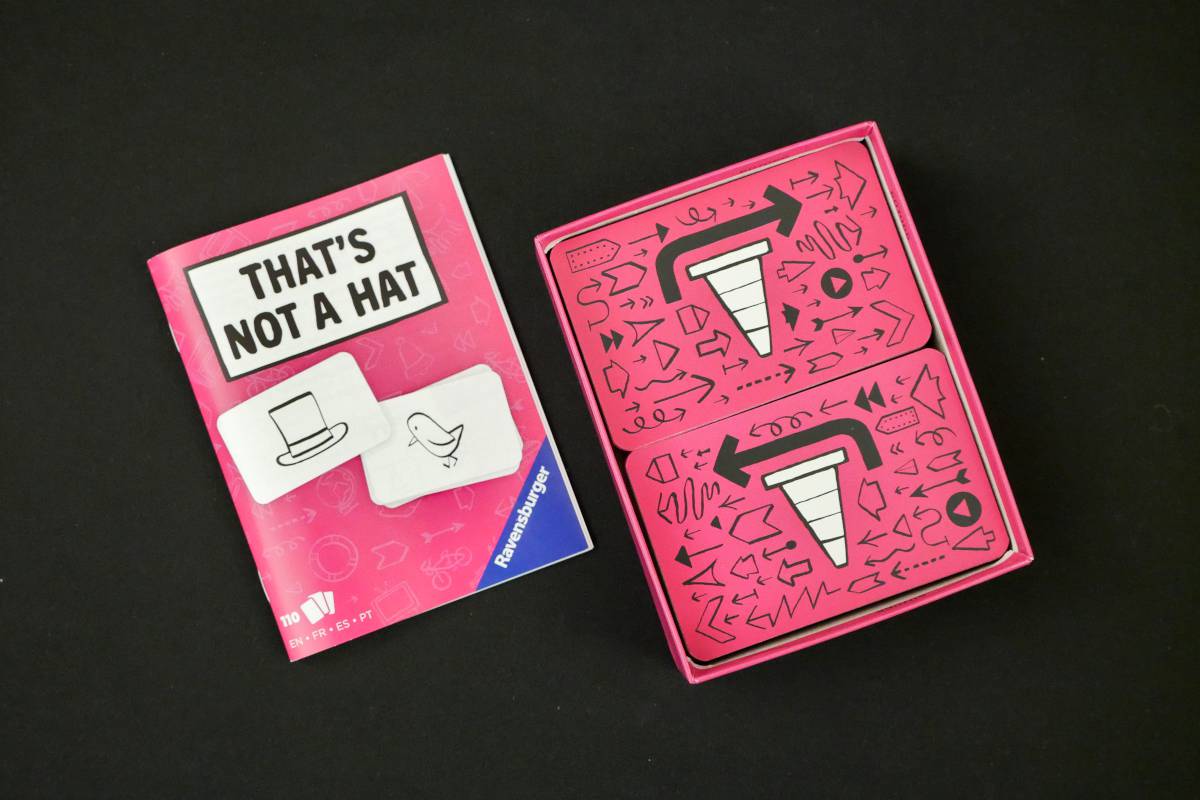
The game box is compact and portable. While it isn't quite pocket-sized, it's small enough that you can shove it into any bag without a second thought and take it with you anywhere. There's no wasted space here, and that's worth appreciating in a quick party game.
The Bottom Line
That's Not a Hat is a decent party game that combines memory with bluffing in a unique way, although it's more of an activity than a game. It's quick, fast, easy to learn, widely accessible, and can be entertaining (with lots of laugh-out-loud moments) as long as you have enough players who don't take it too seriously. Though far from an essential, I think everyone should try it at least once.
Stop Buying Games
You'll Regret
Before your next game purchase, run it through this mental checklist that every seasoned gamer uses.
Free checklist, delivered instantly to your inbox.
No spam, ever. Unsubscribe in one click.