
Things don't always go your way, and that's no more true than it is when you're out fishing. Are you casting the right lures? Are you fishing in the right spot? Are the fish going to your line or the line of that guy who's several yards away? You can all be in the same water, but results will vary—and yet you can all have a chill and enjoyable time together.
Lure captures that aspect of fishing in a fun, light, relaxing, yet surprising sort of way. Formerly known as Dice Fishing: Roll and Catch before it was re-released as Lure by Allplay, this game mixes dice rolling with a blind auction system to simulate what it's like to fish together in a shared pond.
Here's everything you need to know about Lure, how it plays, where it succeeds and what it lacks, and whether it's good for your own collection.
This review is based on a review copy of Lure provided by Asmodee, but my thoughts and opinions are my own.
Overview
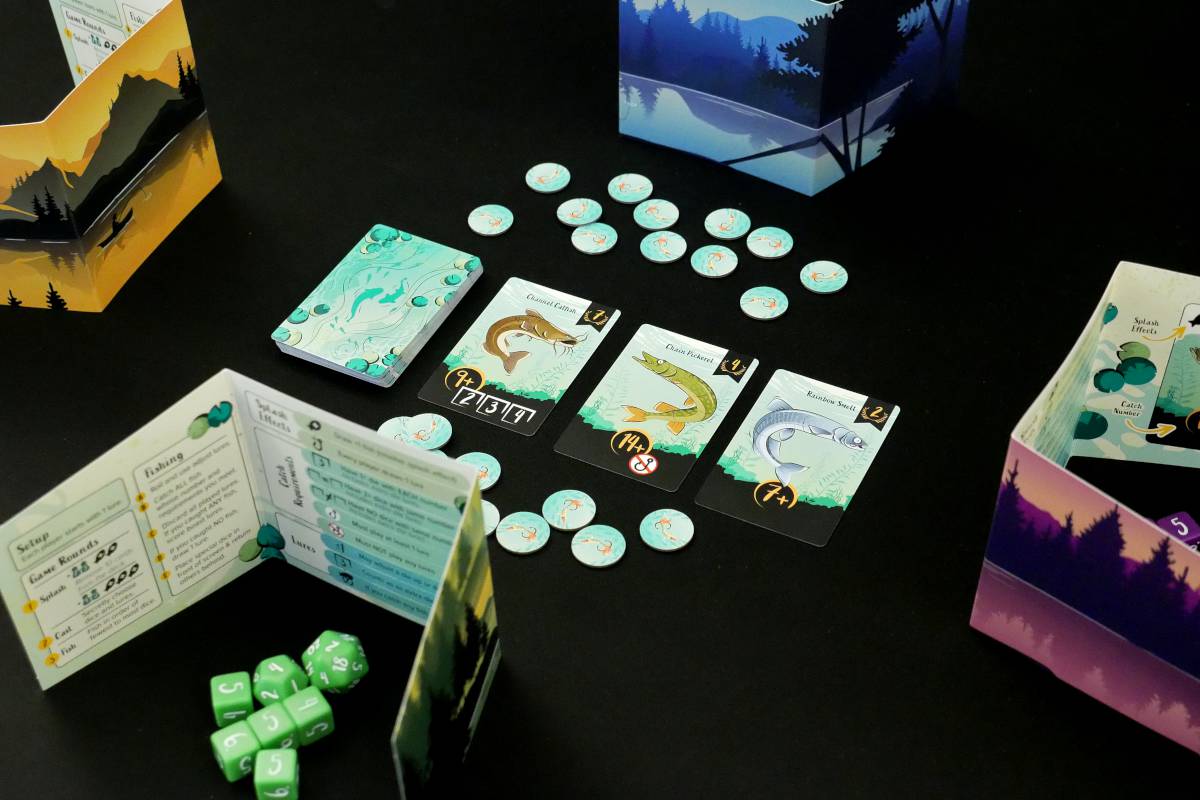
Lure is a casual push-your-luck dice chucking game with a splash of blind bidding mixed in. You're rolling dice to fulfill the requirements for catching different Fish cards, but you're also trying to use fewer dice than others so you get first chance at catching Fish cards.
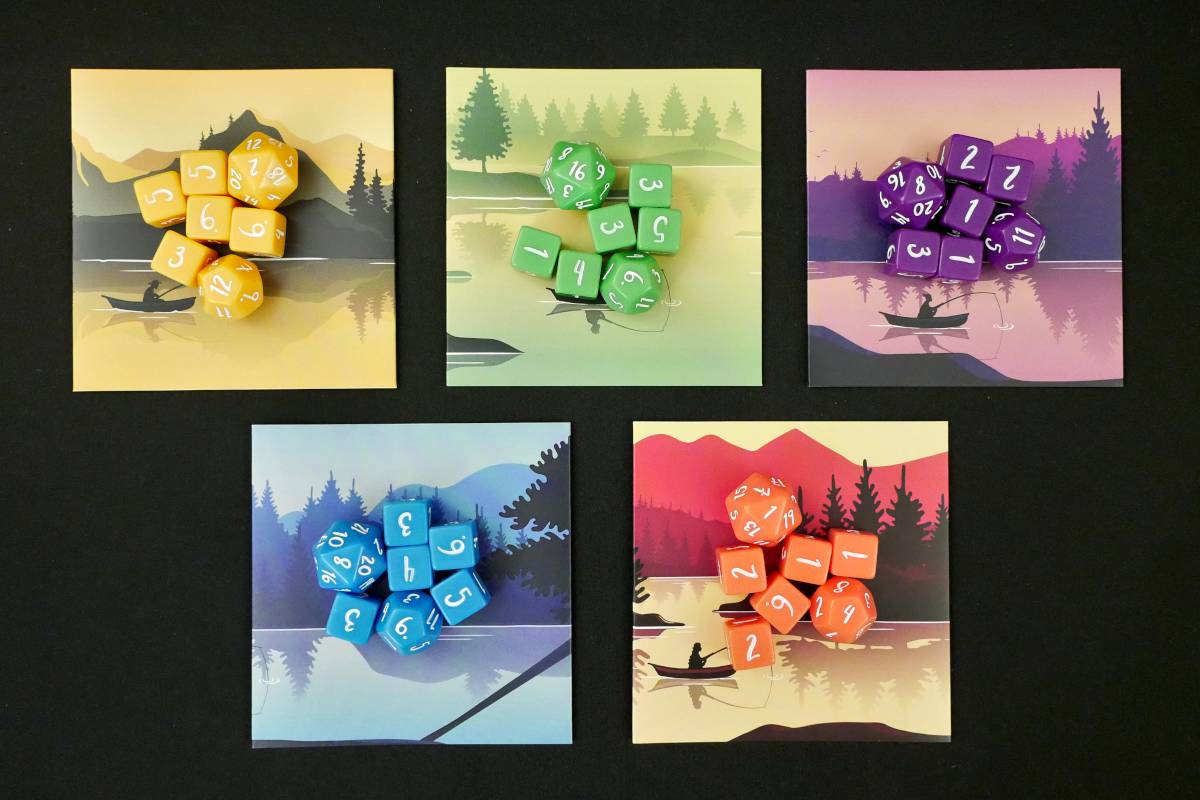
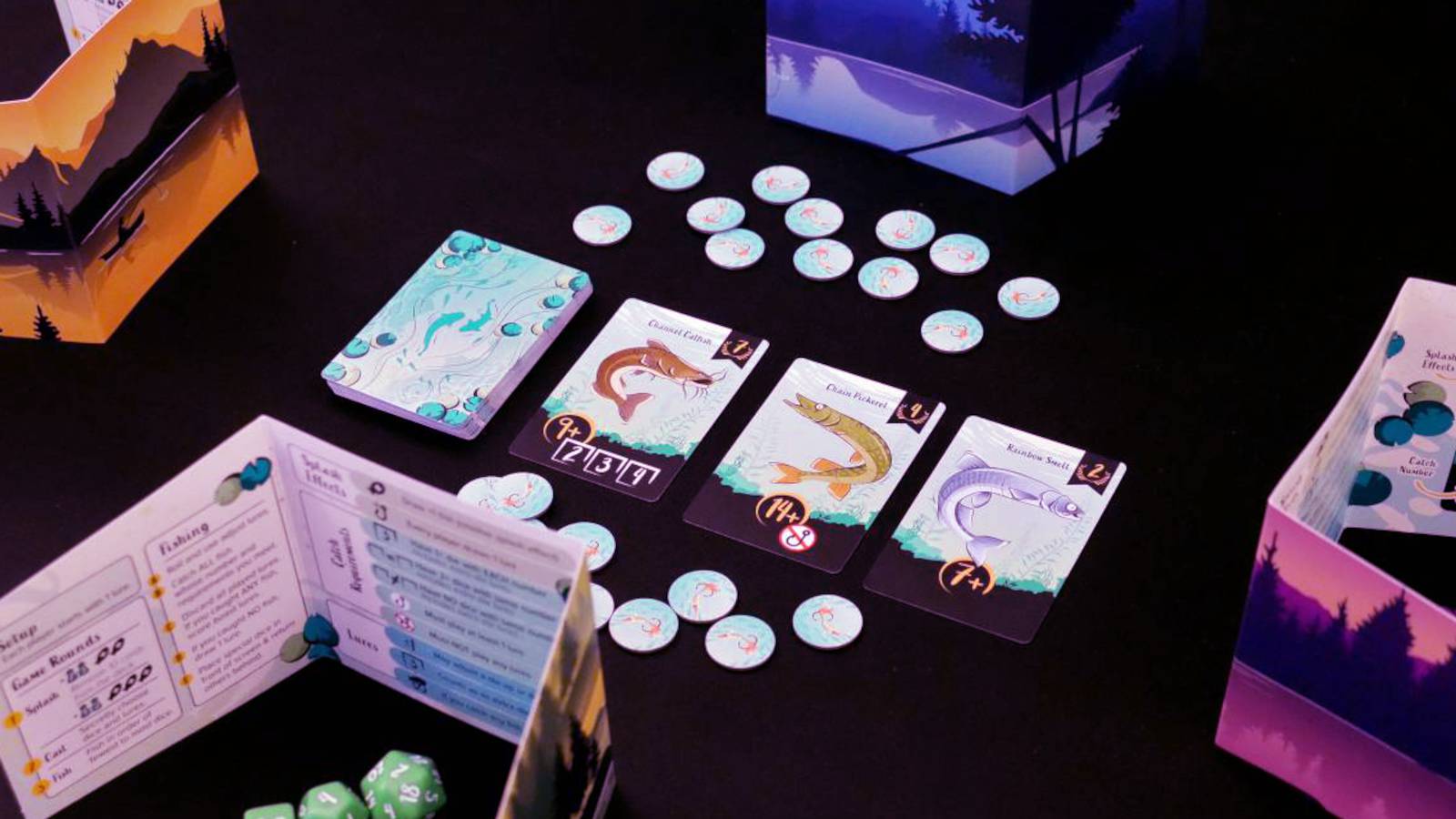
Each player starts with their own personal set of 7 dice, which includes 5x D6 (six-sided dice), 1x D12 (twelve-sided), and 1x D20 (twenty-sided). The D12 and D20 are "special dice," while the D6 are "normal dice." More on this later and why the distinction is important.
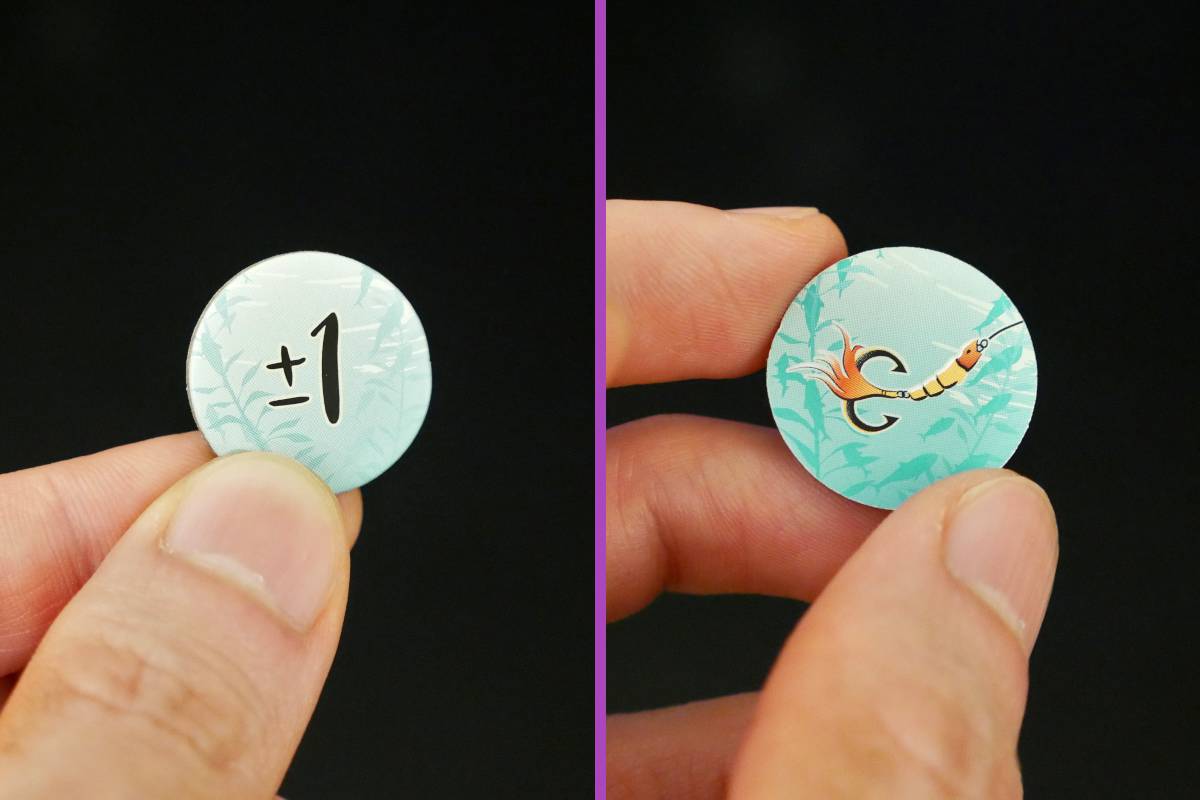
Each player also starts with a Lure token. You can think of Lure tokens as one-time bonuses you can spend when rolling your dice and catching Fish cards. Lure starts with a supply of face-down Lure tokens, and every time you gain a new Lure token, you pick one at random.
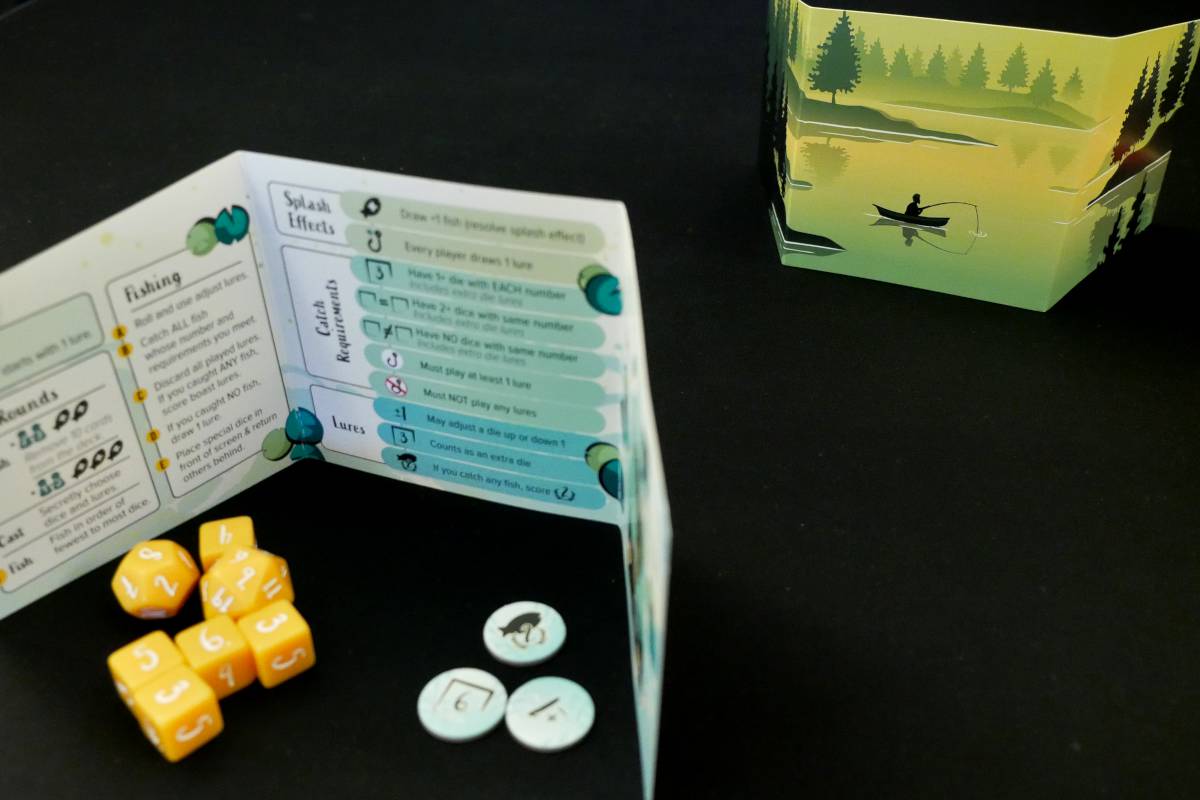
Finally, each player also gets a player shield for hiding their dice and Lure tokens. This comes in handy for the bidding portion (so no one can see which dice you're bidding with) as well as for hiding the Lure tokens at your disposal. The player shield also doubles as a player aid!
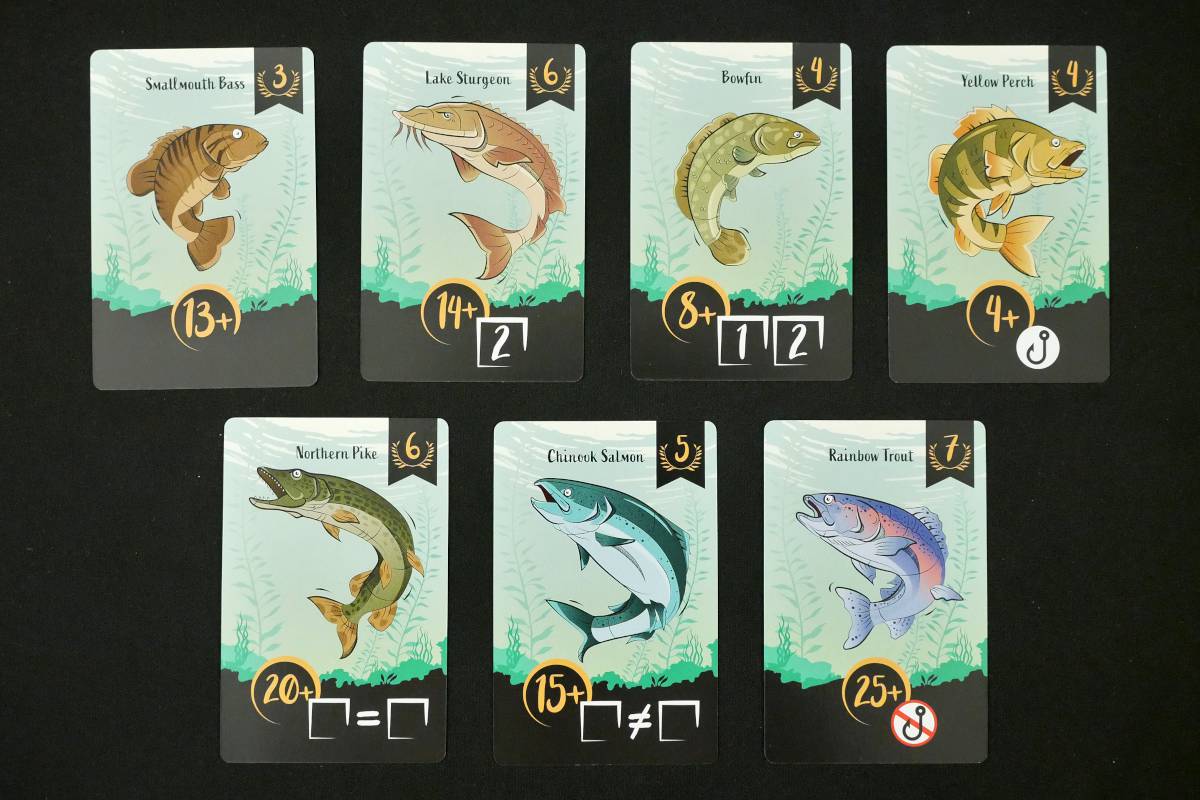
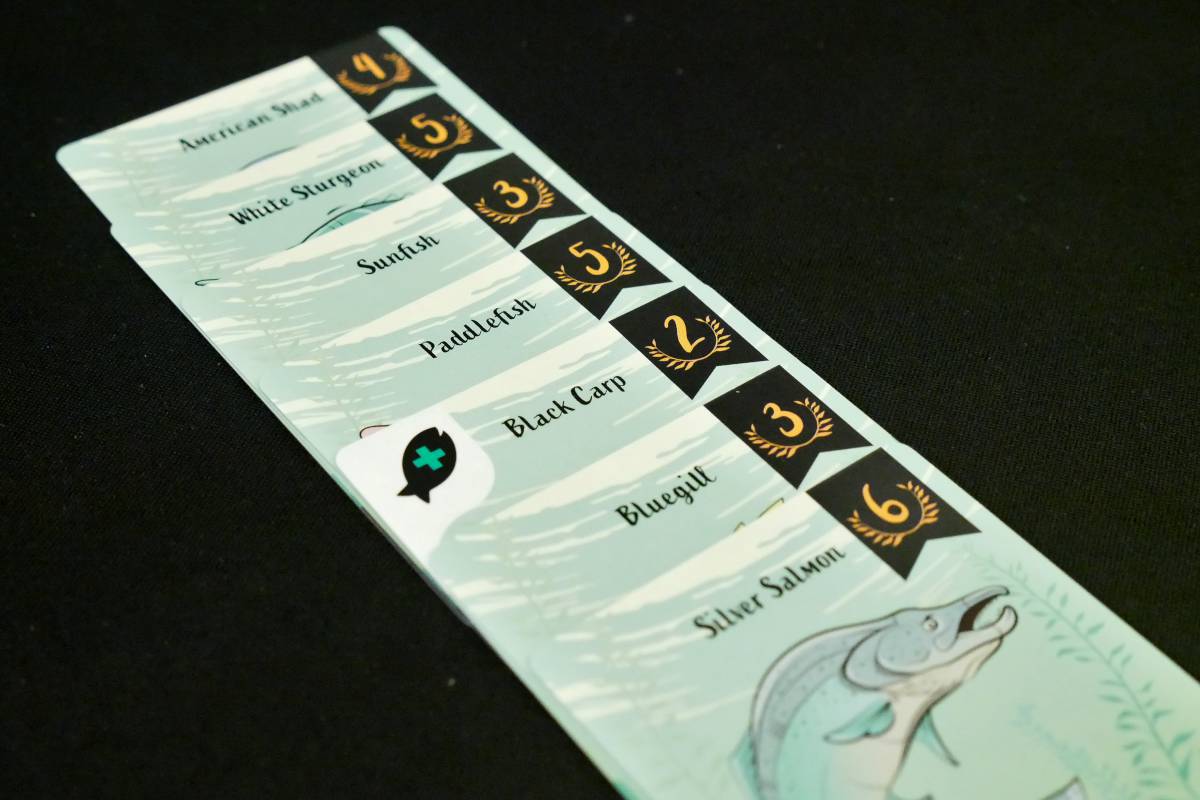
Core to Lure are the Fish cards. Each Fish card has a point value, a sum target, and dice requirements:
- The point value is how many points you earn at the end of the game for having caught this Fish card.
- The sum target is the minimum you must roll with your dice to catch that Fish card. You must meet or exceed the sum target.
- The dice requirements are specific die values that must be among your rolled dice to catch that Fish card.
At the start of every round, new Fish cards are revealed from the deck and added to the current pool of active Fish. (Two new Fish every round at 2 or 3 players, three new Fish at 4 or 5 players.)
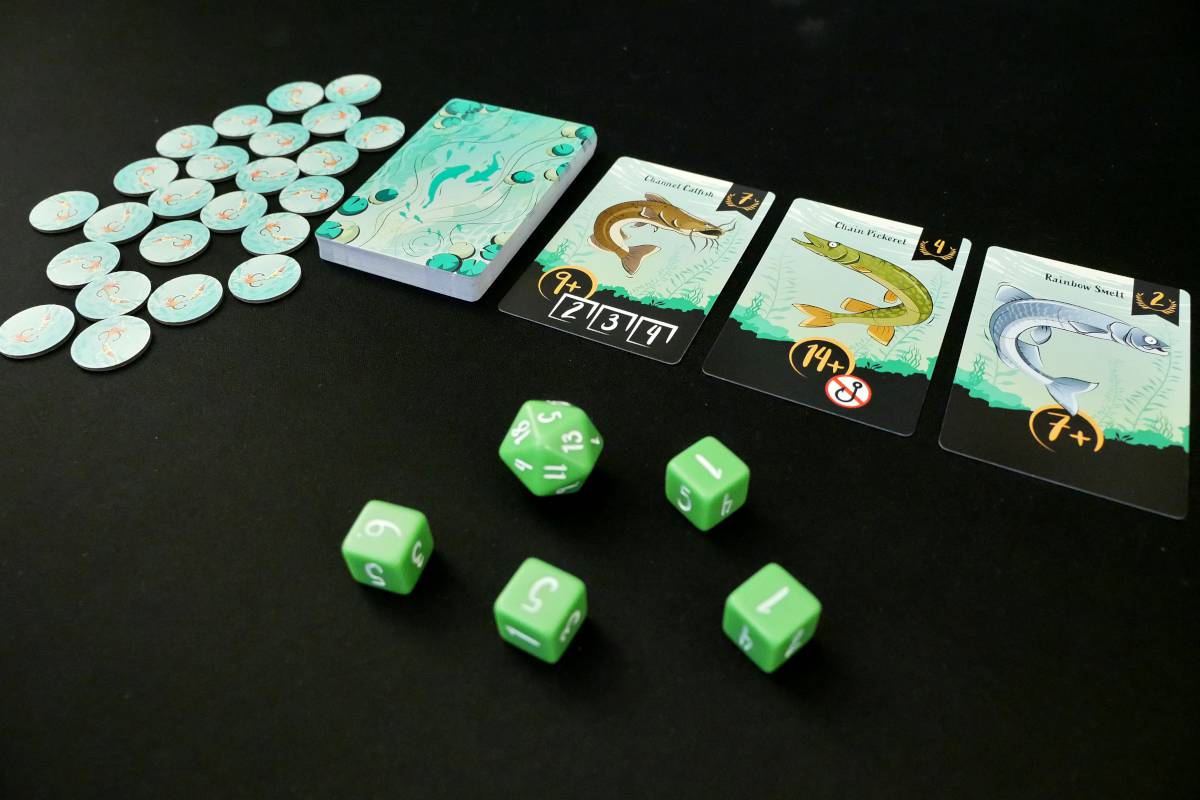
When you roll your dice, you catch ALL the active Fish that match your dice results! If you don't catch any Fish for any reason, you gain a Lure token as consolation. Most of the time, though, you will catch something.
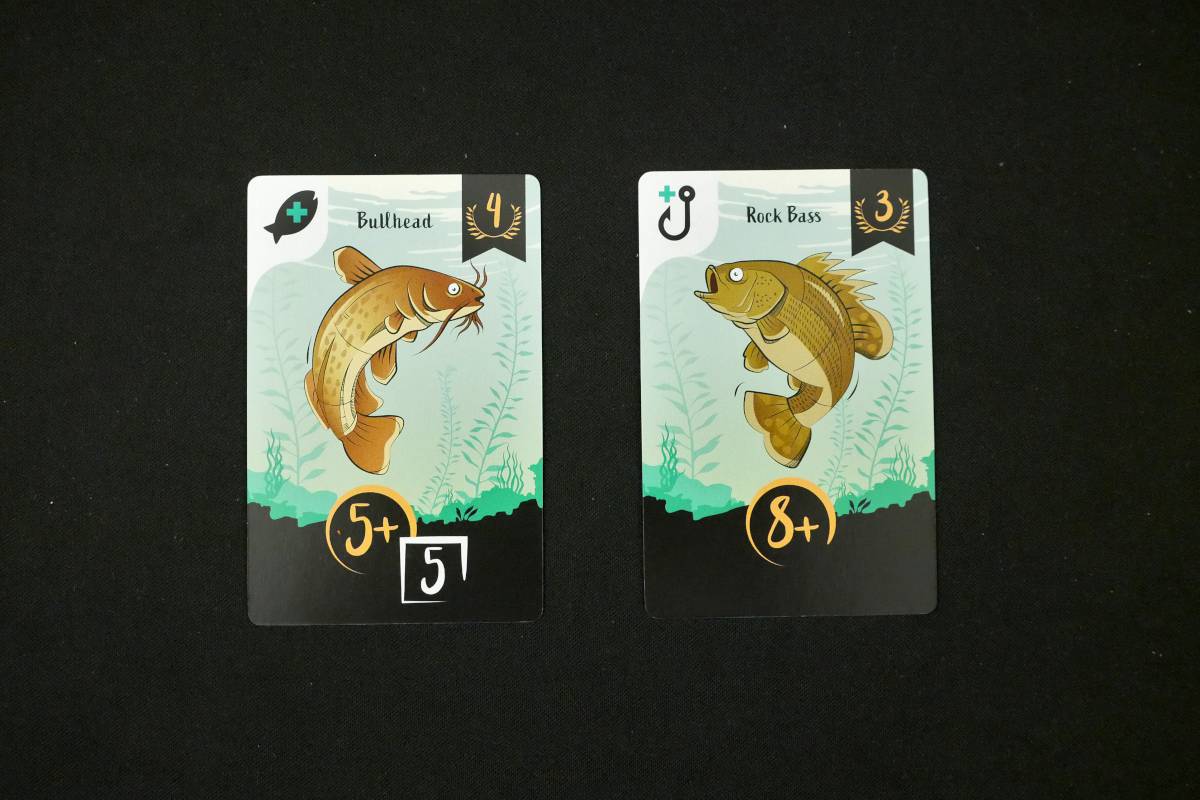
A few of the Fish cards have special actions when they're drawn, either causing an extra Fish card to be revealed that round, or granting every player a free Lure token. While these actions don't happen often, they do spice things up ever so slightly—a nice little bonus. (The special actions are at the top-left corner of each card.)

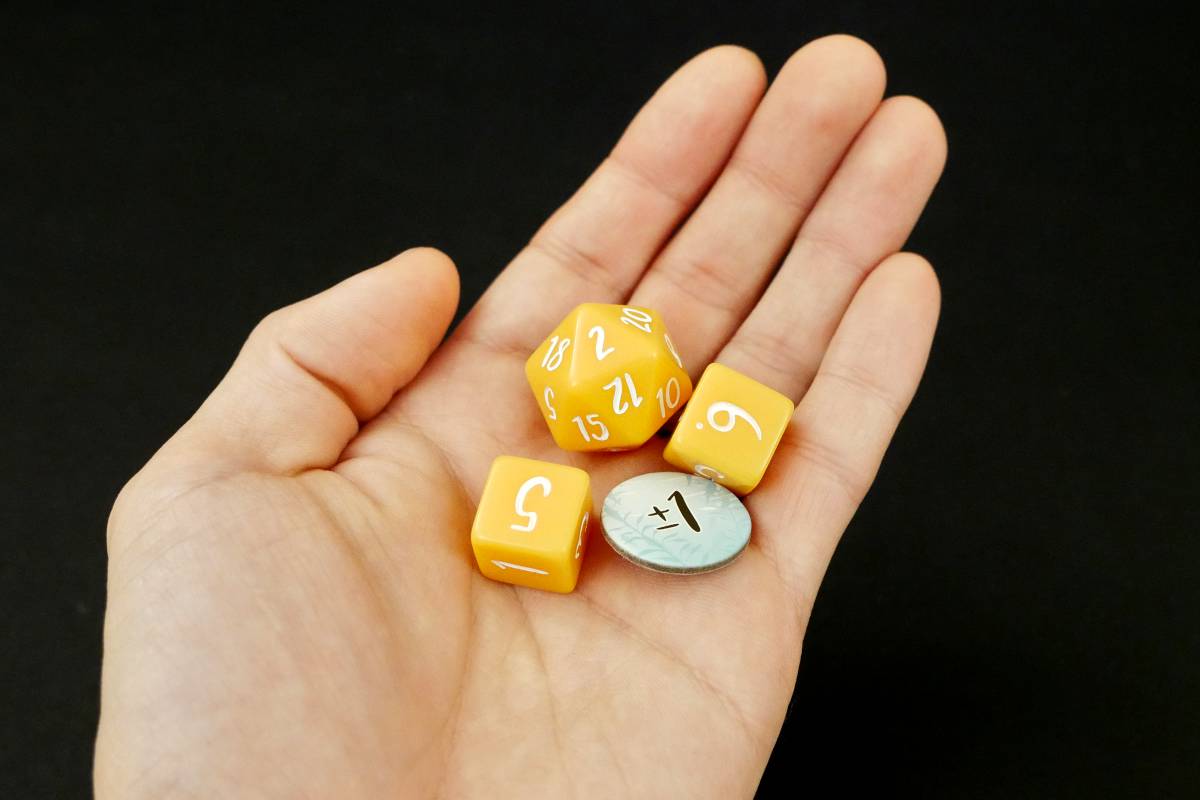
There is no fixed turn order in Lure, and this is where the game stands out as unique. Every round, each player secretly bids which dice they want to use, and then all bids are simultaneously revealed. The round's turn order is determined by each player's number of dice bid, from fewest to most. For example, if James bid 3 dice, Max bid 6 dice, and Zeke bid 5 dice, then turn order that round is James, Zeke, Max.
In the case of a tie, all tied players roll at the same time, and then turn order between them is determined by their final sums, from lowest to highest. For example, if James and Max both tied with a bid of 4 dice and they each rolled 15 and 12, respectively, then Max goes first followed by James.
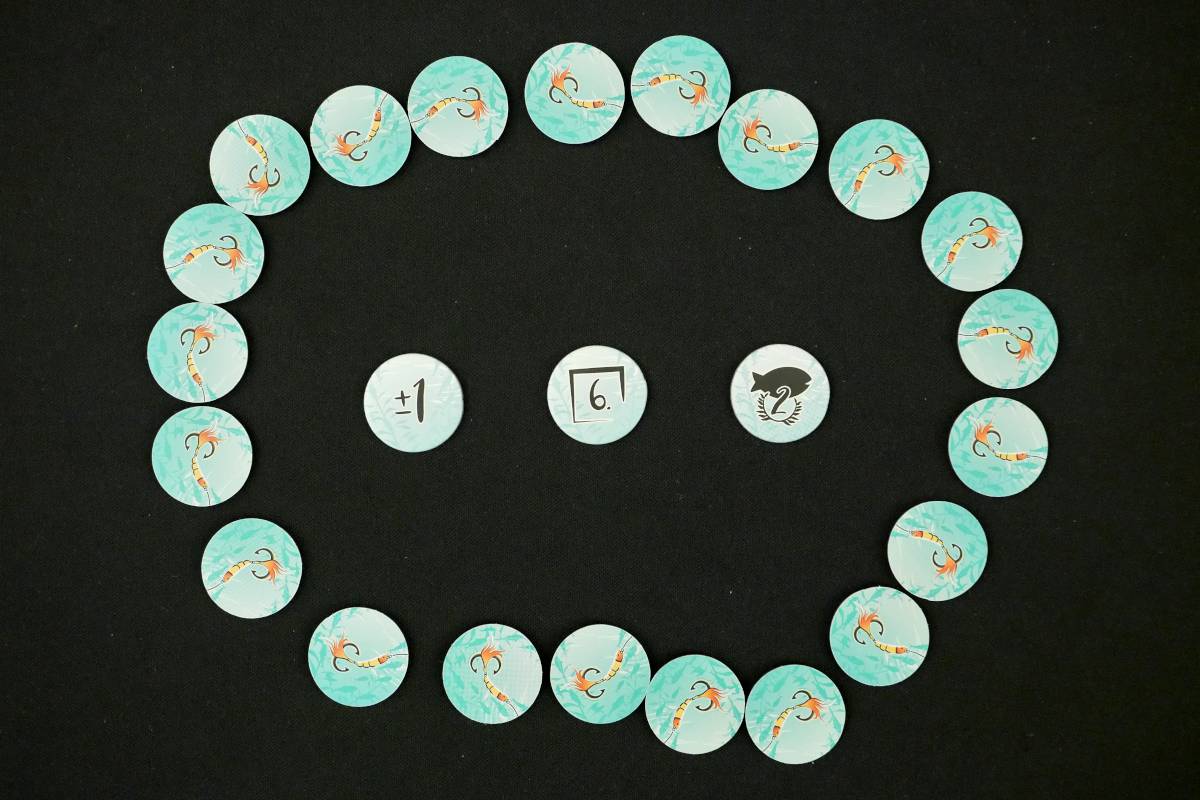
When bidding, you can also include Lure tokens with your dice. These Lure tokens aren't considered when determining turn order (except during a tie), but they do help you modify your dice rolls and get more out of your turn. There are three types of Lure tokens:
- Adjust Lures allow you to adjust a die result up or down by 1.
- Extra Die Lures are added to your dice roll sum and count towards the dice requirements of Fish cards.
- Boast Lures are extra points, but they're only scored if you successfully catch a Fish in the round they're used.
When your turn is over, all Lure tokens in your bid are discarded—even the unused ones. For example, if your bid included an Adjust Lure but you didn't use it to adjust any of your dice that turn, you still lose it.
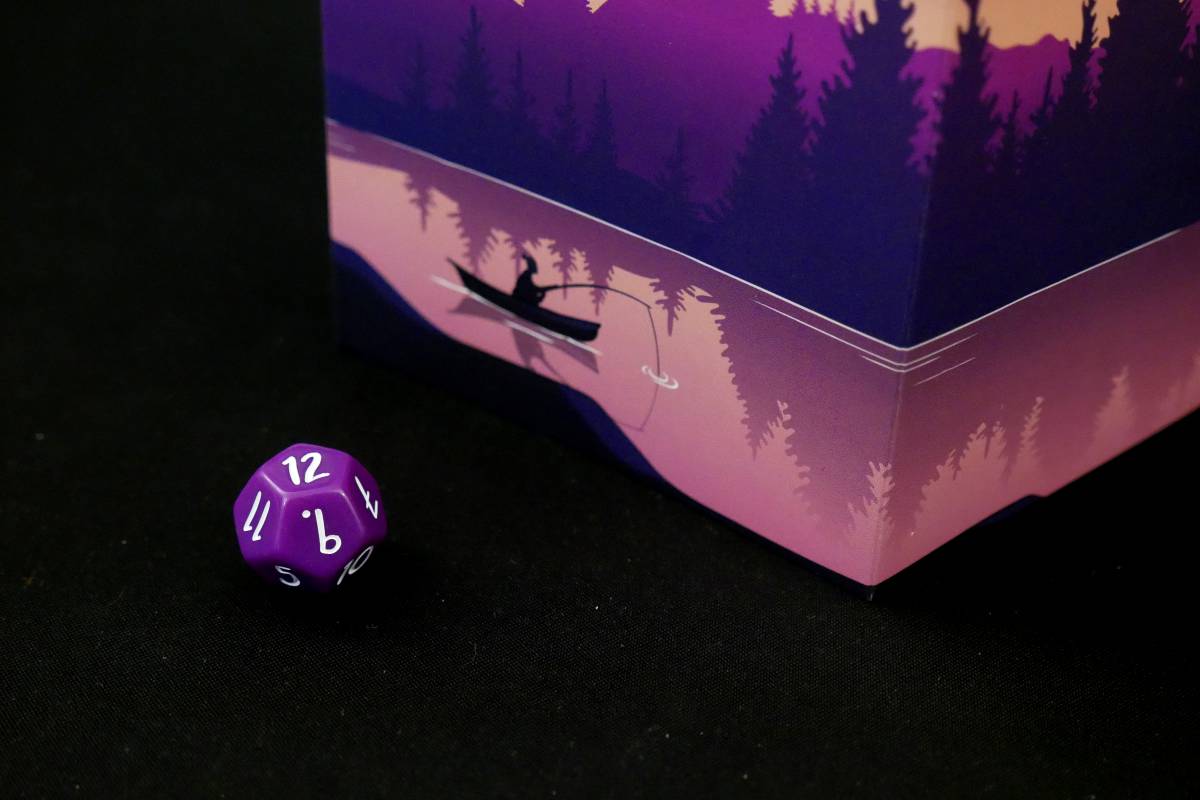
Now, remember the special D12 and D20 dice I mentioned earlier? These are great for hitting high sum targets on Fish cards, but there's a catch: special dice always go on cooldown for 1 round, and that's true whether you actually get to roll them or not. A special die is designated as "on cooldown" by placing it in front of the player's shield.
For example, if I bid 6 dice and one of them is the D20, but all of the active Fish cards end up being caught before it's my turn, then the D20 still goes on cooldown for 1 round. At the end of my turn, any special dice that were previously on cooldown are reclaimed.
Lure keeps going like this—bidding, rolling, and catching—until the last Fish card in the deck is revealed at the start of the round, which marks the final round. When it ends, whoever has the most points wins!
Setup and Table Footprint
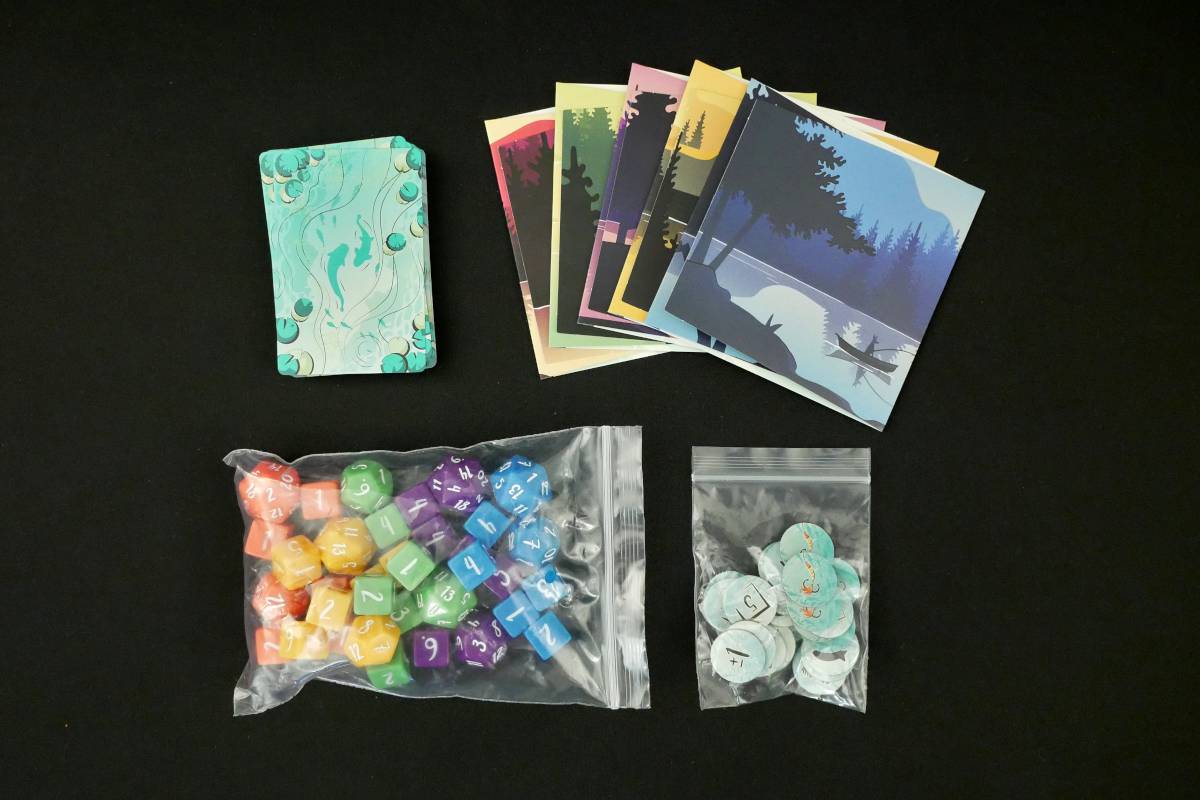
Lure is a breeze to set up and play, which is perfect for a filler-type game like this. Is it as quick and painless as a game that's only a deck of cards, like Love Letter or Quiddler? No, but it's close.
Here's how easy it is from box to table:
- Each player takes a shield and matching set of dice.
- Shuffle the Fish deck. If playing with 2 or 3 players, remove 10 cards.
- Shuffle the Lure tokens and flip them all face-down.
That's it! You're ready to play. It only takes a few minutes max, and the reset (if you decide to play again right away) is even quicker. It's also similarly fast to pack up and put away—just do it all in reverse.
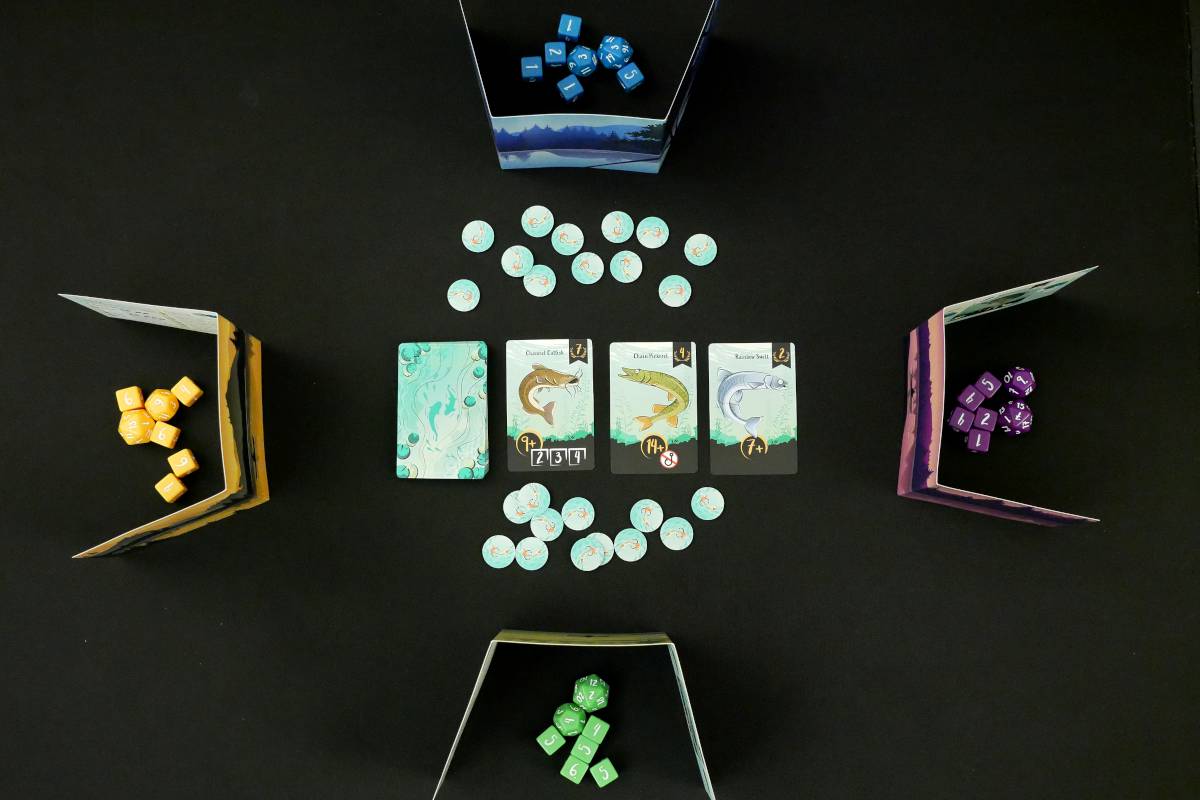
I've said it in past reviews and I'll say it again: games with small table footprints are my jam, and Lure is one of those games. It's a pretty compact experience that can fit on any table, as all you need is a little bit of personal space for each player's shield and dice, plus a small central area for the Fish deck, Fish cards, and Lure tokens.
Learning Curve
Lure is in Allplay's "1-Minute to Teach" collection, but that's a bit of a stretch. Maybe that's true if you're teaching it to someone who's well-versed in board games, but it'll most likely take a few more minutes than that. Still, it's an easy, accessible game without many moving parts.
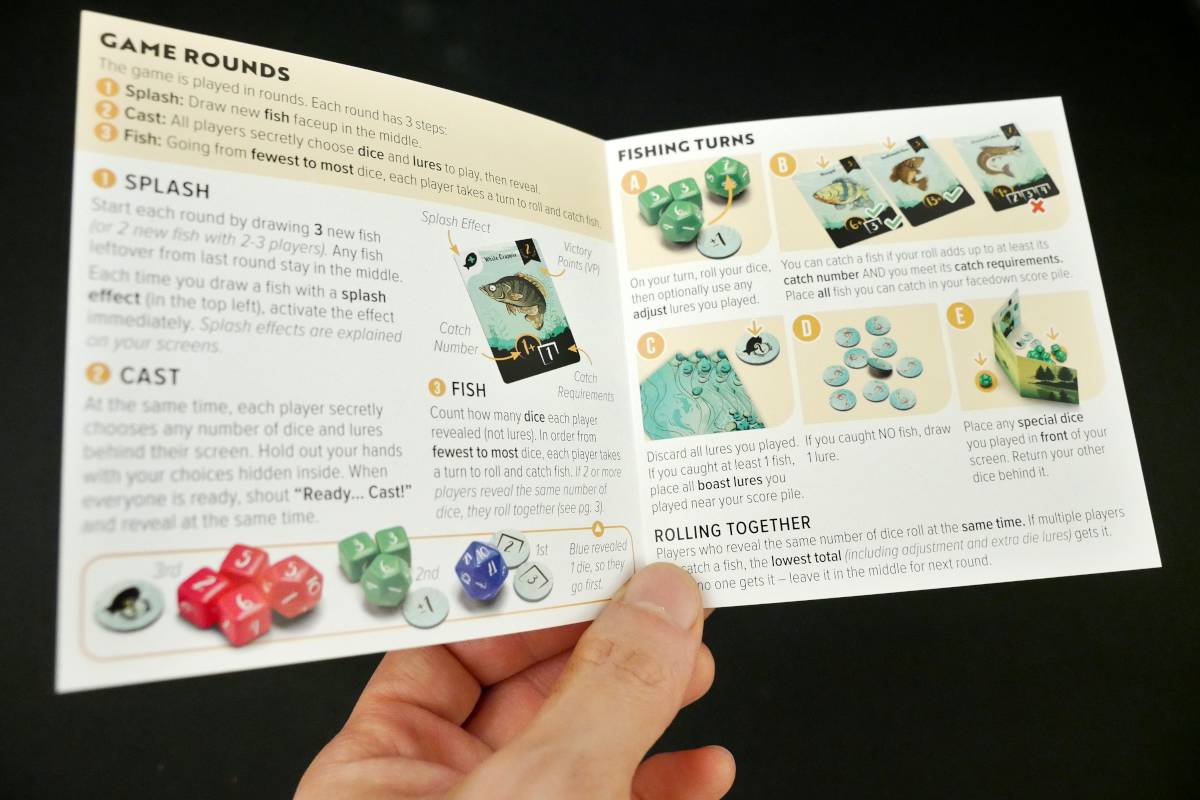
The Fish cards and their requirements are pretty straightforward, as are the Lure tokens and their effects. But when it comes to blind bidding the dice and putting special dice on cooldown, non-gamers might get tripped up—at least for the first couple of rounds. The great thing about Lure is that it will click pretty fast, and even non-gamers can eventually pick it up.
But will non-gamers be able to play it well? Will they be able to enjoy it? That's harder to say because the strategy in Lure is opaque. Read more about this down below in the "Decision Space" section.
Game Experience
Decision Space
Let's be clear up front: Lure is a lightweight game. It doesn't have that much depth, complexity, or even strategy to it. Rather, it's a casual sit-back-and-see-what-happens style game, with just enough player agency to keep it engaging from round to round and keep you invested every turn.
When you're sitting there at the start of a new round, there might be a few things going through your head. First, what Fish are out there and which ones can you catch? This will be the factor that anchors your decision on how many dice to bid. If you see two easy 3-pointers, you might opt for fewer dice so you can go first and secure them—but if there's a juicy 7-pointer, you might go big with all your dice in an attempt to catch that.
Second, how do you expect others to bid? The active Fish pool doesn't just influence how you bid, but also how others bid. You can use that information to adjust your bidding accordingly, and it also helps if you have insight into each player's personality. Is someone a luck-pusher? Maybe you play it safe, or maybe you use that as an opportunity to push some luck yourself. Is someone too conservative? Maybe you sweep up after them.
That said, while there's a bit of a mind game to Lure, it's honestly rather minor. Don't go into this thinking it'll be a psychological battle with leering side glances and sneakery. Some rounds I don't even consider what others might be bidding and just play the odds against the Fish.
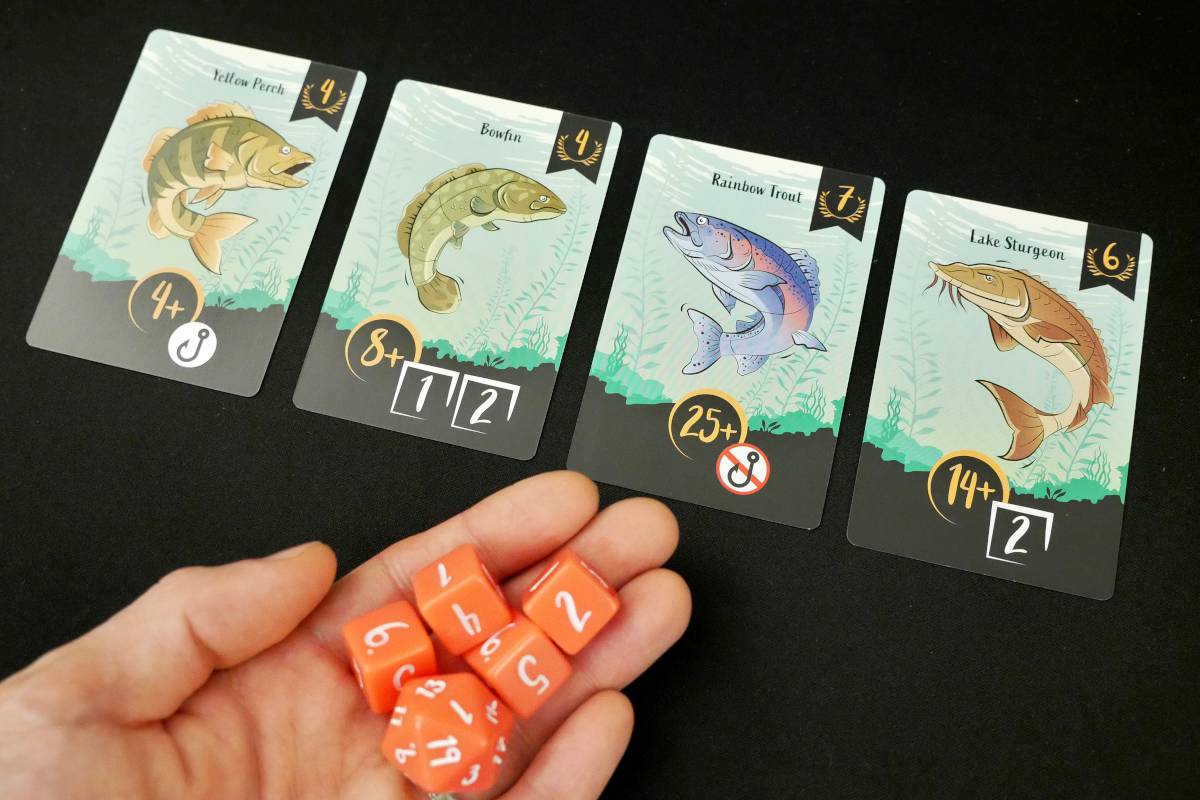
Third, which dice are you going to bid? The special D12 and D20 dice help you to hit high sum targets on Fish, while the normal D6 dice are great for meeting dice requirements. If you've decided to bid three dice, there's a big difference between three D6 versus two D6 and a D20. The "right" choice will depend on what Fish are out there and which ones you're aiming for, plus whether you think you'll need those special dice next round.
Fourth, when are you going to use your Lures? Because there's always a small risk to using a Lure, you don't want to be frivolous with them. Do you prefer to stock up and use them all at once? Or use them one at a time to secure small wins here and there? Either way, your Lures get discarded whether they end up used or not, so you'll want to time them well—perhaps when the active Fish pool is large with high-pointers.
Again, Lure is a lot simpler and more chill than I'm making it sound. You don't actually have to think about all of the above to have a good time—the decisions are small and low-stakes, so you could even turn your brain off if you want to. There's no analysis paralysis or brain burniness in Lure. In fact, a lot of it comes down to gut decisions and intuition.
Luck Factor
Yes, there's definitely luck in Lure, but it's a good balance of input and output randomness. You have ways to mitigate and mold luck in your favor, but sometimes bad luck is still just bad luck. You'll run into surprising moments when someone gets a crazy roll with few dice, along with devastating moments when someone rolls all 7 dice and catches nothing. Things don't always go your way—and that's part of the game.
For example, the Fish cards that show up every round. Sometimes you spend your big D12 and D20 dice only for two big juicy Fish to plop onto the table next round. And then there are the randomly drawn Lure tokens. Someone who lucks into three Boast Lures could get a real leg up just because (although the Lure tokens aren't that powerful, so this is minor). These are the "input randomness" that you're dealing with every round.
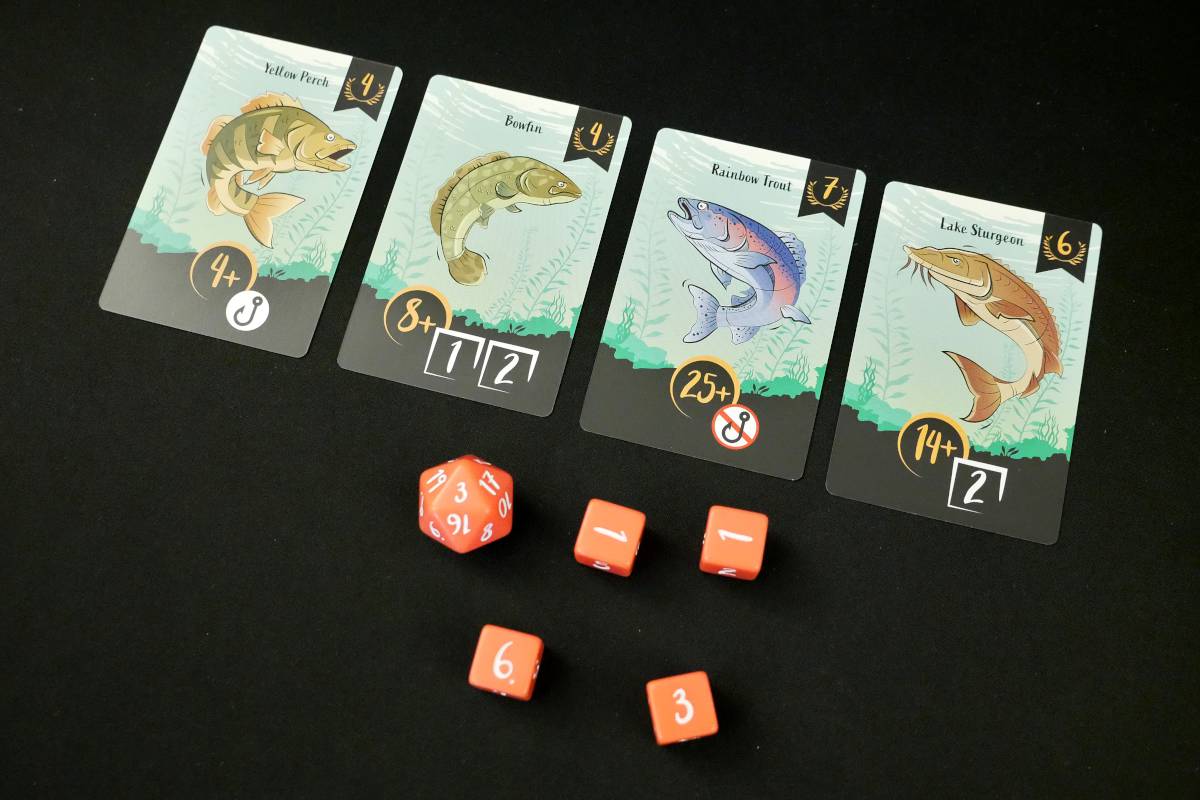
You also have "output randomness" in the dice rolls. Like I said, you could potentially bid all 7 dice and roll a 1 on each die, catching nothing and putting both special dice on cooldown. Or you could bid three Lures and roll so badly that none of your Lures help to meet any Fish requirements. At the end of the day, Lure comes down to dice rolls—your enjoyment will depend on how much you like or dislike the capriciousness of dice.
Fortunately, bad luck isn't too punishing in Lure. The worst that can happen is you catch nothing, lose a Lure token or two, and maybe put your special dice on cooldown. You get a consolation Lure token for catching no Fish, you'll get your special dice back soon enough, and you're still in it next round. You don't fall behind much, even with a terrible roll.
I also need to mention that Lure isn't just a lucky game but a push-your-luck game. There are actually three small layers of luck-pushing, but they come together to form an intriguing and engaging flow, which is why I enjoy Lure quite a bit (as a fan of push-your-luck in general).
- When bidding dice: How low are you willing to go? Is three dice low enough to go first? Would three dice be enough to catch the available Fish? Would you rather go last, leaving the small fry for others while trying to snag the big Fish with a big five-dice roll?
- When bidding special dice: Are you going to risk it this turn or same them for a better Fish pool? If you do bid your special dice, are you going to swing it with fewer dice so you have a better chance at using them? Or are you going to risk it even more with a larger bid? Remember, even if you don't get to use them, special dice still go on cooldown...
- When bidding Lure tokens: Is this the right turn to use your Extra Die Lure to secure that big 7-point Fish? Or are you going to try gaining another Lure token this turn so you can go for that Fish next turn? But what if someone else catches it before then? Same with Boast Lures, which are less risky when used to catch the easier small Fish, but maybe you want to go for it with a juicier Fish anyway? And like the special dice, Lure tokens are lost even if you don't actually use them!
Fun Factor
Lure's small pockets of push-your-luck elevate the set collection and contract fulfillment to a higher level of engagement, and those little pangs of excitement are fun. In between the gentle gameplay, you're hit with the occasional thrills of a lucky dice roll, the sporadic frustrations of a dud roll, and the soft tension of pushing your luck in every decision.
And it's those intermittent thrilling moments that make Lure as fun as it is. I love when I go first because I bid three dice, only to hit a near-perfect roll and end up catching three of the four active Fish. Every turn is bated breath as you see how many Fish you can catch, except there's an extra layer of anticipation because you control your "handicap," so to speak. Plus, it's just satisfying to collect Fish over the course of the game.
Lure also lends to table talk, whether that's ribbing and goading during the blind auction as players decide which dice to bid, or shouts of victory and disbelief as someone somehow lands a huge catch with little. I love those moments and they elevate the overall experience for me.
Pacing
Lure plays fast and doesn't outstay its welcome. You're looking at a 30-card deck of Fish cards with about three of them revealed every round, plus or minus bonus Fish cards every so often. The game is over in about 9 rounds, and each round only takes a minute or two. It's snappy, it's almost simultaneous, and there's pretty much no analysis paralysis.
I'm also a fan of the punchy turn-to-turn flow. Every round is a soft rush of hope as you watch for the dice and see what you catch (or don't catch). Lure is seriously just a series of dice rolls, all while hoping you get to roll before all the Fish are taken. And when you do land a Fish? It's almost as exciting as landing one in real life. Even if you miss three or four turns in a row, landing that fish in the fifth round finally gives you that rush—and it's great.
Those quick turns pass by fast, and soon enough the pond is empty and you're tallying up what you caught. Scoring is straightforward, which is a plus for a game like this, and it's easy enough to reset and play again.
Player Interaction
There are two elements of player interaction in Lure: outwitting your opponents in the blind auction, and racing to catch Fish. You'll think about how everyone else might bid when bidding your dice for turn order, and you'll have to decide whether to undercut them or intentionally bid higher depending on the Fish out there.
That said, Lure isn't a highly interactive game. The auction and race are somewhat important, but I mainly feel like I'm playing against the game—the other players are there to get in my way before I'm able to roll, but once I'm rolling, it's just me against the Fish. In that sense, I'd say the interaction in Lure is indirect and not very mean at all.
Player Counts
I've played Lure at 2, 3, and 4 players and enjoyed it at every one of those player counts. There are some differences as player count scales up, but the core gameplay of rolling against the Fish and seeing what you catch is basically the same no matter what.
What are those differences? Mainly, the randomness is amplified with more players and the blind bidding feels more arbitrary. Going last out of 4 players can suck, especially when you're left with only one Fish (or even none). And bad dice rolls can feel more punishing when everyone else is catching Fish but you're still lagging behind.
All in all, I prefer to play it at 2 players (me and my wife). Lure is at its most chill when it's just the two of you at the pond, going back and forth without too much at stake. I also really like it at 3 players! But I have no desire to play it again at 4 players or even try it with 5 players.
Fiddliness
Lure isn't fiddly at all. The dice are fun to handle, the Lure tokens are simple enough, and the shields don't get in the way. None of the components in this game feel extraneous or gratuitous, and there's no manual upkeep or unwieldy manipulation. It's a lovely, pleasant time!
Replayability
Lure isn't a big game, neither physically nor in gameplay. There isn't a lot of depth to explore. One play and you'll see everything that it has to offer. After all, there are only 30 Fish cards and you see all of them in a single game (except in 2 or 3 player games where 10 are randomly removed). You blind bid, roll, and see what happens, round after round after round.
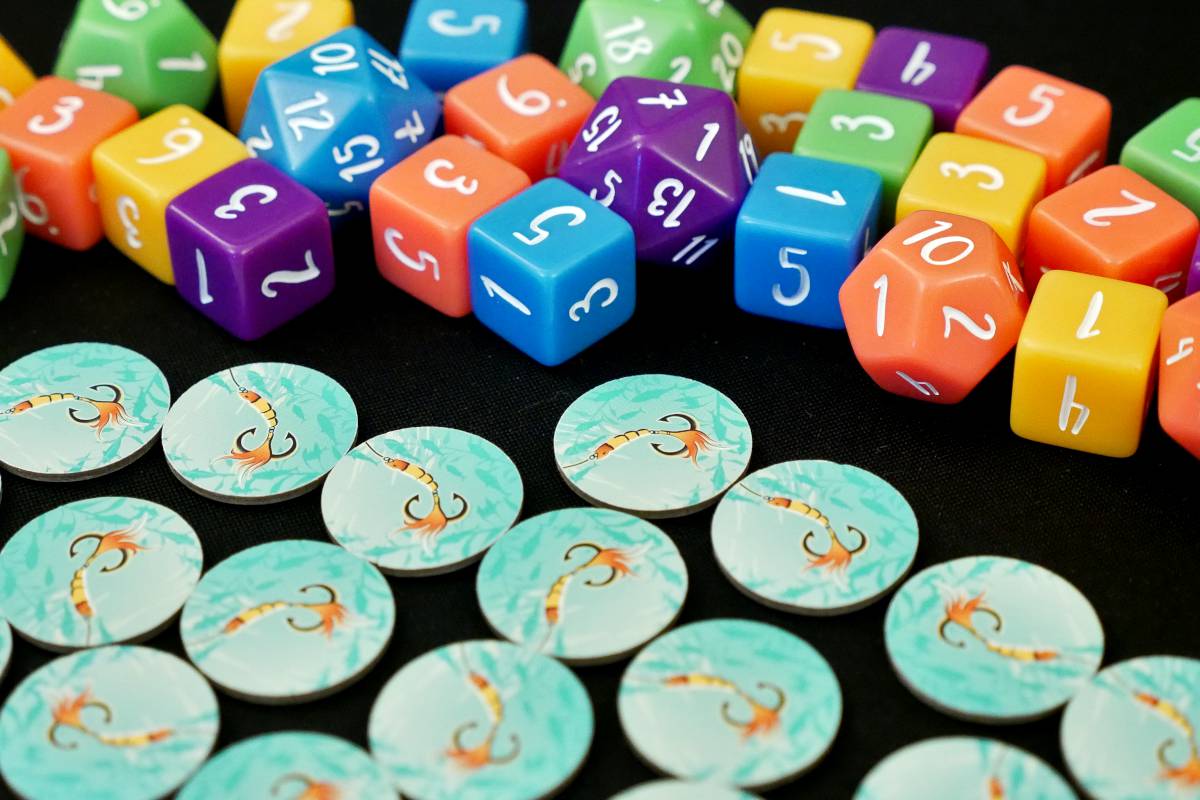
But Lure is a great filler to bust out every so often. Sure, I'm not going to play it all night long. In fact, I might play it twice in a row, but probably not more than that because it lacks longevity and staying power. In that sense, it may not be "replayable" or "addictive" in the usual sense—but I love coming back to it for a hit every once in a while.
Lure is a fantastic "comfort" game for me. When I just want to kill 20 minutes without thinking too hard, with a game that has a pleasant mixture of soft tension and satisfying tactility, Lure is the game I look to. It evokes real-world fishing: you don't always walk away from a fishing session with a full box of catches, but it's always a good time nonetheless.
Production Quality
While Lure didn't wow me at first glance, it did have me nodding my head in pure appreciation after I'd played it. This is how I like games to be produced. It looks good, it feels good, it doesn't go overboard. It's pleasant, inviting, and doesn't scare you away. I'm quietly impressed by Lure's production.
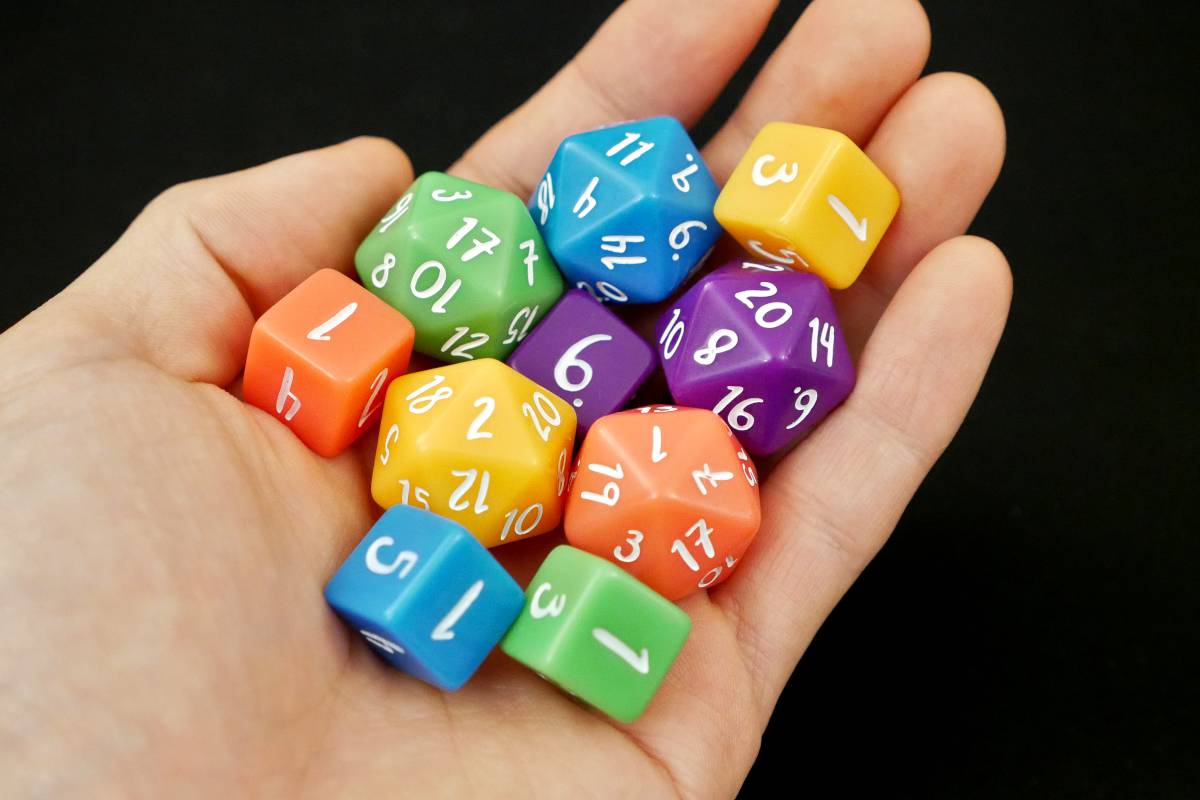
I love the dice color palette! That's one of the first things that struck me when I opened Lure onto my table. I'm not exactly sure what the term would be, but I'm going to call it "dark pastel." The five colors—blue, green, pink, purple, yellow—are bold yet soft, neither stark nor faint. It's aesthetically pleasing and even a bit cozy. A visual treat, if you ask me. I wish more games would use this style of color for player markers and the like.
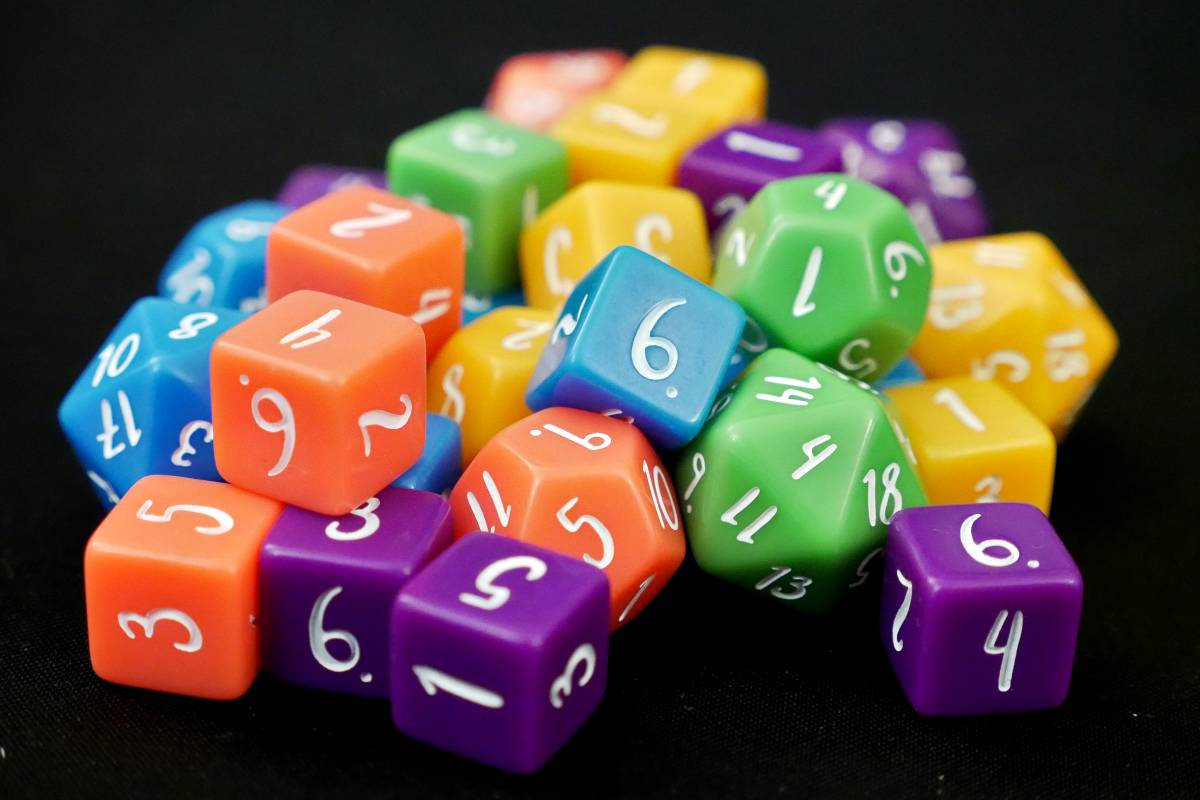
The dice are good quality and fun to handle. They're made of plastic, so they're run-of-the-mill dice in one sense. But the plastic has heft to it, so they feel good to shake in my hands. I find they're perfectly sized—my hands are neither big nor small, mind you—so I can hold them comfortably during the bidding phase yet still get a satisfying clack out of them when they roll. The dice are everything here and Allplay struck a good balance with them.
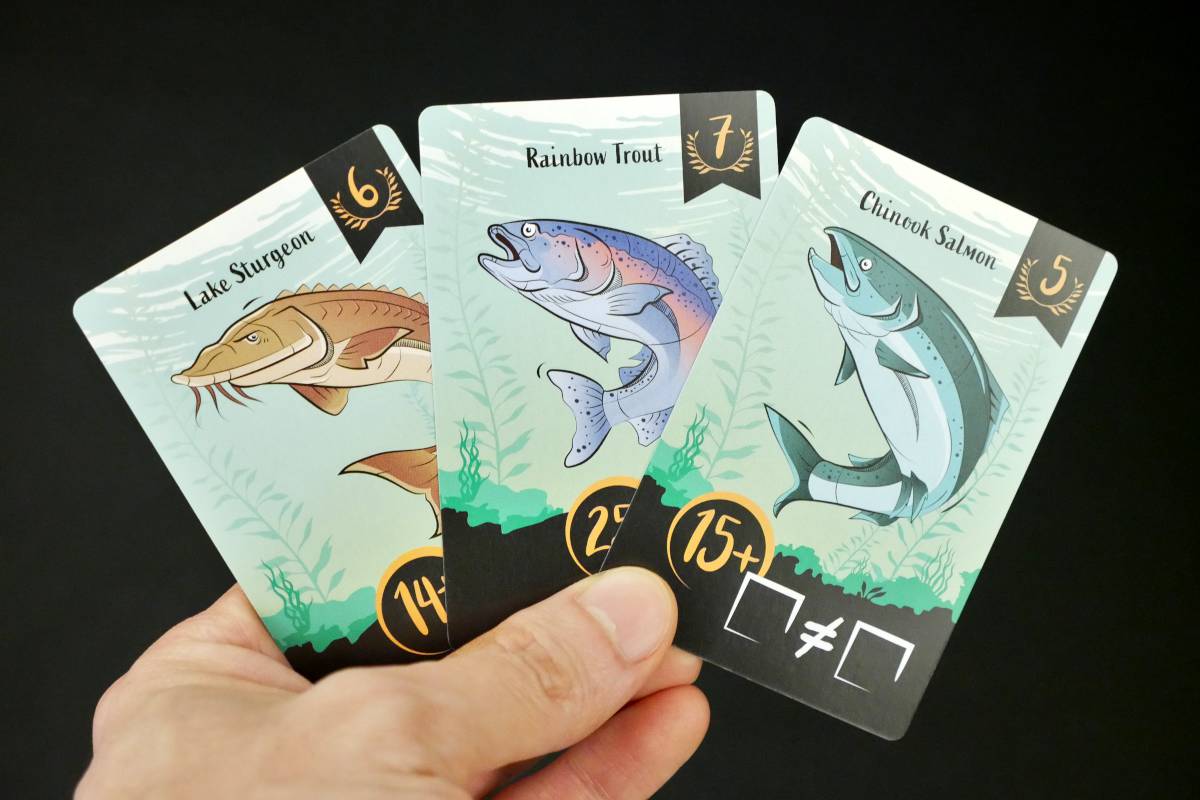
It took a few games, but the art and card design grew on me. I didn't like the box art, the fish art, the stark black on the cards, or the iconography style at first. But you know what? It all works pretty well and it's distinctive. Lure definitely has its own aesthetic, and I have to admit that it's kind of comforting now that I've played it so many times. The icons are intuitive, readable, and uniquely styled. I've grown to like it.
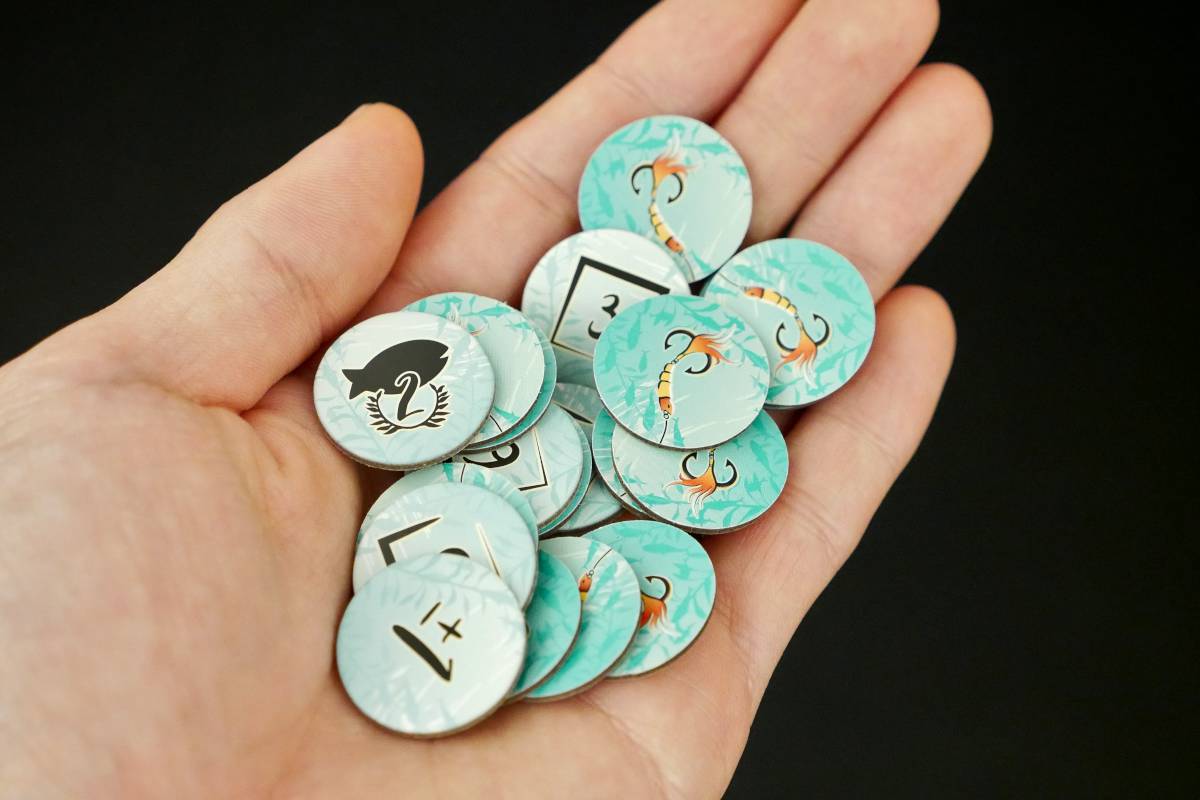
The cardboard Lure tokens are fine. These tokens only play a small role in the game, so it's fine that they're just fine. Small enough to hold comfortably in hand with the dice, but not so thin as to feel cheap. The icons are easy to read and discern. And they're practical, serving their purpose without getting in the way. Plus, it's fun to pick, flip, and see what you get.
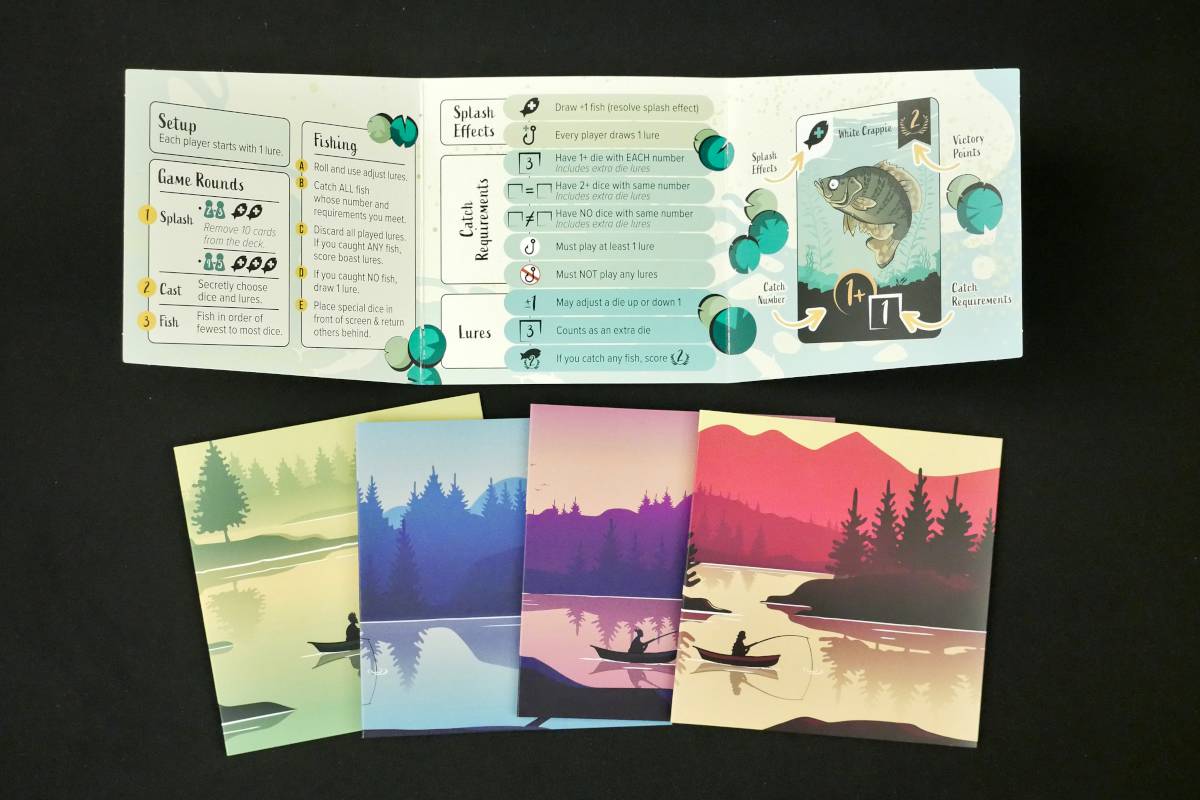
I wish the player shields were bigger, but I love how well-designed they are. Any game that involves a privacy shield instantly gets a bump up if that shield doubles as a player aid. I've seen it in games like The Search for Planet X, and there's no reason not to do so! It only makes the game better, and Lure's player shield is perfect. It tells you everything you need to know, including how to play as well as a glossary of all icons and tokens.
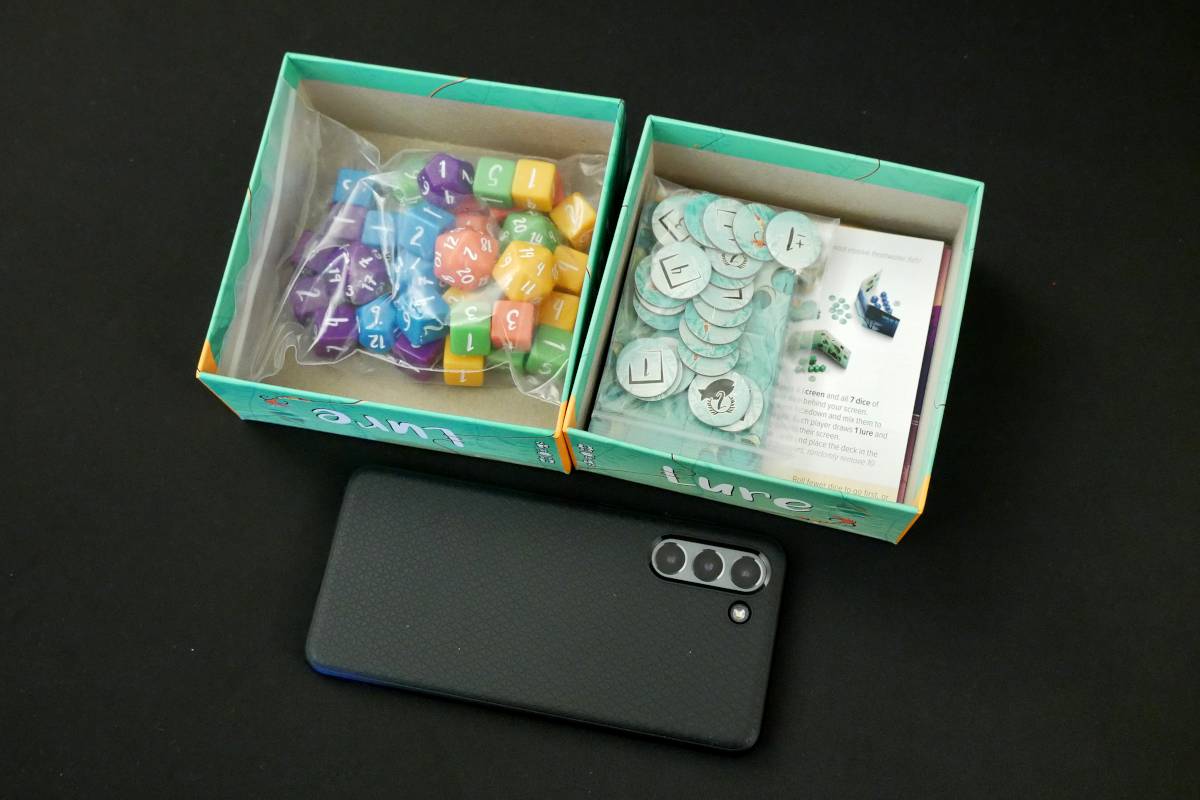
Lure is a perfect fit in Allplay's small box lineup. Technically it's in the "1-Minute to Teach" collection, but the box size is the same as the ones in their "Small Box Big Game" collection. Regardless, it's a good size. Very portable and not intimidating, with just enough space for all the components.
The Bottom Line
Lure is pretty good! It doesn't quite reach the status of "great," but it scratches an itch and fills a niche that no other game does: a low-stakes push-your-luck dice chucker that's chill yet engaging. It's one of my favorite comfort games to revisit whenever I'm in the mood for a quick and lucky filler, especially when it's just me and my wife.
Stop Buying Games
You'll Regret
Before your next game purchase, run it through this mental checklist that every seasoned gamer uses.
Free checklist, delivered instantly to your inbox.
No spam, ever. Unsubscribe in one click.