
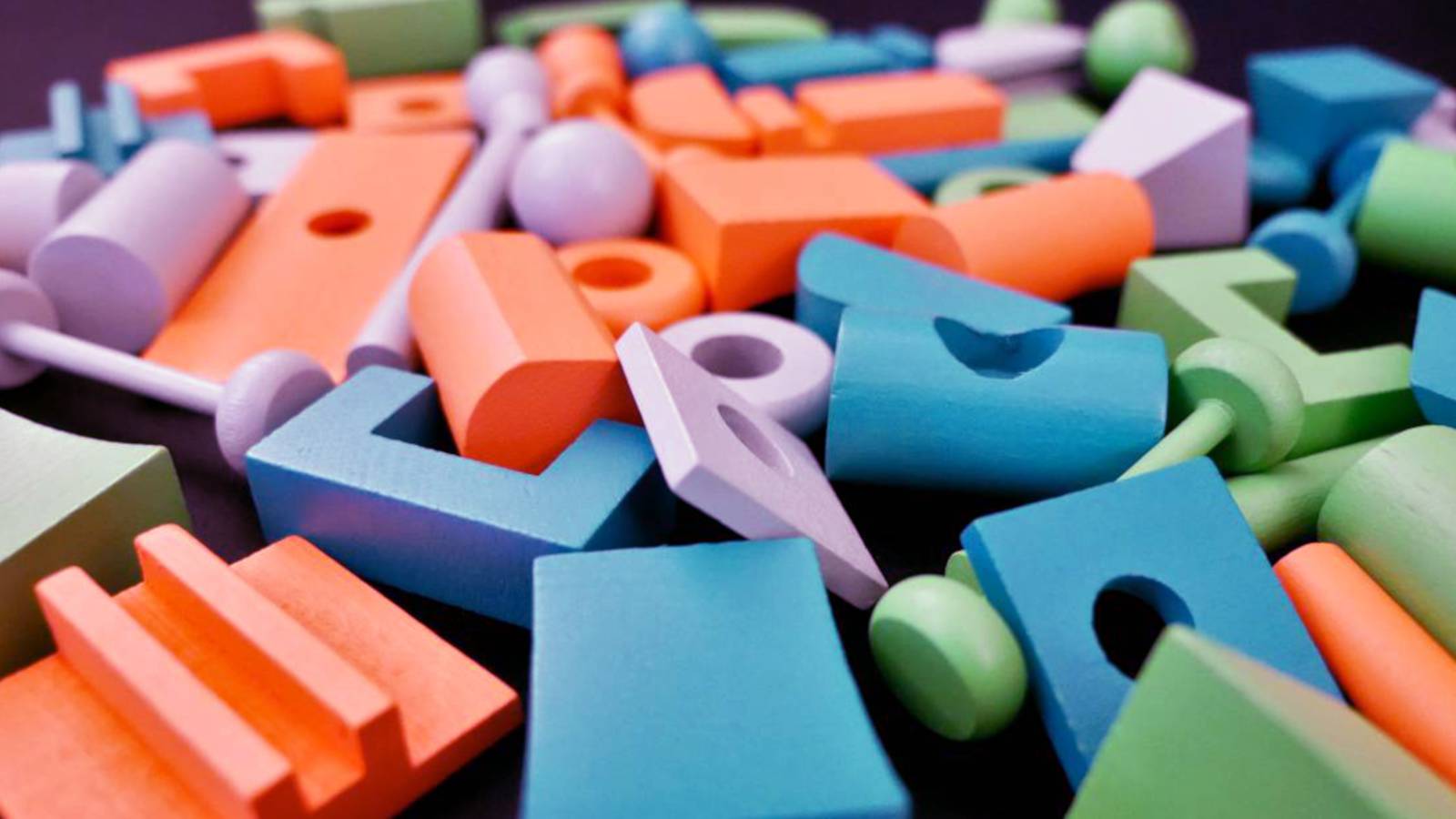
Junk Art is currently out of print.
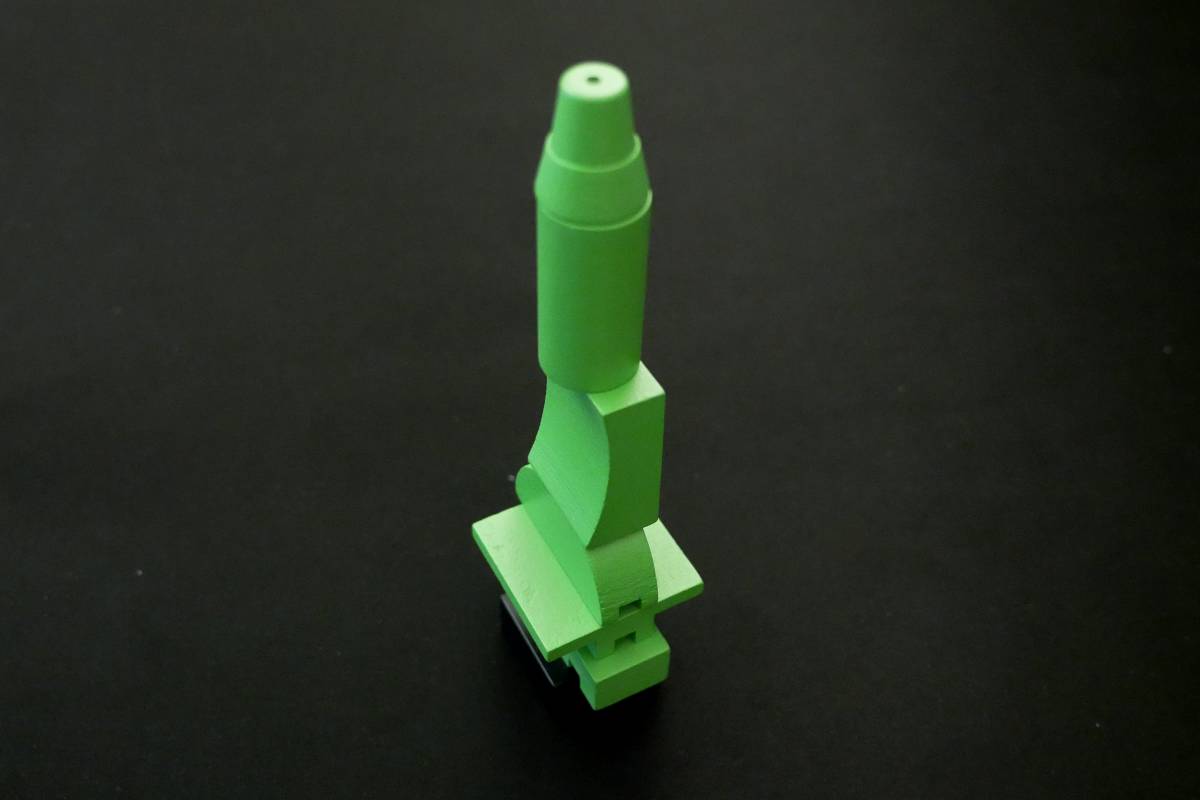
My hand shakes as I stare down my structure. I'm holding a wooden piece that looks like a tiny flower pot and I need to place it on my teetering tower of uncertainty. I'm able to gently set it down on top, and for a moment it seems good—but I see it start to lean. "Noooooo!" I've come so far, but now I'm knocked out and Jerry, the last one standing, wins.
If you've played Jenga, then you know what Junk Art is about... except there's also a sense in which you don't know at all. One glance at the game's oddly shaped pieces will have you wondering how it's possible to build anything from them. Minutes later, you'll be marveling at how high you've gone, at what you've managed to accomplish with junk... until it, of course, collapses.
What is Junk Art? How do you play? Why is it so good, even for someone who doesn't get excited about dexterity games? Here are the answers to all your questions from my experiences with this game. Is it worth adding to your collection? Let's find out!
This review is based on my own personal copy of Junk Art, which I bought new from Detective Hawk Games. Not a free review copy.
Overview
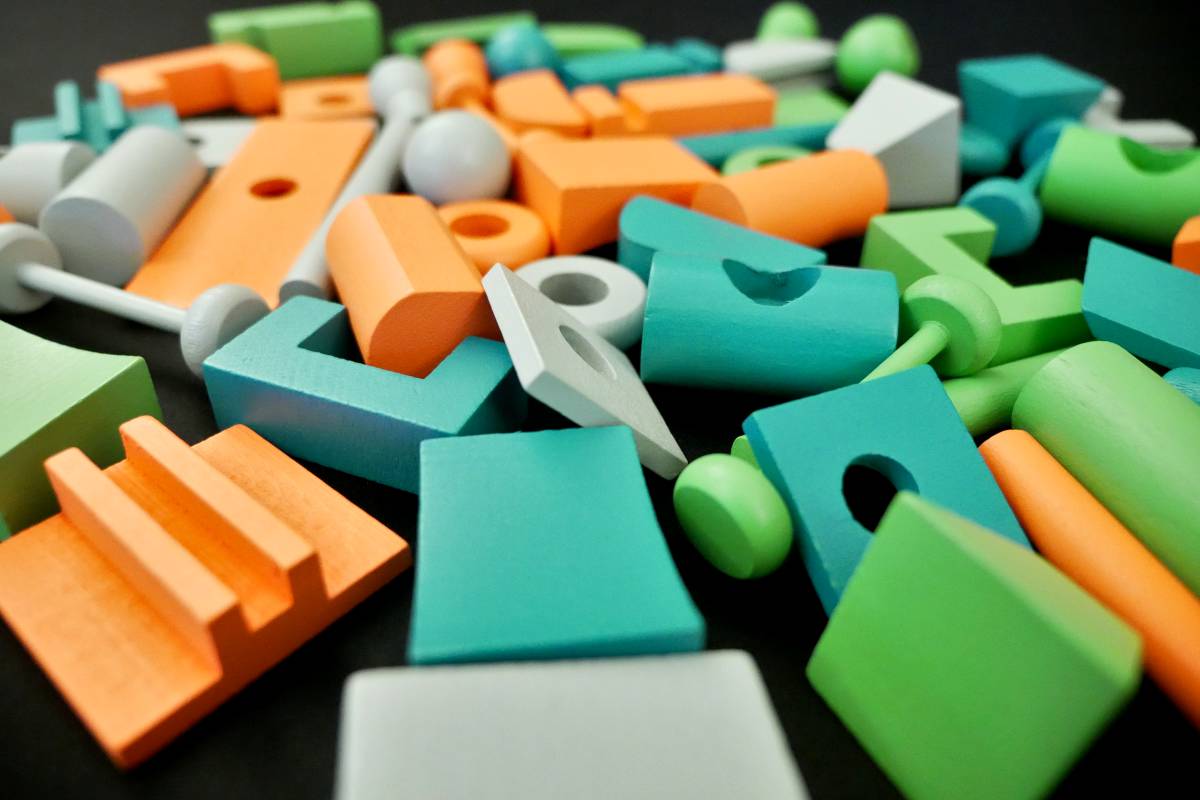
Junk Art is like Jenga except more creative, more varied, and more fun. The idea is that you're an eccentric artist who's tasked with creating "works of art" from trash. You'll be stacking oddly-shaped pieces on a pedestal to wow the audience, all while competing against other artists (i.e., other players) who are also vying to make the best point-scoring creation.
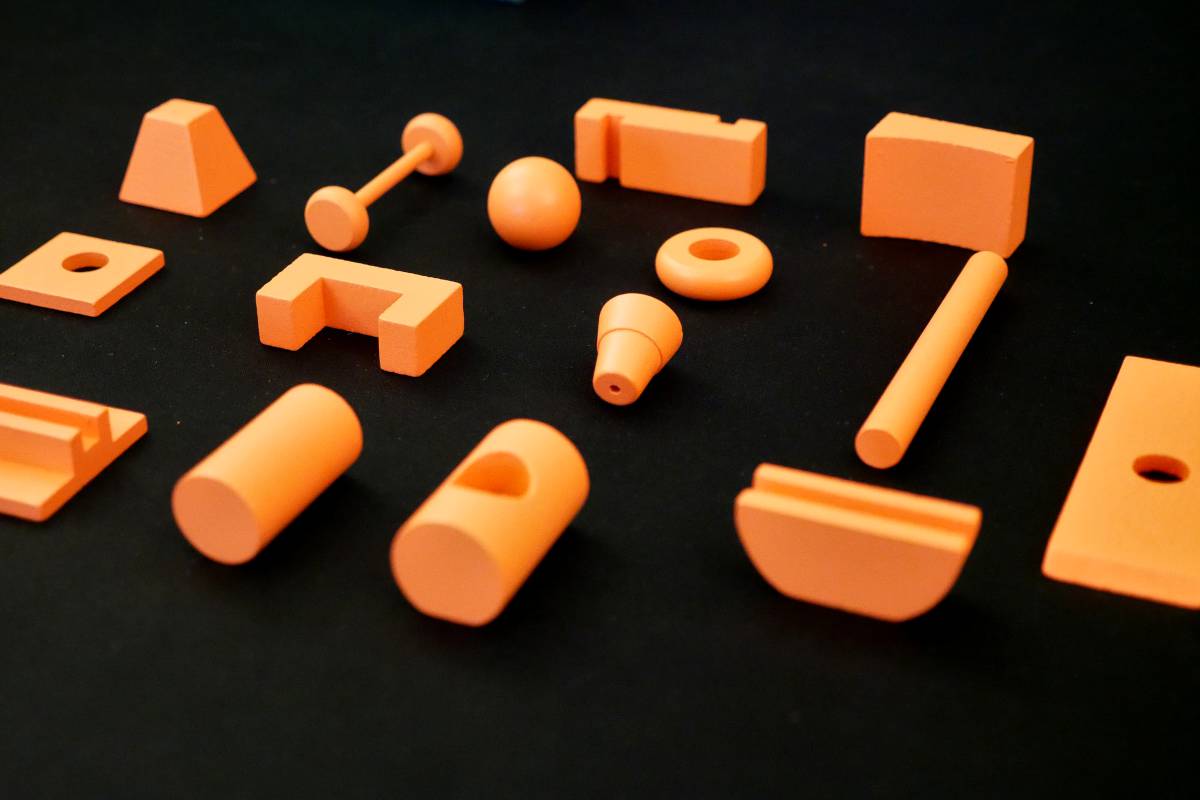
The entire game revolves around these pieces of junk, which are wooden in my version but plastic in another version. You'll see that most of the pieces are unusual and not conducive to stacking—but stacked they must be, and you'll have to figure out how to get them staying up.
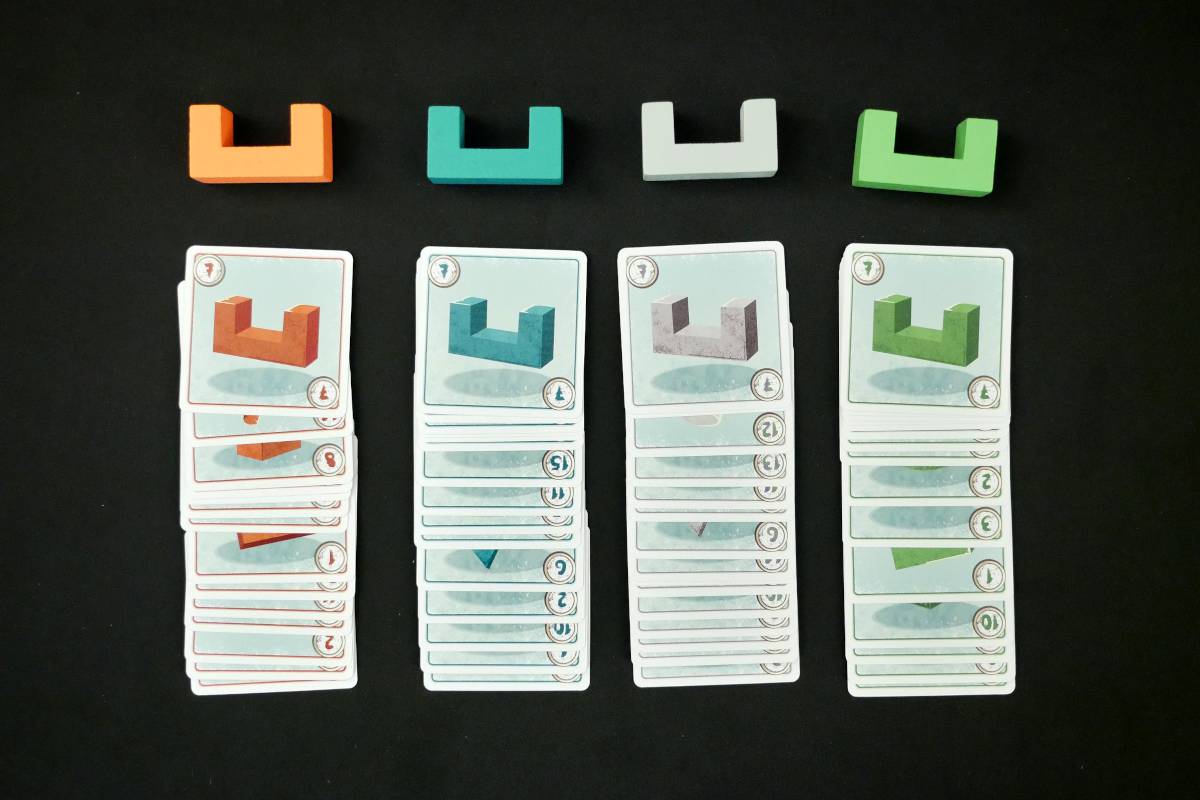
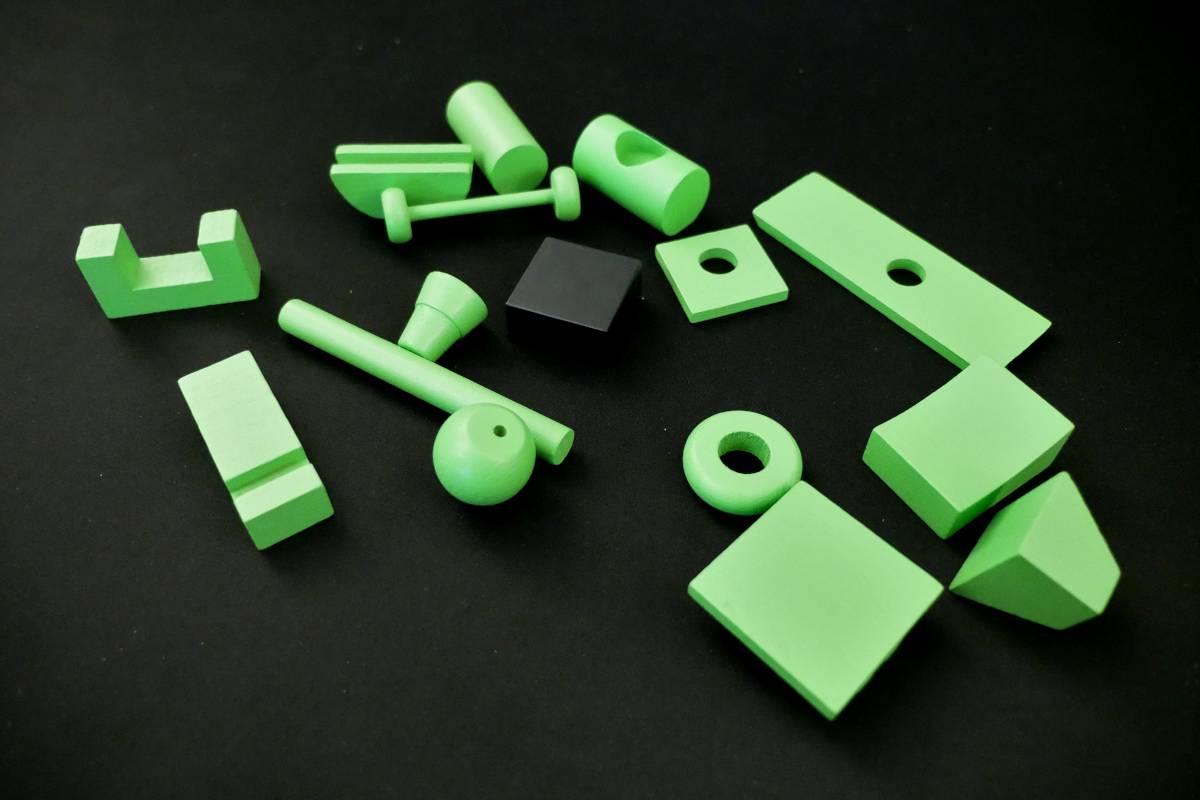
In Junk Art, there are 15 unique Junk pieces in 4 colors each (Red, Blue, Green, White). Some are flat, some are round. Some squat, some long. Some have protrusions while others have holes. And though it may seem like some pieces fit neatly together, they don't always. They're all peculiarly imperfect.
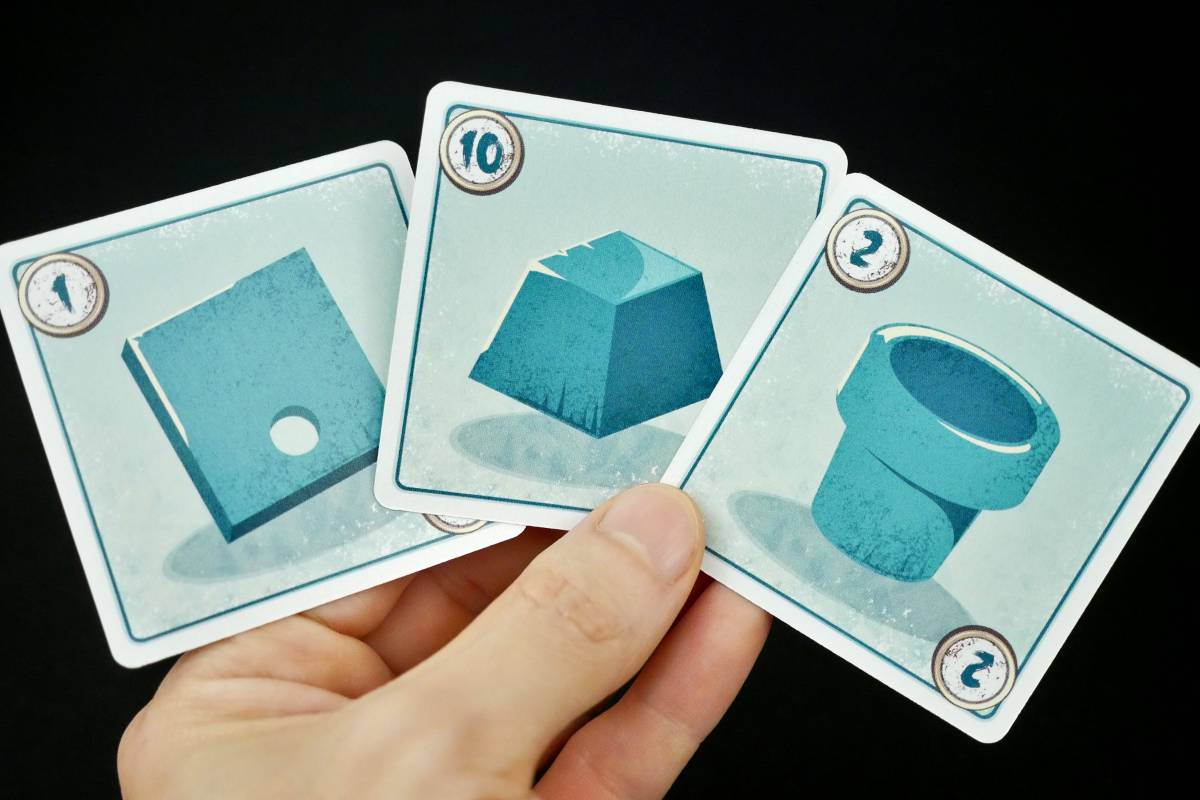
You'll also find matching Junk Art cards for every Junk piece. That means 15 Red cards, 15 Blue cards, etc. These cards are used in different ways to decide what pieces are played on each turn. It's quite clever, really. (More on this below if you're confused by what I mean.)
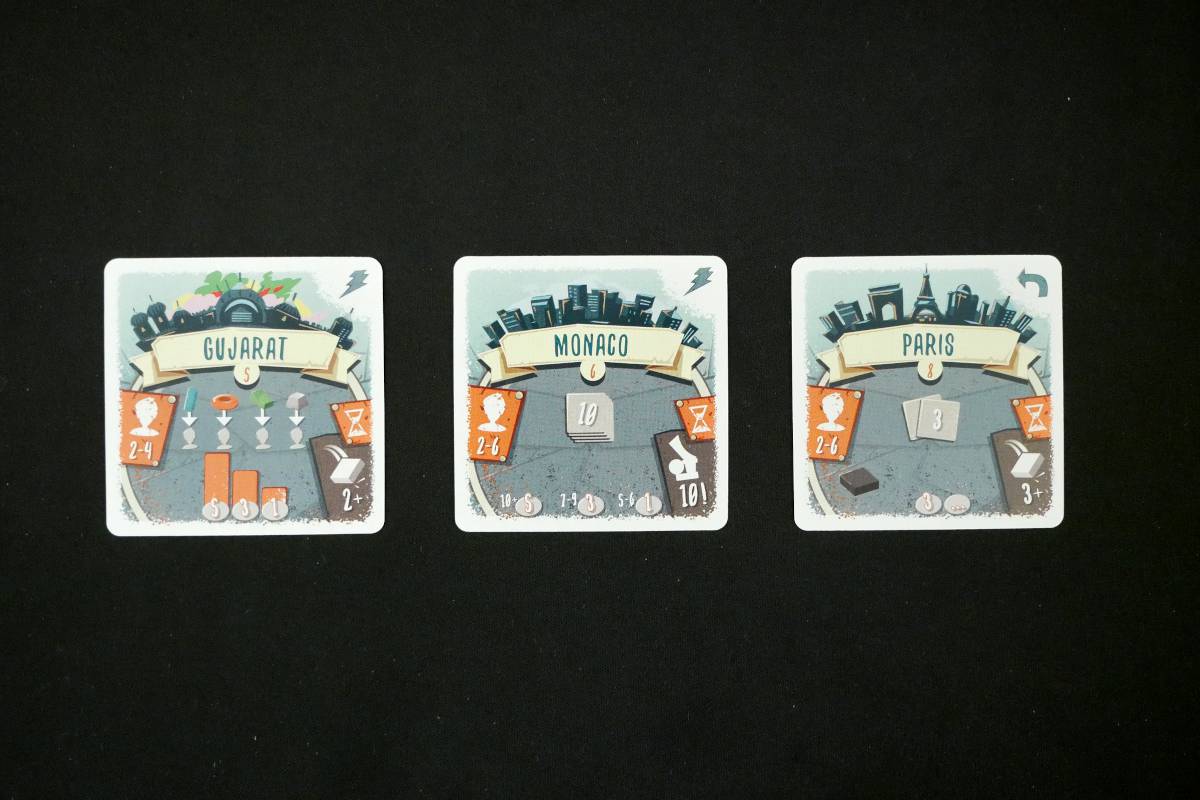
Junk Art also consists of 12 City cards, where each City is like its own little mini-game. That's right, Junk Art is basically a collection of different rule sets, and you'll be playing through 3 of the 15 in a full game. Each City has its own setup, player count range, turn order rules, stacking conditions, and scoring criteria. This variety is partly what makes Junk Art so intriguing.
For example, here are some of the Cities:
- Gujarat: 2-4 players. Goal is to build the tallest structure. Junk Art cards are shuffled into a single deck. Each turn, the top card is revealed and every player adds that piece in their own color to their structure. It ends when a player has 2 or more fallen pieces.
- Monaco: 2-6 players. Goals is to have the most pieces in your structure, plus bonus for tallest. Everyone gets a random deck of 10 Junk Art cards. Each turn, everyone simultaneously reveals their own top card and adds the matching piece to their structure. It ends when all 10 cards are played.
- Paris: 2-6 players. Goal is to avoid elimination. This one has a shared, central structure instead of individual structures. Everyone has 3 Junk Art cards in hand. On your turn, play one card then draw a replacement—the player ahead of you must add the matching piece to the structure. You're eliminated as soon as you have 3 or more fallen pieces.
Junk Art also comes with 3 blank City cards, allowing you to invent your own ways to play with these pieces. It's a cool addition that lets you exercise your game design skills AND makes your copy of Junk Art unique!
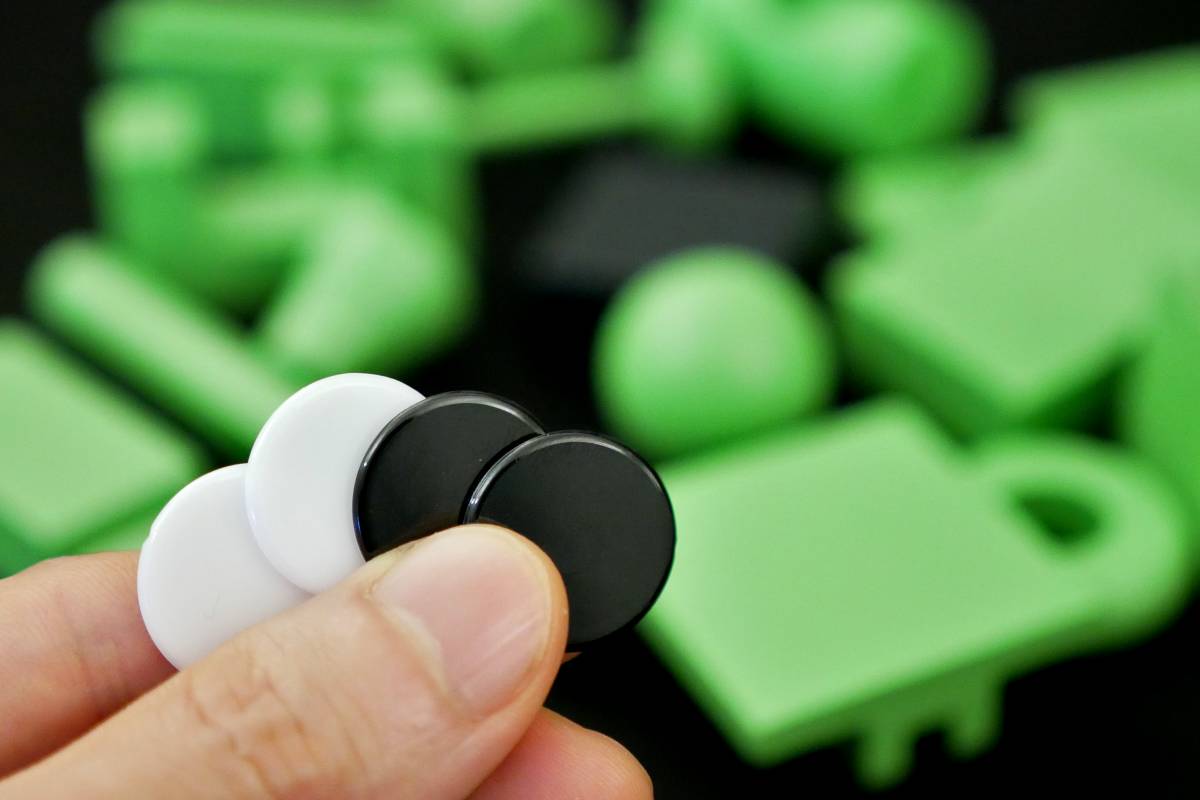
After each City, players earn "Fans" (i.e., points) based on how well they performed, with different Cities granting varying amounts of Fans. Some only grant Fans to the last artist standing, while others grant Fans in decreasing amounts to 1st, 2nd, and 3rd place.
After playing through 3 Cities, whoever has the most Fans wins. Junk Art really is that simple. But hey, if you want to play only 1 City or go through every City on some sort of mega-tour, have at it!
Setup and Table Footprint
One thing I like about Junk Art is how easy it is to set up and play, at least if you're willing to make one minor concession (see note below).
To start, you just need to give one of the wooden base pieces (on which structures are built) to each player. Then, either shuffle up the City cards and randomly draw 3 or manually choose the 3 you want to play.
After that, setup will depend on the City. Some may require you to separate the Junk Art cards into separate decks per players, others may mash them all together into a single deck. Nashville and New York also add special cards to the Junk Art deck. But overall, it's straightforward.
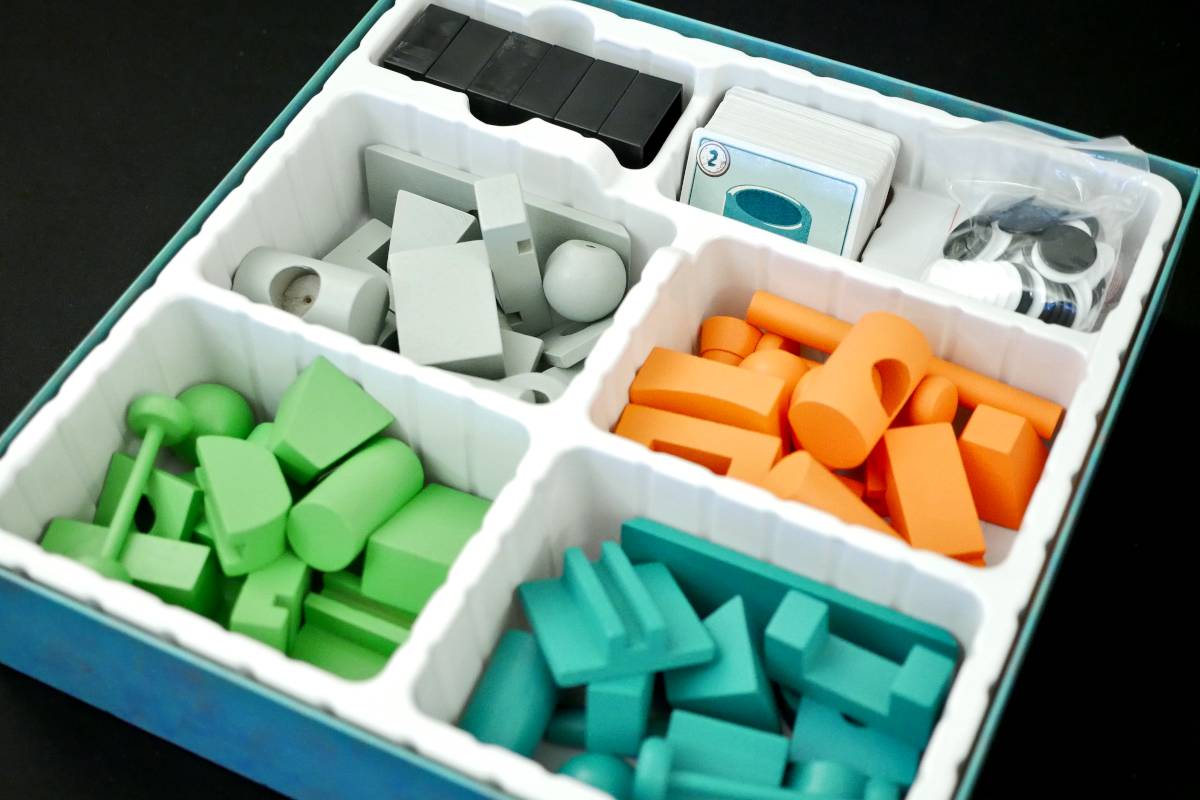
I prefer to keep all the Junk pieces in the box and have it within easy reach of all players. The insert keeps all the pieces separated by color. For Cities where all the pieces need to be mixed, I just dump them all into the box lid. There's no need to take it all out unless you really want to.
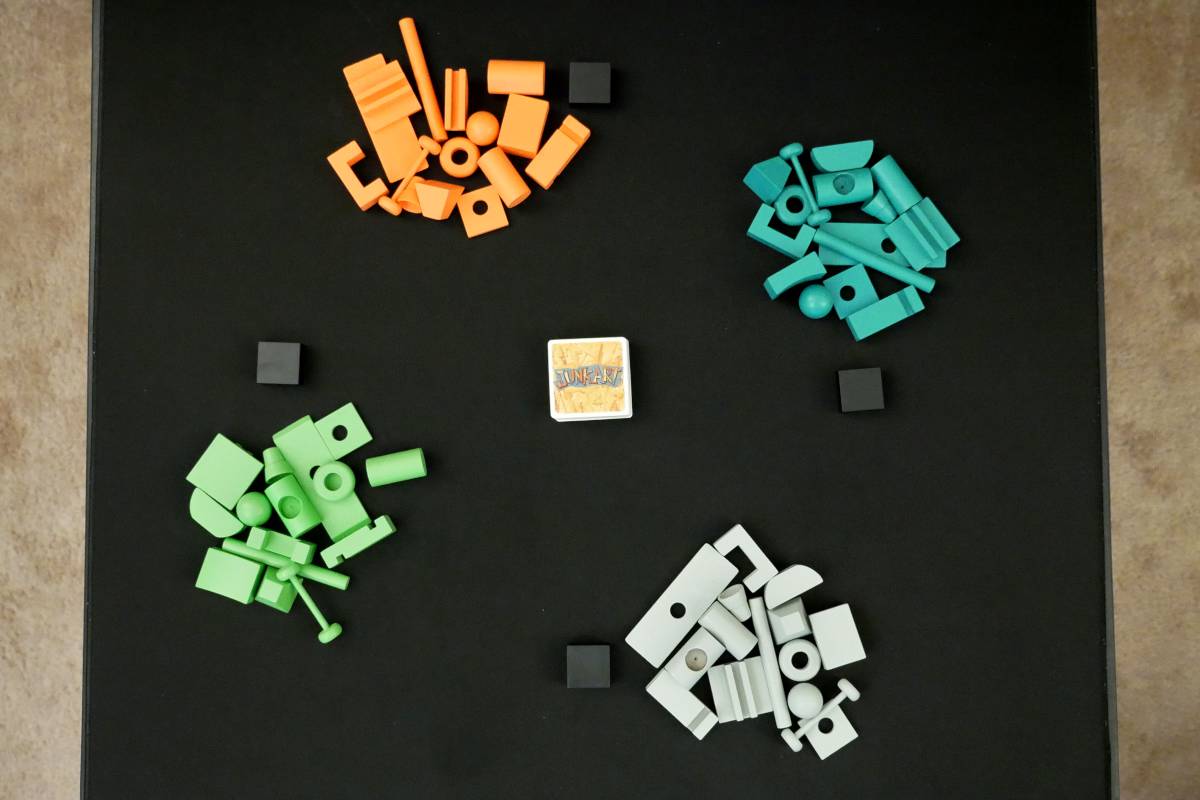
As for table footprint, well, you're going to need a spacious table. It's not just that each player needs enough room to comfortably stack their structure without bumping elbows, but you also need enough distance so that falling pieces don't accidentally cause chain reactions.
On top of that, you also need to make sure your table is extremely stable. This is a balancing game, after all, and the slightest nudge on a weak table can cause everyone's structures to come tumbling down—which really sucks when you're nearing a tense climax! If you don't have a sturdy table, I highly recommend playing on hard, flat ground instead.
Learning Curve
Junk Art is pretty darn simple to learn. The core concept teaches itself—stack up your pieces and don't let anything fall—so the only thing you really need to learn is how each City works.
Fortunately, the Cities are all straightforward. The rulebook lays it all out in an organized way, clearly spelling out how each City sets up, how player turn order works, what the win condition is, what happens to fallen pieces, and how the scoring works.
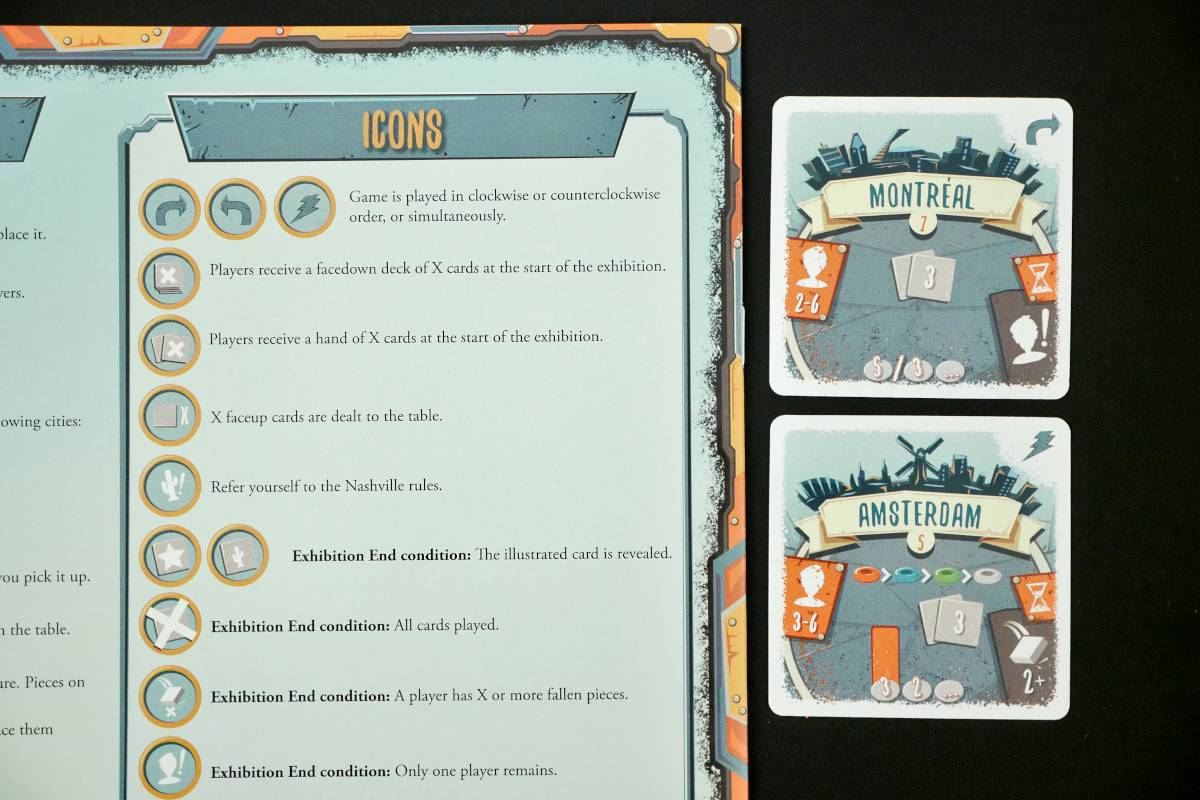
All of these details are shown through icons on each City card, though I find the City cards hard to decipher if you aren't familiar with them yet. You'll probably have to reference the rulebook's full explanations several times, at which point the City cards are good enough as reminders.
The good news is, you only need one person who really knows how to play Junk Art and understands its various Cities. Everyone else can just sit and play, being taught how each City works as those Cities show up. And again, they're all pretty simple. Anyone can join in and have a good time.
Game Experience
Decision Space
For the most part, Junk Art is a game of execution rather than decisions. You could argue that placing a certain piece a certain way on your structure is a decision of sorts, but let's be real. This dexterity game dictates which piece you must place next, either by the card you draw from the deck or by the card that's played on you by one of the other players. You usually don't get to choose your piece—and once you're assigned a piece, there aren't that many ways to place it on your precarious structure without it tumbling.
Still, it feels like you're making meaningful actions. You can be creative about how you place your pieces. You can be risky in an effort to push for victory, and you can be conservative in an effort to outlast your opponents. The various shapes give you those options, and it's up to you to balance risk against stability. How do you orient that piece? Where do you place it? How much will you push and exploit physics to stretch your structure?
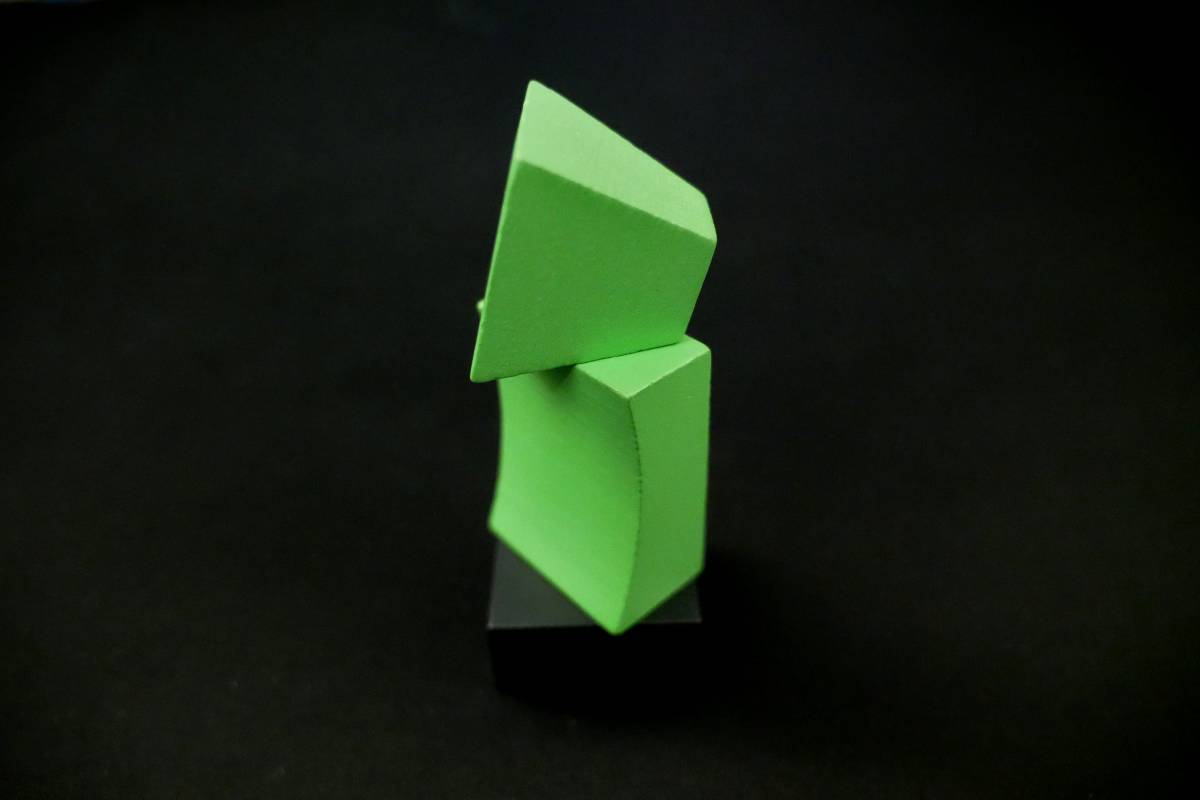
No, Junk Art doesn't play itself. In fact, while your decisions are individually small, they compound into something greater. A mistake when laying your second piece will come back and bite you on your 12th piece. I often find myself kicking former me for the choices I made earlier, and that's the kind of stuff that separates the winners from the losers.
The decisions in Junk Art are subtle but impactful, and the decisions you make will differ from City to City. Your strategies will change. Your openness to taking risks will change. Your skills may shine in one City and fail you in the next. All of this happens without Junk Art ever being prone to analysis paralysis or overwhelming thinkiness. You get a piece, you try your best to hang it on, and you move on. Rinse and repeat until someone crashes.
As for final scoring? Well, to me, Junk Art is one of those games where I don't care about my final score. Stacking, balancing, and making sure nothing falls off is fun in and of itself. It's a strong example of a game where the journey is more important than the destination.
Luck Factor
There is a little bit of luck in Junk Art, mainly in the shuffled-up Junk Art cards. The amount of luck will depend on the City, though, with some Cities way more lucky (and tactical) than others. Fortunately, the luck isn't frustrating. In fact, it's all within your control.
Essentially, luck dictates what piece you have to place next. Sometimes it's a fully random top-deck, sometimes it's drafting from a pool of 3 cards, sometimes it's playing one card from your randomly drawn hand (whether for yourself or forcing a piece on another player). But once that card assigns a piece to you, the rest is up to you. The fate of your structure is your own.
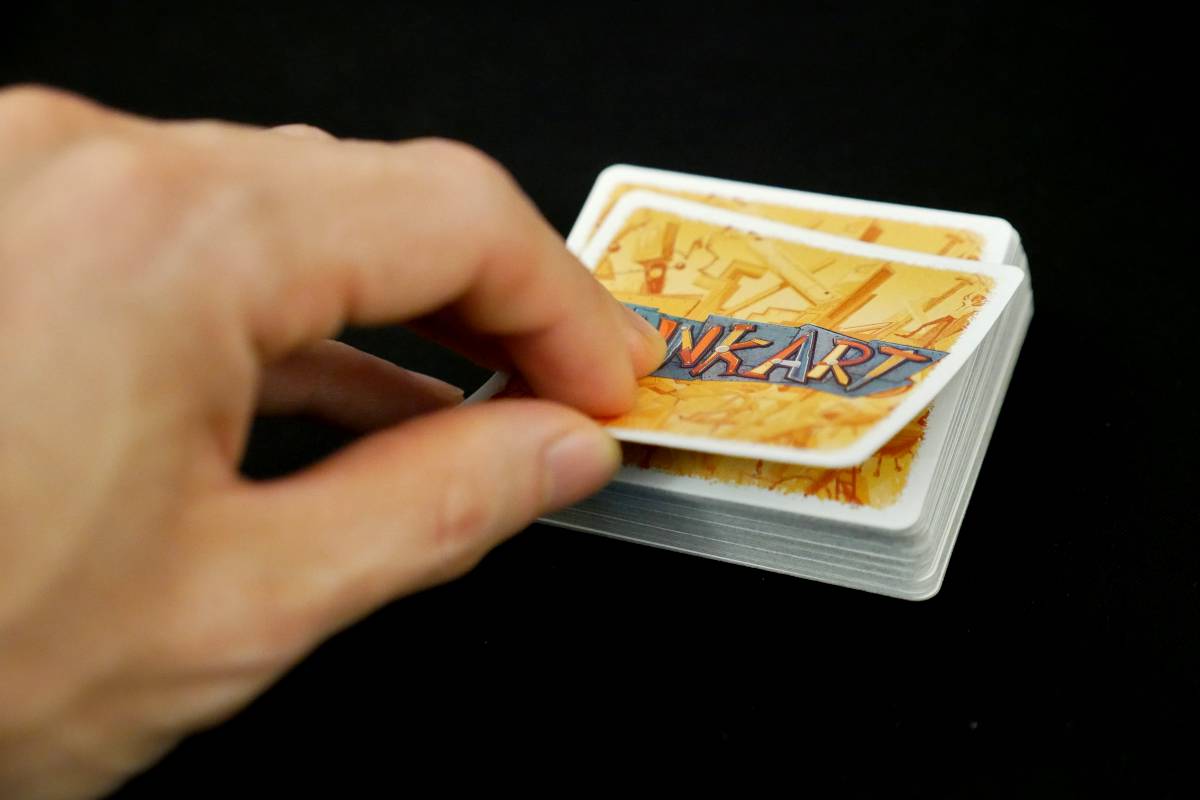
There's also a small bit in the universal rules (i.e., regardless of City) where if your fallen piece knocks into another player's structure and causes them to lose pieces, you keep those as penalty as well. You can't exactly control how pieces tumble around, so this can feel random... but it's not a huge issue, honestly. It's a stacking-and-balancing game, so it is what it is.
Fun Factor
No doubt about it: Junk Art is good, innocent, hearty fun.
I mean, come on! If you've ever built a house of cards, or messed around with stray Jenga blocks, or played that Chairs game where you stack tiny plastic chairs until the whole thing falls over, then you know there's so much inherent entertainment and tension in seeing how high you can go before it all comes crashing down. Holding your breath, hoping for the best, the relief when everything still stands. I think it's wired into our DNA.
And when everything does come crashing down, it's exciting! The sudden, startling rush as someone screams "Nooooooo!" while watching their structure lean, lean, leeeeeeean until physics does its thing to it. It's collective fun for everyone at the table, except in Junk Art you might still be in the game even after your structure falls. Some Cities are like that.
The mixture of tension and table talk is just great. Whenever I play, I find players love ribbing each other, especially when someone is on the cusp of winning. And when someone builds an impressive structure, I find players are quick to admire it (while the builder finds pride in their work). Junk Art isn't a party game, but it can feel like it at times.
Pacing
Junk Art is phenomenally paced and that's a big part of why it's fun. In the Cities where you take turns, each turn is quick and snappy (often no more than draw a Junk Art card and place the corresponding Junk piece). Some of the Cities (notably Gujarat and Indianapolis) are played simultaneously, while some (like Monaco) are even real-time races.
There's very little downtime, not much waiting around for your turn. That keeps the interest level and engagement high from start to finish, and you get a fully satisfying experience packed into just half an hour. And with each game being broken into 3 Cities, you get triple the rising tension, triple the excitement, and triple the satisfying climaxes.
Player Interaction
Junk Art is mostly to yourself, but there's a surprising amount of player interaction at times. It really depends on which City you're playing. Want more interaction? Stick with the likes of Home Town, Philadelphia, Montréal, and Paris. Want less interaction? Indianapolis, Monaco, Gujarat, and New York may be more to your tastes.
In Junk Art, interaction mainly happens in two ways. The most common ways is, you choose what piece a player must play. Sometimes it's a mixture of choice where you give a player multiple options and they choose from them. Either way, you're forcing them to make do with a terrible piece.
The other form of interaction is when you're playing a City where everyone is working on a shared structure. Here, your piece placement itself will affect how the other players make their moves, and you can make things really difficult for them—but also for yourself when it comes back to you.
Despite all this, Junk Art never tips into "mean" territory. It might be frustrating at times, but it's all in good fun and each City is so short that it's easy to move on and let things blow over.
Player Counts
Junk Art scales as well as one could hope. I've played it multiple times at just 2 players (me and my wife), but I've also played it with more (at family gatherings). It's an enjoyable time at all counts, and the gameplay itself doesn't change much from count to count.
The only thing to note is that each City has its own player count range, so a couple won't be playable if you have too few or too many: Amsterdam is for 3-6 players while Gujarat is for 2-4 players. The rest are for 2-6 players, the full range supported by Junk Art. (Nashville is for 2-4 players, but you also need another game called Flick 'Em Up for that one. I've never played it.)
In other words, all the Cities are playable if you have a group between 3-5 players. I don't have a favorite player count, but the more the merrier with Junk Art because of the extra table talk. (See the "Fun Factor" section.)
Replayability
Junk Art isn't the kind of game I want to play all the time. It's a "special occasion" type game that I'd only bring out once a year, or maybe every two or three years. That feels weird for me to write because I do enjoy it when it's played, but I guess I'm just not big on dexterity games. Most of the time, I'd rather play something mentally stimulating than physically so.
That said, it's very much replayable. Junk Art is indeed fresh and exciting every time, and I've played it several times over the years. Again, it's the tension of stacking and balancing that drives the core gameplay—everything else is only there to mix it up a bit. So, while I'm not the biggest fan of dexterity games, this is the one I'd play to scratch that itch.
In my mind, Junk Art serves best as a filler-style game, whether as the appetizer before something bigger or as the wind-down game after a long gaming session. But it's also meaty enough to stand on its own if you only have an hour-ish and want a dexterity-style experience.
Production Quality
A game like Junk Art lives or dies by its production. When it comes to stacking and balancing pieces, those pieces need to be as precisely manufactured as possible—every little imperfection is magnified. Unfortunately, as fun as the game can be, it does have some defects... and that sucks. While most of the production is good, the flaws are hard to overlook.
I have the 2019 wooden version of Junk Art. The following notes on production may or may not apply to the 2017 plastic version or any other version of the game from a different printing.
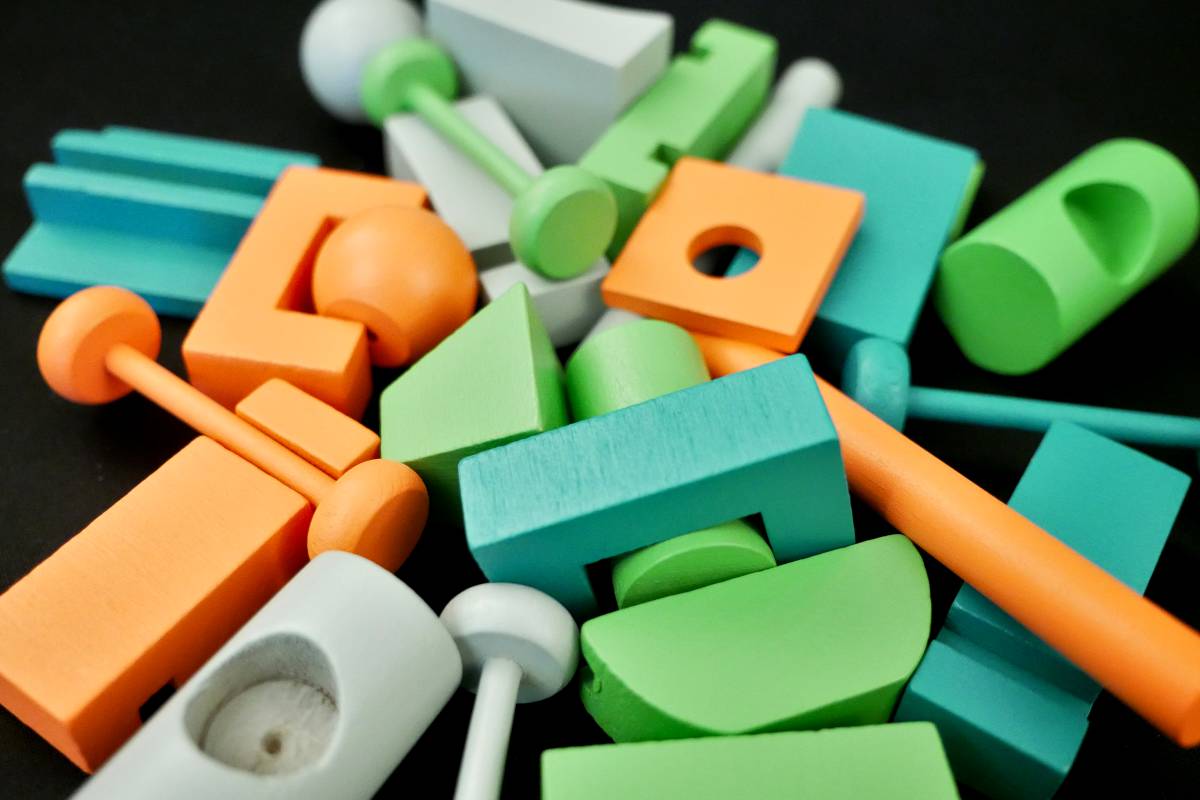
I love the shapes and colors of the Junk pieces. The beauty of Junk Art is that the pieces don't actually fit well together or complement each other, forcing you to be creative and take risks. The unusual piece designs are the chief reason why stacking is both fun and tense here. Meanwhile, the colors are easy to distinguish yet unlike your typical hues found in board games. I really dig the palette they chose. It's nice to look at.
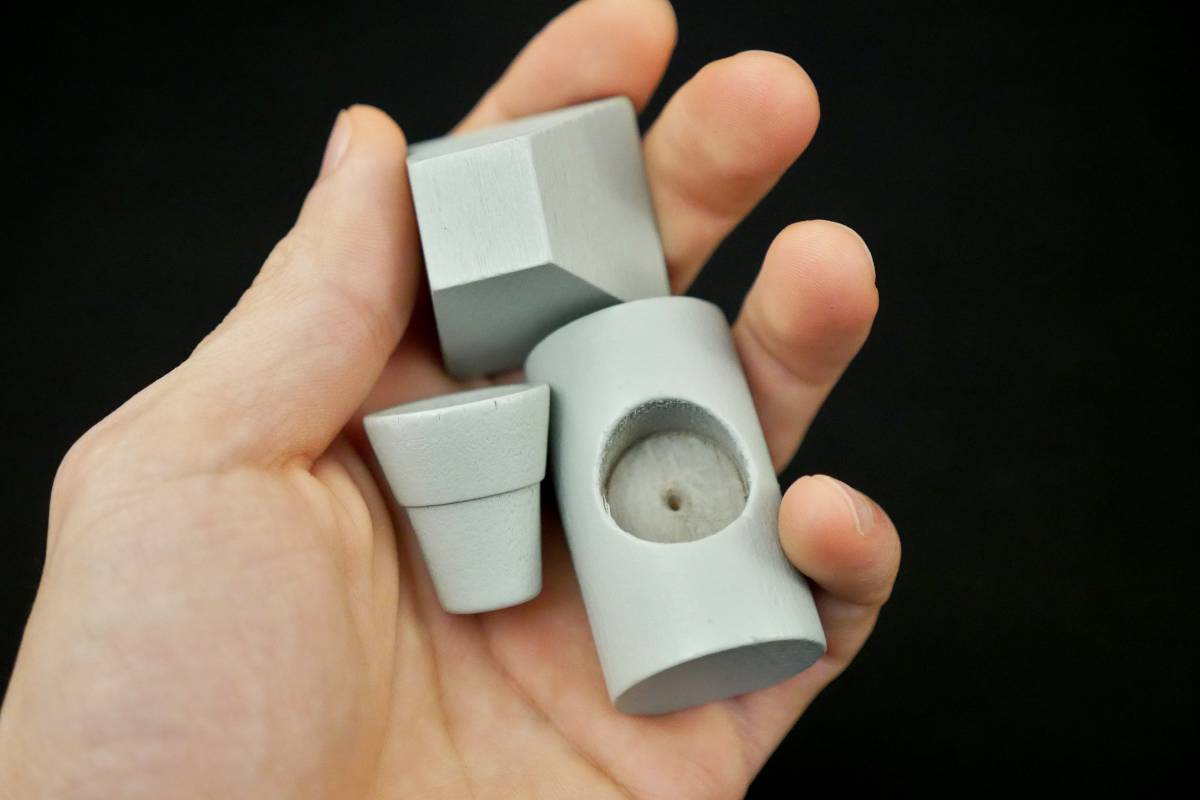
The wooden material is substantial and tactilely satisfying. When I hunted down my copy of Junk Art, I intentionally sought out the wooden version because I knew I wanted the additional heft (as compared to the lighter plastic version). The wood makes a difference, not only in the general handling of the pieces, but in the pieces hanging on together while stacked. The extra mass weighs it down and makes for better balancing.
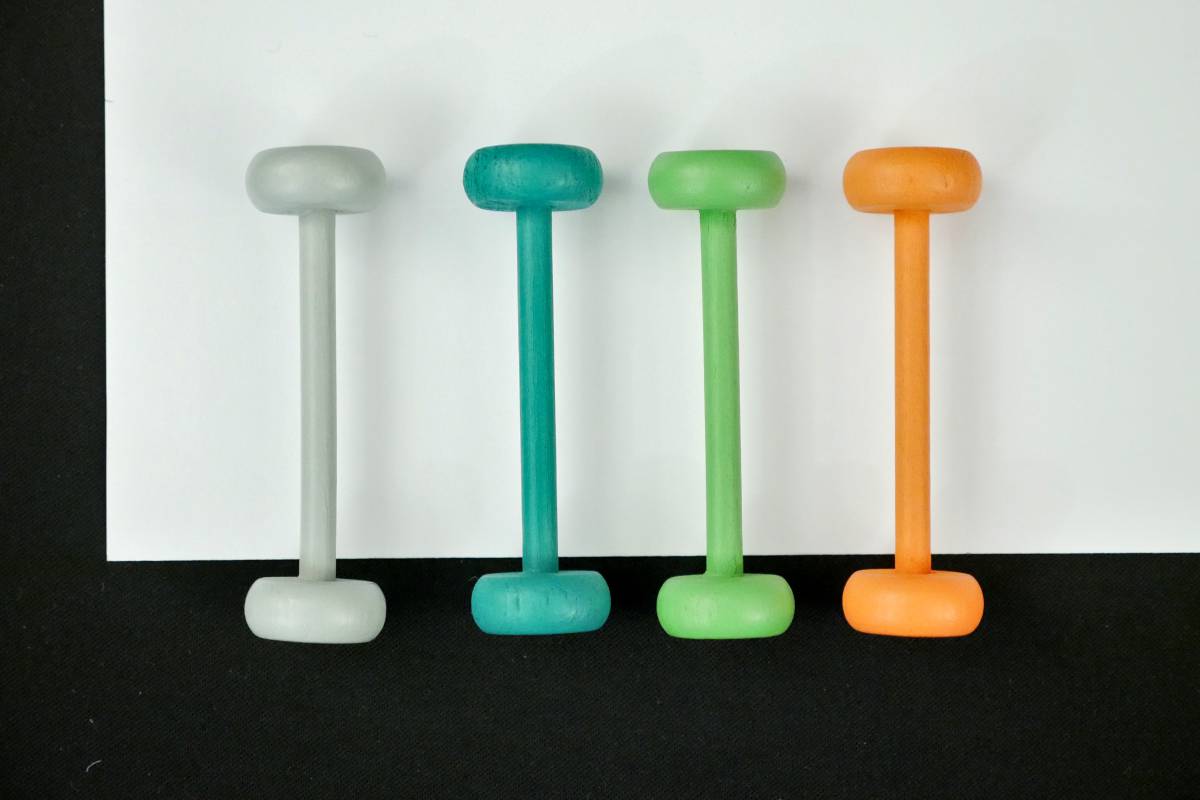
Unfortunately, some of the Junk pieces have manufacturing defects. This is my biggest gripe with the wooden version of Junk Art and the reason why I've soured on the overall experience. Some of the pieces—most notably the barbell-shaped one—aren't the exact same across all 4 colors, which gives certain players a disadvantage. It sucks when you're trying to balance a piece that should be flat but is actually skewed. It's game-breaking.
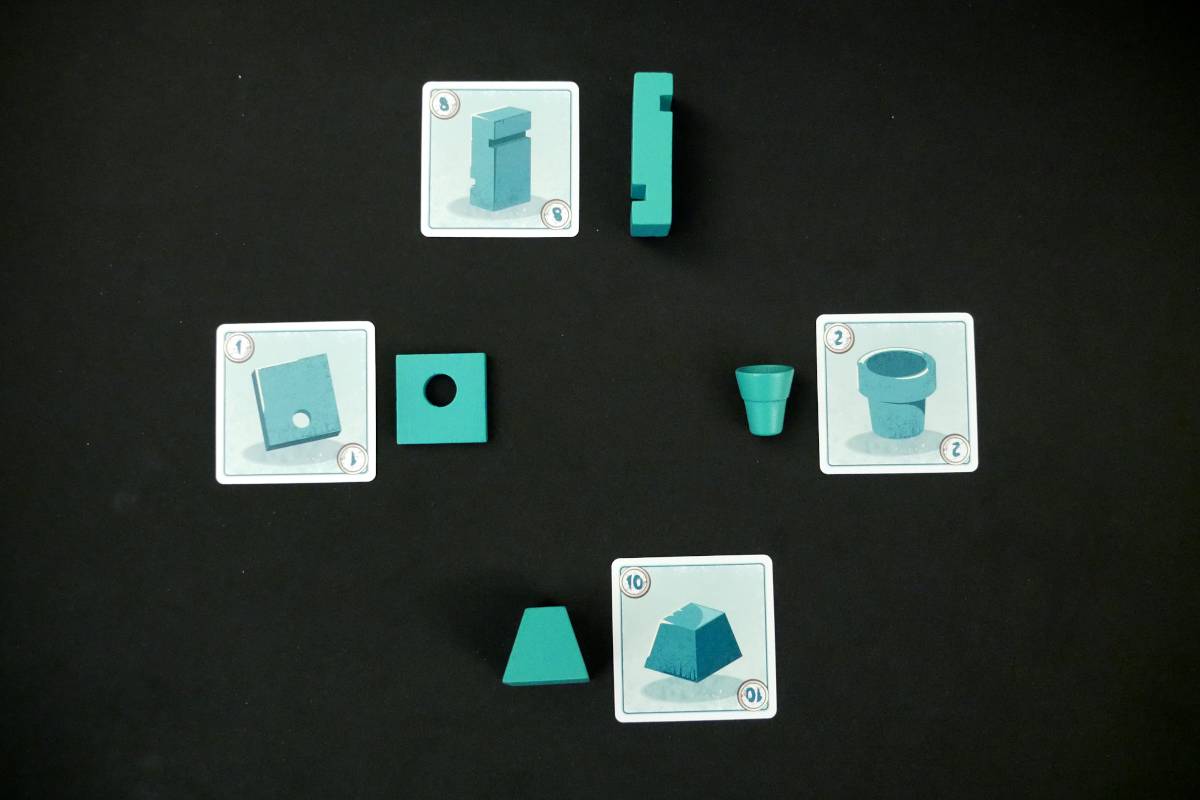
The illustrations on the Junk Art cards can be misleading. While I love the concept of cards corresponding to pieces and dictating which ones to add to your structure, I really dislike how some of the illustrations don't perfectly represent their pieces—the perspective is off on several of the cards. It makes it hard to plan ahead using only your cards in hand, and it can sometimes make it hard to find the actual piece you need.
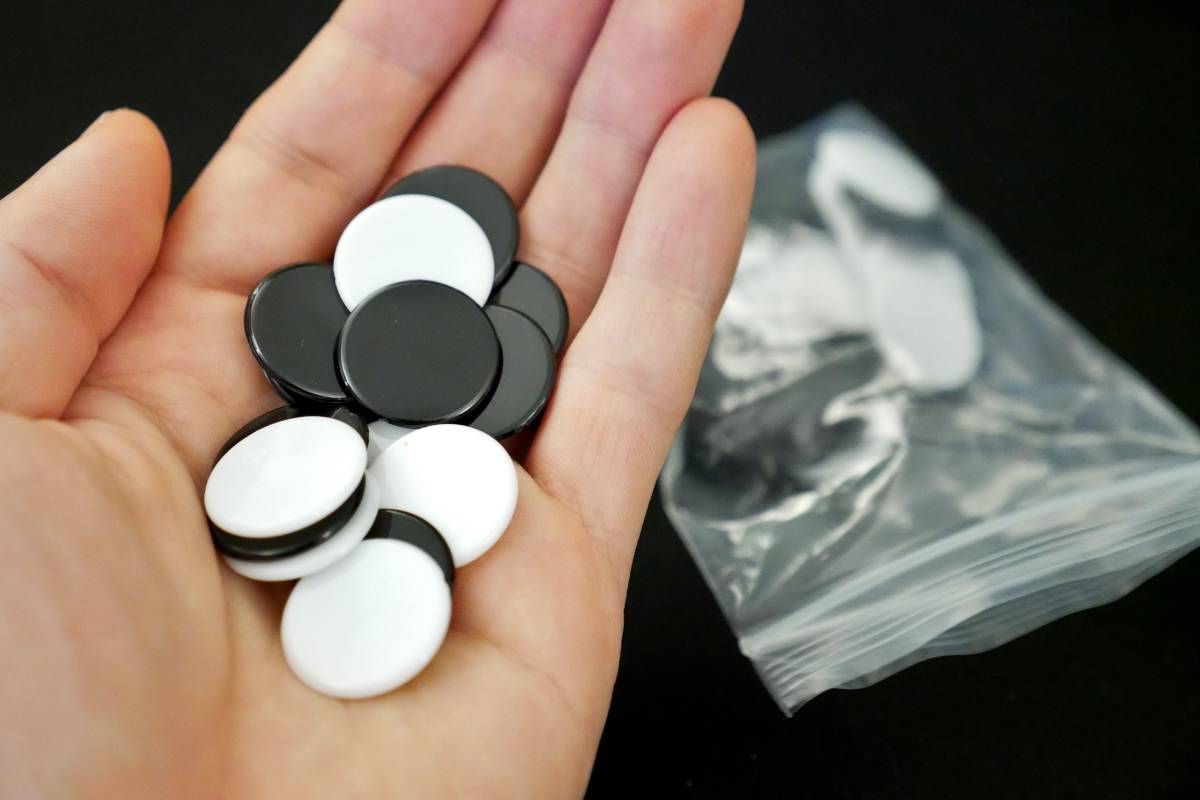
The Fan tokens are tiddlywinks that feel jarringly cheap. For a game that's all about physical presence and tactility, I'm surprised they would cheap out on this. Sure, they're "just" score tokens, but why go for the absolute cheapest of all components? Tiddlywinks are bad enough to detract from the experience. Cardboard tokens or wooden cubes would've been a much better production choice by a mile.
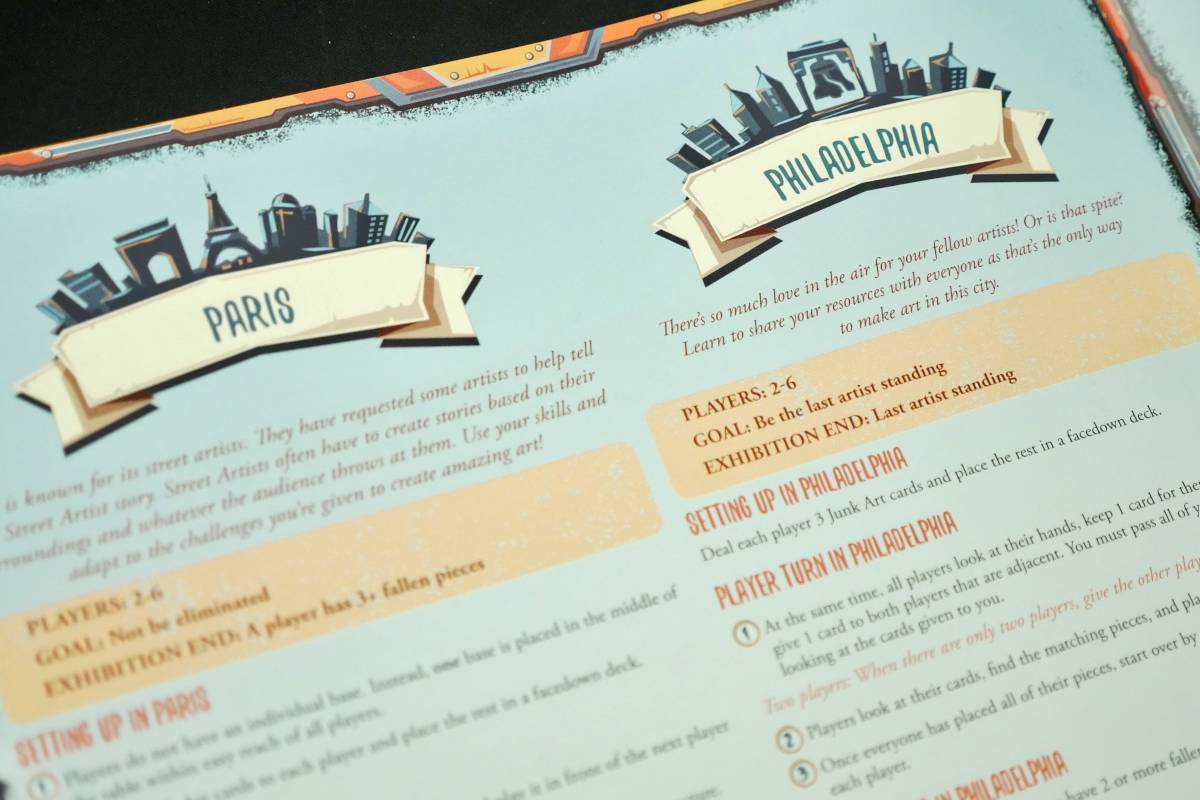
The rulebook is organized well and easy to reference. I mentioned this already in the "Learning Curve" section, but the rulebook clearly explains how every City works in a most ordered fashion. It's really easy to thumb through, find the City you're about to play, and start playing. I also like how the "universal rules" (that apply to all Cities) and the City card icons are all listed for quick reference on the back of the rulebook.
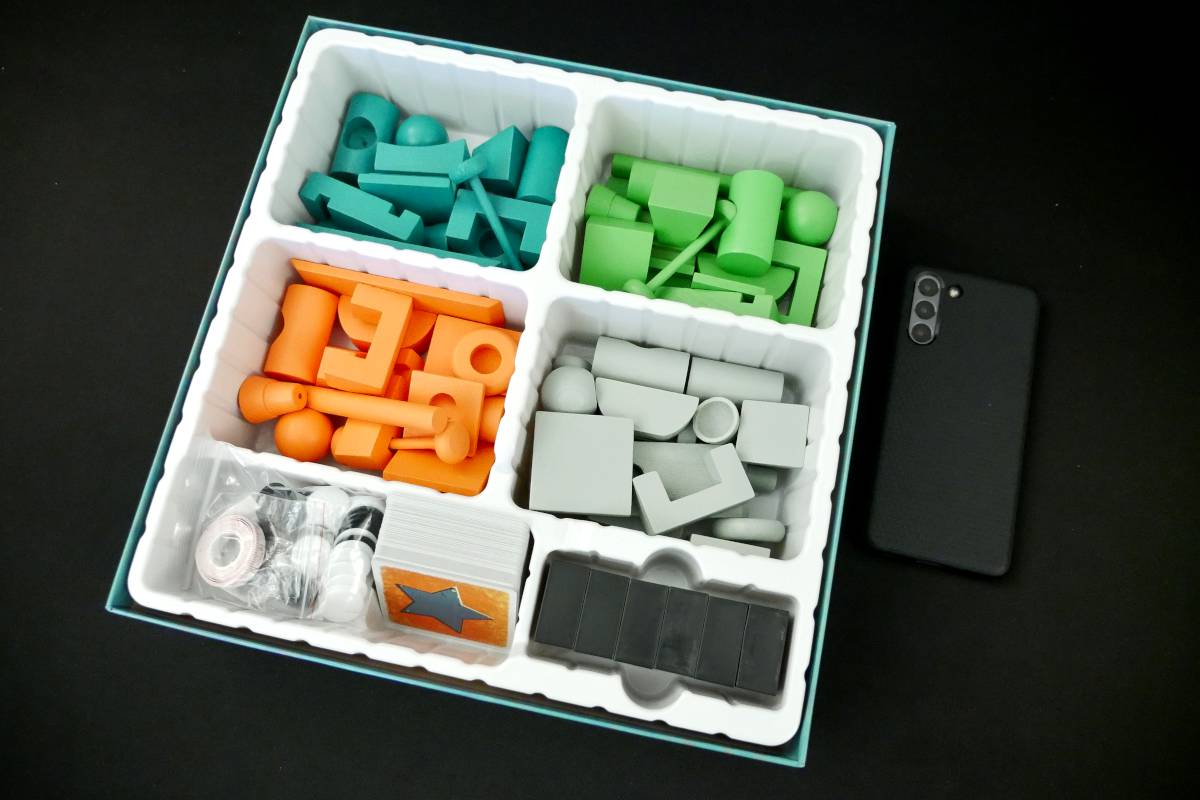
The game box and insert are well-designed. The insert is made from plastic and consists of four large compartments for each set of Junk pieces, plus smaller cubbies for the other components (i.e., cards, bases, etc.). It's not excessive—in fact, it's a very good use of the space and eases setup. Given how much is in this game, I appreciate the smart design.
The Bottom Line
I'm generally neutral on dexterity games—they're fun in the moment and I'm willing to play them, but I don't seek them out. But if I had to suggest one? It'd be Junk Art every time. It's fresh, creative, and replayable, with several different game modes that let you play how you like best. Everyone should try it at least once!
Junk Art is currently out of print.
Stop Buying Games
You'll Regret
Before your next game purchase, run it through this mental checklist that every seasoned gamer uses.
"8 Questions to Ask Yourself Before Buying a Game"
Free checklist, delivered instantly to your inbox.
No spam, ever. Unsubscribe in one click.