
I have a thing for games that involve betting. That's why I have such an affinity for push-your-luck games. There's a degenerate gambler living deep within my soul, and though I try my best to keep him in check, I love that I can set him free in certain board games without fearing for my bank balance or addictive tendencies.
Hot Streak is the ultimate race betting game for people like me. Unlike Long Shot: The Dice Game and Camel Up and Ready Set Bet, this one is extra light on rules and decisions. It basically plays itself. It's as close as it gets to the experience of showing up at a race track, putting money down, and hoping for the best—yet it doesn't take itself seriously at all. It's wacky, it's chaotic, and it's unpredictable. Not just a betting game, it's a party game.
Hot Streak is the best game I've acquired in a long time. Here's everything you need to know about how it plays, why it's so good, and why it's my favorite party game to play with family and friends.
This review is based on my own personal copy of Hot Streak, which I bought new directly from CMYK. Not a free review copy.
Overview
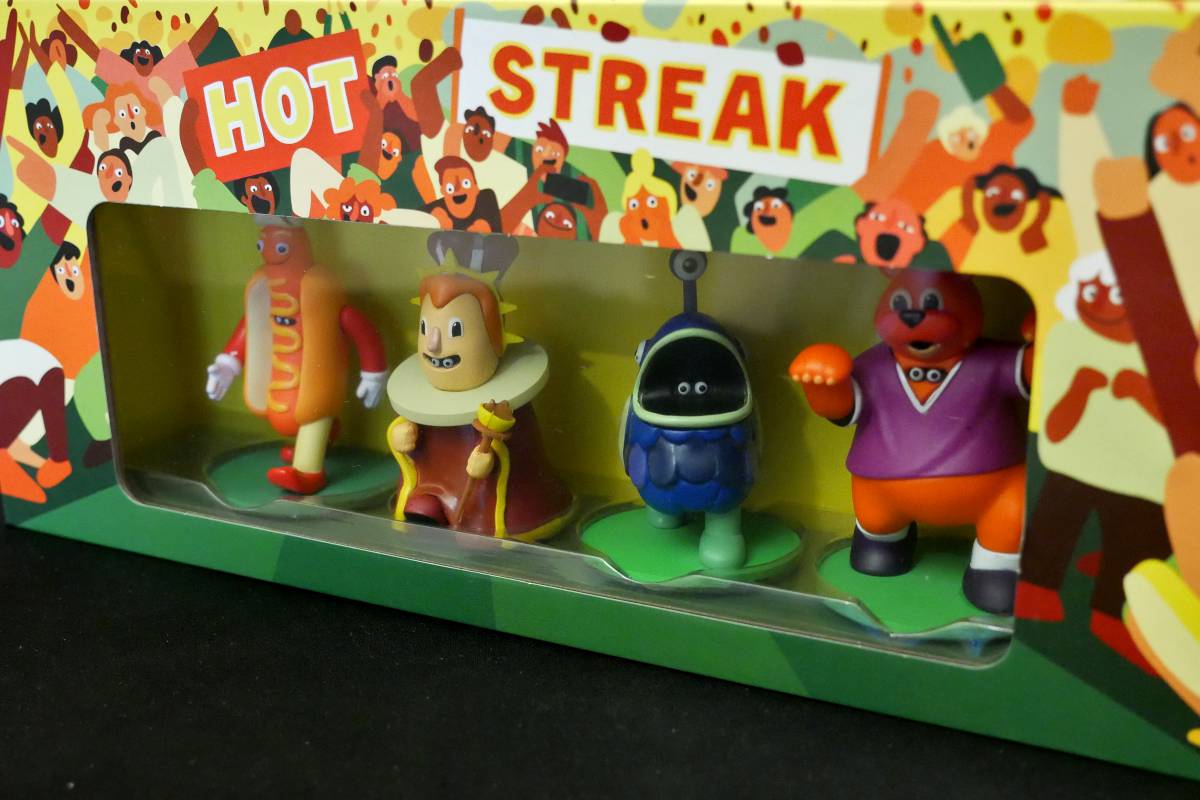
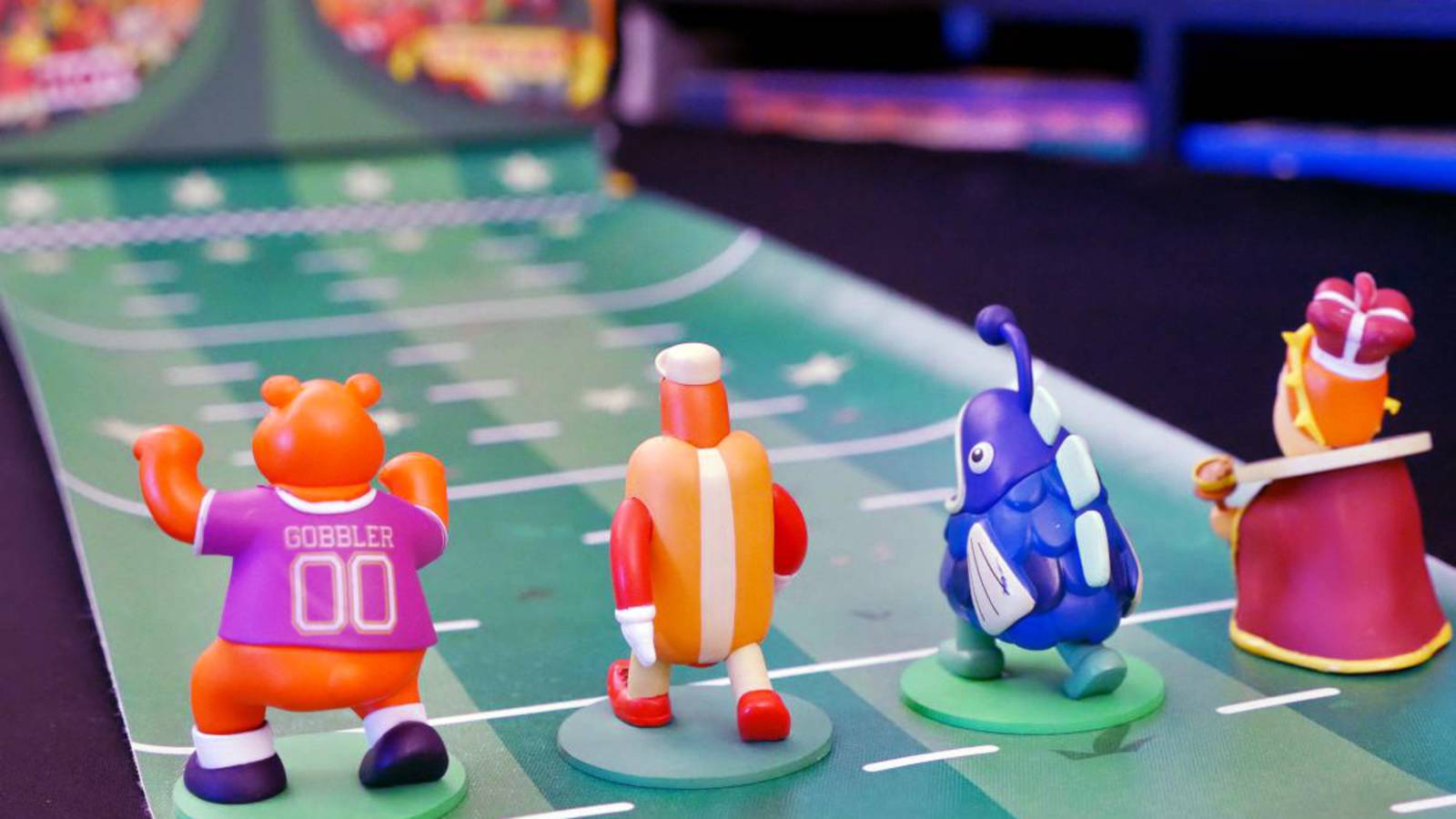
Hot Streak is a mascot race between four wacky personalities: Mum, Dangle, Hurley, and Gobbler. But you aren't playing as these characters. You're just you, a spectator who's betting on the race results. Little do you know that these mascots are as unserious as they come, and no matter how well you think you can foresee the winner, they'll surely bungle it up.
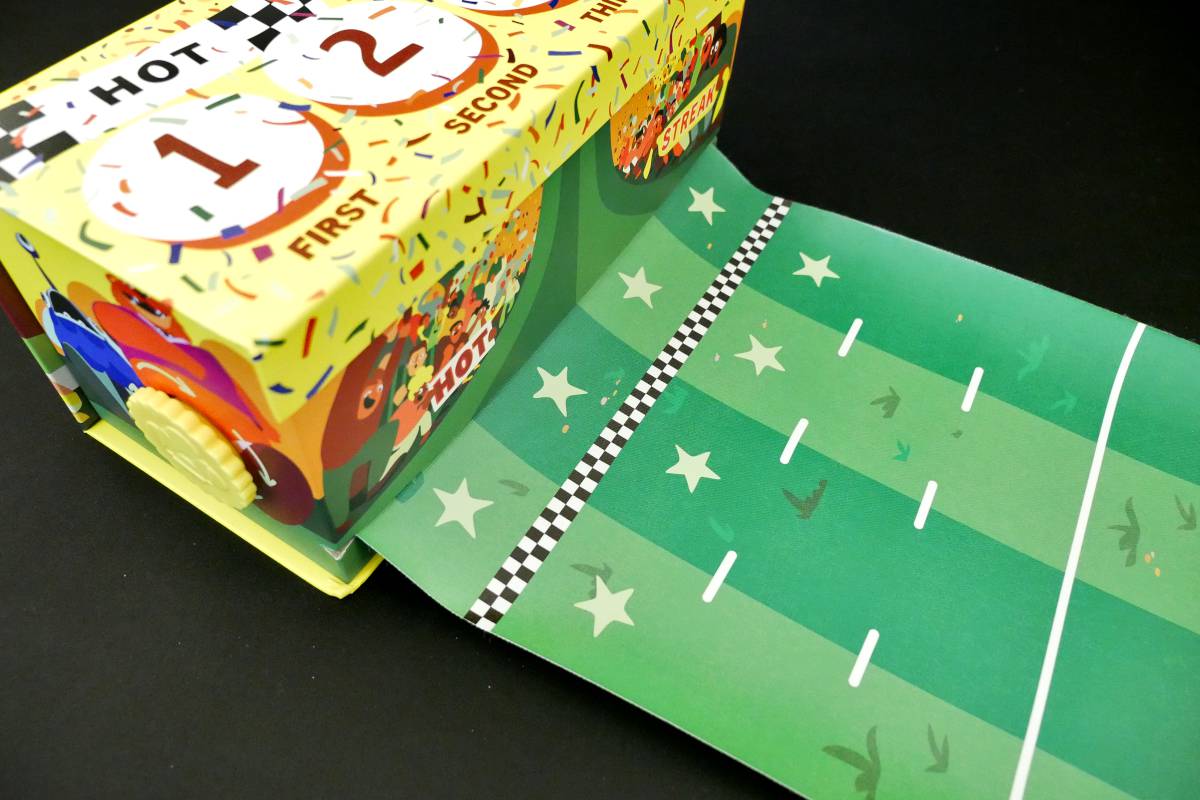
The game starts with the race track, which extends from the game box like a window shade. Each mascot starts on their designated starting spot, with their own lane leading down the track. Winners are determined by the order in which they reach the finish line (of course), but racers can also be disqualified along the way in various ways.
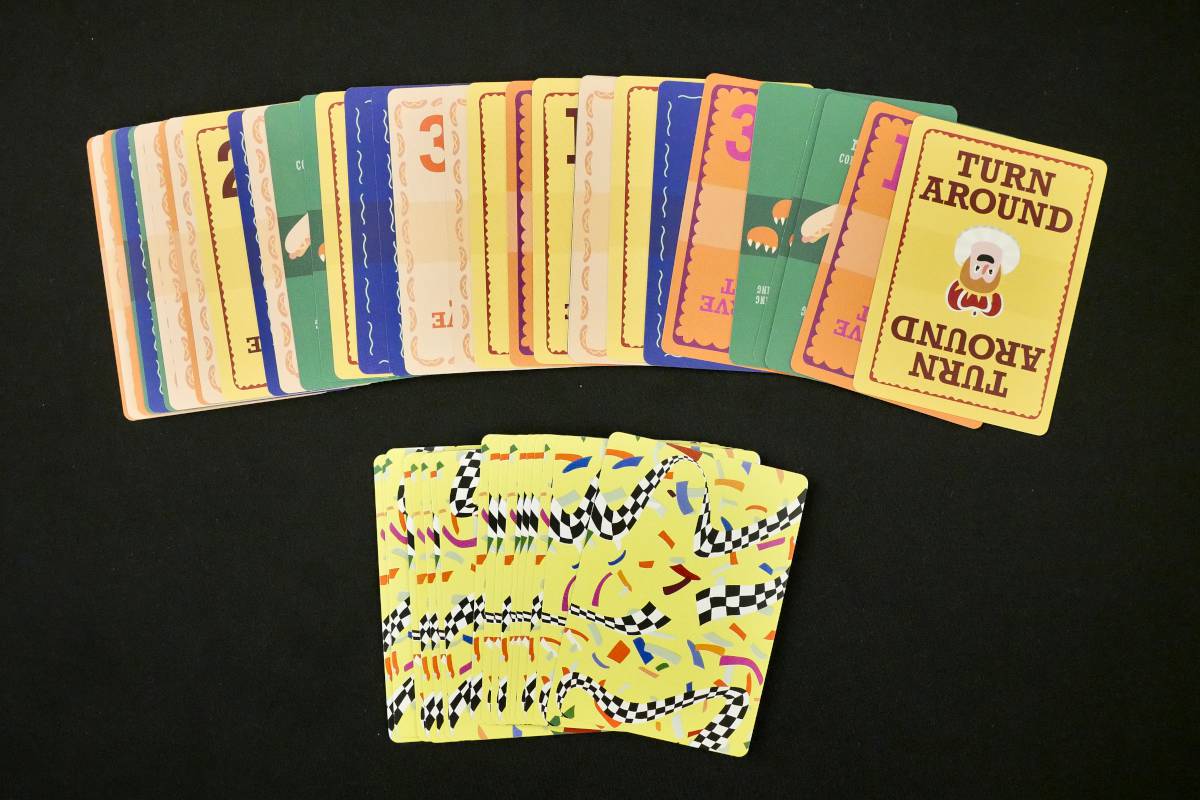
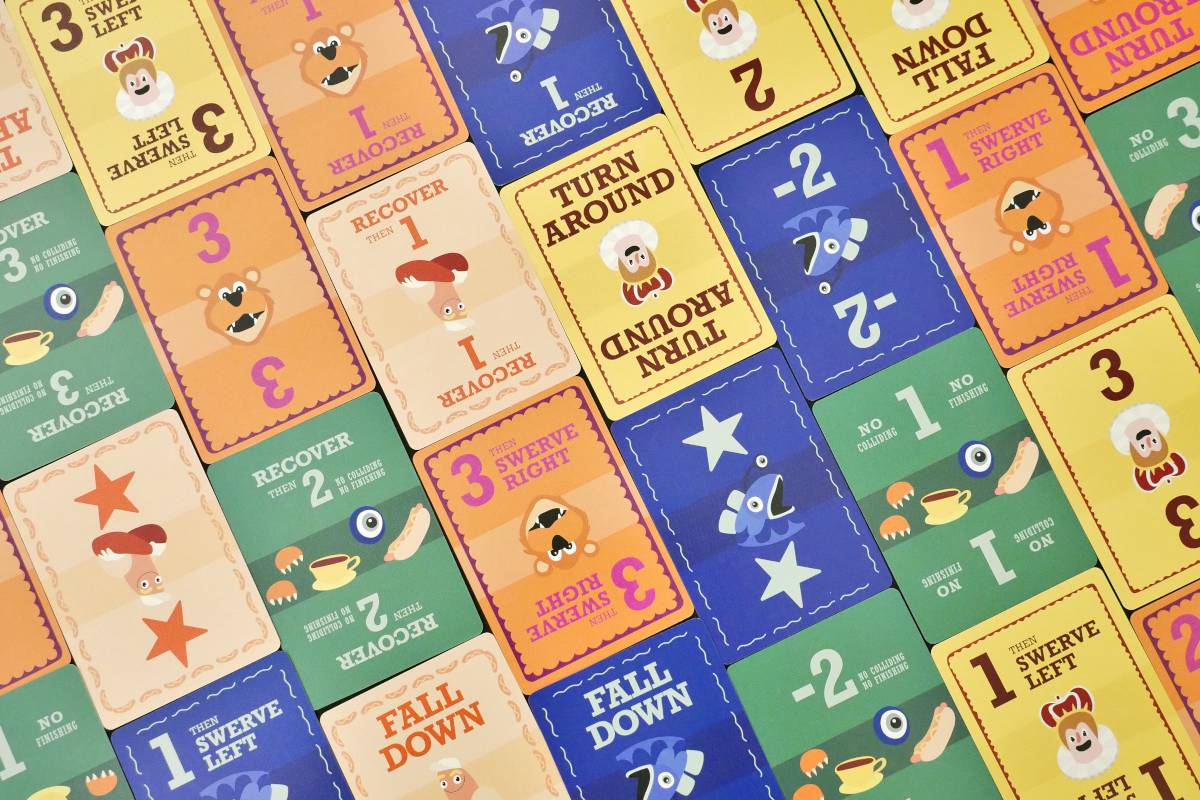
Remember, the mascots don't belong to any players. Nobody controls how they move. Instead, the mascots are controlled by the race deck. The race deck is a neutral deck in the center of the table, and it's comprised of movement cards. There are a total of 53 movement cards, but only 18 are used in any given game. The rest go back in the box.
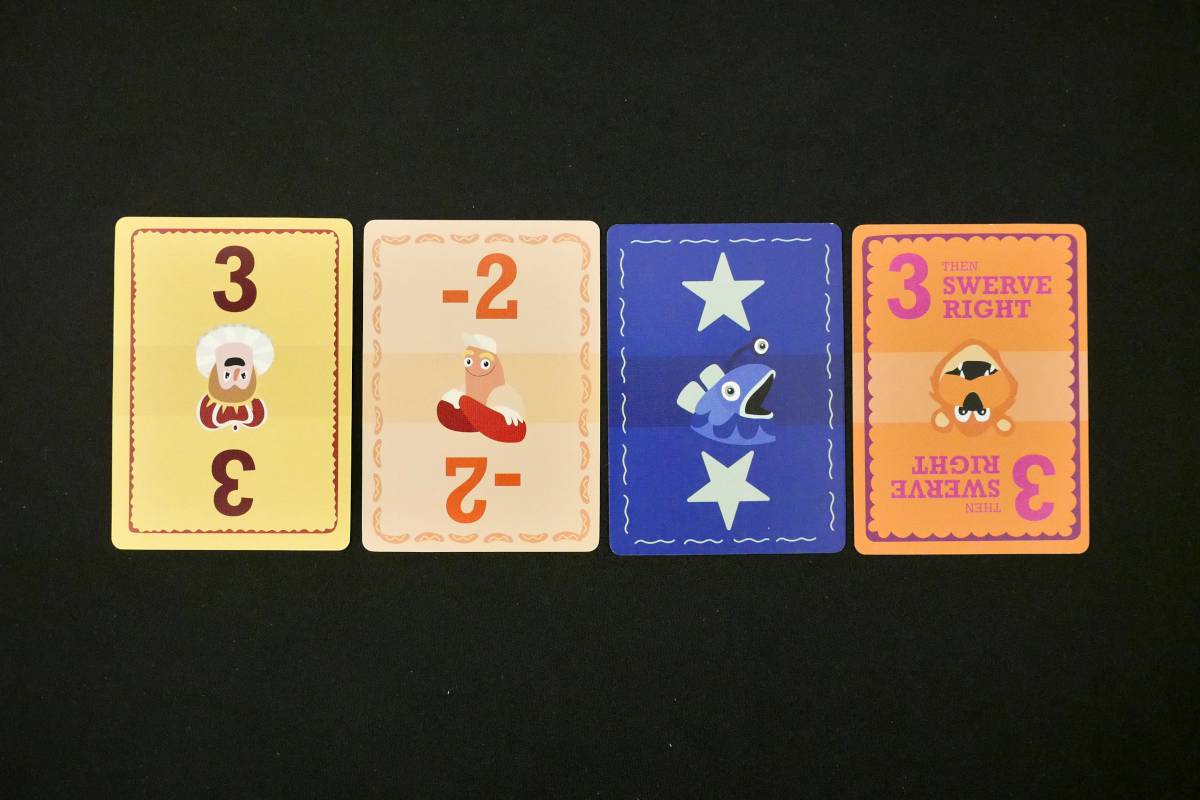
Each movement card dictates which mascot moves and how. If it has a number, the mascot moves forward that many spaces. If it has a negative number, the mascot moves backward that many spaces. Some movement cards say "Swerve," which causes the mascot to move into an adjacent lane, either left or right depending on what the card says. And then there are Star cards, which move the mascot to the next star on the track.
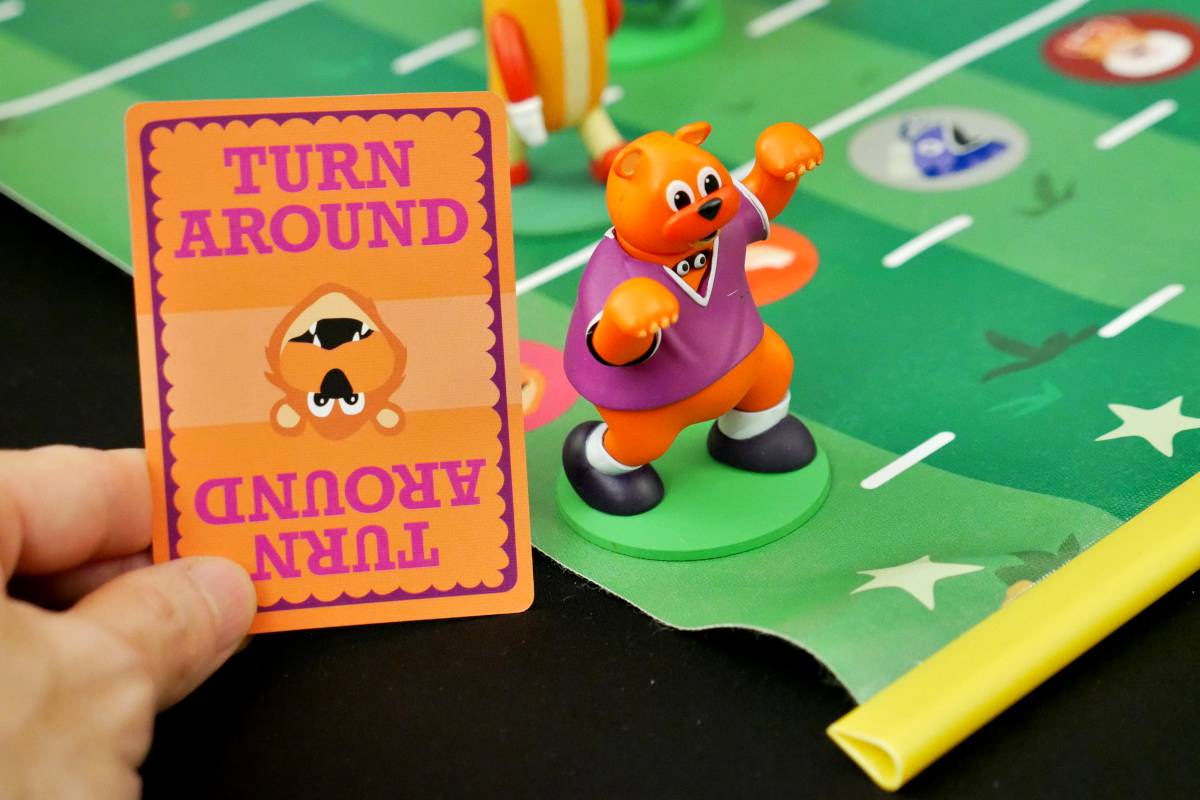
Here's the first big twist: Turn Around cards cause the mascot to literally turn around 180 degrees. When a movement card says to move "forward," that's relative to the mascot's facing—so if the mascot gets turned around, a movement card will instead move them towards the rear of the track. Every card is like this, including the Star cards, which could cause a backward-facing mascot to jump to a previous star on the track.
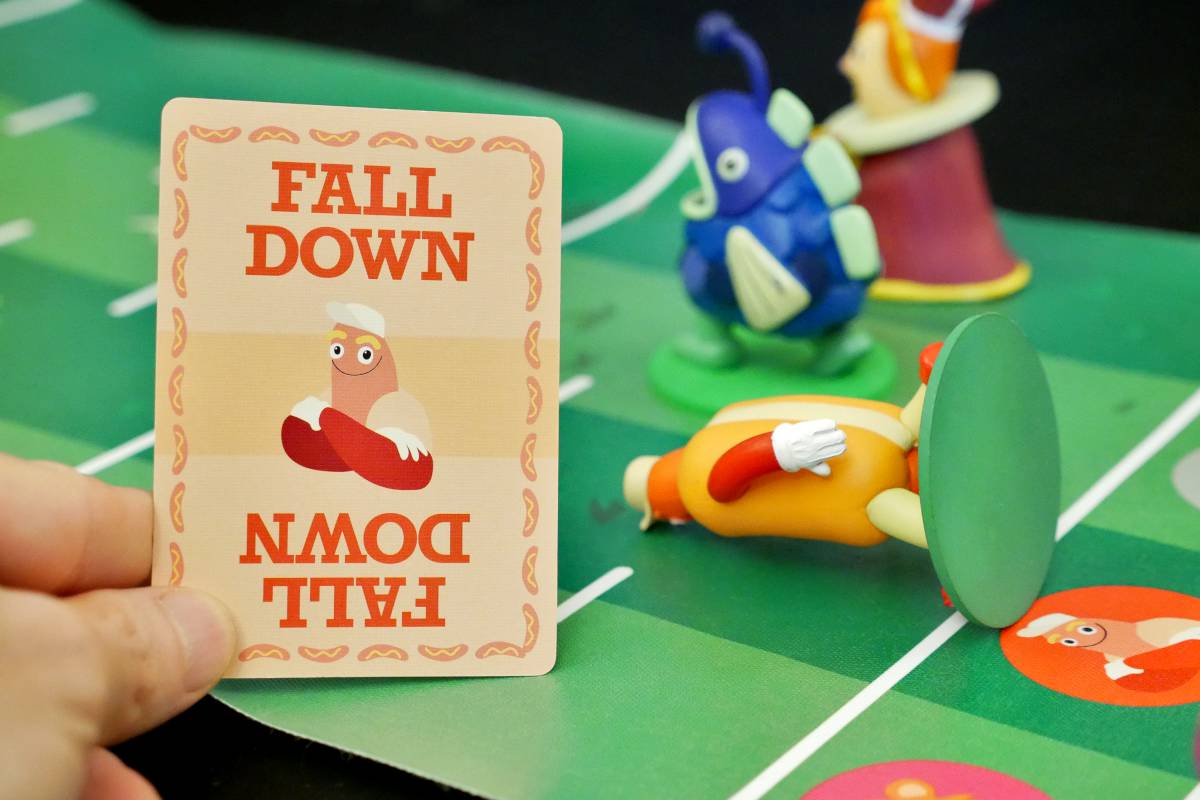
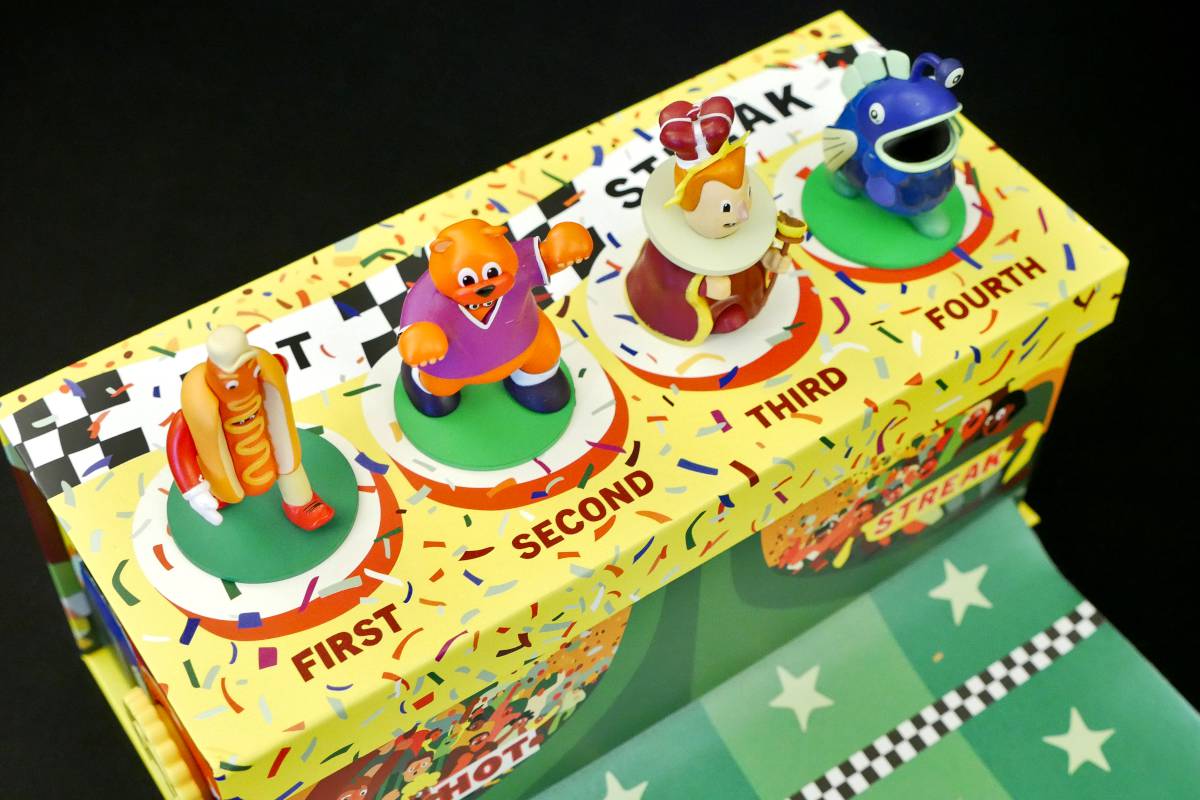
Here's the second big twist: Fall Down cards cause the mascot to literally fall down. While fallen, a mascot only moves a maximum of 1 space per movement card. Mascots also fall down when another racer moves into them or through them, like with a Swerve card. And if a mascot falls down while already fallen? They're disqualified! That means removed from the track and put on the lowest open space on the podium.
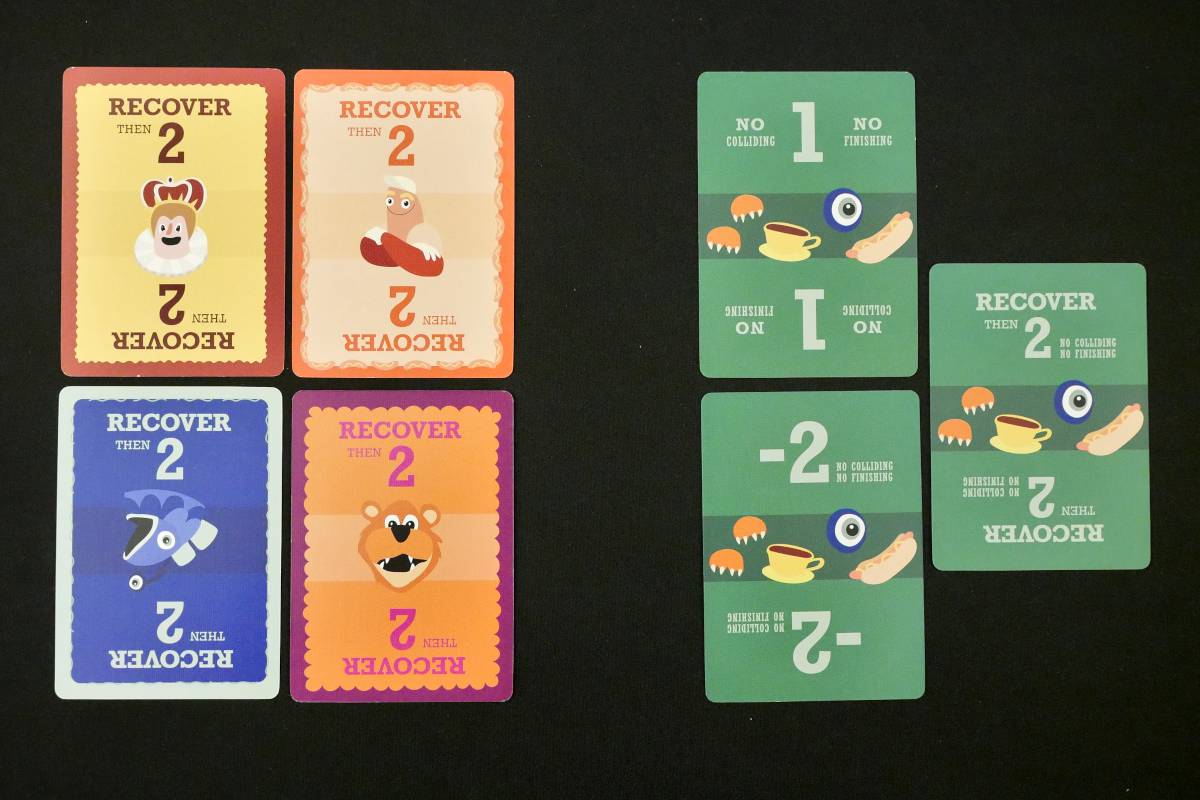
Fortunately, there are also Recover cards that cause the mascot to stand back up and face forward correctly, resetting them back to normal status. There are also Multi cards, which are like normal movement cards except they apply to ALL the mascots simultaneously. But Multi cards have a special restriction: mascots can't collide or cross the finish line when moved using a Multi card. It's a clever catch-up mechanism!
Every mascot starts with a Recover card in the race deck, which means every mascot can always potentially Recover—at least at the start. These starting cards could end up being removed in later races. More on how this happens down below.
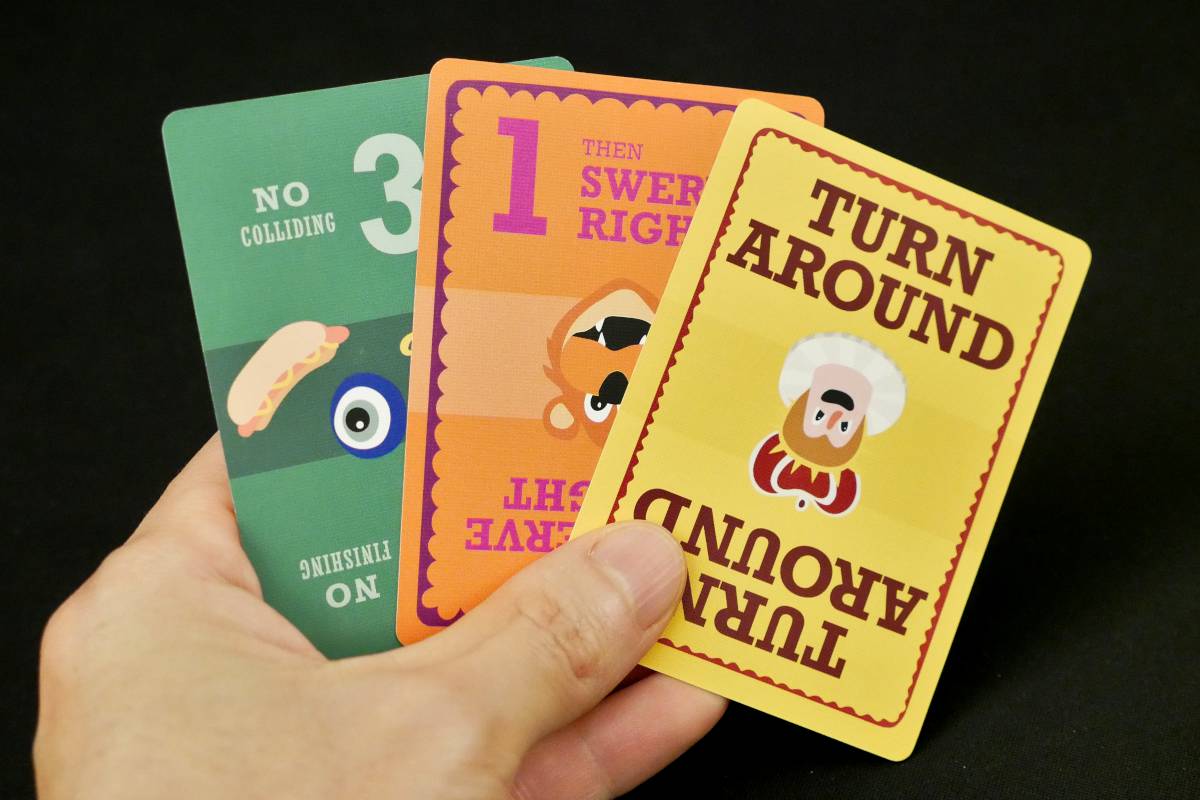
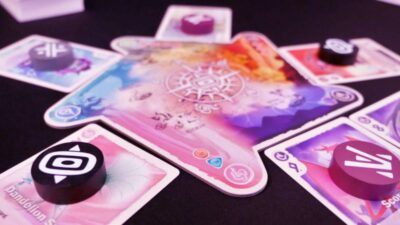
And here's the third big twist: Each player gets to slip a secret card into the race deck, one that nobody else sees. At the start of the game, each player is randomly dealt a hand of 3 cards, and before each race, you can add one from your hand to the race deck. This gives each player a personal edge when it comes time to bet, kicking up the excitement by another notch.
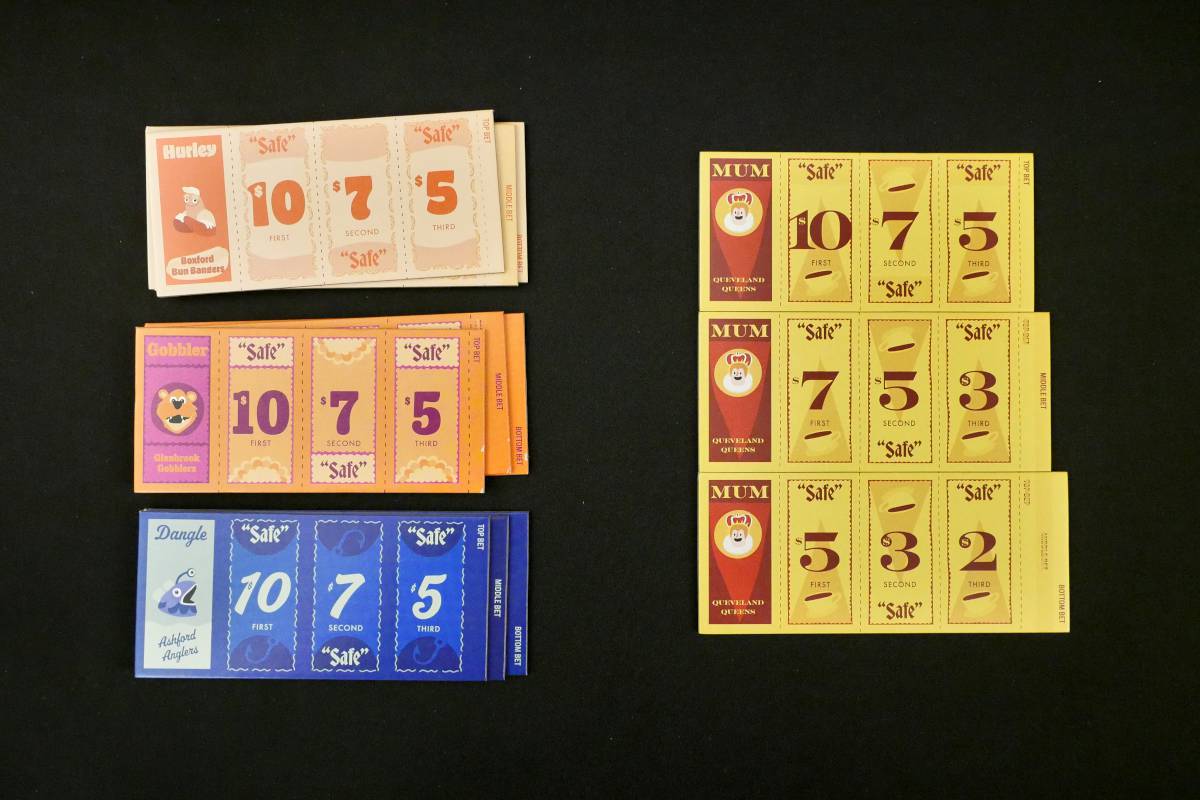
Before the race starts, players bet on mascots by drafting betting tickets. A betting ticket shows the payout for a given mascot if they place in 1st, 2nd, or 3rd. Not all betting tickets are equal, though—there are only three betting tickets per mascot, and they get progressively worse.
For example, the first player to take a Mum ticket earns $10 if Mum places 1st, but the second Mum ticket only pays out $7 for 1st, and the third Mum ticket is the worst at $5 for 1st. Meanwhile, 2nd place pays out $7/$5/$3 and 3rd place pays out $5/$3/$2. Think Mum is going to perform well? You'll want to draft her betting ticket ASAP. Same goes for the other mascots.
Each player gets to draft two betting tickets, and the drafting is done using a snake draft order. That means players first take turns in clockwise order, taking one betting ticket each, then starting with the last player, players take turns in counter-clockwise order for their second ticket.
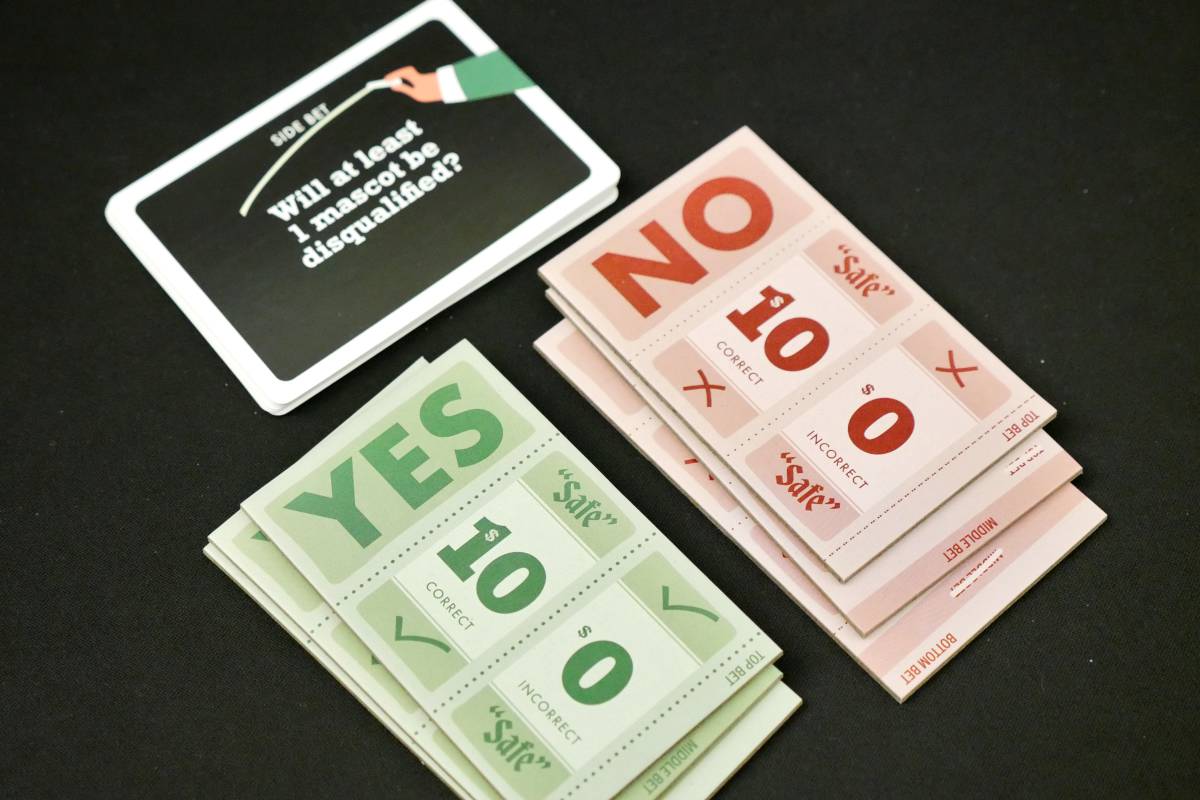
In addition to the Mascot Bets, there are also Side Bets. Hot Streak comes with 12 Side Bet cards, with one random Side Bet used for each race. With a Side Bet, you're betting either Yes or No that a specific situation will happen during the race. Side Bets pay out $10 (correct) or $0 (incorrect).
For example, here's one of the Side Bets: "Will at least 1 mascot be disqualified?" It's a simple Yes/No question. If you want to bet on it, you just draft a Side Bet ticket instead of a Mascot Bet ticket.
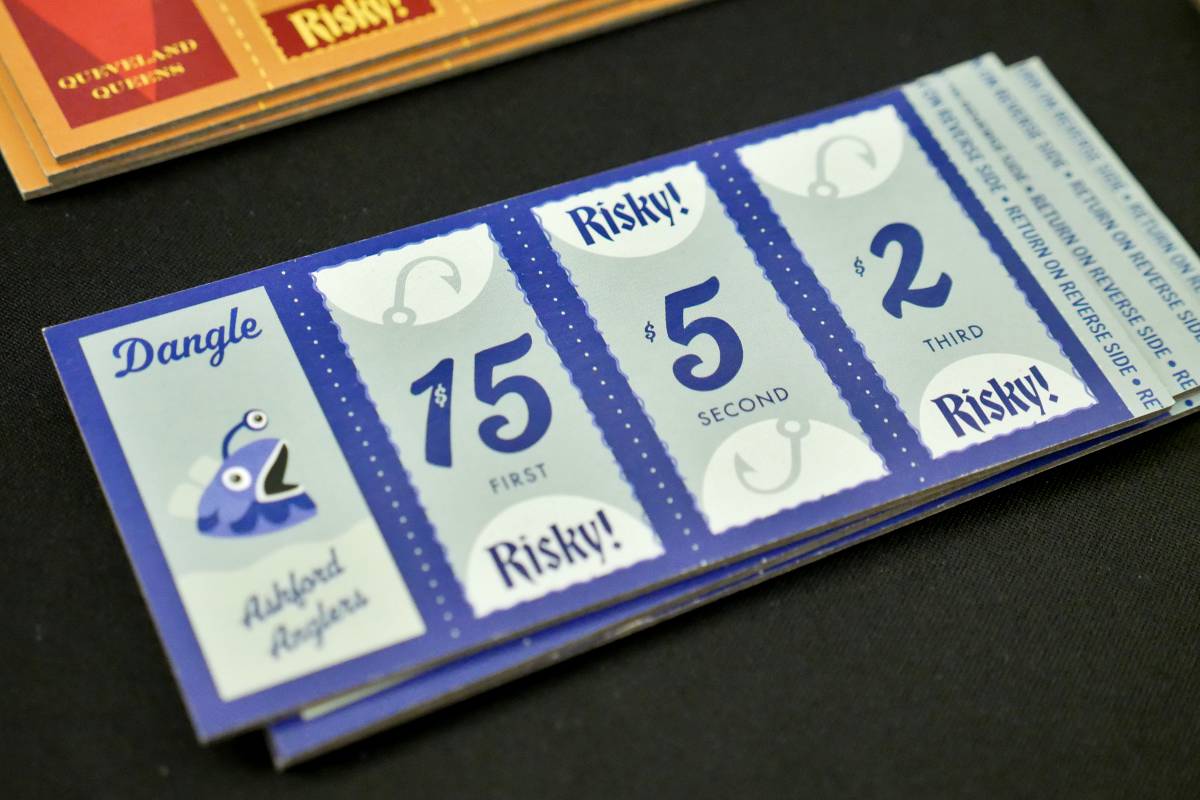
As soon as you take a betting ticket, you have to decide if you want to keep it on its Safe side or flip it over to its Risky side.
With Mascot Bets, the Risky side offers an increased payout for 1st place but reduced payout for 2nd and 3rd places, so flipping to the Risky side is basically saying you think that mascot is going to win it all.
With Side Bets, the Risky side amplifies the correct payout from $10 to $15, but also causes you to lose $5 if you're incorrect. This is the only way to lose money in Hot Streak, so be careful!
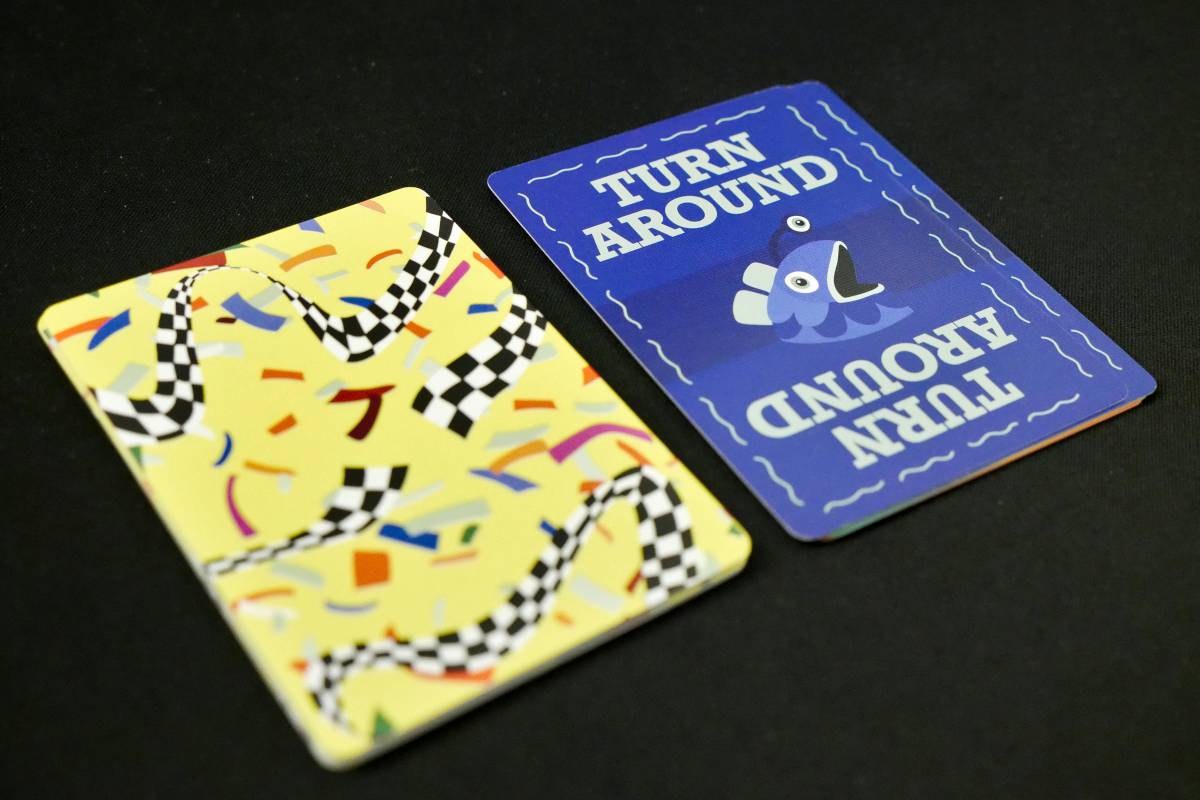
Once all players have drafted their two betting tickets, it's time to actually run the race. The 18-card race deck—which consists of random cards plus one secret card from each player—is shuffled. Then, three cards are burned (i.e., discarded). Then, the remaining cards are flipped face-up one by one, applying the revealed movement to the appropriate mascot (or, in the case of Multi cards, all mascots). It's that easy!
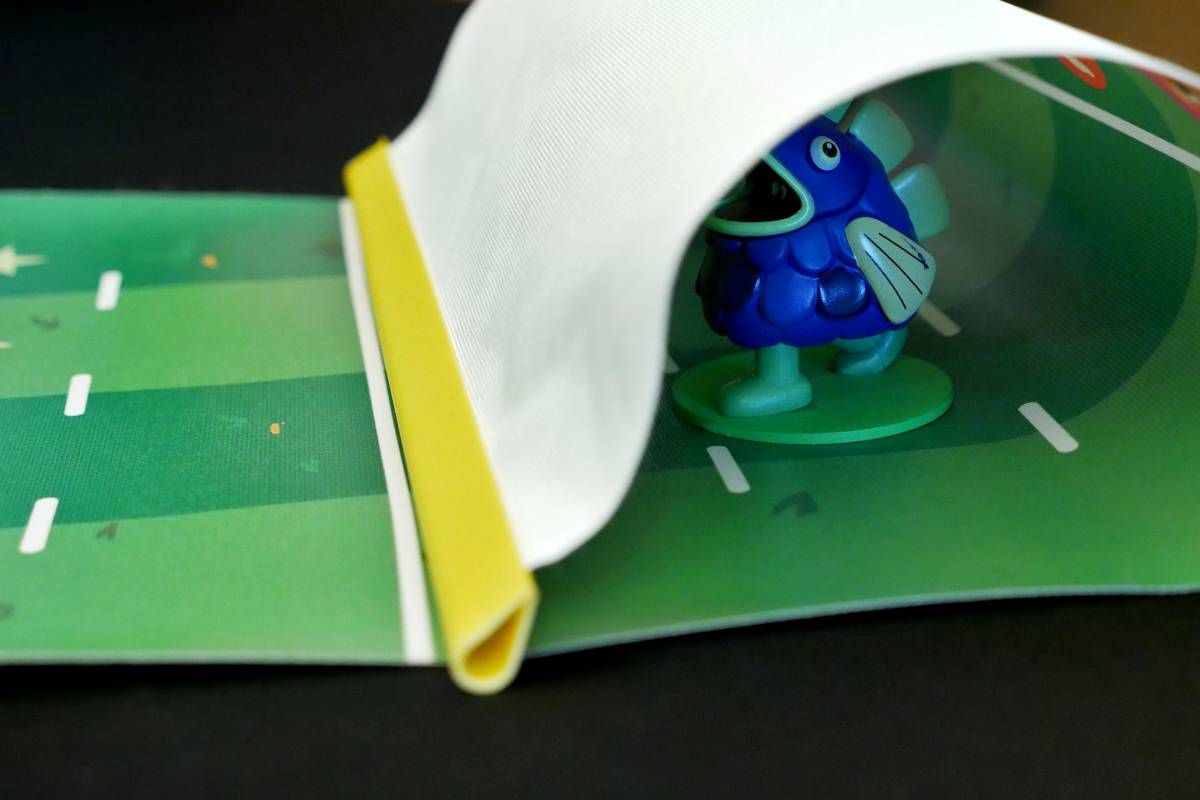
When the race deck runs out, all 18 cards are shuffled back together... and then the race track is shortened. The back edge of the track folds up to the next solid line, and if any stragglers are caught under the fold, they're instantly disqualified.
Repeat the 3-card burn, then resume flipping up cards and applying movements to the remaining mascots on the track. Repeat this whole process until all mascots cross the finish line or get disqualified.
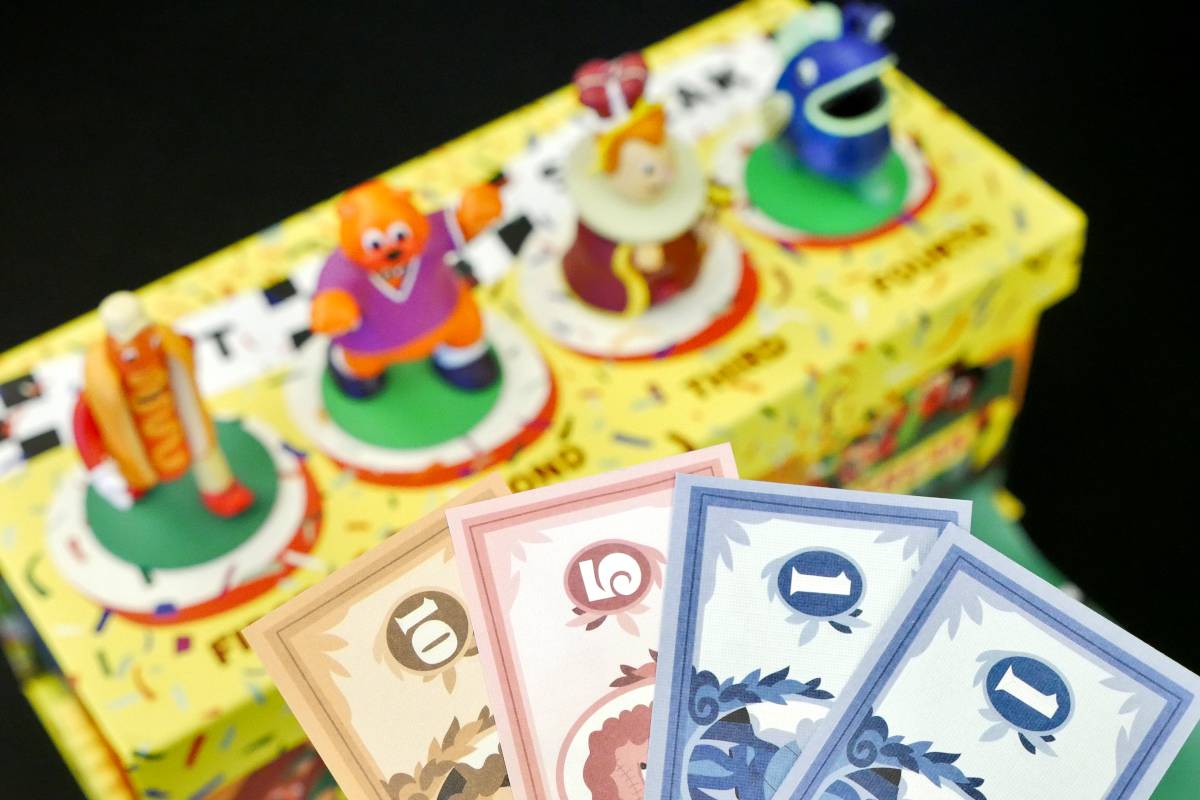
When the race ends, it's time to pay out winning tickets and set up the next race. Paying out tickets is straightforward, and all the betting tickets are returned to the table. Setting up the next race has a few wrinkles to it. The biggest thing is that one random card is dealt from the race deck to each player, so each player once again has a hand of 3 cards, and each player once again slips a secret card back into the race deck. The betting ticket draft happens all over again, and then the next race begins.
Hot Streak is played as a three-race series, and whoever has the most money at the end of the third race is the winner!
Setup and Table Footprint
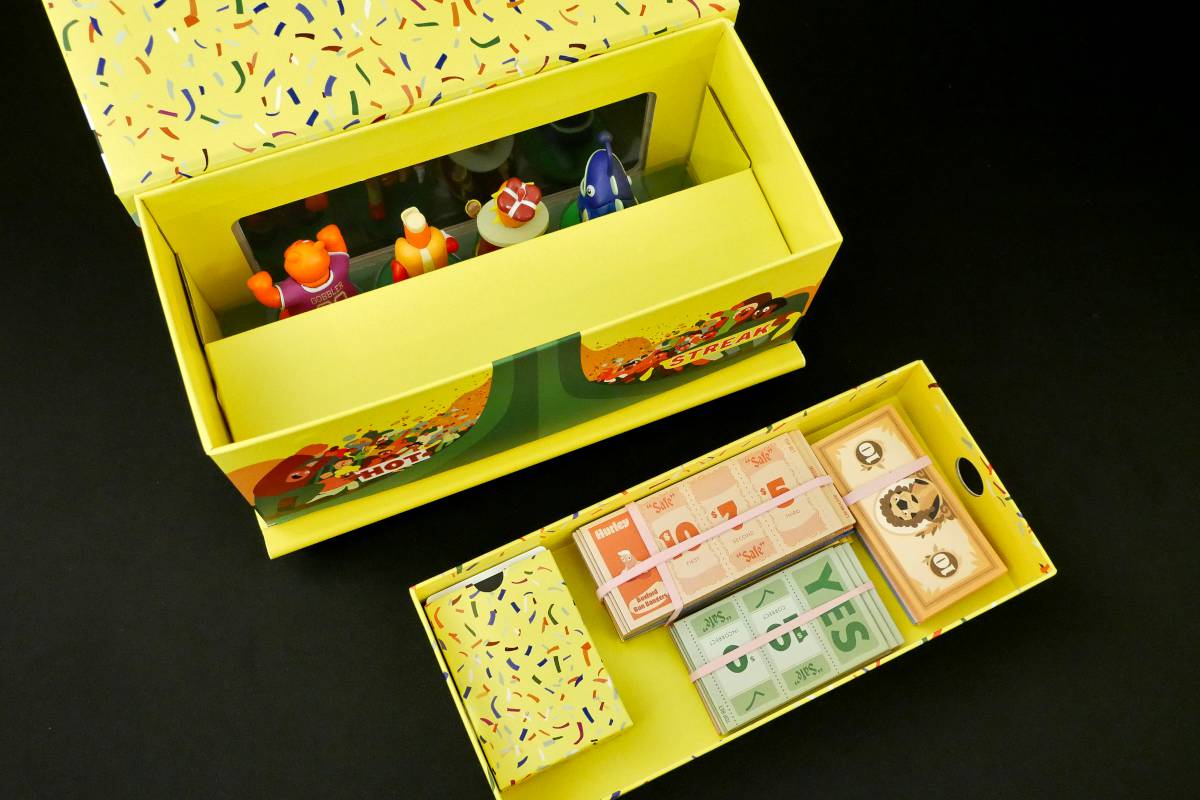
I love that Hot Streak is easy to set up and get going:
Pull out the race track, then take the mascots from the box and place them on the track. Take out the four starting cards from the deck, then shuffle the deck. Create the race deck and deal hidden cards to each player, then return the leftover cards to the box. Set up the ticket piles and money piles, then give everyone $10 to start. You're now ready to rock and roll!
Okay, fine. Could it be even simpler? Yes, especially when you consider how lightweight the gameplay actually is. But it's not too bad once you've done it a few times, and it's super easy to reset if you're playing multiple times.
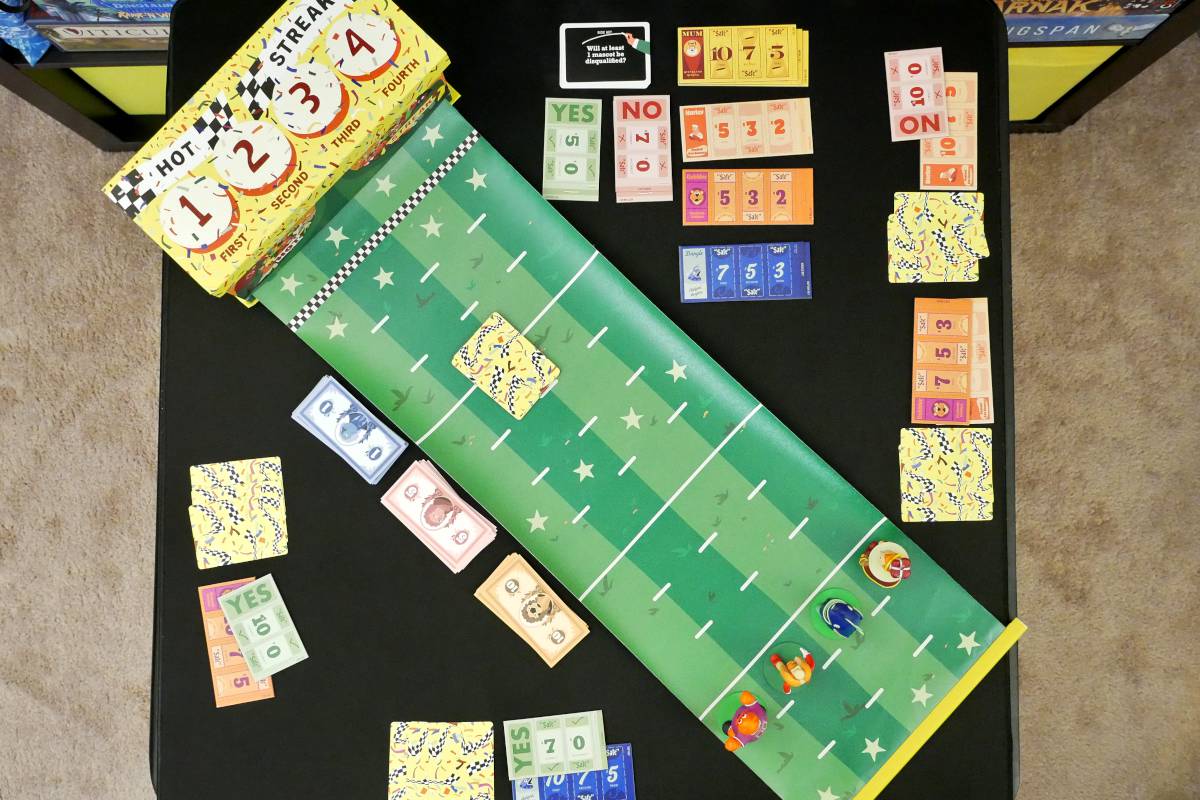
You're gonna need a sizable table for Hot Streak because the race track takes up a good amount of space. When completely extended, it measures a full yard (exactly 36 inches), which is just a tad too long for a standard card playing table like mine (which measures 33.5 inches per side). I have to play with it on a diagonal—not the end of the world, but not ideal either.
That said, if you're playing on a long enough table, you don't need that much more space on top of the race track. The stacks of tickets and money can be placed anywhere that's convenient, and each player just needs enough personal space for their own cards, money, and tickets.
Learning Curve
Hot Streak is a party game, but it's not the kind of party game you can bust out in any situation and expect people to catch on. This is a step up from the likes of Just One and That's Not a Hat, with little bits of gamery flair that might trip someone up if they aren't into hobby board games.
For example, the snake draft for betting tickets could be confusing for a non-gamer. The betting tickets themselves might be hard to grok for someone who has never bet on a race before, even without the Risky sides involved. The concept of adding in a hidden card, getting one back, adding in again for the next race—it might all seem simple, but it's patently gamery.
All I'm saying is this: Hot Streak isn't complicated but it does have a slight learning curve for the uninitiated, so I wouldn't recommend it as a general all-purpose party game. It's best played with a group who has some level of exposure to (and interest in) board gaming. The good news is, only one person needs to know how to play for Hot Streak to go smoothly.
Game Experience
Decision Space
Hot Streak is played over three races, and you mainly have one decision to make for each race: who do I think is going to win? But as simple as that sounds, there are several mini-decisions you're making along the way.
The first mini-decision is the race deck analysis. At the start of the game, you get to see the initial makeup of the race deck—and that's key because this is how you establish a foundation for how all three races are going to go. Who has the most movement? Are there lots of Fall Downs and Turn Arounds? What about Recovers? Sometimes it's obvious who's best equipped to win, but not always. Use what you see, mixed with some of your gut.
The next mini-decision is which secret card to slip into the race deck. If the race deck looks neck-and-neck for both Dangle and Mum, and if you have a Turn Around for Mum in your hand, you could give Dangle an edge by slipping in that Turn Around for Mum. Or if you have a Recover for Dangle in hand, you could slip that in to give him a boost. Only you know what you put in, so make sure it's a high-impact move that you can capitalize on.
Remeber also that betting tickets are acquired in snake draft order, so you can use the draft to glean insight into how others may be influencing the race deck. Who is everyone betting on? If Gobbler was a clear winner in the race deck but Ellis is avoiding them, maybe he slipped in a bad card for him. Or if Dangle seemed unimpressive but Marcy takes his ticket, then maybe she slipped in something good for him. You can't glean too much from this, mind you, and you may not even be able to act on your learnings depending on your position in the snake draft. But it's something to consider.
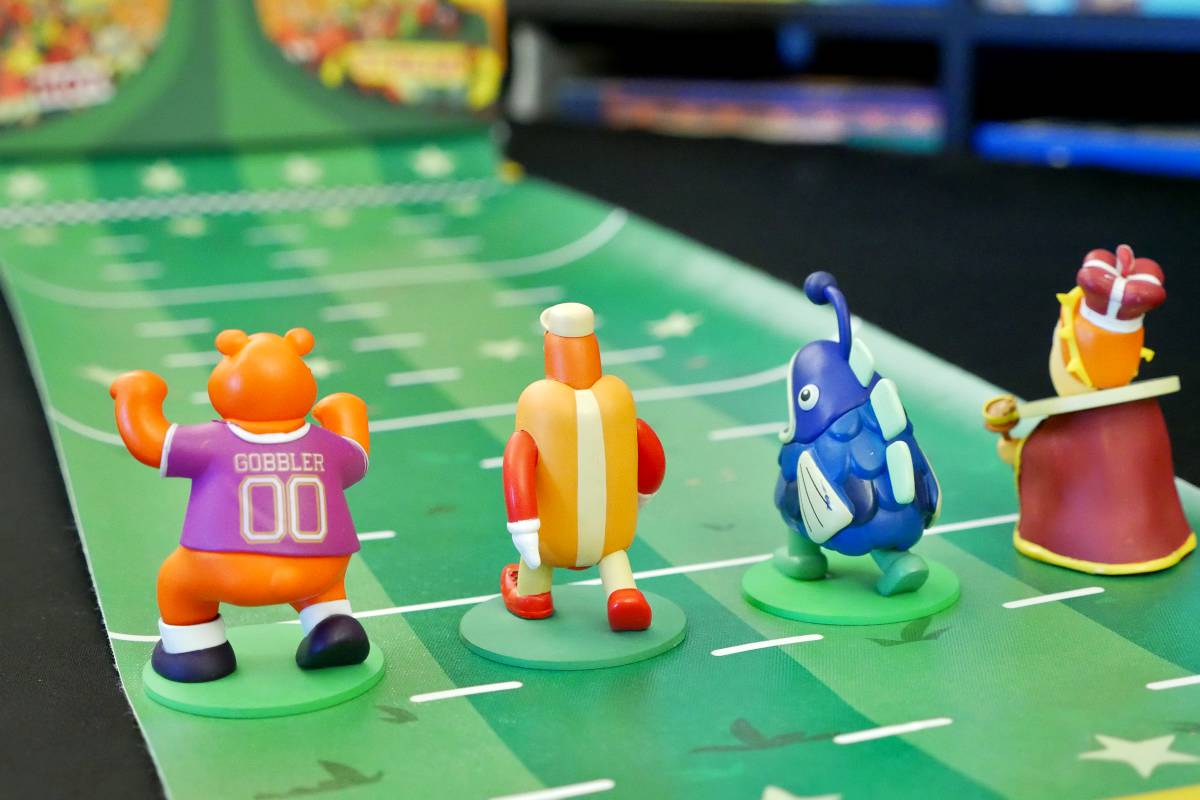
And when it comes time to draft your own betting tickets, you aren't just picking a winner—you're trying to maximize your payouts. You might think Gobbler is going to win, but if two of his tickets are already taken, you aren't going to win much even if you're right with that third ticket. You might earn more by taking a Mum ticket and hoping she comes in second place, for example. It's not all about first-place winners.
But if you're absolutely certain that a racer will come in first, you can always flip their ticket to the Risky side. The Risky side has a better payout if the racer comes in first, but worse payouts for every other position. Are you going to risk it? Or play it safe?
Lastly, there's the matter of the current race's Side Bet. The cards in the race deck aren't just telling you who's likely to win and lose! They're also showing you how likely it will be for racers to fall, recover, get disqualified, etc. And when you aren't sure who to bet on, or if your intended tickets are taken, a well-placed Side Bet can make a big difference.
These are all the mini-decisions you have control over in the midst of a chaotic and unpredictable race, and they're small yet engaging. There's enough to think about for Hot Streak to not feel like a pointless waste of time. At the same time, you aren't inundated with too many factors. I've yet to see anyone get locked in analysis paralysis here, even among AP-prone players.
Luck Factor
Hot Streak is an extremely lucky game. Randomness isn't just baked into its DNA—every aspect leans into unpredictability, so much so that you can make all the "right" decisions and still end up in last. It's just that kind of game and you have to accept that going into it, but it works here because each race is so quick and the unpredictable outcomes are hilarious to watch unfold.
It all comes down to the order of cards in the race deck. Hot Streak's design is a stroke of genius because the step-wise movement of each card leads to a sort of emergent gameplay. You can know every single card in the deck, but the order in which they come out can totally change the outcome.
For example, the race deck might have 9 Hurley cards. That's half the deck! Likely more movement potential than the three other racers combined. But if one of those cards is a Turn Around and if it's the first Hurley card to be drawn, then he'll run right off the back of the track and end up in 4th place. Meanwhile, if Turn Around is the last card of his to show, he'll probably blow right past everyone and win the race. Maybe.
Disqualifications are also huge. Even if Hurley pulls ahead early, the card order could cause both Gobbler and Mum to run through him. The first hit knocks him down, then the second hit knocks him out, immediately disqualifying him and turning the race on its head. These collisions are impossible to predict. They really come down to how the deck is shuffled.
All of the above doesn't even include the fact that you can't fully know the race deck's composition of cards. With every player secretly slipping in their own card at the start of a race, there's always an unknowable element. And it's doubly true at the end of each race, with random cards taken out (you don't know which) and then more cards secretly added back in.
Plus, there's the 3-card burn. Did you slip in a Turn Around card for Mum, hoping that it would hamper her performance? That card might never be played if it ends up burned. I love this aspect because it adds a third layer of unpredictability and surprise to the race deck.
Fun Factor
Ultimately, Hot Streak is a game of surprise. That's the core mechanism. You throw a bunch of ingredients into a pot—and everyone else also throws in their own ingredients—and you all see what comes out together. You all just happen to be betting on that outcome, too.
Half the fun is trying to guess who's going to win. With so many unpredictable layers (see "Luck Factor" above), winning really is a guess. You can be the smartest board gamer who's ever board gamed, but you'll never have a perfect track record here... and that's okay because you'll still feel like you're making meaningful guesses. You have one piece of secret info that nobody else knows, and that small advantage sweetens the guessing half of the game. You know it's a crapshoot, but it's your crapshoot.
The other half of the fun is watching the race fall apart. The race deck can spit out some crazy sequences that totally go against expectations, with racers getting knocked down and turned around and crawling to a finish. But you know that anything can happen—even when the chips are down—so you find yourself rooting and cheering and hoping for the best right up to the very end. It ain't over 'til it's over, and it's full of surprises along the way. Combined with everyone else at the table, Hot Streak is pure entertainment.
Pacing
Hot Streak is perfectly paced with its three-round back-and-forth between quiet individual betting and raucous group excitement. The betting phase takes just a few minutes to draft tickets, then the following race takes 5+ minutes to run through. The whole three-race series is over in under half an hour, and there's absolutely no downtime.
The game arc is pretty strong, too. Though you start on the same footing as everyone else, every race immediately disrupts the standings and you're either hoping to catch up or hoping to pull further ahead. The tension grows more and more taut with each race, and the double-scoring on the third race means you're always in it even when you've fallen behind.
In other words, each subsequent race has higher stakes and you can really feel it. That last race is always brimming with anticipation, nervousness, and excitement, leading up to a thrilling climax. It's great.
Player Interaction
Now that I think about it, it's surprising just how little players interact in Hot Streak. You'd think with all the table talk, cheering, and groaning that players were personally duking it out on the track. But that's not the case at all. The race is fully automated and entirely hands-off, and everyone is merely a passive observer awaiting the outcome with bated breath.
If there's any interaction at all, it's when players are able to slip in a secret card into the race deck to influence how things will play out. But even that doesn't feel like interaction, at least not player interaction. It's more akin to sneaking a few dashes of cayenne pepper into a stockpot of stew, then seeing how everyone else reacts to it while you enjoy the spice.
Player Counts
Hot Streak is excellent at all player counts, although it's (unsurprisingly) way more chaotic at higher player counts. My very first play was at 2 players with my wife—and we had such a blast, we ended up playing three full games in a row. I've also played at mid player counts and I've spectated 9-player games. It's just plain fun across the board.
Do note, however, that it's ever so slightly more tactical at 2 players because there are a few tweaks: you have a hand of four cards (not three), you slip two cards into the race deck (instead of one), and you draft three betting tickets (instead of two). It's still crazy, but you have a little more control.
Otherwise, with a total of 18 betting tickets (12 Mascot Bets and 6 Side Bets), your options really tighten up above the 6 player count. It's more than likely you'll end up missing out on tickets you want and having to take a ticket you don't want. You're almost being given someone to root for, which could turn out in your favor (see "Luck Factor" section), but you lose a bit of agency. Still, it's worth the trade-off because more players equals more energy!
Fiddliness
I gotta say, Hot Streak feels a smidge fiddly despite how simple it is. The constant handling of racers on the track, the shuffling and rebuilding of the race deck, the taking and putting back of betting tickets, the hard-to-handle paper money—none of it's egregious on its own, but it does add up to an experience with lots of moving components relative to the gameplay.
Replayability
Hot Streak is extremely replayable. The 53-card deck may not seem like it'd offer a lot of replay value, but you only use 18 of them in any given race. Even with so many cards left out per game, there are so many possible combinations of cards that can form the 18-card race deck, and Hot Streak somehow succeeds at making each race feel truly different.
CMYK has a real winner on their hands with this game. Unlike other race-betting board games, Hot Streak strikes the perfect balance of front-loading the decision-making then leaving the rest up to fate. It flows well, it's paced well, it's so dang approachable and entertaining. There are constant plot twists and you're biting your nails right up to the very end. No other game in my collection even comes close in terms of thrills-per-second.
I'm happy to play Hot Streak multiple times in a row, I'm always in the mood to pull it out, and I'd never say no if someone suggested playing it. That's a phenomenally impressive feat for a game that's just 18 random cards flipped up one by one and seeing how things turn out.
Production Quality
In just the past five years or so, CMYK has established itself as one of the rare board game publishers to have a unique visual identity and direction that infuses every game they make, from Monikers to Spots to Wavelength to the reimagined Quacks. Bold colors, toy-like tactility, mainstream approachability, with a touch of wackiness that reminds you that board games are meant to be fun. That's all here in Hot Streak, too.
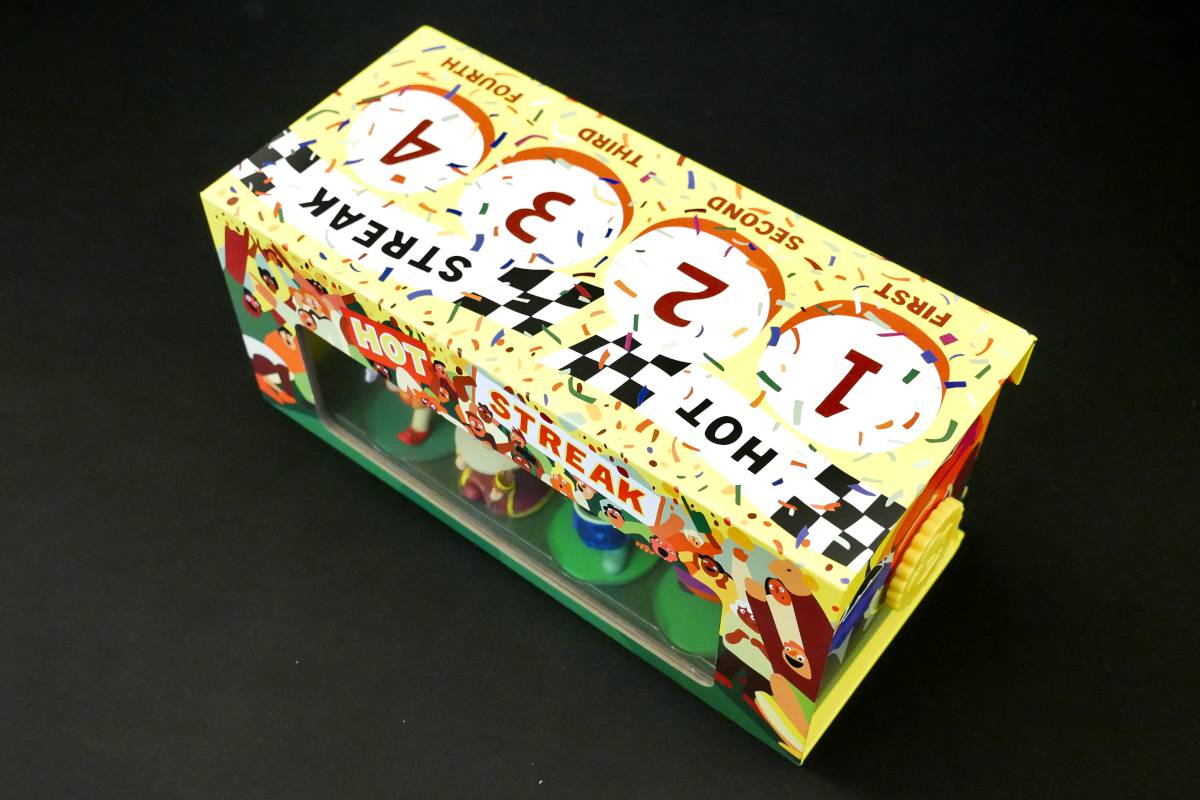
The unusual box design serves the gameplay well, but sucks for storage. I bet you haven't seen anything like this in board gaming before. The race track pulls out of the box like a window shade? That's just crazy! And it's functional, too, with it rolling up as time runs out. The box also serves as a podium for winners during play and as a window display when packed up. I love everything about it... except for its unusual shape. It doesn't store well on my shelves next to my other games. A little annoying, but whatever.
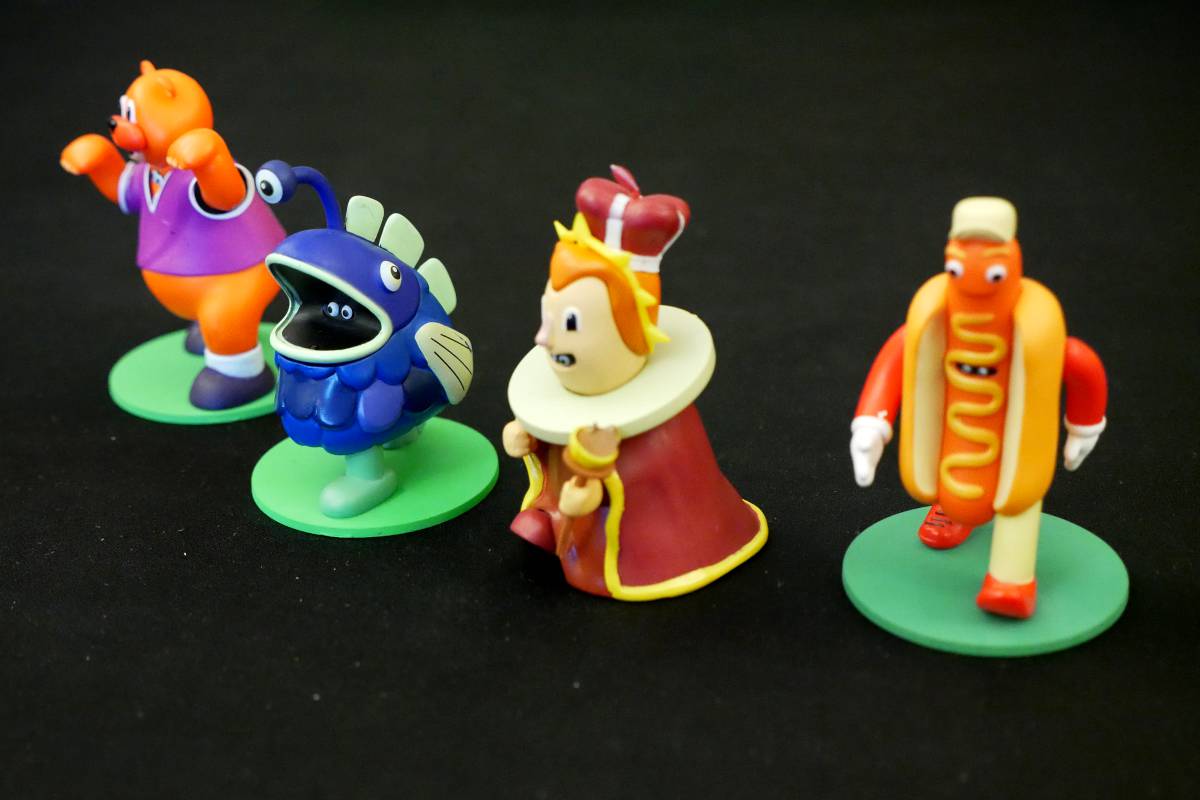
The mascot minis are cute, wacky, and instantly draw your attention. More importantly, they're unlike any style of miniature I've seen in a board game, and that makes them stand out with a unique identity. They're welcoming and approachable—unlike, say, dragons or demons—and I love their size and heft. They have presence and they feel good to move around on the race track. They're basically toys that bring out the child within you.
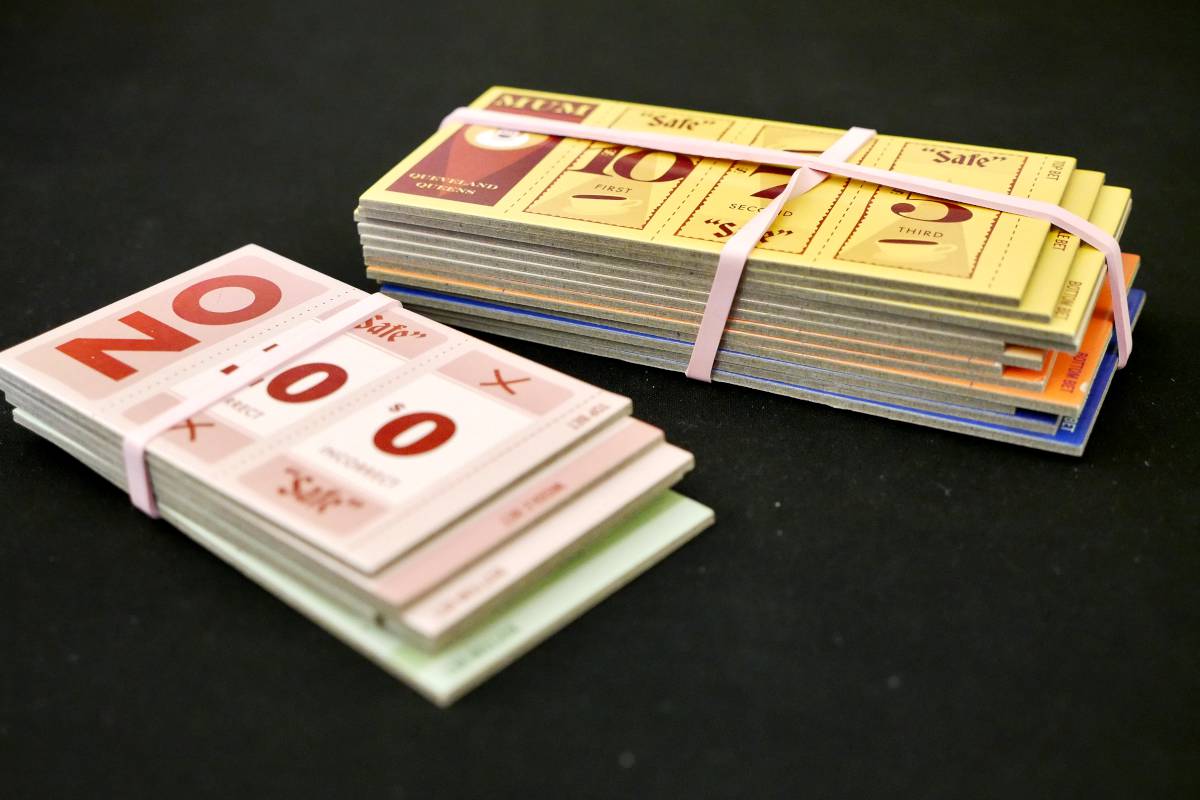
The chunky betting tickets are tactile and fun to draft. Did they need to be big slabs of cardboard? Nope. Almost any other game would've just made them as cards or skimped on the cardboard thickness. Hot Streak gives them weight, and it's a small touch that adds something special to the experience. It injects a bit of oomph to the whole thing.
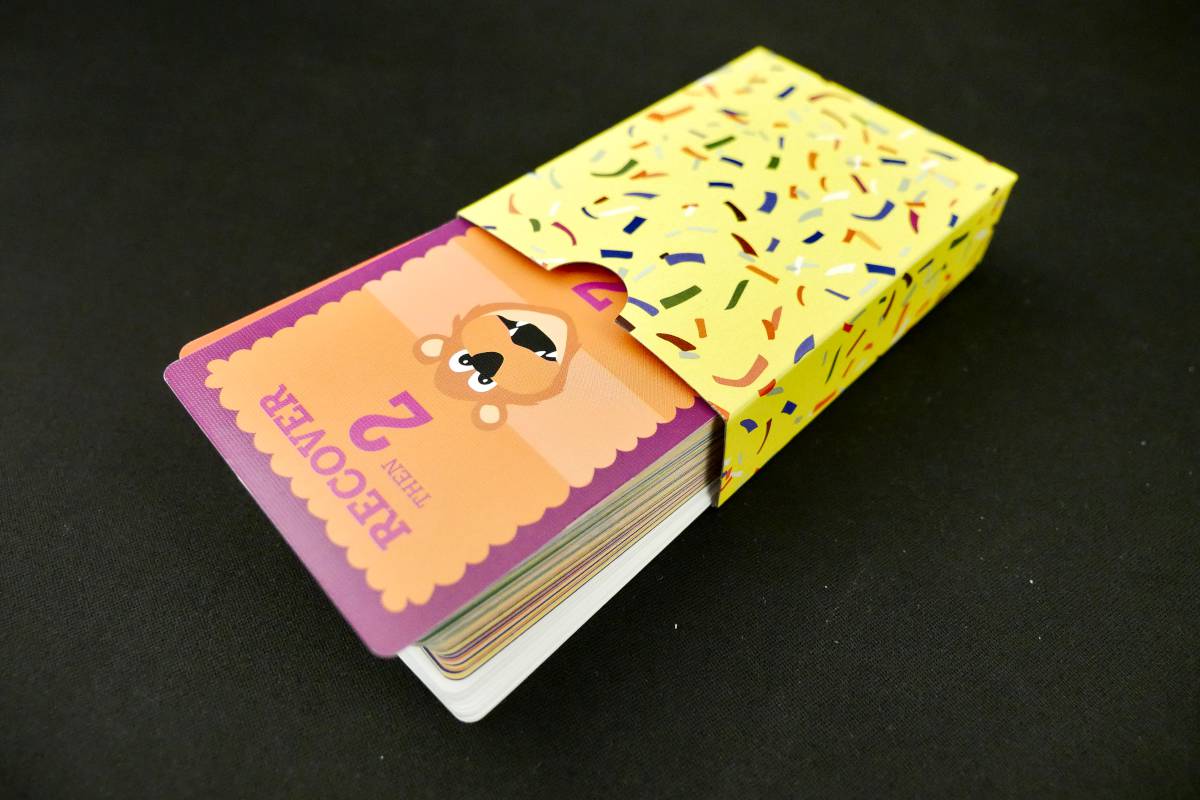
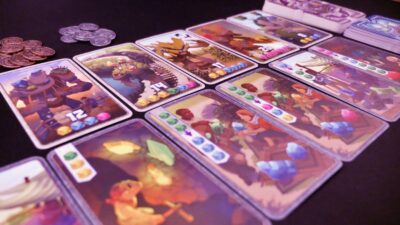
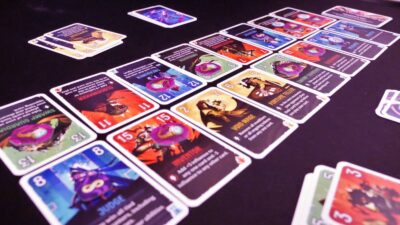
The race cards have clear colors, text, and iconography. The graphic design is just... chef's kiss. You can tell which mascot each card is for, not just by the background color (immediately recognizable), but also by the mascot's face in the center and the mascot's unique border pattern. The text is large and legible, and everything is stylish yet intuitive. All of this carries over to the graphic design of the betting tickets, too.
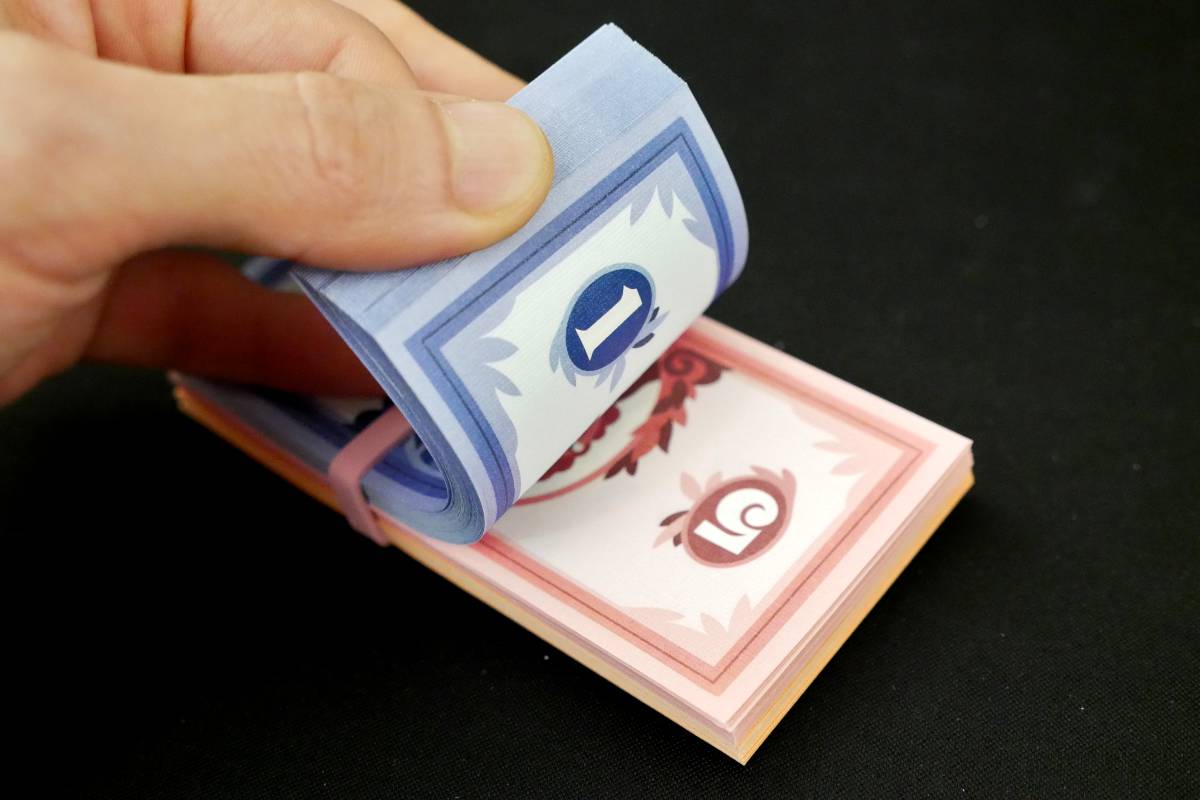
The paper money is a pretty big negative. Sure, it's nicer than the other paper money I've seen in games, but it's still difficult to handle. While the surface is textured and feels premium at first, it's still thin and small and sticks together. I hate trying to peel off a single $1 or $5 bill, and it takes more fiddling than it should. I'd absolutely prefer chips or tokens, which are the norm in board games for good reason.
The Bottom Line
Hot Streak is phenomenal. It's the most thrilling, lively, hilarious, and spirited party game I've ever played that still feels like a game rather than an activity. It has a high success rate across demographics, and it's been a hit with families, friends, kids, casual gamers, hobby gamers, you name it. I highly recommend it to all gamers of all kinds.
The only reason you wouldn't like it is if you hate chaotic outcomes that are beyond your strategic control. But that's the whole point here, and that's what makes Hot Streak so enjoyable over repeat plays. You make your guesses, sit back, and watch it all fall apart in the most ridiculous ways.
Stop Buying Games
You'll Regret
Before your next game purchase, run it through this mental checklist that every seasoned gamer uses.
Free checklist, delivered instantly to your inbox.
No spam, ever. Unsubscribe in one click.