
I love the idea of a tiny 2-player card game that packs a punch, and I've been on the hunt for such a game to no avail these past few years. The closest I've come are Odin and Skulls of Sedlec, which are fine games but not quite as punchy as I'd hoped. Then along comes Duel for Cardia.
At first glance, Duel for Cardia looks like the kind of game I've been hoping for—and in many ways, it is. There's a lot to like here, with plenty of replayability and emergent interactions to be explored. While I've ultimately decided that it isn't right for me, I can happily say it's one of the best in this genre. Duel for Cardia is a standout.
Here's everything you need to know about how Duel for Cardia plays, what's so great about it, why it doesn't fit my needs, and whether it's a game worth adding to your own collection.
This review is based on a review copy of Duel for Cardia provided by Asmodee, but my thoughts and opinions are my own.
Overview
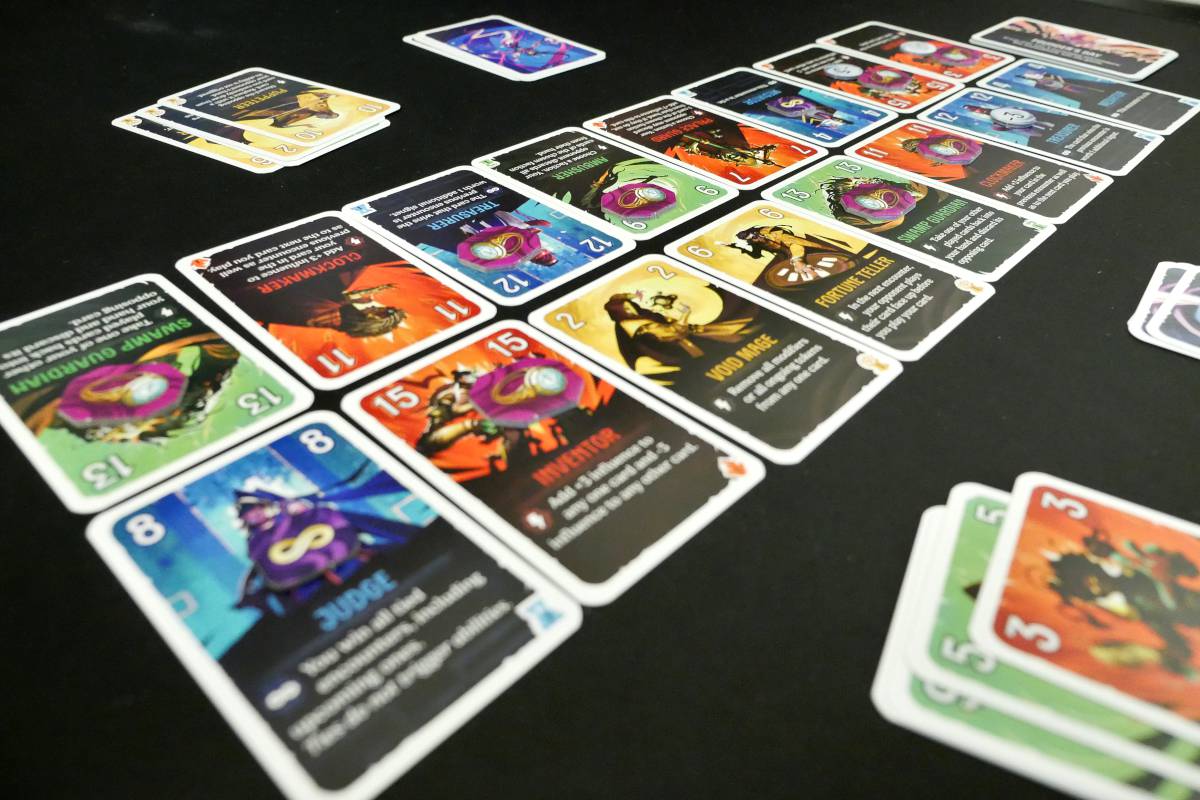
Duel for Cardia is exactly what it says on the box: a 2-player head-to-head duel with cards. It's a mostly symmetric showdown where the winner is determined by clever hand management, tactical wizardry, psychological trickery and mind games, and a little bit of luck. There are a lot of games like this now, but Duel for Cardia stands out with one key mechanism.
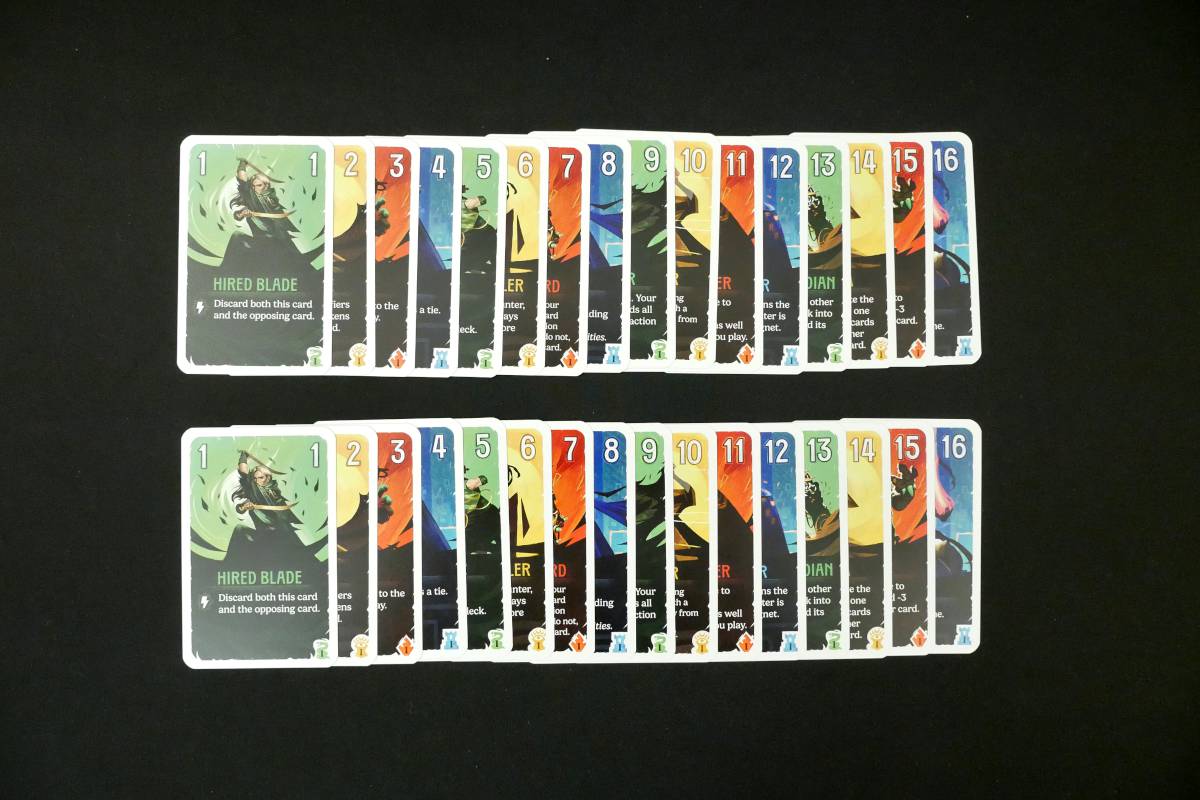
Each player starts with the same exact deck of 16 cards. These cards are numbered 1 to 16, and each card also has a special ability. Again, both players have the exact same set of numbers and abilities, but each deck is shuffled up at the start of the game and set aside. Symmetrical, but not perfectly so.
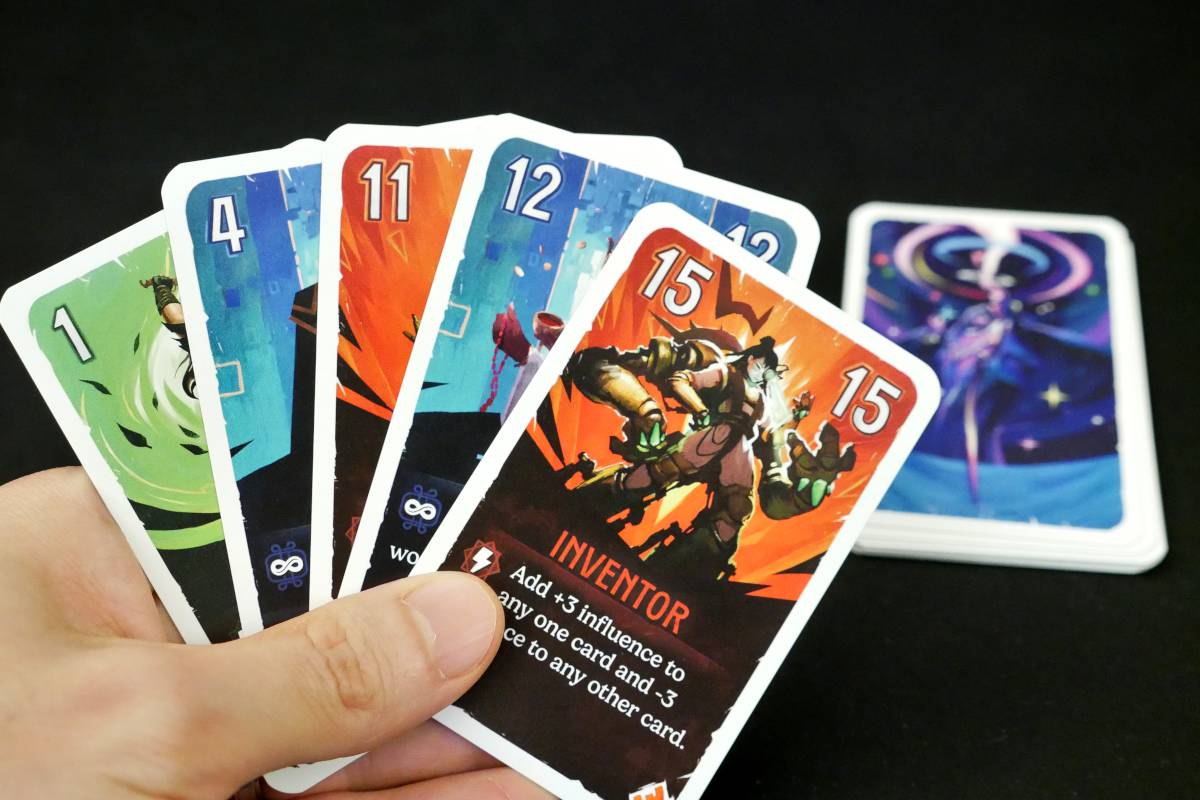
Each player starts with a hand of 5 cards drawn from their respective decks. While the total potential of each set is the exact same, each player is actually playing from an asymmetric perspective.
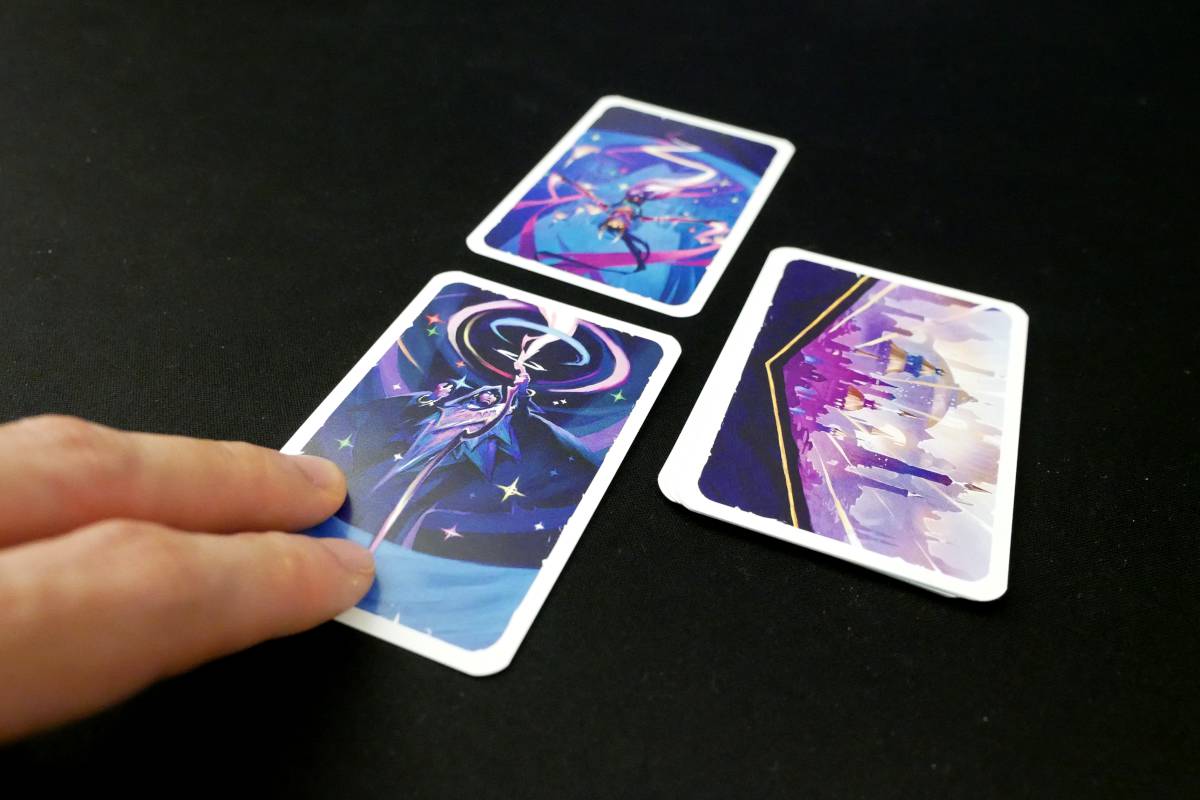
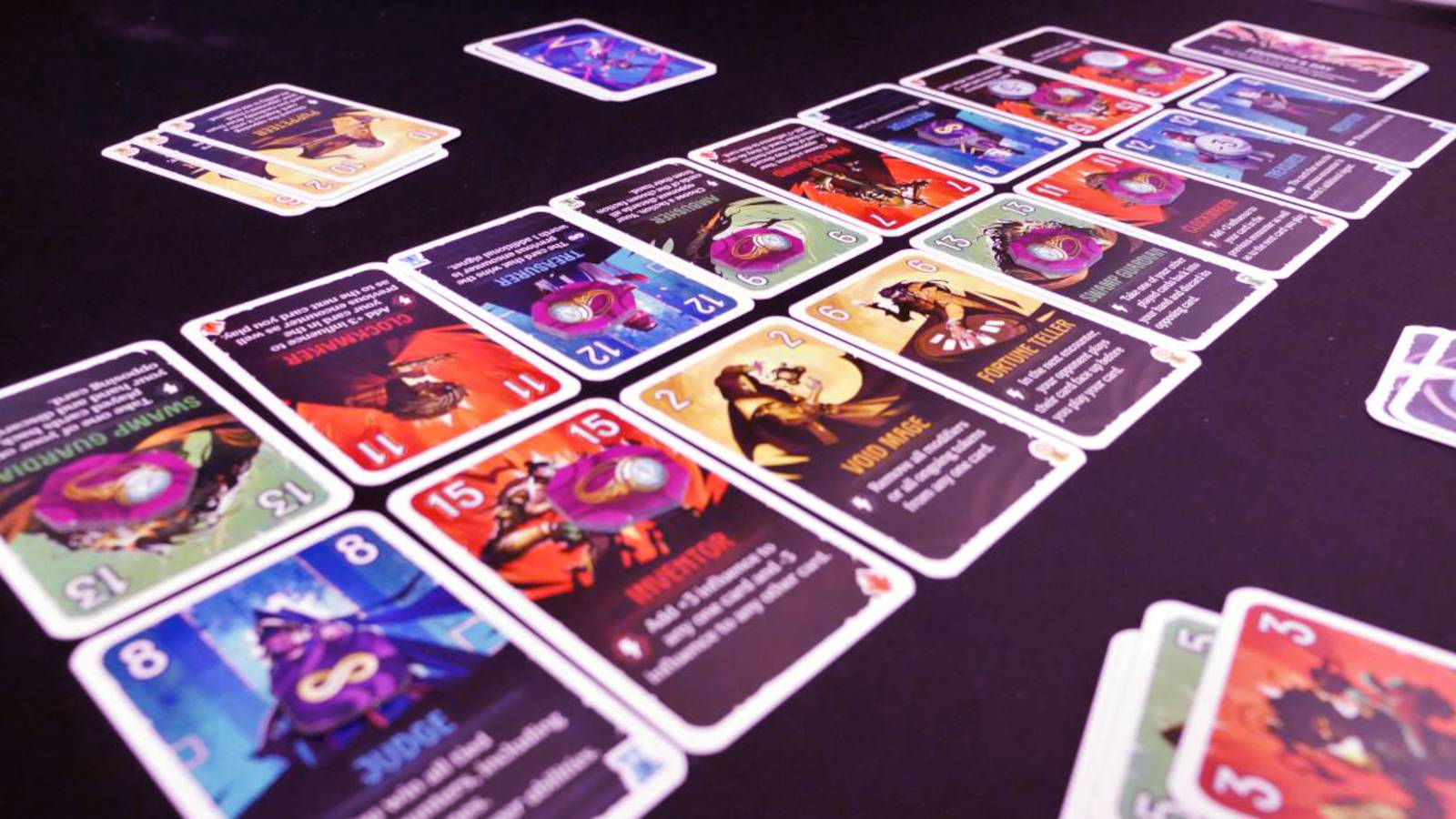
Both players simultaneously play a card face-down. This is called an Encounter. When both players have played their cards, they're revealed face-up and resolved. The card with the higher number wins the Encounter, earning a Signet token to show its victor status. These Signet tokens are important because the first player to earn 5 of them wins.
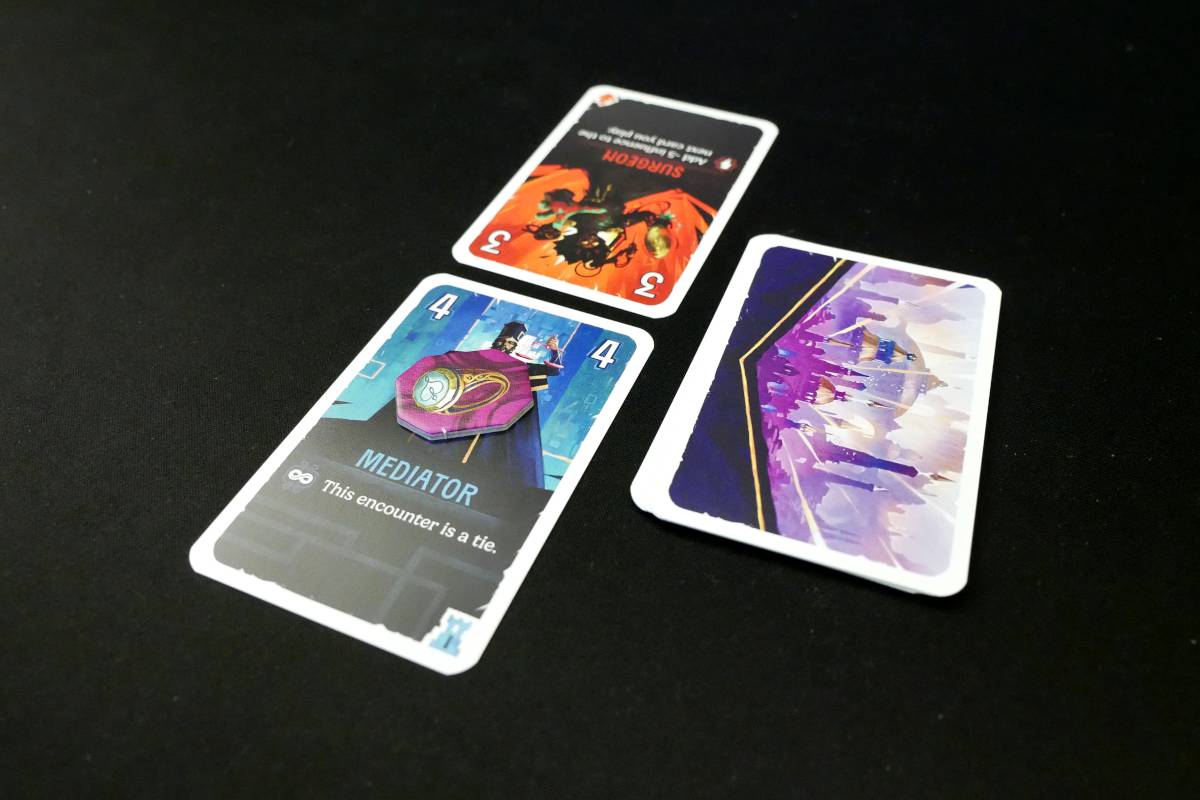
Here's the twist: the losing card then activates its ability. The winning card does not. In this way, both players benefit from every Encounter, with the winning player taking one step closer to winning the game while the losing player gets to influence the fight in their favor somehow.
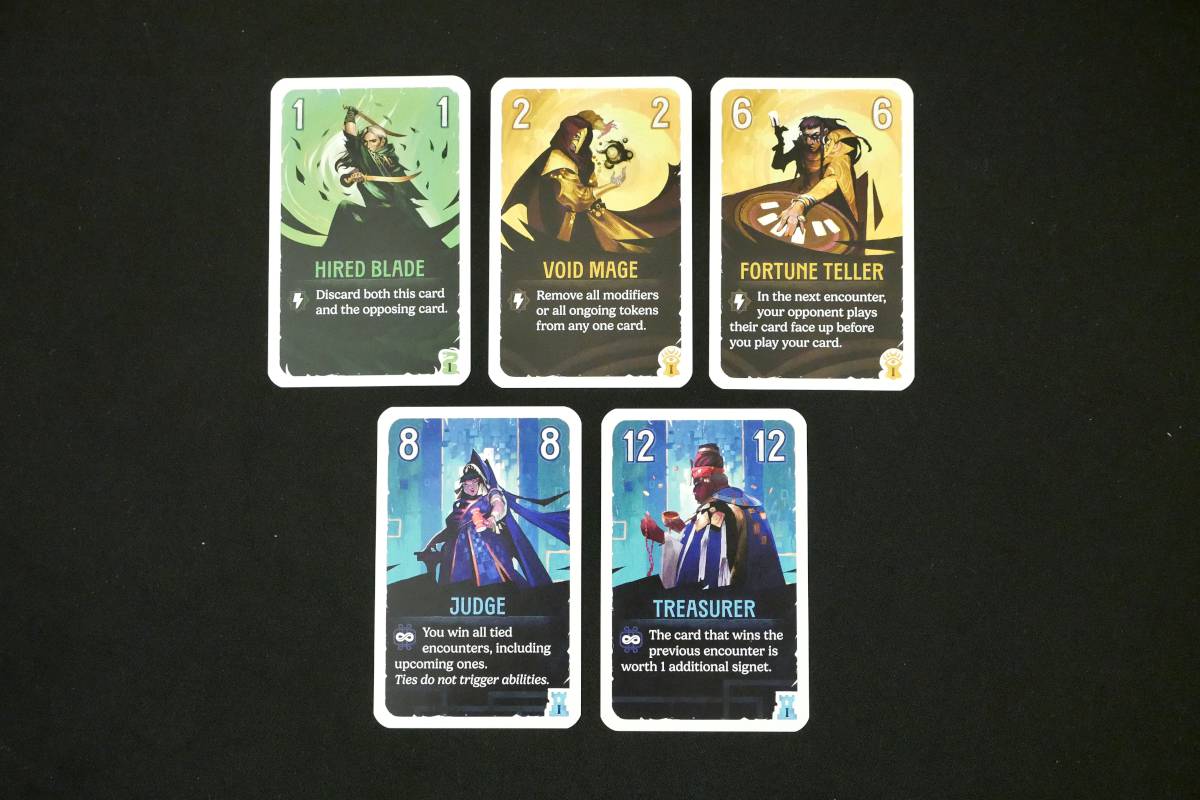
Abilities come in two forms: Instant and Ongoing. Instant abilities, as you might guess, happen as soon as the Encounter is resolved. Ongoing abilities are like new rules that alter the match, but these new rules are only in effect as long as the card has an Ongoing token on it. If that Ongoing token gets removed somehow, that rule is no longer in effect.
Examples of ability effects include:
- Hired Blade (1): Discard both this card and the opposing card.
- Void Mage (2): Remove all Modifiers or all Ongoing tokens from any card.
- Fortune Teller (6): In the next Encounter, your opponent plays their card face up before you play your card.
- Judge (8): You win all tied Encounters, including upcoming ones.
- Djinn (16): You win the game.
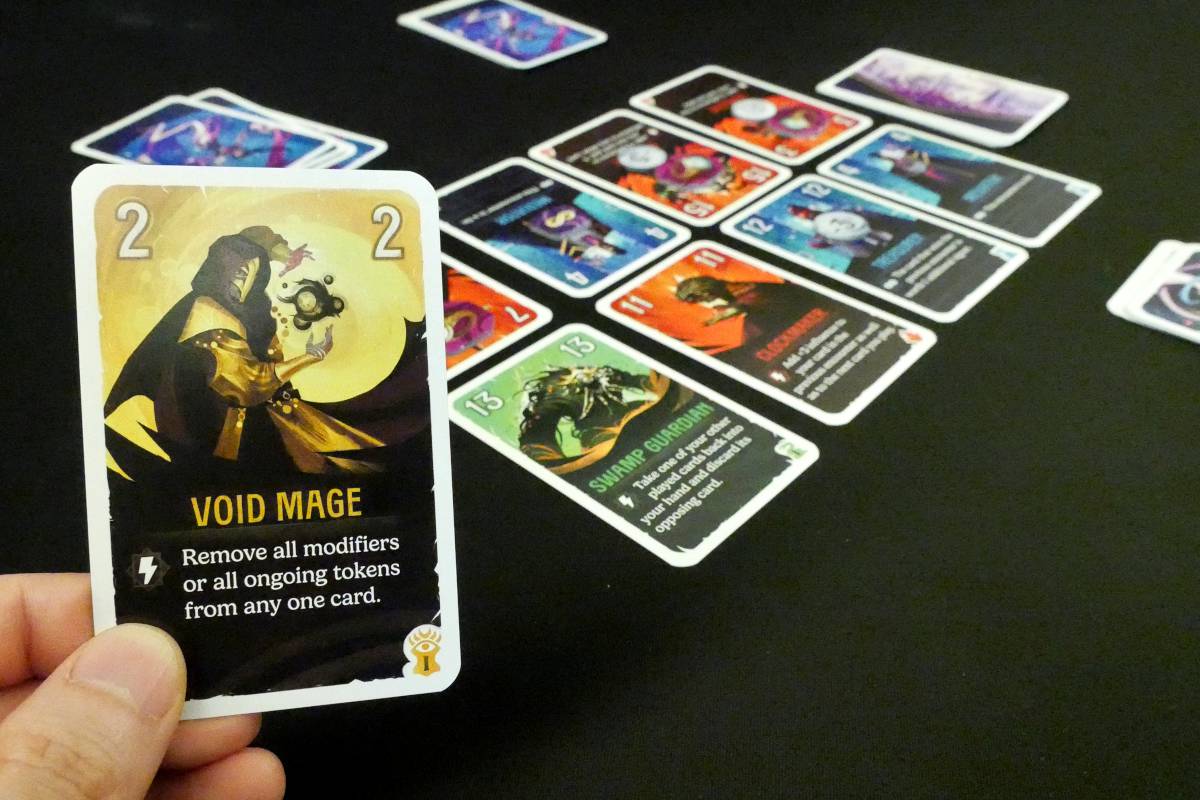
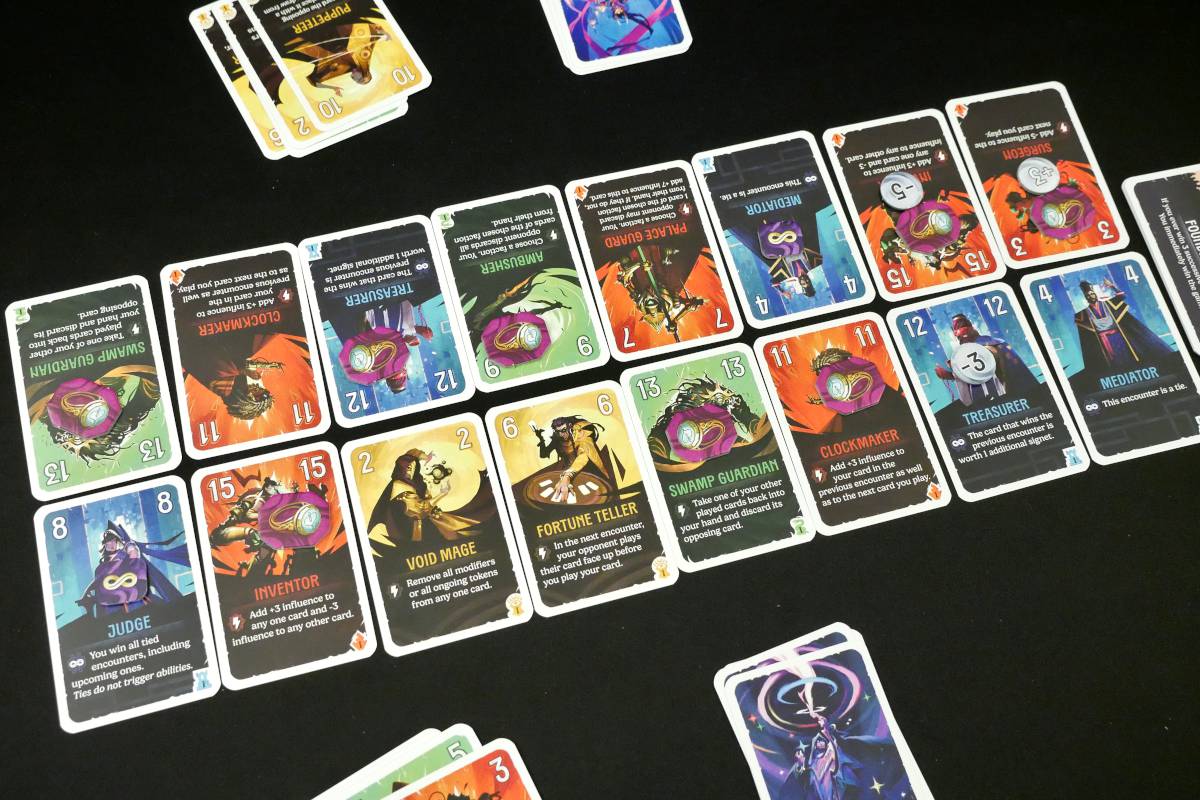
Past Encounters can be changed by future Encounters. What's really cool is that Duel for Cardia is sort of a time travel game, in that the results of past Encounters aren't set in stone. If a later Encounter kicks in an ability that affects previously played cards, then the results of those previous Encounters can change... causing Signet tokens to switch between cards.
In this way, you aren't just trying to win every single showdown, but you can purposely lose a showdown knowing that you might flip it back in your favor with a clever move down the line.
There are three ways to win. These different win conditions put pressure on you from different angles and nudge the game towards a conclusion:
- You have 5 Signet tokens at the end of a round. This is the primary win condition and the most common way to win.
- You trigger an ability that says you win the game.
- Your opponent can't play a card.
That's the gist of it. You simultaneously play cards to win Signets while the loser of each Encounter gets to trigger an ability, and it's a race to 5 Signets before your 16-card deck runs out. It's as straightforward as it sounds.
Advanced Mode
Duel for Cardia doesn't exactly have an advanced "mode," but it does include a few bits of extra content that can shake things up.
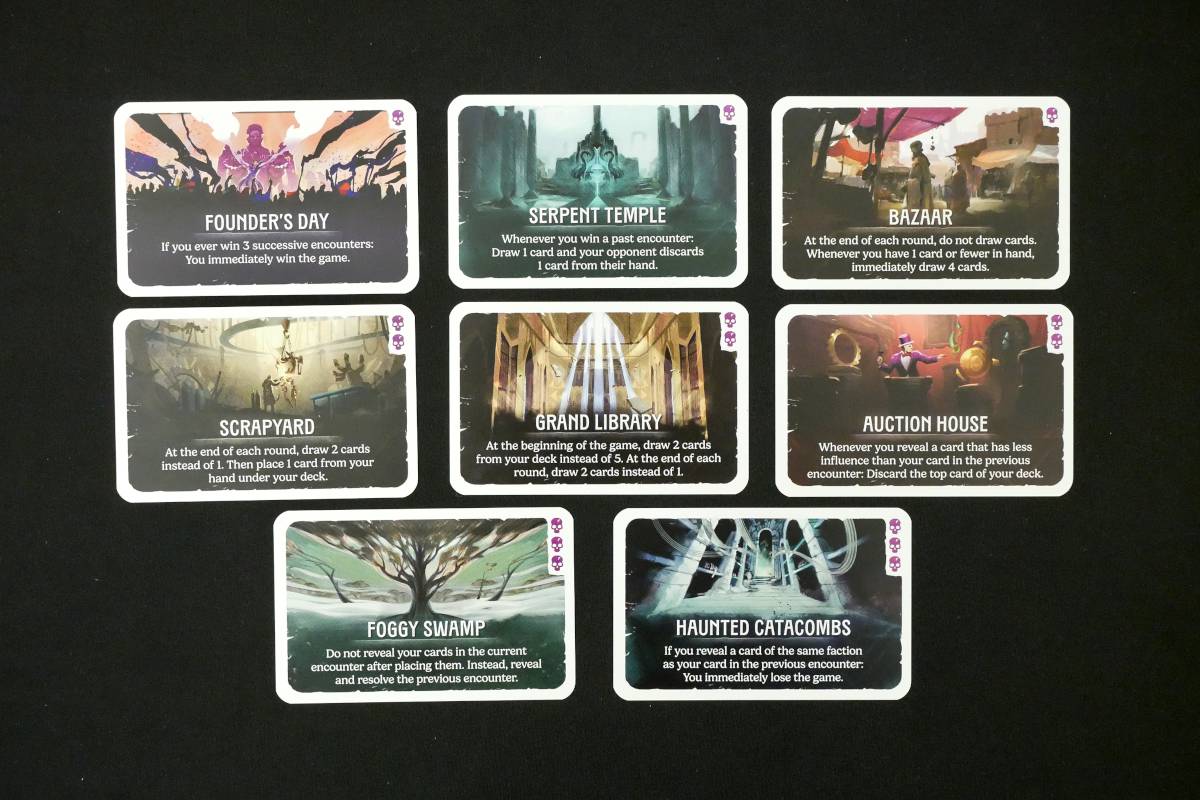
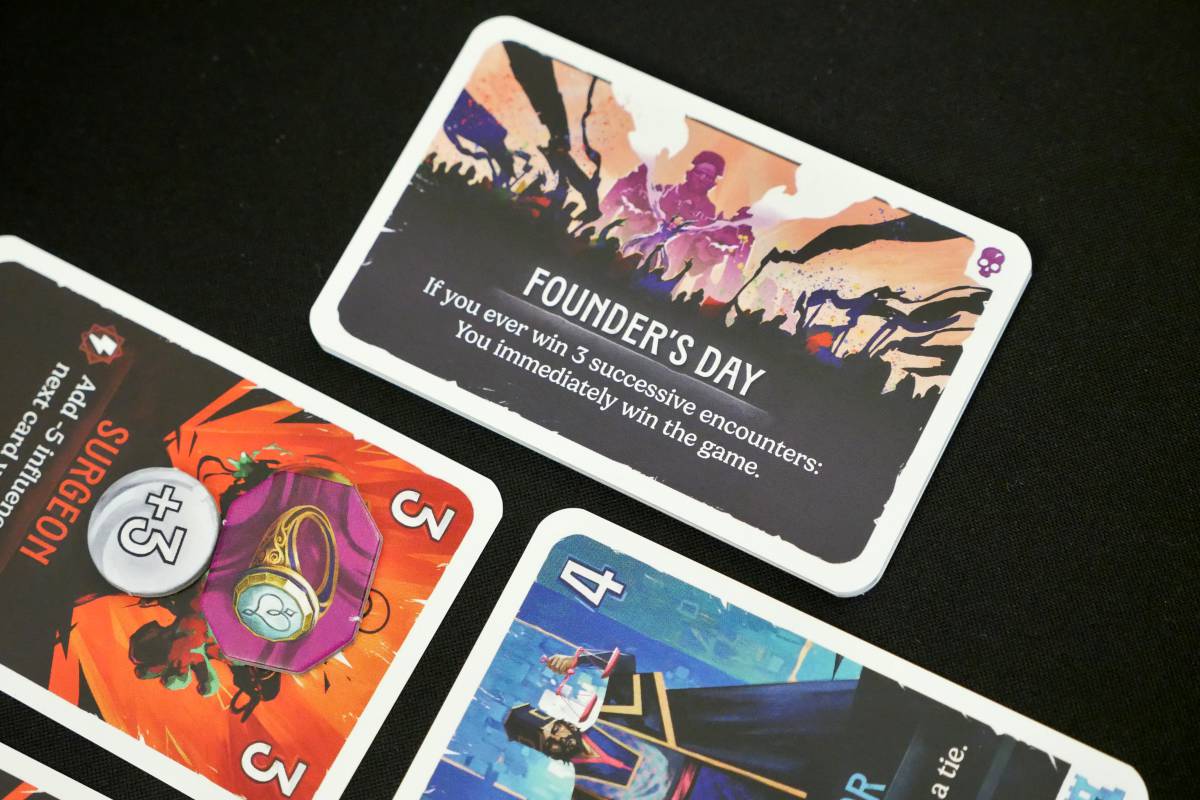
The first bit of content is Location cards. A Location card is basically a special rule that comes into effect at the start of the match and lasts the entire duration. There are 8 Location cards (one chosen per match) and they come in three difficulty levels based on their effects:
- Serpent Temple (1): Whenever you win a past encounter, draw 1 card and your opponent discards 1 card from their hand.
- Bazaar (1): At the end of each round, do not draw cards. Whenever you have 1 card or fewer in hand, immediately draw 4 cards.
- Founder's Day (1): If you ever win 3 successive encounters, you immediately win the game.
- Grand Library (2): At the beginning of the game, draw 2 cards instead of 5. At the end of each round, draw 2 cards instead of 1.
- Scrapyard (2): At the end of each round, draw 2 cards instead of 1. Then place 1 card from your hand under your deck.
- Auction House (2): Whenever you reveal a card that has less Influence than your card in the previous Encounter, discard the top card of your deck.
- Haunted Catacombs (3): If you reveal a card of the same faction as your card in the previous Encounter, you immediately lose the game.
- Foggy Swamp (3): Do not reveal your cards in the current Encounter after placing them. Instead, reveal and resolve the previous Encounter.
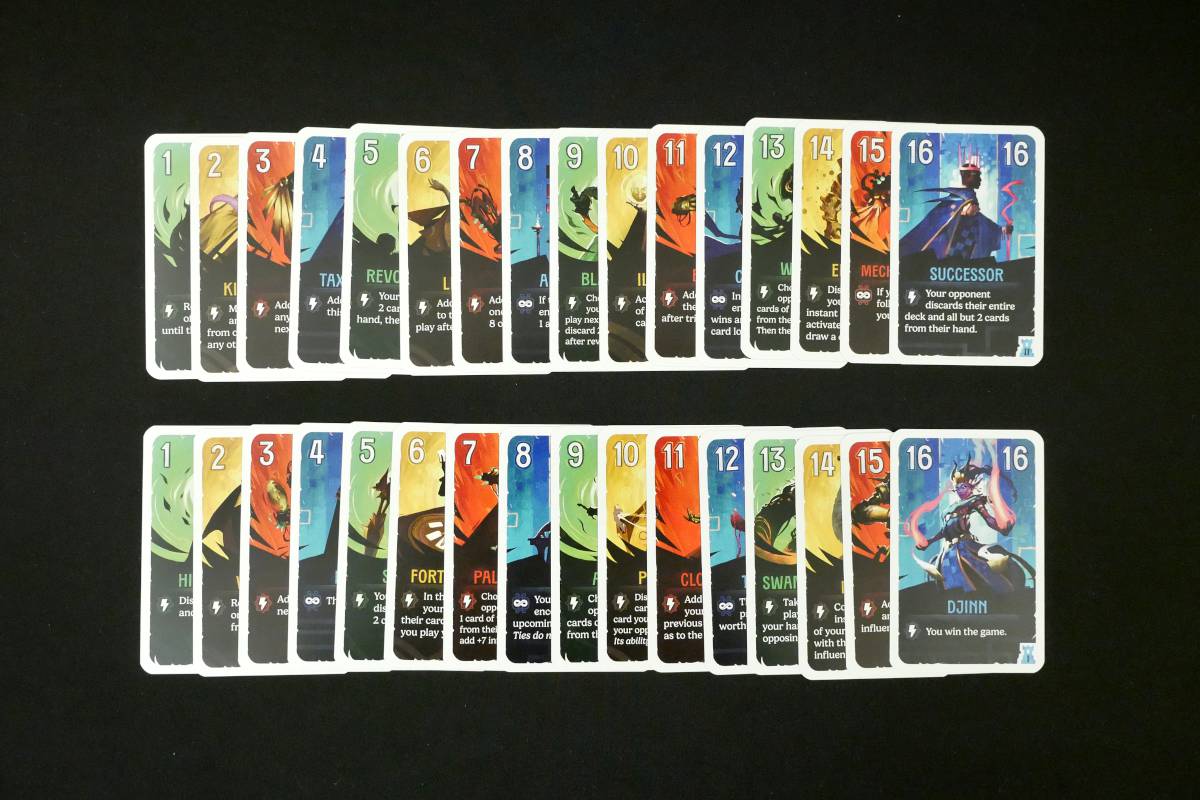
The other bit of content is a second set of 16 cards. This second set is also numbered 1 to 16 (both players each get the same exact set) except the abilities on each card are different. It's slightly more complex than the first set, but it's more "different" than it is "advanced," giving you new ways to influence past Encounters and changing how you strategize.
You can actually mix and match Set 1 and Set 2 cards, but the rulebook makes it clear that both players need to have the exact same sets of cards. In fact, if you want to play with asymmetric decks, the rulebook tells you to go pound sand and play a different game altogether!
Setup and Table Footprint
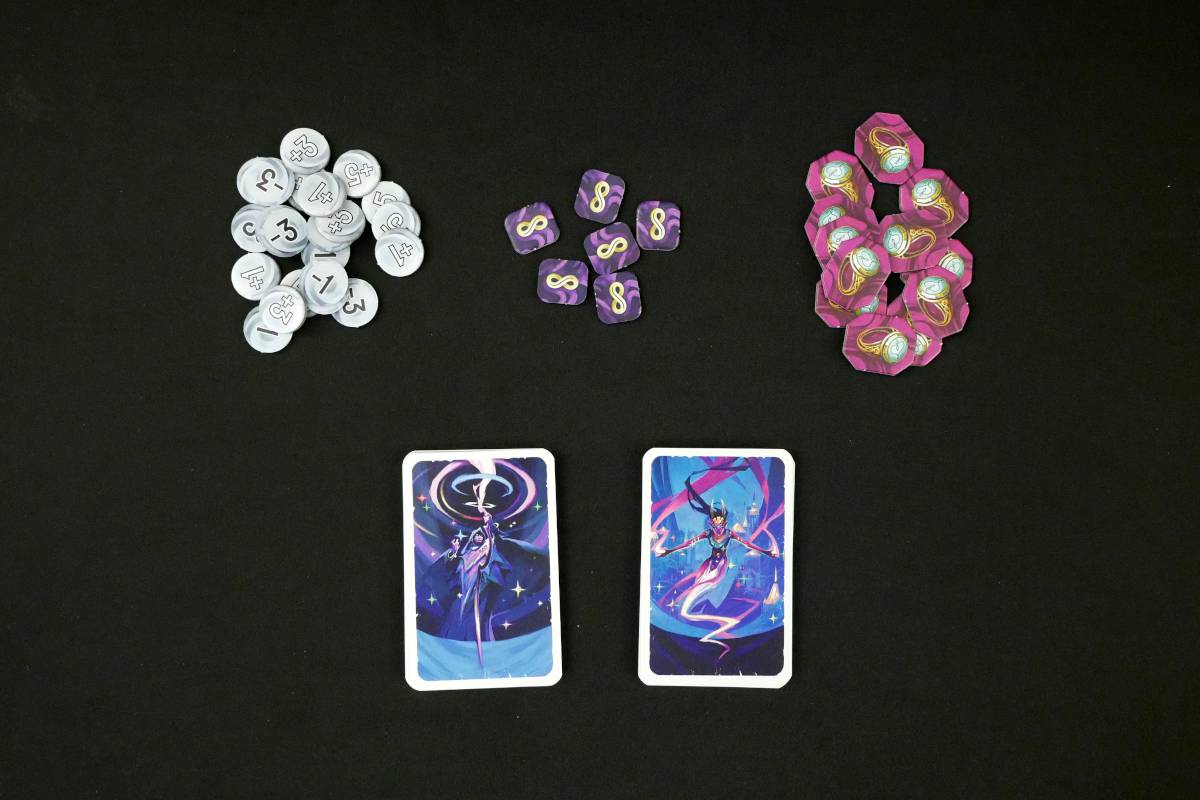
Duel for Cardia is insanely easy and quick to set up, and that's one of its greatest advantages in the 2-player duel genre. You just dump out the tokens and set them aside, then choose one of the two Sets and give each player a copy of that Set. Shuffle up and you're ready to go. Want to play with a Location? Choose one. Done. So easy, so fast.
The only thing that'd increase the setup time is wanting to mix and match the two different Sets. That'll add a few minutes since both players need to fish around and make sure they end up with the exact same set of cards.
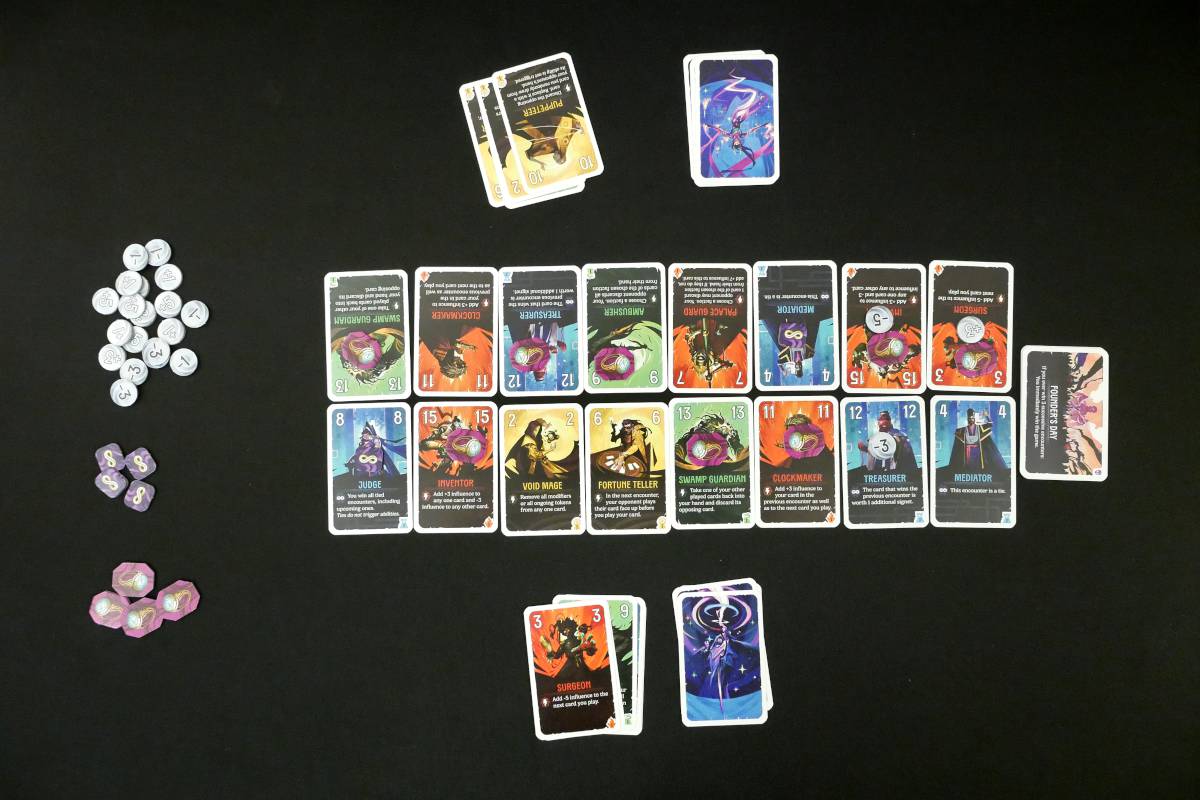
One thing that surprised me about Duel for Cardia is how much table space it needs. I wouldn't call it a table hog, but the timeline of Encounters can get pretty long—about 3 feet in length if you end up playing every card.
While this isn't an issue if you're busting it out at home, it does pose a problem if you want to take it on the go. Because Duel for Cardia is so portable in its package, you might expect it to be a take-anywhere-and-play-anywhere sort of game. It isn't. You'll need a good-sized table for it.
Learning Curve
Duel for Cardia is one of those games with simple rules but emergent complexity. The actual framework of the game is super straightforward: play a card, higher number wins a Signet, lower number triggers its ability, and first to 5 Signets wins the game. Anyone can grasp that.
It's the abilities on the cards, though, that make Duel for Cardia more difficult than it may seem at first. I had no idea what I was doing my first few games, unable to come up with any kind of strategy because I didn't know what was possible—I hadn't even seen all the card abilities yet.
You have to know all 16 card abilities in a Set by heart before you can truly start playing Duel for Cardia, otherwise you don't know enough to do anything other than shrug your shoulders and play randomly. For someone who doesn't have a lot of experience with text-heavy trading card games and collectible card games? It's not easy memorizing it all.
Switching over to Set 2 repeats that whole process (of learning a completely new set of card abilities that interact in new ways). Meanwhile, the Location cards aren't that difficult because each one only adds/changes one rule, and you only play with a single Location each time.
Game Experience
Decision Space
Upon first play, Duel for Cardia wowed me with its concept of a timeline of Encounters, where future Encounters can affect past Encounters. It's such a cool idea and the execution here is fantastic—it's intuitive, clean, and fun to play around. More importantly, though, it affects how you strategize and think about every card you play. You can intentionally lose an Encounter now, knowing that you can flip it back in your favor later. There's a lot more depth here than simply playing high cards and feinting with low cards.
The concept of an Ongoing ability also adds a layer of depth to the Encounters. You can think of an Ongoing ability as like a new rule, one that twists or breaks or adds onto the underlying framework of the game. For example, the Judge (8) card's Ongoing ability is "You win all tied Encounters, including upcoming ones." That new rule grants you Signets for all tied Encounters in the past, plus it shapes how you approach future Encounters.
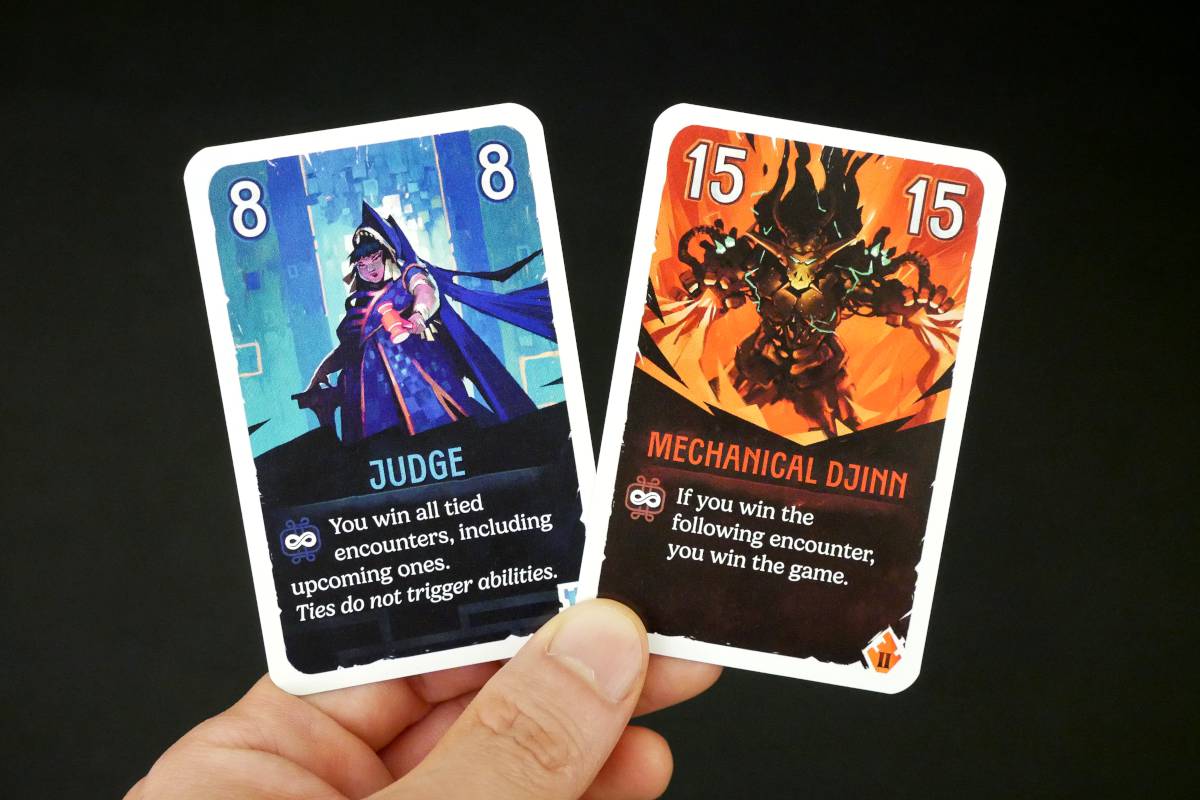
Or consider the Ongoing ability of the Mechanical Djinn (15): "If you win the following Encounter, you win the game." If you can trigger this rule, you now have a new path to victory. And even if you lose the next Encounter, not all is lost—you can still win with the Mechanical Djinn's ability if you maneuver an even later Encounter to retroactively flip the lost Encounter into a win. These kinds of emergent strategies are all over the place.
The card abilities are designed for clever manipulation of the timeline. They give you a wide toolbox of ways to influence Encounters in the past, present, and future. You can force a tie with the Mediator (4), then use the Judge (8) to win that tie. That means you can potentially use a 4-value card to nullify a high-value card and earn a Signet in the process. How cool is that?
But as cool as the overall concept is, I do have one major issue with Duel for Cardia: while it may seem like a battle of psychological wits at first, the promise of mind games is a mere illusion.
The crux of the game rests in the tension between choosing a card to win a Signet token or to activate its ability. If you want to win a Signet, you have to play it against a lower value card; if you want to activate its ability, you have to play it against a higher value card. For this to be a meaningful decision, you have to have some inkling of what your opponent might do.
But you never quite know what your opponent is capable of—and that's a problem. You each draw 5 random cards at the start, and that immediately puts you on asymmetric footing. You might have a 1, 4, 8, 9, and 16. What can you possibly know about what your opponent will play? Do they have a hand of 1, 3, 6, 7, 8? Or maybe a hand of 9, 10, 13, 14, 15? In order to "mind game" an opponent, you have to read what they're thinking. But you can't.
Sure, you both have the exact same 16-card deck. You know, in theory, what they could have in their hand... but there isn't enough certainty to inform meaningful decisions. You might play a series of Encounters in a way hoping they'll drop a big card next, but if they haven't drawn a big card yet, it simply won't happen. Your machinations are for nought.
Of course, with every Encounter that's played, you gain more information about what cards can't be in their hand. Towards the end of a match, you can narrow things down with more certainty. Unfortunately, by then you've already used most of your own cards and no longer have the flexibility you need to manipulate your opponent. You burned a key card in an early Encounter? Too bad. By the time you have enough information to make clever moves, you're left playing with scraps.
I hate it to say it, but Duel for Cardia almost feels like a stepped-up rock-paper-scissors experience. You play a card hoping that it'll secure a Signet or hoping that it'll trigger its ability, but ultimately it comes down to your opponent throwing rock or paper against your scissors.
That said, Duel for Cardia is still a compelling intellectual exercise thanks to its tactical nature. You have a hand of cards and you have to figure out the best strategy from that hand. You know what cards are left in your deck, but you don't know what order they'll draw. What do you sacrifice? What do you save for later? How will you manipulate the timeline?
I find this part pretty enjoyable. If you go into Duel for Cardia thinking it'll scratch that psychological mind games itch, I think you'll be disappointed. But if you go into it as a tactical hand management puzzle, it's pretty satisfying—once you've internalized all the cards, that is.
Luck Factor
Luck rears its head in Duel for Cardia in three ways.
The first way is your shuffled deck. Your 16 cards can come out in any order, which affects how well you can strategize them. For example, the Surgeon (3) card ("Add -5 Influence to the next card you play") synergizes well with any high-value card, making it a lot easier to trigger their abilities. But if the Surgeon is buried low in your deck, that opportunity won't arise for you—and there's no way for you to plan around that.
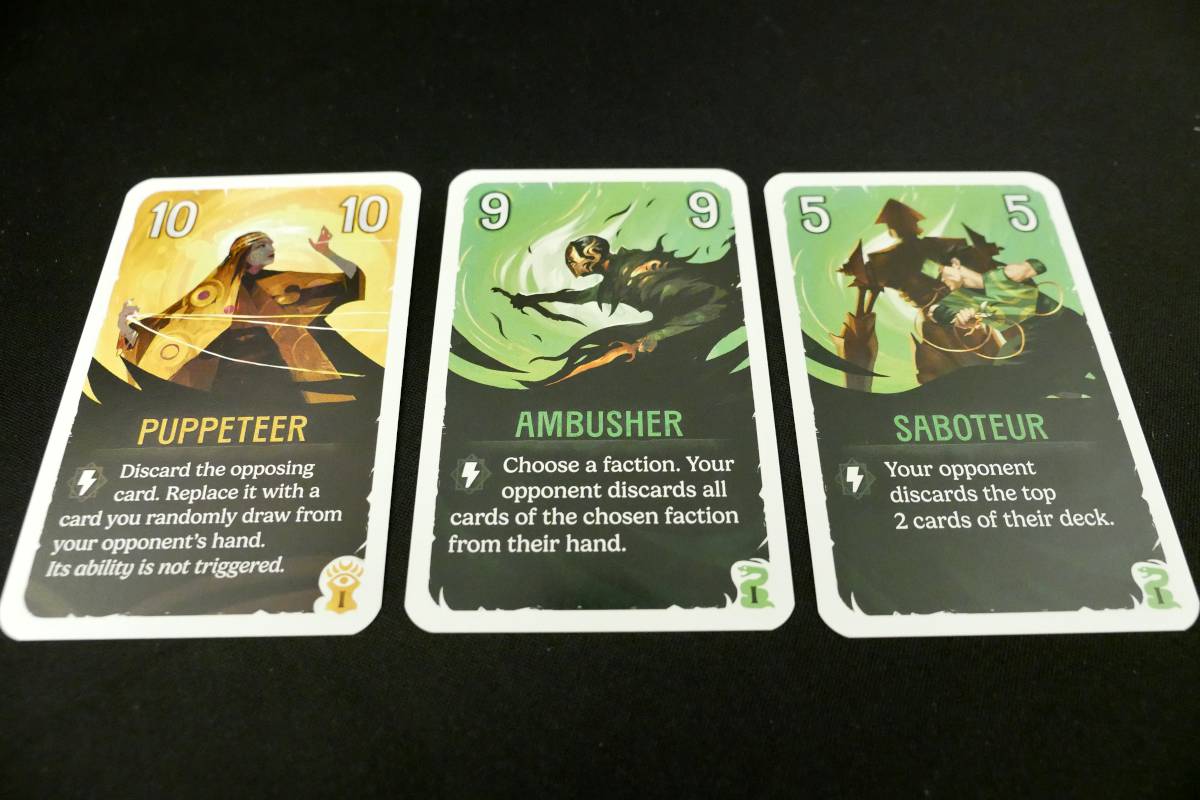
The second way is with certain card abilities that have randomness baked into their effects. For example, the Puppeteer (10) ("Discard the opposing card. Replace it with a card you randomly draw from your opponent's hand."), the Ambusher (9) ("Choose a faction. Your opponent discards all cards of the chosen faction from their hand."), and the Saboteur (5) ("Your opponent discards the top 2 cards of their deck").
The third way is via simultaneous action. Now, technically this isn't luck because cards are chosen by players... but it sure feels like luck. In the "Decision Space" section, I described Encounters as stepped-up rock-paper-scissors because it's hard to make meaningful guesses on what cards your opponent is going to play—and if you can't make educated guesses, you're essentially shooting in the dark. To me, that's luck.
To be clear, I don't think these elements of luck are enough to ruin the experience. You just have to know going into it that Duel for Cardia isn't a perfectly strategic game where the better player wins every time. Sometimes a lucky move can create significant swings.
Fun Factor
I'm torn on how I feel about Duel for Cardia. If I had to sum it up in one sentence, I'd say that it's more "interesting" than "fun."
One thing I really like about this design is that both players often benefit from an Encounter, and that feels good. The winner of the showdown earns a Signet while the other triggers an ability, which helps alleviate a lot of the fear and paralysis that tends to lock me up in 2-player strategy games. You aren't so worried about making "bad moves," and I love that.
I also like that every Encounter has a flash of anticipation and surprise. Both of you place your cards face-down, then reveal them at the same time with bated breath, hoping to pull off whatever result you aimed for.
Even so, Duel for Cardia is a pretty subdued experience. It's quiet, thoughtful, without much table talk. Your turns are mostly spent analyzing the cards in your hand, processing card combos, and strategizing the order in which you intend to play them. You're also thinking to yourself about what your opponent might do, though that's often a futile exercise (which I explained in more detail in the "Decision Space" section.)
To me, Duel for Cardia feels like a thought experiment or a tech demo—a clever design that successfully brings out a lot of emergent gameplay from a tiny set of cards—but not something that sparks joy or amusement. I often find myself thinking "Oh, that was pretty cool" but rarely "Wow, that was fun, let's play again." It's interesting, not fun.
In the end, I don't feel much excitement or tension when playing Duel for Cardia. Those moments of surprise when revealing Encounters are more like gentle satisfaction than fist-pumping cheers. And even when the last Signet is on the line, I'm not sweating or agonizing or chewing my nails. It doesn't stir anything in me and I'm rarely invested in the outcome.
Pacing
The pacing in Duel for Cardia is excellent. Turns are super quick (you're just playing a card from your hand), there's no downtime due to simultaneous action, and the whole game is over in about 10 to 20 minutes. The game arc has a steady climb from what feels like a random start with gently building tension as Signets are won.
I like that Encounters are self-balancing: the winner gains a Signet and takes one step closer to victory, while the loser gets to activate an ability that lets them set themselves up to claim future Signets. This back and forth tug-of-war keeps the tension up and the results unpredictable.
Most of the big plays happen when the fifth Signet is in contention, and there can be surprising plot twists as players lay down unexpected cards that swing past Encounters. It doesn't always happen that way, but when it does, the ending can be surprisingly climactic. Indeed, you're never truly out even when you're far behind. (My wife was 3-to-5 as I won my fifth Signet, but her card ability let her steal two Signets from past Encounters, swinging everything 5-to-3 in her favor and winning the match. Ouch!)
Player Interaction
Duel for Cardia is all about head-to-head player interaction. Many card abilities let you directly affect your opponent, whether that's changing the values of their cards, obliterating past Encounters, forced discards from their hand and/or deck, stealing Signets, nullifying Ongoing abilities, etc. If you like "take that" gameplay, this will be up your alley.
Yet, I wouldn't say Duel for Cardia feels mean. I tend not to like "take that" mechanisms because they negatively affect my game state and often drag out game lengths. Not the case here. Duel for Cardia is so short and briskly paced that I don't mind the direct attacks, and the "take that" elements are so core to the gameplay that the attacks are easy to accept.
And despite the complaints and observations I made in the "Decision Space" section, there is some psychological trickery in this game. To whatever extent you can manage, you'll be trying to read your opponent's mind, anticipate their plays, and feint with your own card plays. If you like mind games, you'll appreciate that aspect of this game, too.
Fiddliness
Duel of Cardia is not a fiddly game at all. I was slightly worried that the Signet, Ongoing, and Modifier tokens would be annoying to handle all the time, but it's not bad at all. It's actually quite satisfying to plop down a Signet on your card every time you win an Encounter, while the Ongoing and Modifier tokens are uncommon enough not to be an issue.
Replayability
I played Duel for Cardia about a dozen times and I can tell I've only scratched the surface. There's a lot of depth packed into these 16-card sets and you'll have to play it over and over again to see how clever it is. Each match might be short—just 10 to 20 minutes—but I don't see it as the kind of game you bust out to kill some time. It's always followed by "Let's try again!" and each play reveals a little bit more, with different tactics you can take.
If you ever get bored of Set 1, there's always Set 2 with its own fresh abilities and interactions and tactics to explore. And no matter which Set you play, you also have the Location cards that modify core rules, which continue to keep things interesting over numerous plays—enough to impact your decision-making process, but not enough to feel like a whole new game.
Again, Duel for Cardia is at its best when you know all the cards by heart, which affords you the flexibility needed to adapt your strategy on the fly as you draw and lose cards, and the foresight needed to read your opponent's mind. It's also at its best when playing against someone who's on the same level as you, who knows what's capable in these cards.
Without ample investment of time, Duel for Cardia can feel arbitrary and random. I'm personally not interested in doing that, so this isn't the game for me—but if you're that kind of gamer, I can't think of any other 2-player card game that offers this much depth in such a little package.
Production Quality
For a game that essentially boils down to a single 16-card deck per player, Duel for Cardia is immaculately made. Every included component is necessary, nothing is lacking, and nothing is extravagantly overproduced. The quality is excellent for the price. A shining example of a small box card game.
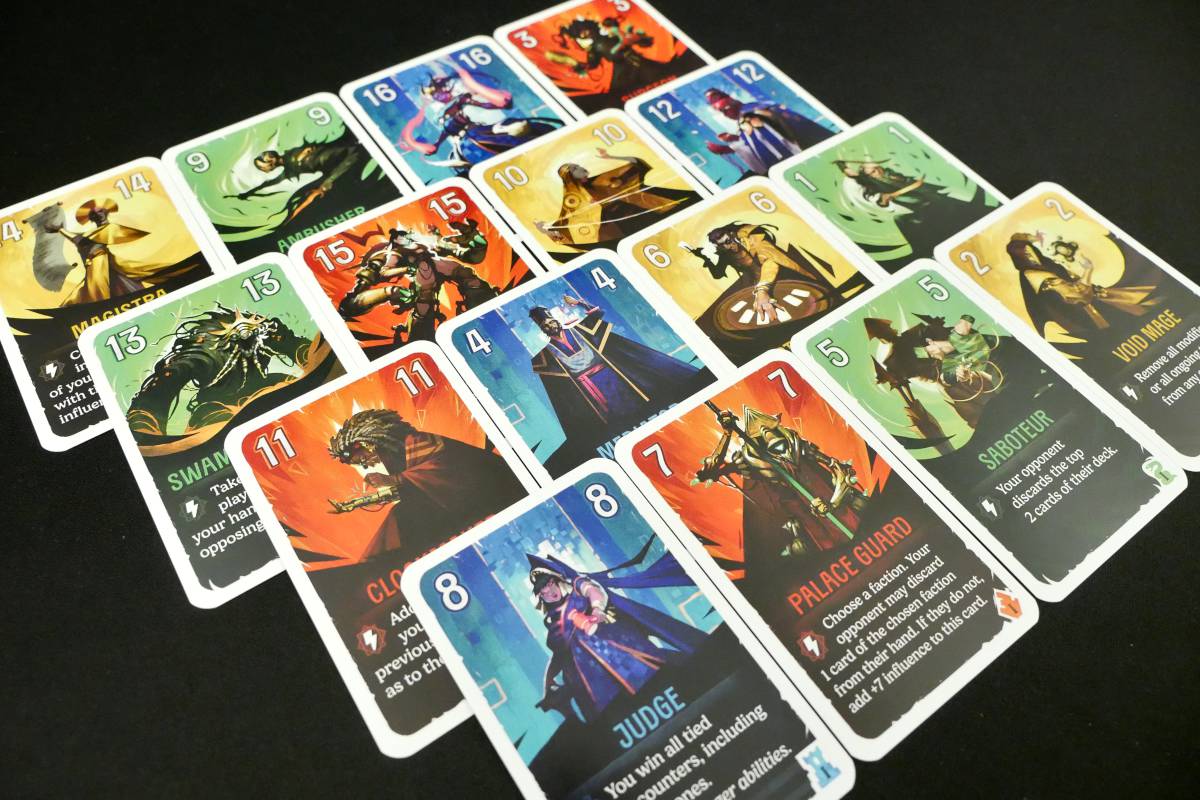
While the theme is whatever, the art and graphic design are excellent. I get the sense that Cardia has a fantastical backstory and history to it—and some of that comes through in the card names and abilities—but it's all ultimately irrelevant. The art is nice, though, and the graphic design on the cards is as good as it could be. Very readable and playable.
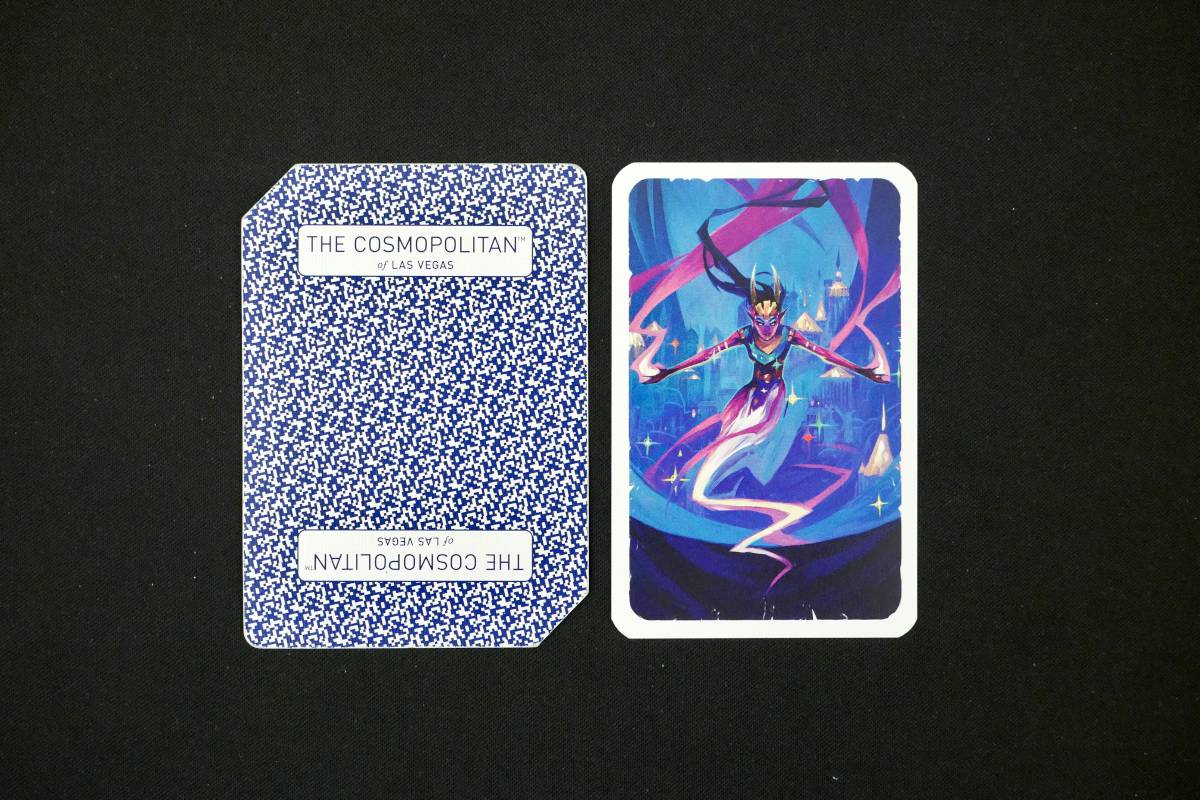
I love the card size they went with for this game. It's smaller than your typical card size and it fits well for a game of this kind. It keeps the timeline short (imagine how much longer it'd be), it makes for a more compact box, and it allows the graphic design to be tightly composed. I honestly think my enjoyment of Duel for Cardia would be worse with normal-sized cards.

Card quality is a little thin. You'll likely want to sleeve them. The cards in Duel for Cardia are somewhat flimsy, but they have a light linen finish that feels good to handle. Given the crucial nature of hidden information in this game, any markings on the cards will give away what's in your hand and/or what you're playing. I also foresee Duel of Cardia being the kind of a game that gets played to death, so wear and tear will happen. Between all those points, I recommend sleeving this one.
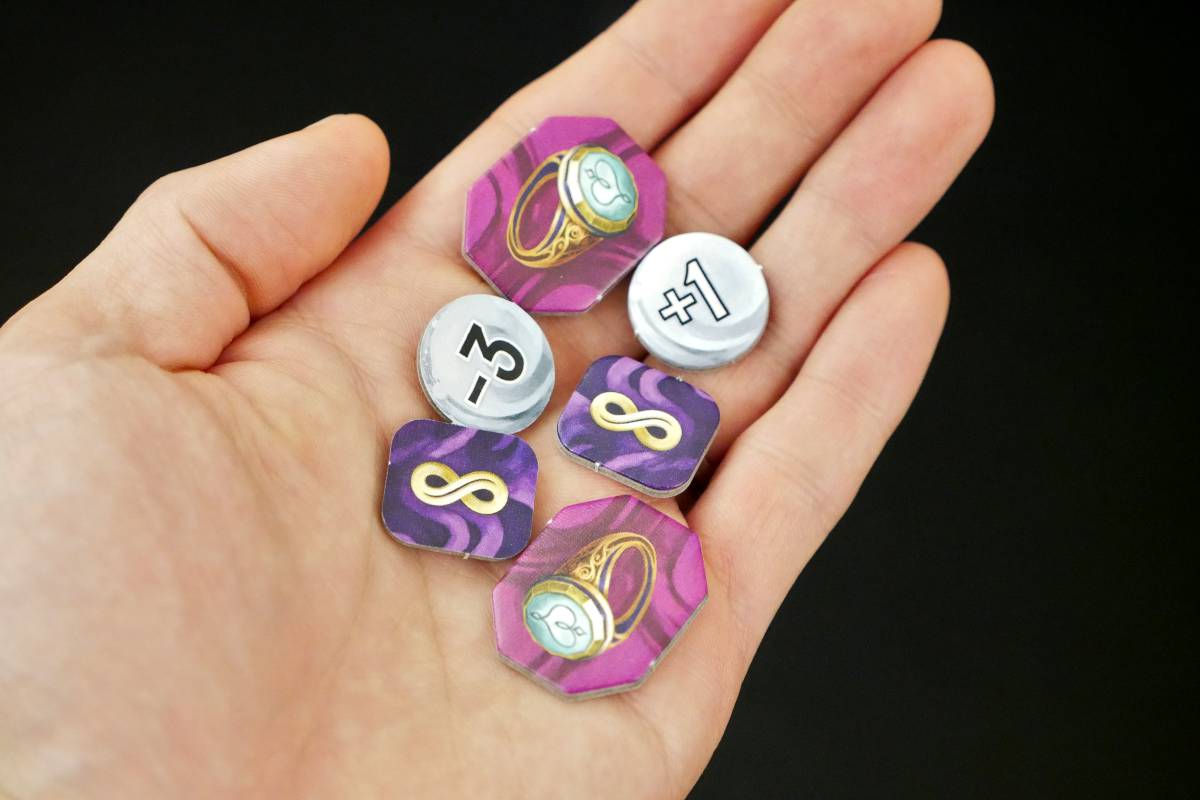
The cardboard tokens look and feel good. While I like the appearances of the Signet and Ongoing tokens, this is one time when I think cubes might've provided a better experience. Yeah, cubes are boring, I know, but I don't like repeatedly picking up flat tokens from cards. (The Modifier tokens would have to stay the way they are, of course.) This is a minor complaint—might even be a nitpick—so don't read into it too much.
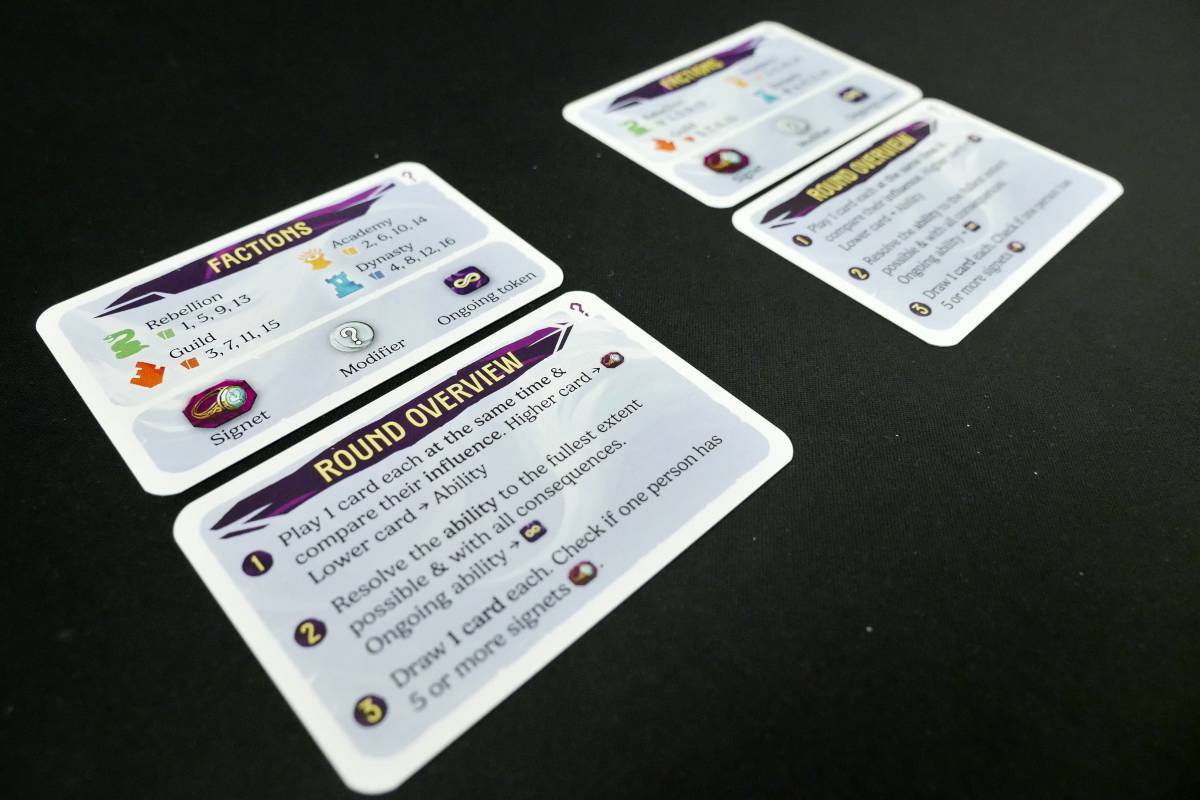
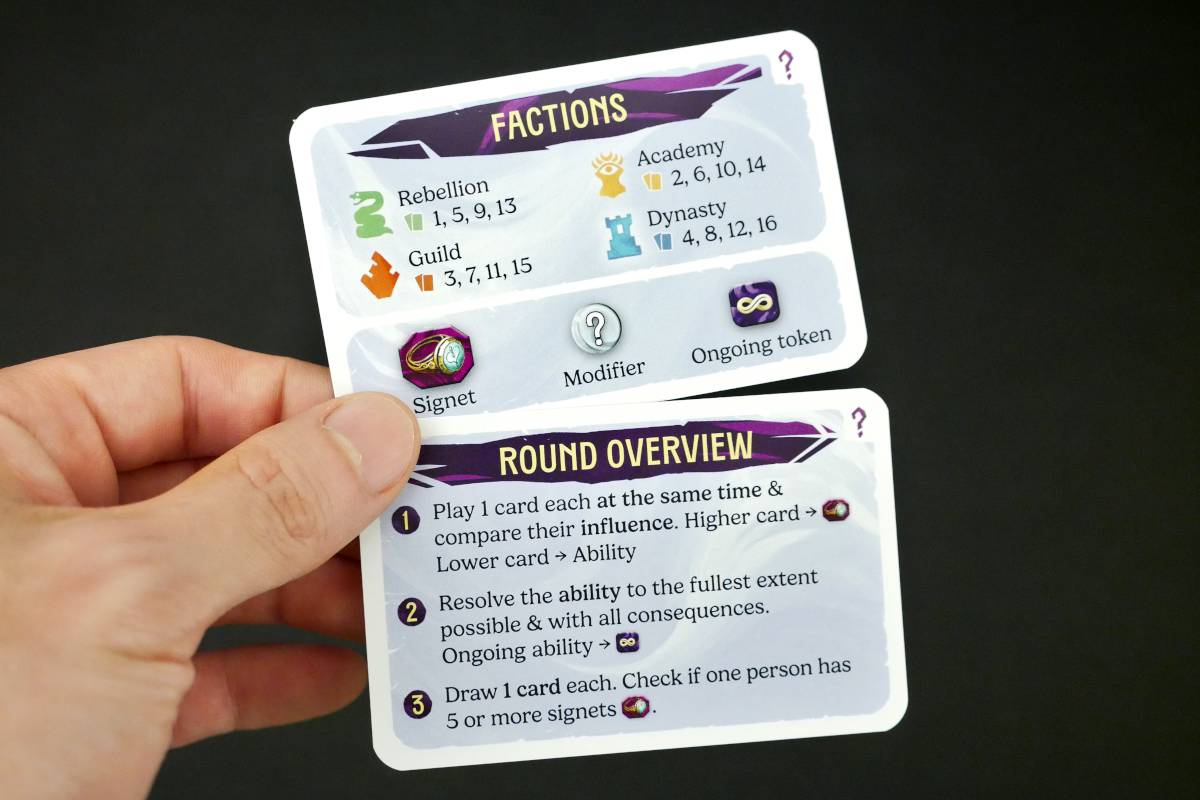
The little player aid cards are nice to have. I don't care how simple or complex a game is—player references are essential. They don't just ease the learning curve, but also make it easier to return to the game after it's been shelved for a while. In this case, I appreciate that each player gets their own set of player aids and the information is all practical.
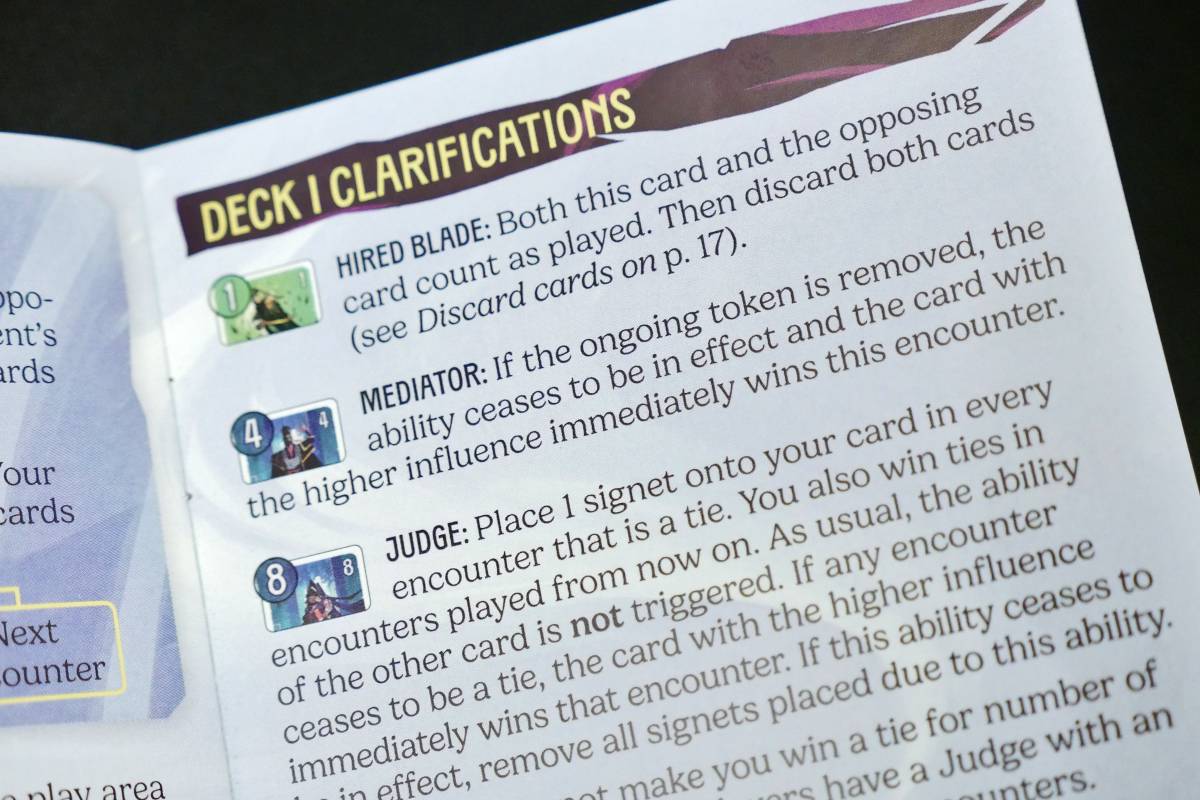
I appreciate the rulebook, complete with card clarifications. With all the emergent card interactions in Duel for Cardia, you're bound to run into edge cases and ambiguous situations. Fortunately, I'm happy to say that Duel for Cardia feels like it was playtested well—most of the questions I had when activating abilities were addressed in the rulebook. It also teaches the game in a clear and logical manner. I never stumbled over the rules.
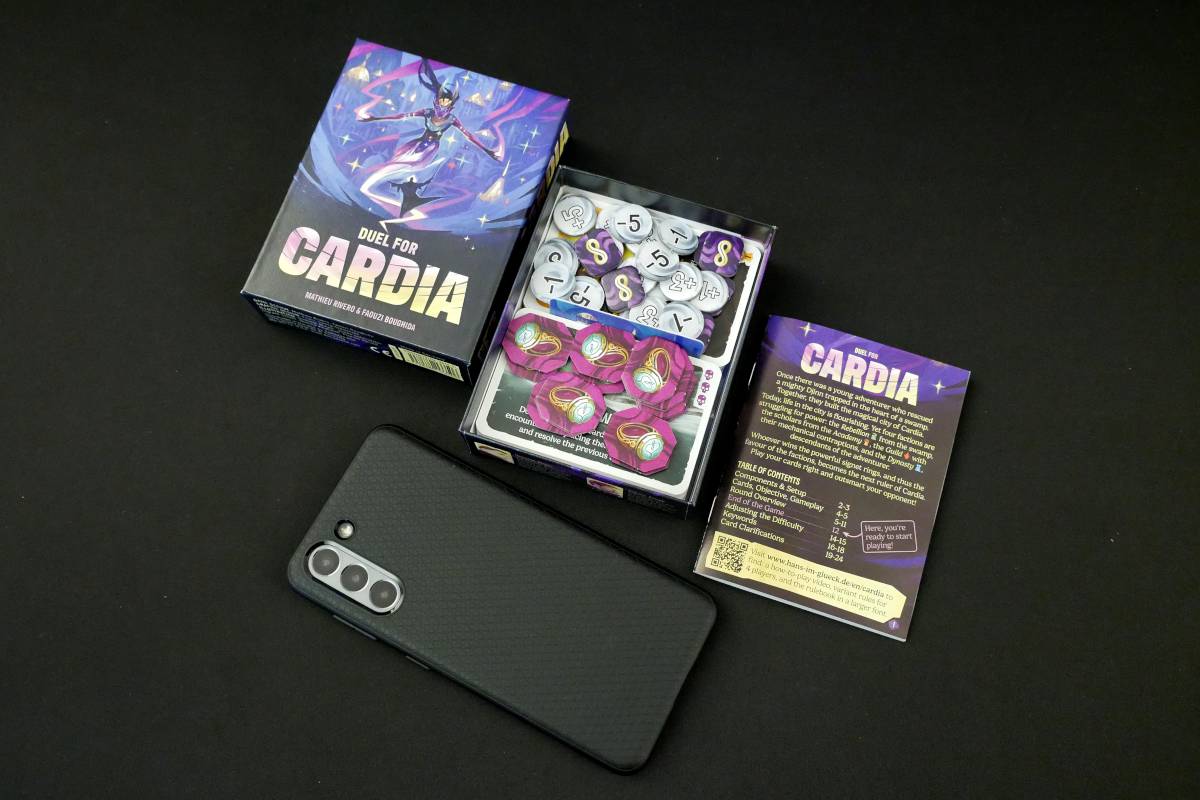
The tiny game box is extremely portable and works well. As I mentioned in the "Setup and Table Footprint" section, Duel for Cardia takes up a deceptive amount of space for its size, so I probably wouldn't take it with me as a play-anywhere game—but it's perfect when heading to a friend's house or traveling to a hotel. Very compact, lightweight, and durable.
The Bottom Line
Duel for Cardia is a cleverly designed 2-player dueling card game that packs a ton of depth into a tiny package, but it demands a lot of investment for its depth to show. It'll appeal to gamers who like collectible card games with its text-based abilities, tactical gameplay, and emergent interactions. It's one of the better 2-player dueling card games, but not to my tastes. I much prefer Tag Team for a quick head-to-head card battle.
Stop Buying Games
You'll Regret
Before your next game purchase, run it through this mental checklist that every seasoned gamer uses.
Free checklist, delivered instantly to your inbox.
No spam, ever. Unsubscribe in one click.