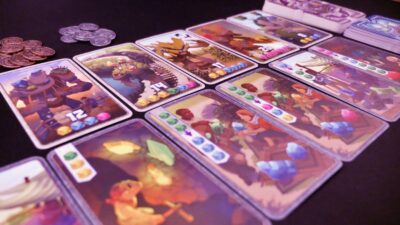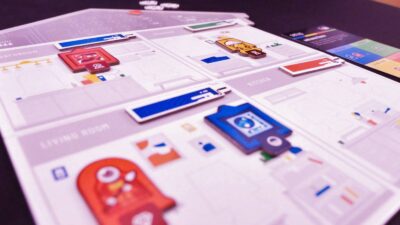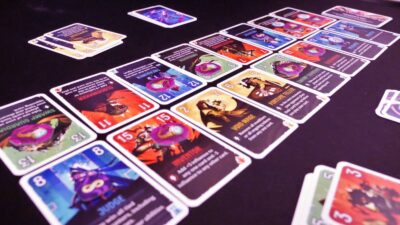

I'm loving the recent trend in two-player-only board games and card games. That's my main mode of play, so I'm always on the prowl for fresh, distinct, and fun games to enjoy with my partner. Agent Avenue caught my eye because it promises to be exactly that.
Two-player cat-and-mouse games are hard to get right. Rely too much on deductive reasoning and it ends up being more of a mathematical exercise than a game. Rely too much on bluffing or misdirection and it ends up being aimless and random. Even when you strike that balance, you still have to make it interesting, tense, exciting, and replayable.
Agent Avenue is a real treat because it nails everything. If you ever wanted a Coup-like game that was distilled down for just two, I can't think of a better fit than this one. Here's how it plays, what I love about it, and everything you need to know to decide if you should add it to your own collection.
This review is based on a review copy of Agent Avenue provided by Nerdlab Games, but my thoughts and opinions are my own.
Overview
Agent Avenue is a two-player cat-and-mouse card game that absolutely nails the rush of two opponents chasing each other down while cloaked in secrecy and deception. The clever blend of I-cut-you-choose for action selection, bluffing on every turn, and racing around a track works well.
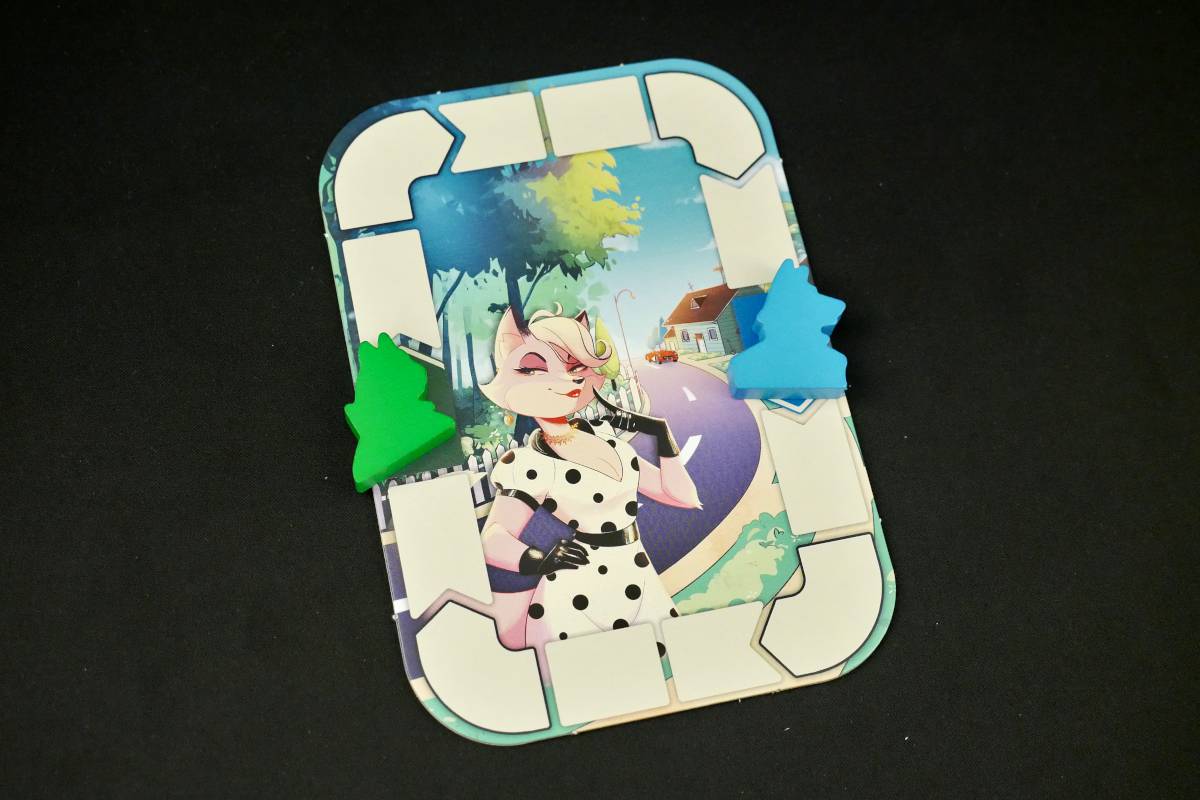
It all starts with the board, which is just a circular track of 14 spaces, with both players starting on opposite sides of the track. The goal is to catch the other player before they catch you. The first to do that wins.
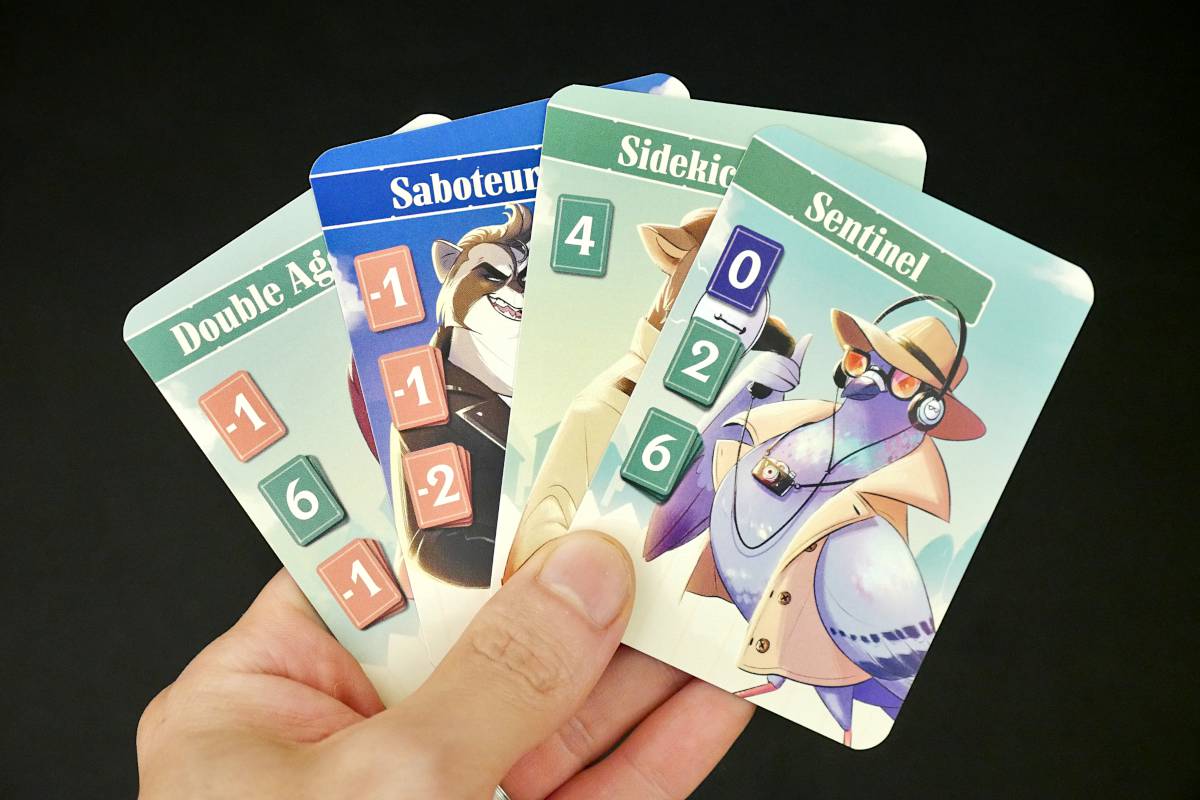
How do you move along the track? You have to play Agent cards. The game has a 38-card Agent deck from which you draw, and each player starts with 4 random Agent cards in hand. Whenever you play cards, you draw from the deck back up to 4 total cards (assuming the deck hasn't run dry).
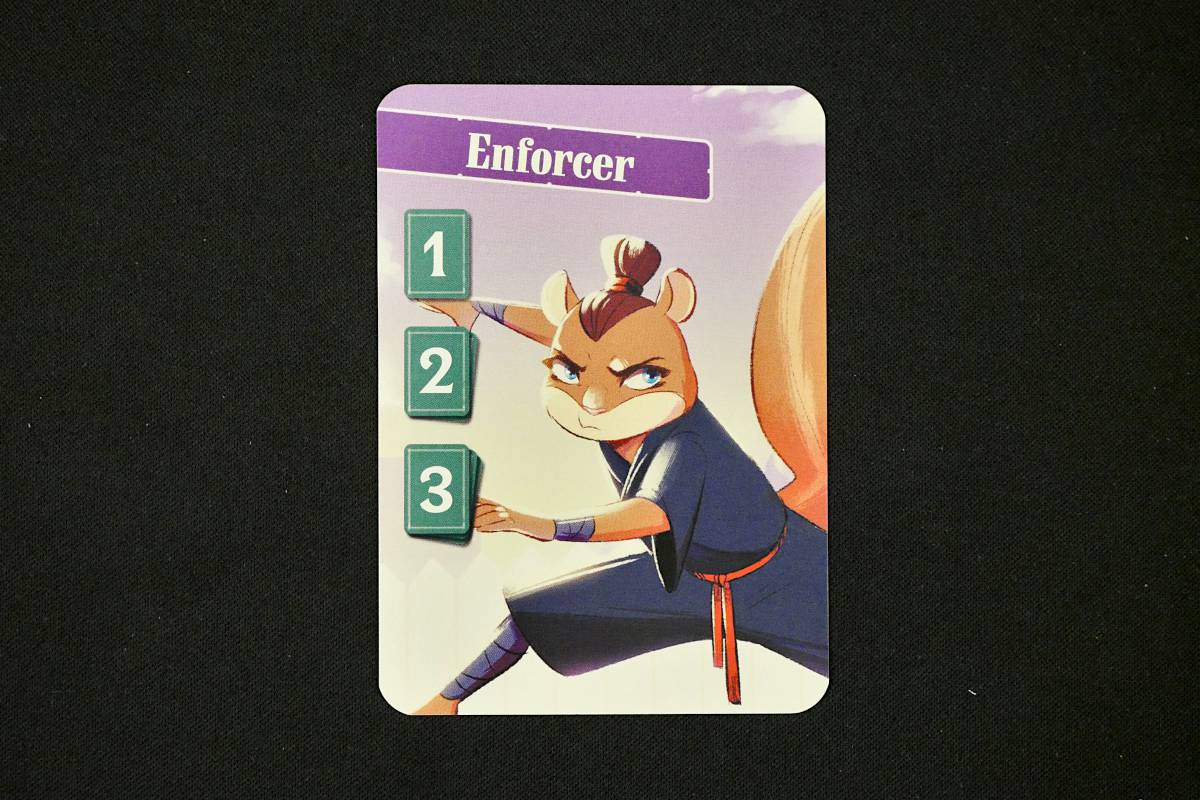
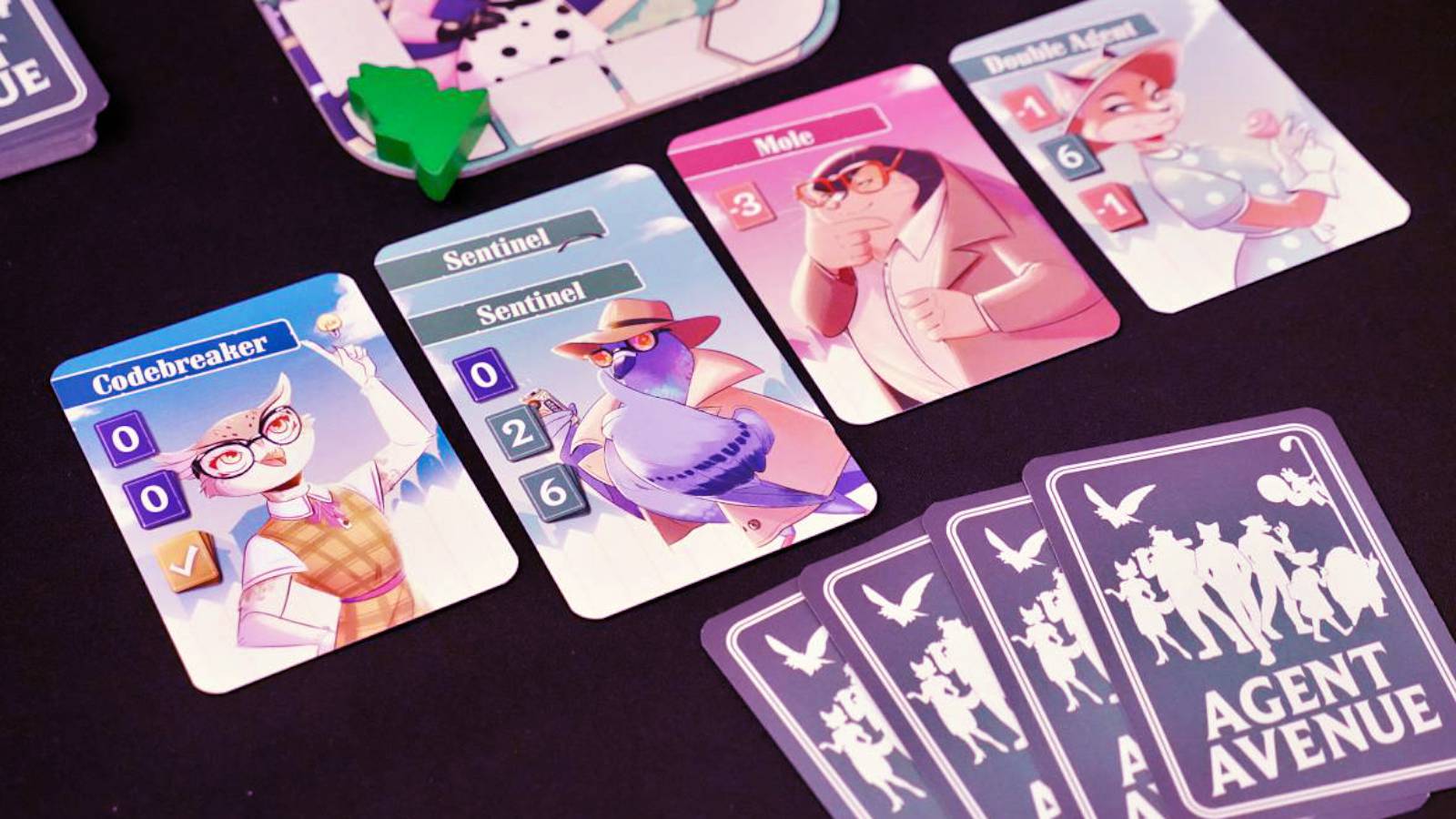
Every Agent card shows how many spaces you move when you play that card. But here's the first twist: when you play an Agent, the amount you move is determined by how many of that particular Agent you've previously played. For example, the first time you play Enforcer, you move 1 space; the second time you play Enforcer, you move 2 spaces; and the third time, you move 3 spaces. (If you happen to play a certain Agent more than three times, just keep repeating the third movement amount.)
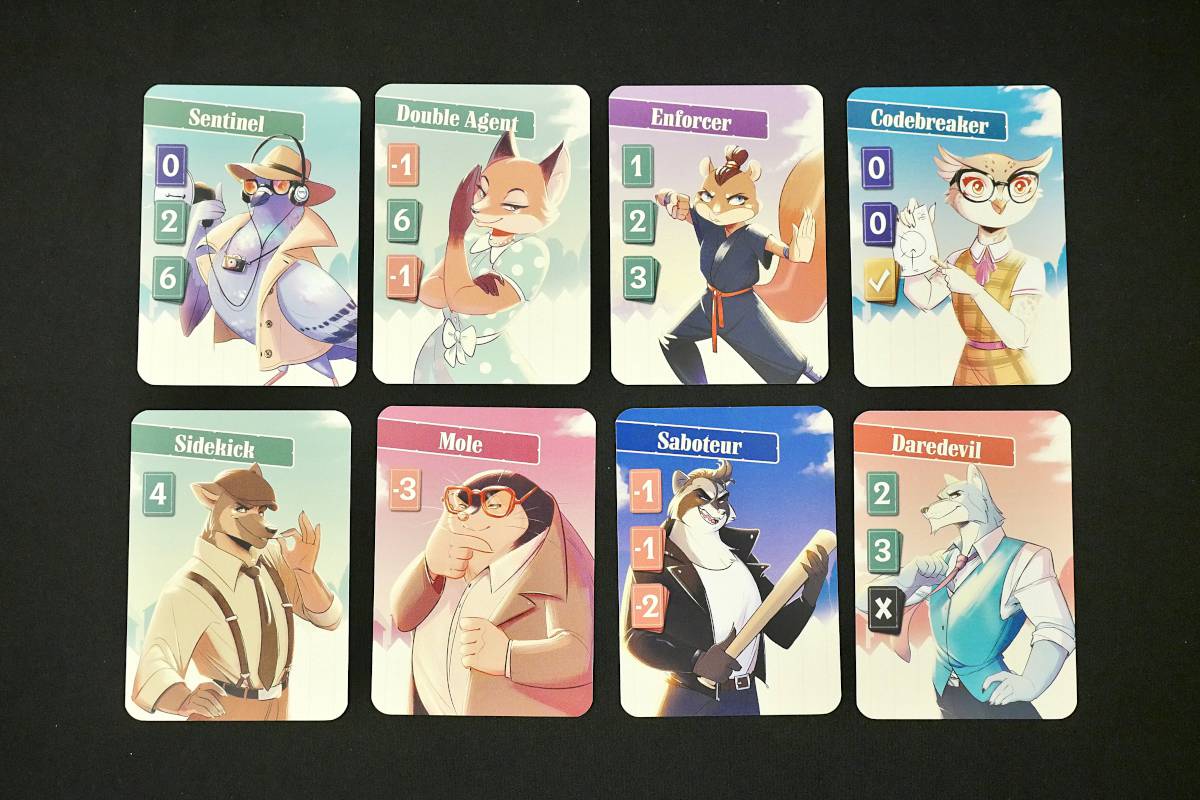
There are eight Agents in total, but two of them are special: Codebreaker and Daredevil. When you play your third Codebreaker, you instantly win! And when you play your third Daredevil, you instantly lose. These game-ending Agents play a huge role in making Agent Avenue as intriguing as it is. (More on this down below in the "Decision Space" section.)
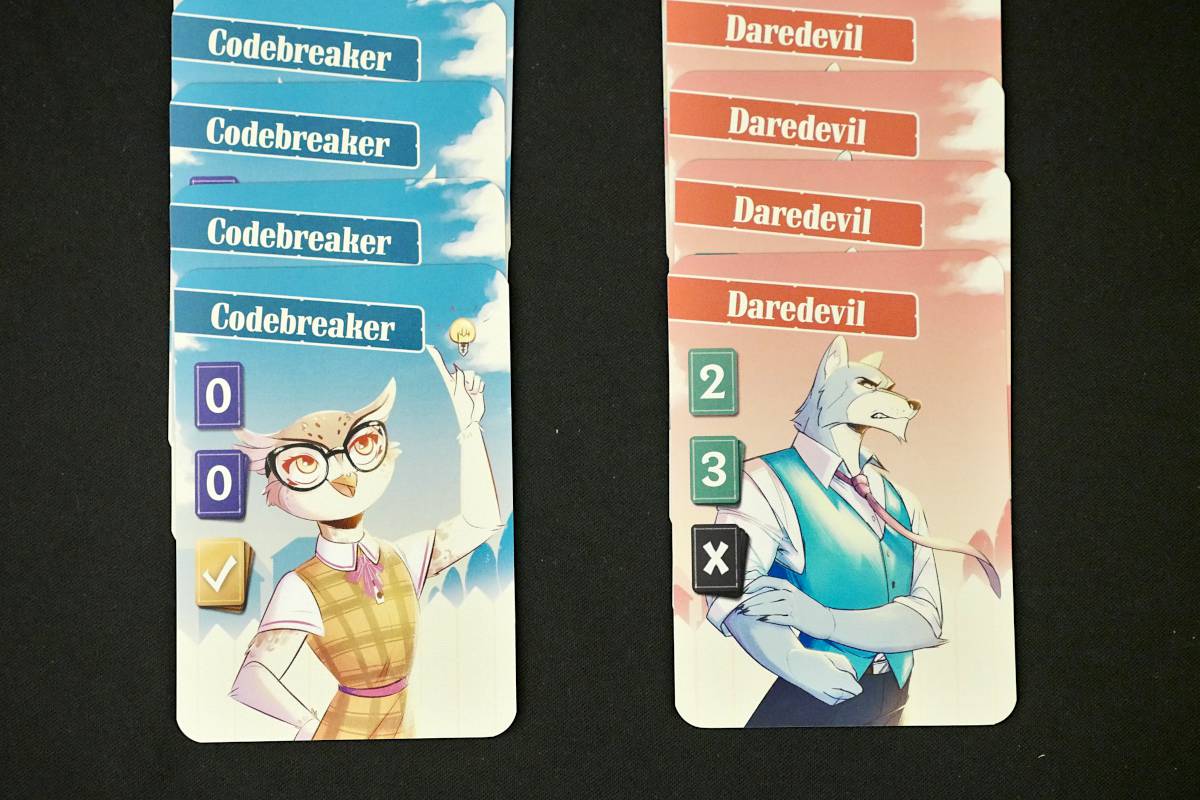
So, why would you ever play a third Daredevil if it makes you lose? And why wouldn't you just spam Codebreakers when you have them in hand? Well, here comes the second big twist: you don't get to choose which particular Agent cards you play. Instead, you offer two Agents from your hand to your opponent and they choose which of the two Agents to play for themself; then, you must play the unchosen one that's left over.
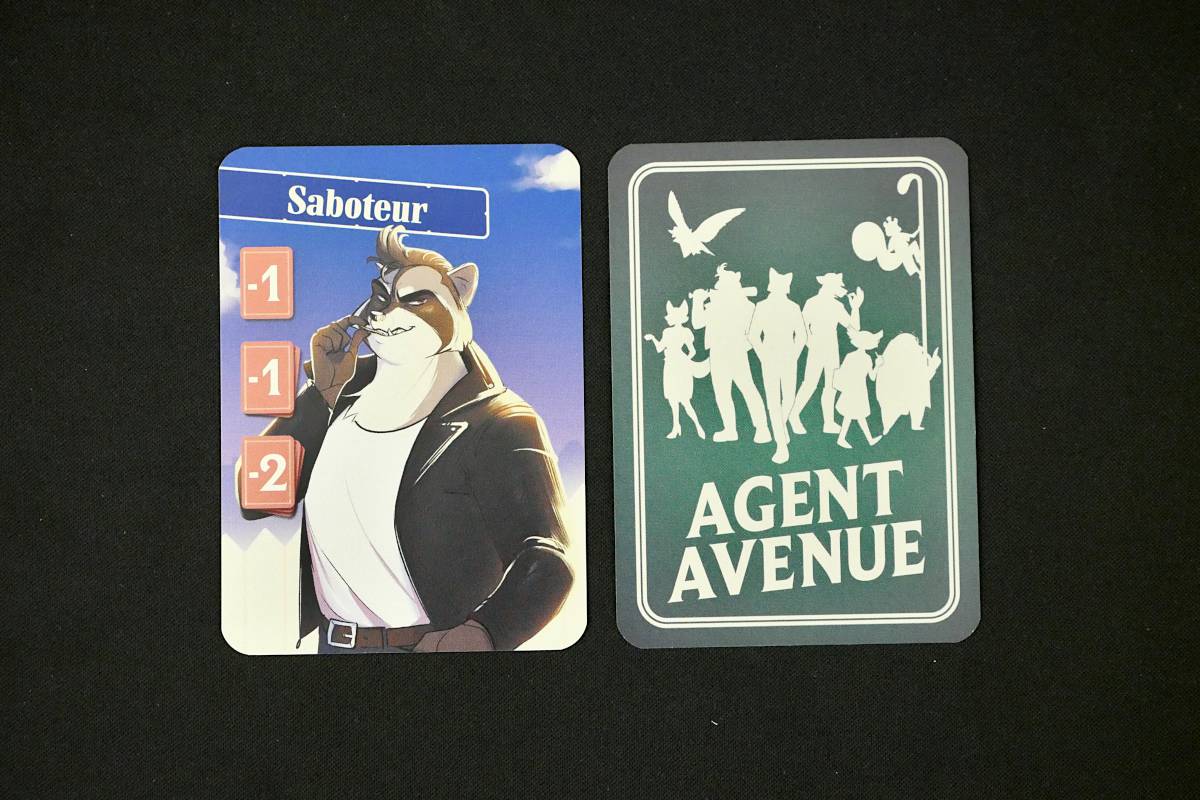
But wait, there's a third twist here: when you offer your two Agents, one is offered face-up and the other is offered face-down. Your opponent chooses which one to play, but they do so without knowing what the face-down card is. This brilliant twist invites bluffing, deception, trickery, and mind games. (Both cards have to be different, by the way. No twinsies!)
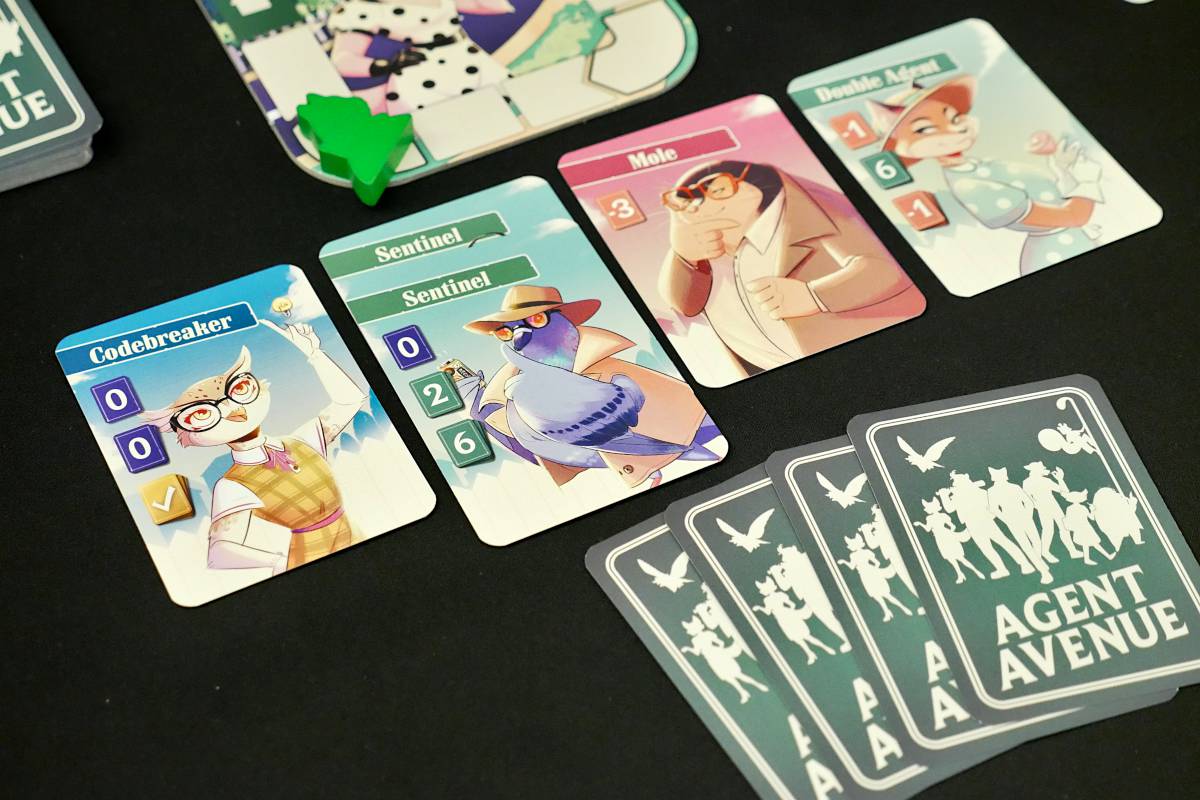
Once your opponent chooses an Agent card, you get the other one. You both keep your respective cards in your own tableaus on the table and move your respective meeples along the track. Then it's your opponent's turn to offer you a face-up and face-down Agent to pick between. So it goes, back and forth.
That's it! First player to catch the other on the track wins. Or first to play three Codebreakers wins. Or first to play three Daredevils loses.
Advanced Mode
Agent Avenue also has an Advanced Mode, which should really be the standard mode because it's only one more rule but adds a lot more depth.
The Advanced Mode is played on the flip side of the board, where you'll see Black Market icons on the corner spaces around the track. It also involves the 15-card Black Market deck, which gets shuffled into a draw pile before three cards are drawn face-up to form the Black Market.
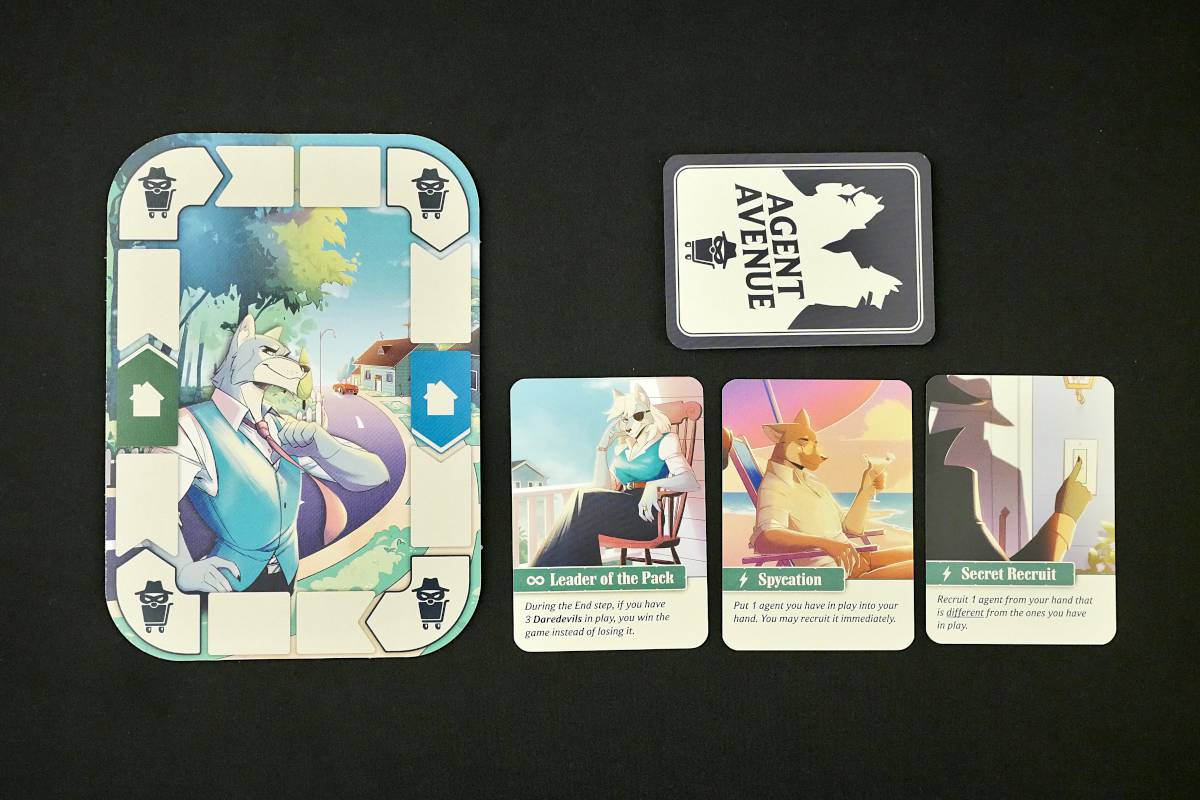
If you ever land exactly on a Black Market space, you must immediately take one of the available cards in the Black Market (which is then replaced with another card drawn from the deck). Depending on the type of card you take, you'll do one of two things with it:
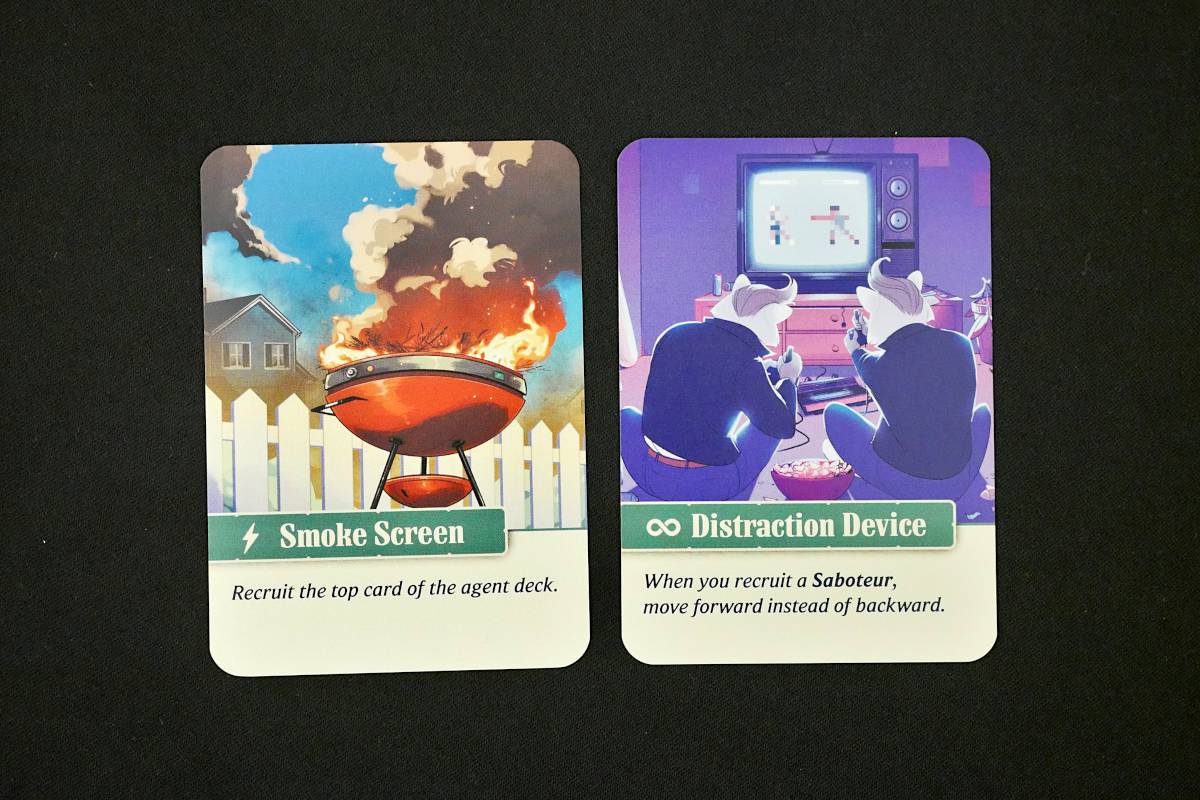
- Instant card (lightning icon): Immediately perform the action as described on the card, then discard the card. It's one-time-use.
- Ongoing card (infinity symbol): Keep the card face-up in front of you. The action described on the card is active and available for as long as you have this card in front of you.
That's it. Everything else is the same.
Setup and Table Footprint
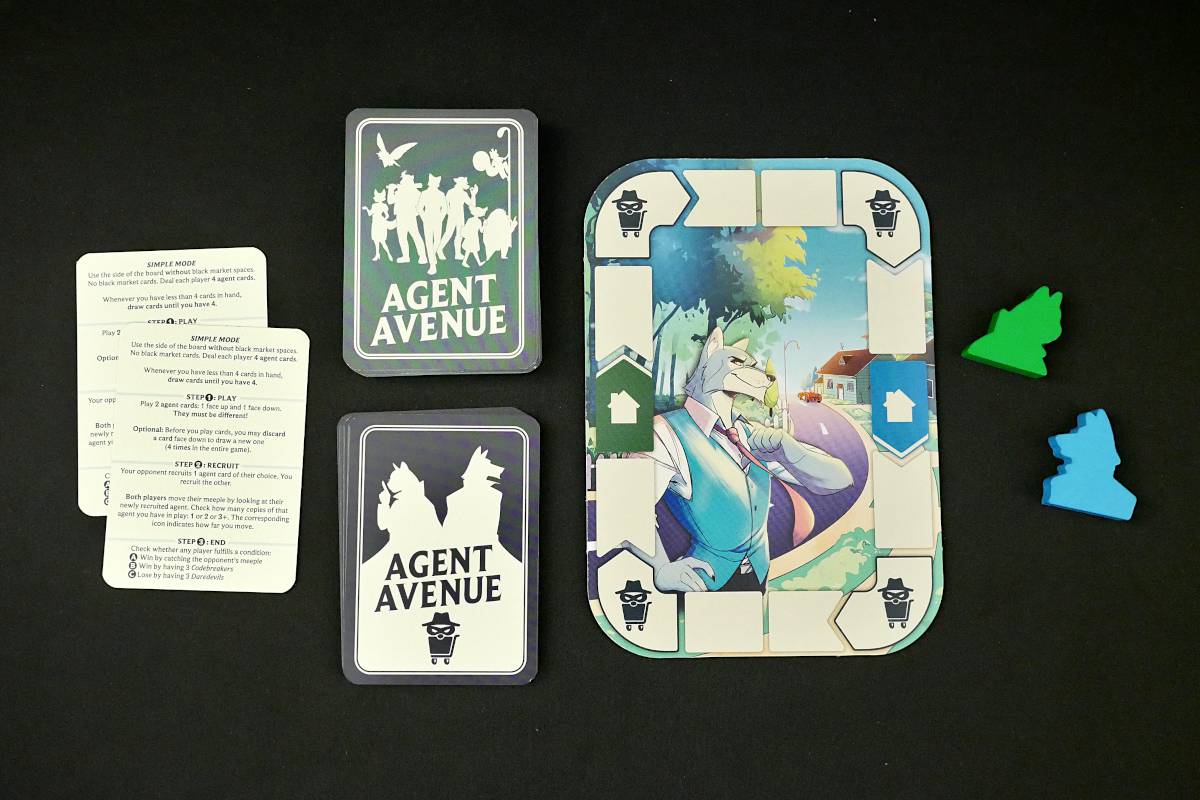
Agent Avenue sets up in a flash. You pull out the board, the Cat and Dog meeples, and the cards. Shuffle up the Agent deck and you're ready to play. If you're playing the Advanced Mode, flip over the board and shuffle up the Black Market deck, too. It all takes about 2 or 3 minutes, tops.
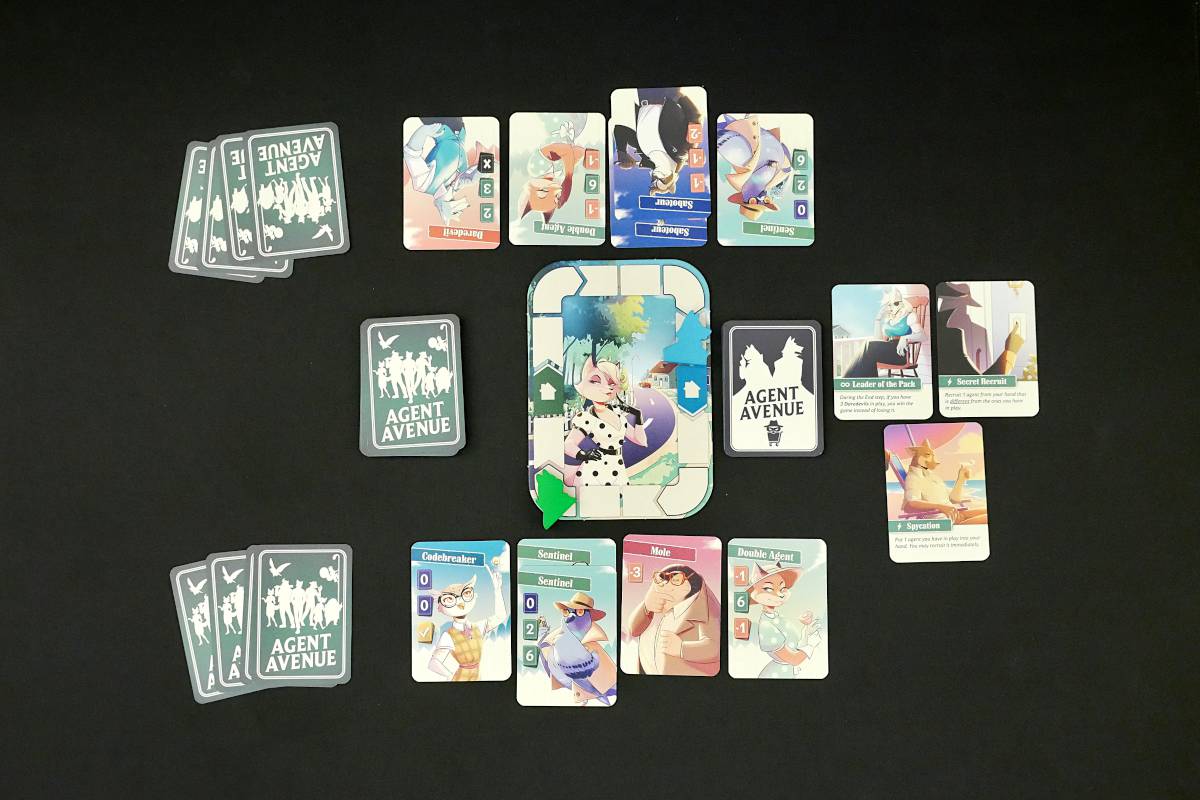
I love the compactness of Agent Avenue with its miniature board and minimal table space requirements. You don't need much room to play—it's playable on a couch, a side table, or even a bed tray, at least in Simple Mode. The Black Market in Advanced Mode needs a tiny bit more space and you'll probably want an actual table for that. Still, it's a low-footprint game.
Learning Curve
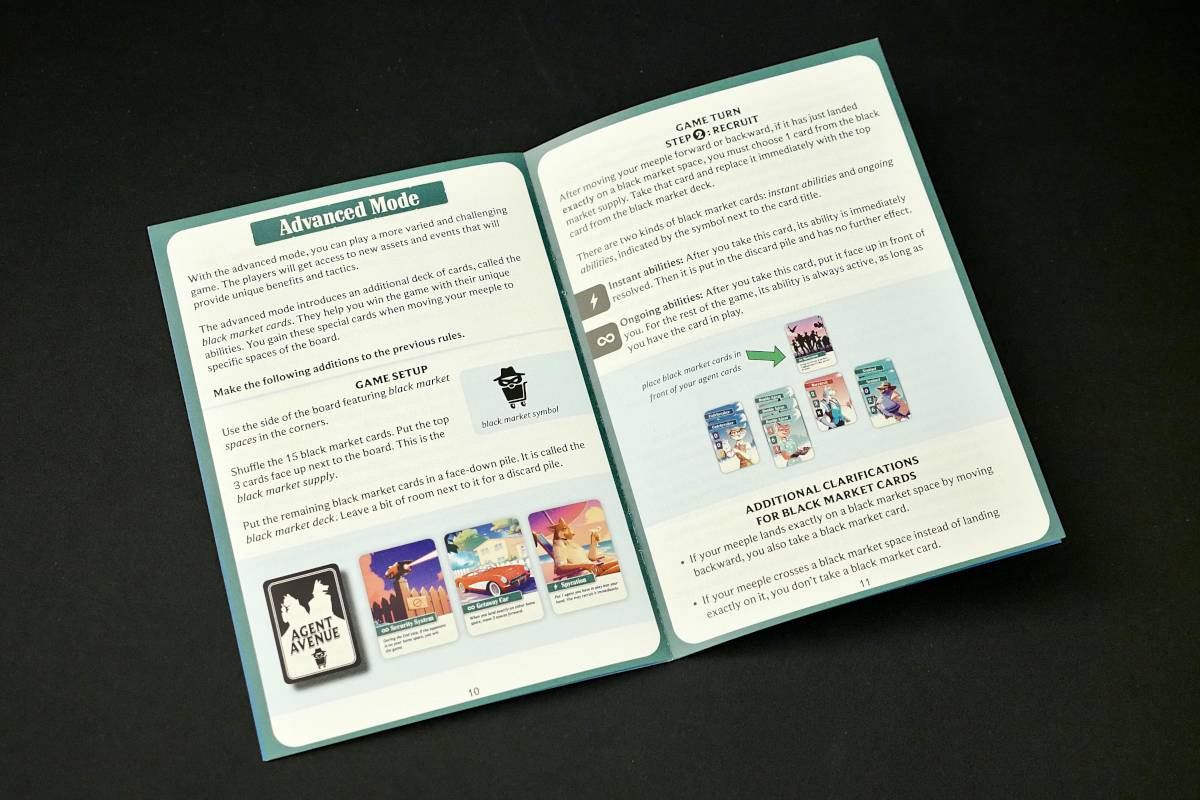
Agent Avenue is an absolute cinch to learn. The mechanisms are as easy as they come and there aren't many rules. In fact, the player aid is a measly card that fits the entire game flow on one side (with the Advanced Mode on the other side). Everything is intuitive, nothing is complex. You can teach this game to anyone, and even most non-gamers will grasp it fast.
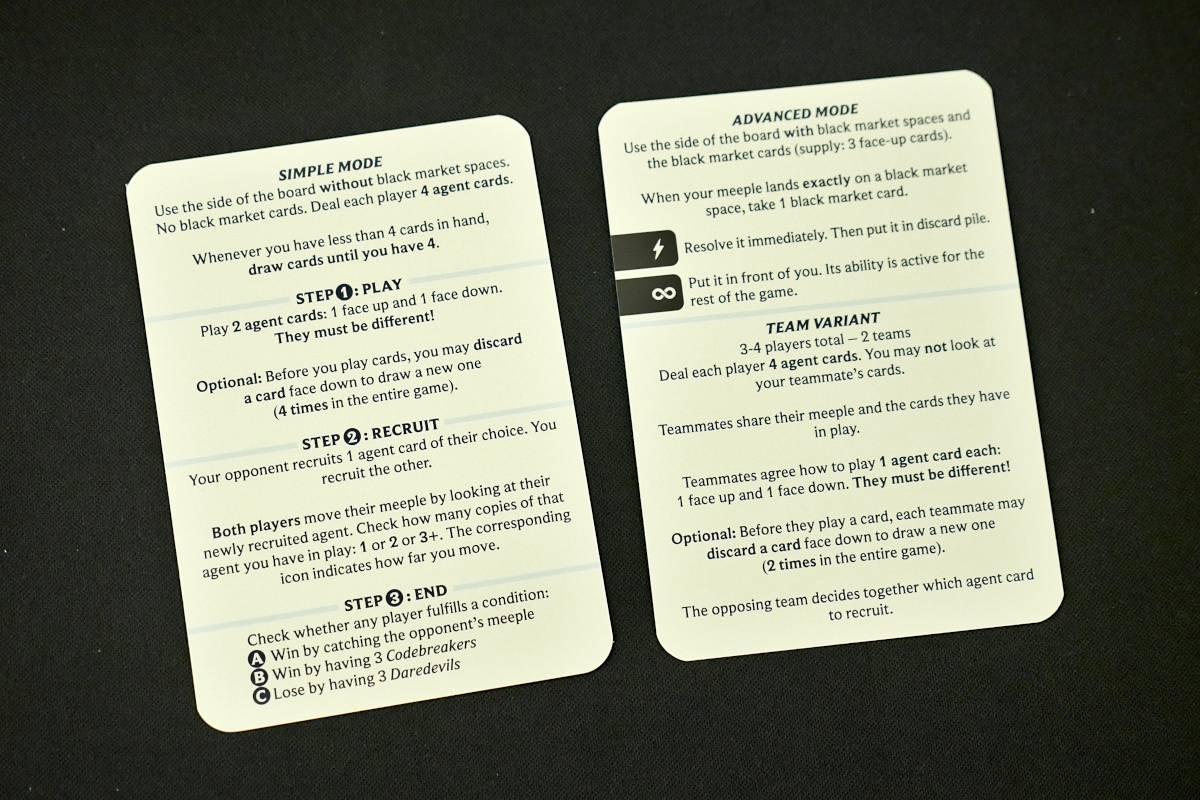
The Advanced Mode is a bit more gamery, but still far from complex. The mode only introduces a single extra rule (i.e., if you land on a Black Market spot, activate one of the available Black Market cards), and the cards are just special powers with everything explained via text. Once you know the Simple Mode, the Advanced Mode can barely be considered a step up.
Game Experience
Decision Space
Agent Avenue is so simple yet so brilliant, all because of its action selection mechanism. You have to present two options to your opponent, who chooses what they want while also leaving you with the other. I-cut-you-choose has been done plenty of times before, but the small twists in Agent Avenue give it more weight and force you to engage on a deeper level.
When it's your turn, you have a lot to think about.
Which card in hand do you want to play for yourself? The most basic path to victory is via high numbers so you catch up to your opponent. That means playing cards like Enforcer, Sentinel, Sidekick, Double Agent, and Daredevil. There's also Codebreaker, which doesn't help you in the race but edges you closer to an instant win. In other words, most cards are "good" and it's up to you to make the most of them with good timing.
How do you actually play the card you want? This is the crux of Agent Avenue. You don't get to choose what you do; only your opponent can choose for you. That means figuring out what other card from your hand to pair it with and how to present them so your opponent chooses the "right" card. To do that, you need to know what your opponent wants and doesn't want—but that's a lot harder than it sounds because of how the Agent cards work.
The value of a given card is always shifting because its value depends on how many of it you've played. If I haven't played any Sentinels yet, then the card is worth nothing to me... but for my opponent who's already played two Sentinels, it's worth a whopping 6 movement! On the other hand, Daredevils are good if you haven't played any, but grow increasingly risky with each one you play.
Which to face up, which to face down? If you put a good card face-up and a bad card face-down, they might just grab the face-upper because it's safe. So maybe you put a good card face-up and the card you actually want face-down! That'll tempt them to go with the safe option and leave you with your desired card. But maybe they know you're a trickster? In which case they might see through your ploy and snatch the face-down card after all. Oof.
As you can see, there are layers to this. You have to be able to read your opponent's personality and thought process, and you have to understand how they view you. You have to use all of the above to present an offering that manipulates your opponent into giving you want you want.
When you're on the receiving end, you have to reverse engineer the stuff I mentioned above while also doing some deductive work.
When you're presented with an offering of Agent cards, your one goal is figuring out the face-down card. It isn't easy, let me tell you. Part of it involves looking at all the cards that have been played and the cards in your hand, which tells you what cards are left in the deck and could possibly be in your opponent's hand. As the game goes on, you can whittle down the possibilities further and more accurately deduce what a face-down card could likely be.
You can never "count cards" with absolute certainty because of the discard rule. Four times per game, you can get rid of a card you don't want and draw a replacement—and your opponent can do this, too. When they do, you don't get to see what they discarded. You can never fully know which cards are still in and out of play, and this uncertainty prevents perfect deduction.
But ultimately, it's about reading your opponent. Are they playing it straight with a good card face-up and a bad card face-down? Or are they trying to pull a fast one on you, sneaking an even better card through? What kind of person are they? Are they likely to bluff? Are they capable of shifting gears and going against type? How long has it been since they last deceived you? Does it look like they need a certain good card? Or absolutely want to avoid a certain bad card? How does all this factor into their face-up-face-down offering?
Now, if all of this makes Agent Avenue sound like a chess-tier mental exercise, don't worry. It's far from thinky or brain burny. You aren't thinking about these things so much as you are intuiting them. In my experience, Agent Avenue is about having limited information and making gut calls.
Luck Factor
In Agent Avenue, there's a bit of luck when drawing Agent cards. Some Agent cards are good, some are bad, and what you get will shape what you can do. But as it turns out, the luck of the draw is inconsequential.
This isn't a game where drawing "good" cards is good and drawing "bad" cards is bad. In fact, you want a mixture of good and bad because each type helps you manipulate your opponent in different ways. Whether you have all good cards, all bad cards, or a combination, you always have options for how to play them in a way that benefits you more than your opponent.
And if you ever do find yourself hating your hand, you can always fall back on the "discard 4 times per game" rule. It gives you just enough mitigation to crawl out of tough spots, but not enough that you can abuse it.
Fun Factor
Despite its simplicity, Agent Avenue is entertaining in several ways. When you're on the offense, it's puzzly and crafty as you work out how to get your opponent to react a certain way to every offering. When you're on the defense, it's deductive and apprehensive as you suss out your opponent's intentions.
That darned face-down card is the secret sauce of Agent Avenue. You just don't know what it is! And so it makes you curious, wary, suspicious, even fearful at times. You end up psyching yourself out. You gamble on risks and they don't always pan out. That one face-down card introduces so much mistrust, paving the way for informed mind games.
And the tension is palpable throughout. It's thrilling when your opponent is right on your tail and you feel squeezed and cornered. It's equally as thrilling when you have two Codebreakers or two Daredevils and you stand on the edge of victory/loss while trying to pull off a multi-turn gambit so they eventually snatch the exact card you want them to snatch.
Agent Avenue is mentally engaging and emotionally riveting. Period.
Pacing
Agent Avenue is a fast-paced back-and-forth between you and your opponent, punctuated by tough decisions that have you holding your breath and grimacing as you debate over which offered card to take. It starts off slow but the tension quickly ramps up within a few turns, then gets cranked up further as you both teeter on the edge of losing or winning.
I find myself equally engaged both when it's my turn and when it's my opponent's turn, which isn't something I can say with many two-player cat-and-mouse games. There's a tiny bit of downtime, yet it doesn't feel like downtime. But what's most impressive about Agent Avenue's design, to me, is that all three possible endings feel climactic. Not only are they all viable, but they're always in play and always a threat. No one is a clear winner until the fat lady sings.
In one game, I went from being right behind my opponent (i.e., one step from catching them) to being caught by them in just two turns. The tides can turn on you in a snap, yet it never feels unfair or unexpected. Between that and the steady accumulation of Codebreakers and Daredevils, there's constant forward momentum that builds and builds. Even when you're about to win, you can lose—and vice versa. Oh, it's so tense!
All of this is packed into just 10 to 20 minutes. That's an incredible feat of design, if you ask me. Sure, the shorter games aren't as exciting or satisfying as the longer ones, but that's okay because you can just shuffle up and play again.
Player Interaction
The interaction in Agent Avenue mainly comes down to bluffing, deduction, and mind games. You're trying to get into your opponent's head and understand how they think, all so that you can present a face-up-face-down combo that plays out in your favor. That'll involve some trickery and deception. And when it's their turn, you'll have to see through their deceit as well.
But none of this is stressful or mean. It's not like you have to lie through your teeth or put on an act. "Bluffing" in Agent Avenue is just placing a card face-down on the table, and "deduction" is just thinking about what that face-down card could be. Honestly, you don't even have to "read your opponent's mind" if you don't want to. You can play it entirely straight if you wish.
Fiddliness
Agent Avenue isn't fiddly at all. The meeple movement around the track is easy and the set collection of Agent cards is clean. Most of the game time is spent holding your hand of cards and thinking. It's refreshingly simple.
Replayability
I've been raving about Agent Avenue in most of this review, and I mean every word I've said. This is a great game with a clean and effective design. But do I want to play it every single day? For hours at a time? Without losing any of its luster? No, of course not. Every game has its time, place, and occasion. Agent Avenue is no exception.
The core gameplay is fun—no question about that—but deception and deduction are mental exercises, and too much of that wears me down. If you showed me this game back in my college years, I might've enjoyed it all day every day. But I don't have that kind of stamina now... and Agent Avenue does require some mental stamina, at least if you're playing to win.
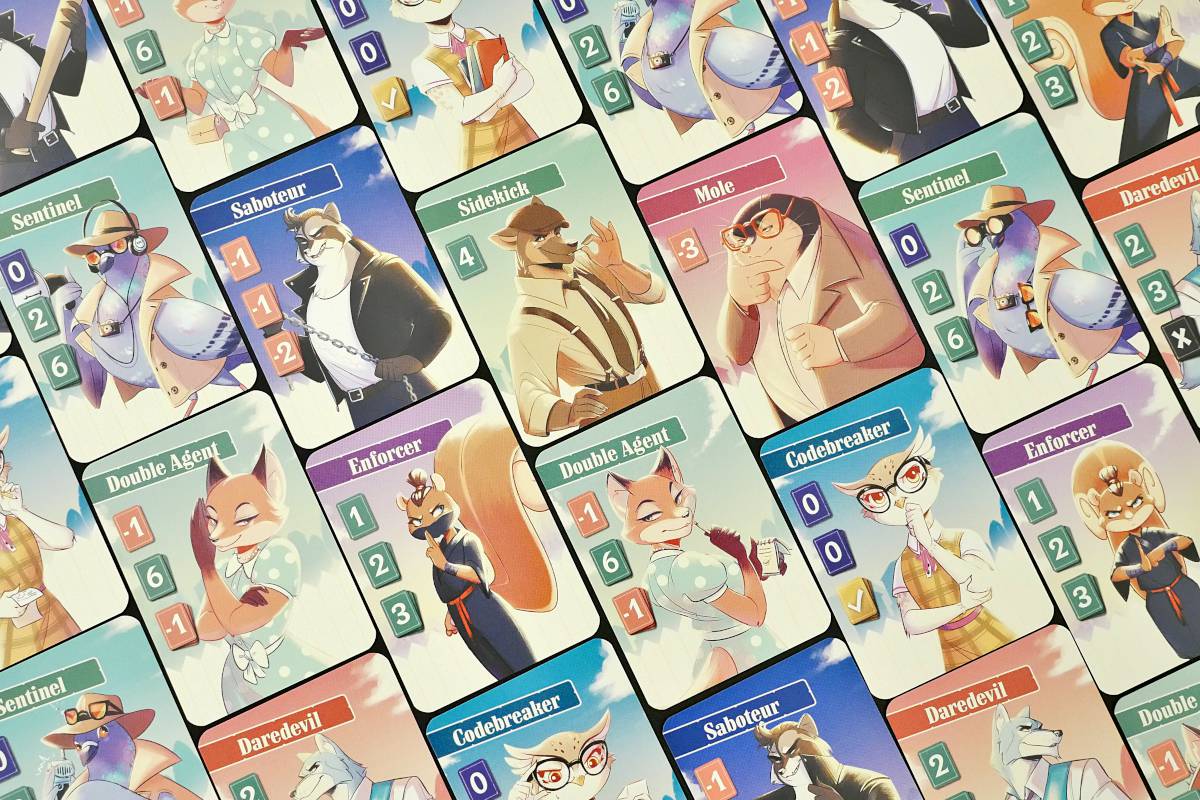
Also, be warned that Agent Avenue doesn't have much novelty past the first play. If you need tons of content or variable setups to stay interested in a game, you won't find that here. Think of it like Coup or Jaipur or Welcome To—it's the same experience from play to play, but what makes it interesting is how you deal with the situations you're dealt. (If I have a complaint, it's that there are only 15 Black Market cards. Twice as many would've been great.)
For me, Agent Avenue is the kind of game I'll pull out, knock out a game or two and have a really fun time, then put it away for another day. I have to be in the mood to play it, though, and it's best played with someone who's really into bluffing and mind games. Without that, it's rather tame. But when I'm craving a two-player bluffing experience? Agent Avenue is the best for it.
Production Quality
Agent Avenue accomplishes a lot with little—just one board, two meeples, and 53 cards. I love how restrained the production is overall, yet Nerdlab Games still put in effort and paid attention where it matters. It's small but striking.
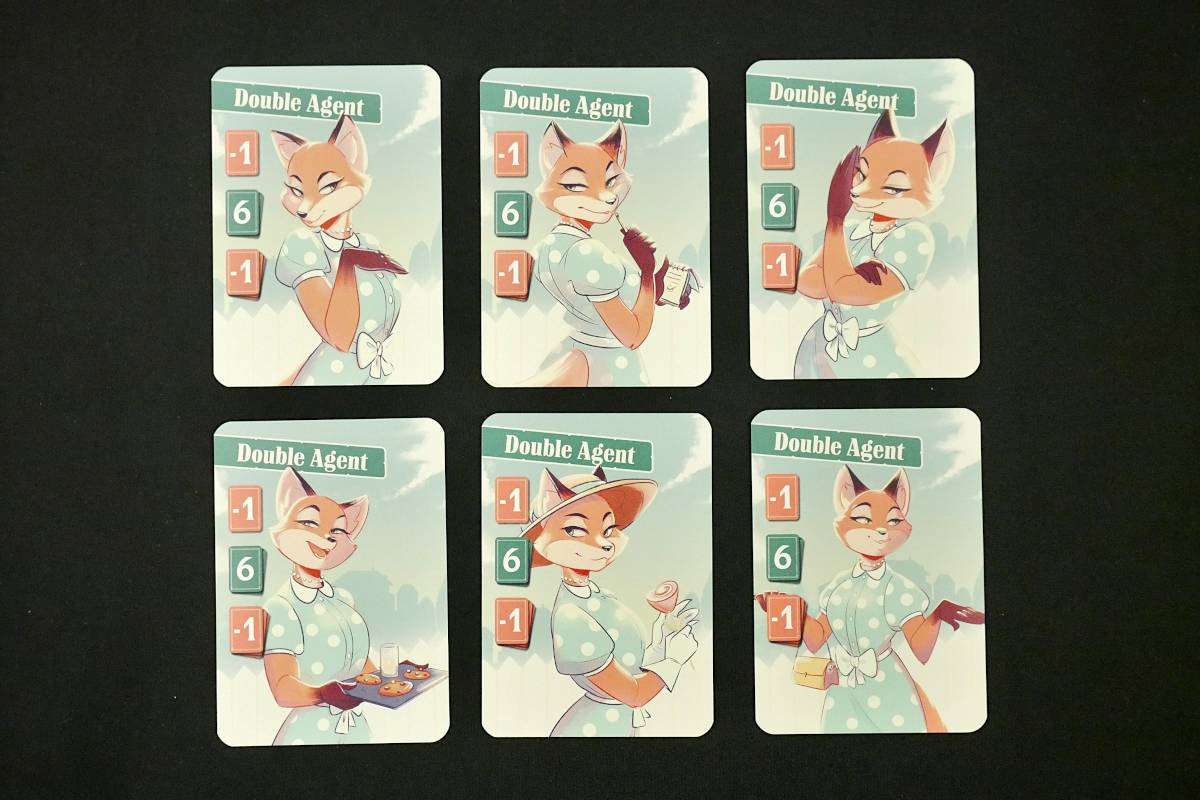
The artwork looks great and every card's illustration is different. In Agent Avenue, there are six copies of each card (except for Mole and Sidekick). Each of those six copies could've used the same exact illustration and been fine for it, but no, each copy has a different pose and expression. It has zero gameplay impact, but I appreciate it! And the art style is lovely. (I say that as someone who's pretty much over the anthropomorphic animals trend.)
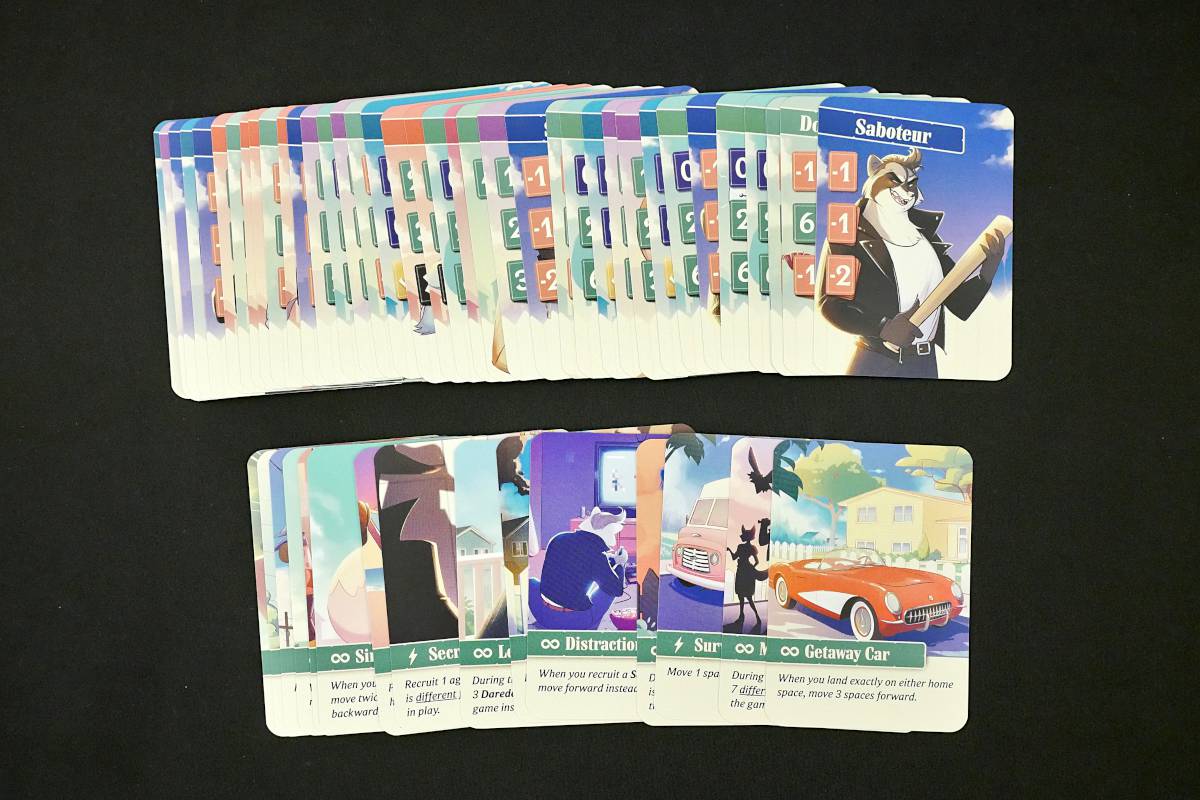
The graphic design is intuitive and legible. The Agent and Black Market cards have their own flair, so they feel fresh and original instead of paint-by-the-numbers or phoned in. The iconography makes sense, the text is easy to read, and everything is aesthetically cohesive.

The cards are missing a linen finish, but they feel okay to play with. Since this is one of those games where you hold your hand of cards, I'm worried the cards might get grimy over time. (It hasn't happened yet, though.) And while not flimsy, the cards aren't exactly thick either. I'm normally not a sleever, but I'm going to sleeve this one. (Given that it's a bluffing game, you'll want to avoid marked cards, as that'll give away what certain cards are.)
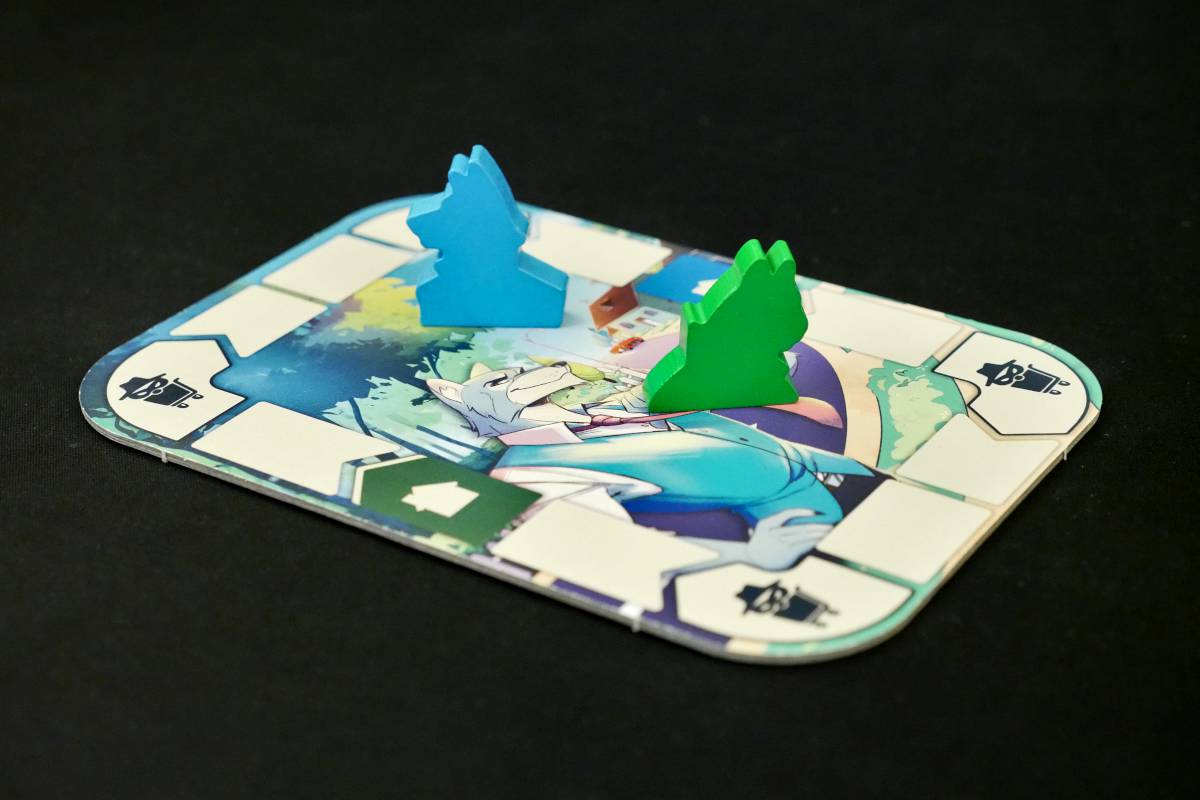
The board is adequately thick and the meeples are chunky. While the game revolves around card play, these two elements are the central focus, so it's good that they feel great to interact with. A flimsy board and cardboard tokens could have served the same purpose, but the overall tactile experience would've been noticeably worse. It really makes a difference here.
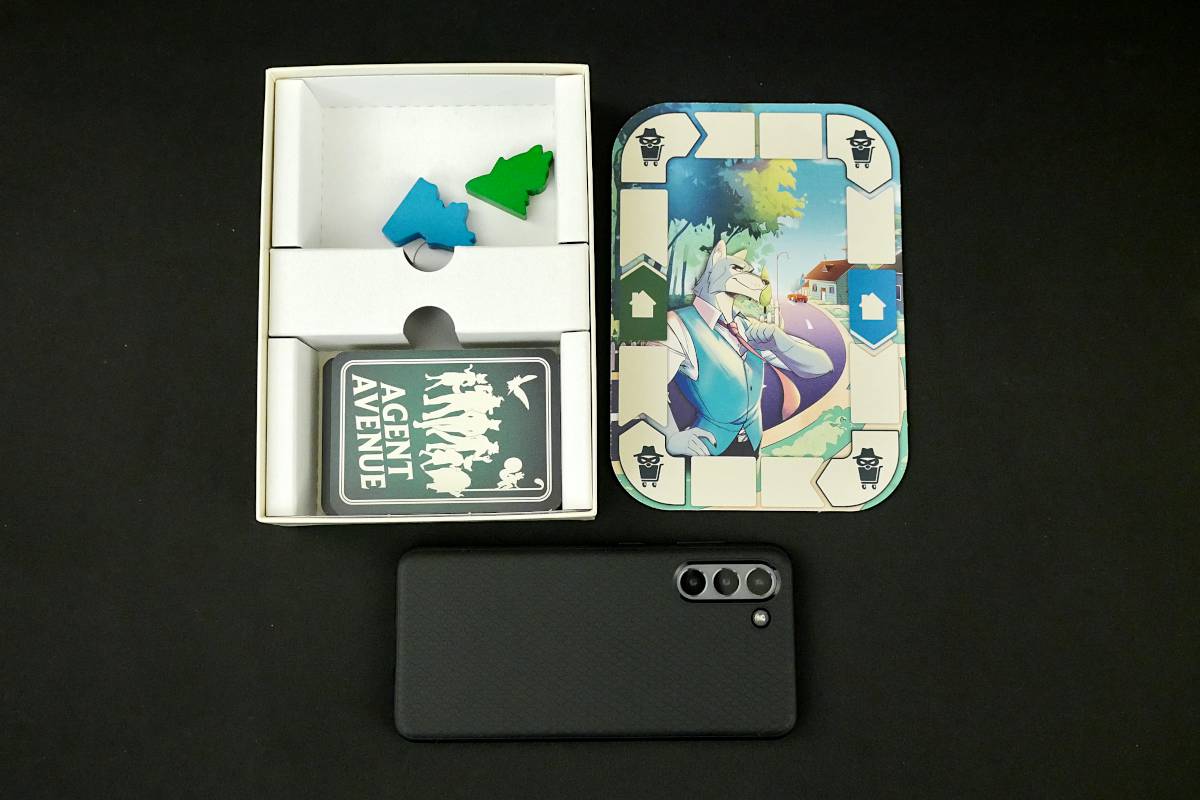
The board and game box are sized perfectly. I love when a board is no bigger than it needs to be, and doubly so for boxes that have no wasted space. Agent Avenue is compact and portable, taking up minimal shelf space and able to fit into most bags and backpacks without hassle. I'm always happy to praise publishers when they exercise restraint like this.

The eco-friendly packaging is a nice touch. After buying and opening hundreds of games over the past few years, I've grown conscious of all the single-use plastics everywhere. Some of it's necessary, I get it, but I appreciate when a publisher is willing to take steps to minimize their impact—even if it's as small as replacing shrink-wrapped decks with paper wrapping.
The Bottom Line
Agent Avenue is phenomenal if you're looking for a condensed two-player experience. It has the perfect blend of strategy, bluffing, and deduction, resulting in a nail-biting duel of mind games that never feels mean or stressful. It's fun, light-hearted, and replayable. Plus, with both Simple and Advanced Modes, it accommodates gamers and non-gamers alike. Agent Avenue is a shining example of two-player bluffing done right.
Stop Buying Games
You'll Regret
Before your next game purchase, run it through this mental checklist that every seasoned gamer uses.
Free checklist, delivered instantly to your inbox.
No spam, ever. Unsubscribe in one click.