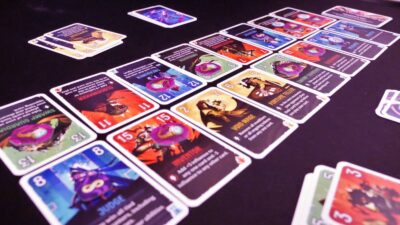

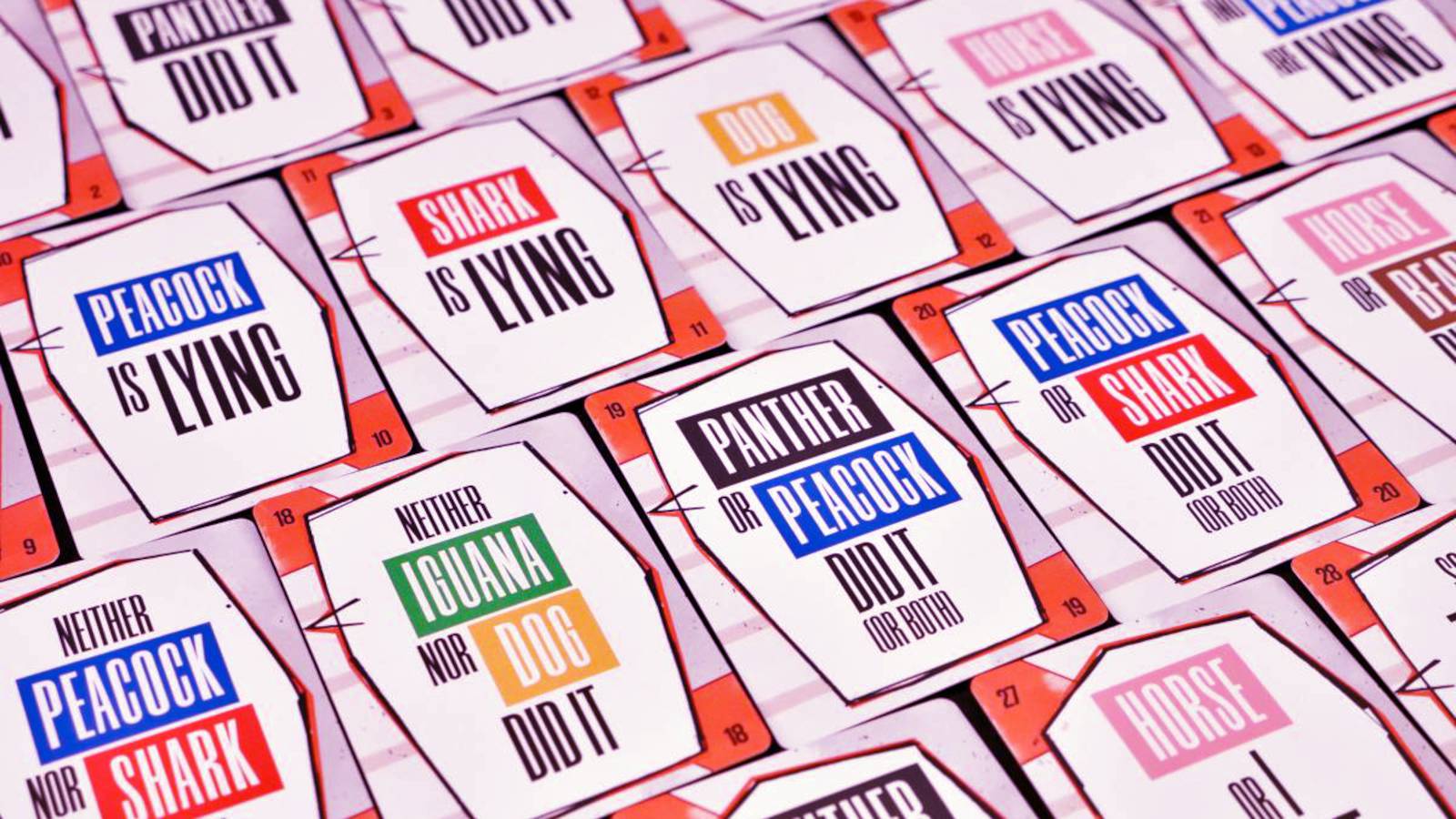
A crime has been committed, so you round up a handful of suspects. They're all making various claims and pointing fingers. Some of them seem to be lining up with each other, while others are contradicting them, and then you have a few who are flat-out calling others out as liars. The truth lies somewhere in that tangled mess.
A Carnivore Did It! is framed as a detective game, but it's actually a game of logical deduction. There's no narrative, no weapons, no witnesses, no motives. Every case is a no-nonsense exercise in deductive reasoning and logical contradictions. A love-it-or-hate-it kind of game.
Here's everything you need to know about how A Carnivore Did It! plays, why I find it so enjoyable, and whether you'll fall on the side of loving it or hating it based on your own affinity for logic puzzles.
This review is based on a review copy of A Carnivore Did It! provided by Horrible Guild, but my thoughts and opinions are my own.
Overview
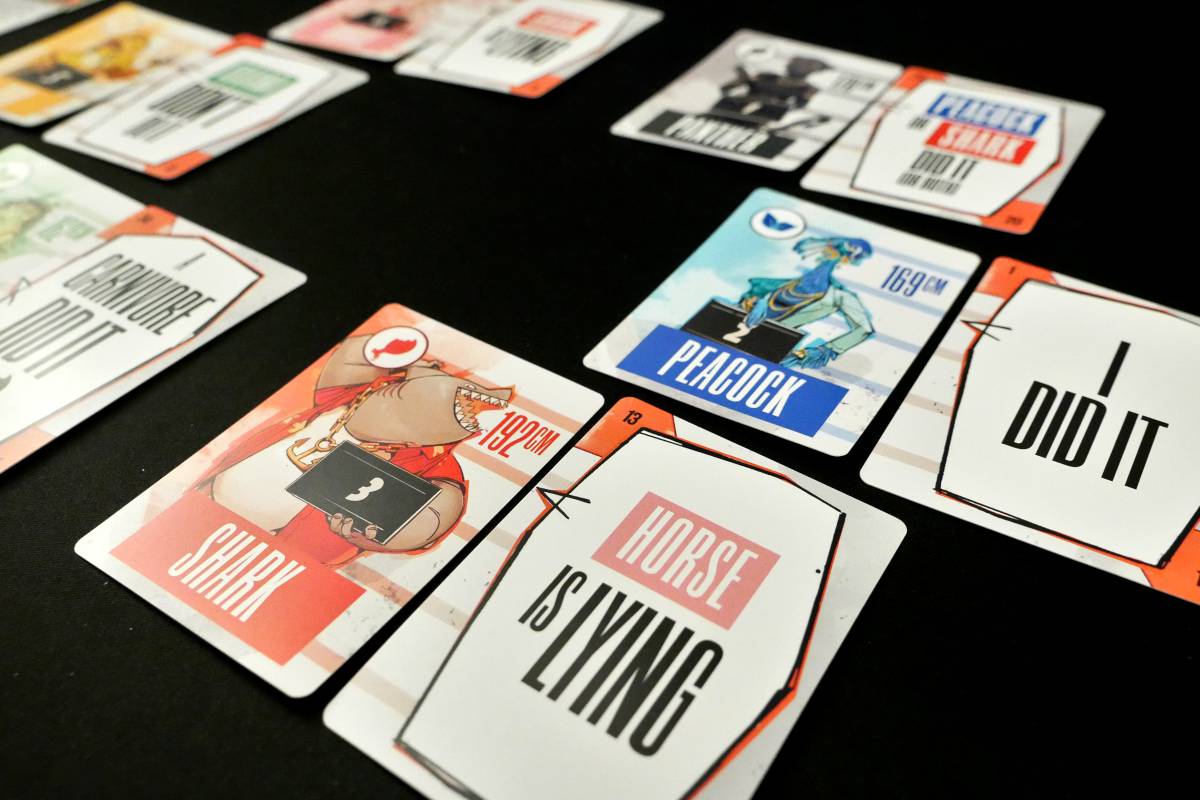
A Carnivore Did It! is a cooperative logical deduction activity, one that feels more like a puzzle than a game. What's clever about it is that it combines a set of 7 Suspect cards with a set of 50 Statement cards to create thousands of different scenarios where you suss out culprits using logic. Yes, seriously, this game comes with two thousand cases!
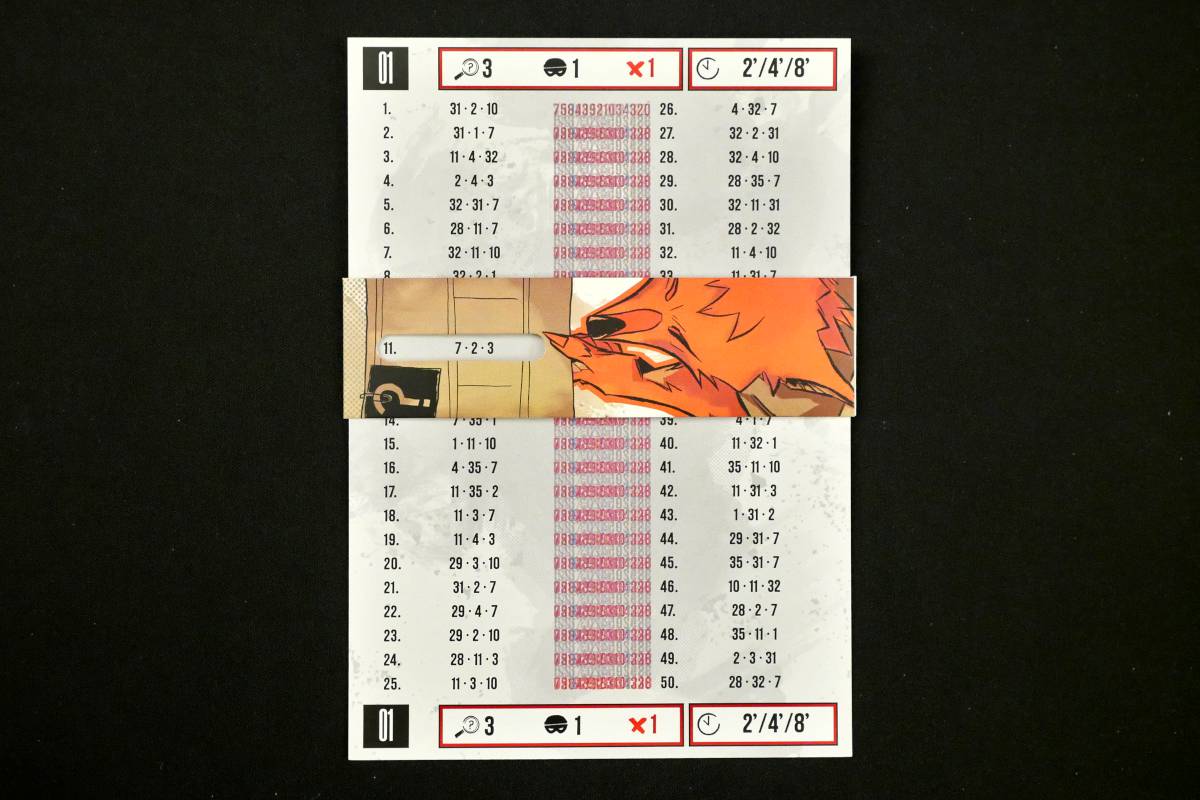
A Carnivore Did It! comes with 20 different Dossier Sheets, with each Dossier Sheet consisting of 100 cases. Each Dossier Sheet has its own unique setup that determines how many Suspects are in play, how many Culprits are among the Suspects, and how many of the Suspects are either being truthful or lying with their Statements. The case you select tells you which Statement cards to pair with each Suspect card. That's the entire setup!
Each subsequent Dossier Sheet is more difficult than the previous one, with later Dossier Sheets involving more Suspects, more Culprits, and more uncertainty in the truthfulness and untruthfulness of the Suspects.
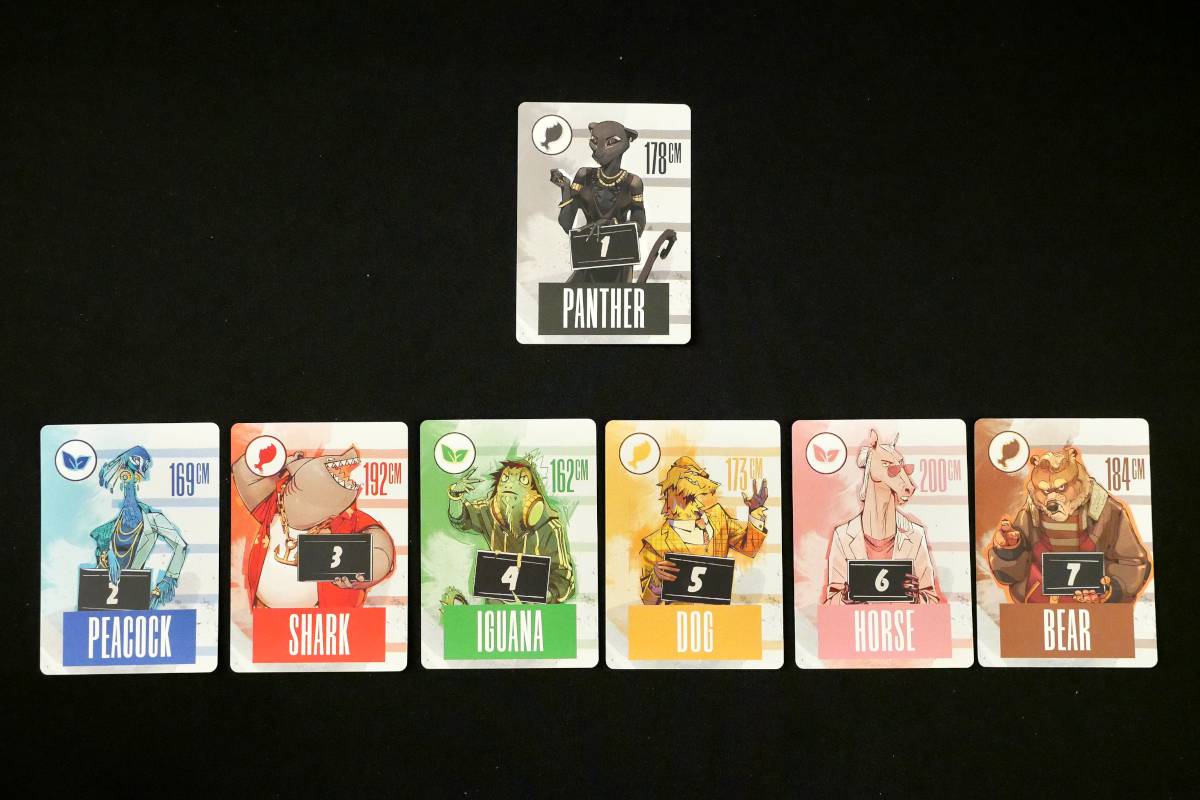
Each Suspect has three different attributes that may or may not come into play depending on which Statement cards are used in the case. There are 7 total Suspects and each one has a name, a height, and a diet (either Carnivore or Herbivore). These attributes will help you eliminate or narrow down who the Culprit is, depending on the truthiness of Statements.
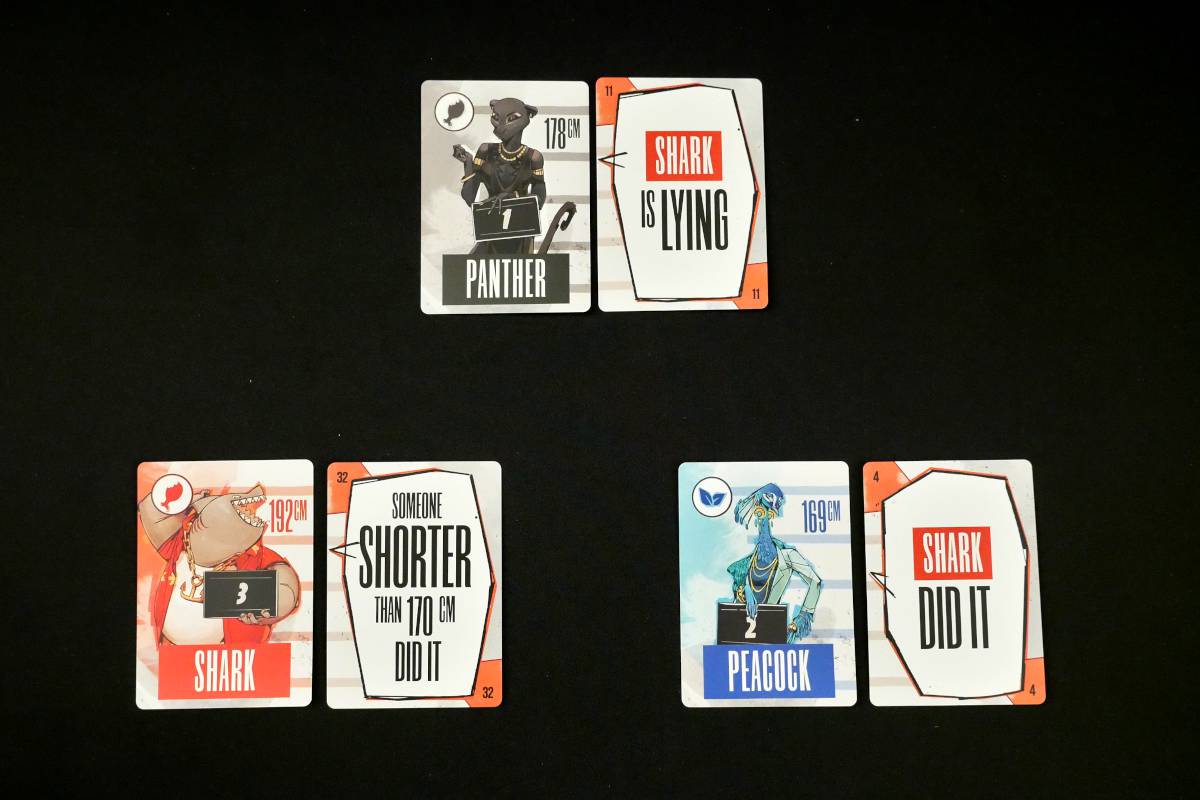
Once you've picked a case and set it up, all you have to do is flip over the Statement cards to begin. Each Statement card tells you something, either about the Culprit(s) or the other Suspects. But Statements can be true or false, and part of the game is figuring out who's lying and who isn't by seeing whether all the Statements add up according to the Dossier Sheet.
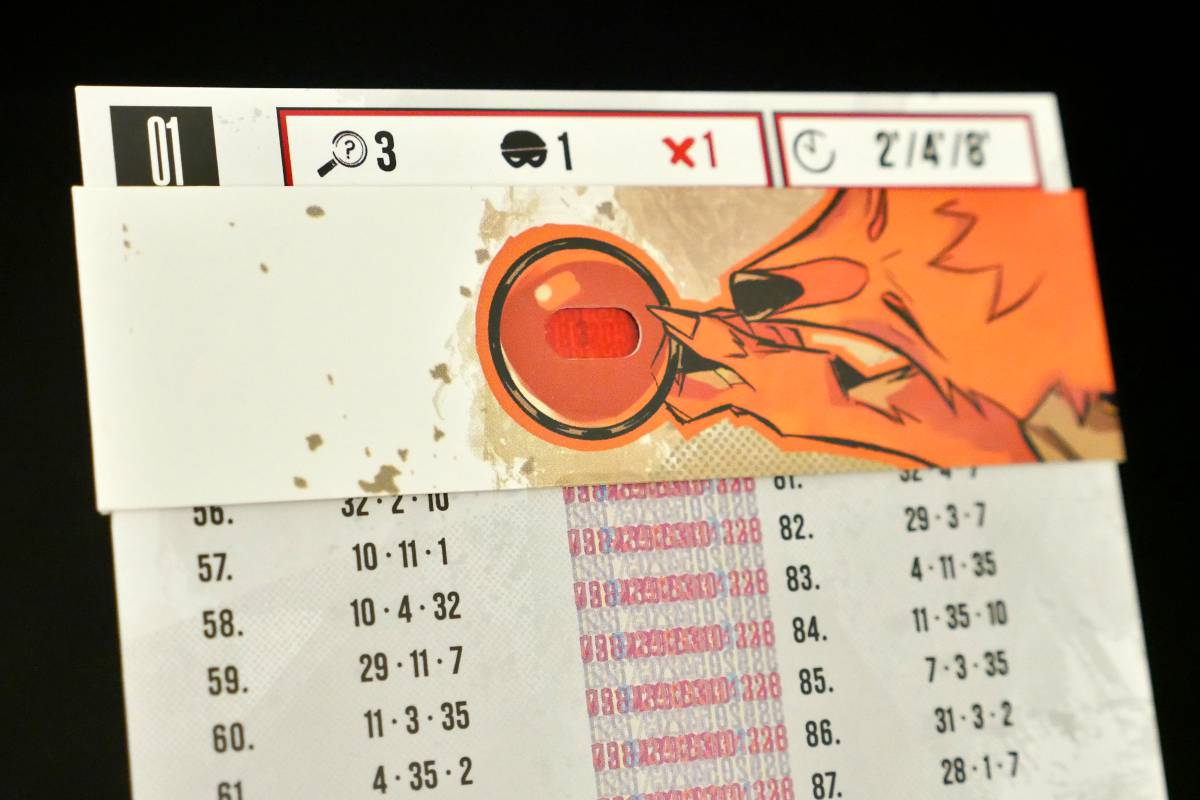
Once you think you've solved the case and found the Culprit, you use the Magnifying Glass to see the decoded answer (shown on the reverse side of the Dossier Sheet). If you're right, you're right; if you're wrong, you're wrong. Case over. It's that simple!
The rulebook says "keeping track of all the information can become complicated," so "feel free to define your own methods to help visualize your reasoning process" and "anything that helps your detective minds stay focused is fair game." In short, you can take notes!
Setup and Table Footprint
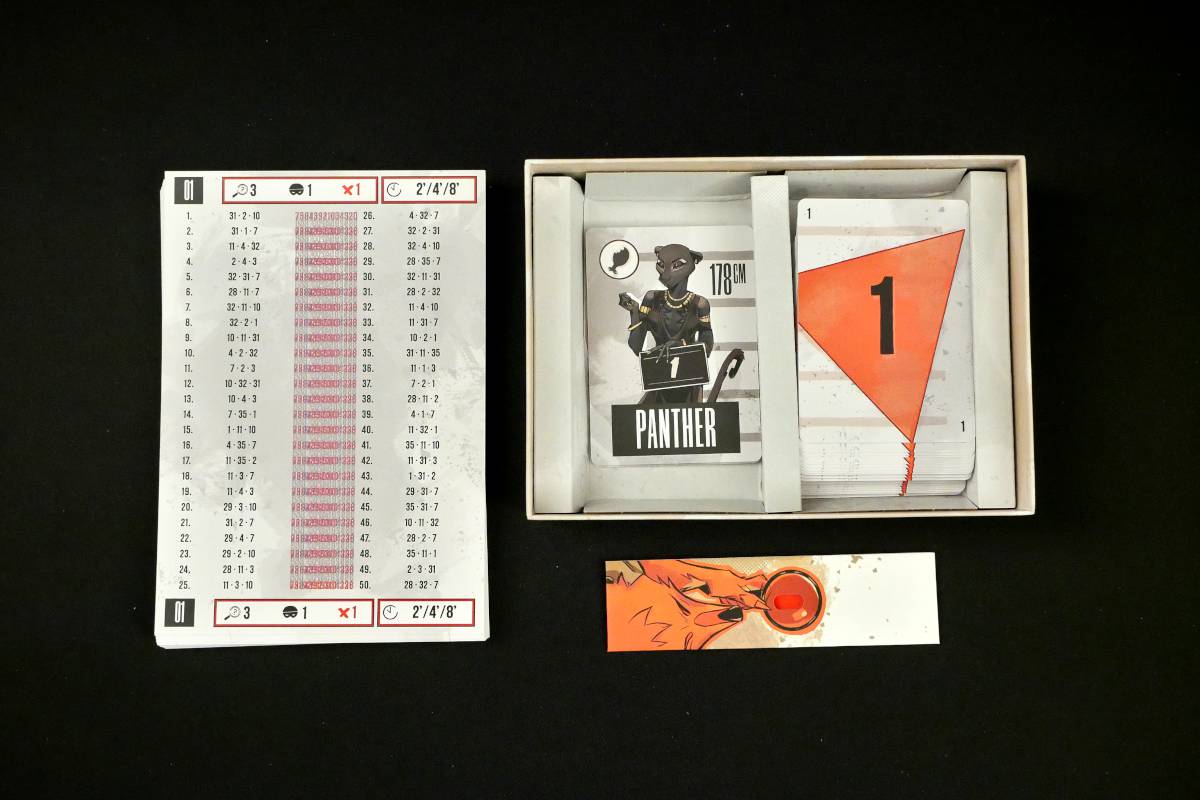
A Carnivore Did It! is pretty quick to set up, helped along by the design of the box and components. You pick a Dossier Sheet and put the Magnifying Glass on it. You place out the Suspect cards, then pair them with their Statement cards according to the Dossier Sheet. Done!
My only complaint is that you have to be very careful when setting up a case in A Carnivore Did It! because the game will break if you mess it up. When the Suspects don't pair to their assigned Statement cards, the whole logic of the case gets thrown out the window. Always double-check!
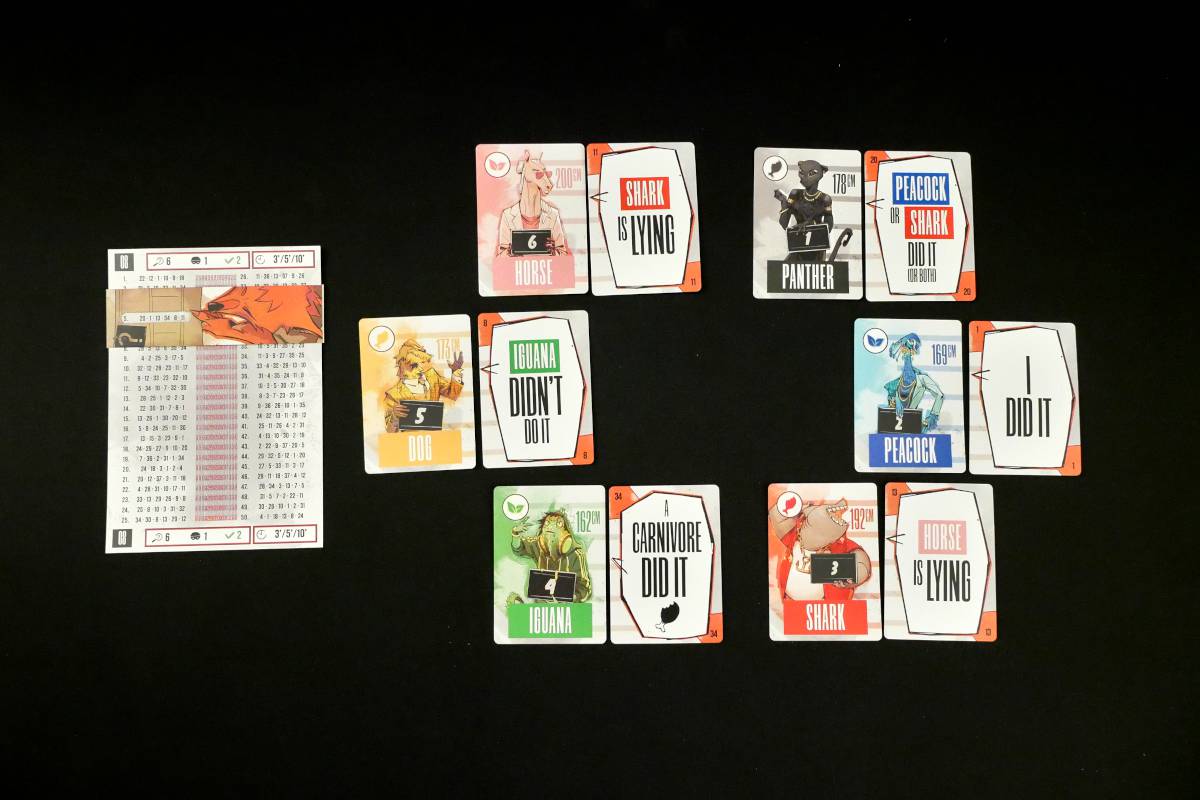
I also appreciate that A Carnivore Did It! doesn't take up much table space. Depending on the case, you really just need enough room to display between 6 cards (3 Suspects + 3 Statements) up to 14 cards (7 Suspects + 7 Statements). The rest of the components can stay in the box, including the current Dossier Sheet and the Magnifying Glass.
Of course, the Suspects then need to be arranged in a circle, so that does take up more space than just laying them out as compactly as possible. Still, the overall footprint is small enough to comfortably play almost anywhere.
Learning Curve
One of my favorite things about A Carnivore Did It! is how much gameplay you get from its simple rule set and minimal components. The rulebook looks more complicated than it is, and even then all the rules fit on 4 neat pages. The rest of the rulebook explains how to play a campaign, plus a few campaign sheets for recording your results.
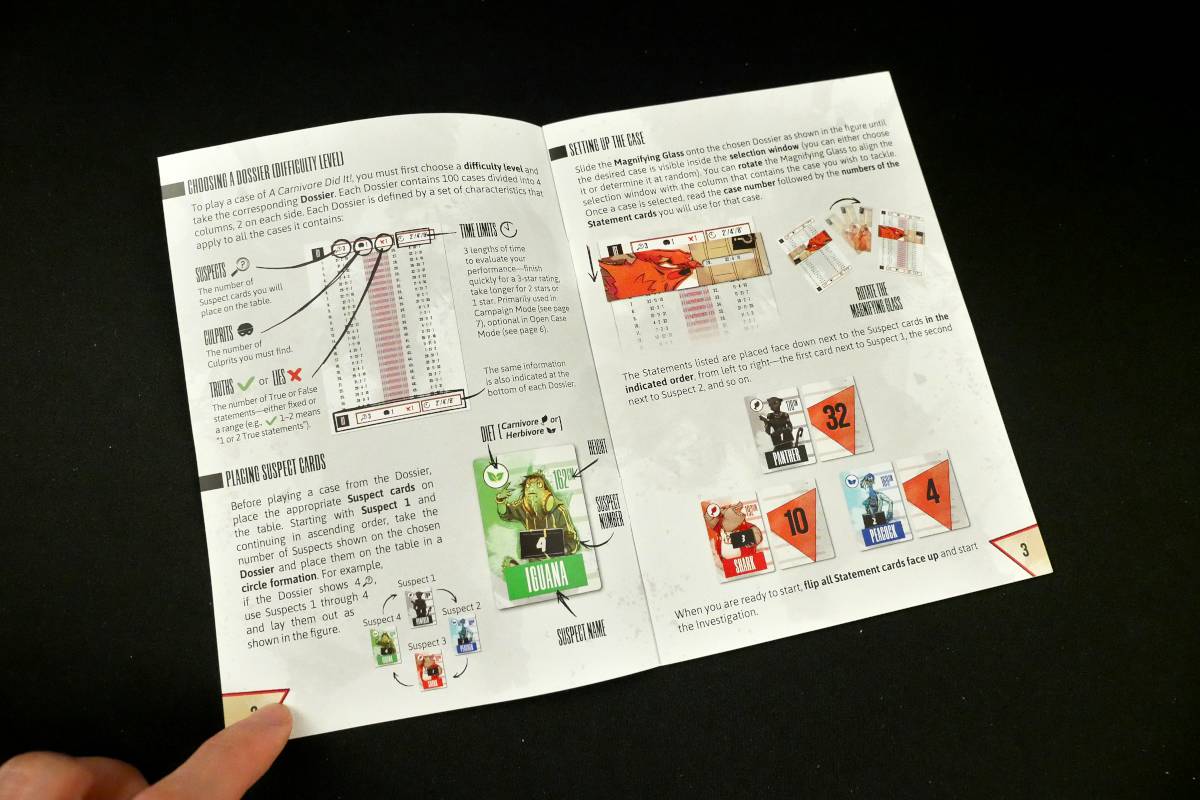
In other words, it's super easy to pick up and play. Once you know how to set up a case, the rest of it handles itself. A Carnivore Did It! is intuitive with close to zero mental overhead. Literally anyone—even a non-gamer—could walk by in the middle of a case and help out. I love that.
Game Experience
Decision Space
Working through a case in A Carnivore Did It! is both straightforward and routine, with the same basic flow taken in every case. First, you find the contradictions. Then, you assume a condition and play it out to see whether it holds up. Along the way, you uncover truths and falsehoods that help you pick other conditions to assume and play out.
Finding the contradictions. The most important thing in A Carnivore Did It! is that each case has a predetermined number of Truthful Suspects and Lying Suspects. In order to find the Culprit, you must be able to suss out who's lying and who's telling the truth—and in order to do that, your primary tool is spotting contradictions between statements.
Let's say you're playing a case with 4 Suspects, 1 Liar, and 1 Culprit. Panther's Statement is "Shark did it." Meanwhile, Shark's Statement is "Panther did it." It's logically impossible for both Shark and Panther to be Culprits (because this case only has 1 Culprit), which means one of them is lying. That right there is a contradiction, and that contradiction helps you.
This hypothetical case says there's only 1 Liar, and now you know that either Shark or Panther is lying. What's the logical follow-up to that? The other two Suspects must be telling the truth! Now you can read Peacock's and Iguana's Statements at face value to uncover the Culprit.
Assuming a condition and playing it out. In the easier cases, spotting one or two contradictions might be enough to immediately suss out the Culprit. But as you progress to the intermediate cases and beyond, you'll find that the contradictions are harder to spot. There's more ambiguity built into those higher-difficulty Statements, which means more uncertainty.
Let's say you're playing a case with 6 Suspects, 3 Liars, and 1 Culprit. You might be able to suss out contradictions between Panther and Iguana, between Peacock and Horse, and between Dog and Shark. But the contradictions alone may not be enough to tell you who's the liar in each pair of Suspects. You don't have enough to continue.
So what can you do? Make an assumption and see how it turns out! Maybe you assume that Panther is lying. If he is, do all the other Statements line up and agree with the case criteria? If not, you know he's being truthful—and if he's being truthful, then you know Iguana is a liar (because of the contradiction you spotted earlier).
Then, based on Panther's truthfulness, you gain more information based on his Statement, which you can then use to make more assumptions and test further conditions. Eventually, you'll arrive at the Culprit.
Don't know what to do? Just brute force it. In the tougher cases, the conditional logic gets really ambiguous, messy, and confusing. There may be enough in there to make logical connections, but maybe you can't see them. It gets even harder when cases have multiple Culprits!
If you're ever stuck, you can reverse engineer any case by randomly picking a Culprit and working backwards to see if the various Statements line up with the case criteria. It's a slow and painstaking process, but yes, it's possible to brute-force any case via process of elimination.
I'm no genius when it comes to logical deduction games, so there might be all kinds of reasoning tricks and shortcuts that I haven't discovered. Maybe there's a lot more to this game than I realize. Or maybe there isn't. But if you're like me, your general experience will likely be the above.
Luck Factor
There's zero luck in A Carnivore Did It!, which is exactly what I want in a game of logical deduction. Can you imagine? If there wasn't enough information or structure to reliably arrive at the right answer, and if my success or failure on a case came down to guessing the right path at a fork, I'd toss it in the trash. Fortunately, that isn't the case here.
You can always arrive at the right answer in A Carnivore Did It!, assuming you have the mental tools and brain power to churn through the logic. It might involve brute forcing, and it might be an exhausting brain-locking process, but rest assured that every case is fully deterministic.
Fun Factor
I keep making comparisons between A Carnivore Did It! and sudoku because they're so dang similar, and that's also true for how it's fun. A Carnivore Did It! is "fun" in the way that any good logical deduction puzzle is: mentally challenging and satisfying to solve. But that's all.
If you find no joy in the very act of problem solving, then A Carnivore Did It! will be little more than a futile exercise in silence. Most of the game is thinking through things in your own head—there's no action. If that doesn't sound fun to you, then skip this. But if it does? You'll have a blast.
Pacing
I've said it elsewhere, but A Carnivore Did It! is basically all downtime. While there aren't any "turns" in this game, an entire case is nothing more than working out logical contradictions and conclusions in your head. The pace of a case, then, is determined by how slow or fast your brain works.
The lower difficulty cases don't have much of a game arc to them—as soon as you spot the contradiction in case, it's essentially over. But the more difficult cases do have an interesting curve. With these, spotting the contradictions is only the first step; after that, it's about running through various assumptions and seeing how they pan out. And as you eliminate different impossibilities, you slowly creep your way towards the answer.
Lastly, depending on how competitive you are, the Campaign Mode has a nice upward game arc to it. In trying to complete 8 cases of increasing difficulty, the tension slowly rises with each one. Every subsequent case could be the one that breaks your streak, and you don't want that to happen on your sixth, seventh, or eighth case. Talk about nail-biters!
Difficulty
Not to toot my own horn or anything, but I've always been pretty "smart" when it comes to logic puzzles, deduction, and problem solving. That's why deduction is one of my all-time favorite genres! Maybe I'm getting dumber with age—it's totally possible—but I found that the difficulty in A Carnivore Did It! ramps up a lot faster than I expected it to.
There are 20 Dossier Sheets in increasing difficulty, and I started struggling around Sheet 10. For reference, Sheets 1 to 8 are supposedly "Normal" difficulty, Sheets 5 to 12 are "Advanced," and Sheets 13 to 20 are "Hard." (Yeah, there's some overlap. That's per the rulebook, not me!)
When I say "struggling," I don't mean unsolvable. I've played up to Sheet 15 and I can solve those cases just fine. But the logic gets significantly harder to untangle around Sheet 10 and you need to start brute-forcing solutions through trial and error. Again, maybe I'm just not smart enough to see the deeper logic? But when you're resorting to brute force, A Carnivore Did It! does start to feel rote, mechanical, and less interesting.
Player Interaction
If you've ever played sudoku or crosswords with a partner, or a game like MicroMacro: Crime City with others, then you know what to expect as far as player interaction here: not much at all. You're mainly making connections on your own, then telling others what you learned.
The connections made by your partner(s) may help you see things that you missed, or you may refute them by explaining how those conclusions can't be true because of X, Y, Z. So, yes, there's a bit of talking and teamwork...
In the end, though, it feels like you're each playing individually in your own heads while thinking out loud and occasionally sharing notes.
Player Counts
A Carnivore Did It! can technically be played with as many players as you want, either cooperating together or competitively racing to figure out the answer before everyone else. But each mode has a sweet spot.
For cooperative play, I'd only play it by myself or with one partner. The deductive discussions aren't interesting enough to warrant more players, and it's extremely prone to "alpha gamer" or "quarterback" issues where one person dominates and everyone else just goes along.
For competitive play, it's pretty good up to 4 or 5 players. You'll need enough dry erase boards and markers (or pens and paper) for each player so they can take notes and run through the case logic. With too many players, it starts to feel cramped and players are bound to get frustrated because they're less likely to be the one who solves any given case. No matter the player count, I'd only play competitively with players of the same "deductive level" as me since the one-winner design can feel bad if you're outmatched.
Fiddliness
During a case, A Carnivore Did It! isn't fiddly at all. You're just sitting there, staring at the different Statement cards and working through all the logical implications in your head, maybe jotting some notes to help.
But it does feel slightly fiddly when you're playing through multiple cases, like in Campaign Mode. Reclaiming all the Statement cards in order, then dealing out the new set of Statement cards, then removing the Magnifying Glass from the old Dossier Sheet and sliding it onto the next one, then double-checking and triple-checking that all the Suspects are properly paired to their Statement cards for the next case...
That last bit is very important. I once found myself unable to solve a case, tearing out my hair for a good 15 minutes and questioning my brain's ability to think, all because I'd accidentally mixed up the Statement cards. One mistake can break a case, so you have to take care when setting it up.
Variants
Campaign Mode
While A Carnivore Did It! can be played as one-off cases, there's a "campaign mode" where you play 8 cases in a row across 8 consecutive Dossier Sheets (in other words, gradually increasing difficulty). Your goal? Successfully solve all 8 cases within the time limit designated on each Dossier Sheet and earn as many Stars as you can. (The faster you solve a case, the more Stars you earn for it.) You have Badges that save you on incorrect guesses, but if you fail too many times, you lose the campaign outright.
I'm not big on the Campaign Mode, mainly because I hate the time pressure. Whenever I do something like sudoku, nonograms, crosswords, etc., I always prefer the play-at-my-own-pace option. The added stress does nothing for me. That said, it's nice that Horrible Guild included the time limits and Star ratings for those who are challenge seekers.
Competitive Mode
The "competitive mode" in A Carnivore Did It! is 99% the same game, except you're no longer thinking out loud and sharing your findings. It's a straight-up race to solve the Culprit before everyone else, which means it's best when everyone at the table is similarly skilled; otherwise, the fastest thinker will consistently outsolve everyone. If you're like me and you don't like being under extra pressure, you might not like this mode, period.
But it's nice to have the option, and it can be a satisfyingly competitive event when everyone's on the same level. It's such a rush when everyone's on the verge of solving the case and you pull it out just before they do!
Replayability
A Carnivore Did It! is brilliantly replayable, in the same way that sudoku is. It's the gameplay itself—the logical deduction, the puzzle solving, the brain crunching, the rush of satisfaction when it comes together—that keeps it engaging from case to case. It can be as easy or as difficult as you want it to be, and there's a meditative quality as you work through the logic.
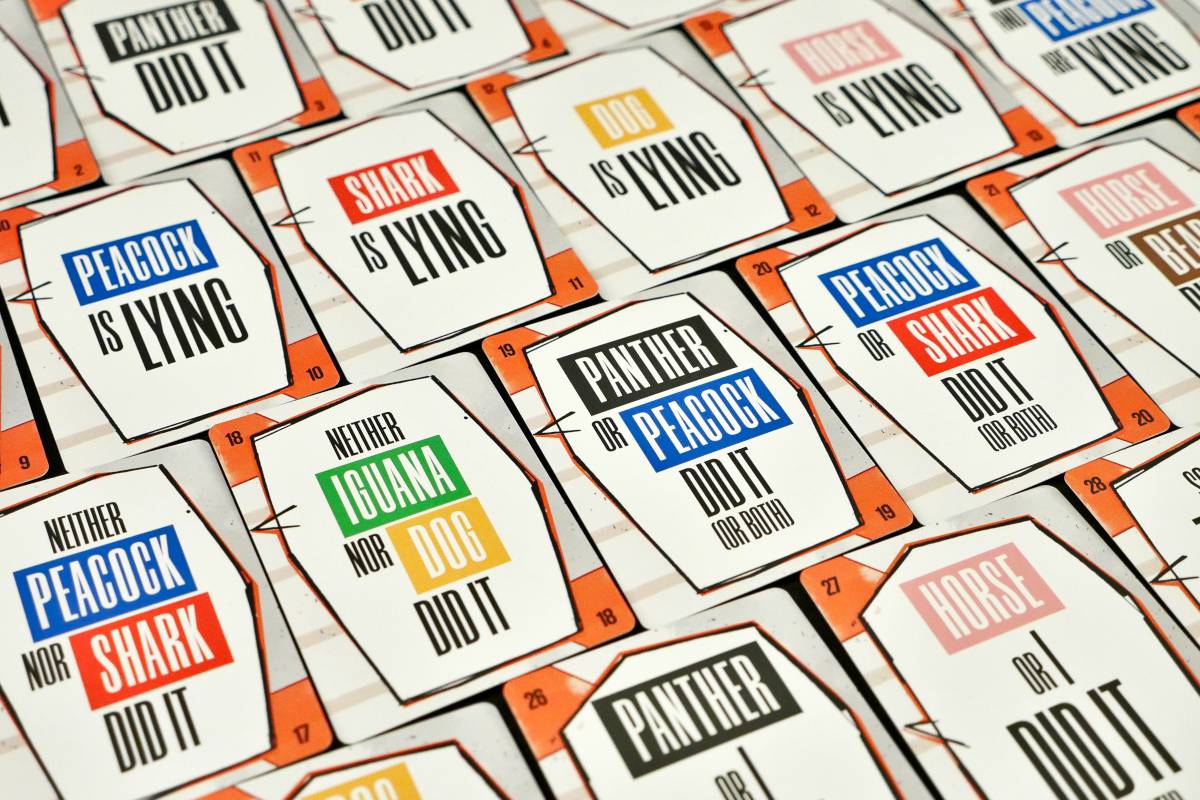
And while A Carnivore Did It! technically has a finite number of cases, let's be real: you aren't going to play through all 2,000 cases. You'll probably never replay any given case, and even if you do, it's not like you're going to remember the solution. Again, think sudoku. Just because you play the same puzzle at a later time doesn't mean you know the answer, especially with the more advanced puzzles that have more layers of depth. Same here.
It's all helped by A Carnivore Did It!'s case-by-case design. You can pull it out, play a single case, then pack it up. Or you can play a full 8-case campaign. Or you can play 50 cases, jumping around the different Dossiers. It has zero "tabling friction," so it's easy to replay on a whim—something I find myself doing pretty regularly. A satisfying experience all around.
Production Quality
While there's nothing flashy or extravagant about A Carnivore Did It!'s production, it's well-made, cleverly modular, and does a lot with little. This is the kind of efficient design I'll always support.
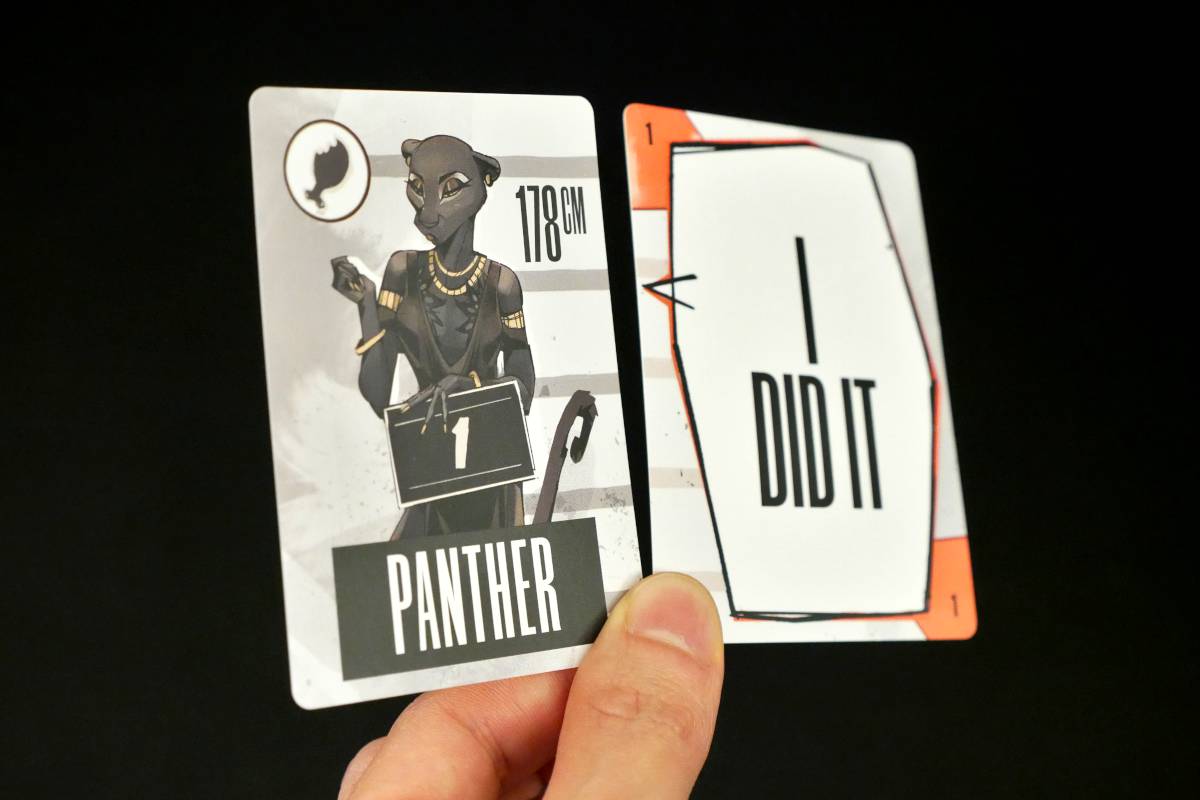
The Suspect and Statement cards are great. Each Suspect has a clear identity, with a clear number and unique color, and all the auxiliary information (like diet and height) is immediately recognizable. The Statement cards have huge, legible text that's easy to read even from across the table. Plus, the Statement cards are designed like speech bubbles, so it's intuitive to see that this Suspect is saying this Statement. And the way it's all modular and reusable in thousands of ways? Stroke of genius.
The only thing I could complain about is the card quality. They're a bit thin and prone to warping, whether due to humidity or frequent handling. Is it a deal-breaker? Not at all. Just something I felt worth noting.

The Dossier Sheets pack a lot into a small space. That's one case per line, 50 cases per side (across two columns), for a total of 100 cases per Dossier. I love that each Dossier is actually its own separate sheet and not a page in the rulebook, which would be annoying to keep flipping back and forth across. And I appreciate the thick card stock, giving each Dossier a tactile oomph and more durability (which is needed for the Magnifying Glass).
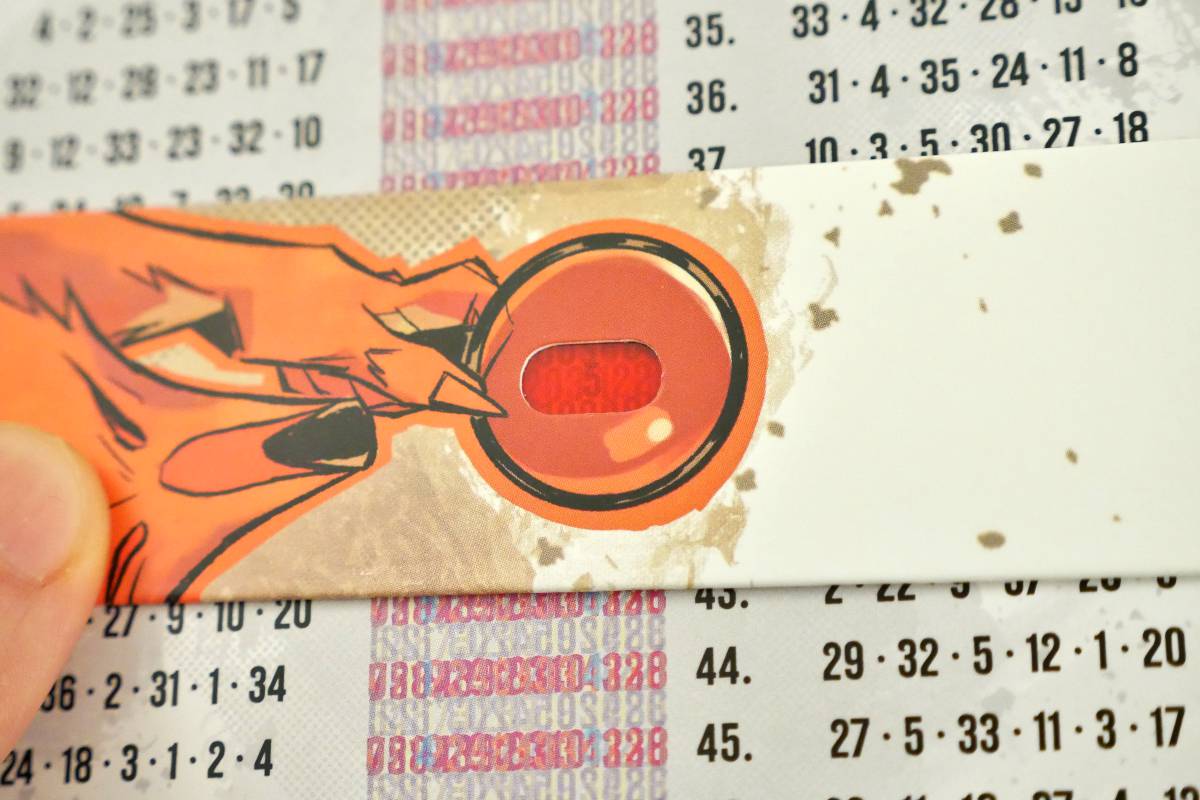
While the Magnifying Glass is clever, the answers are hard to read. I like the way the Magnifying Glass slips over the Dossier Sheet and isolates a single case, reducing the chance of accidentally mixing up numbers from adjacent cases. But I don't like the decoder glass! It's hard to read the answer even in good lighting, with "5" and "3" and "6" especially difficult to tell apart.
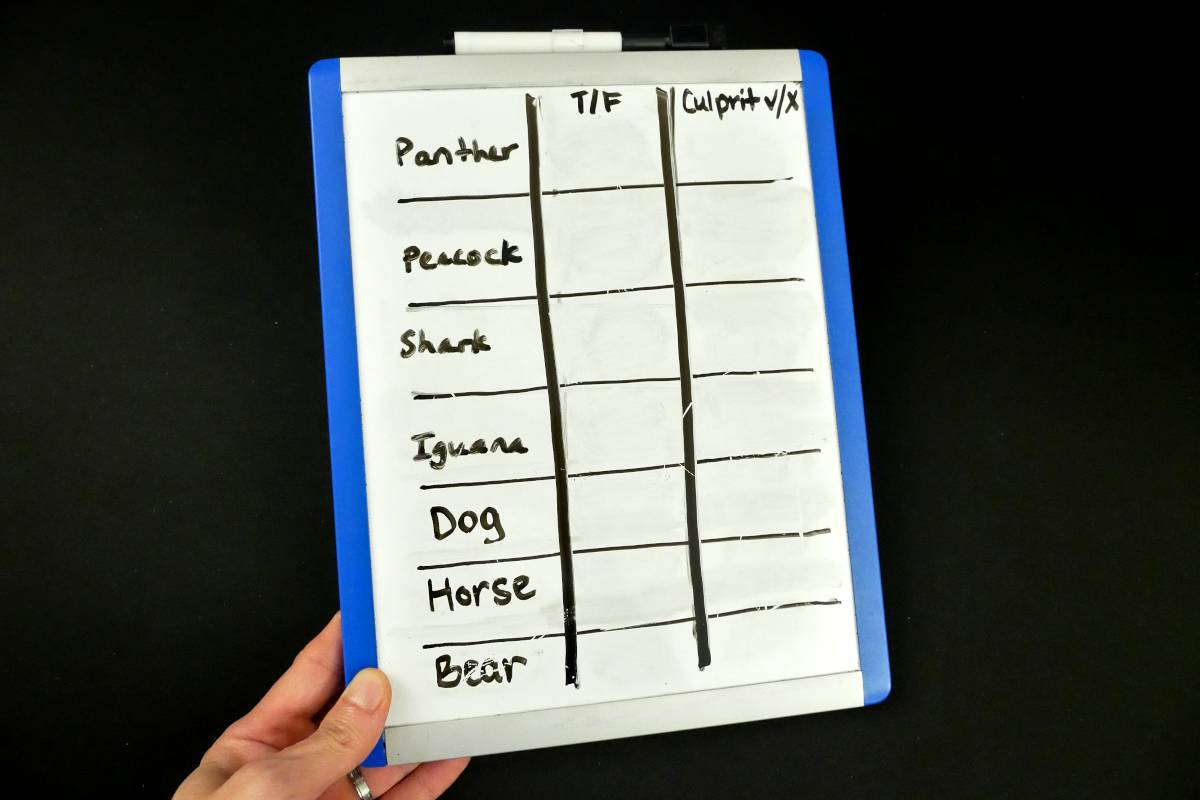
That it doesn't come with any kind of note-taking apparatus is mind-boggling. Once you get past Dossier Sheet 5 or so, you start having to juggle a lot of information per case—and unless you're some kind of Einstein, it's more than you can probably keep straight with your mind alone. You need a notepad for the non-trivial cases, which is like 60% to 75% of them. Some paper and pencils would've been nice at a minimum, or a few cheap dry erase cards and markers as a step up from that. (I've been playing with a self-provided dry erase board and it's a serious boost.)
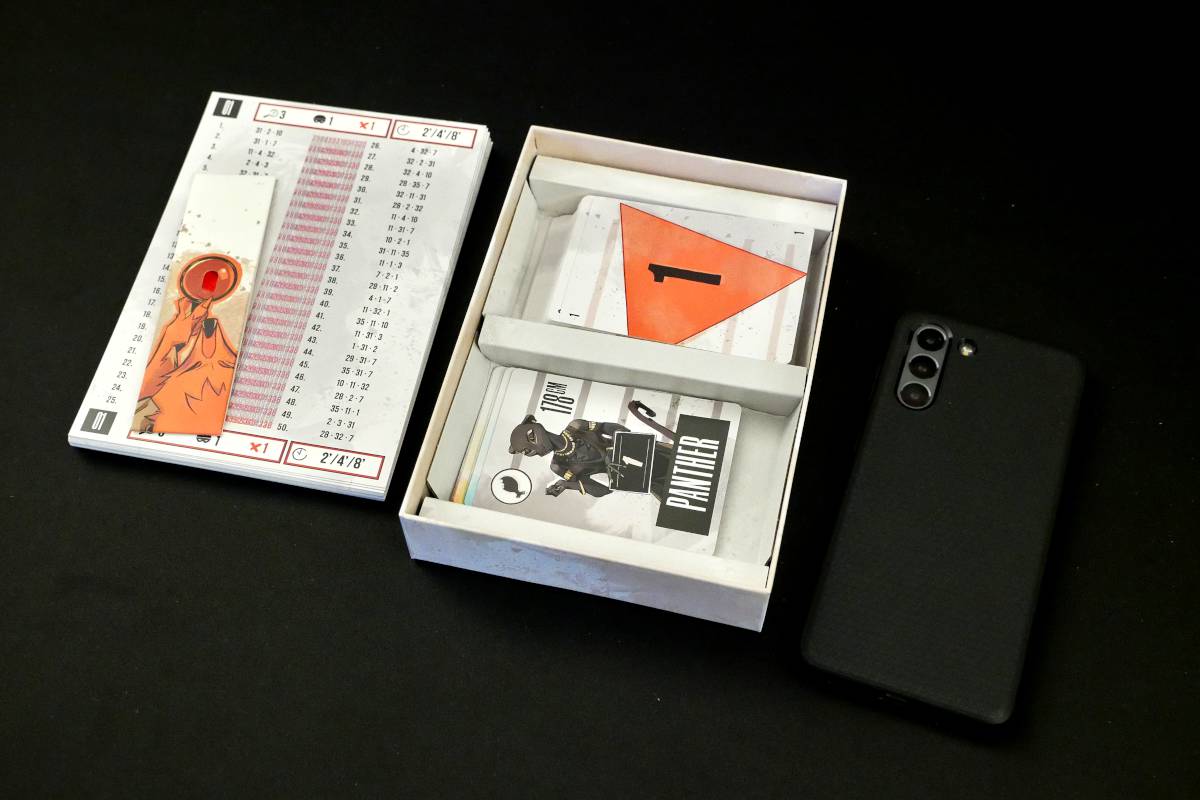
I love the small game box. A Carnivore Did It! is a satisfying game, but it's ultimately a small game—one that deserves a fittingly small box. (I hate when small games come in big boxes! It's one of my board game pet peeves.) Not only is it adequately portable, but it's pleasantly accessible. I see it on my shelf and it doesn't feel overwhelming. Want to play a few quick cases? No problem! Bang 'em out and pack it away again.
The Bottom Line
A Carnivore Did It! is a no-brainer recommendation for anyone who likes logical deduction. It's a real brain tickler with a wide range of difficulty levels, and thousands of cases right out of the box. If you like the challenge of figuring out a logic puzzle, you'll love this—otherwise, you should skip this one because there's no other gameplay beyond the puzzle-solving. I really enjoy A Carnivore Did It!, but my brain is wired for this kind of stuff, and I can see why some people wouldn't like it in the slightest.
Stop Buying Games
You'll Regret
Before your next game purchase, run it through this mental checklist that every seasoned gamer uses.
Free checklist, delivered instantly to your inbox.
No spam, ever. Unsubscribe in one click.