
If there's one thing I've learned from playing The Vale of Eternity, it's that an elegant game design doesn't always result in a fun game. It can be clean, polished, and clever on paper... but you'll never know how it feels to play until you actually sit down to play it.
The Vale of Eternity piqued my interest from the moment I first learned about it. It has cool ideas and refined mechanisms that come together in a new way, and its production is eye-catching. I really thought I'd love it. But this is a case where the design is more interesting than the gameplay.
Alas, The Vale of Eternity fell flat. Here's everything you need to know about how it plays, what I like about it, why it ultimately disappoints, and whether it might be a good game for your own collection.
This review is based on my own personal copy of The Vale of Eternity, which I bought new from Cardhaus. Not a free review copy.
Overview
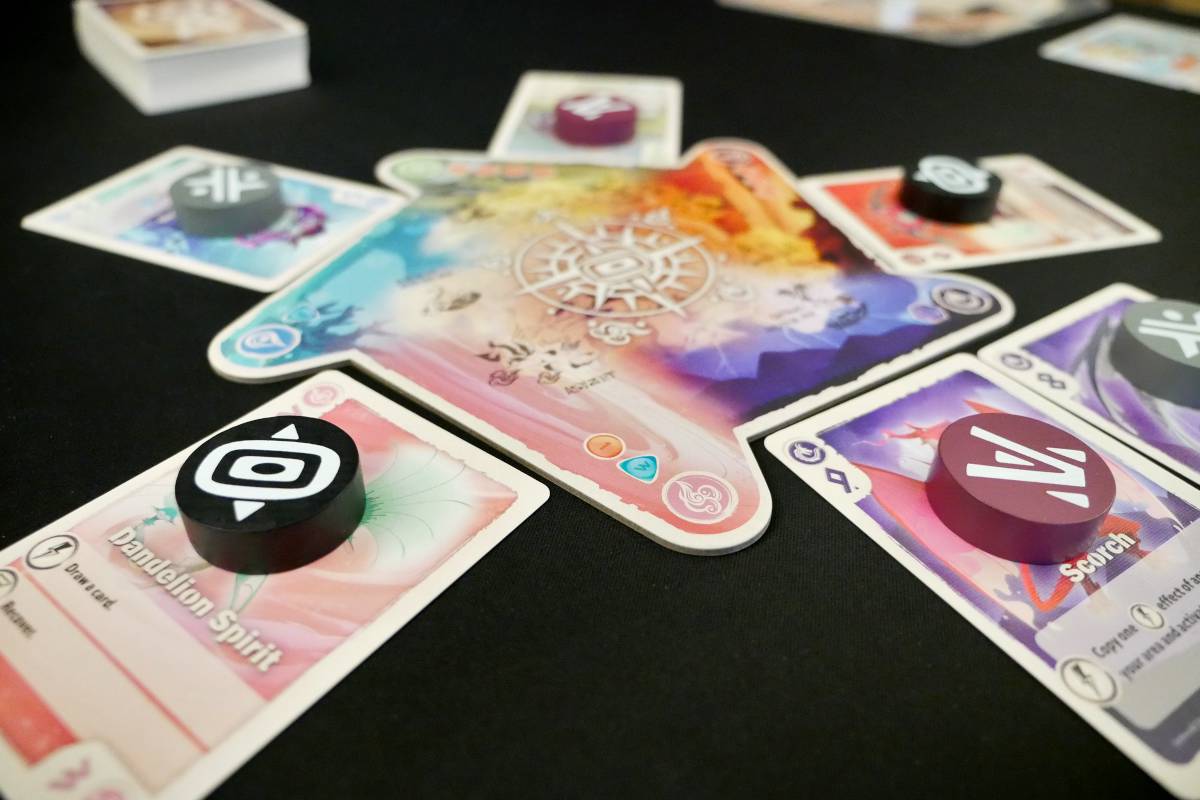
The Vale of Eternity has a very Pokémon-esque theme: you're a tamer who goes out into the Vale to hunt and capture legendary monsters with special abilities that ultimately score you victory points. Mechanically, The Vale of Eternity is an engine-building game that blends card drafting and hand management with an emphasis on action efficiency.
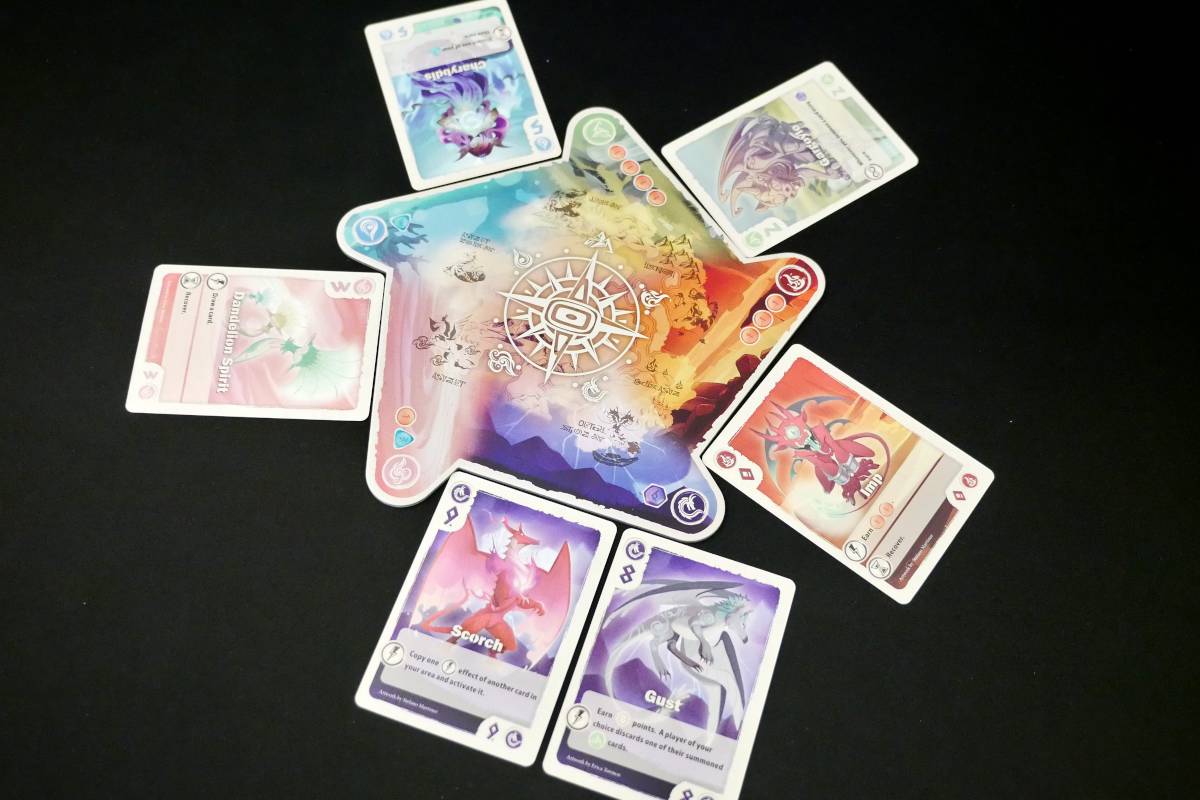
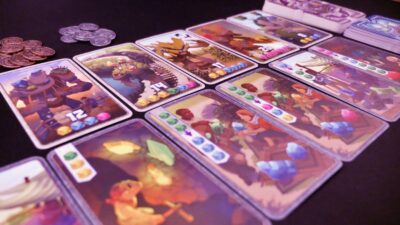
At the center of the game is the Game Board, which is where all the drafting happens. Every round, a new set of Monsters are drawn from the deck and organized by element type. The number of Monsters is equal to 2x the number of players (each player will be drafting 2 Monsters per round).
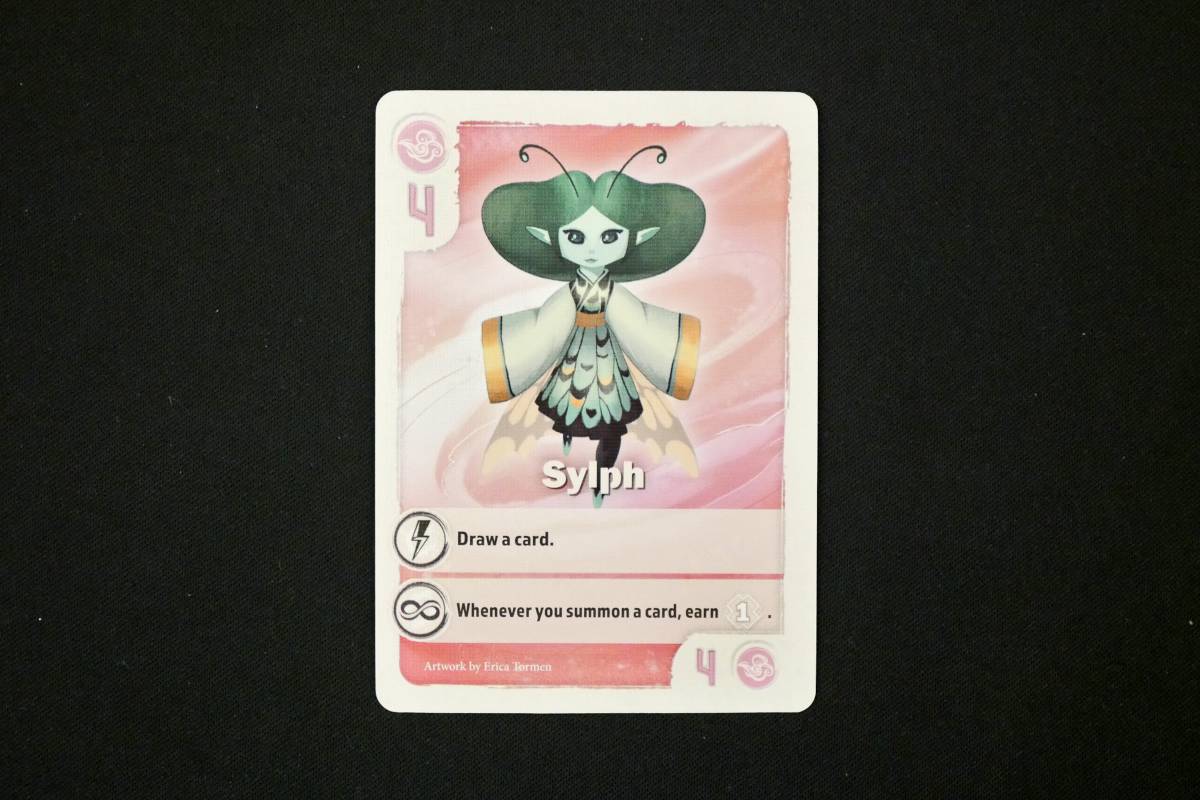
Every Monster has the following attributes:
- Element. The Monster belongs to one of the five elemental families: Fire, Water, Earth, Wind, Dragon. On the Game Board, Monsters are sorted by their elemental families.
- Summoning Cost. The Monster has an energy cost that must be paid when played from your hand. More on this below.
- Ability. The Monster has one of three ability types—Instant, Permanent, Active—with an effect written in text. More on this below.
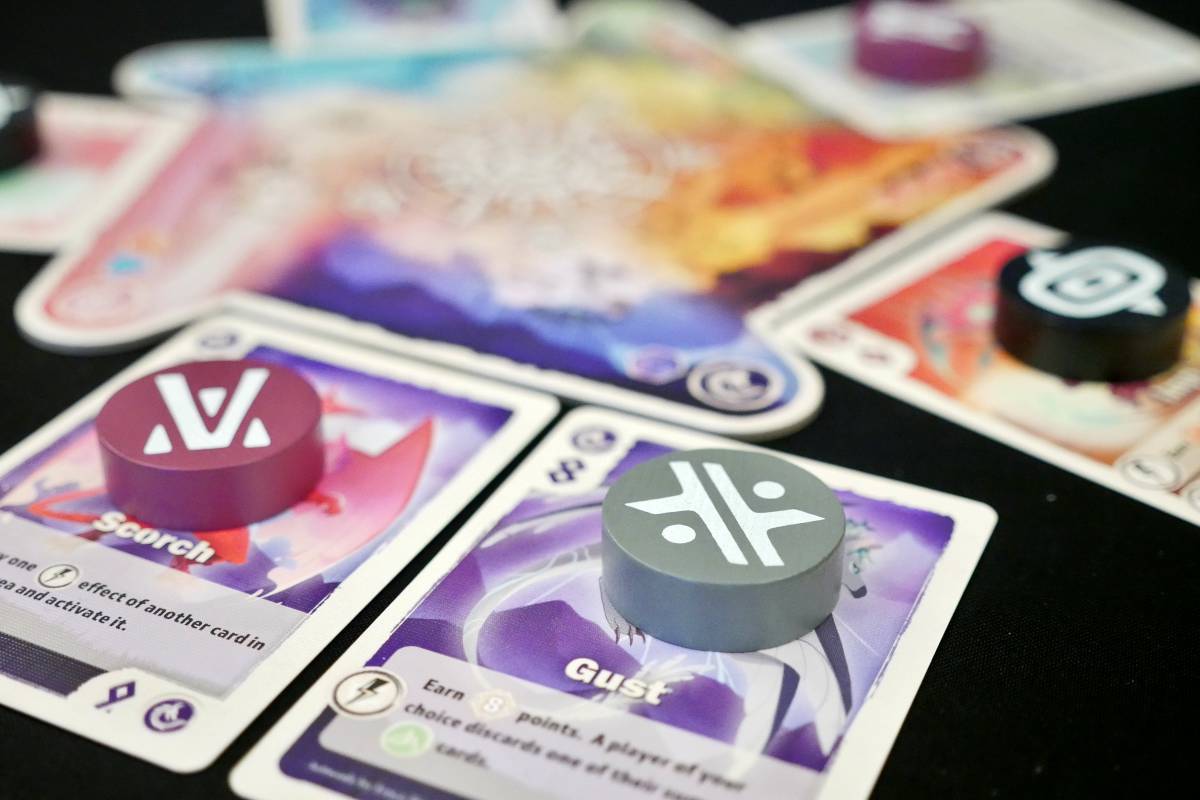
The Vale of Eternity employs a snake draft for the Hunting phase, which means it starts with the first player and goes into clockwise order to the last player, then comes back around counter-clockwise from the last player back to the first player. During this phase, each player marks two of the Monsters using their Markers. Thus ends the Hunting phase.
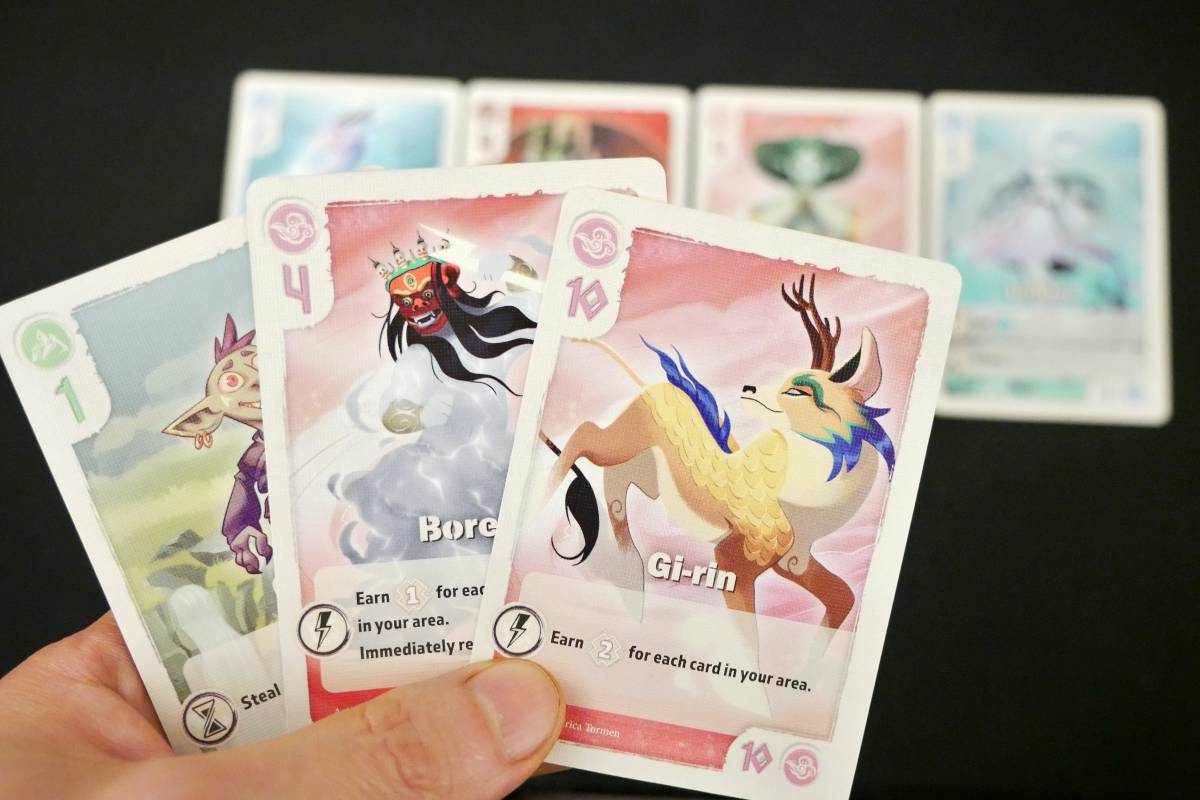
After that, we have the Action phase. Each player—in turn order, starting with the first player—gets to do all of the following 4 actions in any order they want, as many times as they want:
- Sell a Monster. Retrieve your Marker from a hunted Monster and discard that Monster to earn Magic Stones. The amount of earned Magic Stones depends on the Monster's element. (More on this below.)
- Tame a Monster. Retrieve your Marker from a hunted Monster and put that Monster in your hand. No hand limit.
- Summon a Monster. Play a Monster from your hand to your tableau by spending its Summoning Cost in Magic Stones. Your tableau can't hold more Monsters than the current round number.
- Remove a Monster. Pay Magic Stones equal to the current round number to discard one Monster in your tableau.
When you're satisfied and have no more actions to do, you simply end your turn and it moves to the next player. Once every player has taken their turn, the game enters the Resolution phase (which simply triggers all end-of-round abilities on Monsters) before cycling back to the Hunting phase.
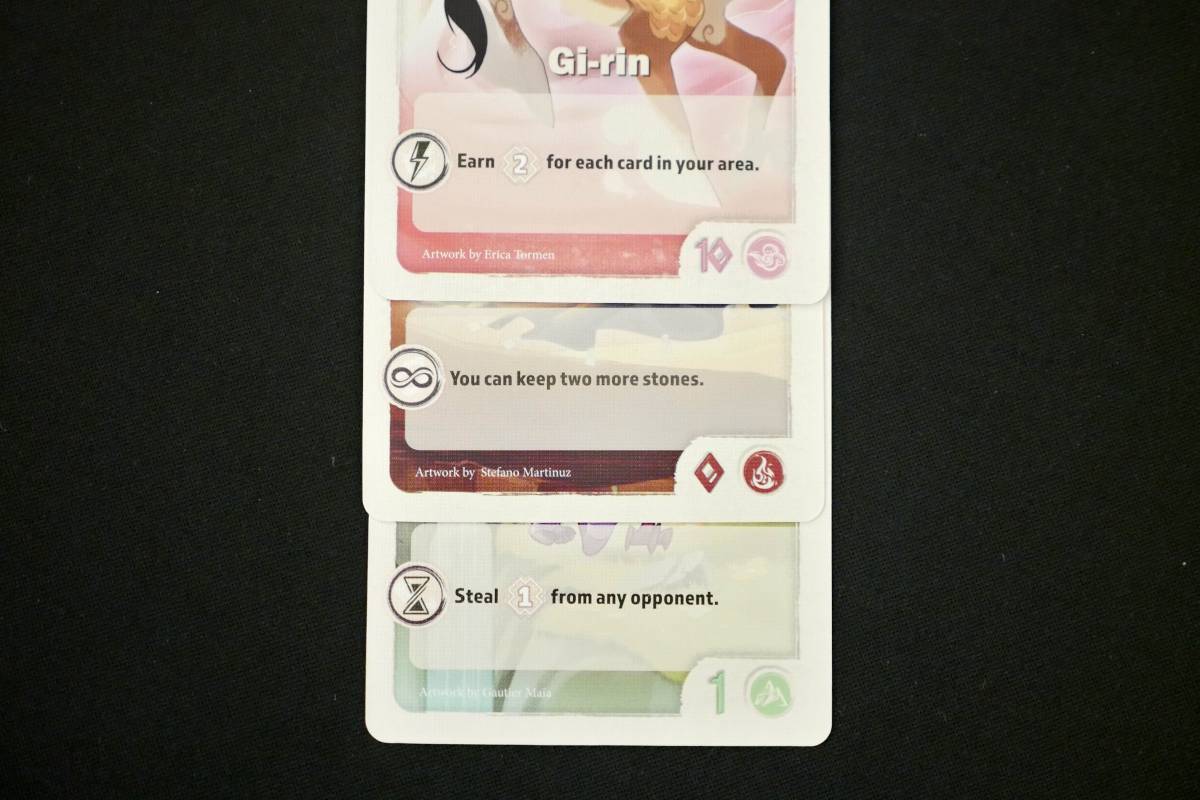
As mentioned above, Monsters can have one of three ability types: Instant, Permanent, and Active. Here's what that means:
- Instant abilities (lightning bolt icon) trigger when a Monster is summoned (i.e., played from your hand to your tableau).
- Permanent abilities (infinity icon) are like new rules that change gameplay for as long as a Monster is still in play. For example, one ability might increase the value of your Magic Stones while another might give you points every time you summon a Monster.
- Active abilities (hourglass icon) trigger at the end of each round during the Resolution phase. These are recurring abilities that continue to provide benefit over the long run, as long as a Monster is still in play.
This interplay between the different ability types creates all kinds of combos and emergent interactions that affect your strategies.

Now, let's talk about the Magic Stones. These are basically the currency you spend to play Monsters from hand to table. Magic Stones come in three denominations: 1-value, 3-value, and 6-value Stones.
However, The Vale of Eternity has a unique twist that adds a clever layer of resource management, and this twist comes in two parts:
- You have a limit of 4 Magic Stones. Whenever you gain Magic Stones, you must discard down to the limit of 4 if you exceed it.
- You don't get change when you spend Magic Stones. If you spend a 6-Stone to summon a 3-cost Monster, you don't get anything back for it. Paying too much means losing the overage.
This creates a tension where you need big-value Stones to make the most of your limited capacity, but you also need small-value Stones to prevent too much waste when summoning. Nice.
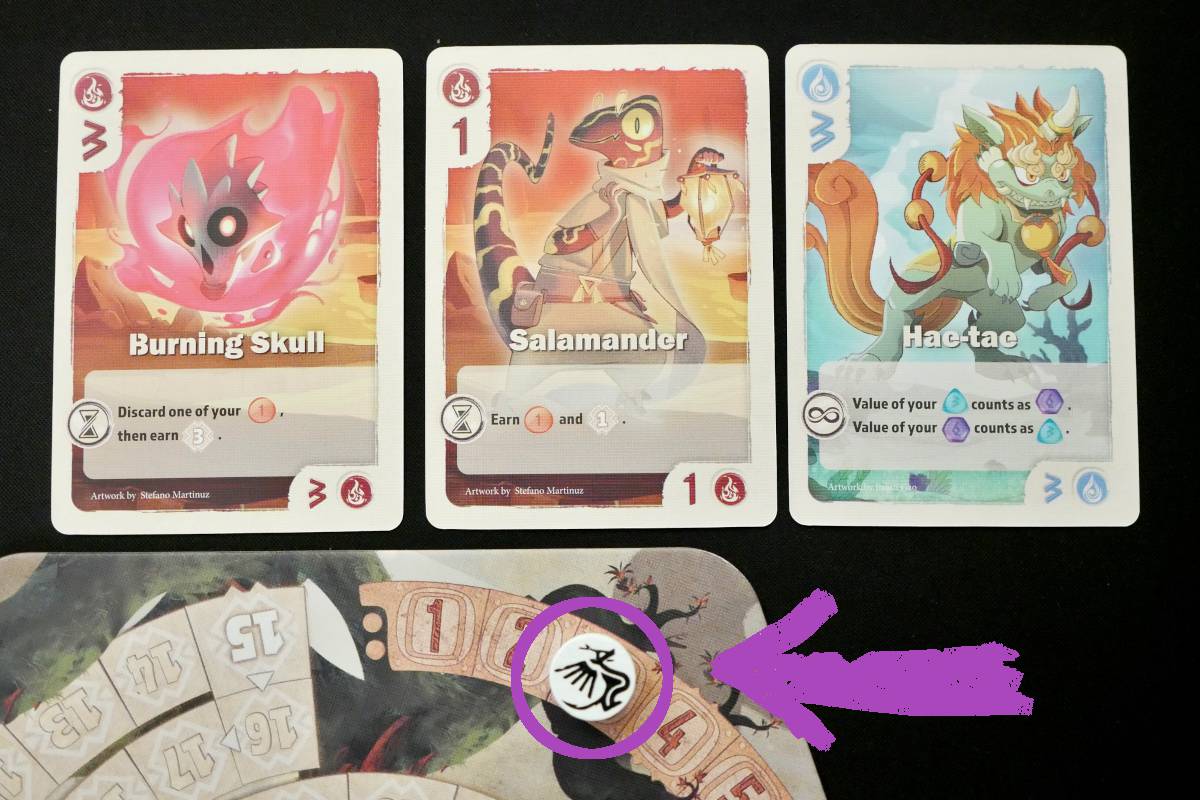
When a Monster is summoned from your hand, it stays in your tableau for the rest of the game (unless an ability allows you to recover it back to your hand, or you spend Magic Stones to remove it). This makes things tough because you have a tableau size limit equal to the current round.
In other words, in the third round, you can have a maximum of 3 active Monsters in your tableau. In the fourth round, your tableau size limit increases to 4, and so on. You have to create an efficient engine of Monster cards within the constraints of this growing limit.
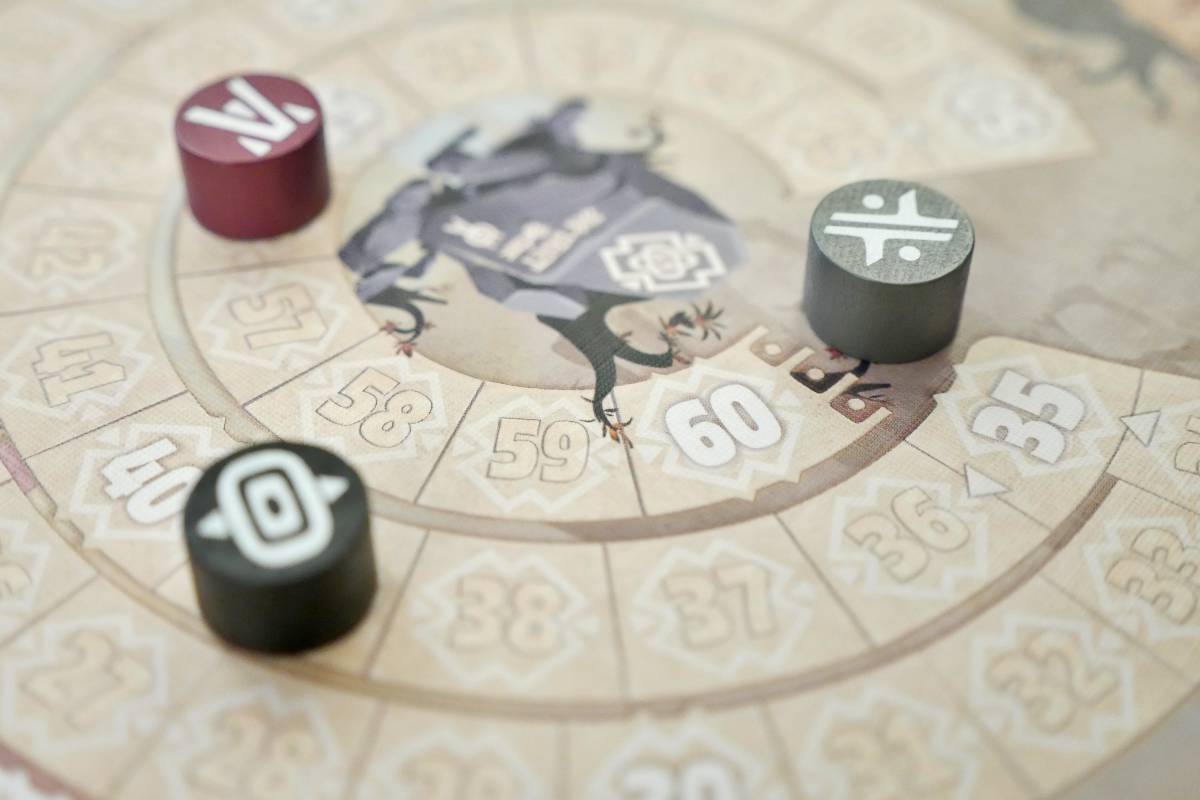
Throughout the game, Monsters will earn you points with their various Instant, Permanent, and Active abilities. The Vale of Eternity is a race to 60 points and the first player to cross that line triggers the end of the game. Alternatively, the game will also end after the 10th round. Whoever has the most points is the winner.
Setup and Table Footprint
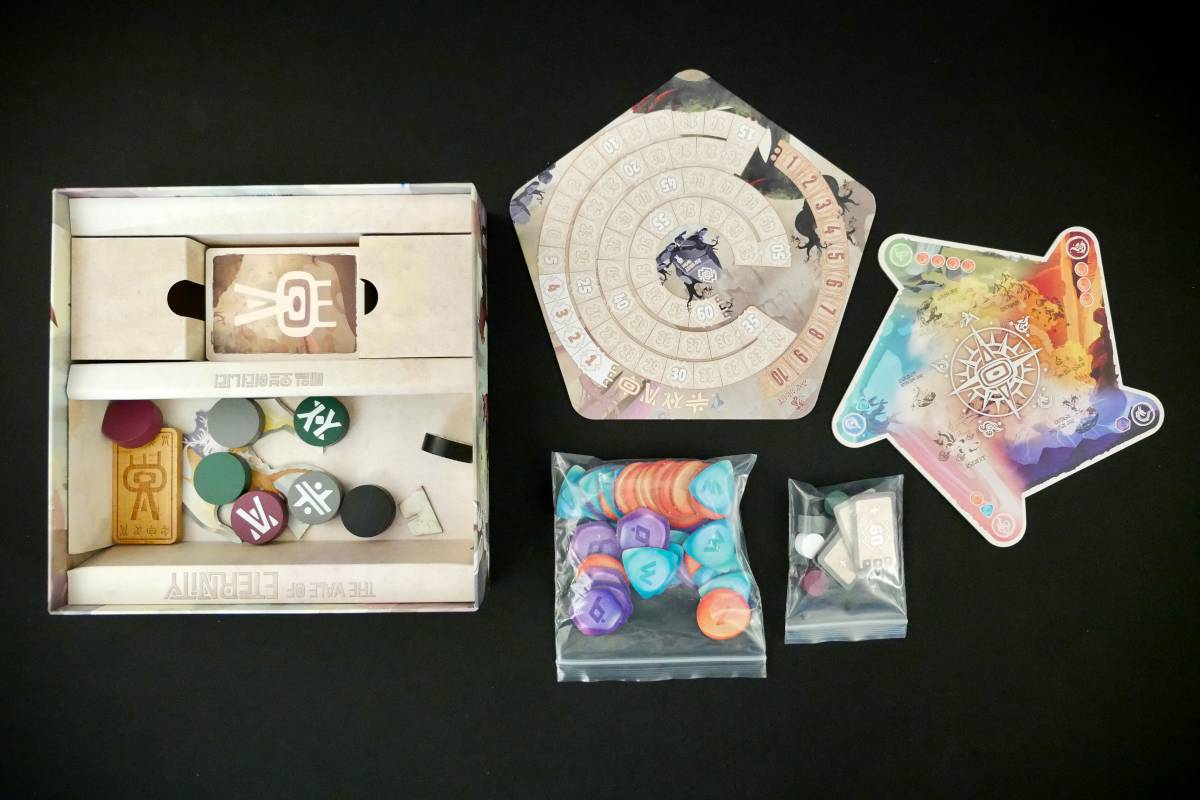
The setup for The Vale of Eternity is pretty quick and painless. You plop the Game Board and Score Board down on the table. You throw the Magic Stones into a bowl (or just set them aside in a pile). You give each player their respective Player Tile and Player Markers, then their Score Markers on the Score Board. Lastly, shuffle up the Monster cards.
It all takes a few minutes at most, and it can be even faster if you organize your box ahead of time: put each player's pieces into separate baggies so you can simply hand one to each player.
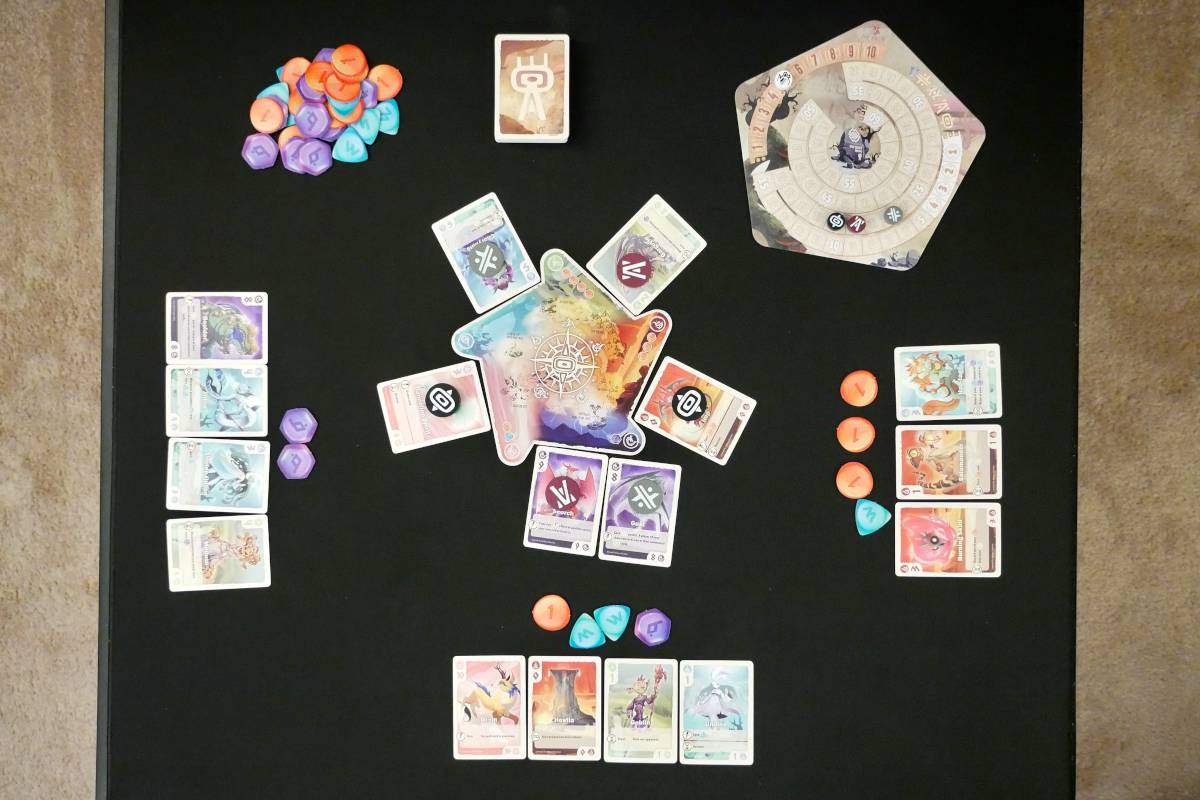
The Vale of Eternity is also pretty good when it comes to table space. The Game Board takes up the most space once Monster cards are dealt out, but not too much space (although it does go up with player count since more Monster cards will be in play every round). You also need some personal space for each player's tableau (up to 10 cards).
Ultimately, it's playable on any regular table. If you really need more space, you have two options: move the Score Board to a side table and/or get rid of the Game Board and just sort the Monster cards into rows (maybe with a reminder that shows the sell amounts for each elemental family).
Learning Curve
On the whole, The Vale of Eternity is simple to learn but not so simple to play. The underlying game structure is rather straightforward: you draft cards in snake order, then take sell/tame/summon/remove actions in any order you want, as many times as you want. Rinse and repeat.
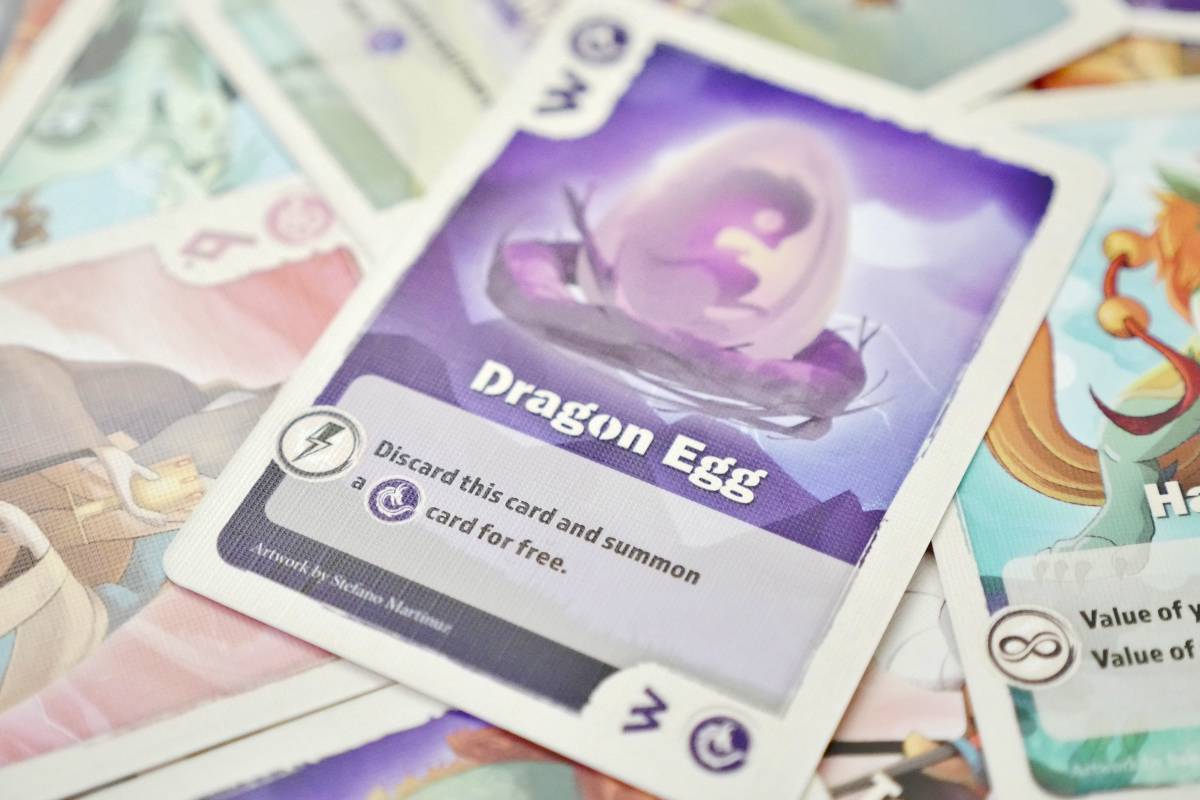
But The Vale of Eternity is more complex than it seems, mainly because it's one of those TCG-like "card text" games where every card has a unique (or almost unique) ability explained via text. For someone who isn't super comfortable with Magic: The Gathering and similar games that are heavy on card powers, The Vale of Eternity can be pretty heavy on mental load.
In that sense, The Vale of Eternity is a gamer's game. Though simple in its framework, I would only introduce this to hobbyists and enthusiasts who like "card text" games. A little too much going on for casual gamers.
Game Experience
Decision Space
As I mentioned in the "Learning Curve" section, The Vale of Eternity is more complex than it seems at first. Designer Eric Hong made some clever design decisions that seem small on their own but come together to pack a lot of depth into your choices as a player. It's hard to talk about any single aspect of the game in isolation because they're all so closely intertwined.
For example, the Magic Stones: You can only hold at most 4 of them; they come in denominations of 1-value, 3-value, and 6-value; and you don't get "change" when you spend them. That alone creates a fun efficiency puzzle where you want both big-value stones (to play bigger Monsters) and small-value stones (so you don't waste bigger stones on smaller Monsters), but you can't have everything because 4 stones is so limiting.
Meanwhile, the different Monsters may sway you to favor certain stones over others. Troll gives you 3 points at the end of the round if you have a 6-Stone in your possession. Kappa gives you 2 points every time you summon a Monster using a 3-Stone. Agni turns your 1-Stones into 2-Stones. These small details pull you in various directions. Which way will you go?
The elegance of the Magic Stones economy is inseparable from the game's action economy. On your turn, you can do any of the four actions (Sell, Tame, Summon, Remove) in any order, as many times as you like. That freeform design—"in any order, as many times as you like"—is what makes The Vale of Eternity so richly complex in its decision space.
In short, the order in which you perform actions matters. You might want to sell that hunted Aeris to earn a 6-Stone, but you can't do it yet because you already have 4 Stones—so you need to summon something first to avoid wastage. But what if you only have 1 open spot in your tableau? And what if the Monster you want to summon (Scorch) needs that 6-Stone? Do you throw away one of your lesser Stones, sell the Aeris, and summon Scorch now? Or summon something else for now, sell the Aeris, and summon Scorch next round? Will Scorch's ability still be useful next round?
Figuring out your action order is the bulk of this game, to be able to get done everything you need to do with the resources at your disposal, to get it all done with minimal wastage, to build up an engine that scores you as many points as you can earn, to wring out maximum value from every turn. Setting yourself up with the right combination of Monsters and taking advantage of your engine? Not as easy as it sounds.
And remember, The Vale of Eternity has an entire drafting phase (called the Hunting phase) before you act every round. This drafting phase is key to success because it determines your action potential.
While hunting a round's Monsters, you need to be able to assess all of them and "look ahead" based on what's available. Which Monsters work best with your growing engine? How many Magic Stones, and what types of Magic Stones, do you need to play your desired Monsters? Which Monsters are you going to Sell and/or Tame? It's all quite combinatorial and it isn't easy to churn through the vast number of potential combinations.
Not to mention you can't always draft what you want. Even if you spot the exact Monsters you need this round, they could be drafted by someone else. In fact, not just "could be"—they will be, more often than not. And when that happens, you have to be able to pivot on your feet and change your plans on the fly. On top of the two Monsters you'd prefer to draft, you'll also be thinking about contingencies and backups.
So, as you might be able to tell, The Vale of Eternity is a complex blend of strategic planning (your overall engine and how you intend to pump out points) and tactical flexibility (your response when you can't build your engine the way you intended it to be). This richness gives it a ton of depth to explore. There's never a dull decision to make.
All in all, The Vale of Eternity has lots of interesting decisions, but the complexity makes for a game that's prone to analysis paralysis. While analysis paralysis is mostly a player problem, some games are a lot easier to get "stuck" in. The Vale of Eternity has a lot of card combinations to consider, so it can be a hindrance for anyone who's compelled to find the optimal solution every single turn.
Luck Factor
For such a strategic game, you might be surprised that there's a non-trivial amount of luck involved in The Vale of Eternity. This luck has three small parts that intertwine into one whole:
- The available Monsters in a given round. The shuffled deck of Monsters sets the tone for the entire game. You might decide to pursue a certain strategy based on round 1's draft, but subsequent rounds may not produce Monsters that work well with what you got. Meanwhile, someone else might spot exactly what they need and keep finding complementary Monsters round after round.
- The order in which Monsters appear through the whole game. Some Monsters are better early on, others are better later, and some combinations are extra powerful if you can play one Monster before another. The luck of the shuffled deck determines the order in which Monsters come out, and it sucks when you're stuck with crappy options through no fault of your own. With 10 rounds max, every single round matters—and a wasted one really hurts.
- Turn order during the Hunting phase. First player advantage is pretty significant since you get to draft the exact Monster you want from the lineup. Sure, you're last with your second pick due to snake draft order, but often the second pick is less important. Being able to grab your ideal Monster with zero interference? Priceless. And not everyone gets to be first player equal number of times, so there's that.
Again, these are small elements of luck individually, but non-trivial when considered all together. I wouldn't say that The Vale of Eternity is a "lucky" game by any means, but luck does play a role. If I had to judge, I'd say it's about 70% strategy and 30% luck. You can do your best and still fall behind due to factors beyond your control.
Fun Factor
The Vale of Eternity is a heady game. A quiet game. A sit there and stare at the cards, both on the table and in your hand, while working out your strategy kind of game. If your idea of fun is reading a bunch of card powers and meshing them together to form a point-production engine, then The Vale of Eternity might be right up your alley.
But for me, The Vale of Eternity isn't fun. It's very much multiplayer solitaire (see "Player Interaction" below), which wouldn't be so bad if there wasn't so much analysis paralysis and downtime (see "Pacing" below). The engine building isn't satisfying, the mental load is heavier than I want in a game with such a simple framework, there's a little too much luck, and there isn't enough tension.
Overall, The Vale of Eternity falls quite flat for me. There are some great ideas here, but the juice sadly isn't worth the squeeze.
Pacing
One interesting thing about The Vale of Eternity is that it has an accelerating game arc. Since you get to play more and more Monsters to your tableau every round, your engine size is gradually expanding, your actions are chaining further, and every turn can potentially earn more points than the last. There's forward momentum that slowly ramps up, and round 8 looks very different from round 1. That sense of progress is nice.
Plus, you have the tension of the race. The Vale of Eternity ends as soon as someone crosses the 60-point threshold, and everyone's point status is visibly tracked on the Score Board. Those Score Markers creep up along the track with every turn and it's interesting to see how players jockey for position. Sometimes a big turn happens and the player in last place jumps up to first place, upsetting the balance and surprising everyone else.
Despite all that, The Vale of Eternity is too slow and plodding for me. It's a pretty thinky game—as expected of a combinatorial engine-building game with text-based card powers—and prone to analysis paralysis, which I mentioned above in the "Decision Space" section. You know what that means? Lots of downtime. Being able to take actions in any order you want, as many times as you want is great for tactical depth... but it also means players can take a long time to think through their options.
It's mitigated a little bit by the fact that all the drafting happens first, so you can think through your turn actions while someone else is working through theirs. But even so, once you've figured out what you want to do, you just have to sit there until it comes around to you. Not to mention engine imbalances—some engines are action-heavy and can take many turns to resolve, while others are very quick.
Maybe I just play with slow gamers? Even so, I can't help but see that the game's design lends itself to its plodding pace. A bit too slow for me.
Player Interaction
The Vale of Eternity is mostly a heads-down, think-to-yourself, don't-mind-what-others-are-doing affair. In short, multiplayer solitaire.
You're mainly concerned with your own tableau and making sure your engine is built up as efficiently as possible. No one else's engine will affect yours, and there's nothing you can do to stop or slow down anyone else once they're chugging along. On the plus side, it's not a mean game.
The one bit of player interaction occurs during the Hunting phase's open drafting of Monsters: players compete for limited options, first come first served. But even here, the interaction is incidental, not intentional.
In other words, you're aiming for Monsters that best suit your needs. You don't really care what others are doing, and hate drafting (i.e., taking a Monster that someone else wants) is usually not in your best interest. If someone drafts a Monster before you, it's simply that you both wanted it but they had the better turn order this round.
As you might be able to tell from the way I'm describing things, the interaction in The Vale of Eternity just isn't very interesting to me.
Player Counts
The Vale of Eternity's game feel changes non-trivially at different player counts. The more players you have, the more Monster cards come out every round during the Hunting phase. That means more options when drafting and more opportunities to build a functional engine. It also means more deck churn, so you get to see more cards throughout the game.
But the larger spread during the Hunting phase also bumps up the analysis paralysis because there are more combinations to evaluate. There's also more downtime with more players, especially in the mid-to-late rounds when turns can consist of numerous actions with bigger engines.
In my experience, The Vale of Eternity is best at 3 players. It's not bad at 2 players, but the tension is noticeably weaker and the deck churn is too slow. Meanwhile, the game overstays its welcome at 4 players with all the extra downtime and increased analysis paralysis.
Fiddliness
Fortunately, The Vale of Eternity is not fiddly at all. The Player Markers are satisfying to handle every round. Your tableau is simple to manage. The Score Board is straightforward, though the design of it sucks (more on this below in the "Production Quality" section). The constant gaining and spending of Magic Stones is the closest thing to fiddly here, but even that is negligible. Overall, it's a clean and smooth play.
Replayability
I was so excited about The Vale of Eternity when I got it. Everything about it sounded good on paper and I thought it'd be a game I love. But having played it a handful of times now, I'm sorely disappointed. It's not for me.
That isn't to say that it's a bad game. Oh, not at all. It's the kind of strategic-tactical game that gets deeper with repeat plays. While it may seem to lack content and variability at first glance, The Vale of Eternity is designed in such a way that no game is ever the same. Those Monster card interactions are so layered, you'll be finding new combos every time you play.
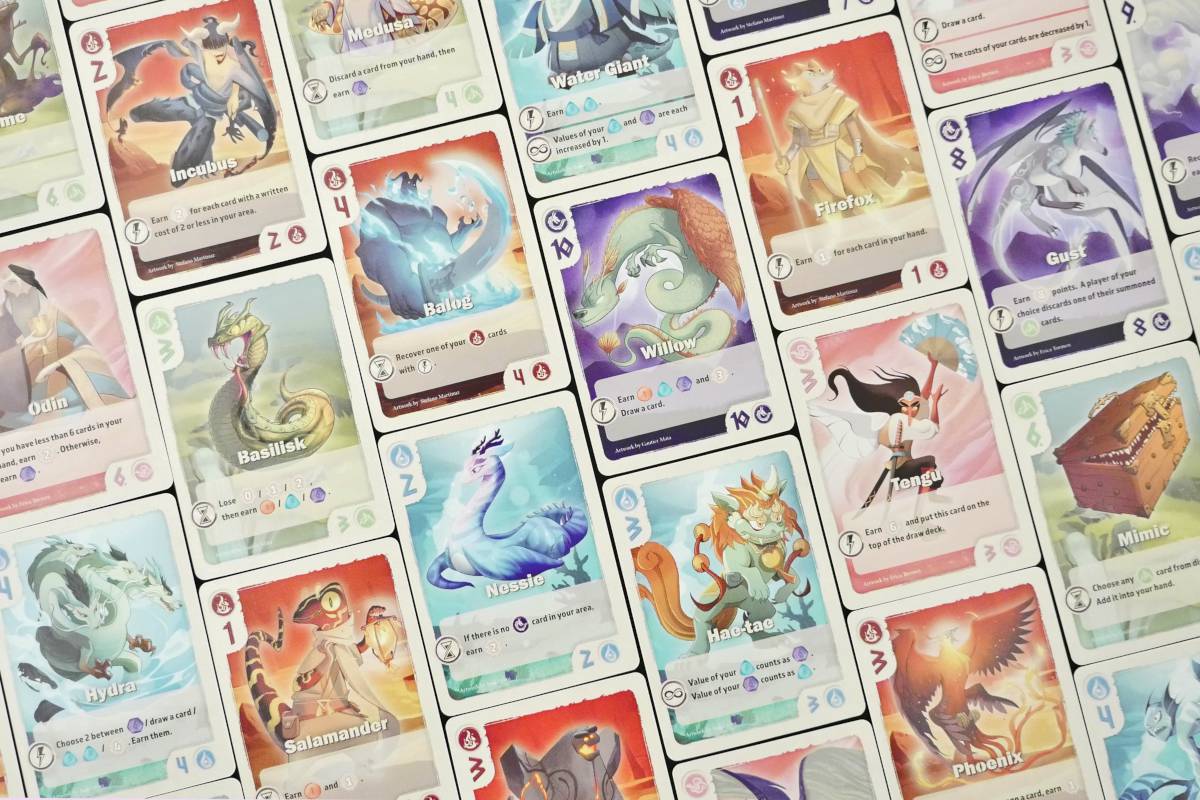
Indeed, The Vale of Eternity is one of those games where you need to know every card in the deck for its depth to even start opening up. The more you know what's in that deck, the more you can plan ahead, strategize, and decide which Monsters are best to draft or toss away.
And it's at its best when you're playing with others who are on a similar level, who have as much knowledge of the deck as you do. It's ultimately a game about comparing engines, and it's most interesting when everyone's on a level playing field and able to craft engines of equivalent efficiency.
The Vale of Eternity is highly replayable—if you like what it offers. It just so happens that I personally don't. While I can see why some love this game, I have no urge to come back to it.
Production Quality
Overall, I like The Vale of Eternity's production. It makes a few missteps—like the rulebook feeling like a translation and lacking polish—but for the most part it facilitates a smooth and enjoyable play.
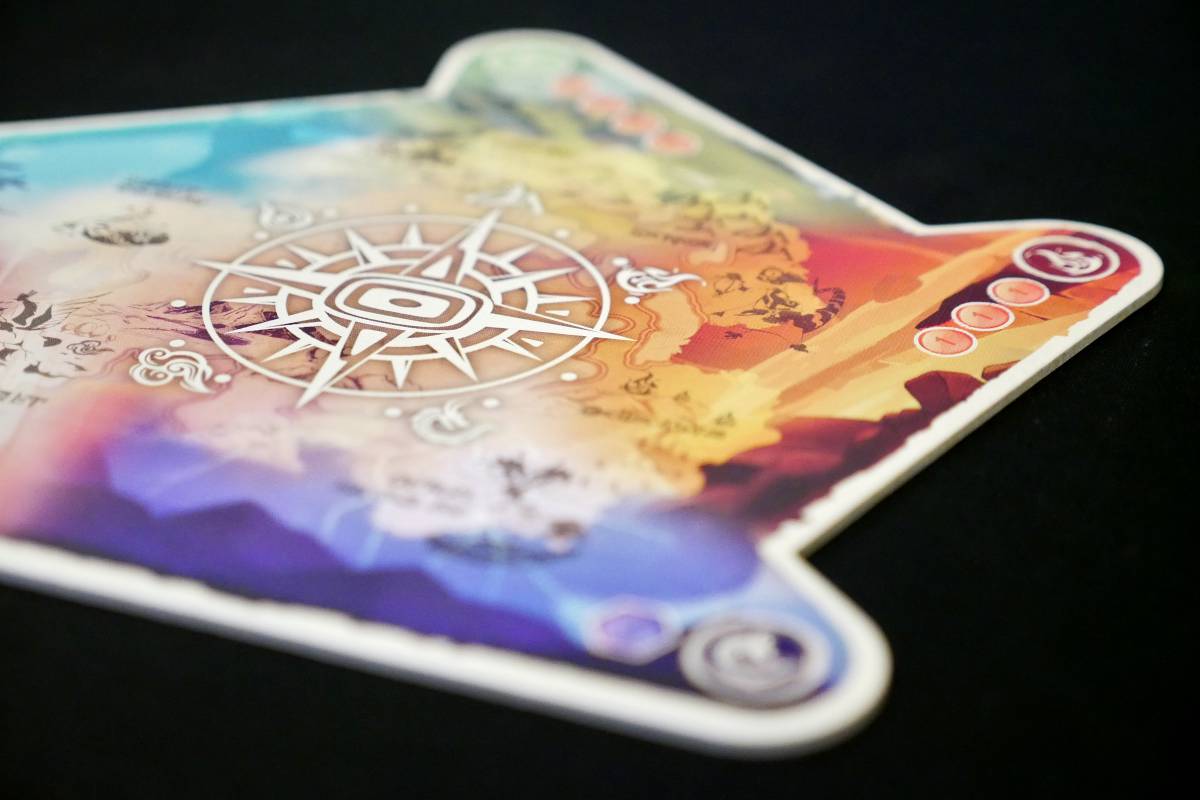
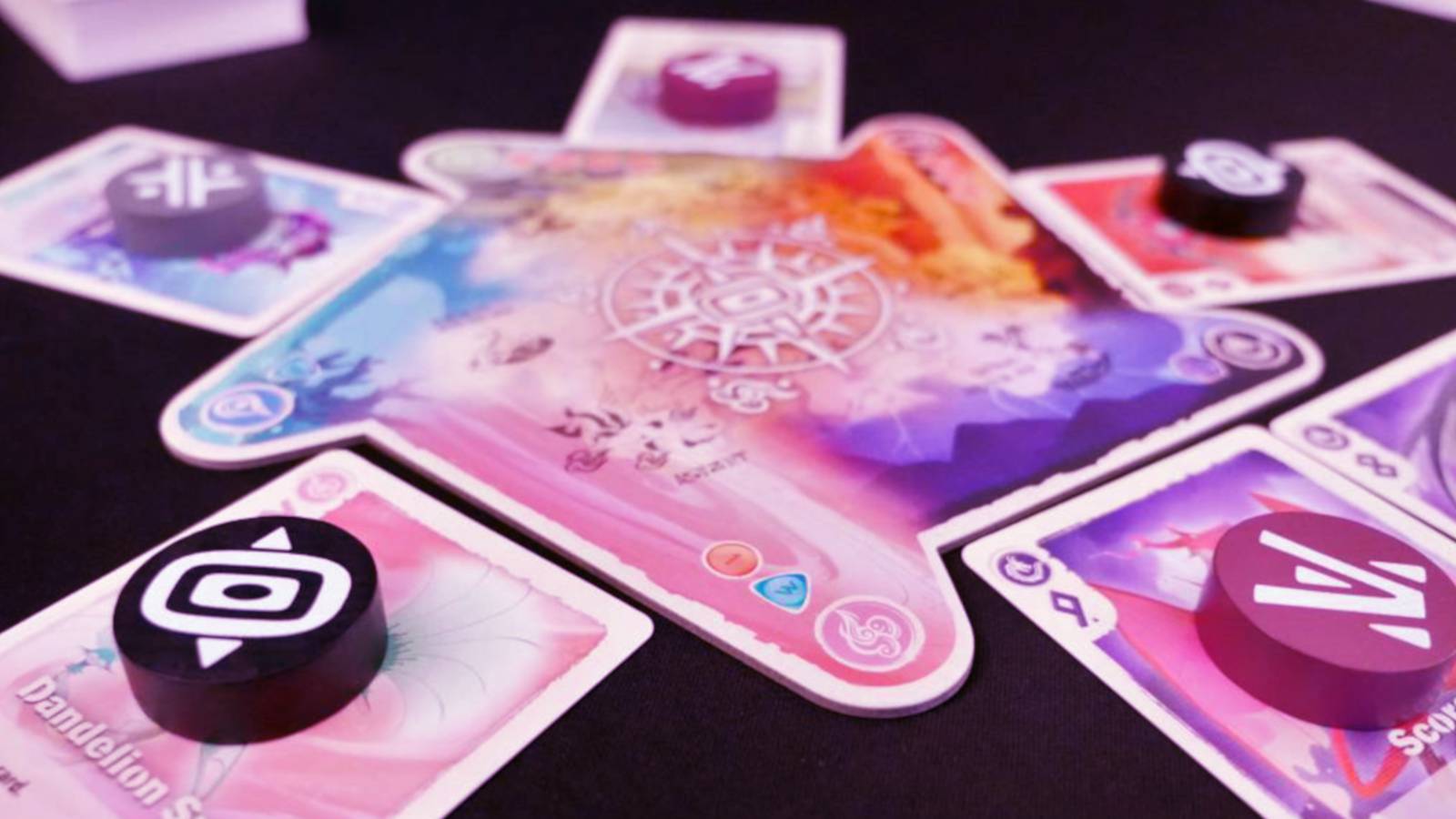
The Game Board is an eye-catcher. That pentagonal shape with each "arm" extending out for each elemental family? Not an approach you often see in card drafting games, so it stands out—all while being functional with the selling price printed right there on the board. My only complaint is that some cards are always going to be upside-down, so there's a lot of picking up cards to read them and setting them back down again. But with the board being circular, at least it affects everyone equally.
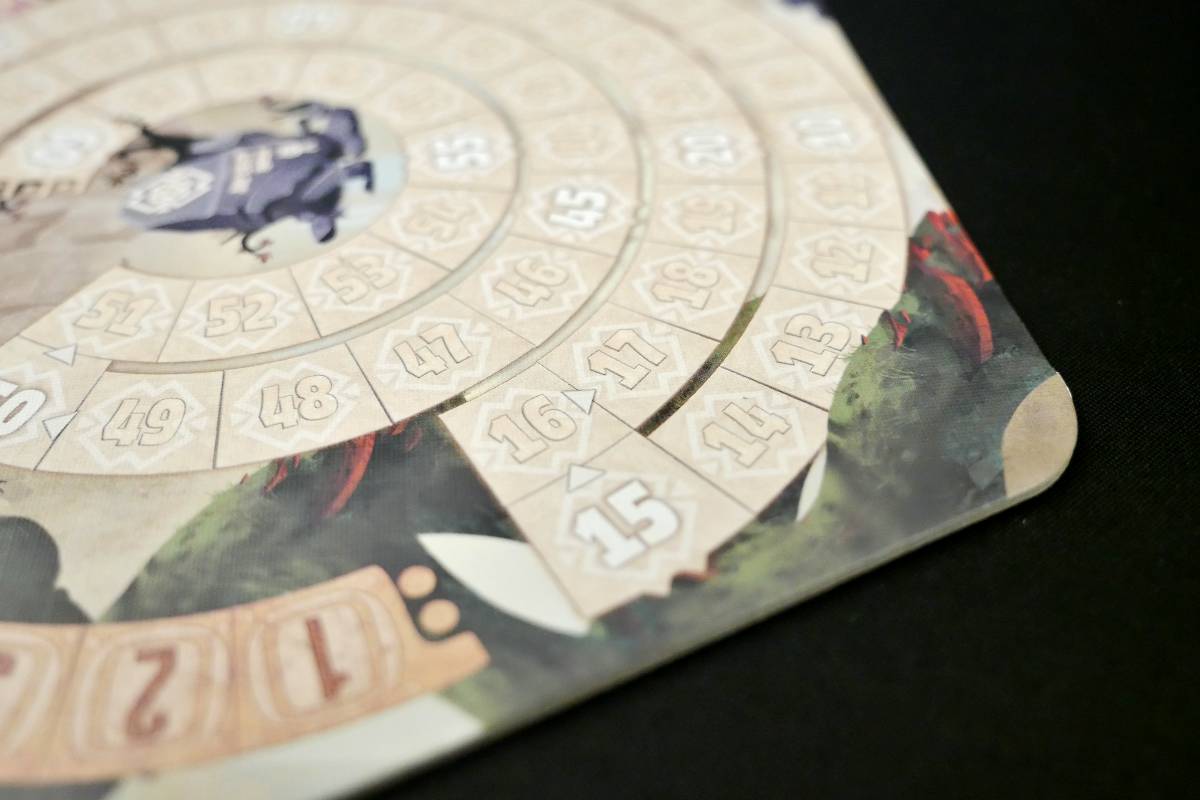
The Score Board is functional yet prone to errors. The Round Track is important information for several things (e.g., game end trigger, tableau size limit, cost of removing cards from tableau), so it's nice that it's centrally available at a glance. But the back-and-forth winding of the Score Track sucks! It's not easy to tell who's in the lead at a glance. It's an unusual design so it's easy to make mistakes while advancing along it. An accidental knock can screw up scores and it's hard to tell where everyone was. It takes up too much space. I wish it had a more conventional rectangle design.
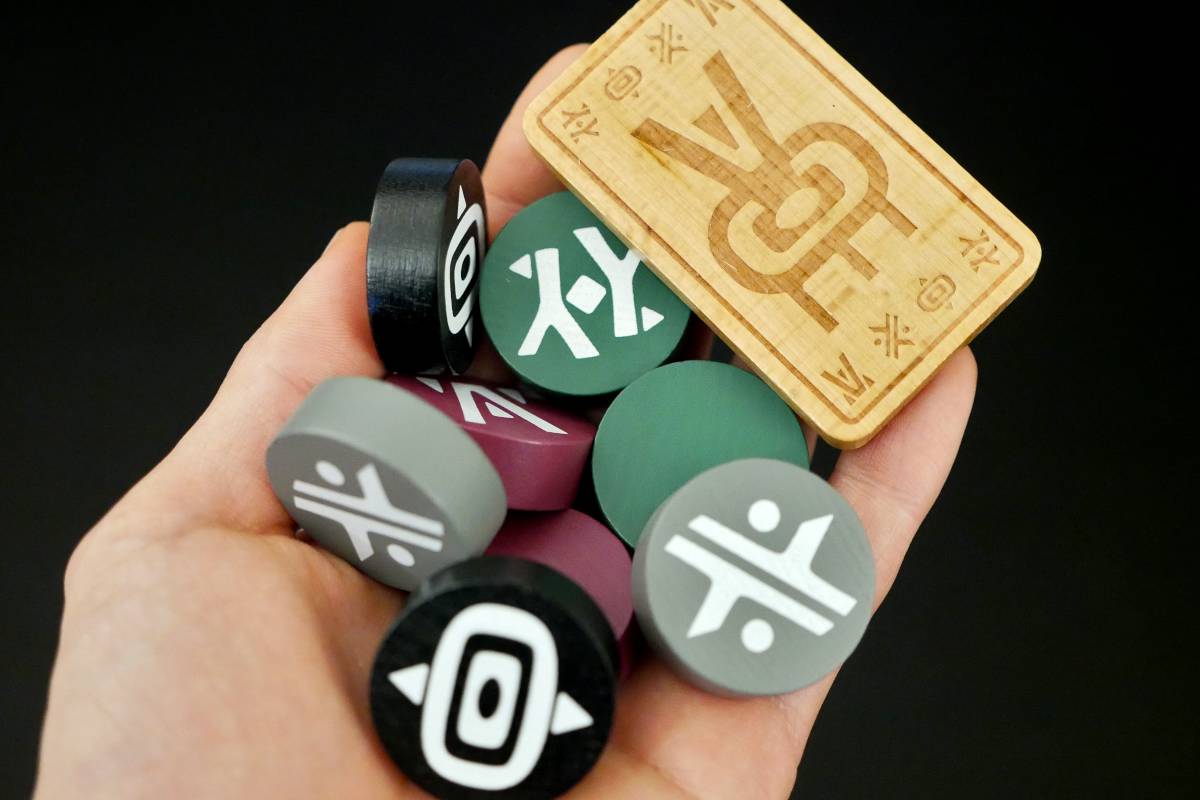
Great game feel with all the wooden markers. The Player Markers used in the Hunting phase are so satisfying to handle. They're big and chunky, so it feels good to plop them down on cards and retrieve them later. Same goes for the First Player Marker and the Score Trackers. They didn't have to be wooden, but it adds something special to the overall experience.

I wish the Magic Stones were glass beads. For a game that's surprisingly thoughtful about the tactile experience, I wonder why the Magic Stones are flat and lifeless cardboard tokens. They're thin but wide, which makes them unsatisfying to handle—and you're constantly spending and gaining these stones, so you definitely feel it. Mancala-style glass beads would've been a much better option that truly elevated the experience.
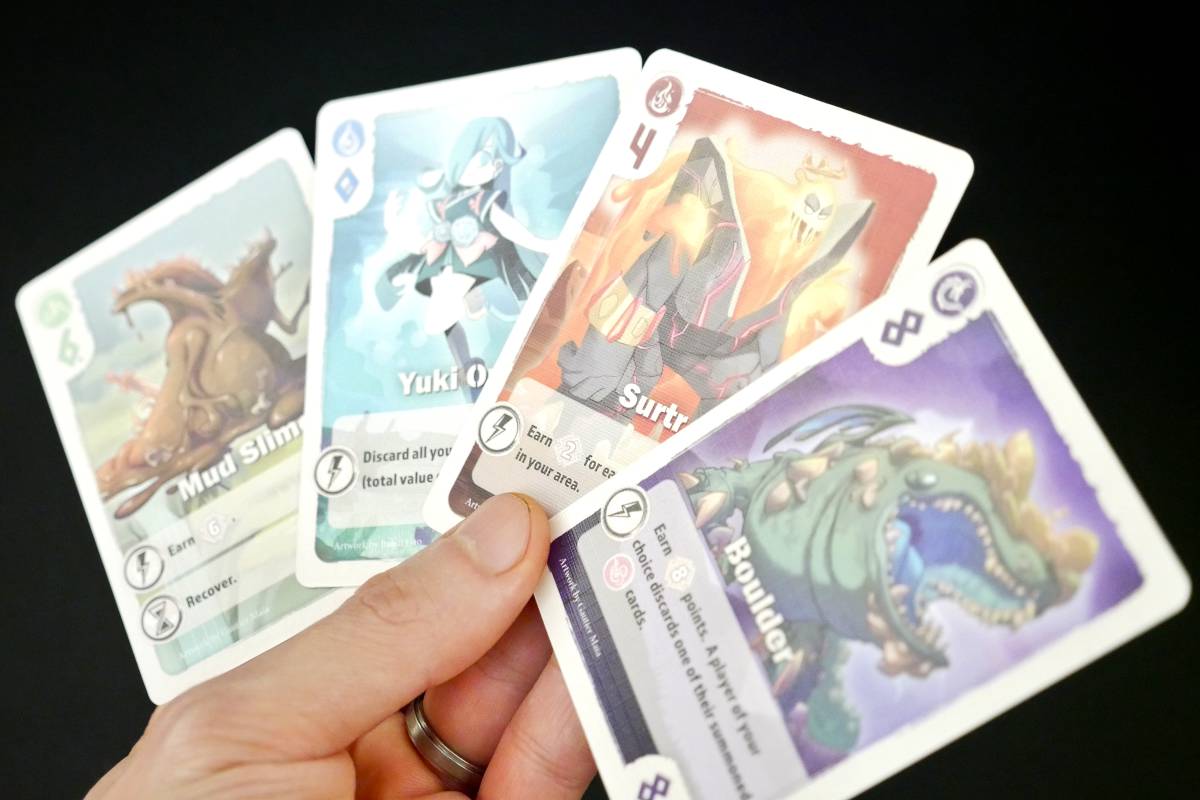
I'm impressed by the card art and graphic design. You really get that TCG feel from The Vale of Eternity thanks to its card design, which carries its own aesthetic and identity (not generic fantasy) while remaining approachable. You can glean all the information you need from a card with a quick glance (except for the card text, which needs to be read in full). The colors, the layout, the iconography—it's all exactly how it should be.

It's one of those games that you'll likely want to sleeve. The card quality is fine, but no card game can withstand infinite abuse. And given how replayable it is, you should probably sleeve these—they're going to be shuffled and handled a lot. That said, The Vale of Eternity is an open information game, so you don't have to worry about marked cards and secrecy. Skip the sleeves if you don't mind wear and tear on cards.
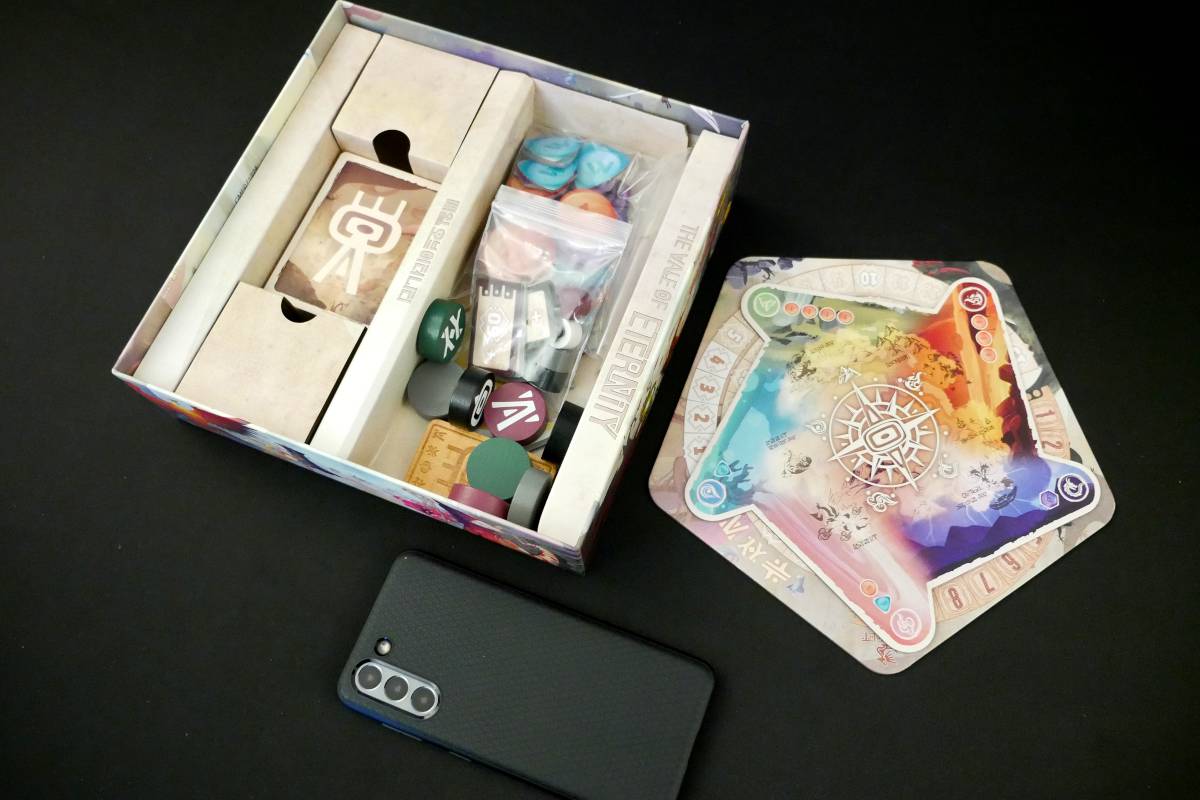
I appreciate the game box size and insert, but it could've been a lot smaller. The Vale of Eternity is ultimately just a 70-card drafting game—everything else exists to facilitate a smoother learning curve and play experience. The box has a lot of dead space and it's way bigger than it needs to be (no doubt to fit the unusually designed Score Board). I honestly think it's to its detriment, betraying the kind of game that awaits inside.
The Bottom Line
The Vale of Eternity is a solid engine-building game for those who love TCGs and games with card-text powers. I'm not one of those people. It's too prone to analysis paralysis, it's too quiet and thinky, the payoff isn't worth the mental load. Ultimately, it has depth but I'm not willing to invest the energy needed to explore it.
Stop Buying Games
You'll Regret
Before your next game purchase, run it through this mental checklist that every seasoned gamer uses.
Free checklist, delivered instantly to your inbox.
No spam, ever. Unsubscribe in one click.