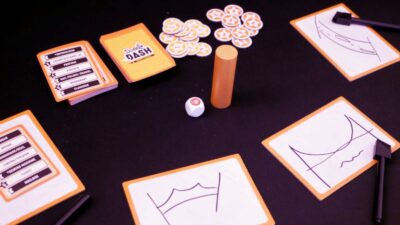

It's surprisingly hard for a party game to become a true classic. You'd think the genre is "easy" because party games are so simple and straightforward, but that's precisely why they're so hard to get right. On top of somehow evoking tons of laughter and entertainment from minimal rules, you also have to consistently beat hundreds of new party games that come out every year. Most party games are flashes in the pan.
But Just One is going to stick around for a long time. It's already been seven years and it's still one of the best in its class, able to do so much with so little. It's the ultimate party game with an insanely high success rate—I've never seen it flop. Yeah, this one is lightning in a bottle.
Here's everything you need to know about how Just One plays, why it's such a great game, and why it should be in every game collection.
This review is based on my own personal copy of Just One, which I bought used from BGG's GeekMarket. A refreshed version was later released in 2025, which features 550 completely new words and replaces the dry erase markers with "erasable crayons." The gameplay is the exact same, and the two versions can even be combined.
Overview
At its core, Just One is a cooperative word game where one player is left out of the loop and everyone else tries to get them to guess a secret word. The catch is that each player can only give a one-word clue, and that clue can't be the same as someone else's clue otherwise they cancel out. It sounds a bit dull on paper, but trust me—it's an absolute blast.
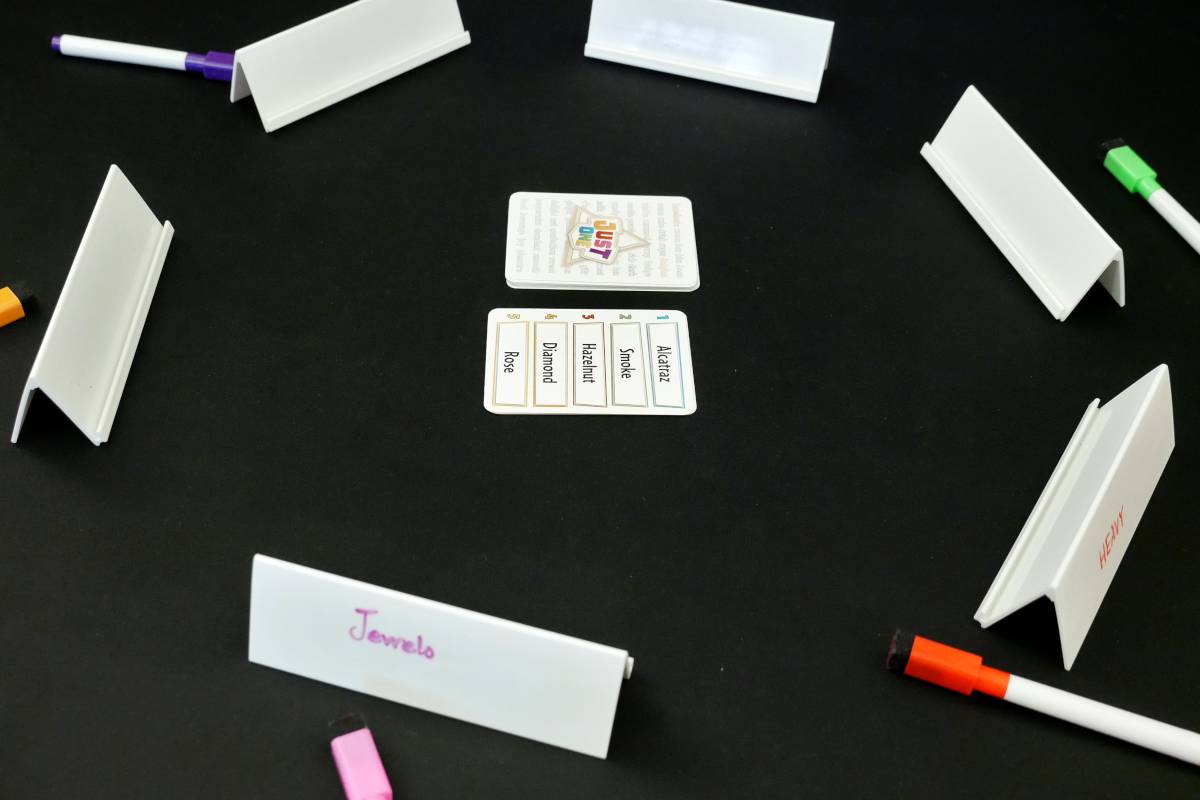
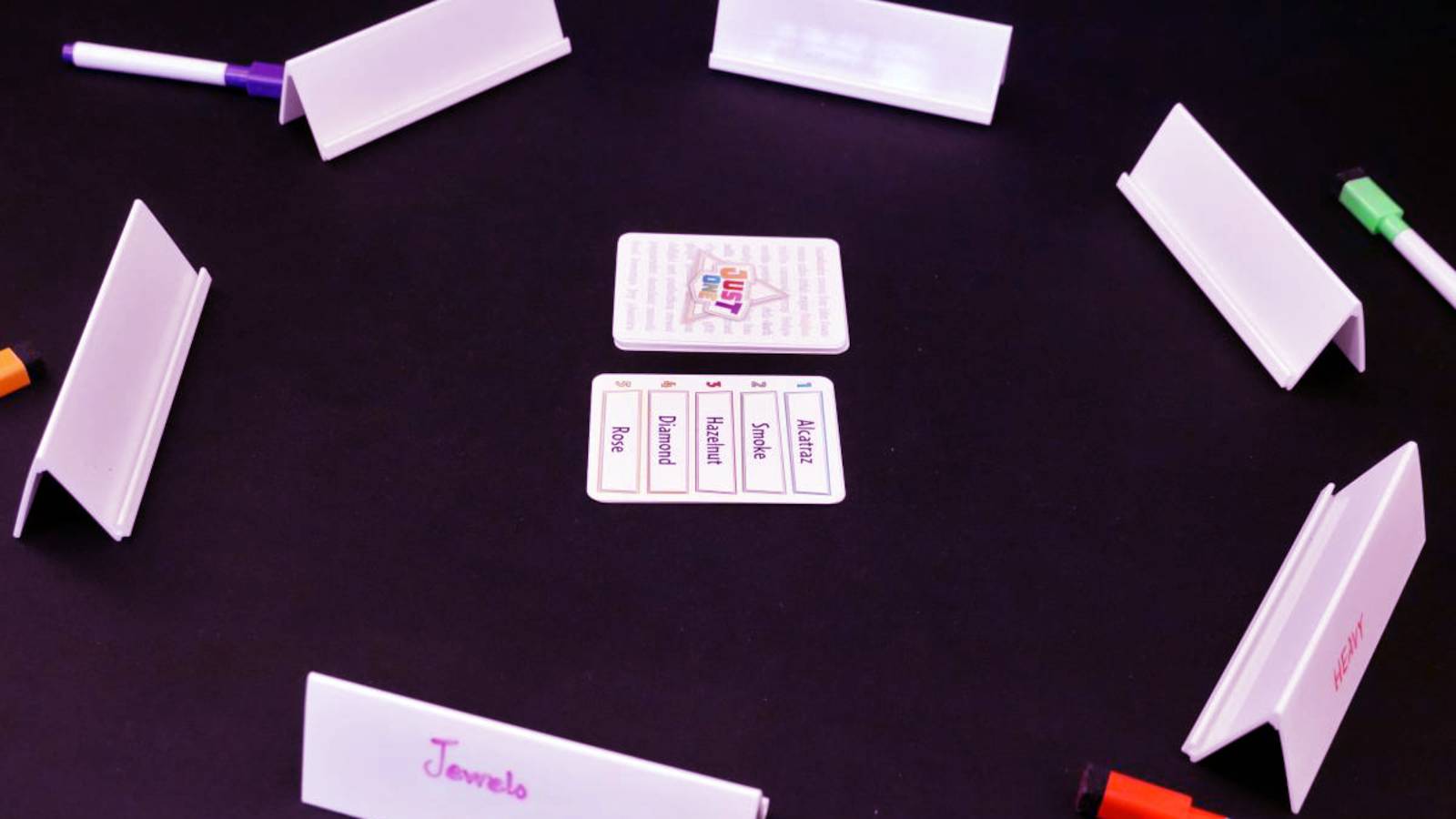
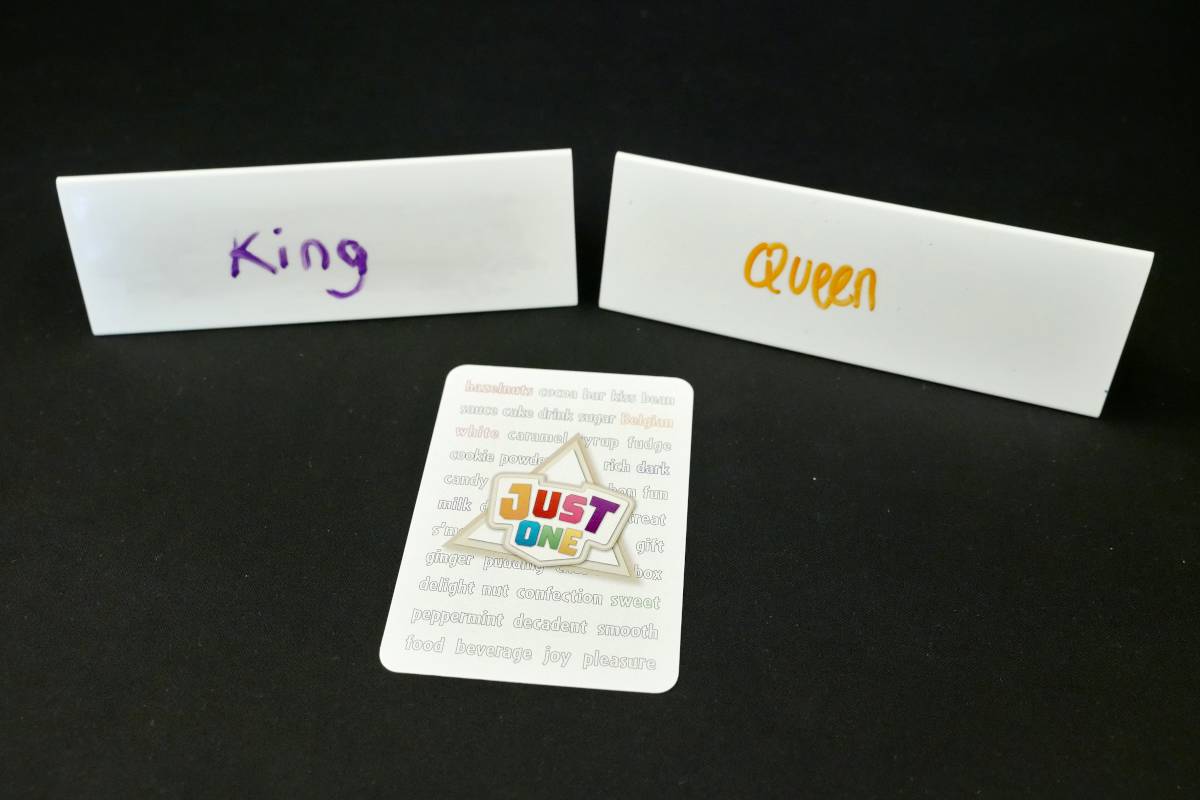
In Just One, every player gets a personal easel and a dry erase marker. This is where they'll write their clues for the secret word every round.
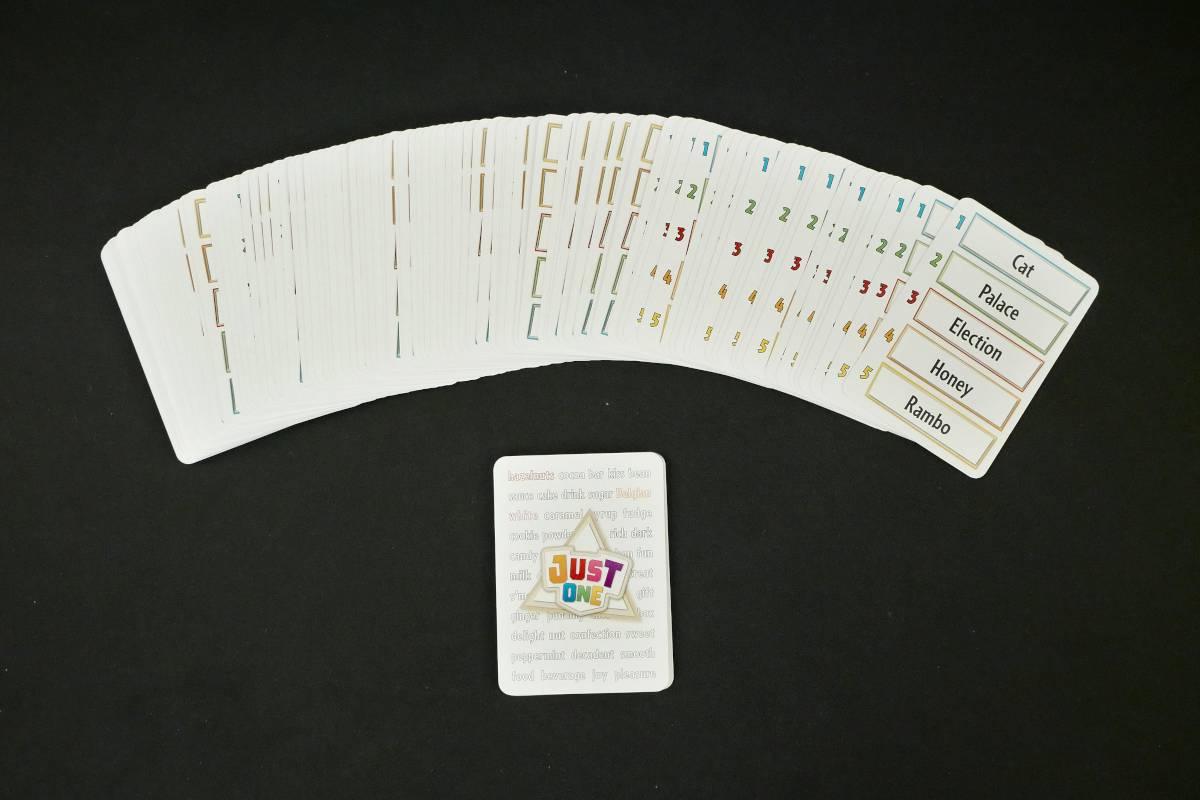
Just One comes with 110 cards, with each card containing five different words on it. Only 13 cards are used in a given game. The cards are all shuffled, then 13 are drawn into a face-down deck in the center. The rest of the cards are placed back in the game box.
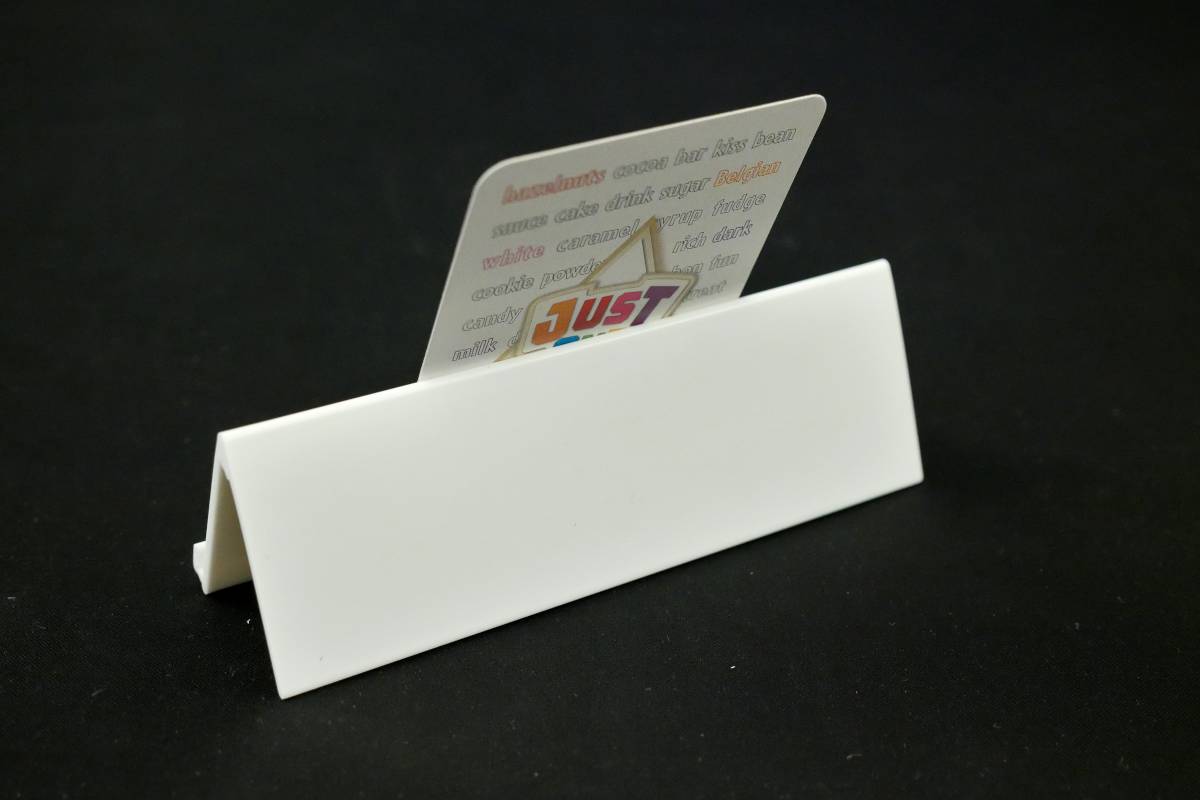
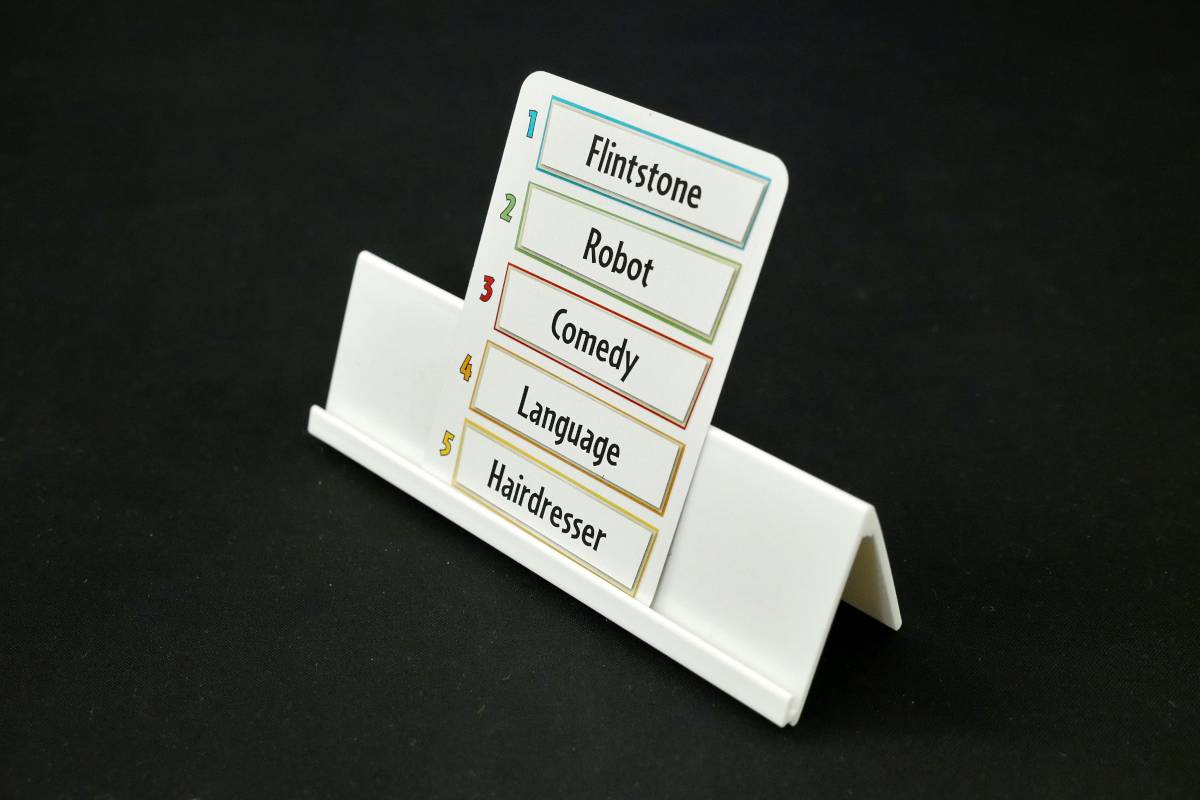
Players take turns being the "active player." When you're the active player, you draw the top card without looking at it and place it on your easel, facing away from you so everyone else can see it. You then announce a random number between 1 to 5, which selects one of the five words on the card. That word is now the secret word for the round.
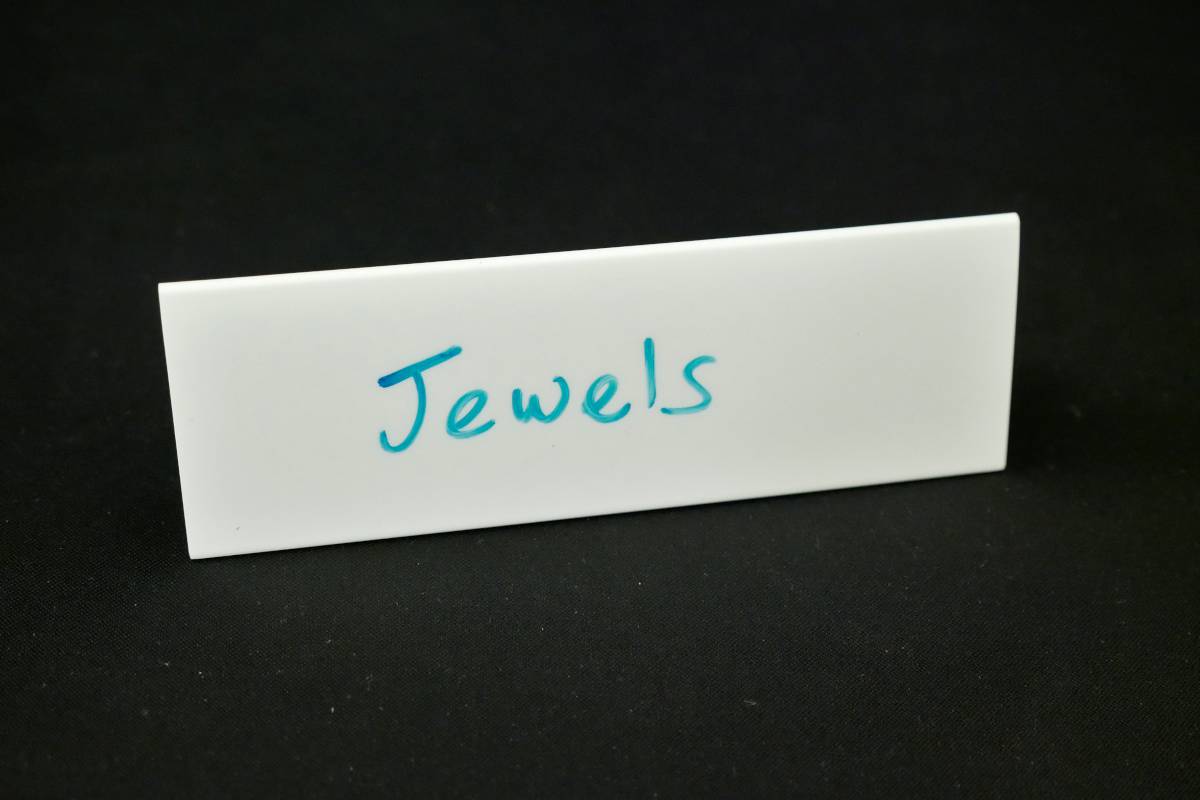
Everyone else secretly writes a one-word clue on their easel, then hides the easel face-down so no one else can see it. When everyone has written a clue, you close your eyes and all the easels are silently revealed so the clues can be silently compared. Don't give away any audible hints!
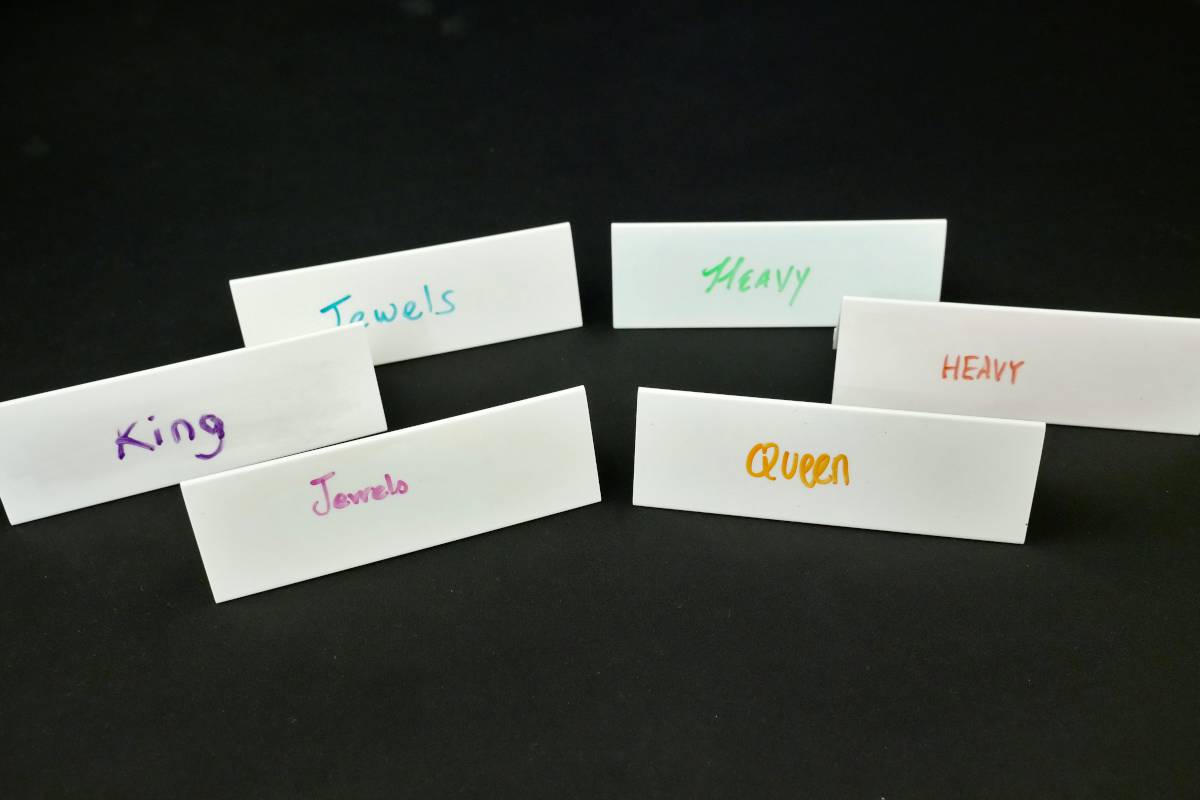
If any of the written clues are either identical or invalid, they're disqualified and erased. The remaining clues are kept face-up for you, who must now open your eyes and evaluate those clues. When you're ready, you can verbally guess the secret word. Only one guess allowed!
Your guess can turn out in one of three ways:
- If you guess correctly, the card is kept as a point.
- If you pass and don't guess, the card is returned to the game box.
- If you guess incorrectly, the card is returned to the game box AND the top card of the deck is also returned to the game box. (If no cards are left in the deck, a previously won card is returned instead.)
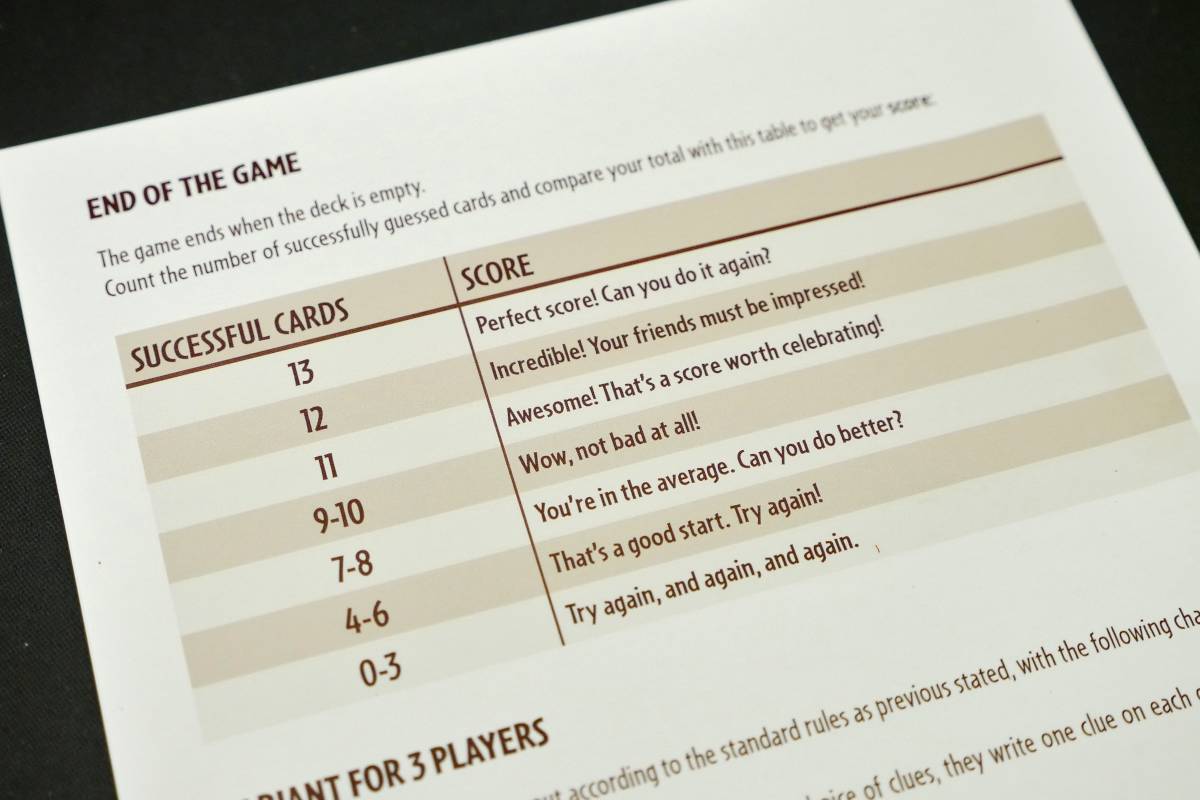
Now it's the next player's turn to be the active player. Keep repeating this until the entire deck is depleted, then count how many cards you won. Remember, you're working together! The goal is to reach a perfect score of 13 cards—but it's a lot harder than you think.
Setup and Table Footprint
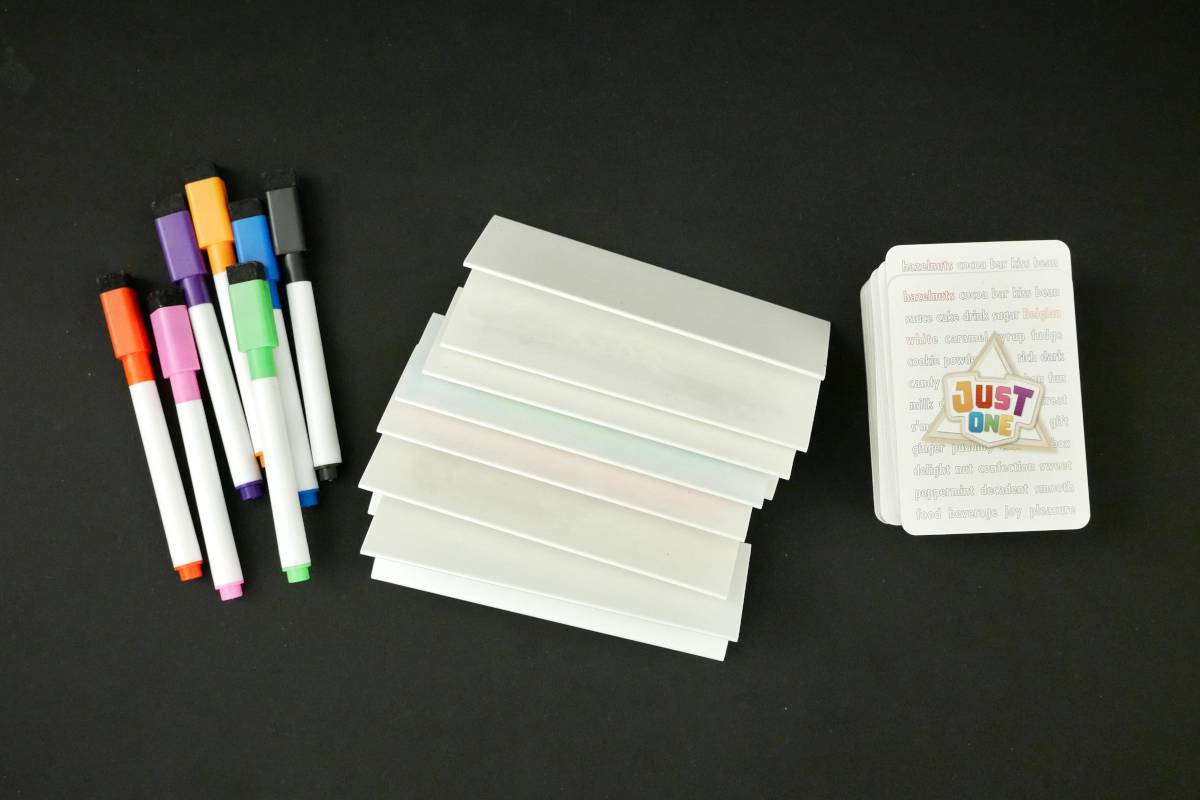
Just One is one of the easiest games ever to break out and start playing right away. All you have to do is pass out an easel and a marker to each player, shuffle up the cards (or don't), then draw 13 to create the game's deck. You can be up and at 'em in a literal minute. I love that.
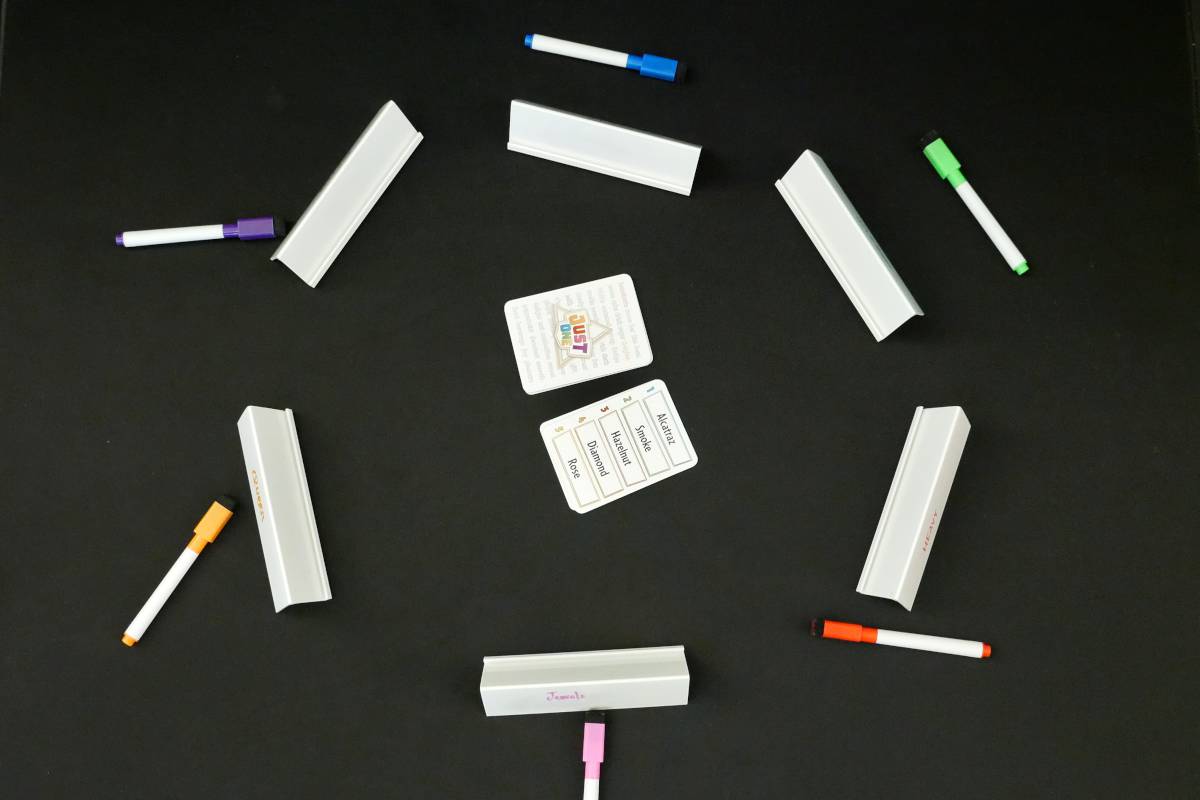
Just One is also incredibly easy to play anywhere thanks to its minimal table footprint. All you need is a tiny spot for the 13-card deck. The easels and markers don't take up much space at all, and you can even play with them in your laps if no table is available. This flexibility is one of the many reasons why Just One is the quintessential party game.
Learning Curve
Just from the overview above, you can probably tell that Just One is a contender for simplest party game ever. It's certainly the easiest game to teach in my entire collection—and I have lots of simple games!
Just One barely has a learning curve. In fact, you don't even have to learn how to play it! Someone can hand you an easel and a marker, then say "Come up with a one-word clue that'll help John guess this word." You write it, you put it down, and that's it! You're actually playing along.
In other words, Just One is universally accessible (apart from any language barriers that might be present). There's no mental overhead. Anyone can play this, which is another huge reason why it never flops.
Game Experience
Decision Space
There's only one decision in Just One: think of a one-word clue that no one else will think of. That's the entire game, repeated round after round, with a new prompt every time to shake things up. And while that might sound boring, repetitive, or easy on paper, you'd be surprised...
What makes it so interesting is that you can approach your clue from so many angles. For example, if the target word is "Elf," you can come at it from the direction of Santa's workers... or the fantasy race from Lord of the Rings... or the well-known makeup brand... or the Will Ferrell movie.
But the goal isn't to simply describe the target word. The trick is coming up with some word that's associated so strongly that it pulls the guesser towards the answer—and with enough of them, the guesser should be able to bridge them together to arrive at that exact word. For "Elf," clues like "Legolas" and "Workshop" and "Cosmetics" and "Buddy" should make it pretty clear.
You need to tailor your clue to the active player, of course. If they're a sports fan, you might get away with a sports term; if they don't care for sports, you'd only be making things more confusing for them. At the same time, you need to avoid the obvious clues that others are certainly going to write... Or will they? "Legolas" is pretty on-the-nose as a clue, but if everyone thinks that, then maybe everyone avoids writing it—and now that killer clue won't be there. Will you write it and risk having it collide?
This bit of mind melding between you and everyone else introduces just the right amount of tension to make Just One so juicy.
Okay, I lied about there only being one decision in Just One. When you're the active player, you have a different decision to make: what word are all these one-word clues pointing at? As the guesser, you're faced with a different kind of challenge—and it's just as interesting as the other one.
Here's an example. Let's say you're presented with these one-word clues: "Green," "Leaf," "Lawn," and "Shamrock." What comes to mind? If you said "Clover," you'd be right! Putting clues together and deducing the common point comes with a satisfying rush when you get it right.
And it can get pretty challenging when collisions kill some of the clues. Imagine two people wrote "Shamrock" and killed that one, leaving you with only "Green," "Leaf," and "Lawn." Would you still guess "Clover"? Or would your mind move towards something like "Mower" instead?
Luck Factor
There's no luck in Just One apart from randomly choosing a target word as the active player. Once you've done that, it's just a matter of coming up with clues and then deducing the answer. Is there a feeling of luckiness to clue collisions? Sort of, yeah. But that's all part of the fun!
Fun Factor
Just One is mostly table talk and that's why it's such a fantastic party game. The banter, the stray quips, the occasional groans while struggling to think of a good clue—these are all core to the experience.
There are two exciting moments every round. The first is when everyone reveals their clues. If there are any collisions, the offending players erupt in displeasure; if there aren't, then everyone cheers and feels good. The second is when the active player makes their guess. If they're correct, the whole table feels good; if they're wrong, there's shared disappointment.
In between rounds, you have the fun little conversations about why people wrote certain clues, which clues they avoided or almost wrote, and other potential clues that could've been more or less helpful.
This mixture of creativity, thinkiness, tension, excitement, disappointment, and table talk makes Just One an absolute blast to play.
Pacing
Just One is perfectly paced. Every turn is short and snappy, just a few minutes as people think up a clue to write. Then a few minutes for the active player to put clues together and come up with a guess. Wrong or right, you erase your easel and move on to the next player. Smooth, smooth, smooth.
While the overall game arc is pretty flat—the first round and final round are pretty much the same—there's an ebb and flow to Just One that prevents it from feeling too repetitive. You think, and then you wait for a guess. There's tension, and then there's release. That steady heartbeat takes you through every round, and then you tally up your score.
I also love that you can slip in and out of the game on demand. Gotta go halfway through? You can leave and you won't break anything. Want to join halfway through? Grab an easel and write down a clue! Just One is superbly flexible and another reason why it's an excellent party game.
Player Interaction
Cooperative mind melding is the name of the interaction game in Just One. Which clues are your teammates most likely to give so you don't overlap with them? Which clues are the guesser most likely to understand? You can't just write the first thing that comes to mind—you have to exercise a bit of telepathy, at least if you care about winning.
It's all in good fun, though, and there are plenty of laughs still to be had even when clues collide, guesses go awry, and mistakes are made.
Player Counts
Just One is undeniably better with more players. When you have seven minds at the table trying to telepathically work together, those extra layers of uncertainty amplify everything. The highs are higher, the lows are lower, and the party atmosphere is partier.
That said, Just One is still enjoyable with fewer players. At 3 and 4 players, each person gets two easels to provide two different clues. It's a slightly more contemplative experience and less party-like, but it's just as engaging and a great way to pass the time with lighter fare.
Replayability
Just One is an any-time-anywhere-with-anyone kind of game. I love introducing it to different groups and it's always a hit, but especially so with non-gamers and casual gamers. It has that magical "X factor" that keeps it engaging over multiple plays, making it infinitely replayable.
The game itself is only 110 cards. With 5 possible words per card, that's a total of 550 words. And since you only use 13 cards per game, well, that's plenty for repeat plays without feeling like you're rehashing all the time.
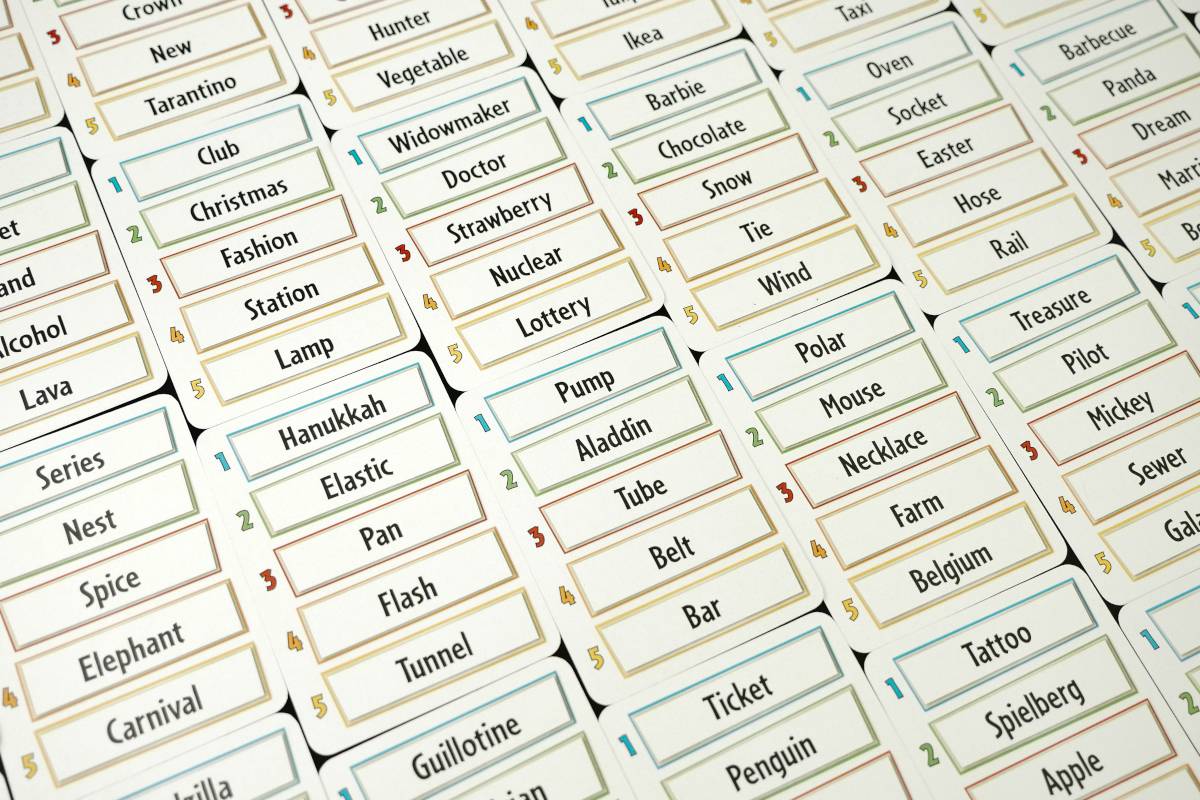
But the thing about Just One is that all of the gameplay happens in the players' heads. The cards are just there as prompts—it's the overlap of creativity and imagination between players that makes it so interesting and hilarious. Trying to think of a clue that won't collide with anyone else is a fun challenge every time, and that challenge is different from group to group.
Could I play Just One for hours all night long? No. I don't think any party game is built for that. It's good for one or two playthroughs in a session, then you move on to something else. But is Just One a game that I regularly reach for? A game I'm always willing to play? A game that'll stay in my collection forever? Absolutely! Because it's the ultimate party game for me.
Production Quality
While there are some minor faults with Just One's production, I find that it doesn't quite matter in the grand scheme. It's such a simple game that mostly plays in your head, so it's okay if the components are mainly functional. It's easy to look past because it's an excellent game otherwise.
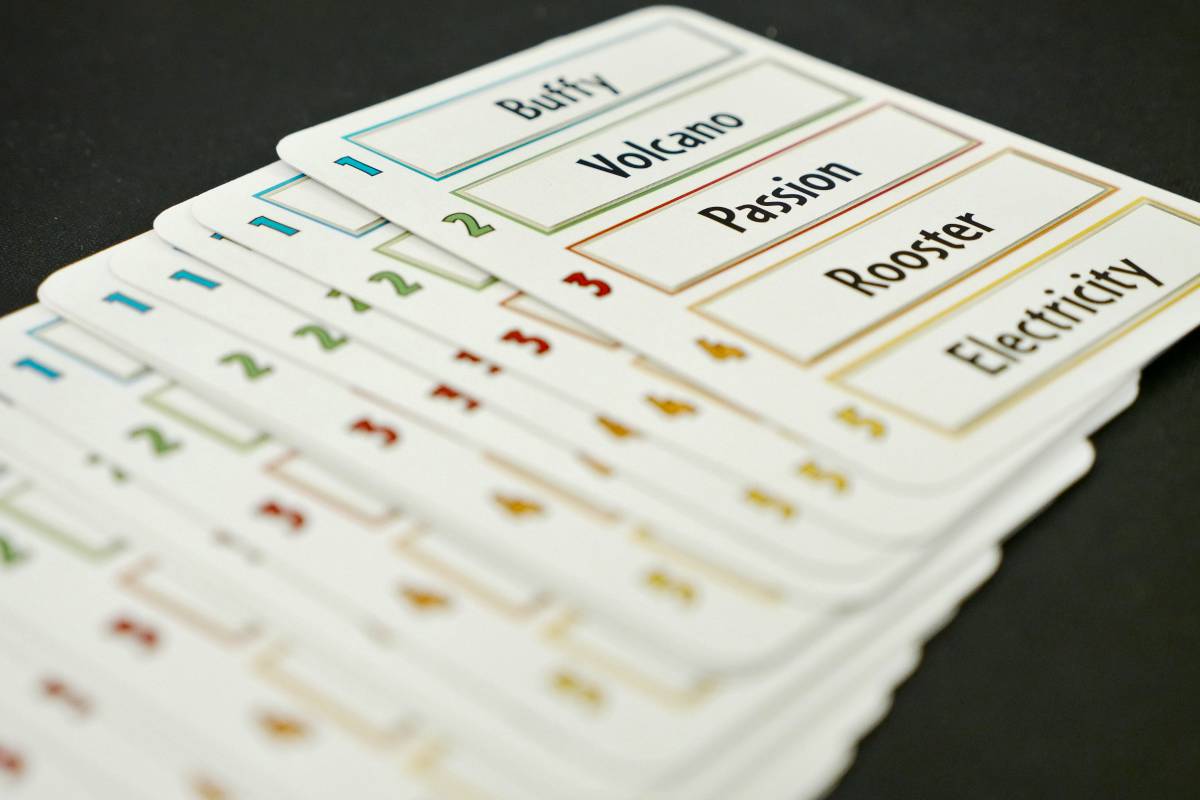
The minimalist aesthetic has mass appeal. Just One doesn't really have an identity, but I appreciate that here. There's nothing theme-wise that would turn away prospective players, and it's so pared-down that it doesn't intimidate or confuse. It's widely approachable and extremely welcoming for non-gamers, all thanks to its simple and spartan appearance.
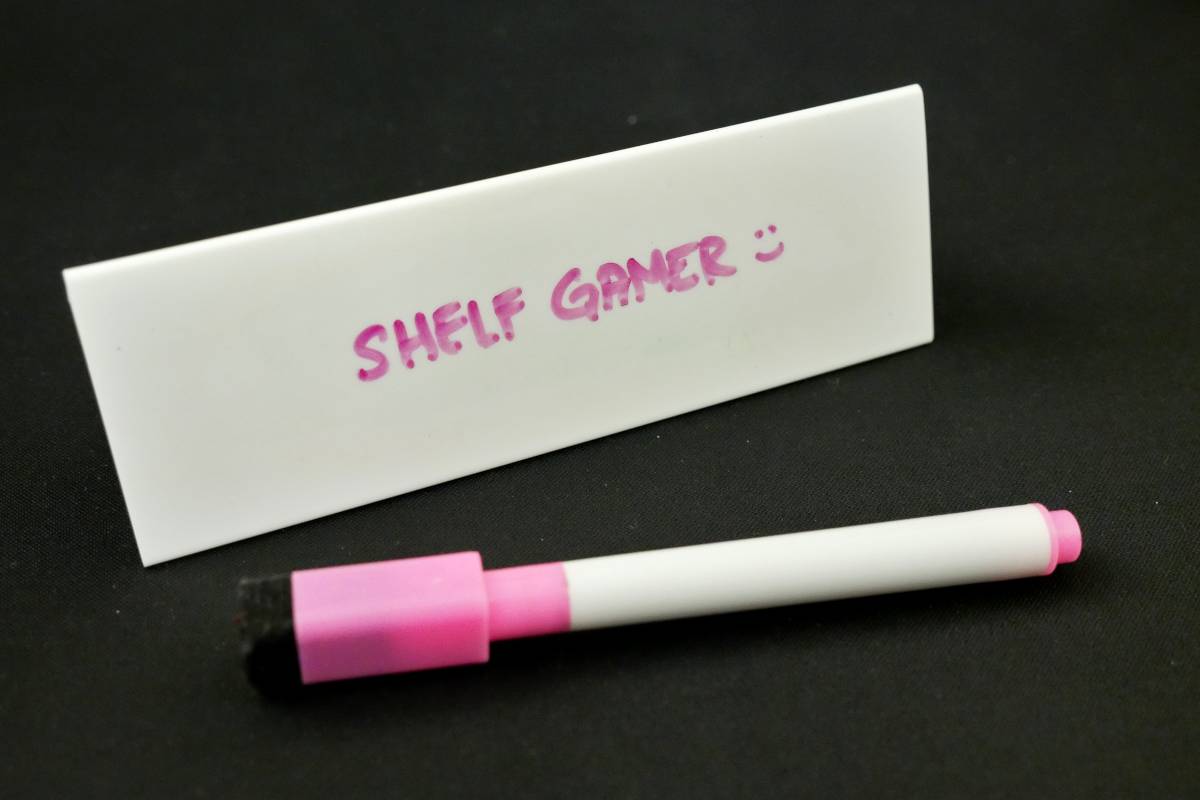
The easel-and-marker approach is perfectly functional. I love games that use dry erase markers, but even among those Just One stands out. It's function over form in every aspect, getting out of the way so you can get to the fun with as little friction as possible. The easels have a smart design, too, with a lip on one side for holding the current word card.
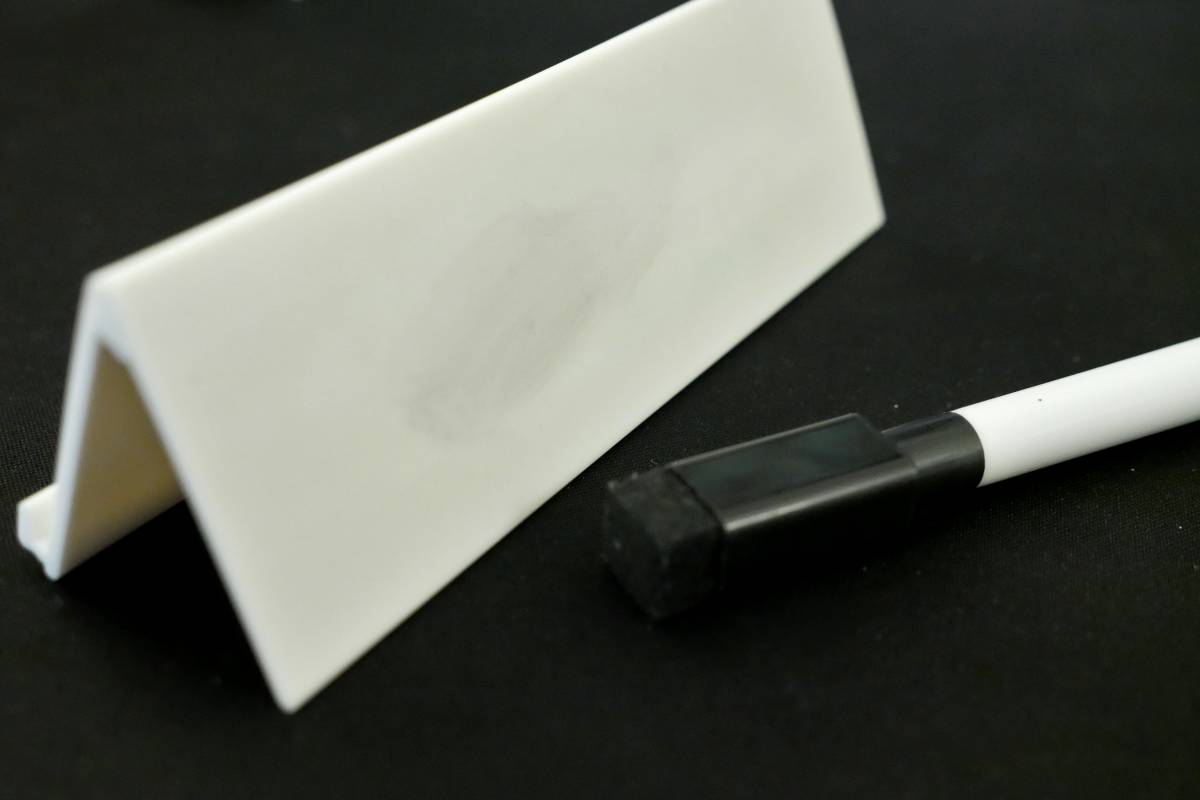
The marker colors are great, but they don't erase well. I love the rainbow markers that differentiate each player's guess. It's a small touch that doesn't serve a gameplay purpose, but feels good anyway. My only complaint is that the markers don't erase well—within a few games, they began to stain the white plastic easels. Not a huge deal, though.
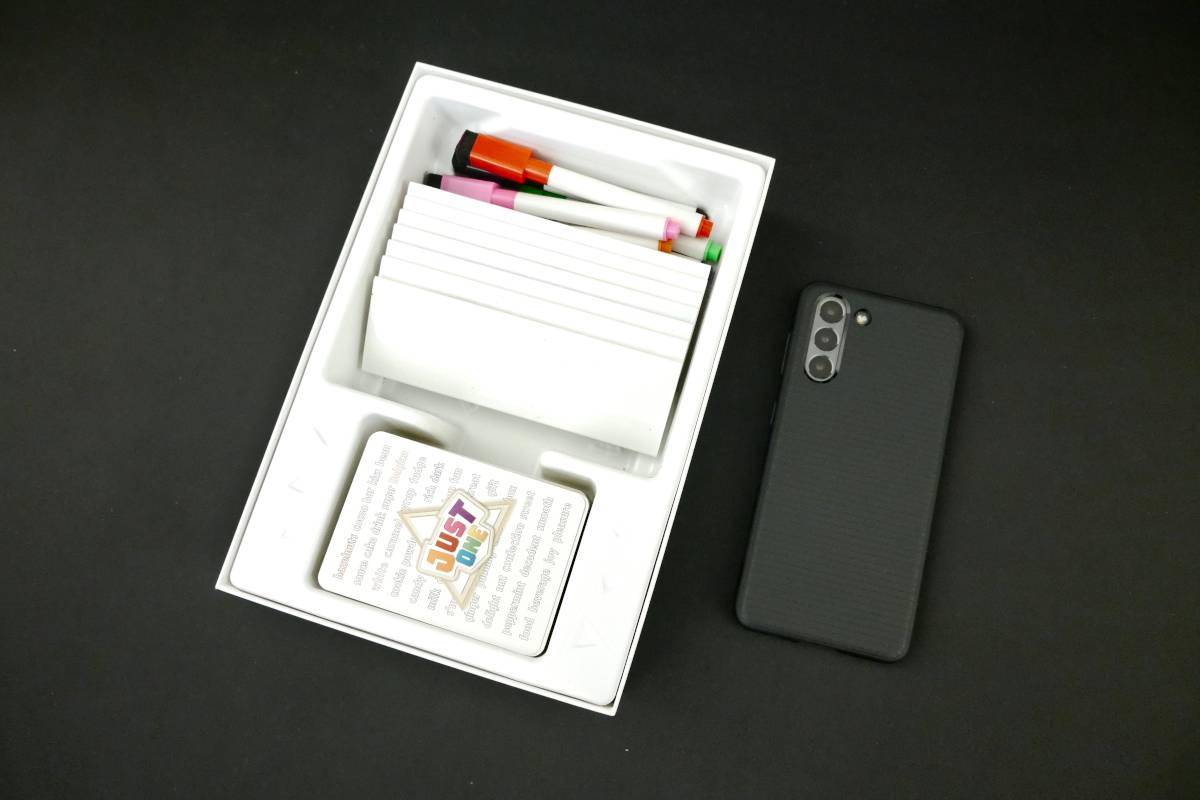
The box insert makes setup and cleanup easy. There's a fixed spot for everything, preventing the components from getting jostled around. Most modest party games like this come without inserts at all, so I appreciate it. Meanwhile, the box size is no larger than it needs to be. Just One is easy enough to take anywhere, even packed in a carry-on for flights.
The Bottom Line
I've introduced Just One to all sorts of people and it has never failed to capture hearts. It's engaging enough for gamers yet approachable enough for non-gamers, with a tight gameplay loop that tickles the brain and encourages table talk. It's my most reliable party game and I never get sick of it, earning its status as an all-time favorite.
Stop Buying Games
You'll Regret
Before your next game purchase, run it through this mental checklist that every seasoned gamer uses.
Free checklist, delivered instantly to your inbox.
No spam, ever. Unsubscribe in one click.